Posted in painting

Using Paint to Create Depth

This past week, I completed the sewing phase of Badlands art quilt. All segments are sewn in, and all but one is quilted.

Quilt lines are not visible in this photo.

The next step in my workplan has me using textile paint to add shading and lines. I learned the technique from a tutorial by Annette Kennedy through Craftsy. Annette is known for her realistic landscape quilts. She is an award-winning fiber artist.

https://www.craftsy.com/class/painted-pictorial-quilts/

So, I have a lot of trepidation about slathering a perfectly nice quilt with paint.

The paints I use are Jacquard Textile Color. I will mix them with a floating medium recommended by Annette. It dilutes the paint, making it lighter and keeping it from drying too fast.

Before painting:

In this photo, I have started shading the large mountains in the foreground. You will also see the applique I have made for my focal point, painted and ready for fusing.

I’m still nervous, but I am trusting that everything will come together in the end.

Posted in painting

Patio Decor – Stage Two

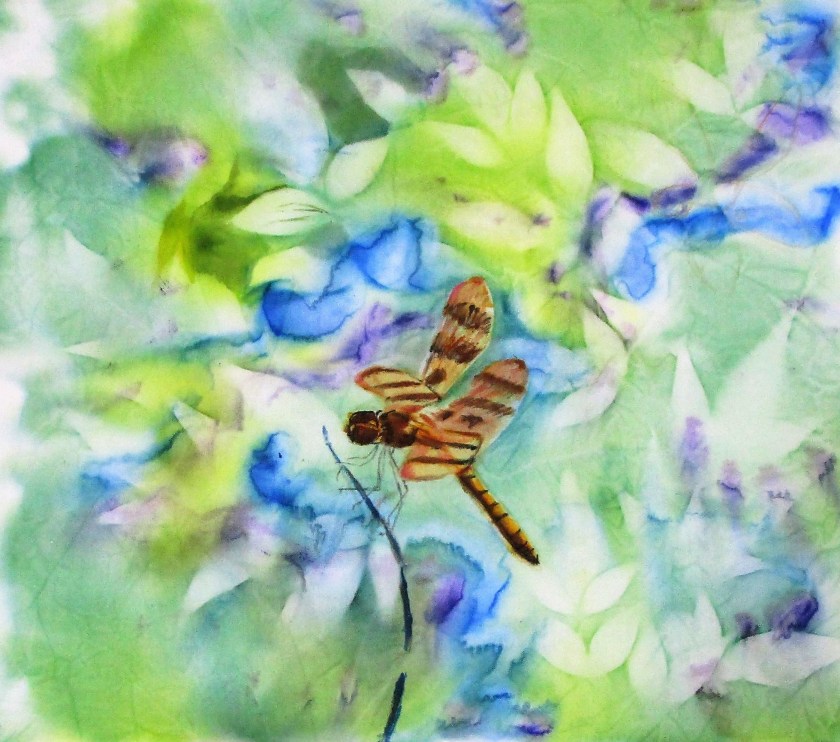
Back in May, I started a painting on fabric for the purpose of decorating my patio.

https://wordpress.com/post/dailyfiberfun.wordpress.com/5098

It was May, and the weather for patio-sitting was perfect. But I didn’t finish my painting – I had become obsessed with the Shell Lake Story quilt, and could think of nothing else.

Now that the quilt is finished, AND lovely patio-sitting weather has returned, I got out the fabric paints to work on stage two of the painting.

At the end of stage one, I had a 15 by 30 inch canvass with a nice background on it.

The lovely green-colored folds already looked like geranium leaves. The blank-looking orange blobs will become geranium blossoms.

Using Jacquard Textile paint in colors green, ruby red and goldenrod, I started working from the right side of the canvas to the left. Here is the painting after my first two sessions:

Only one more blossom to go. Today I finished it up,

Hm, it’s pretty obvious that I got better at painting as I went along! While the far left blossom is more carefully painted, it lacks the bright highlights of the first two. This was caused by the tone of the underpainting, which was predominately violet instead of yellow, like the other ones. The only way to fix this is to apply opaque paint. The risk in doing that is overworking the painting.

So I guess I will leave well enough alone.

My next steps are to square up the fabric and staple it to the back of the frame.

Posted in collage, painting

Fun Fabric Object Friday

The email came in with the following request from my sister-in-law:

Our dear niece is getting married this May. The couple had said “no gifts,” but we want to make them a joint patchwork bedspread from all of the family. Would you be willing to make and send a six by six block that will be incorporated into this gift?

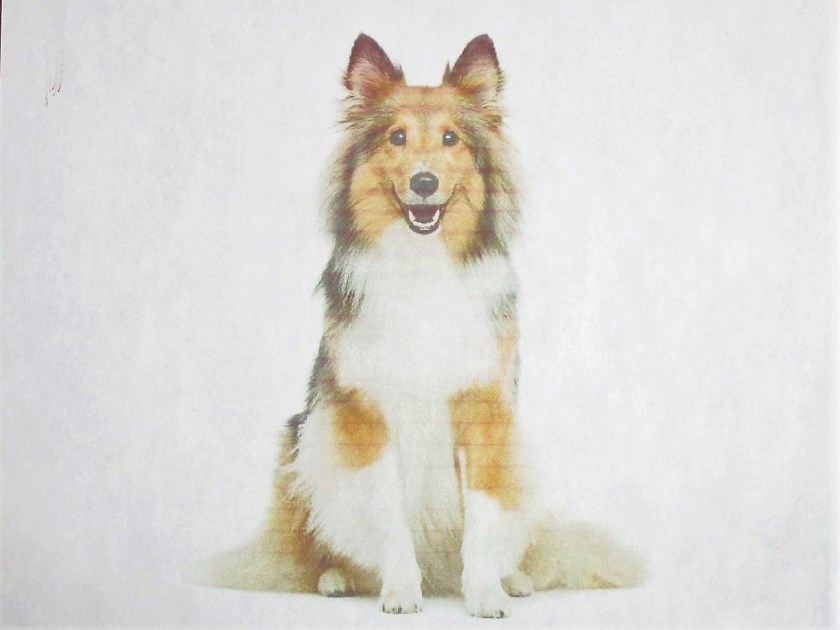
Would I? Without a doubt. But I needed more information to make it personal. I asked, “What are the hobbies and interests of the happy couple?” When I heard the answer (the bride loves ballet and the groom is fond of dogs, especially his collie, Harvey,) an image came to mind immediately:

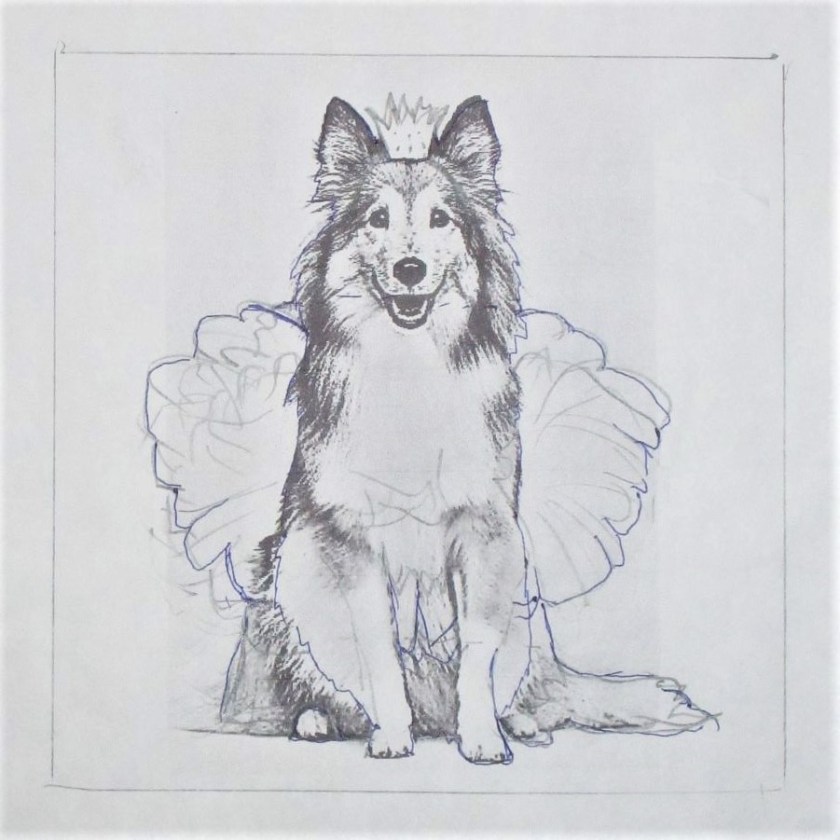
Dog in tutu !!

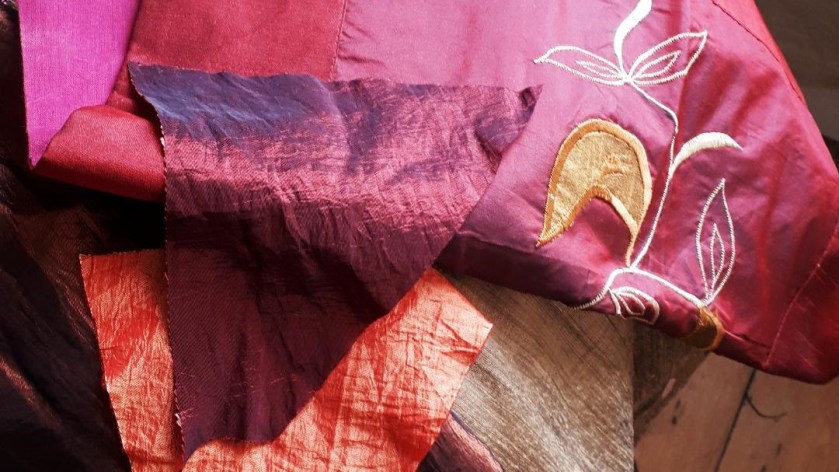
My sister-in-law had sent a photo with the fabric palette. (See above.) All I needed was some similar fabrics and a reference image.

DONE

The first step is to convert the photo to black and white, print it and make my edits.

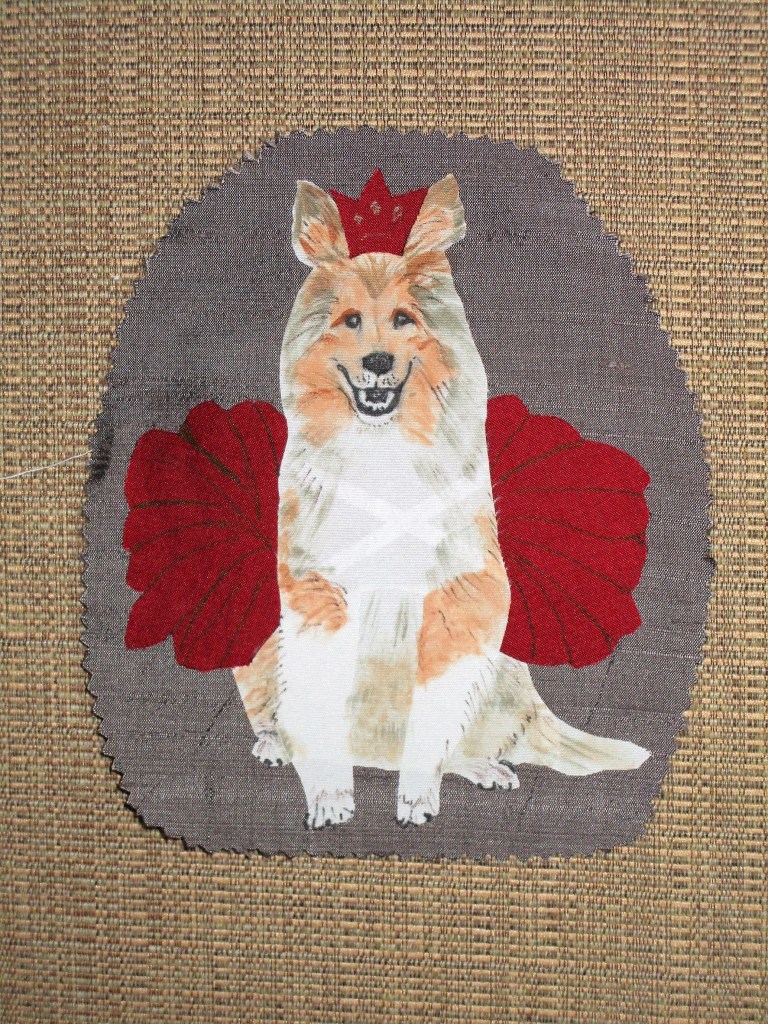
Next I traced it, used the tracing as a pattern, and cut out each pattern piece. The pieces were attached to fabric treated with fusible webbing, cut out, and then fused to a piece of raw silk. Using Jacquard Textile paint and the reference photo as my guide, I painted the collie’s fur and features. Black micron pen rendered his little face beautifully. (sorry, I have no photos of these steps.)

Here is my block after the fusing and painting were complete.

Ballerina Collie after assembly

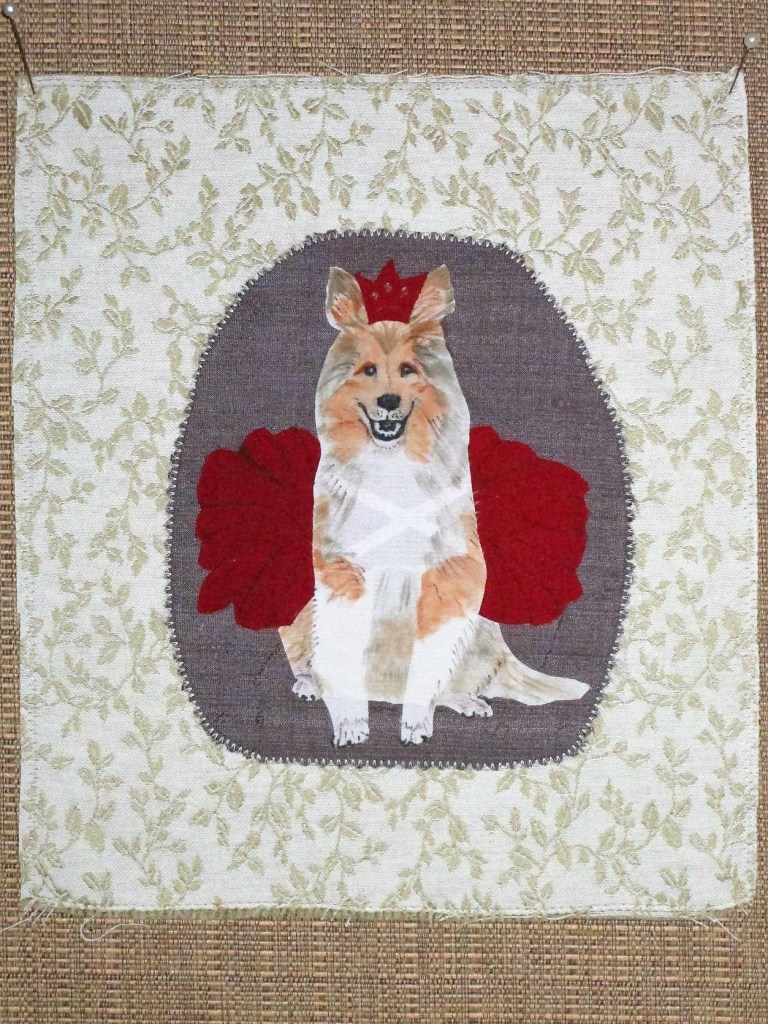
I chose a light color background fabric in a cotton damask. It’s no coincidence that the background fabric was left-over from a bed spread that I made several years ago.

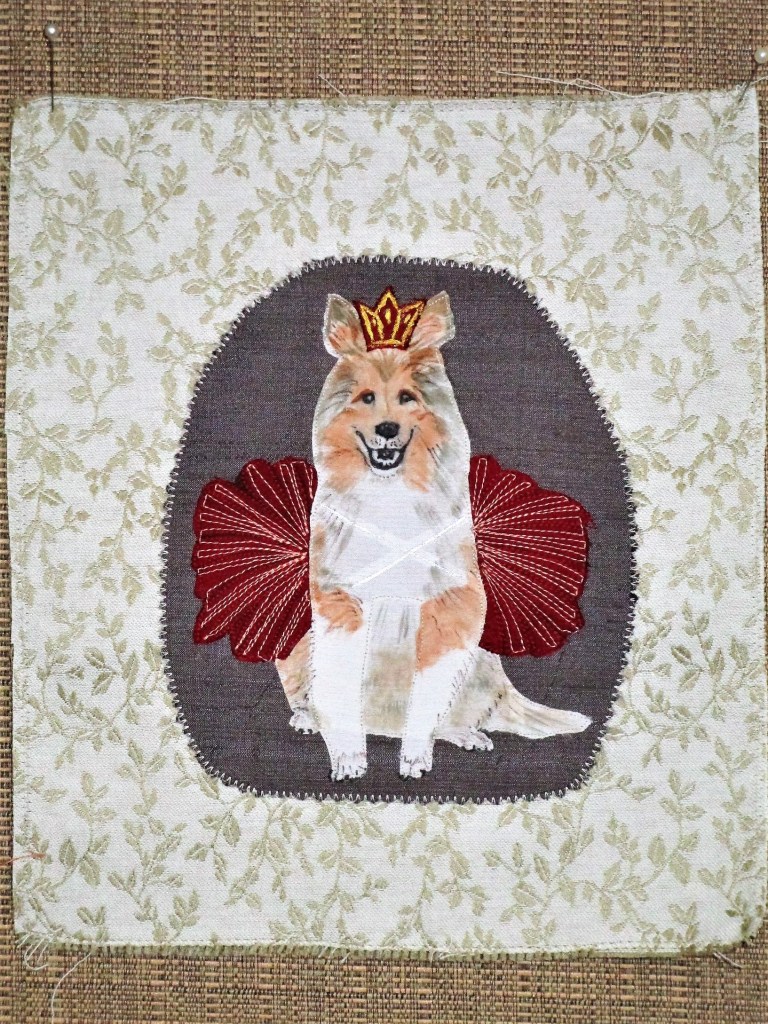
For final touches, I machine-stitched all the edges, added a few ruffles to the tutu with pale peach thread and brushed in some metallic paint for the crown.

Ballerina Collie Completed

This will go into the mail on Monday, along with a few extra pieces of fabric, which the patchwork makers may find useful.

Whimsical and fun. So satisfying to make. I hope that the recipients are pleased.

Posted in hand embroidery

Shadow and Texture

In this post I am following up on the next steps for Spring Green.

Here is how the foreground looked after I finished piecing it.

With textile paint, I created shadows and deepened existing shadows.

It’s finally time to begin sewing. To start with, I added a layer of batting. So that the batting doesn’t shift, I hand-basted the two layers together, adding a few safety pins for good measure. Next came the embroidery. Using cotton twist and cotton floss, I outlined the rims of the pots with couching.

The two groups of pots nearest to the viewer got two strands of gold cotton twist couched with four strands of embroidery floss in a cross-stitch pattern. I matched the floss color to the fabric color.

For the flat of pots further from the viewer, I couched only one strand of cord, using three strands of floss and the whip stitch. This will create a bit of perspective.

I’m loving the texture that the thick stitches create. Now that I have finished couching, I will add the backing.

After that, I will throw on a bit of machine quilting, just to anchor the edges and define further the parts of the image. It will give me more time to consider exactly what I will do next.

Posted in painting

Channeling Vincent Van Gogh

If you read my post dated October 1, you will remember that I have a desire to make a fiber object featuring sunflowers. As a reminder, here is the photograph I took this summer that will form the basis of my design.

I got pulled off my work when I decided to make a “confetti” sample on October 1st. It was great fun, but it won’t really give me the effect I want for this background.

So today, I am back on the trail of Van Gogh. I’ve studied some of his still life paintings, enough to get a handle on how he painted those dotted backdrops. I am trying it on the background fabric I have selected. It is a mottled pattern in a Prussian blue color. Certainly, it looks painterly in its own way, but it lacks the dynamic quality I seek.

I get out my Jacquard textile paints and, with new brush in hand, start at the top of the fabric. Directional lines and dashes are what I’m going for.

Sky complete, starting on foliage background.

As I work my way down the fabric, I move from thinner lines to fatter, more blocky shapes. These represent what I see when looking at the background of my photo: mottled light and shadow of leaves, branches, etc.

Middle section painted.

I leave the bottom of the fabric blank, because the foreground is the fence. I have another piece of fabric for this element. It will be painted with a dry brush technique to portray the weathered state of the boards.

Background with my test swatch of fence fabric. I make the marks in violet paint.

I found this process quite meditative. As the fabric gets filled with splotches, one pauses, studies the work, and asks oneself: Where do I put the next mark? What is it calling for? How will I know when it’s finished?

Mr. Van Gogh might have known, but I am only guessing.