Posted in quilting

SAHRR 2025 Round 4: A Nod to Boro

Pieceful Wendy is our host for round 4. She has given us instructions that lend themselves very well to scrap-busting and improvisational piecing: Cut a square of fabric. Slice it in half in any direction. Cut a strip of another fabric. Sew the strip to the cut sides of the square. That’s it.

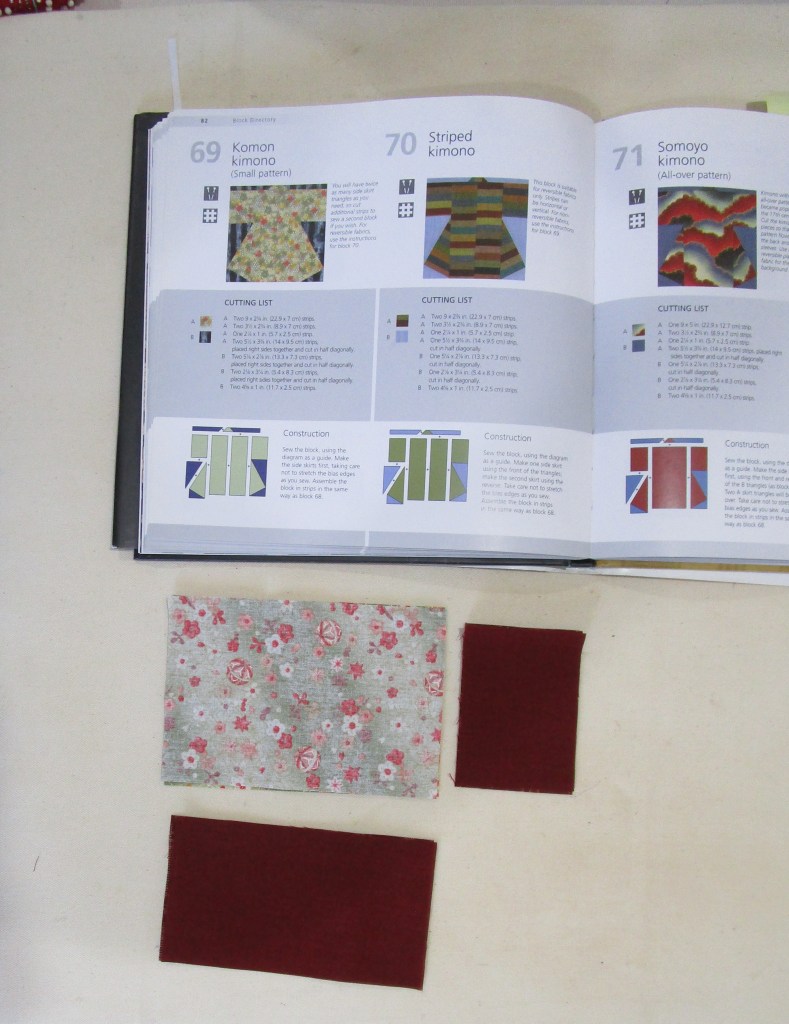
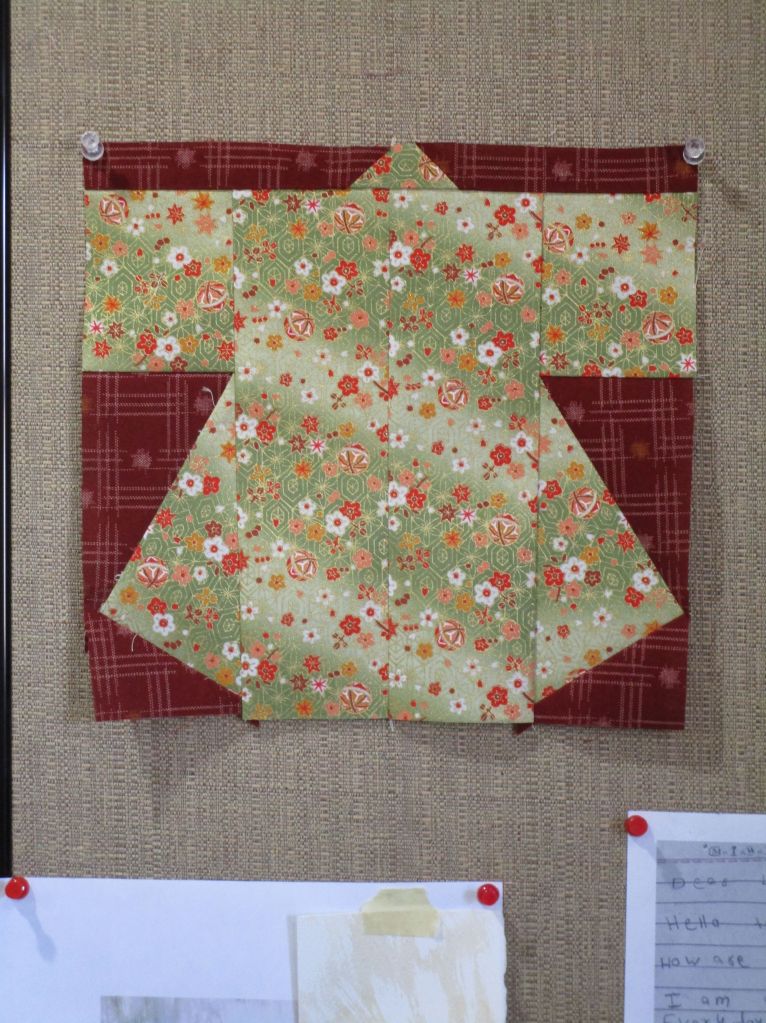
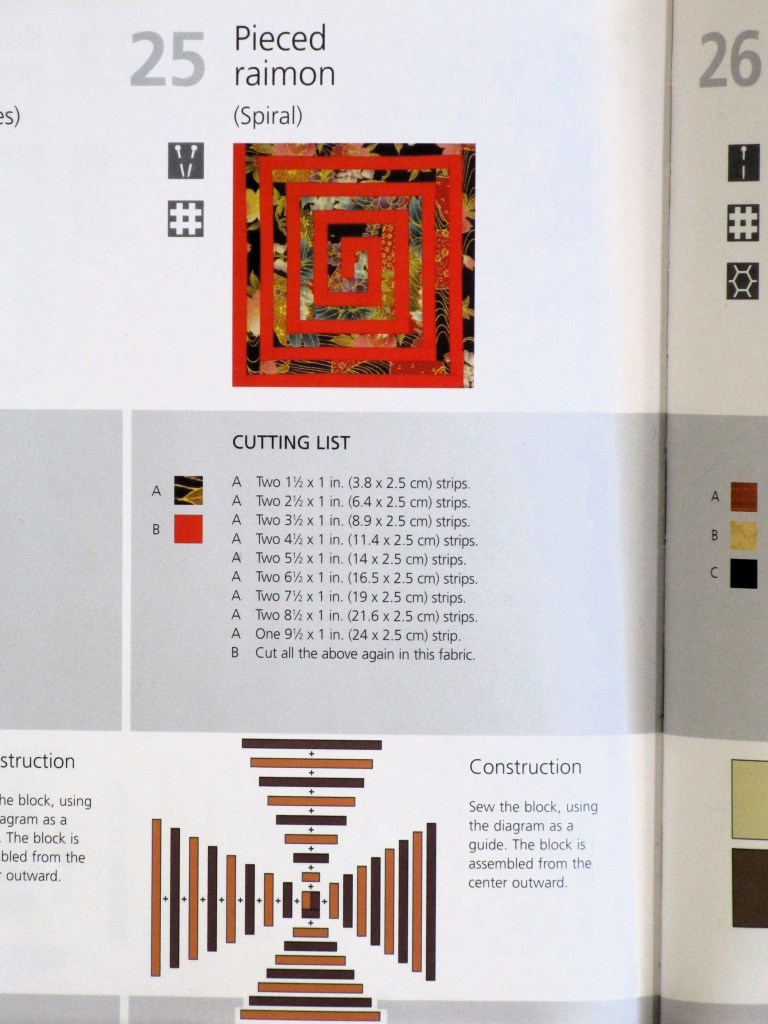
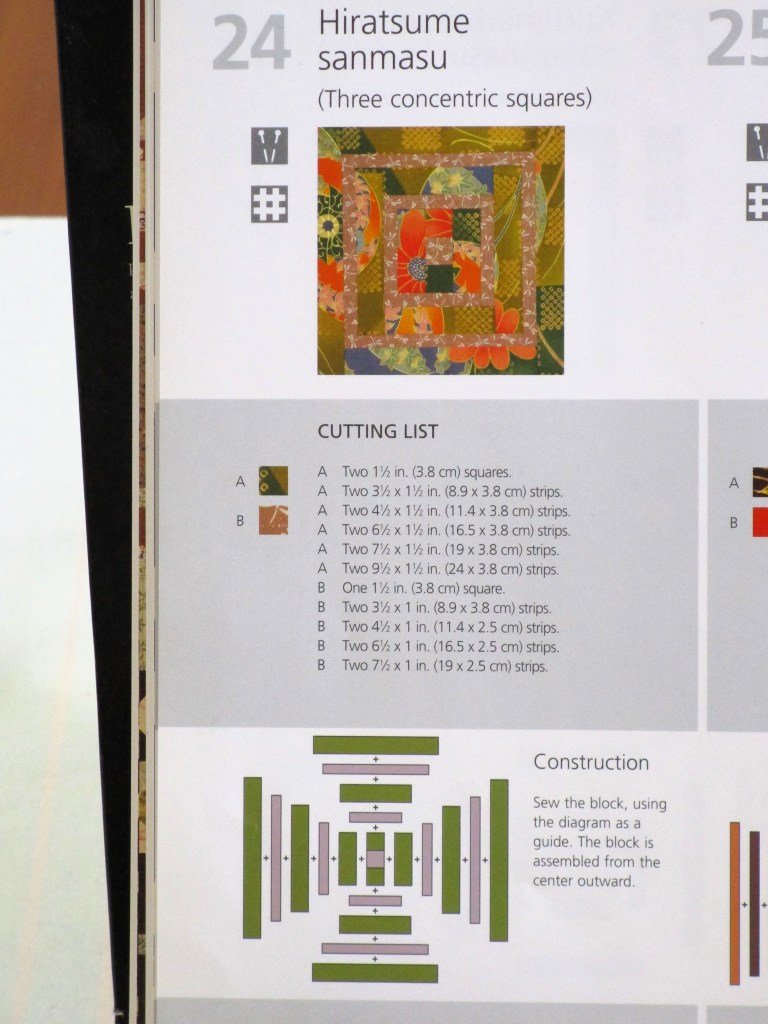
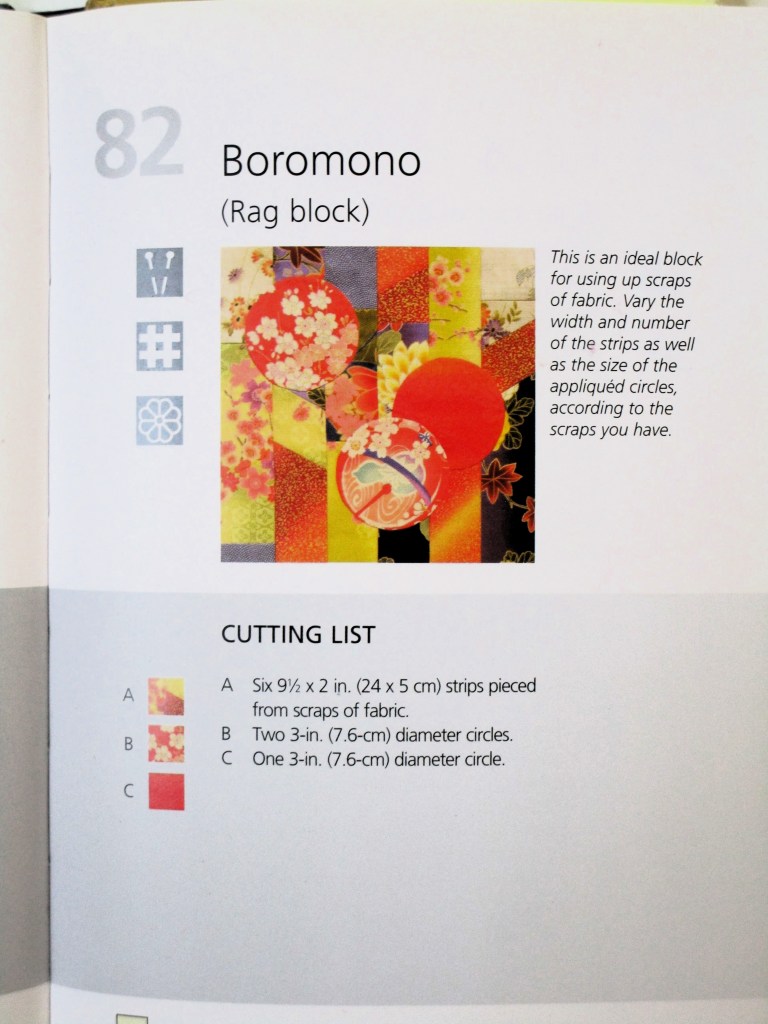
There is a pattern in my Japanese quilt block dictionary that references Boro stitching.

In Japanese sewing culture, boro refers to the technique of mending old clothes by sewing odd pieces of fabric over the worn places. It began out of necessity: in olden times, fabric was scarce and expensive, so each little piece was saved and used in the mending. In modern Japan, fabric is readily available and boro stitching is done just for the sheer pleasure of making things by hand.

To read my post about boro stitching, click here.

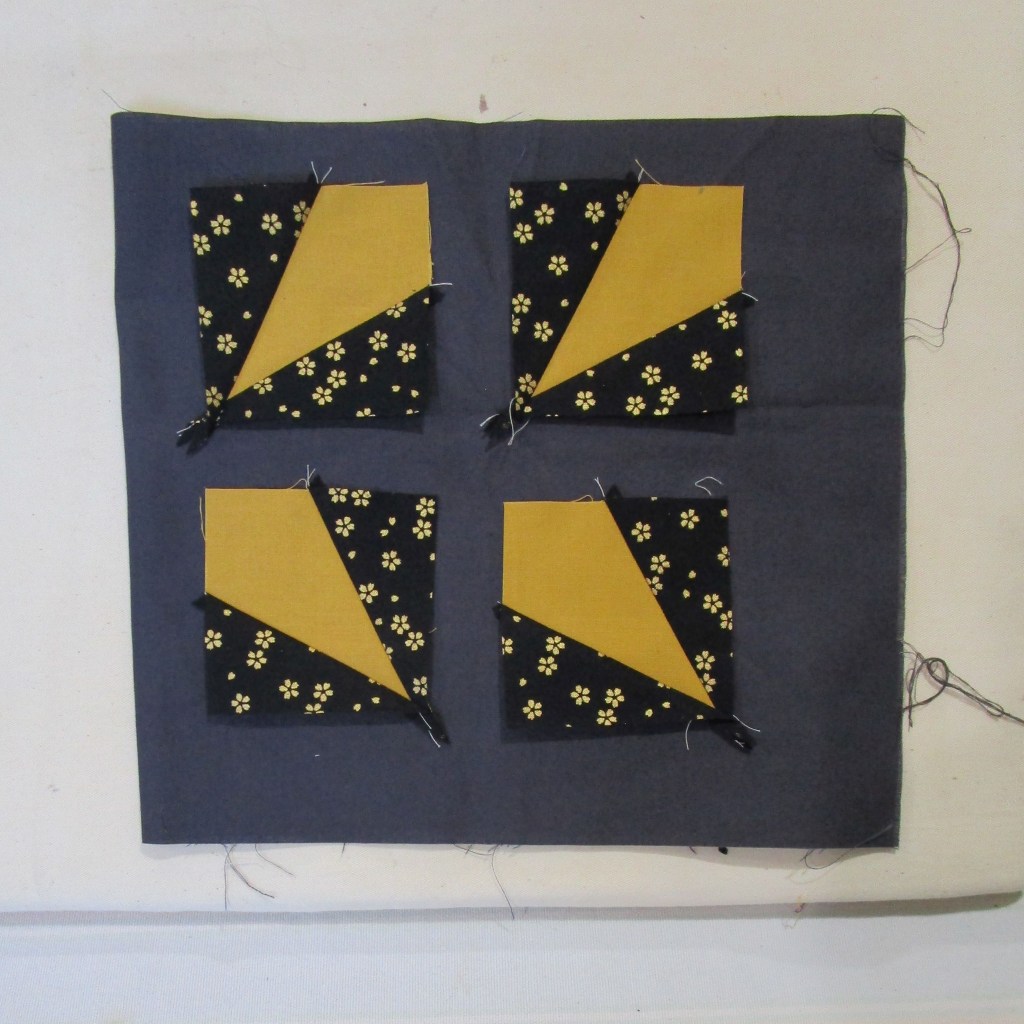
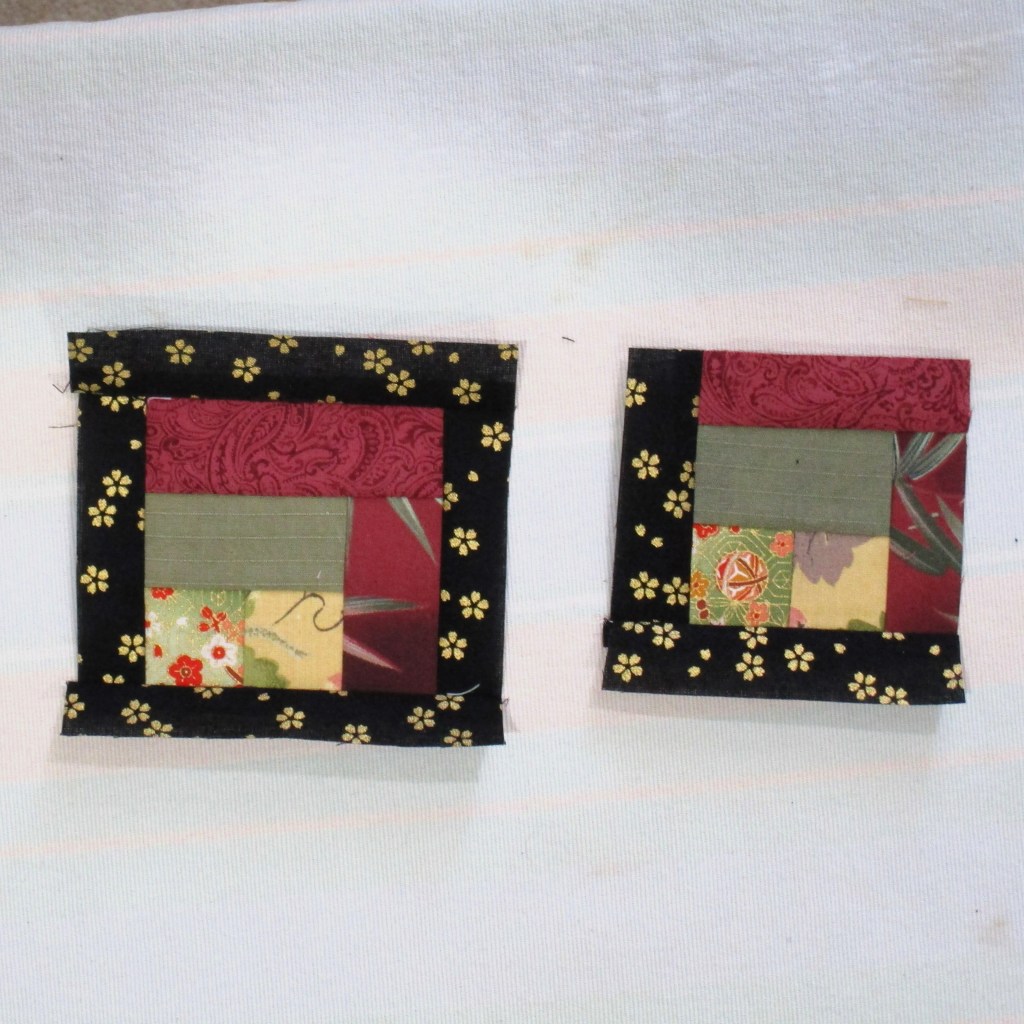
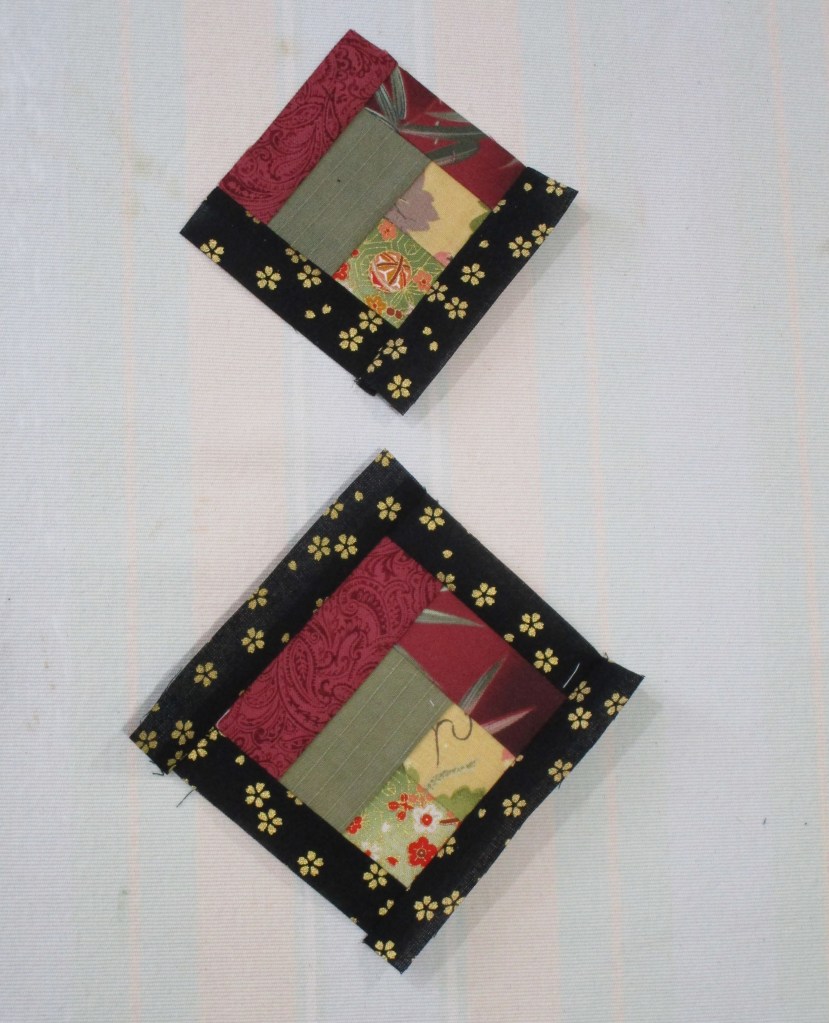
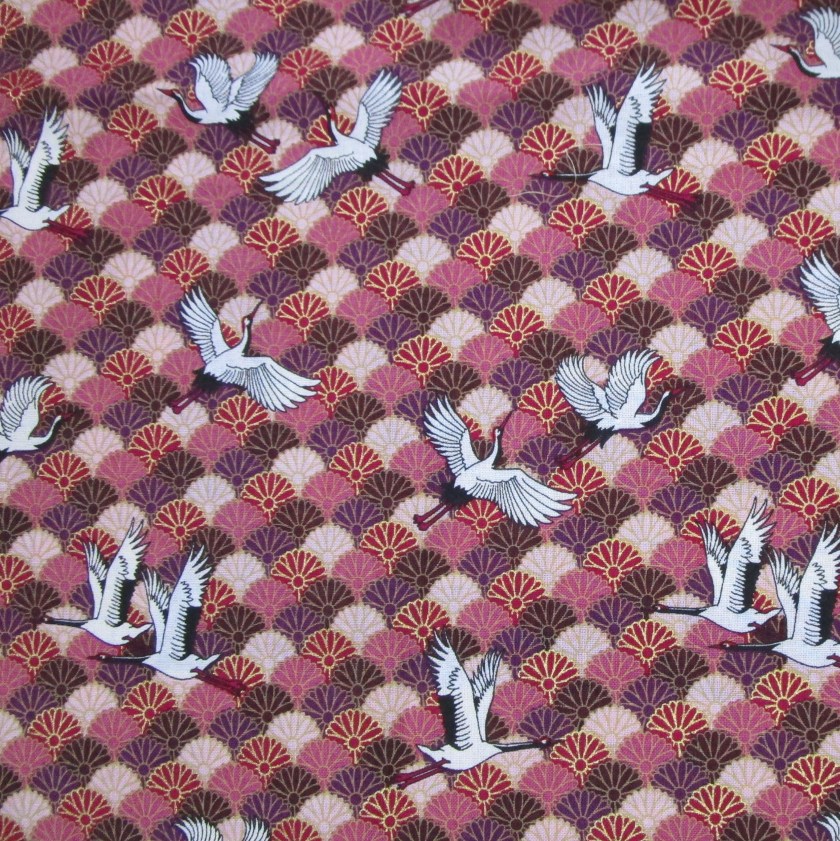
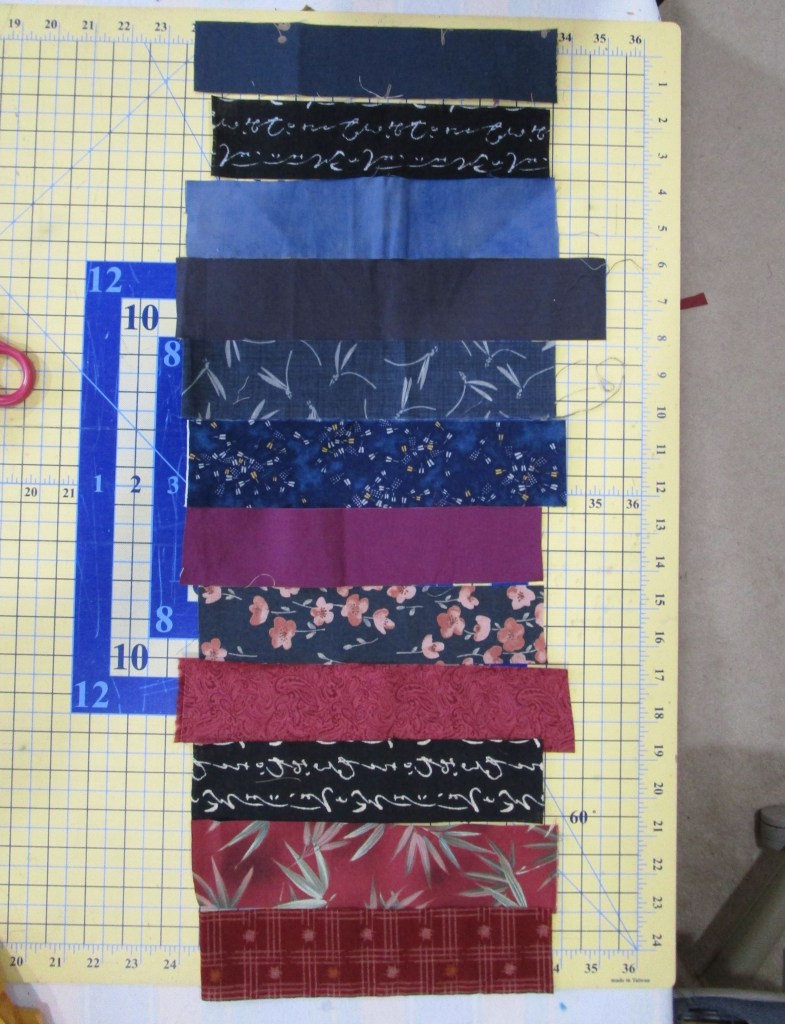
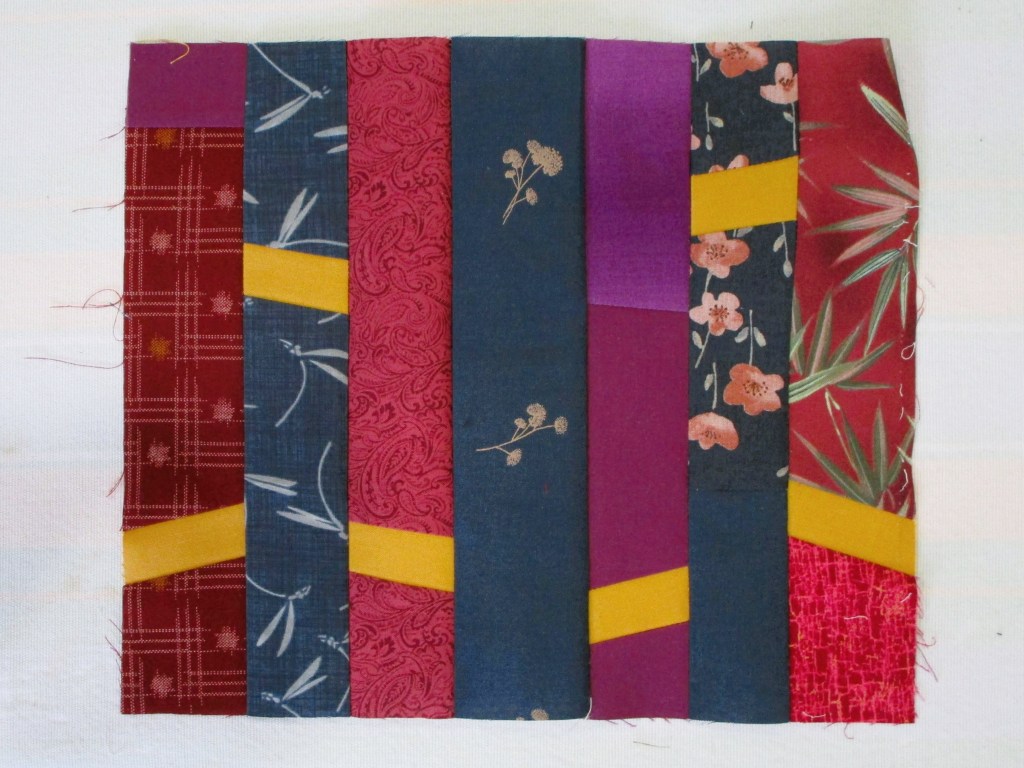
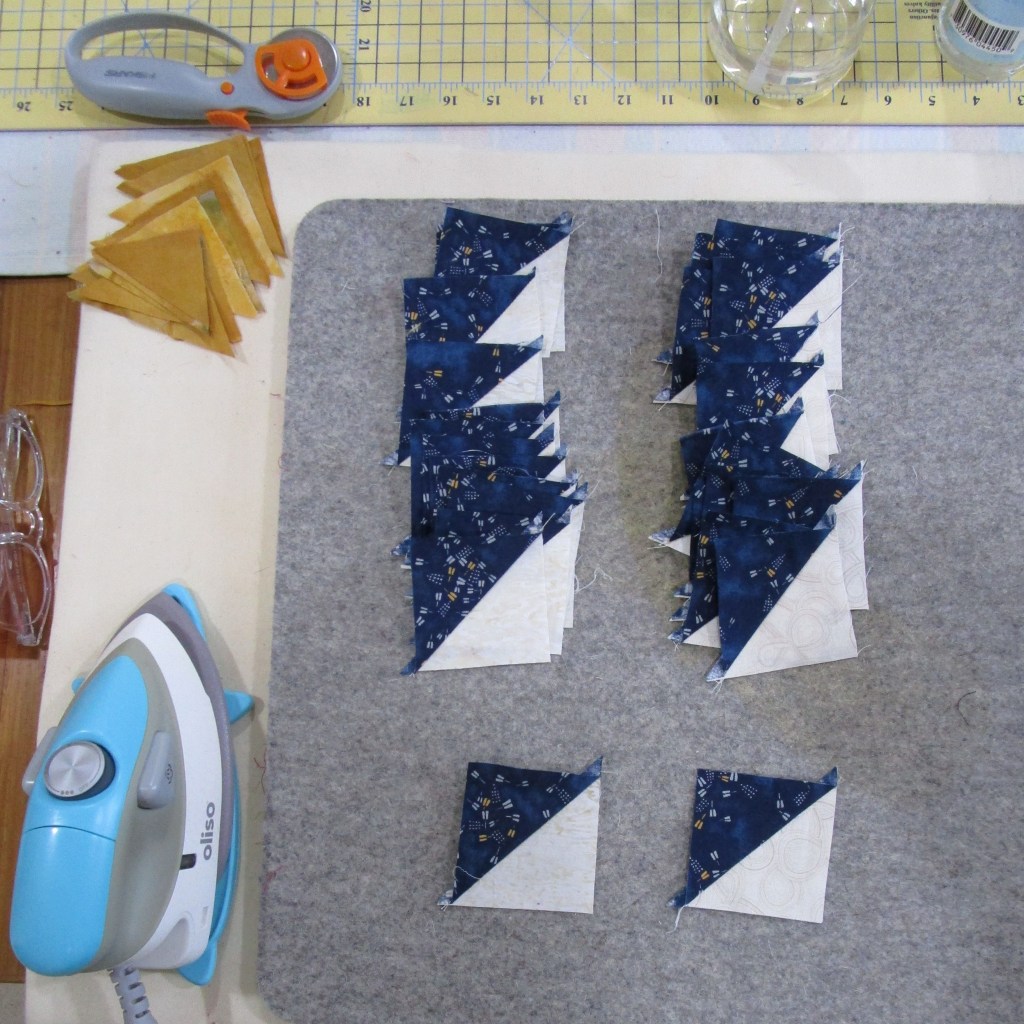
My blocks for Round 4 are not traditional boro. I was inspired by the idea of using scraps. I started by cutting many strips of dark fabrics.

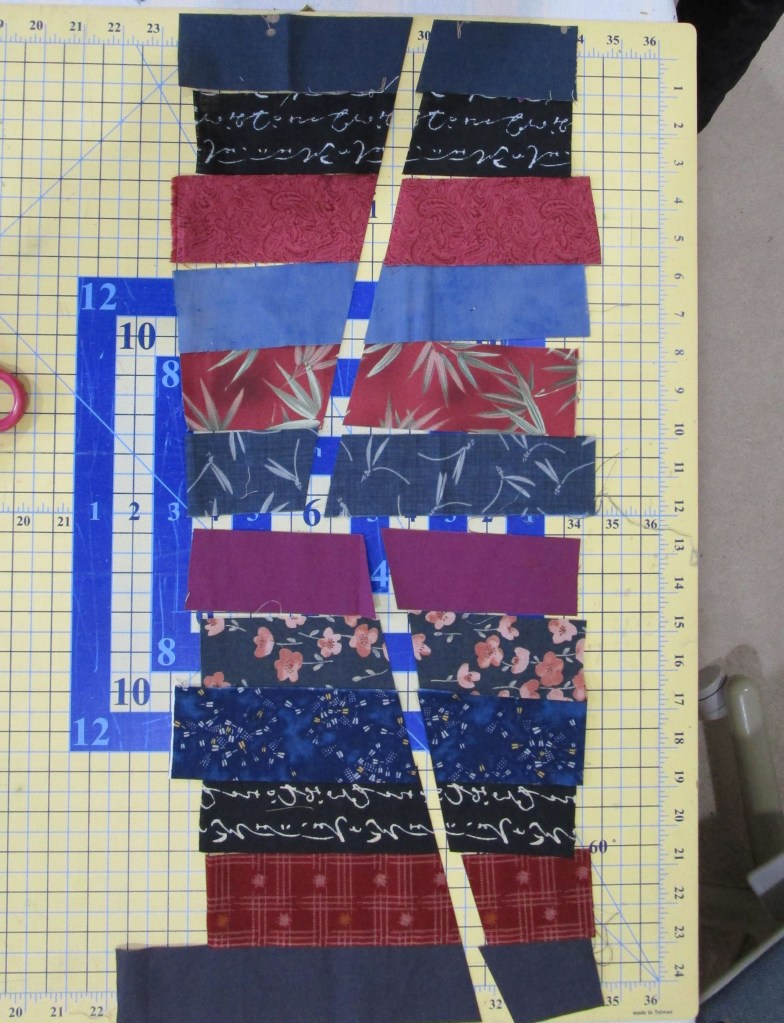
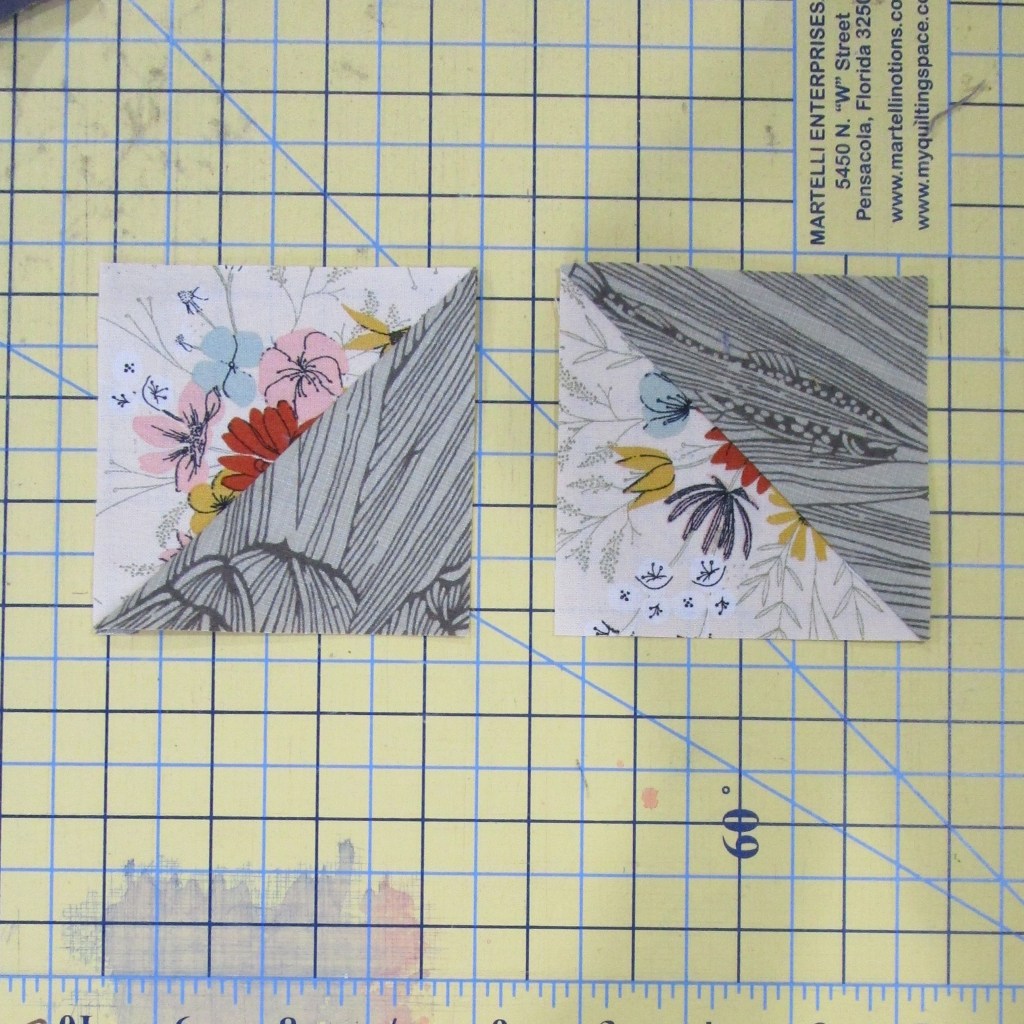
Then, following Wendy’s instructions, I slashed them.

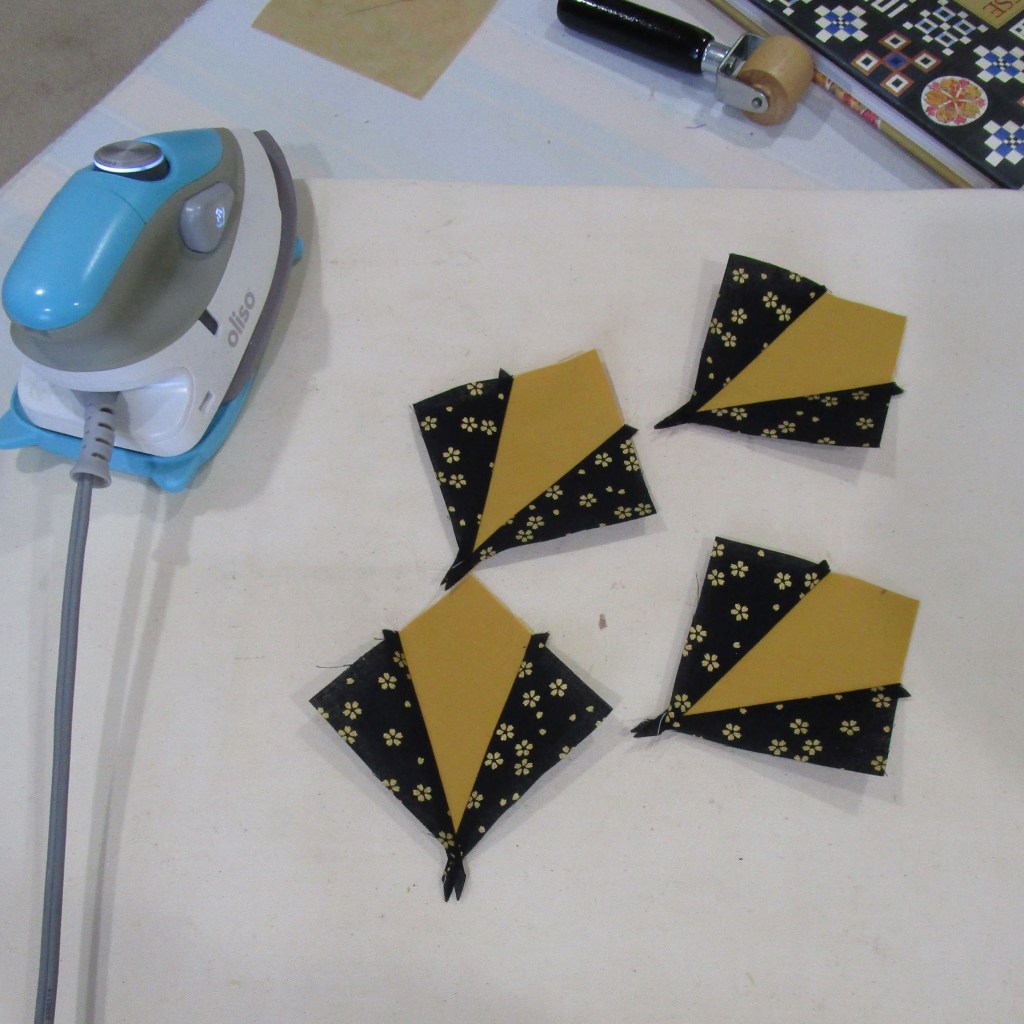
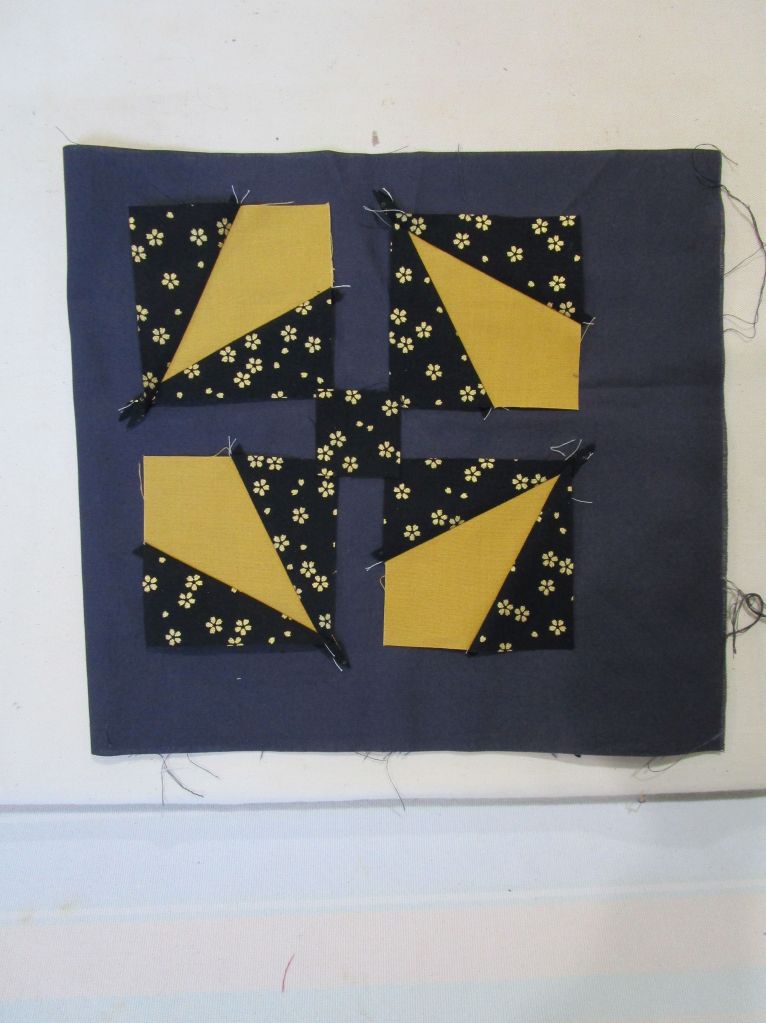
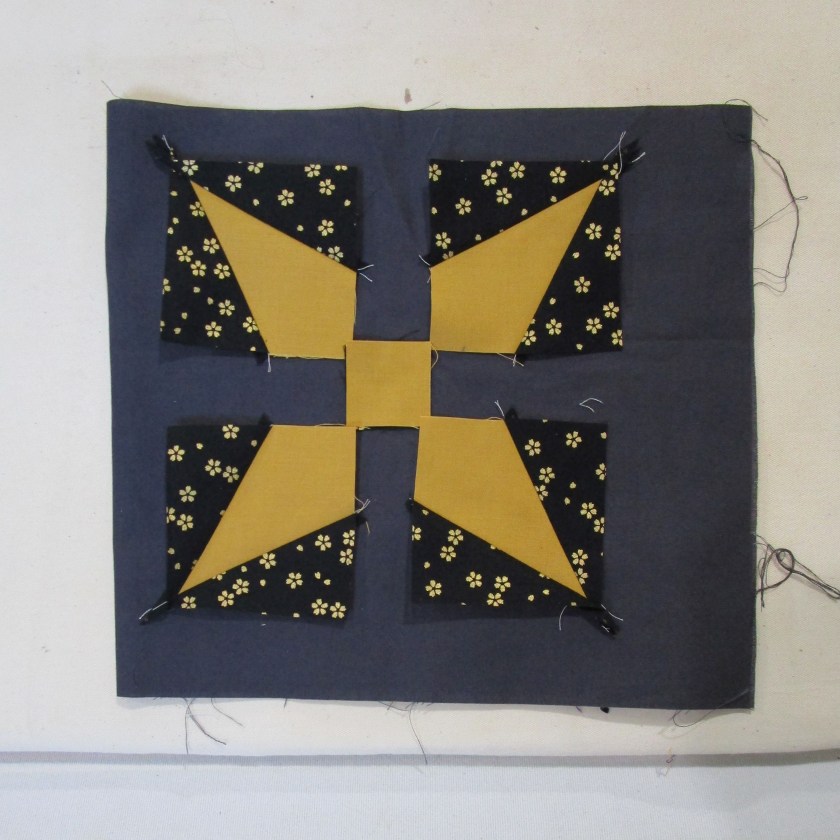
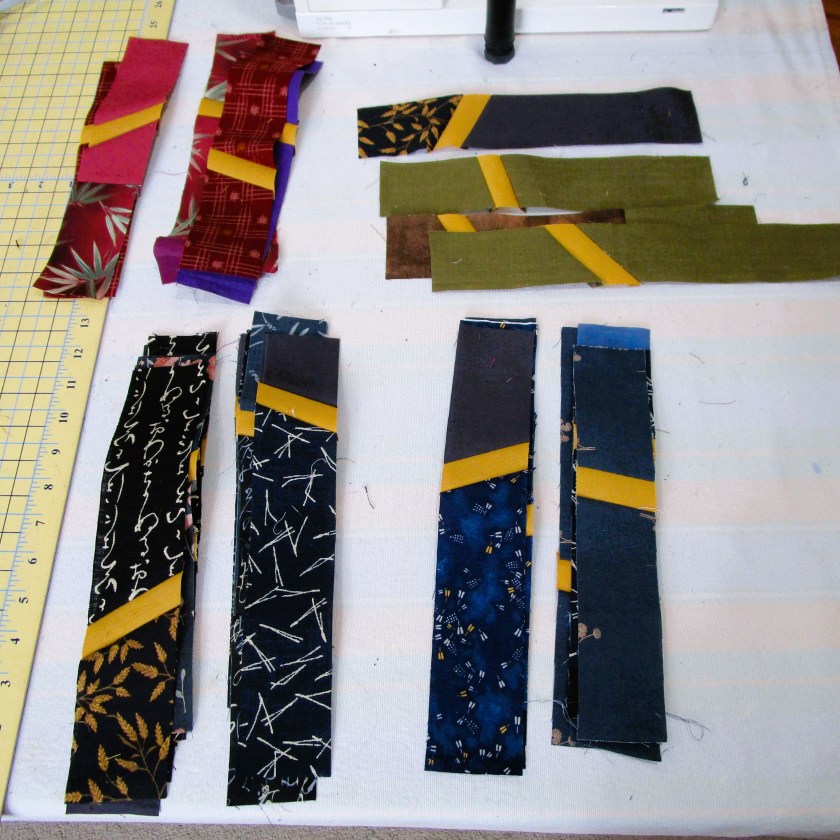
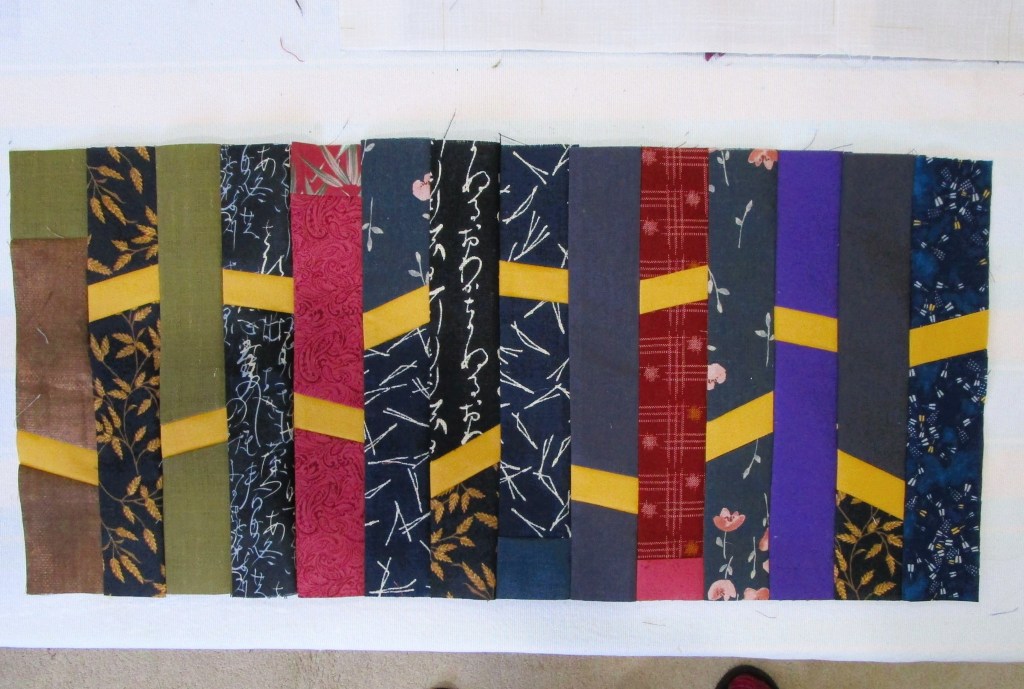
Because I have chosen to use the color gold as a unifying element, I inserted strips of gold fabric, cut at around 1 and 1/4 inch wide. They finish out at 3/4 inch.

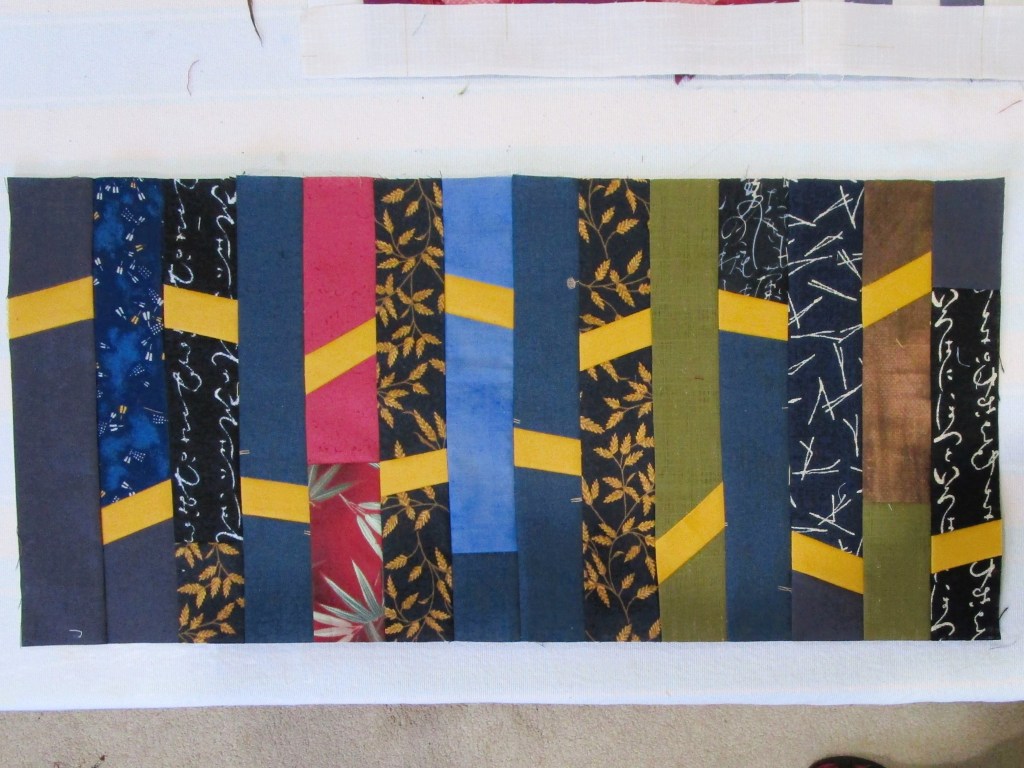
I sorted them into groups by color and direction of the insert. Then I stitched them together in three sections, to become the shoulder area of my kimono.

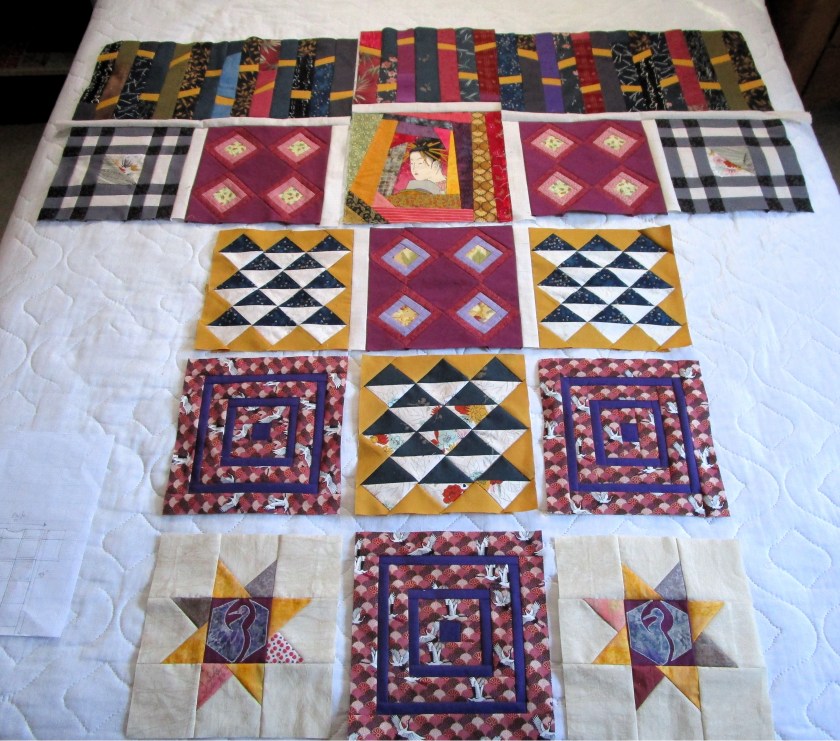
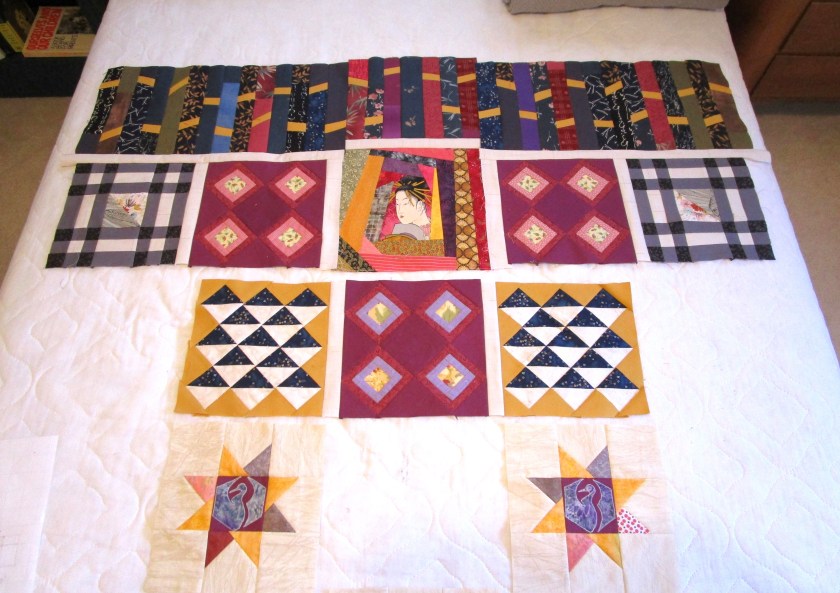
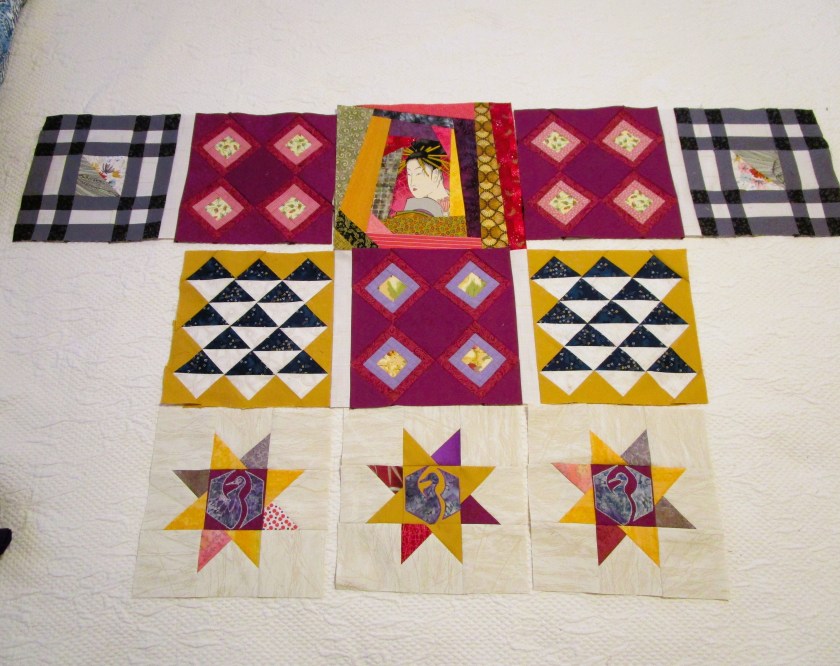
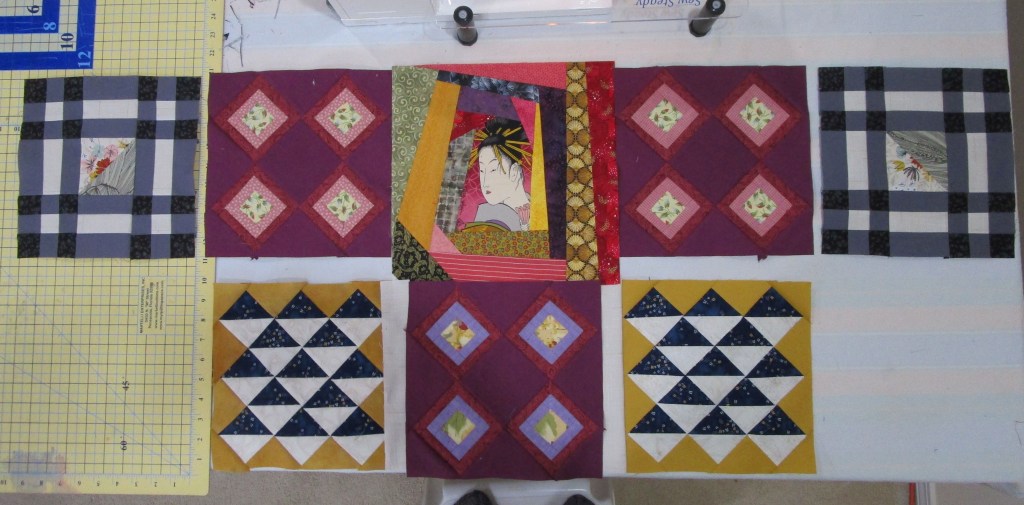
This ten-inch tall section will sit on the shoulder – 1/2 on the back of the garment and 1/2 on the front. Here is my quilt after adding the round four blocks:

Even though the back is not quite done yet, my focus for the next two rounds will be to build the blocks for the kimono’s front.

I hope you are enjoying the quilty fun happening during the Stay at Home Round Robin challenge. To see others who are participating, enter the InLinz link found on Wendy’s Pieceful Thoughts site.

And here is the complete list of our hosts for SAHRR 2025 along with their blog sites.

Posted in quilting, sewing

WIP Wednesday: SAHRR Round Three

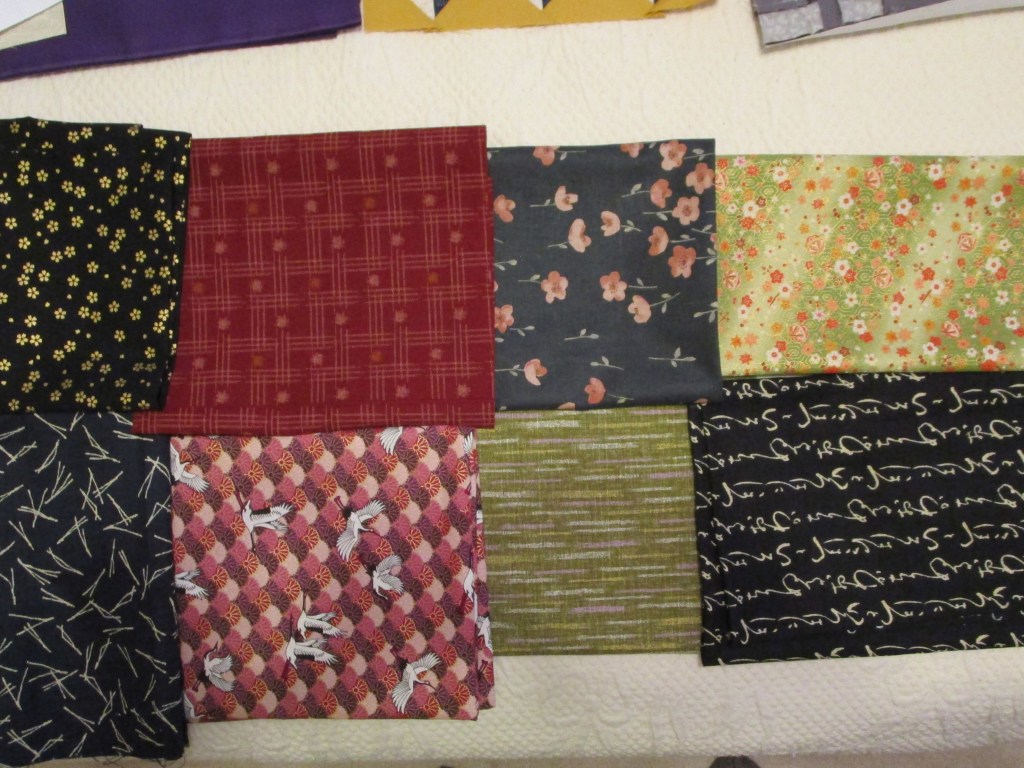
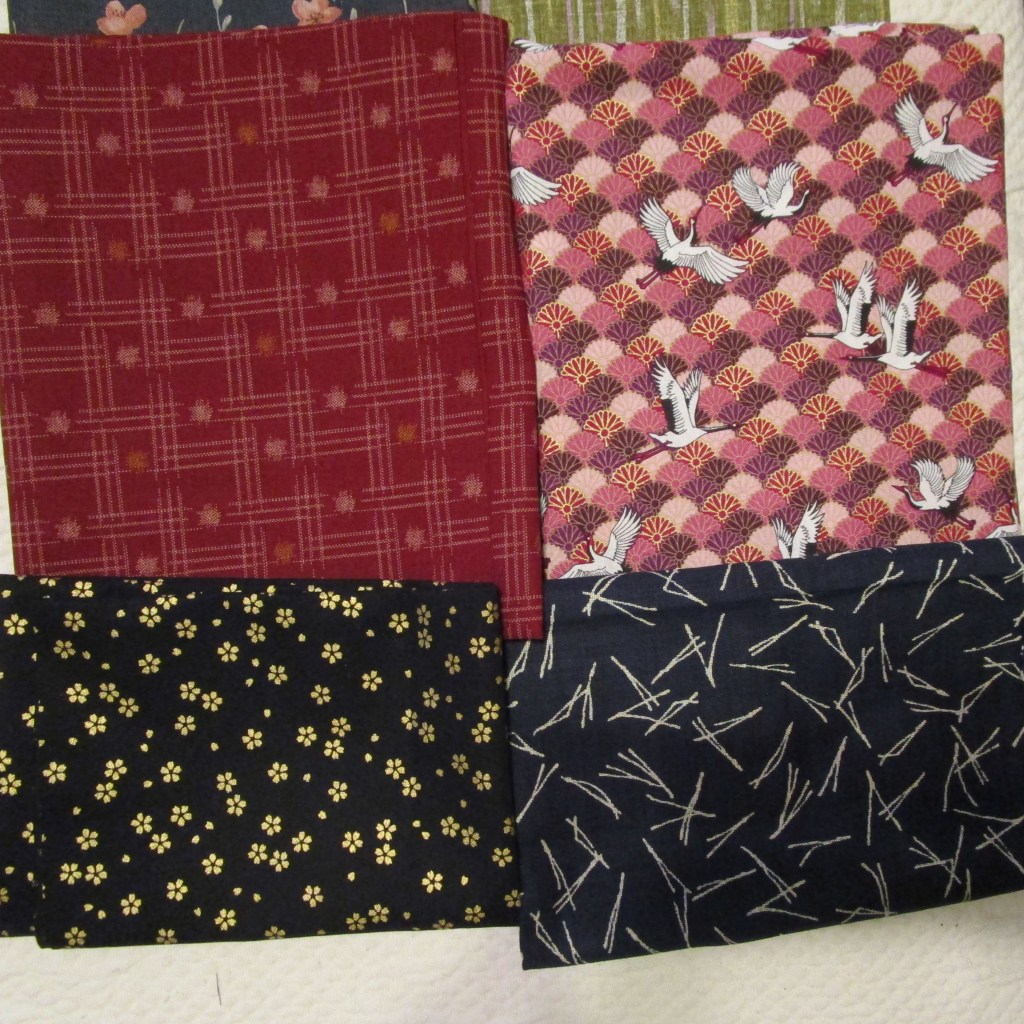
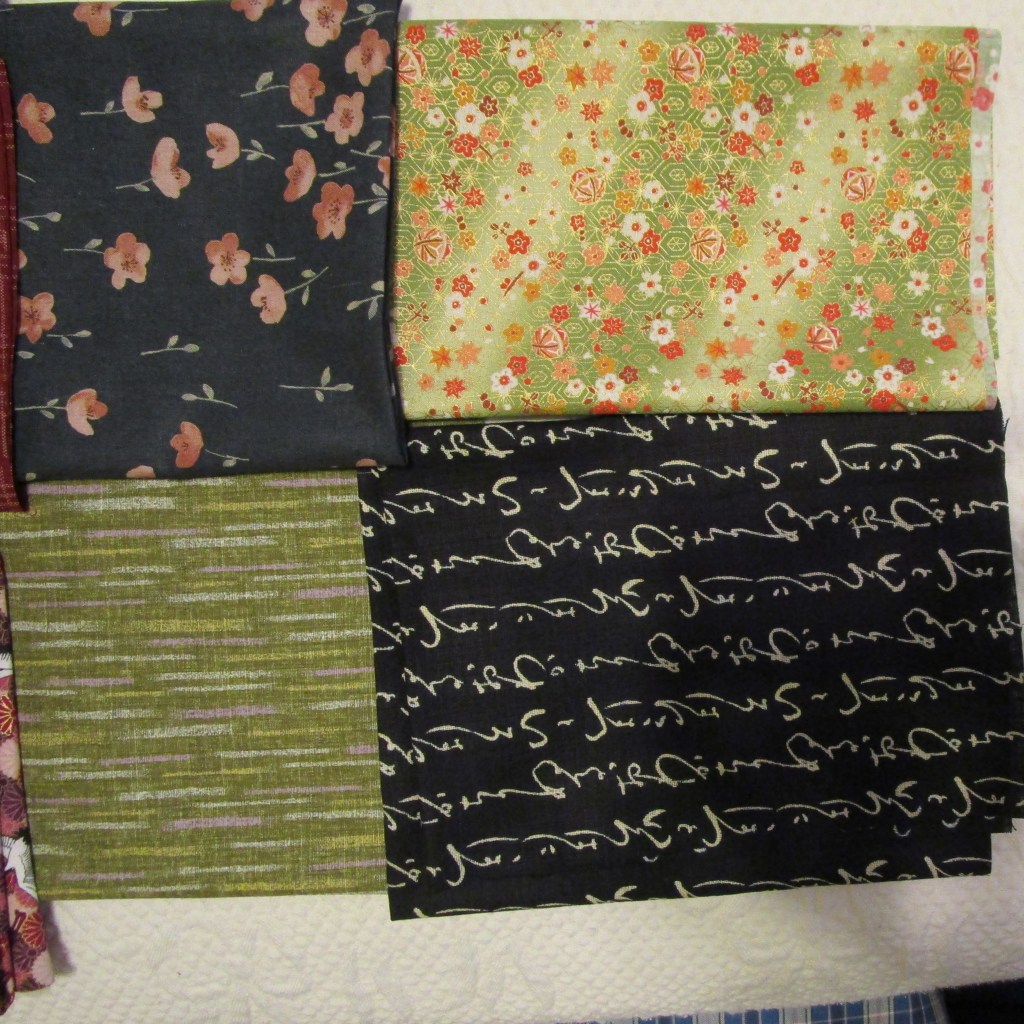
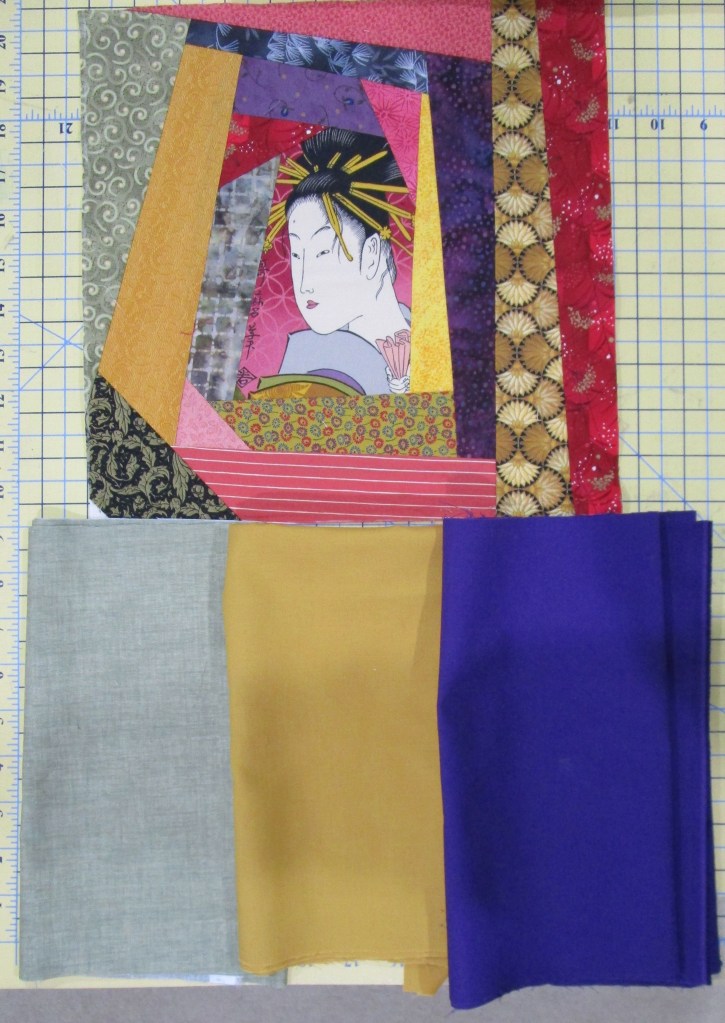
It’s all Japanese quilt blocks all the time around my house these days. First of all, let me show you the fabrics that came yesterday from kimonomomo on Etsy;

They are all types. There’s smooth cotton and homespun, shiny metallics and quiet two-color prints. What I forgot to buy was fabric in light colors. So my completed squares are about to get darker.

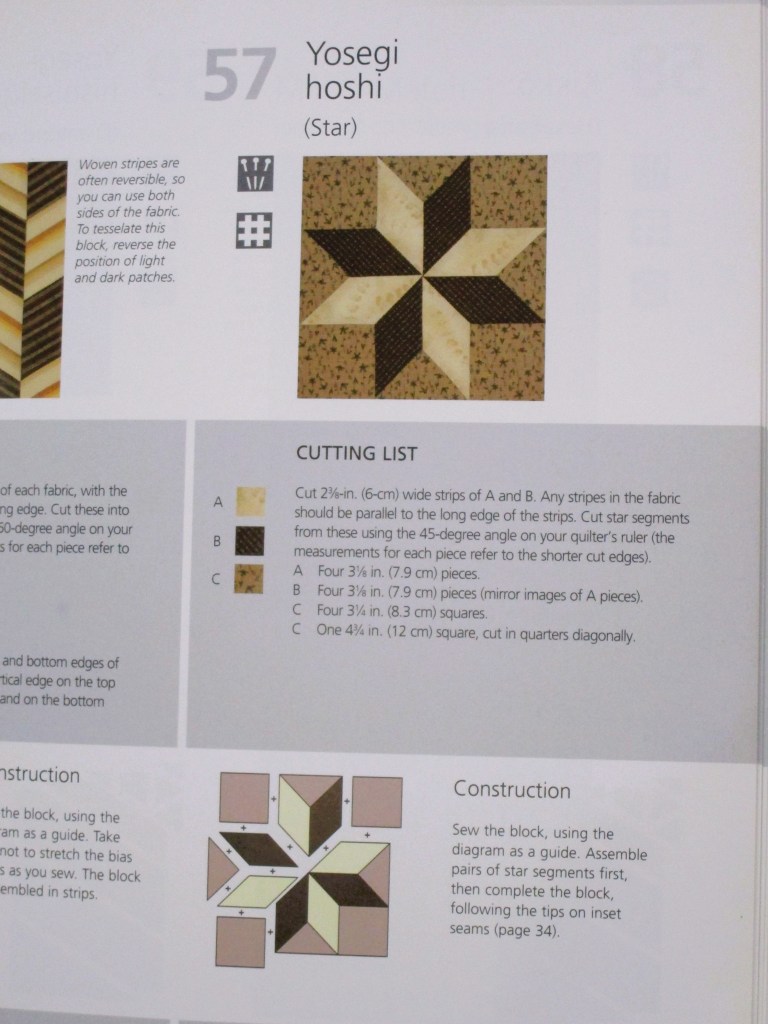
But not this week. Quilting Gail asked us to make star blocks for round 3. I found only one Japanese star block in Susan Briscoe’s book. The Japanese word for star is hoshi.

This is a basic eight point star assembled from diamond shapes. But it is not an easy one. The directions are rated difficult and the technique includes sewing lots of Y-seams. No thank you.

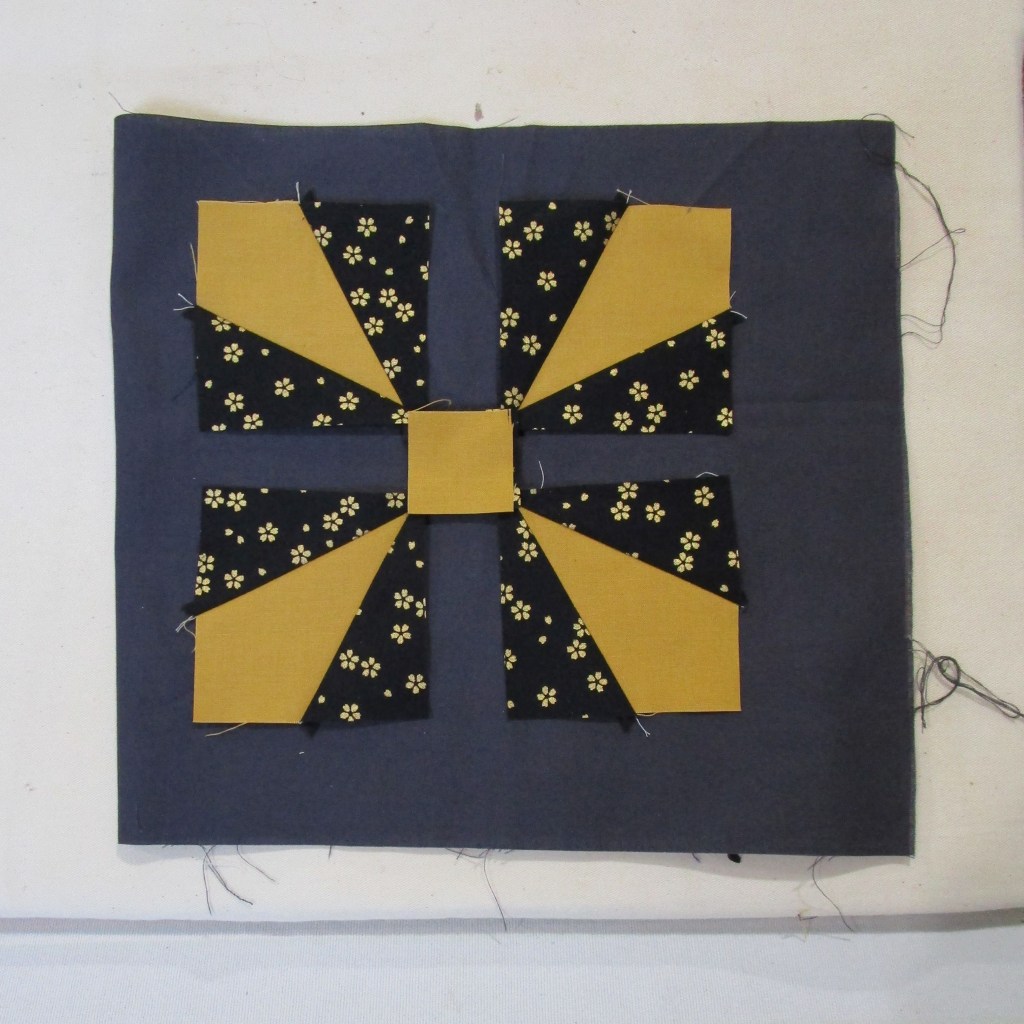
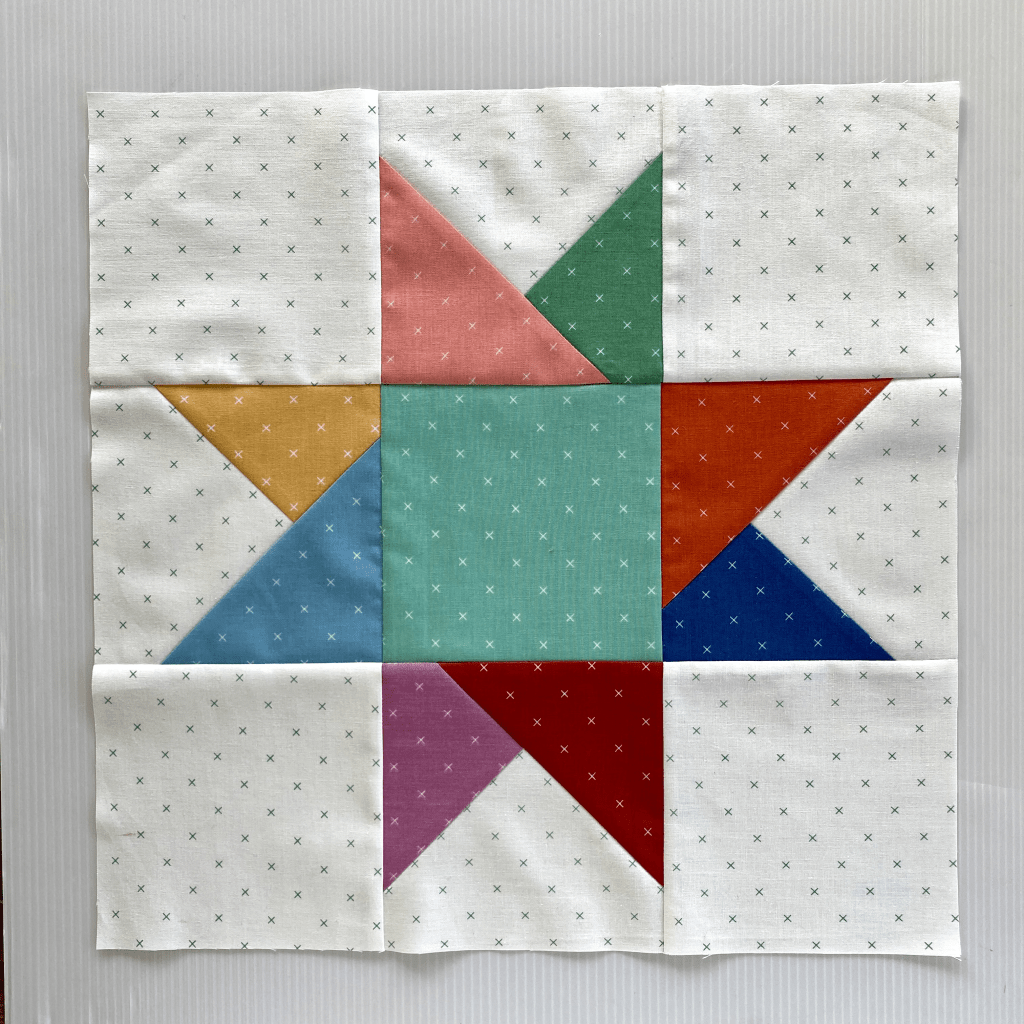
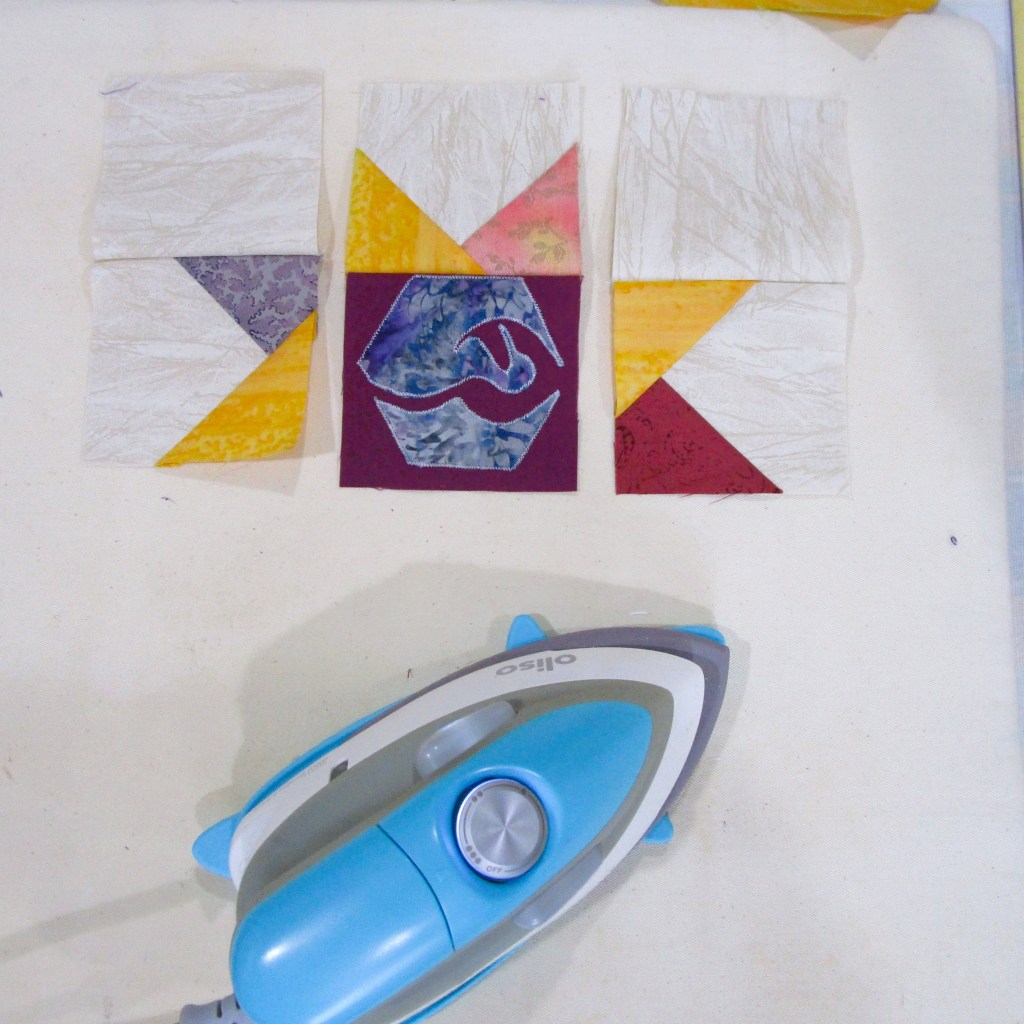
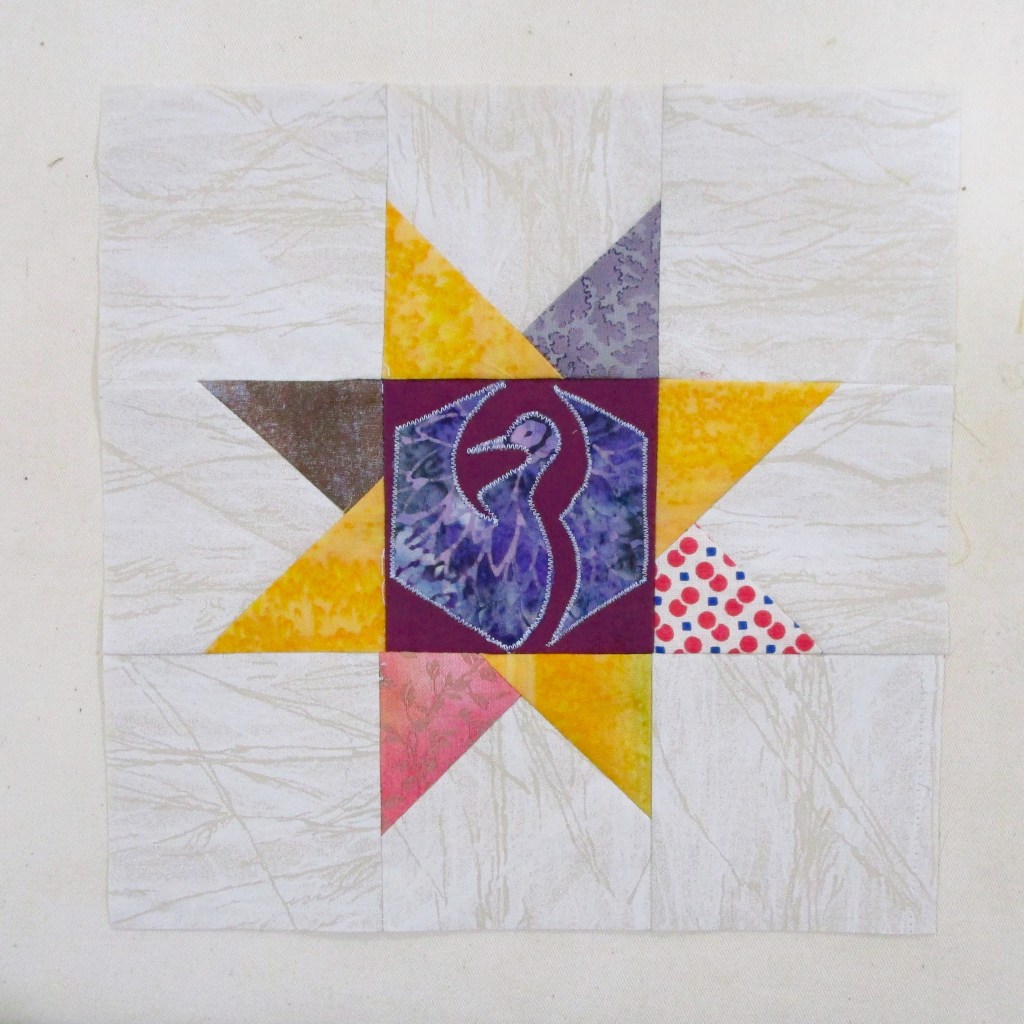
A google search helped me get out of this assignment. I discovered many Japanese quilts that incorporated hoshi blocks in different techniques and styles. So I decided to use this criss-cross star block as described by Anorina on sameliasmum.com

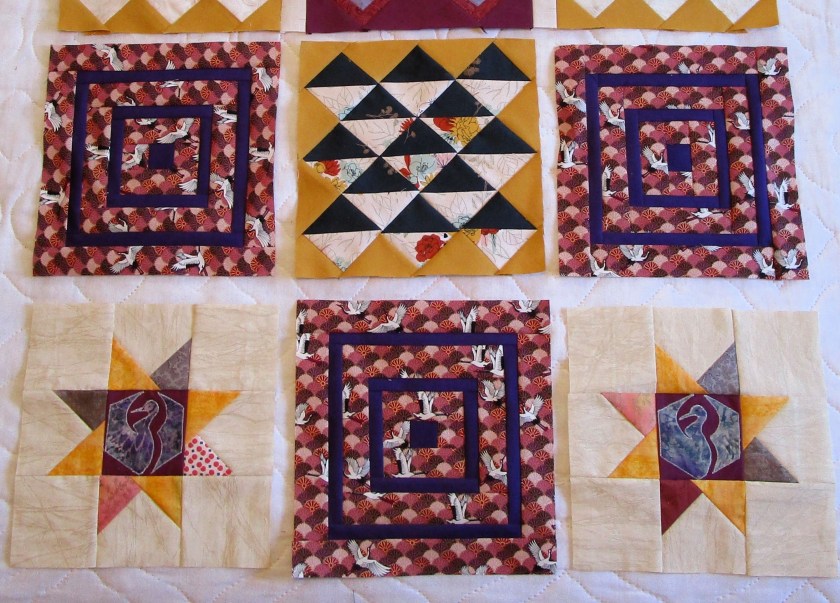
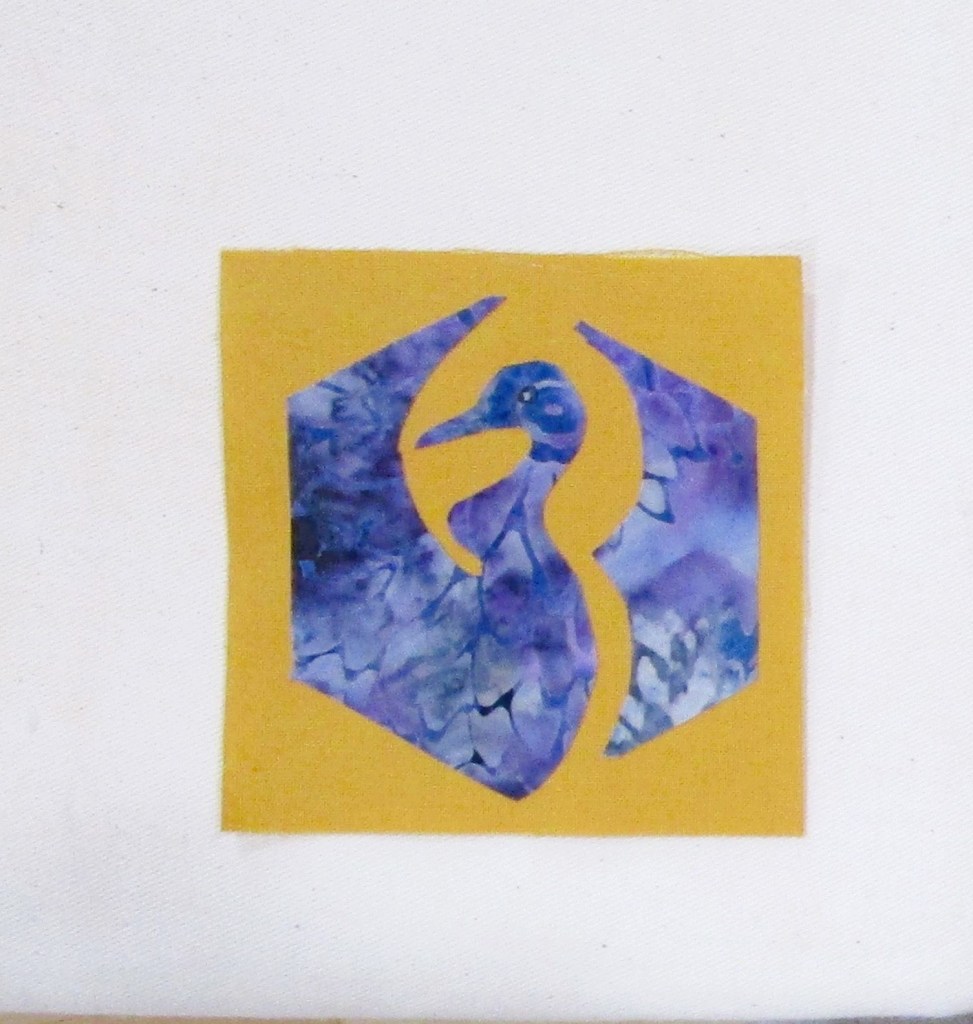
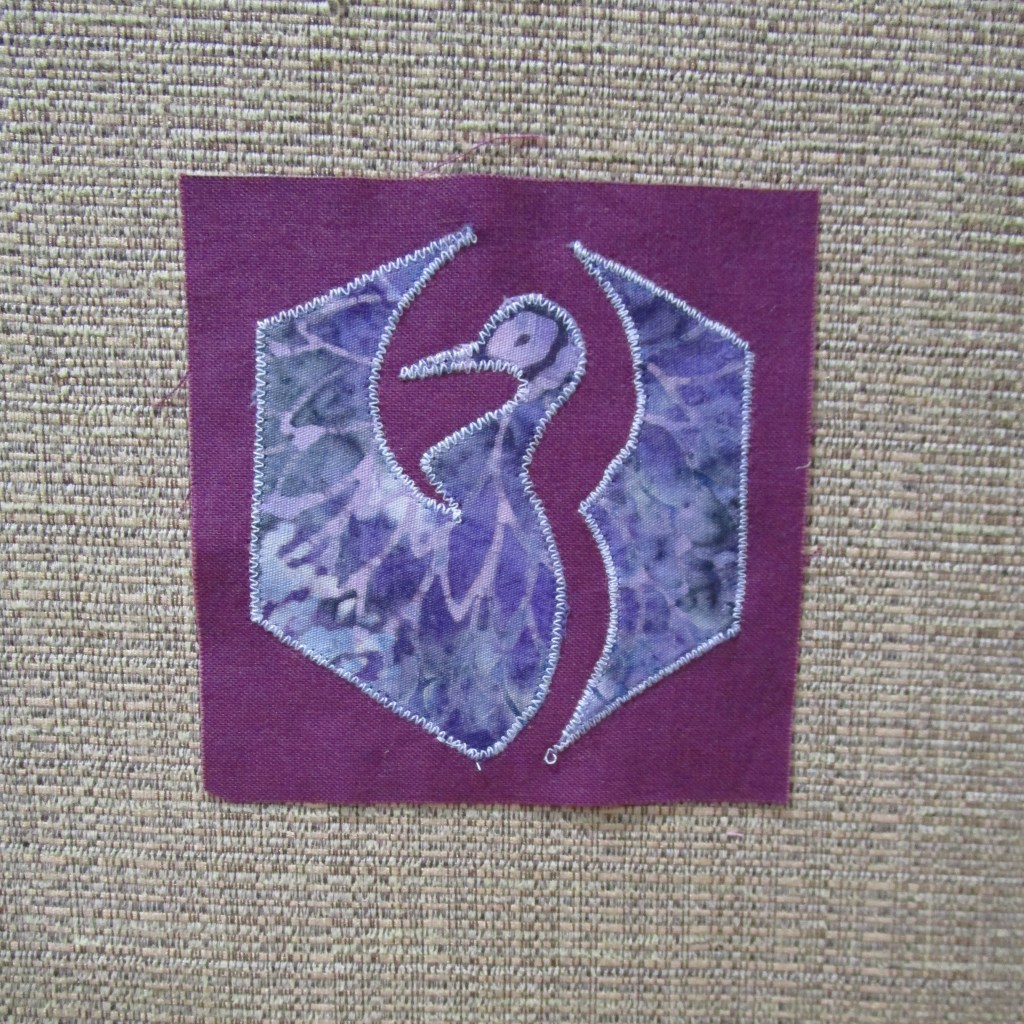
To give the block a little Japanese style, I made the center square with an appliqued crane, which symbolizes longevity for the Japanese. This applique is included in Susan’s pattern book and described as a crest.

I sewed three criss-cross blocks in all. And here is my quilt at the end of round 3.

I will be continuing to stagger the placement of blocks. That means I need to wait for Round 4 to finish this row. Two blocks from Round 4 will replace the outside stars in this row. They will be moved to row 4.

I hope you are enjoying my little adventure in international quilting. Be sure to visit the Linky party. It can be found on Quilting Gail’s site.

Here is the line up of all 2025 SAHRR designers.

See you next week.

Posted in quilting

SAHRR 2025 Round 2: Japanese style quilt

Before I show my work for this round, I want to share a source for Japanese quilting and sewing supplies.

A few years ago, I was interested in learning about sashiko stitching. When it became clear that the necessary supplies and materials for this craft were not available anywhere in my quad-state area, I turn to Etsy and found kimonomomo. Returning to the site this year, I discovered that she carried hundreds of Japanese fabrics which are available in small amounts – fat eights, fat quarters, etc. I chose eight different fabrics which are presently winging their way to me – should arrive on February 3rd. I can’t wait to get my hands on them.

During my preparation of round two, it became very clear that I didn’t have enough fabric to complete the quilt. So in addition to the Japanese fabrics I ordered from Etsy, I bought three cotton solid colors from Hobby Lobby.

Since the color gold is quite prominent in my center paneI, I chose it as a unifying color that would help marry together the different block patterns.

Now on to Round Two: Turning to the Susan Briscoe’s quilt block directory, I discovered two layouts that feature half-square triangles (aka HST.)

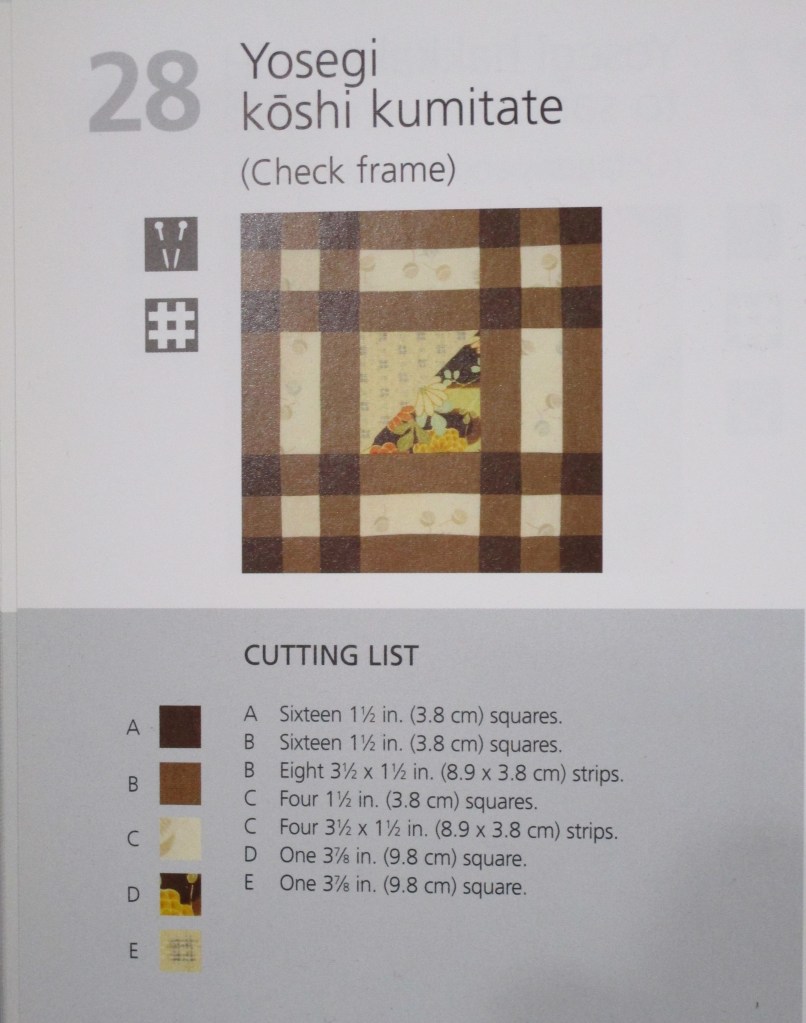
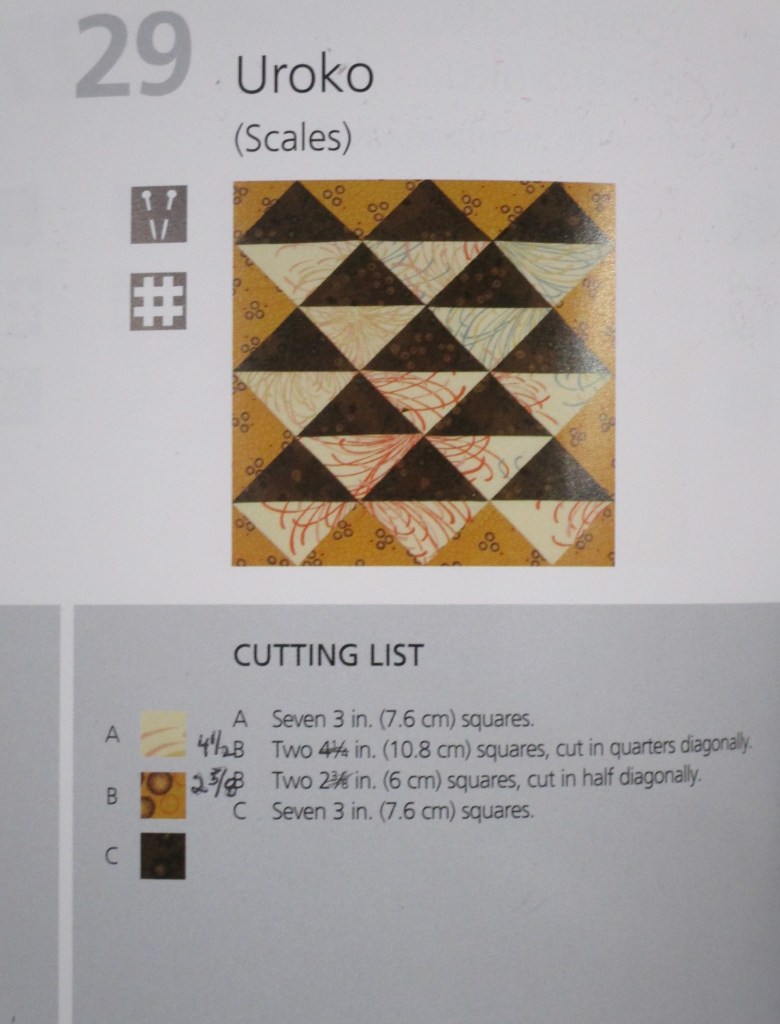
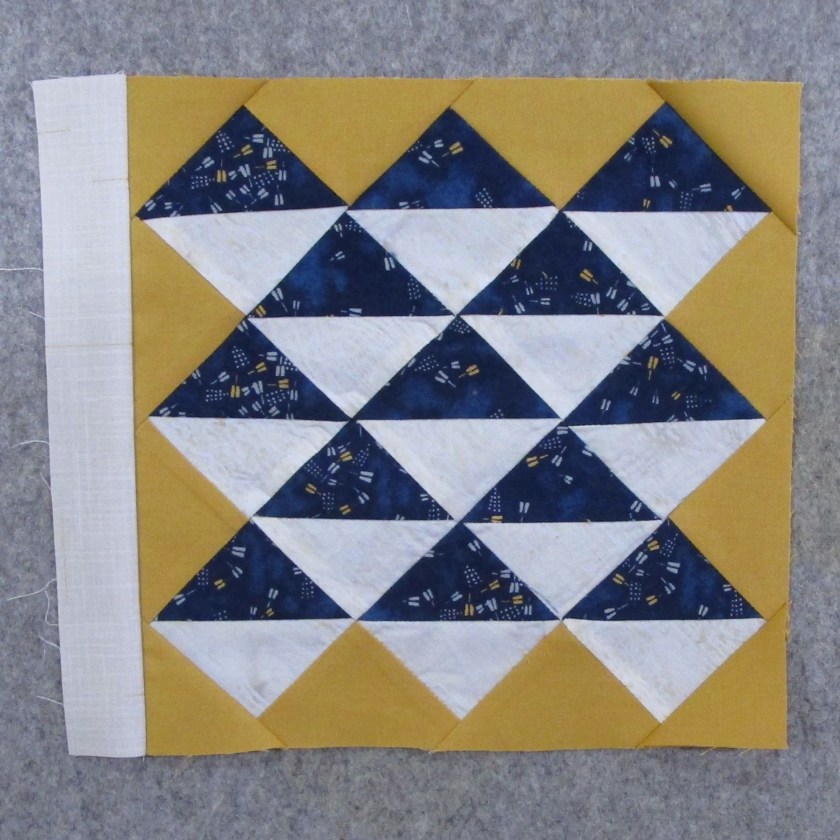
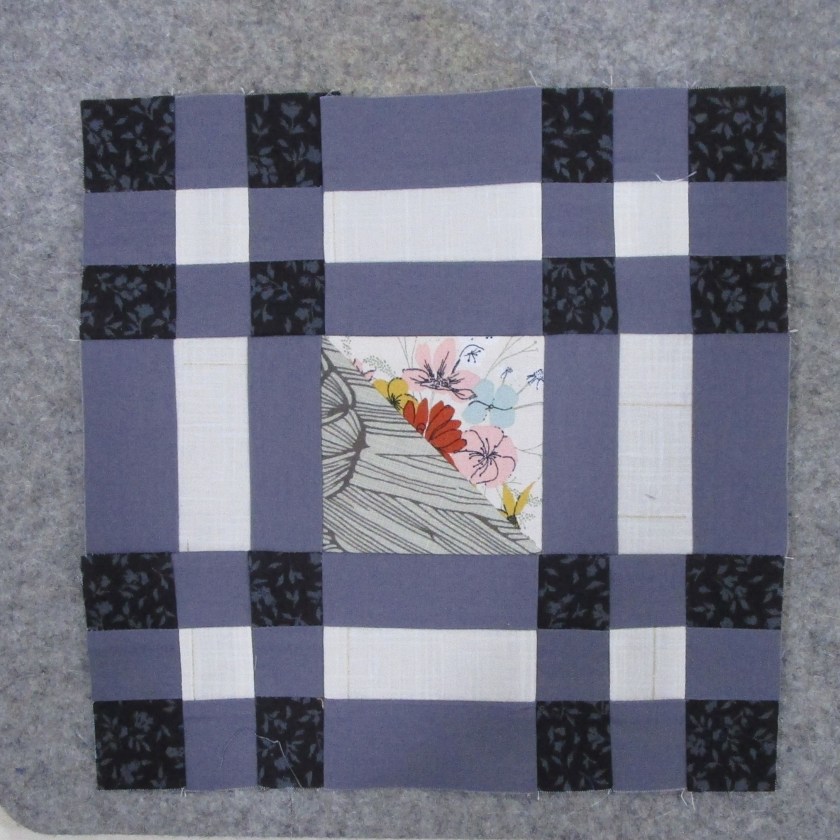
Uroko (scales) is an all-over pattern of the HSTs. Yosegi (check frame) features it as a center square. I decide to make two blocks of each.

Starting with Uroko, I quickly sewed, pressed and trimmed all the little HSTs and then cut out the gold fabric for the setting triangles. Sewing together the first block, it was clearly too small. I removed the gold setting triangles, re-cut each piece 1/4 of an inch larger, and tried again. It measured out perfectly.

Turning to Yosegi, I had much less difficulty. The center HST was edged by four strip pieced squares and cornered by four nine-patch blocks. Easy peasy.

And here is my project at the end of Round Two.

I’m so glad I didn’t start sewing the rows together yet. When I added my newest blocks, it was obvious that I needed to change the layout. Alternating the blocks of Round One with Round Two blocks makes for a more pleasing design, IMHO.

To see the other participants’ round 2 blocks, visit Anja @  Anja Quilts

And here is the line-up for the rest of Stay at Home Round Robin 2025

Posted in quilting

SAHRR 2025 Border 1 Japanese style

I wanted to write a bit about the traits of Japanese style quilting compared to Western style quilting, but today’s schedule is a bit tight and the posting deadline is here. I’ll just show a few pictures. Or maybe I’ll use bullet points:

Types of fabric: plain cotton, woven patterns, large and small scale dyed patterns, stencil dyed cottons, silks and wool.

I tried to choose colors that were present in the center block.

From my mother’s stash
From my own stash
A few fabrics purchased from Hobby Lobby

Block categories: patchwork, Sashiko, Kamon (traditional family crests worked as applique or sashiko) and Takarazukushi (good fortune symbols worked in applique.)

Now to the clue: Kathleen suggested King’s Crown pattern for this round, or choose a block that begins with a K, or that begins with the first letter of my name, L. I immediately thought of Log Cabin. But turning to my Japanese block design book, I saw no examples that looked like a log cabin. In studying the block names, I realized that the “L” sound is absent from the Japanese language! Lots of blocks start with a K. I settled on this pattern – Kumiko – which translates to Lattice.

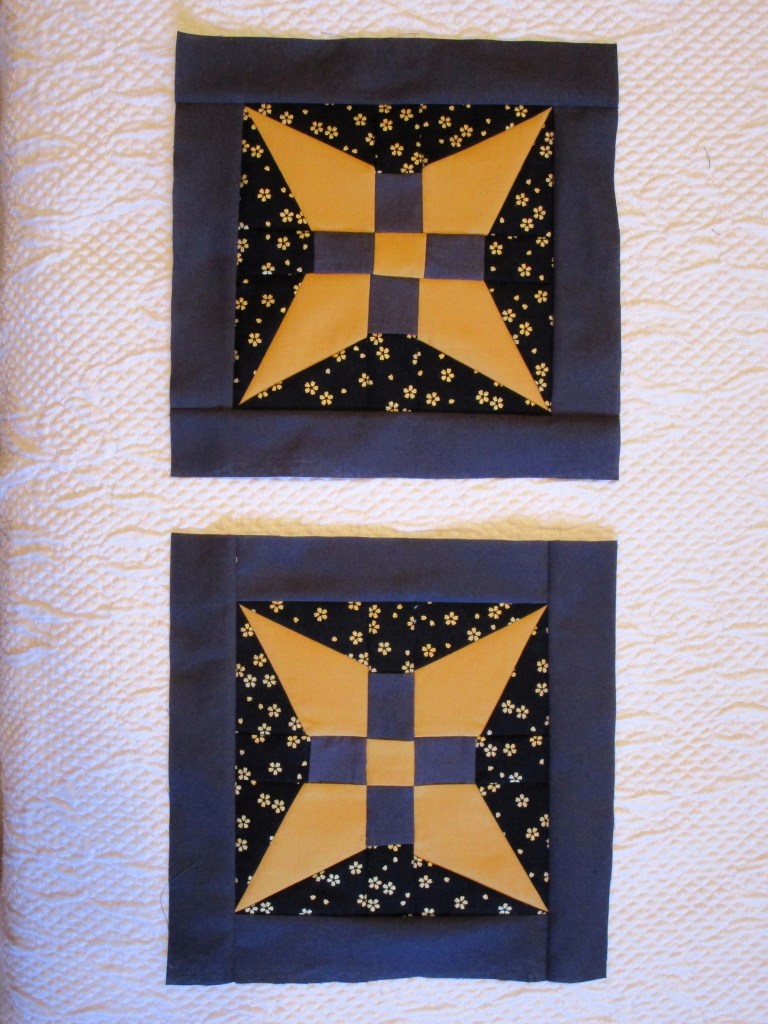
And its construction begins with making four strip-pieced squares built around a center square. Hm, that resembles the beginning of a log cabin.

And here is my first block for Border One.

I ended up making three blocks, which I plan to place just below the center block row.

And so the first round is done, and my post written before the Linky party closes.

I see that my chosen path will hold much challenge if I stick to the plan.

If you want to follow along with Stay at Home Round Robin, here are the hosts and the weekly schedule. Check out their posts!

Posted in hand embroidery, painting, quilting

Friday Finish: Here Be Dragons

After eighteen months in process, my multi-panel quilt that explores the dragonfly is finally finished. The painting and the assembly of the quilt took place in 2023. Then it languished while I fiddled around with hand embroidery. Finally, I made the commitment in December 2024 to get this WIP done. It took an opportunity to display it at an exhibition to set me in motion.

I would be remiss if I didn’t acknowledge the role Bill’s photographs had in inspiring me. Here is a gallery of some of his dragonfly images.

I also did research into the creature, to better understand what I was seeing. I was always puzzled about the legs. In flight, they are not visible. When the insect is perched, one can see either one, two or all three pair of legs. Why is that? I learned that the legs are swiveled back and held flat against the body, just like an airplane’s landing gear. The dragonfly catches its prey in flight, grabbing hold with its legs. When resting, the legs have no function. Dragonflies cannot use their legs to walk. That’s why they seem so motionless when perched.

Anyway, the quilt is finished, except for the label and the hanging wire. It will go on display February 6, along with my Badlands quilt, at Prairie Moon Exhibition, The Center, Bartlesville, OK.