Posted in recycling, sewing

Friday Finish: Sewing

While tidying my workspace last week, I noticed all the shirt pieces I had left over from making the Howard Wabi-Sabi quilt. Since I had used only the backs, the leftovers included sleeves, fronts and collars. It occurred to me that there is a potential fiber object buried inside each one of them.
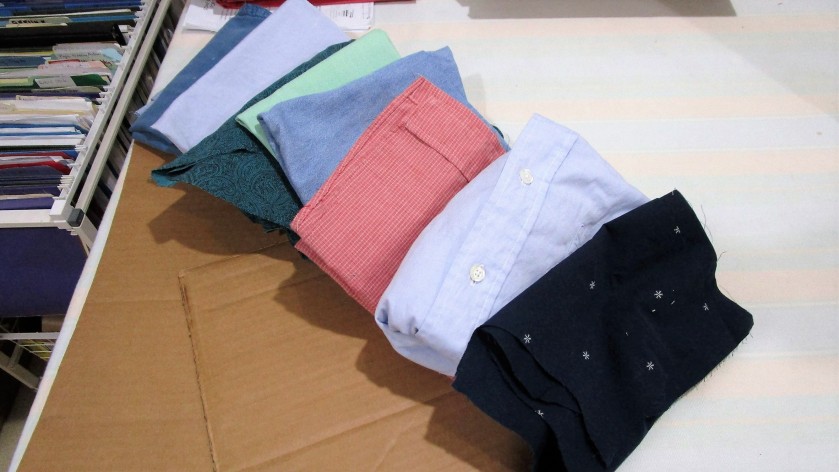
Naturally, I turned to U-Tube, to see what others have made from discarded men’s shirts. Not surprisingly, there were many, many projects. I wanted to make an apron, but I also spotted a cute little girl’s dress.

That idea I will save for another day. For today I am focusing on this dark navy all cotton shirt front.
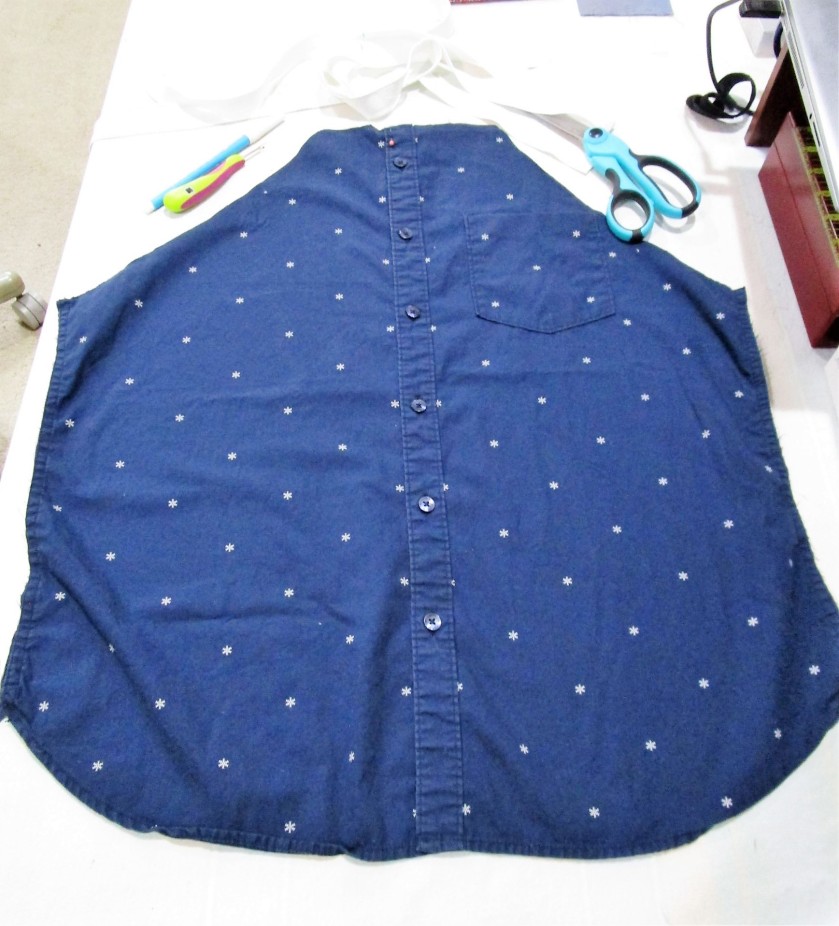
I also happened to have a whole spool of 1-inch white twill tape which will work very well for the neck strap and the ties.

First I removed the breast pocket. This will be jazzed up a bit to add some fun color to my apron. Since the shirt fabric featured a little star motif, (okay, it’s really a snowflake, but go with me on this one) I decided to make a sun using yellow fabric and fusible interfacing. In fact, I happened to have saved some suitable yellow fabric that already had fusing attached to its back. I cut this into the shape of a corona and fused it to the pocket.
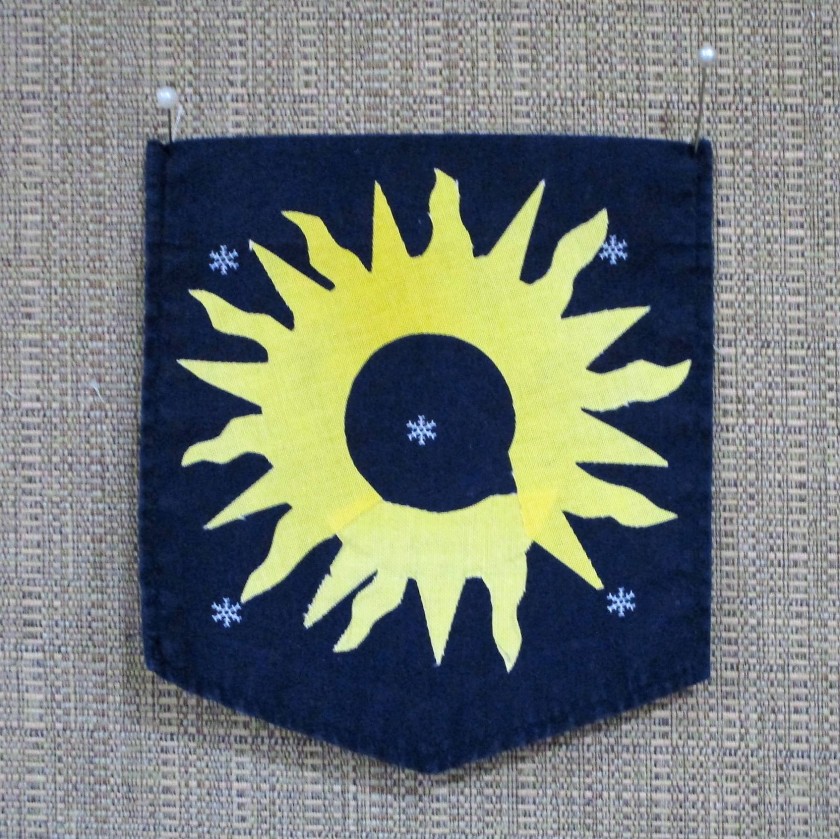
Next I traced a circle onto white printed fabric, pressed fusing to its back, cut out the circle and pressed it over the yellow corona.
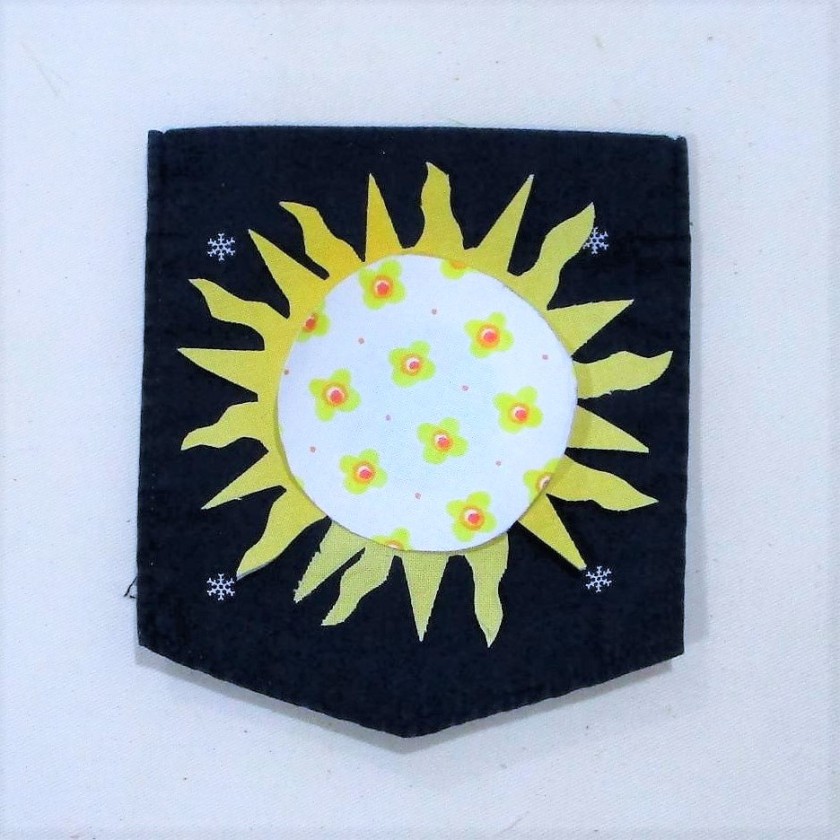
Sun Shine!

Getting back to the shirt, I trimmed the upper edge into the shape of an apron front and sewed the button opening shut. Next, I sewed a piece of the twill tape to the neck edge and folded it over the raw edge, This made for a sturdy facing. With the rest of the twill tape, I found its center, measured down each leg to reserve a big enough neck loop and marked where to start sewing the side edges. These were sewed down in the same manner as the neck facing.

After zig-zag stitching the apron string ends, I re-attached the pocket, and was done!
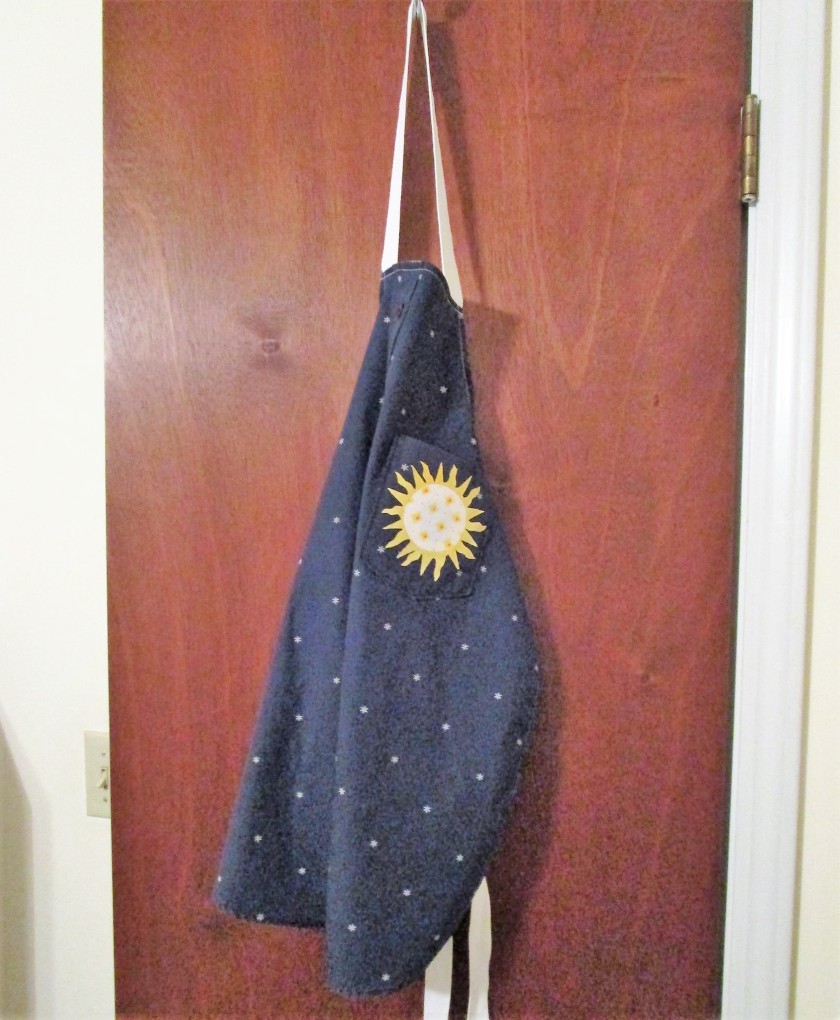
POOR QUALITY LIGHT ON THIS PHOTO – SORRY

The apron fits me just fine, but it will work also on shorter persons.

This fun project cost me a few dollars and only an hour of time. With several more cut-up shirts hanging around, I can easily spend a little more time and a few more dollars to make unique, personalized gifts for the artists and cooks in my life.

Posted in collage, quilting

My Current Art Quilt Project

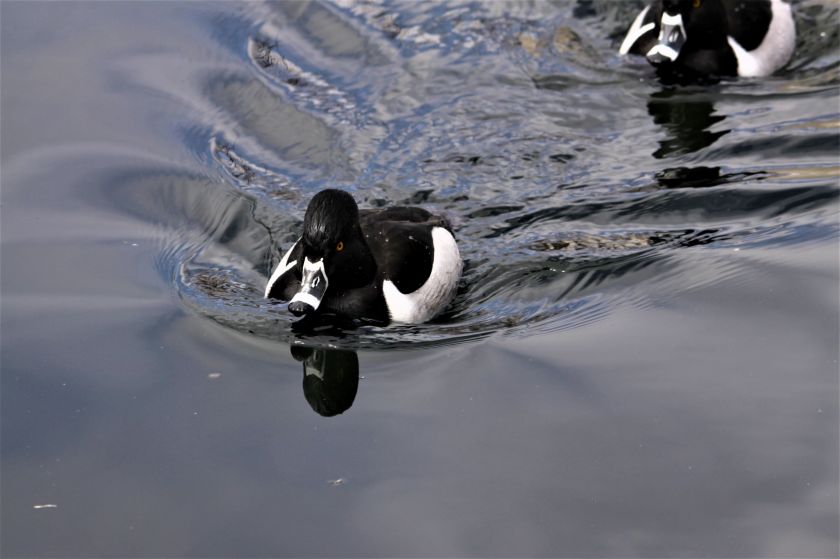
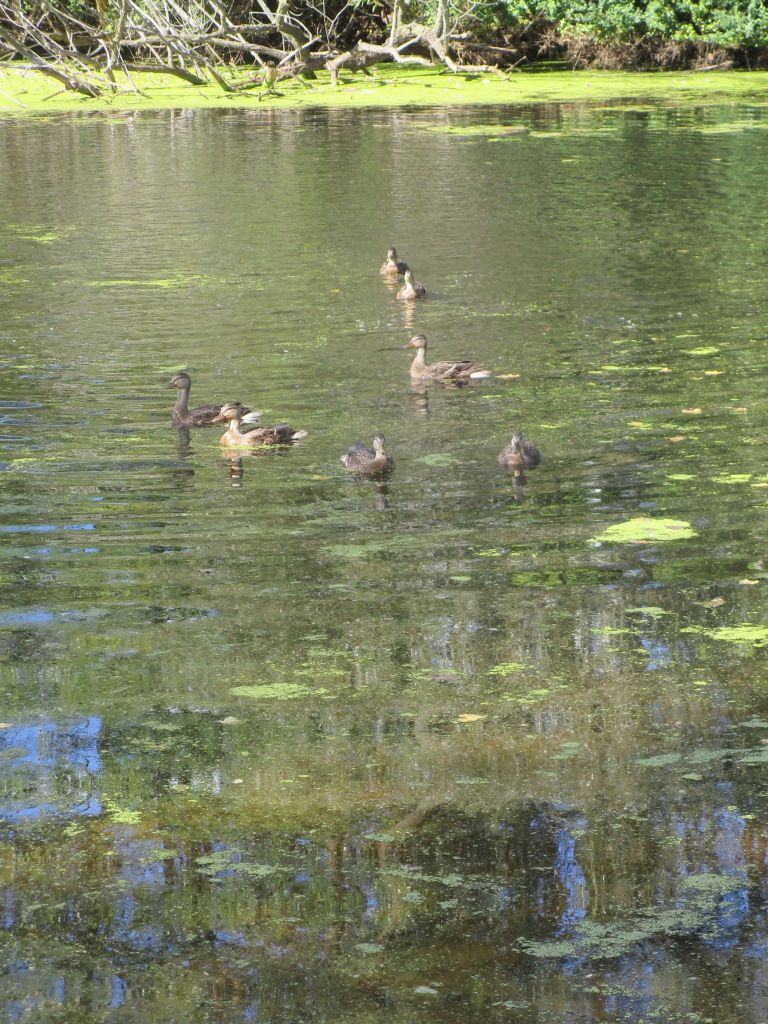
For the past couple of weeks I have been working on a new project. It’s inspired by this photo, which I captured in September at a nature reserve in Madison WI.

Mallards at Cherokee Marsh

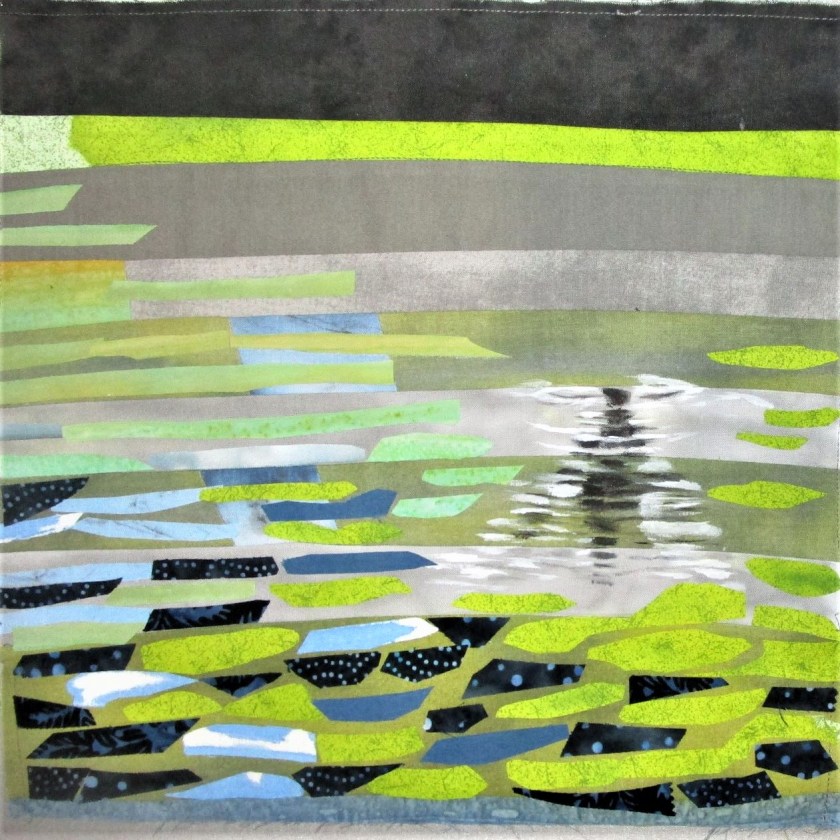
I didn’t have any big expectations for this quick snap of a group of mallard ducks. But when I looked at it on my computer, I was captivated by the foreground – a mish-mash of colorful and spotted reflections. How might I create this look in fabric?

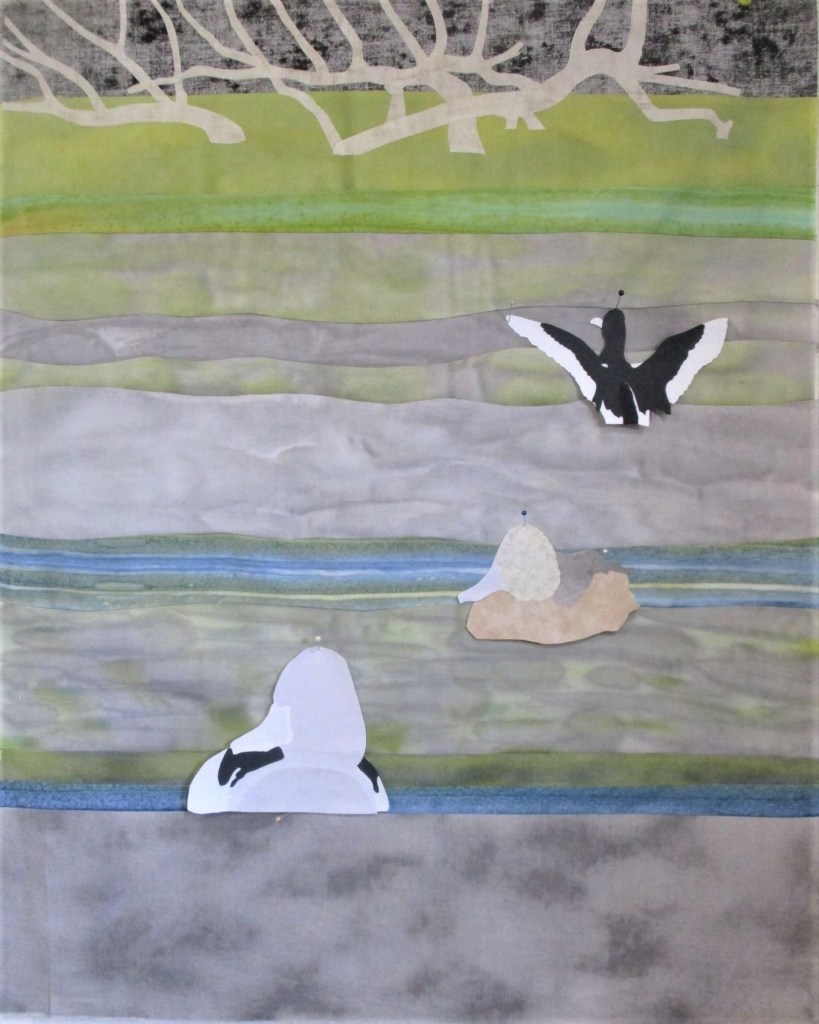
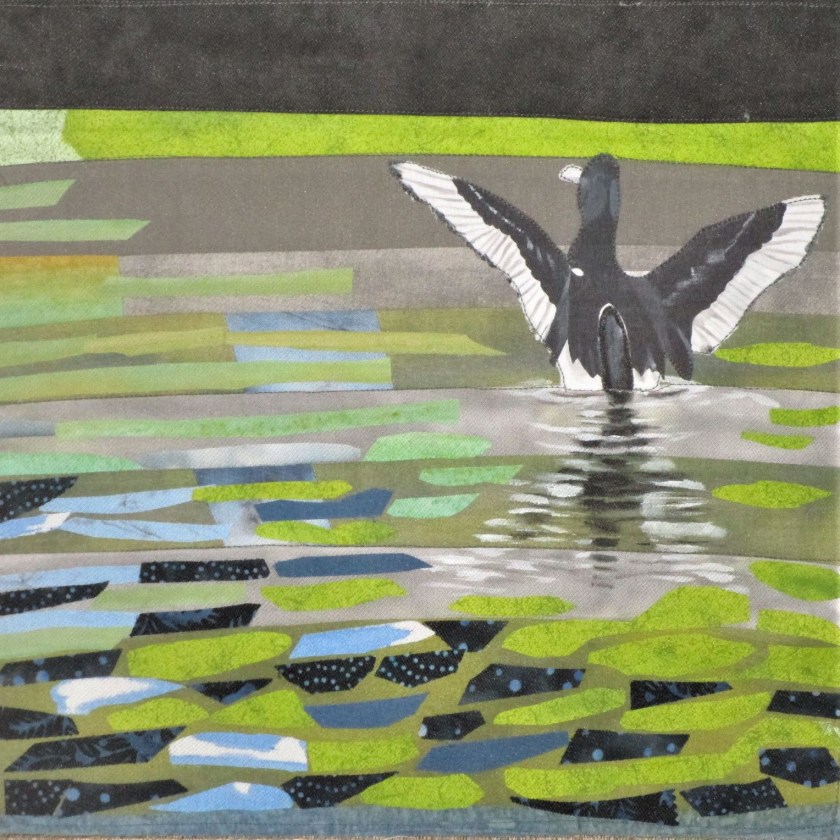
For this project I chose to use ring-necked ducks instead of mallards.

Male Ring-necked Ducks.

I love the black and white coloration and the crispness of its markings. Since this species of duck is also native to Wisconsin, I decided that it was a fair exchange.

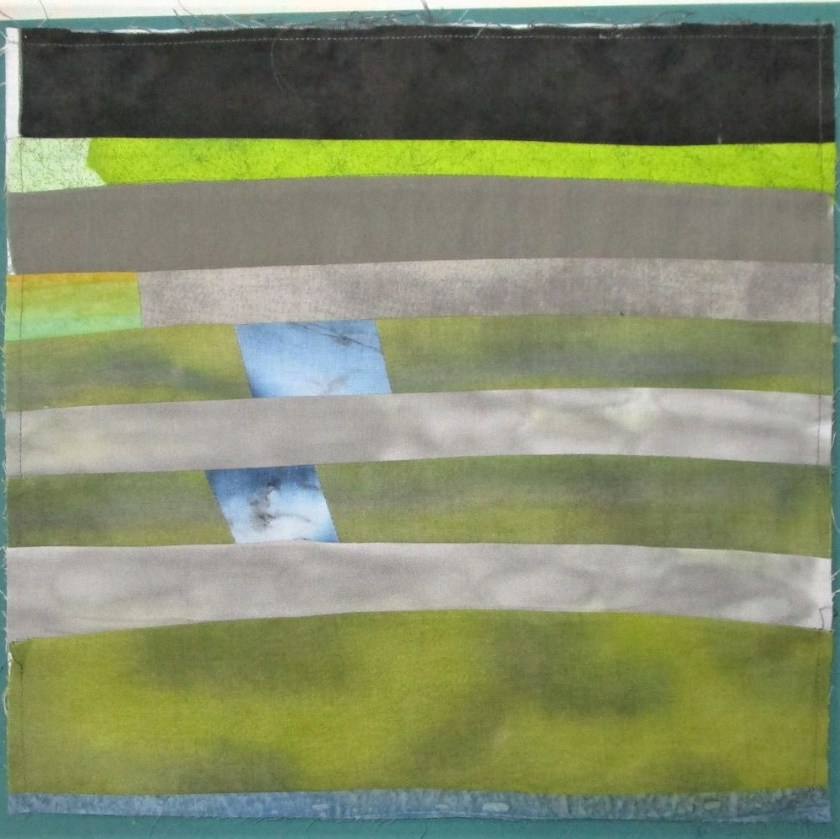
For the background, I selected some commercially printed and hand-painted fabric. these were sewn together in strips. Next I pieced together the first three ducks.

Eventually details will be painted on the ducks with fabric paint.

I took a pause for a few days. I want to use the confetti technique to render the mottled foreground. But this is a very new technique to me. So it makes sense to practice first.

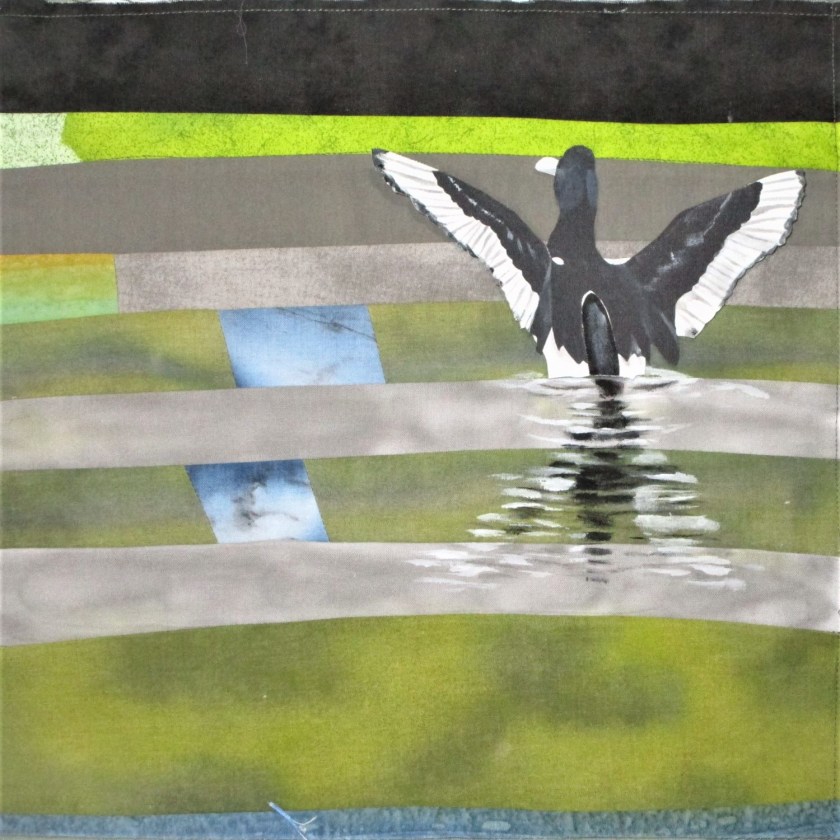
I put together an extra duck so I could practice painting his reflection.

I like the pose of this one.

The next step? Go to U-tube to watch some instructional videos on the confetti technique. I had done this already, but the second viewing helped me work up my confident. With the prepared fabric in hand, I applied fusible webbing to the backs and cut them up into pieces. For the next hour or so, I fiddled around with layout.

Practice block with reflection and confetti foreground.

Did I mention that the title of this work is “Duckweed?” I guess I forgot to say. When I was at the marsh, it was the duckweed that really caught my attention. It was growing about the pond profusely in an intensive shade of green. This is what I am attempting to depict with my confetti pieces.

I next fused the duck in place and stitched a piece of tulle over the whole sample. The purpose of the tulle is to make the quilting easier. Here is where I left off today:

I’m fairly happy with my work. But I want to try rendering the reflection in the confetti technique instead of paint. I also want to work on the shapes of the confetti pieces.

Posted in painting, quilting

Update on Turtle Fiber Object

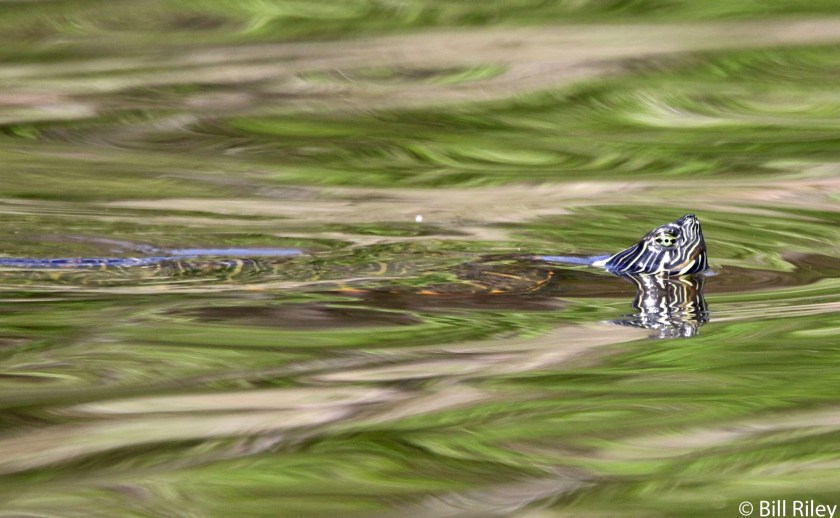
The past five days have found me in a creative slump. Having got my turtle idea started, I am mulling ideas and fiddling with techniques for the next steps. As a reminder, here is my inspiration photograph.

There are two tricky parts for me: 1. How to portray the reflections, and what other elements should be included.

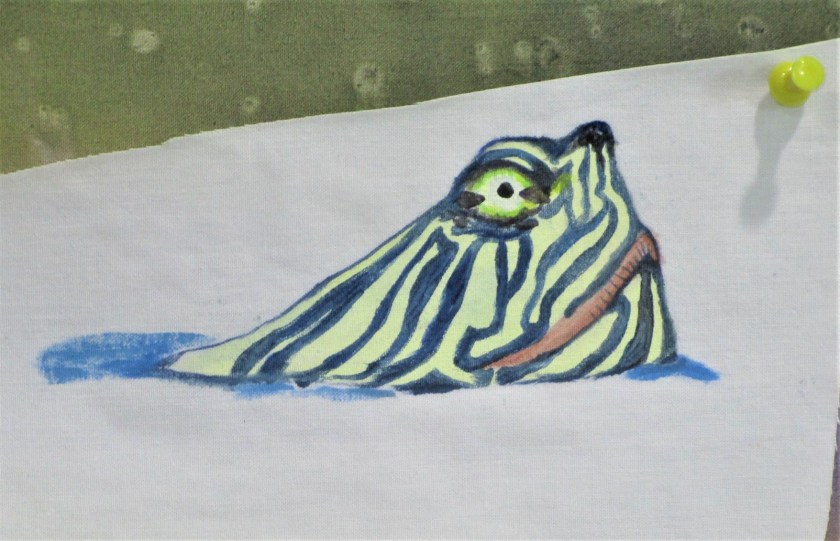
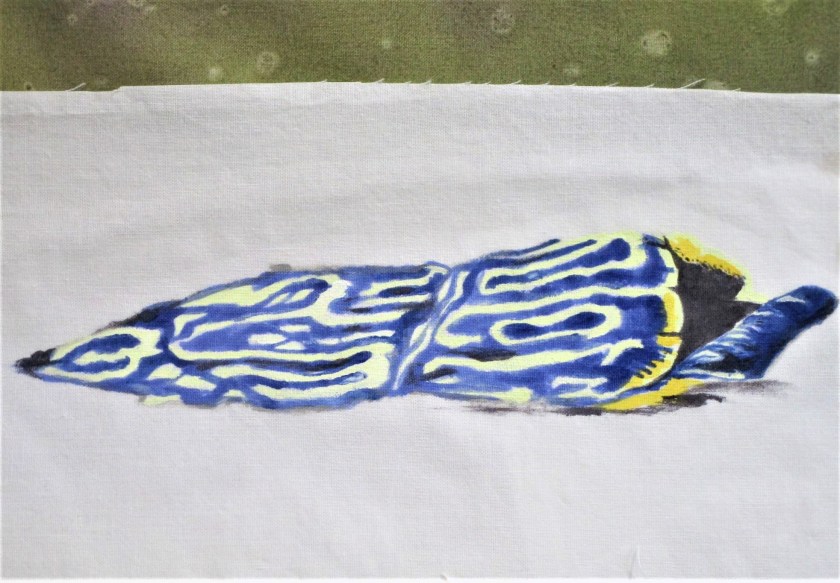
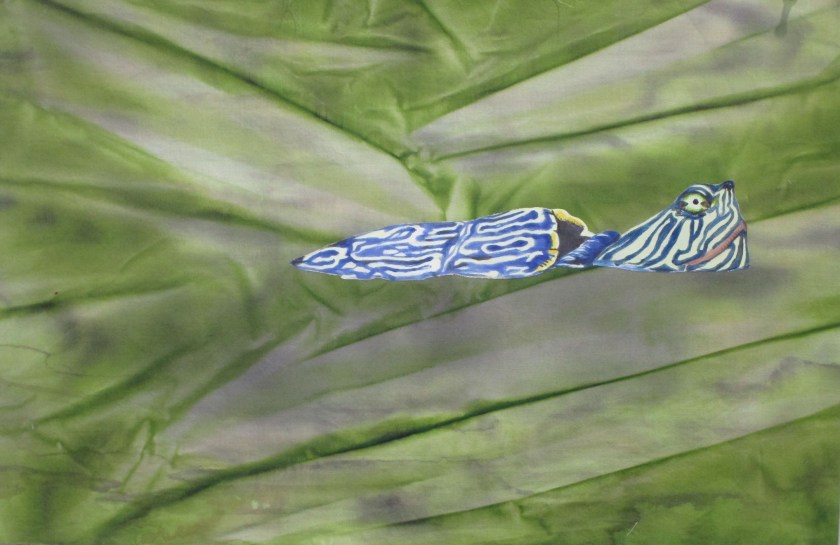
I did get the subject-turtle painted onto to white fabric, in two pieces.

I also added more wash to the background. My goal was to achieve some depth of color and depict some of the swirls and waves in the pond. That didn’t happen but I did achieve some nice shadows. Next I fused the turtle in place with Wonder-Under.

After practicing on scraps, I decided that I have enough skill to machine quilt the reflections. The advantage of this technique is that the thread can be very light colored, even shiny, against the dark background.

For additional elements, I may go with pond grasses….

… and damselflies. Maybe a willow branch or two. But I have yet to work out the specific images and techniques.

This morning when I entered the studio, I felt momentary pleasure at seeing my recent work. Maybe it’s a sign that today I will get my mojo back.

Posted in painting, sewing

Inspired by O’Keefe part 2

Moonflower

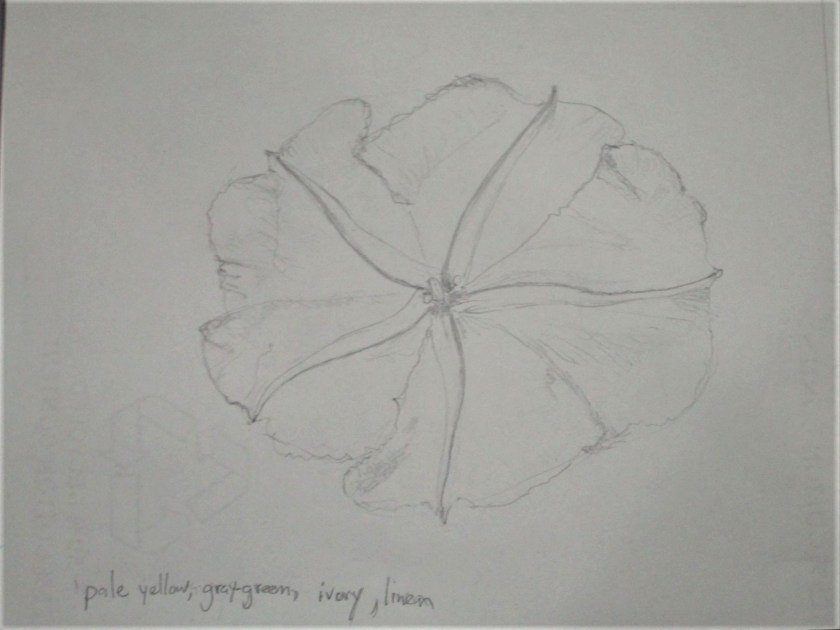
Here is the final result of my O’Keefe inspired fiber object. I have to say, it only partially matches my vision for the piece. Something happened between the sketch, the painting and the embroidery. Take a look:

Here is my original sketch for a moonflower. I was very happy with this effort:

Here is the flower after roughing in the design with fabric paint.

Even though I am not experienced in painting, I was fairly happy with this result. So I guess the only part of the effort that disappointed me was the embroidery.

Dear friends, what do you think? Do you have any recommendations for me that could improve my final result? I am eager to learn.

Posted in sewing

Appliqued Greeting Card

Today’s fiber object is motivated by necessity, not just fun. You see, last week I started my fiber arts students on machine sewing. They all seemed to love it. This week, I promised a project using the machine to sew applique. “What’s applique?” they all asked. After puzzling over what type of project to introduce, I took a page from my own playbook and settled on making greeting cards. This is a cross between the seed packet project and the paper woven letter project.

MATERIALS: 2 or 3 colors of cotton fabrics, Wonder Under fusible web, medium weight fabric stabilizer, ( I used Pellon) thread, fabric pen or Sharpie, card envelope.

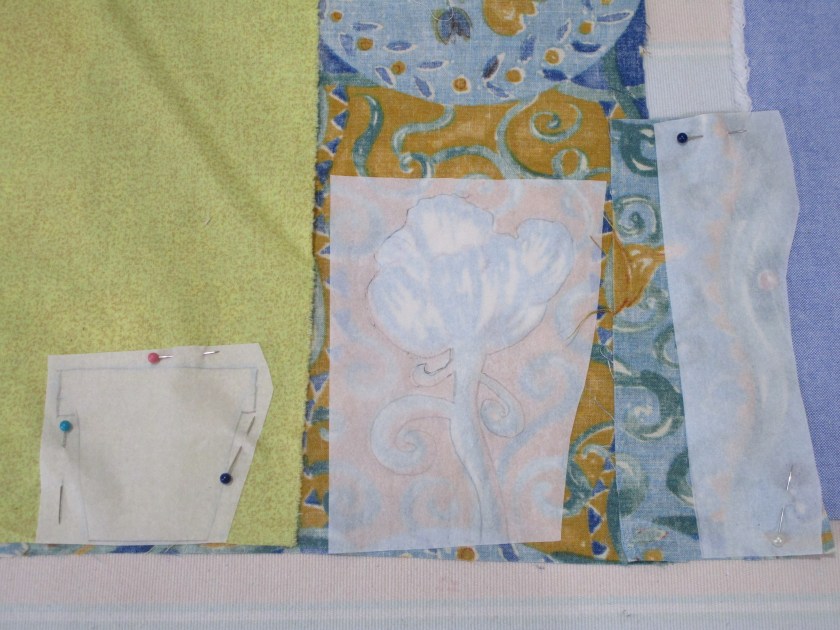
Measure and cut background fabric and Pellon to be the same size as the envelope. Set these aside. Choose a shape or pattern for your applied design. I chose to make a tulip in a pot, because I had some flower patterned fabric. Cut pieces of Wonder Under about the size of your pattern shapes. Draw your shapes on the smooth side of the web if you are not using an image on the fabric. Position the smooth size of the Wonder Under up, and press it on the wrong side of your patterned fabrics pieces.

Cut out the shapes. Pull off the paper backing so that the adhesive is exposed. Arrange your shapes onto your background fabric and press in place.

Stitch around the shapes of your design with a straight stitch, using matching or contrasting thread. Pin the Pellon to the back of the piece. Stitch around all the edges with a 1/2 inch seam allowance. Trim the edges with pinking shears to within 1/4 inch of the edge stitching.

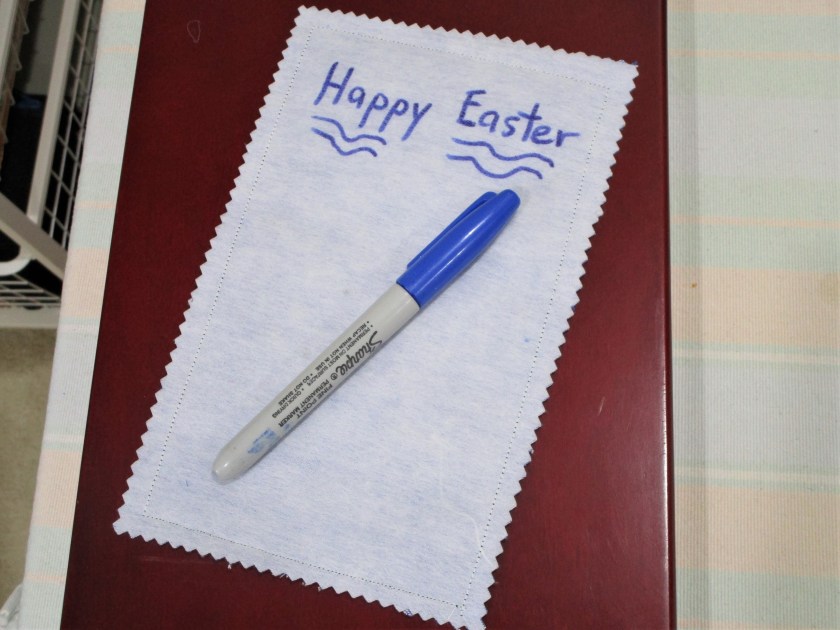
Your card is ready for your message. Write on the back side. Use an ultra-fine Sharpie to write a nice long letter, or use colored markers to print a short wish.

You could also draw a picture, if you like

All done and ready to mail.