Having recently finished a wall quilt, I found myself with various pieces of fabrics left over. Instead of stuffing them into a box and shoving the box under a bed, I decided to cut the fabric into strips for the purpose of sewing them into a project bag.
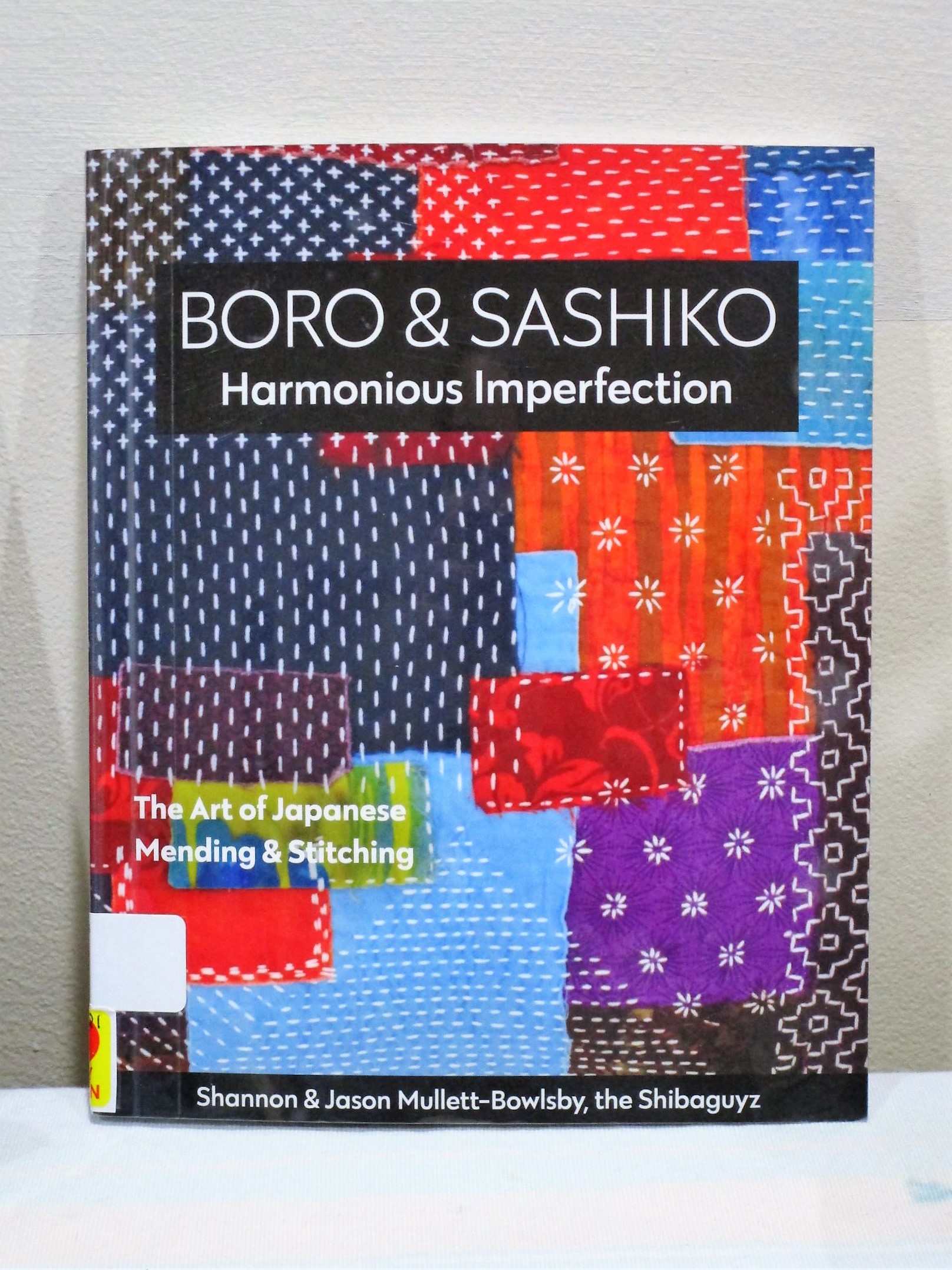
Back two years ago, I became interested in the Japanese art of stitching, aka sashiko and boro stitching. There was a pattern for a knot bag in this book by the Shibaguyz.
I did a post about it on Jan 5, 2022.
To make the bag, I would need fabrics for the base and lining, along with my strips of fabric. Fortunately, I had both. My daughter gave me some yardage of sturdy cotton flannel and my friend and co-worker Scott Perkins gave me a sample of raw silk.
Here is what I came up with using one quilt block made of a circle in a square. I then sewed strips of fabrics around it to cover all of the base and raw edges.
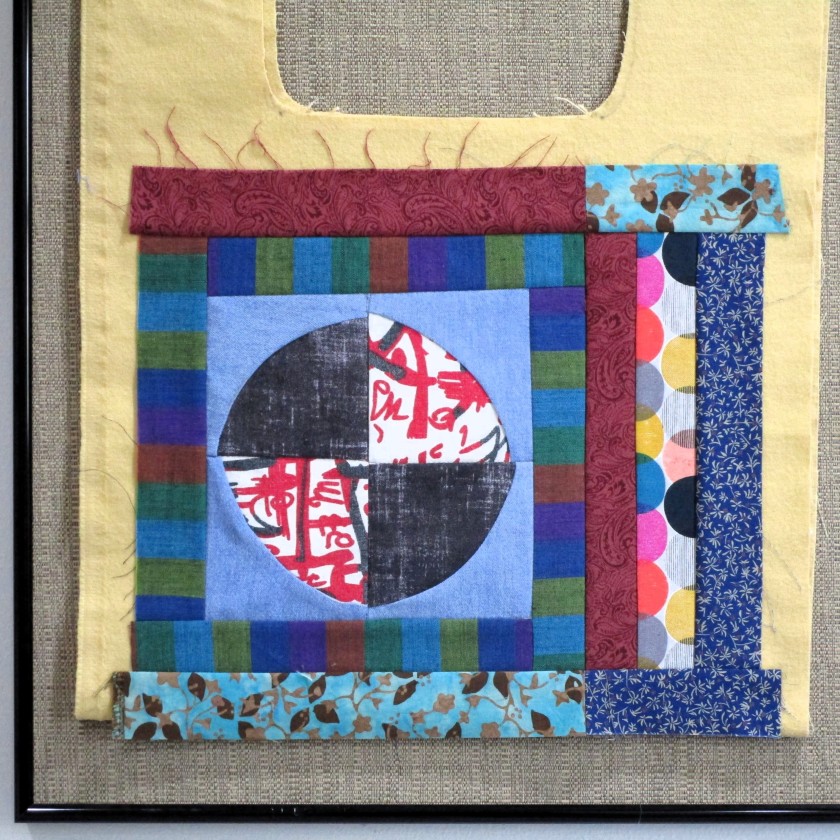

Fabric selection included bits of three men’s shirts. (The dark red and dark green strips, and the blue chambray behind the first circle.) All three of these fabrics had been worked into the Shell Lake Story quilt. So, I am using scraps of scraps!
My next step was to sew up a lining using the same pattern as the base.
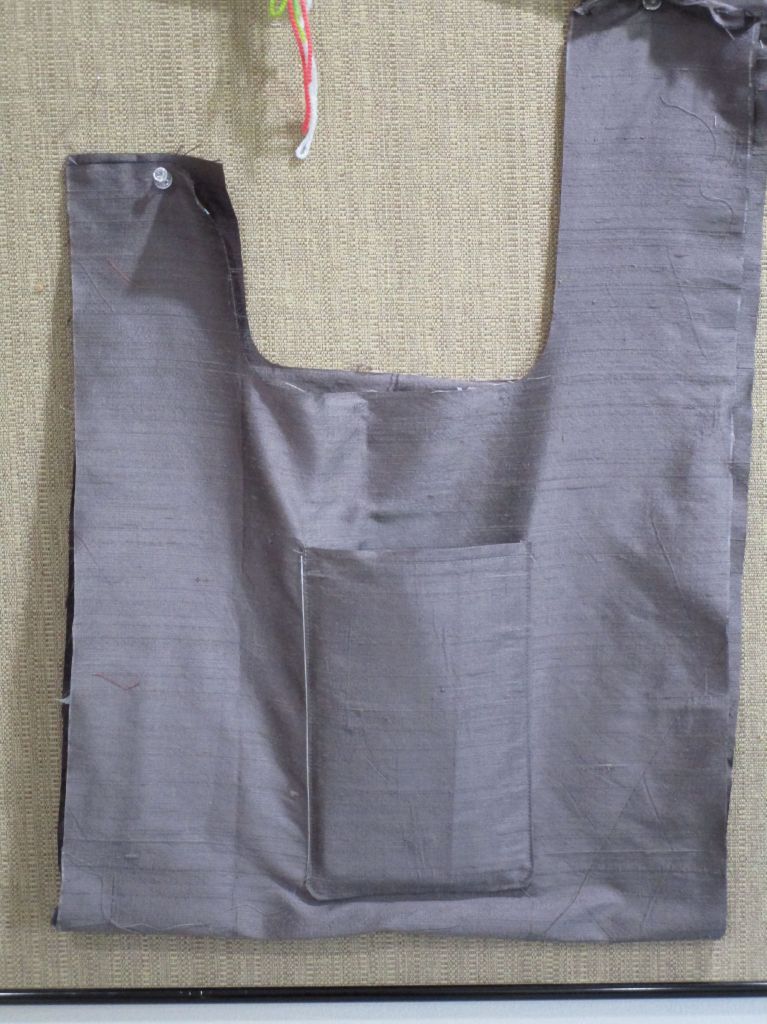
A cellphone pocket in the lining.
Adding the hand stitching took a few weeks. I marked all the stitch lines with a chalk pencil. Using white Sashiko thread I worked a running stitch in straight lines on the strips and circles around the circles.
And here is the front and back of the bag after all the top stitching is in place.


Finally, the seams of bag and lining are sewn up, the bag inserted into the lining with right sides facing and the U-shaped top edges are sewn together. This last step took me two tries, btw, so seam ripping happened.
Turning the bag to the outside, the only remaining steps were to close the strap side seams and top-stitch the opening.
To use the bag, the long handle is threaded through the short handle.

A quick look at the lining before it is turned to the inside. I love the look of the silk, and it is pretty easy to handle. Fraying was the only thing that gave me some trouble. The next time I sew with silk, I will zigzag the seam allowances
Here is the completed knot bag, filled with a knitting project.
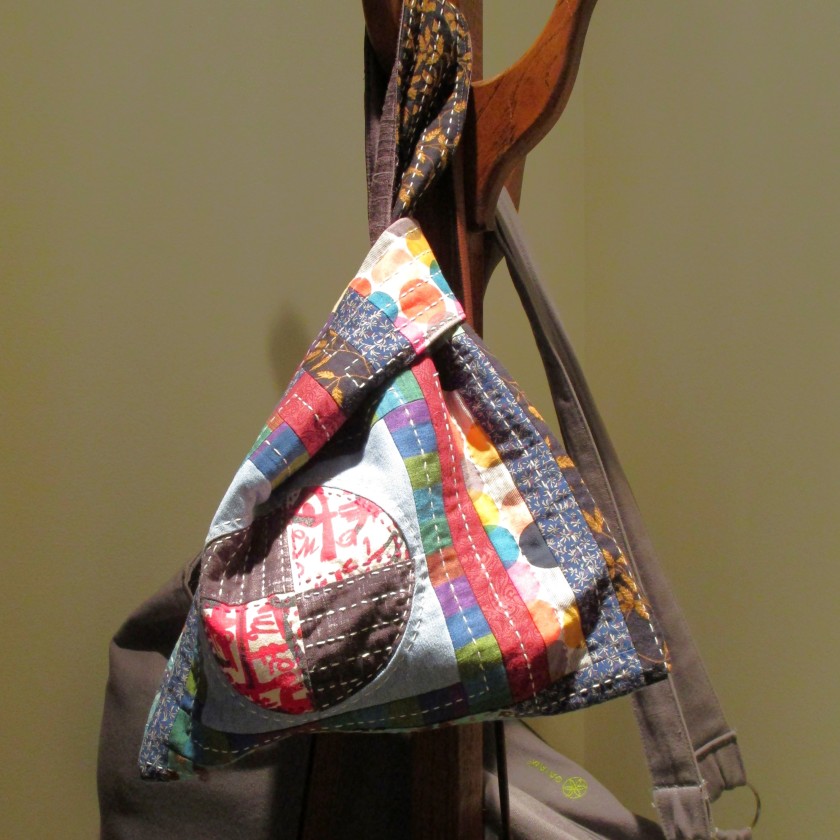
Front of bag as it hangs from a coat rack.

Back of bag.
This project was great fun (except for the seam ripping) and I would enjoy making more of these nifty bags. A larger size would be handy for bigger projects. And what a good way to use up scraps.


 Daily Fiber