Posted in painting

Friday Finish: Dash for the Splash

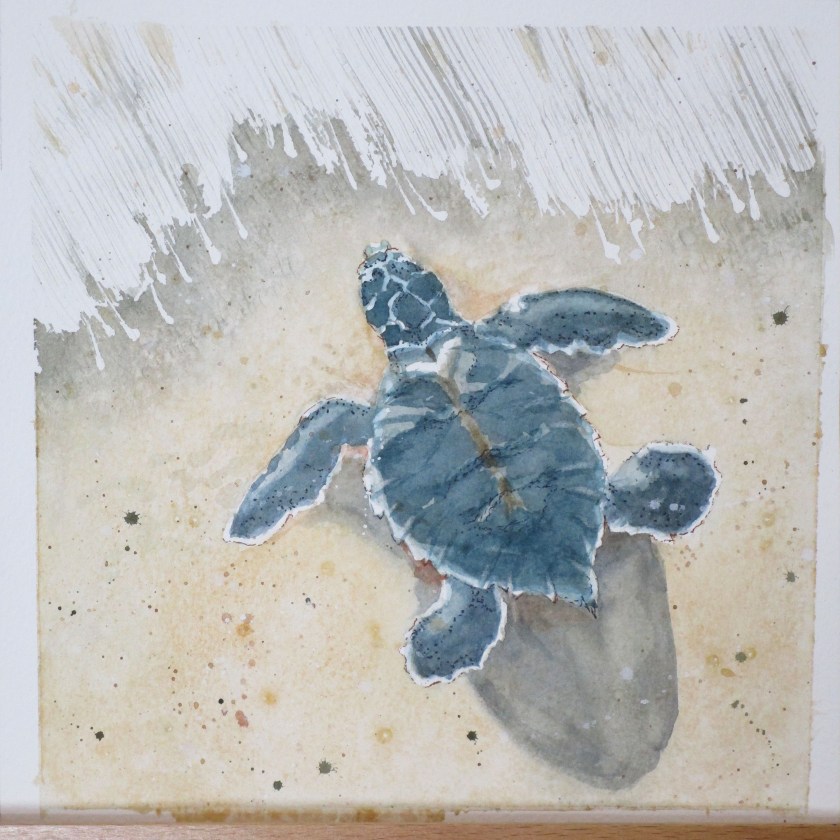
A baby sea turtle, hurtling its little body toward the safety of the sea. This watercolor painting was made as a donation to the 2025 6 by 6 art sale for my local art association. The reference image was found on Unsplash – so many years ago that I lost track of the photographer.

Friends, I know that I have been inactive for three weeks. Life has been full of other stuff. But the turtle painting marks the start of what I hope will be a steady flow of new objects on Daily Fiber.

I liberally applied masking fluid with a toothbrush for the wave action, and with a tiny brush for the white shell markings on the turtle. Pigments were yellow ocher, burnt umber, burnt sienna, Winsor Green blue shade, alizarin crimson, ultramarine blue and white gouache. A few Micron pens stipples were added to suggest motion.

Posted in painting

Watercolor Wednesday

Last Wednesday, I participated in a watercolor tutorial offered by fellow art association member Cheryl Bryan. We were to paint a koi swimming near the surface of a pond. While she had a nice reference image, I preferred to use this one from Unsplash by Jason Leung.

https://unsplash.com/photos/macro-photography-of-koi-fish-7rR_WSk4HM0

Subjects in water are very appealing to me, especially creatures such as fish.

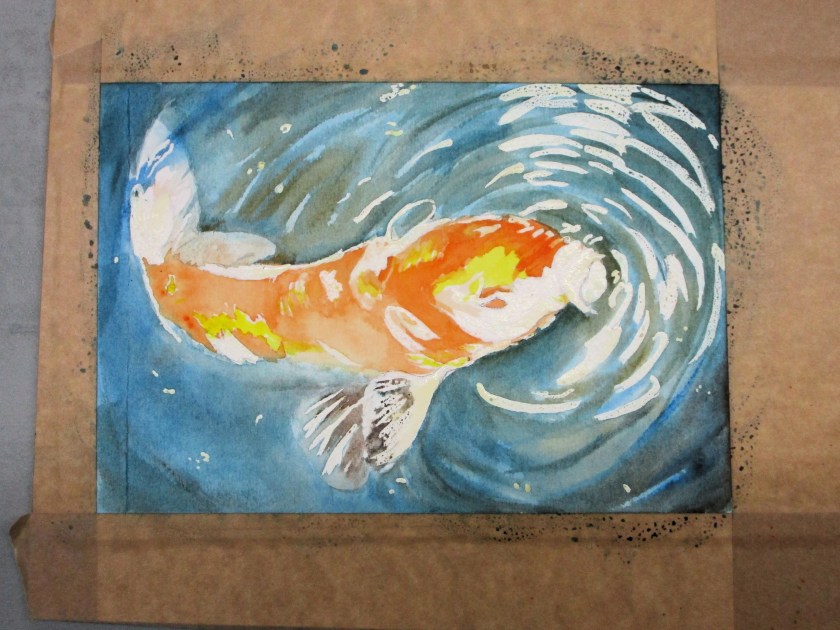
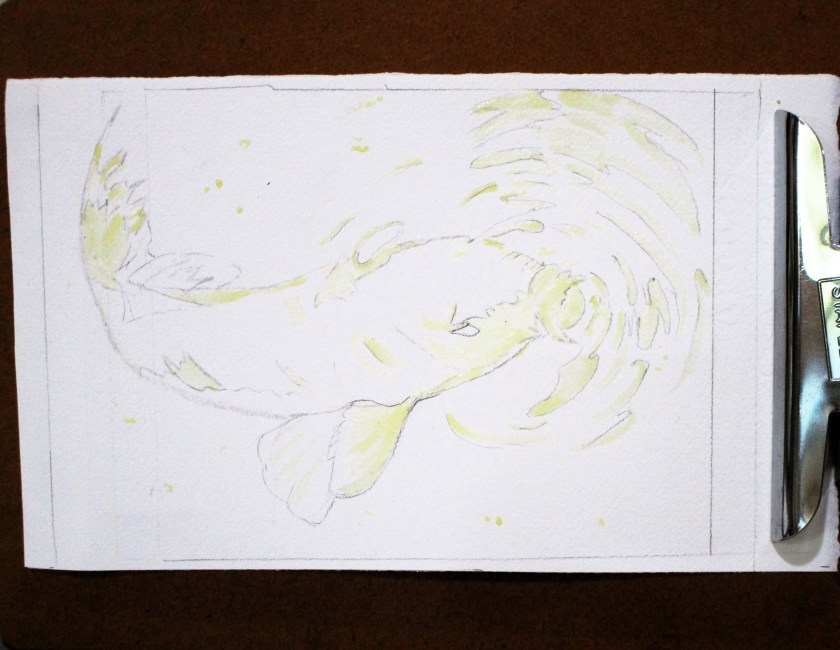
Here is my sketch of Jason’s photograph after I had added masking fluid to reserve the whites of the paper.

I am using Arches 140# cold press paper. The masking fluid is Incredible White Mask liquid frisket. I recently learned to apply this messy stuff by using a small paint brush that is first dipped into a solution of water and liquid soap. To apply little dots, I used the tip of a wooden knitting needle (!) Both worked great.

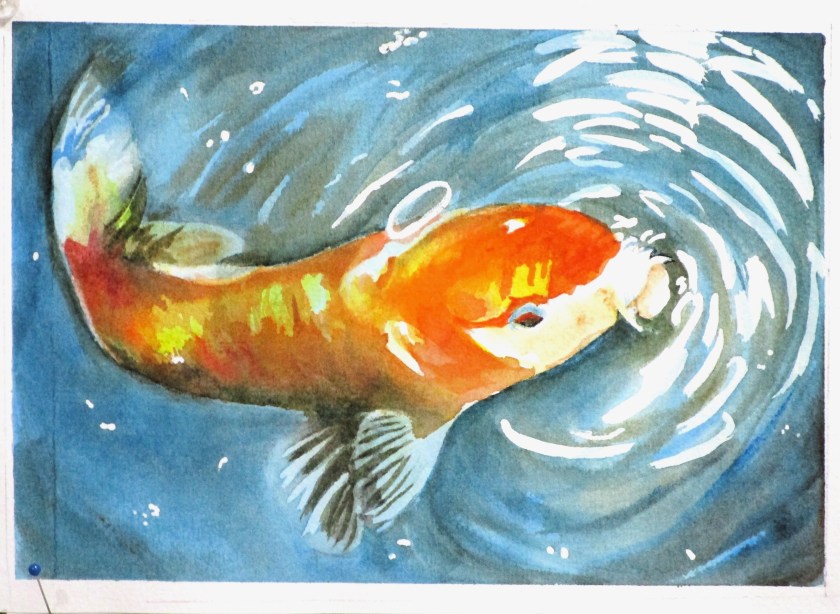
Here is my painting at the end of the 2 hours tutoring session.

I had the background mostly complete and the first wash on the fish. The next day I painted more color on the fish, added shadows and a glaze of highly diluted Phthalo blue. After the paper dried completely, I removed the mask and added highlights.

I’m pretty happy with the result. The fins, tail and ripples came out well. You can tell that the head and mouth are poking through the water’s surface.

I’m less happy with the shadows and my color mixes. Perhaps I should have chosen different pigments.

Anyway, I have dipped my toes back into painting after a long hiatus. The dry spell is over, for now. (puns intended.)

Posted in painting

Admirable Weeds

My inspiration for this painting happened during a camping trip to Kansas in late March. At the site, I noticed a dozen or so Red Admiral butterflies floating around an open area near some trees. After following them around for awhile, I realized that they were taking nectar from two weedy non-native plants: henbit and dandelions. My thoughts went something like this: Those two plants are disdained by gardeners and the general public. Yet one of our most beautiful native butterflies found them attractive. There is something to be valued here that I wish to explore.

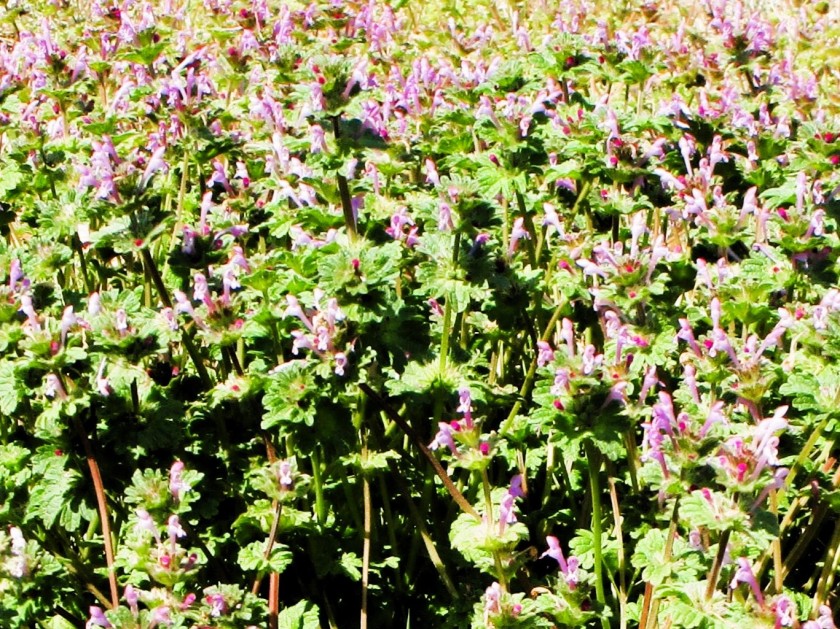
The henbit was lush and blooming profusely.

I grabbed another photo in my backyard, which I used to create my drawing.

For the butterfly reference, I went to Unsplash.com for this lovely by Don Coombez.

https://unsplash.com/photos/a-butterfly-sitting-on-top-of-a-metal-pole-PLyR1XIwcsU

Reference in hand, I started work, first by testing colors in my sketchbook.

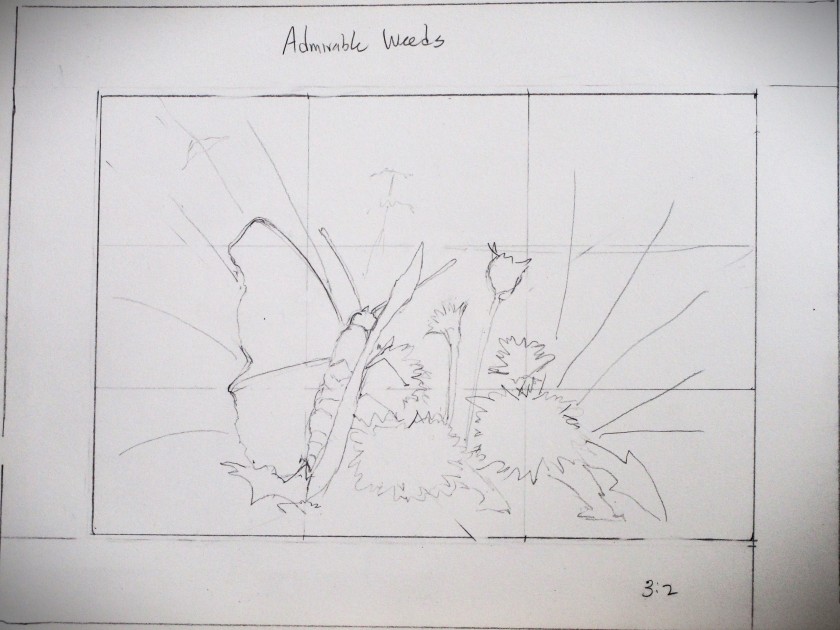
Next came a pencil sketch which was transferred to Arches cold press paper.

Stages of the painting:

Masking fluid applied and Initial wash laid down.

First round of colors dropped in.

Foreground painted and additional layers added.

Masking fluid removed, some shadows and details painted in.

Finished up by adding highlights and cast shadows.

I’m relieved to have finished. These complex organic scenes are still very difficult for me. And while I can’t say I love every bit of my painting, I did achieve my objective.

Posted in knitting, painting

Friday Finishes (Yes, two!)

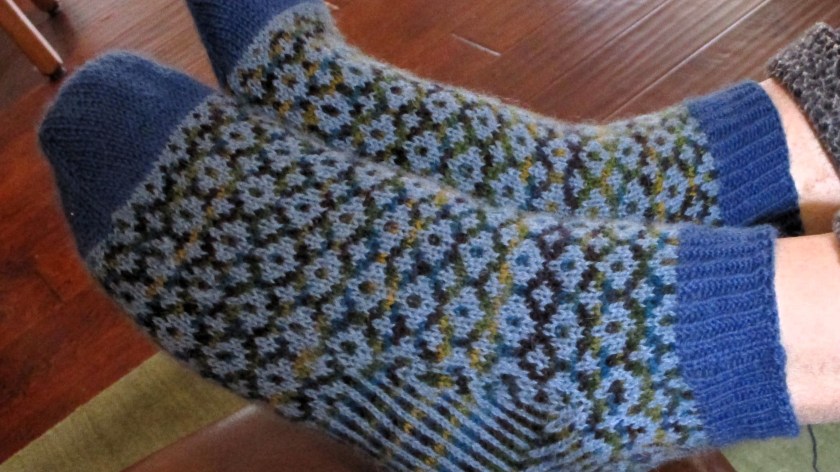
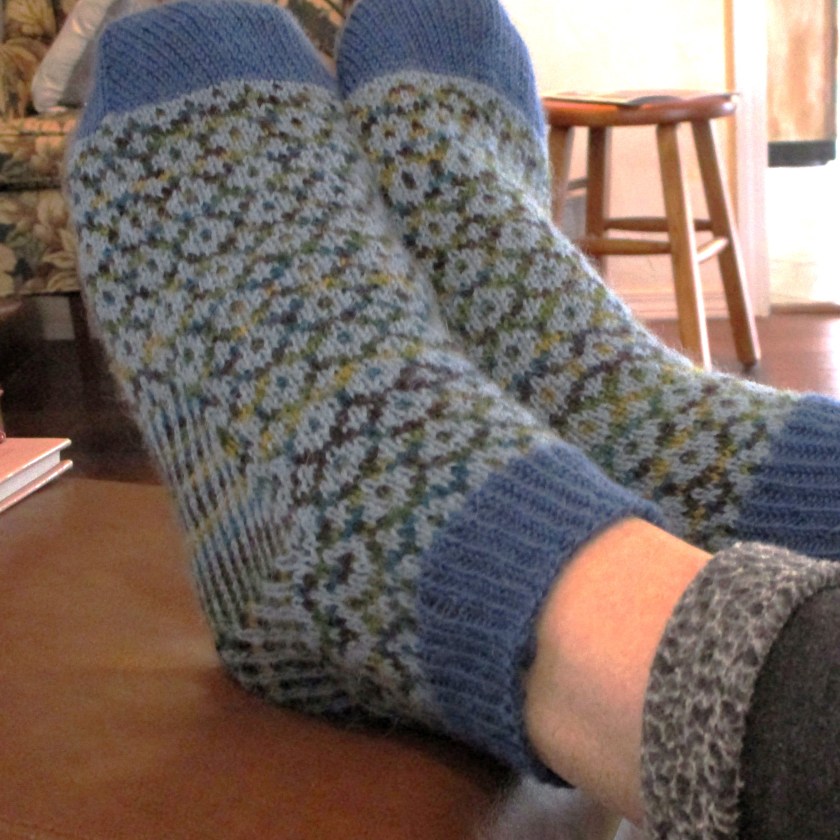
It’s been a pleasant and productive week for me. You see in the image that I have finished the second sock of the Mary Delany pattern.

This is the first time I have stranded two yarns across the heel. For the past few years I have been seeking construction techniques that reinforce the areas of the sock foot which always get holes. Logic tells me that two strands are stronger than one.

I used one blended yarn and one all-wool yarn. Fiber content includes acrylic, alpaca and sheep’s wool. Time will be the measure of success in this test of tensile strength!

The pattern is by Kate Davies, and I will again insert the link to it. I must confess to substituting another Fair Isle pattern for the pattern’s. Your results will vary.

https://www.ravelry.com/patterns/library/mary-delany

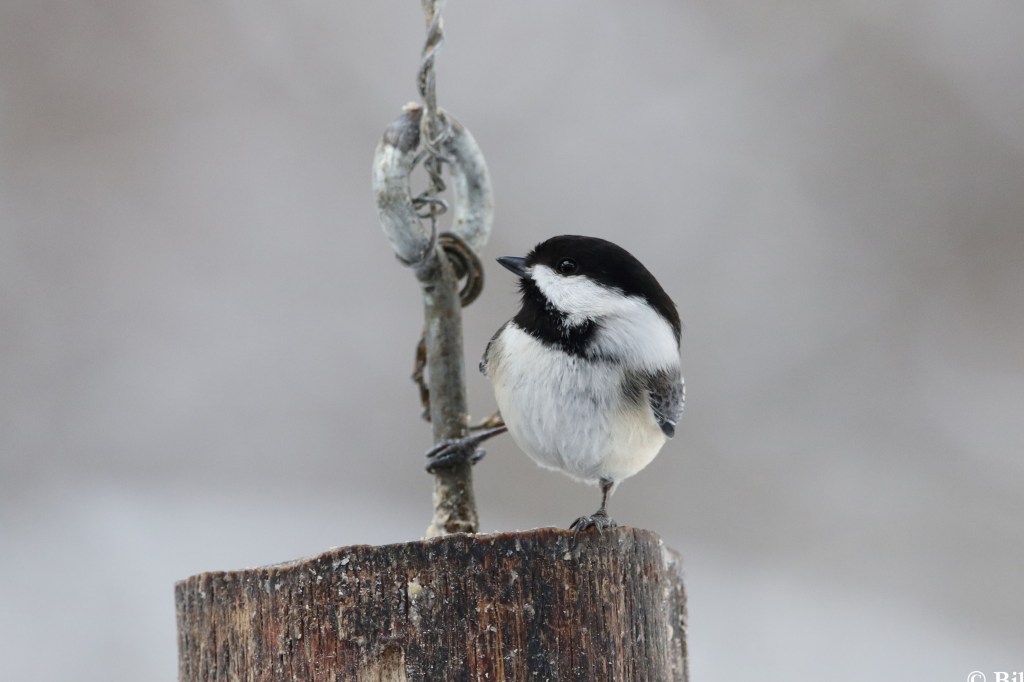
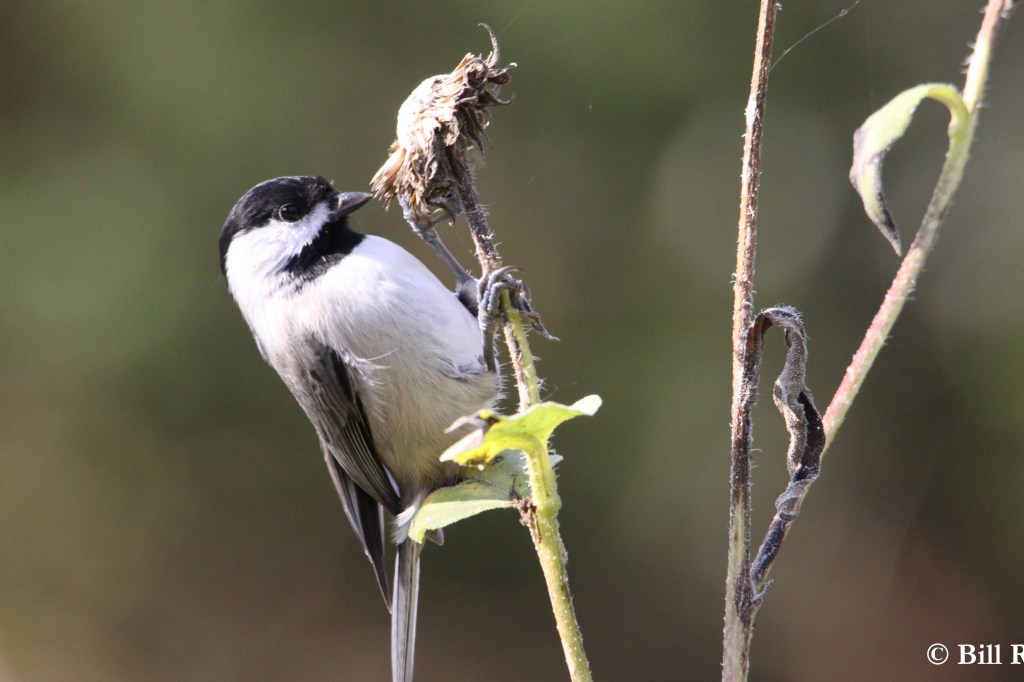
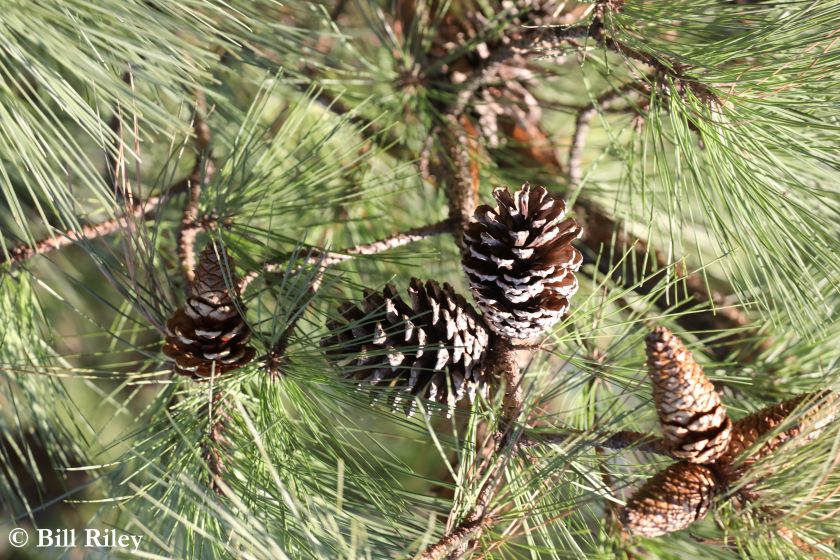
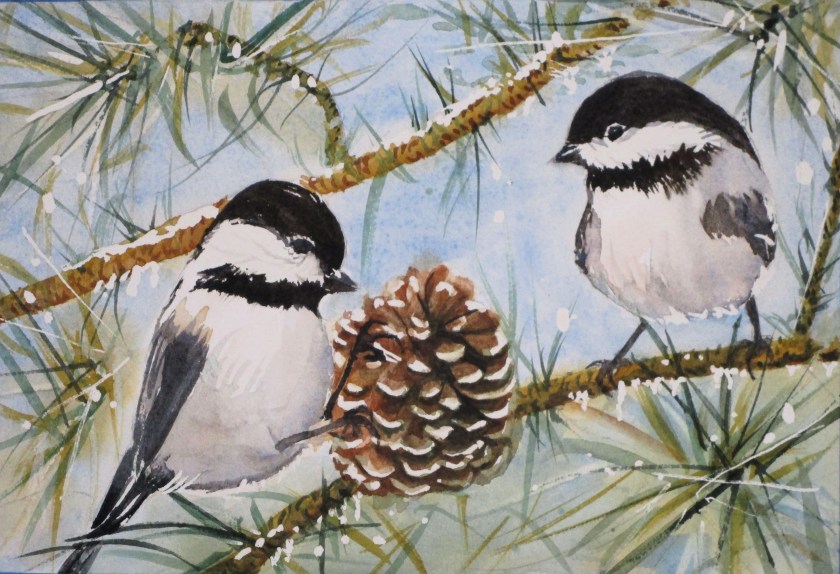
My second finish of the week is the Winter Birds watercolor painting based on Bill’s photographs. My composition is compiled from three of his photographs.

The two chickadees are cozied up to a pinecone, with the pine’s branches and needles as background. Working out the best layout was a wonderful challenge. My goal for the painting was to suggest bird camaraderie during the depths of winter.

WINTER CHICKS

This painting is about done. I still need to clean up some edges, tone some of the masked areas and add a highlight or two. All fun stuff. And it’s finished in time to slip it into a frame and hang it on the wall before Winter officially begins.

After laying in masking fluid, I used hansa yellow deep, transparent orange, pyrrol scarlet, burnt sienna, Winsor green blue shade, Cerulean blue and ultramarine blue. My new favorite black mix is ultramarine blue and transparent orange.

Posted in painting

Watercolor Wednesday Tutorial

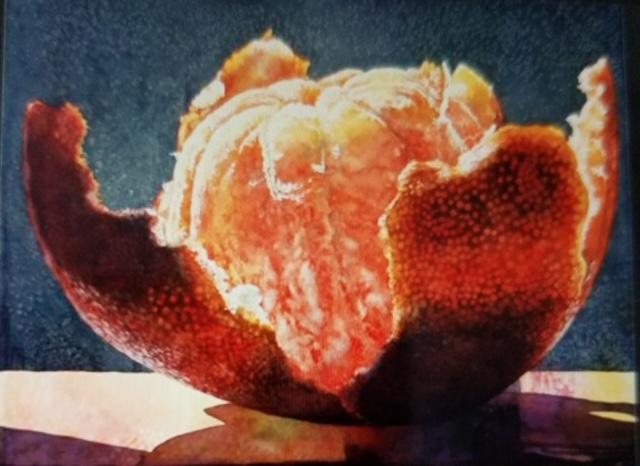
Last Wednesday in Open Studio, Cheryl introduced the group to the work of Soon Y. Warren, a painter who excels at creating light and texture in her watercolor works. Cheryl has taken a workshop with Soon and raves about her.

https://soonwarren.com/

To get us started, Cheryl sent her own version of Soon’s Orange as a reference.

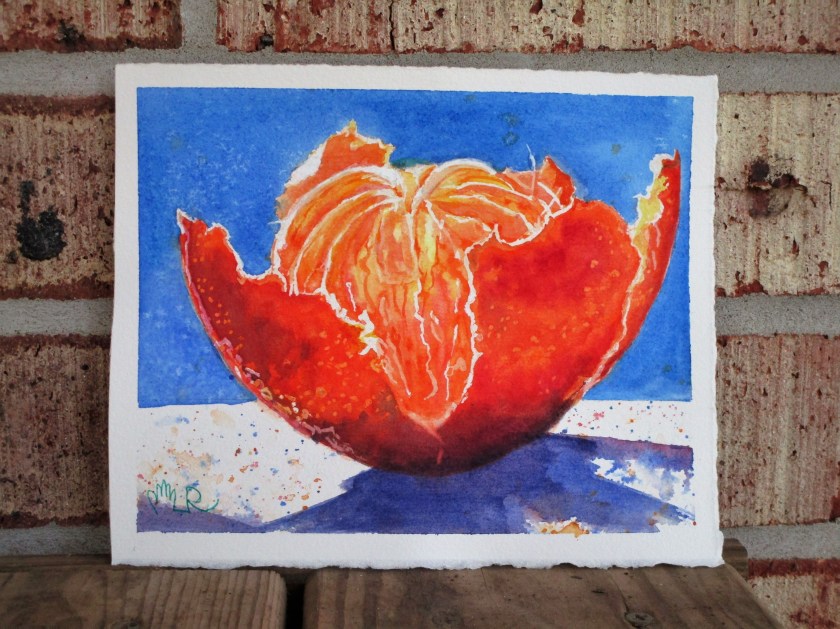
To achieve the effect of bright light on the orange, the artist applies masking fluid on the areas of white. After the painting dries, the mask is scrubbed off and final details are painted in.

I need practice using masking fluid, so I went along with the instructions. It was not a difficult lesson, except for removing the mask. I had to scrape vigorously with fingers, fingernails (go wash my hands and come back) and more fingernails. Ultimately, all the masking fluid came away, but in the process, I rubbed some dirt and/or paint into some places on the white paper where the mask had been. (sigh.)

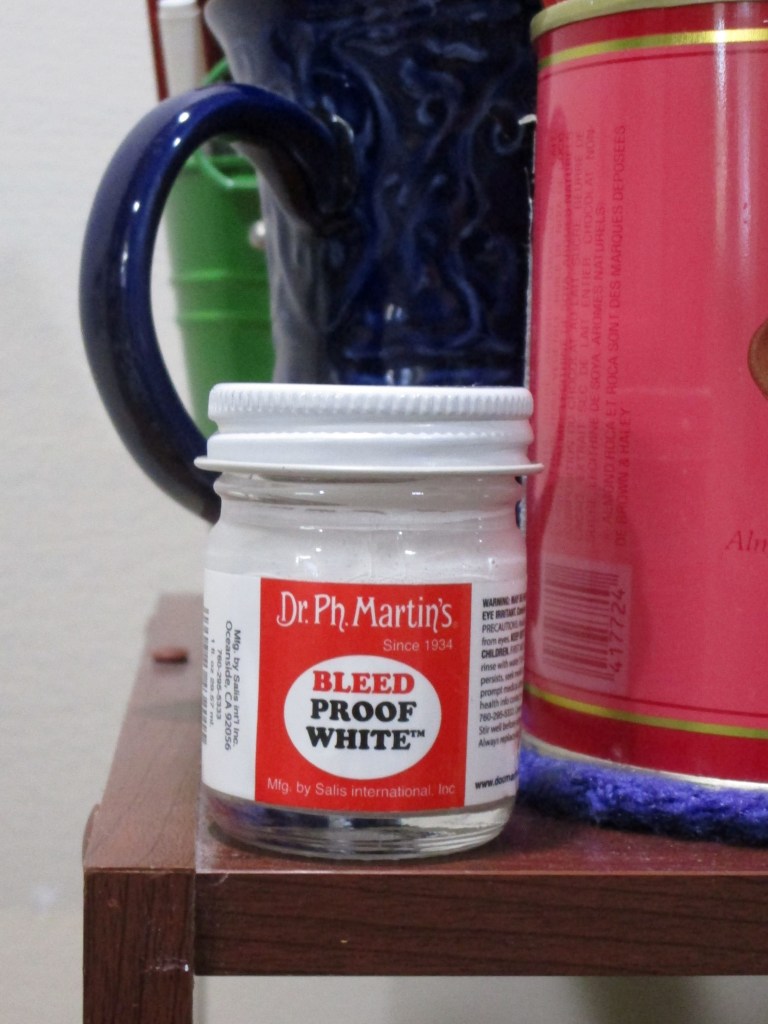
Fortunately, the areas with the worst stains were pretty well covered with an application of Dr Ph Martin’s Bleed Proof White.

Here is my finished study. It will make a nice greeting card.

I chose a different palette for my version: W&N French ultramarine blue, Thalo blue, Winsor lemon, transparent orange, and permanent alizarin crimson. A little salt and paint spatter added texture.

If you enjoy light-filled, transparent watercolor paintings, check out Soon Warren’s site.