After a nine day trip to the west coast, I am jumping back into quilting. It’s crystal clear that one cannot do a stay at home round if one doesn’t stay home…….. hm. I departed just as Pieceful Wendy’s revealed her challenge: Use Curves. My curvy round will be delayed until next week. I’ve got a few cute animal images to work with that are chock full of curves. I arrived home one day after Quilting Gail’s prompt, so I will jump in there.
Gail told us to use any two colors, adding some background fabric if needed. Considering that my quilt is about a rain forest, I will use lots of green to represent all the leafy plants that grow in great profusion there: ferns, bromeliads, palms, vines and grasses. My second color will be yellow. I will need a background fabric as well.
To challenge myself, and to keep it interesting, I decided to use foundation paper piecing in constructing my round 5 blocks. Inspiration and instruction came from quilter Amy Friend’s book:
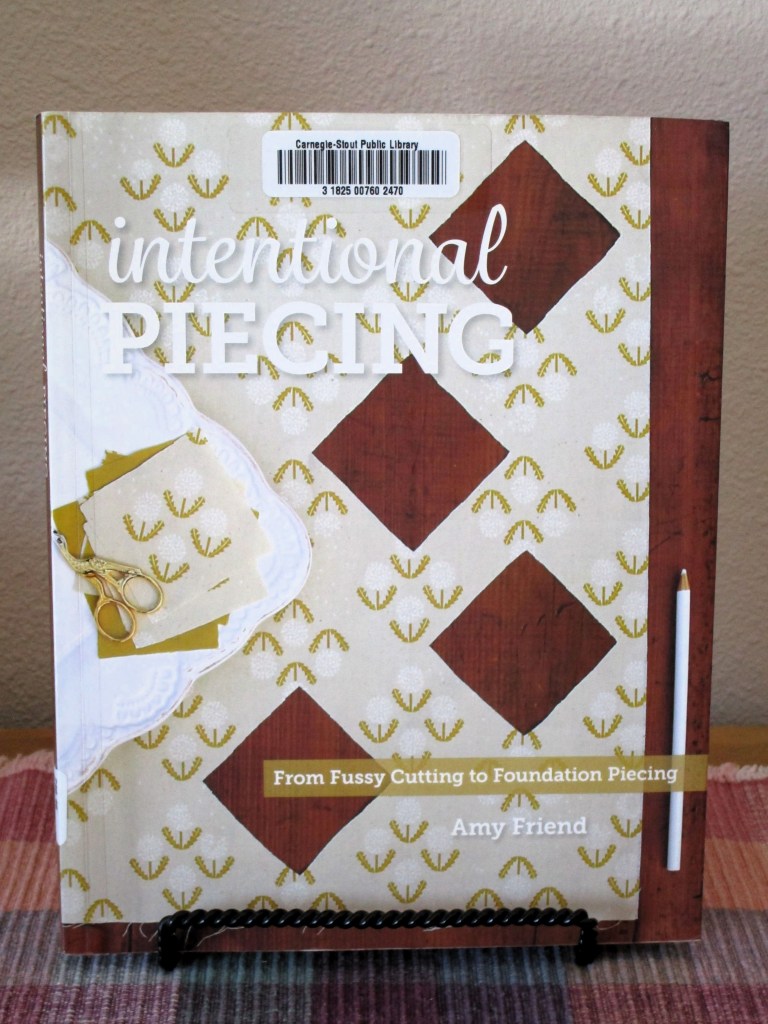
Amy’s goal is to tell stories with her quilts, utilizing fussing cutting and foundation paper piecing. Each chapter is a project. The project’s templates are included at the end of the book. I chose the project Grasslands.
And this is the template I will use.
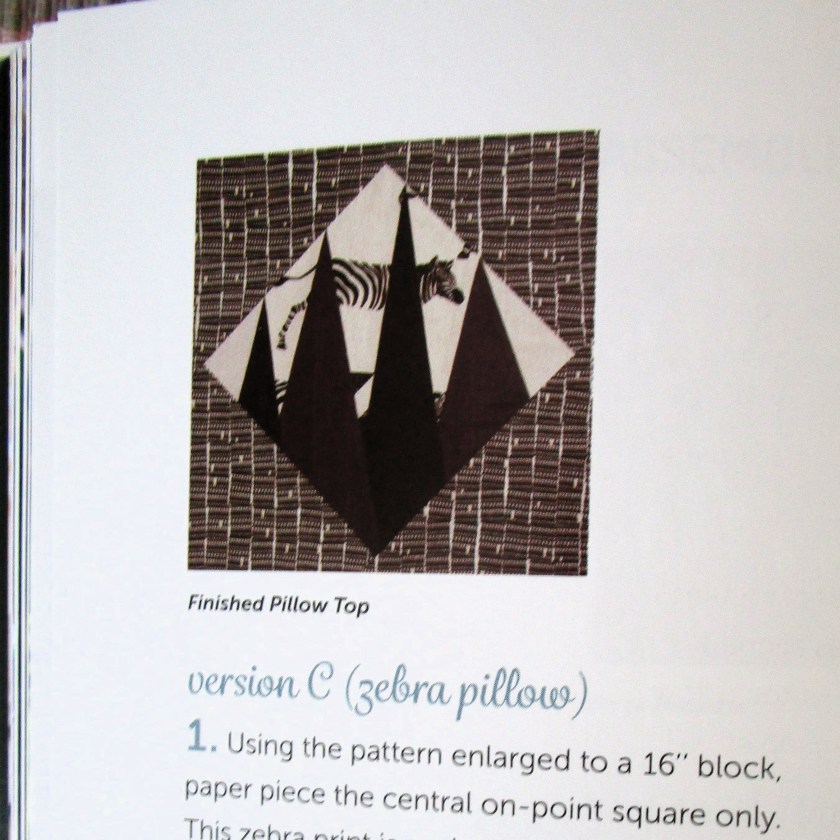
I love the idea of the zebra hiding within the grass. Since time is of the essence, and I am a rank amateur at paper piecing, I won’t attempt to insert any rain forest animals into my grass blocks. It took me several hours over two days and a certain amount of seam ripping. Eventually I managed to sew up six blocks.
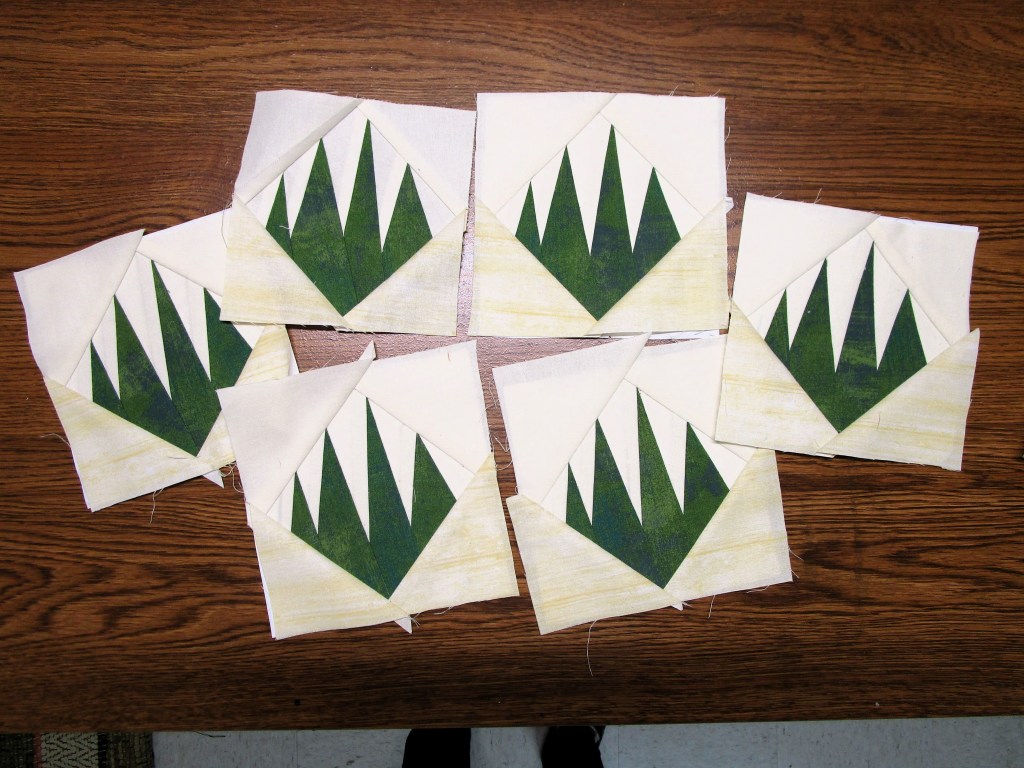
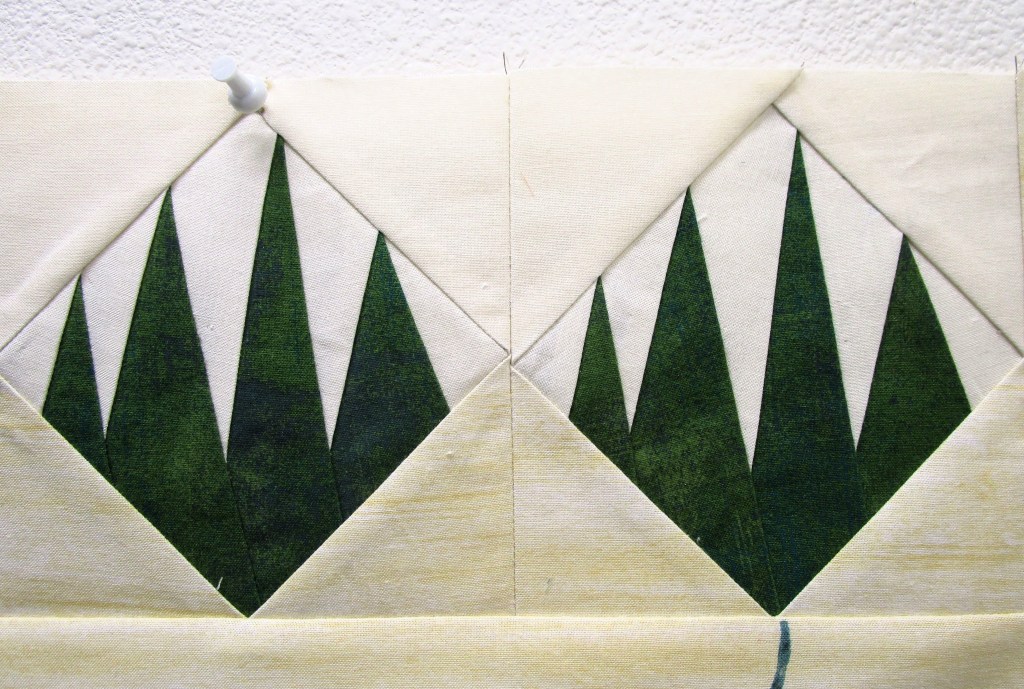
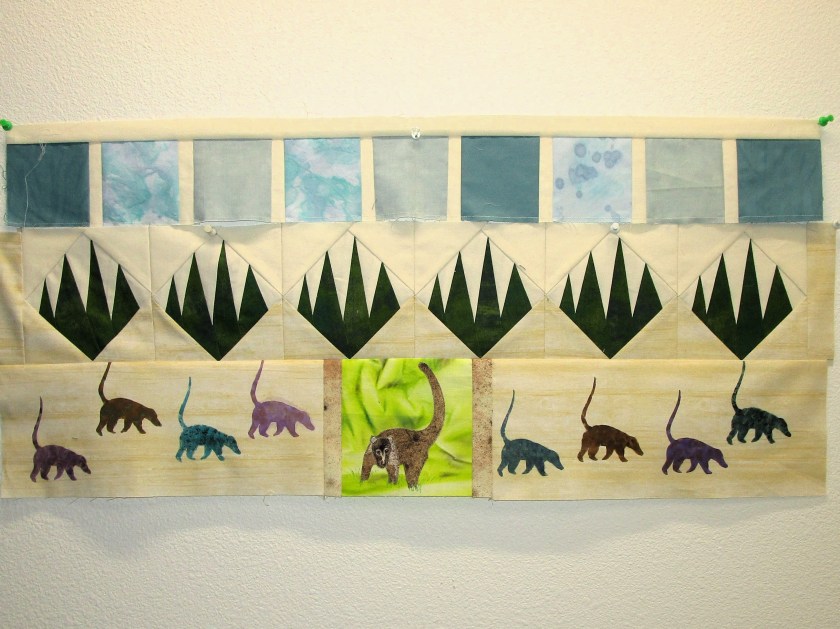
Inserting this row into my project will be easy. The background fabric will blend into the “ceramic tile” row and the pale yellow strips will blend into the coati row.
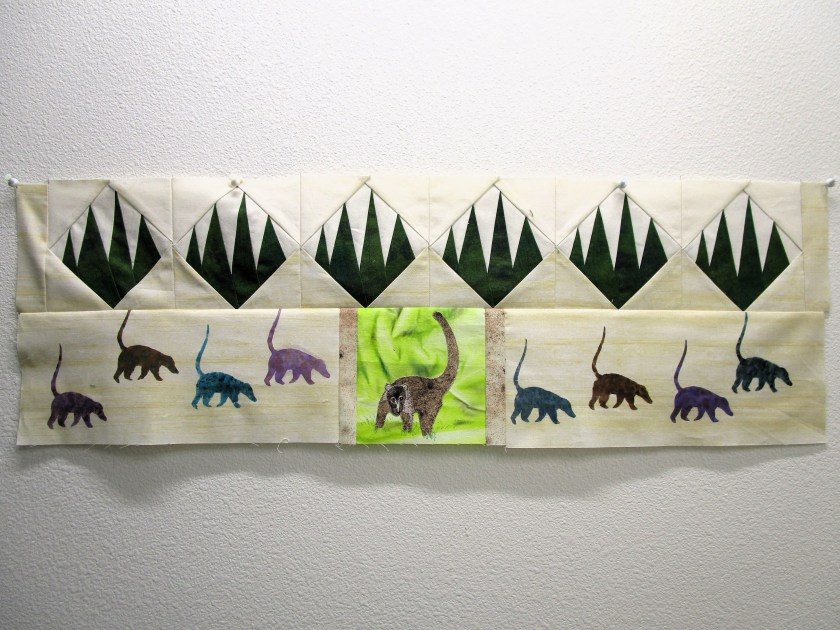
And here is the lower half of my Costa Rica quilt.
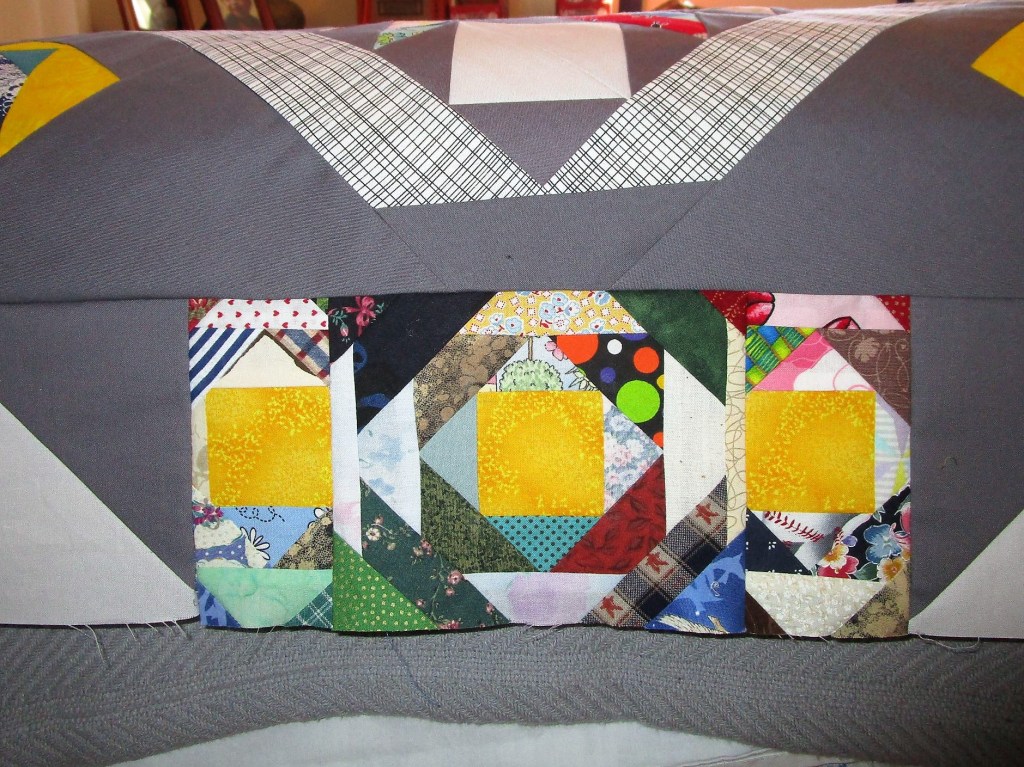
If you are now a fan of the Stay-at-Home Round Robin quilt-along, please follow along by visiting the Linky parties. This week’s can be found at Quilting Gail’s post.
Here is where you can check out all the past weeks’ work, and see what will come next.
- January 14 Each of the co-leaders will be sharing their centre blocks (you will have to visit each of their blogs to see them). I will host the first linky party where you can show your centre block.
- January 21: 1st Round: Brenda @ Songbird Designs
- January 28: 2nd Round: Kathleen @ Kathleen McMusing
- February 4: 3rd Round: Emily @ The Darling Dogwood
- February 11: 4th Round: Wendy @ Pieceful Thoughts of My Quilting Life
- February 18: 5th Round: Gail @ Quilting Gail
- February 25: 6th Round: Anja @ Anja Quilts
- March 25: Parade: showing all of your finished SAHRRs!









 Daily Fiber