Posted in quilting

Stay at Home Round Robin Quilting

Okay, so I got started on this project through fellow blogger Chris Knits.

SAHRR 2021 | chrisknits (wordpress.com)

In a traditional round robin, quilters make a block, then pass it to the next quilter who would add to it, then pass to the next, and so on, until the piece had completed its circulation. The final result is a big surprise to the original quilter when it returns to her.

This is a COVID version. Each quilter keeps her original block, but responds to weekly challenges by adding a border around her block. Each quilter in the round robin is responsible for providing one prompt to the group.

Can I try? I’m kinda new to quilting, but I have a few pieces of fabric left over from projects I finished last year. I invited myself to participate. Chris said, “go for it.”

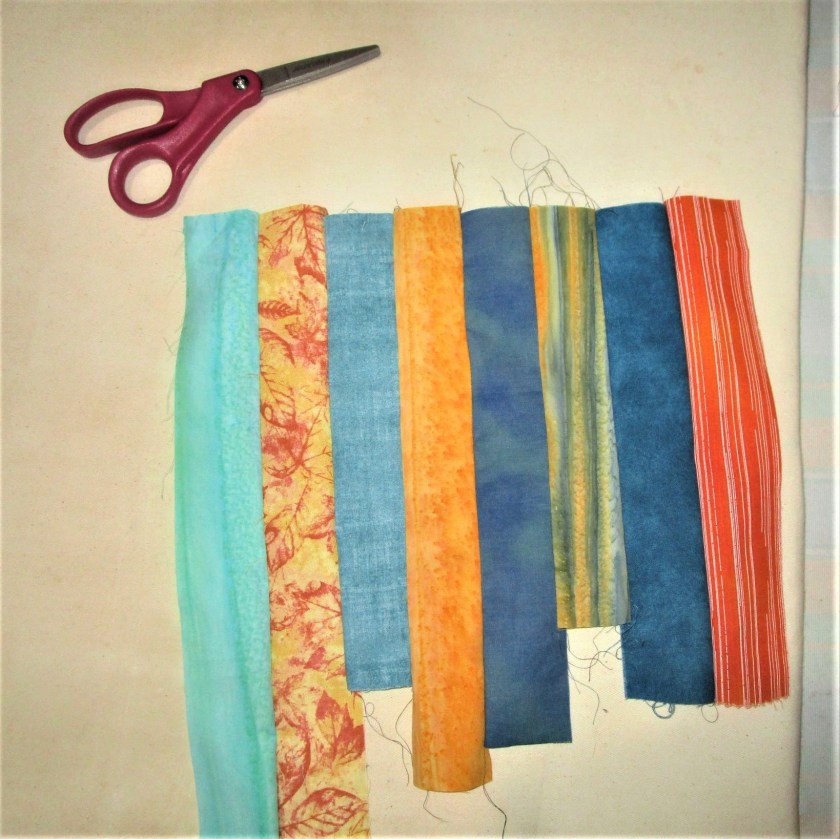
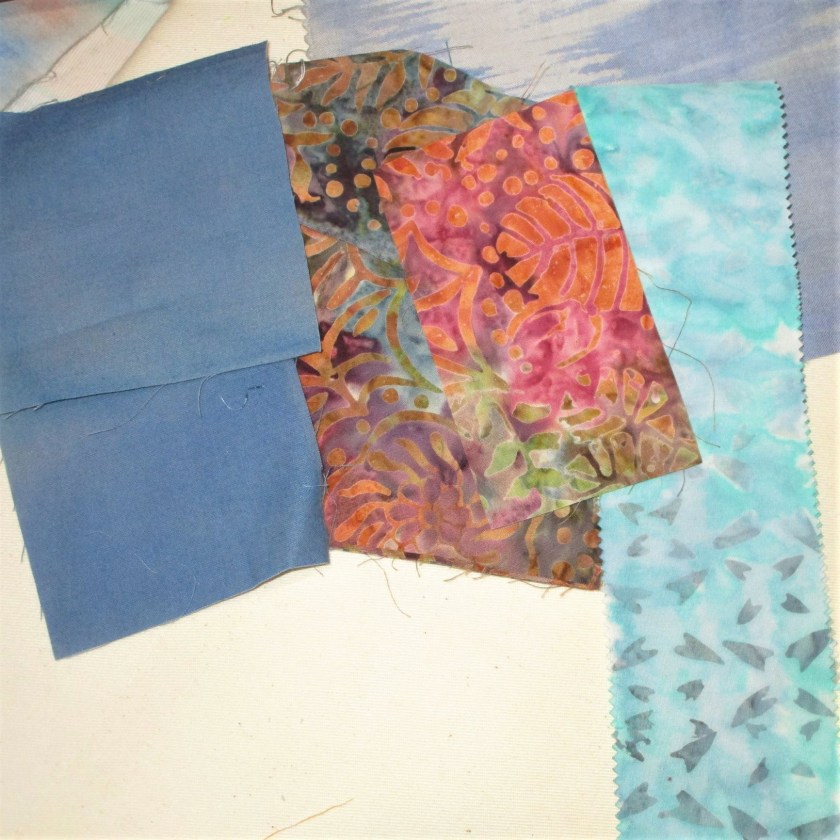
Today each quilter is unveiling her center block. I better get started. First I pulled a few leftover strips that seemed to be big enough.

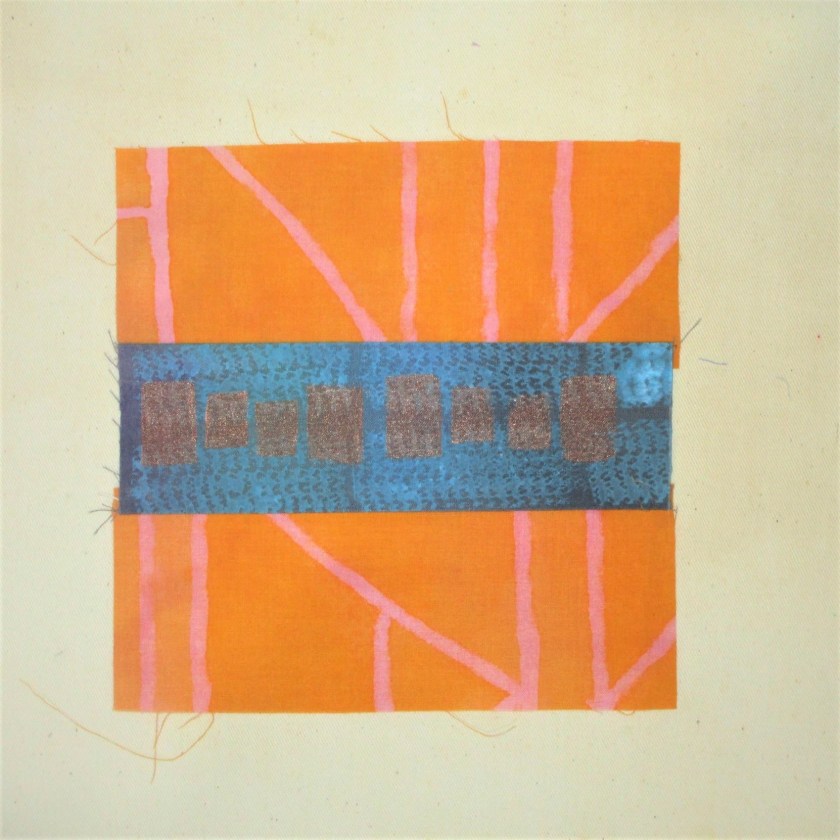
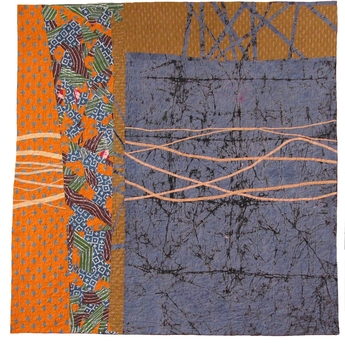
Both fabrics were experiments. The center piece is overpainted with opaque turquoise. then stamped with a metallic bronze color. The orange piece was painted pale pink, then a resist applied, followed by a deep orange paint. Removing the resist reveals pink lines.

So I have my palette, but I need supporting fabrics and a plan for the rest of the block. During my stash rummage, I turned up this beautiful batik that I had bought just because it was on sale.

The other two fabrics are too small, so I went to the hobby store to buy similar colors.

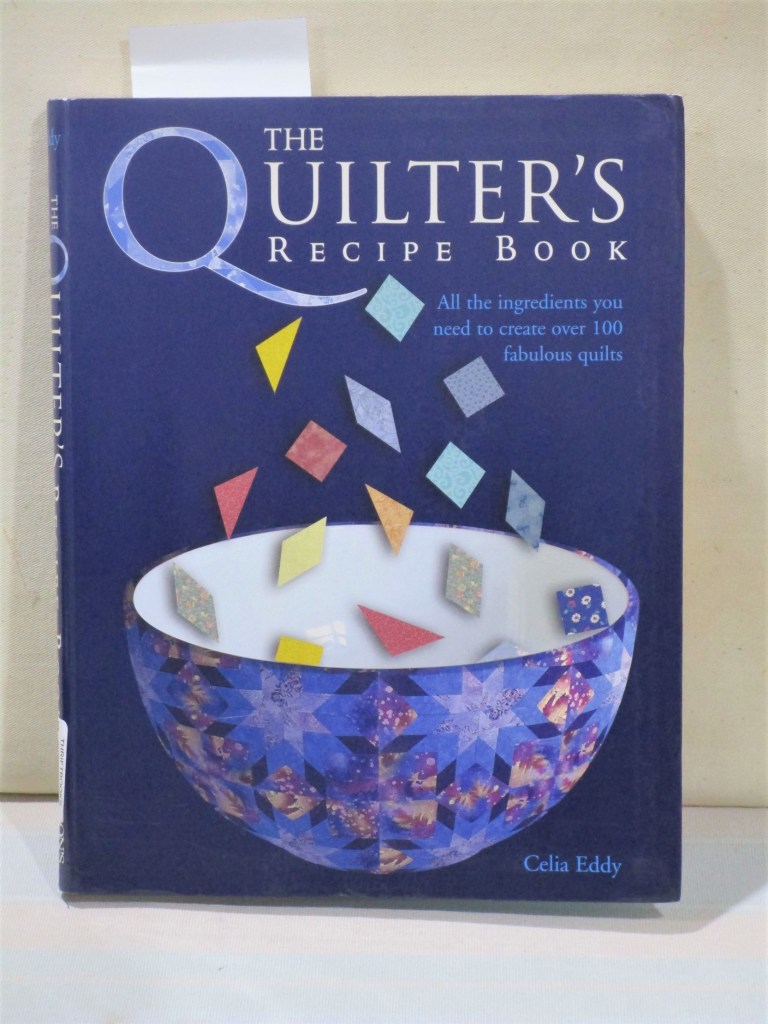
That part was easy for me. Selecting a block design? I needed help, so I got out a quilting reference book by Celia Eddy.

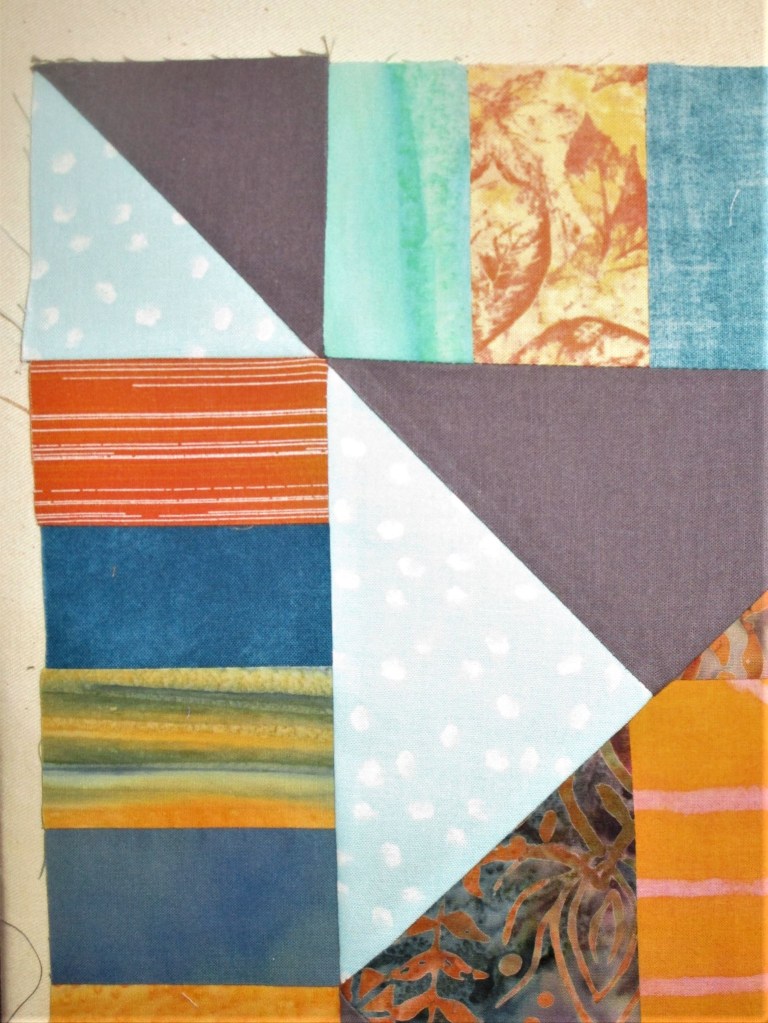
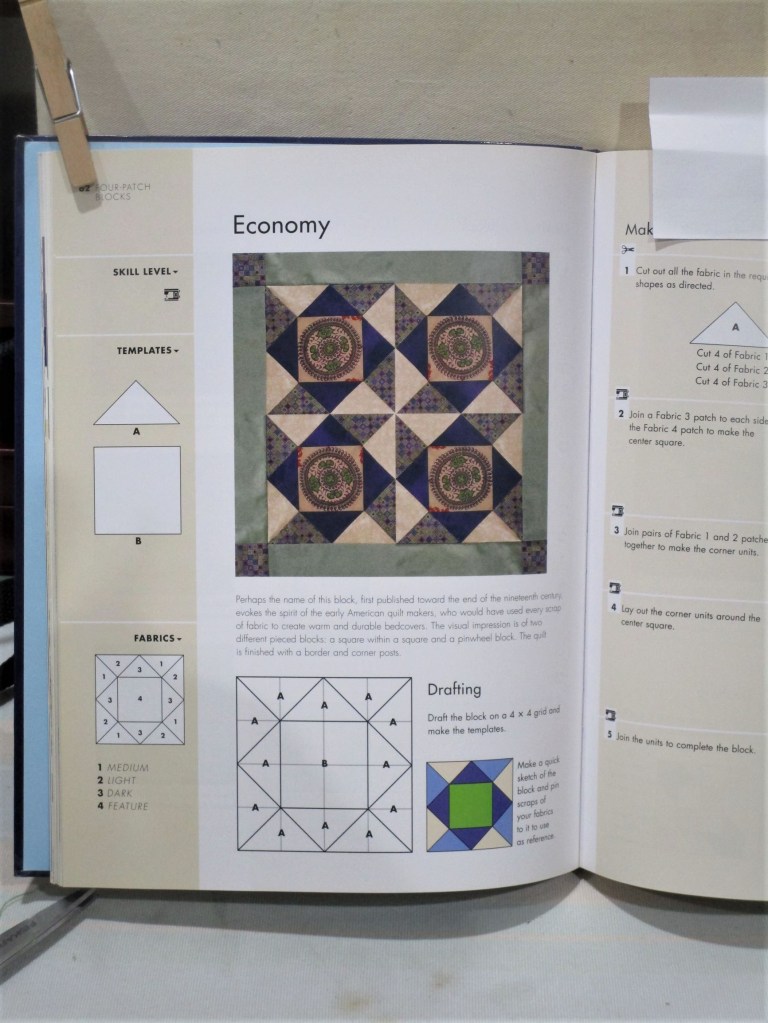
Gosh, I am so glad I bought this. Now, focusing on patterns that feature a center design and are not too hard for a beginner, I selected this one.

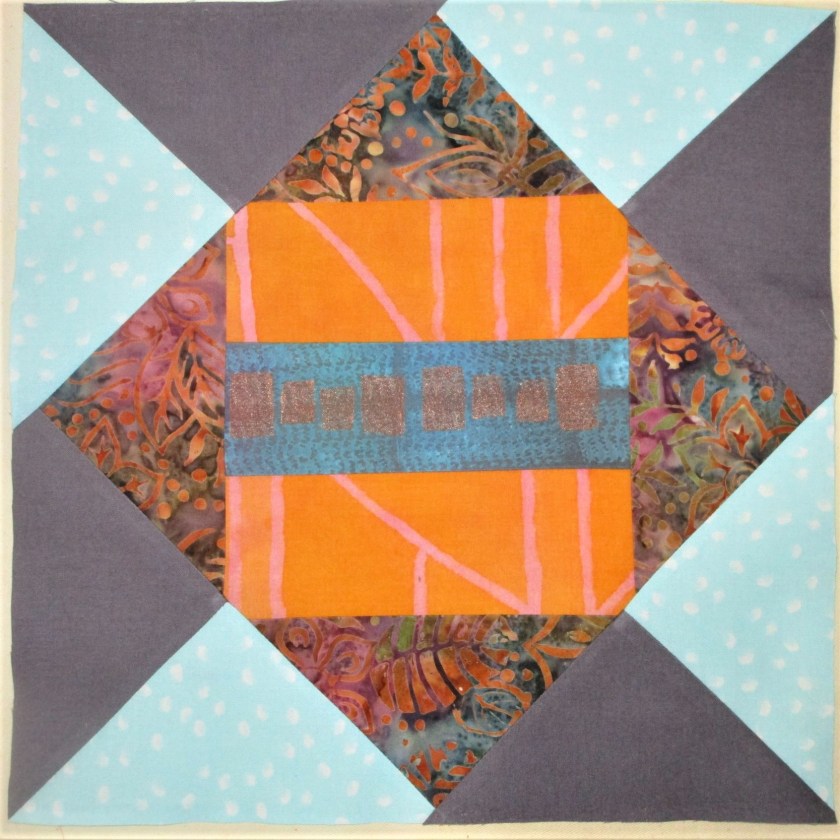
The pattern is called Economy, and includes a square, a right-angle triangle, a focus fabric and three supporting fabrics. It is rated for beginning quilters. Within an hour or so, I had put together my block.

If you also are intrigued by doing a round robin quilt, check out this group.

Below is the schedule of the designers and links to their blogs. 

Posted in quilting

Under the Sea WIP

I spent a good handful of hours this past weekend sewing up blocks for the Under the Sea quilt. So I thought I would show my progress.

My plan calls for 12 quilt sections made up of 4 blocks each. The blocks are constructed in Log Cabin chevron style. Each section will feature a different underwater animal. Here are the three I just completed.

The first two have coral reef fish swimming in formation. These will be placed across the top of the quilt. The third has starfish, which will end up somewhere in the middle.

I placed an order at Connecting Threads for more batik fabric that contains some harmonizing greens. Until the fabric is delivered, I can design and construct the sea creatures for the remaining blocks. So far I have baby turtles. I want to try making jellyfish, which sea turtles love to gobble up. and maybe some more coral reef fish.

Other ideas? Any suggestions will be dutifully pondered.

Link to Connection Threads website:

https://www.connectingthreads.com/fabrics/quilting-fabrics

Posted in quilting

Rock the Block Quilt top Pieced

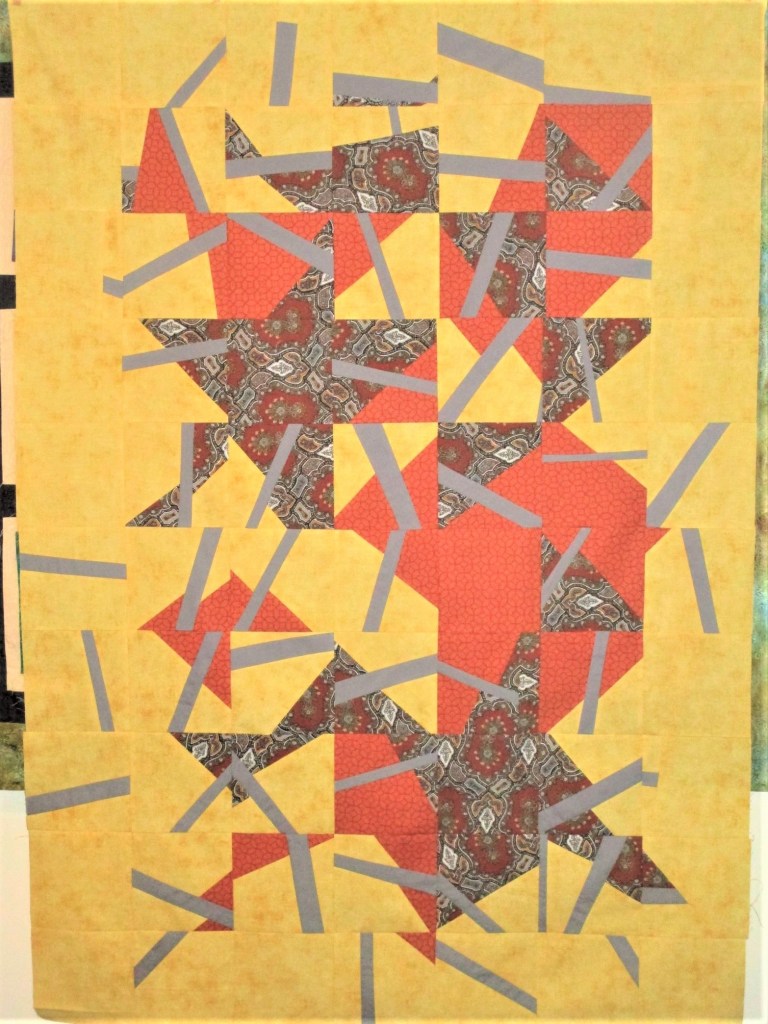
After a few days of fast sewing and meticulous pressing, my improvised Cunningham quilt top is done. Corner matching, as expected, was a bit of a pain. Promise that you won’t look very closely at them! Truthfully, I needed the practice, so all is good.

I am happy with the warm and energetic feeling that the quilt design suggests.

It has been fun to make it up as I go along. I’ve decided not to add any borders, but I still need to choose backing fabric and make a binding strip.

Posted in quilting

Improvisational Quilting with Joe

I came to learn quilting almost as an afterthought. As I started to get ideas for making fiber objects, I became aware that I lacked the skills I needed to realize them. Thus started my quilting education. There are some things about quilting I like – choosing fabrics, developing my design, adding surface details and actually doing the quilting. The things I dislike are cutting many identical pieces of fabric, squaring up blocks and especially matching corners.

So naturally I am drawn to improvisational piecing. Joe Cunningham (aka Joe the Quilter) and his process were a revelation to me. He offers the promise of freedom. Freedom from all the dull parts of quilting, which leaves more time for fun. The quilt featured at the top of my post is one of his. His website can be found here:

http://www.joethequilter.com/aboutjoe.html

Joe Cunningham has been a professional quilter since 1979. His philosophy is unique. He doesn’t use patterns. He designs out of his head, adjusting things as he goes along. He has no specific end in mind. He explains that as the quilt approaches the finish, he finds out what it will look like. He practices randomness, chance and serendipity. To this end, his method relies on chance from the first cut.

As an example, the class I took with Joe featured a quilt called “Rock the Block.” Here is how to make it:

Step 1: Choose three fabrics. Include one big print. The other two can be prints that don’t necessarily go with the big print. Also choose a solid color that you will cut into narrow strips, which Joe called “sticks.”

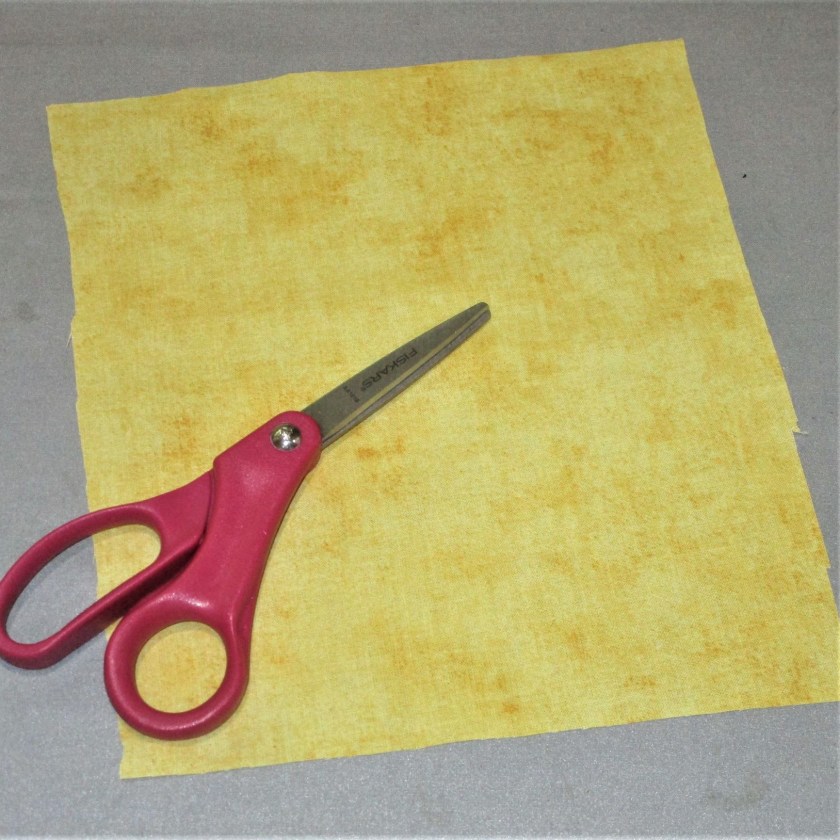
Step 2. Cut out a square. It doesn’t need to be perfect, but does need to be bigger than 7 inches.

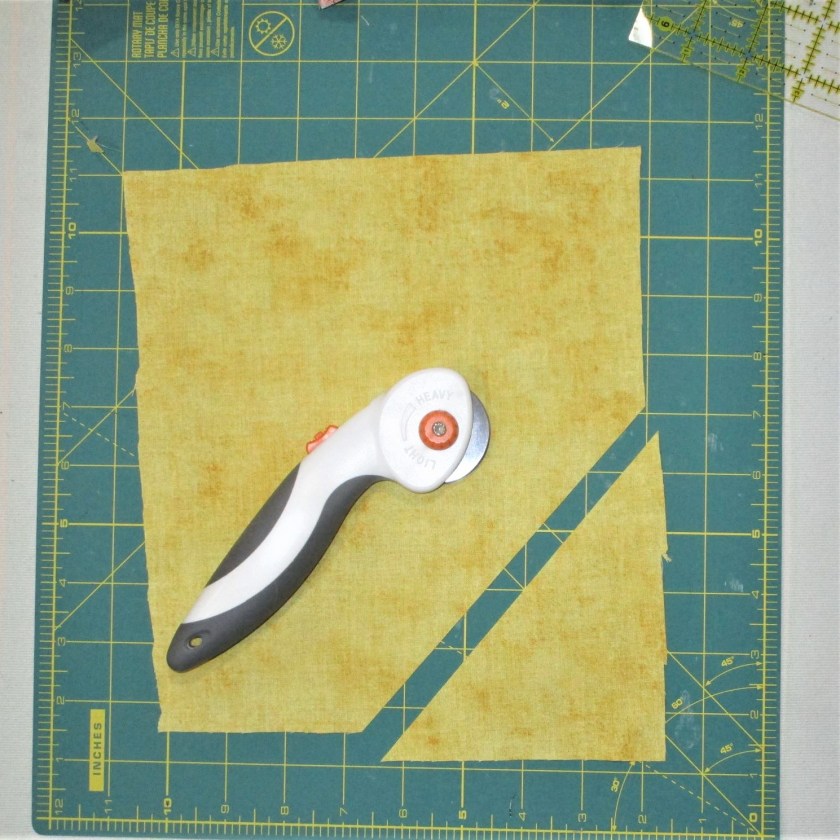
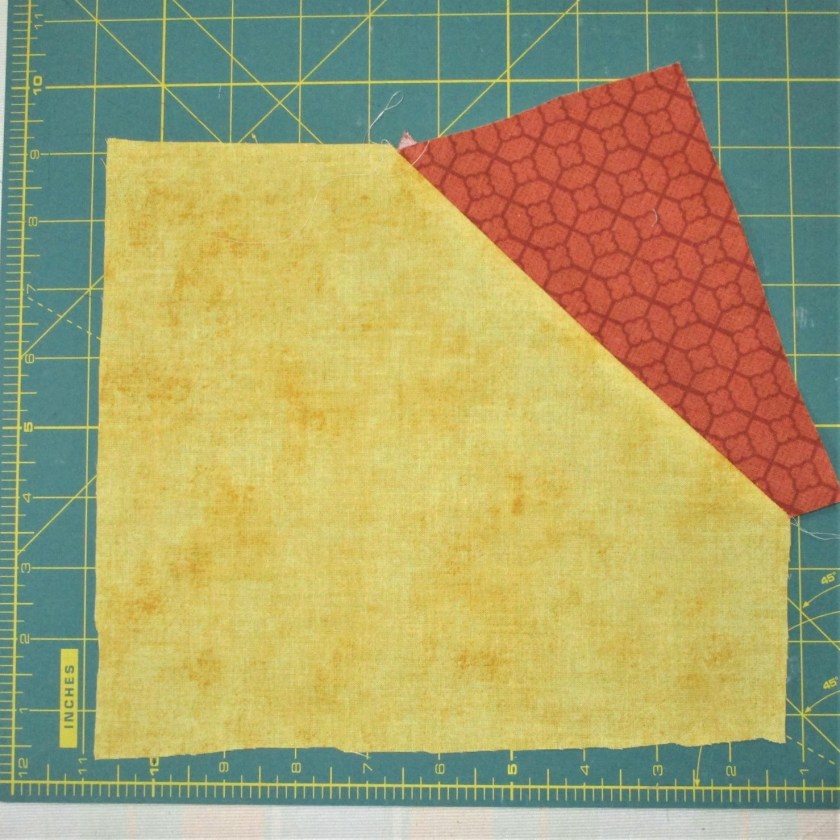
Step 3. Cut off a corner.

Step 4: Cut out a triangle from one of the other fabrics. Sew it to the square at the cut edge.

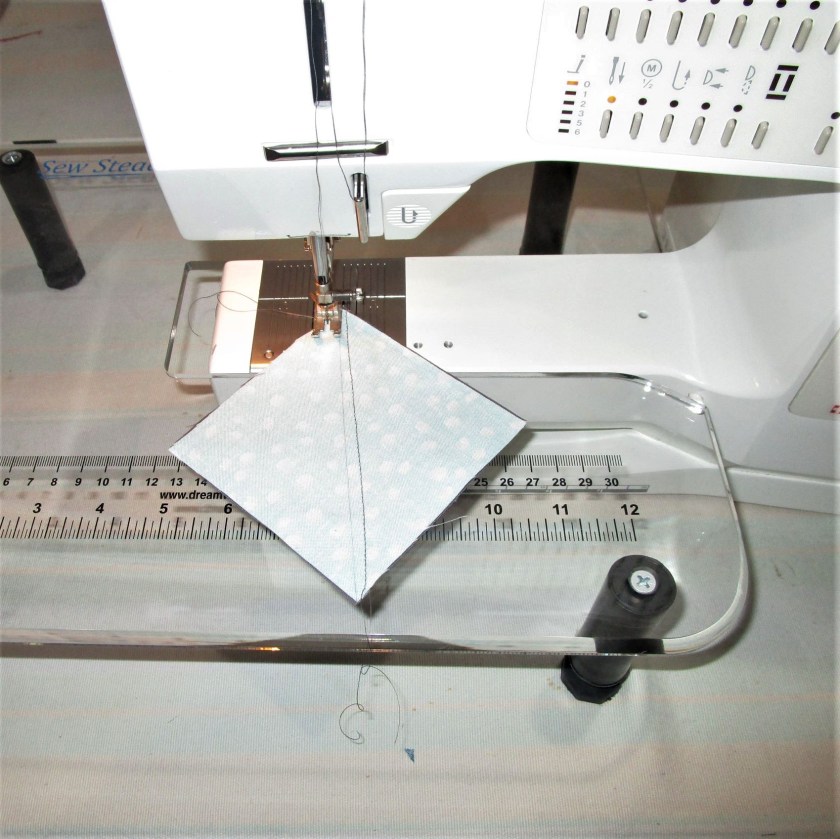
Step 5: Cut through the square, across both pieces of fabric.

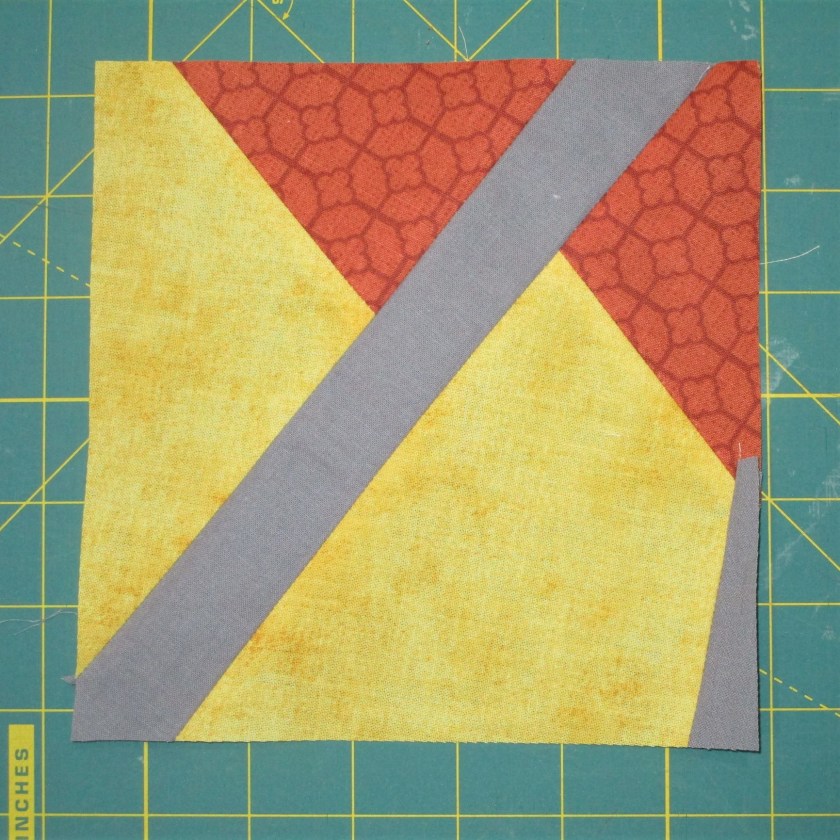
Step 6: Sew in a stick.

Step 7: Press seams open and trim the block with a 6 and 1/2 inch square ruler.

Repeat steps 2 through 7 until you have enough blocks for the size quilt you want to make. Use all the different combinations of your three fabrics. Your blocks might look like these.

Or they may look entirely un-like these!

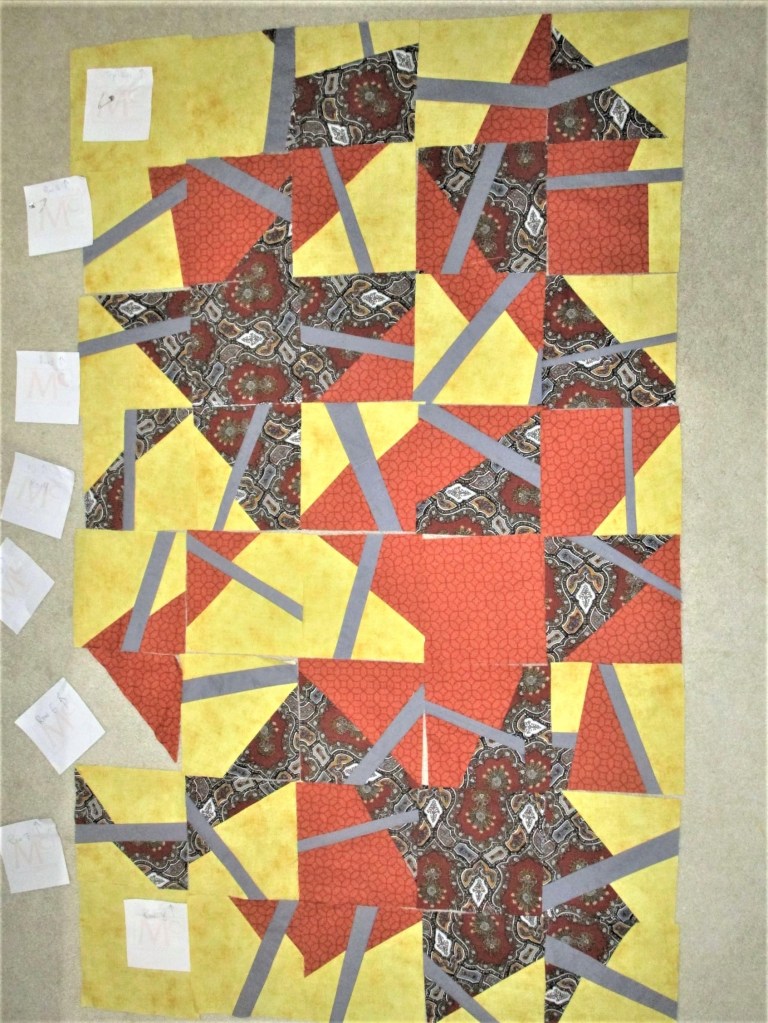
Now the fun begins. Lay out your blocks in rows. Move them around, arranging the blocks until they look “pleasing to you.” Lacking a design wall, I laid mine on the floor.

This arrangement is pleasing to me.

So far, this has been painless. Nay, it has been truly pleasurable. I plan to add more yellow blocks around all sides. Some of them will have patterned fabric crumbs and a few “sticks” sewn into them. Some may not.

While I acknowledge there will be corners to sew, I plan to adopt a laisser-faire attitude about the matching part. If this sort of design process is intriguing to you, I suggest you check out Joe the Quilter’s website to see more of his quilts.

Posted in hand embroidery, quilting

Finished Object: Sunset Abstract

Oklahoma Sunset

It took only a few days to determine and apply the surface decoration on this piece. And I have stretched the truth a little in calling this one finished. I have sewn on a wide border that still needs machine quilting, and the whole thing needs to be mounted to an artist’s canvas. Since I can’t purchase that item until pandemic restrictions are lifted, I am content to call this object finished.

This is a detail I altered from the original image. In my photograph there was a road in the foreground. I changed it to a stream and depicted it with sunlight glinting off its waters. I achieved this with metallic yarn sewn on with couching.

Here is my trick to get my running stitch straight. By using painter’s tape to mark my fabric, I could hand stitch while watching TV. Also I don’t have to remove marks.

Close up of lower right section showing sun. Clouds and stream are reflecting the sunset. The triangles were stamped onto the fabric using metallic paint.

I feel pretty good about this fiber object. It communicates well the idea of sunset and its color range. I like the balance between the elements and the level of detail. And it allowed me to practice my piecing and embroidery skills.