Posted in painting, quilting

Spring Green Progress

This past week I spent a good amount of time on this project. Since the background fabric is complete, I focused on the subject and the foreground. On Wednesday, I got out my fabric paints and created some terracotta and dark neutral colored swatches.

While the fabric was drying, I finalized the design layout. Because the foreground was the interior of a building, I decided to use the piecing instead of applique technique. The stitch lines would be straight and follow the lines of the greenhouse interior. Here is the full-scale drawing that I used to make the pattern pieces.
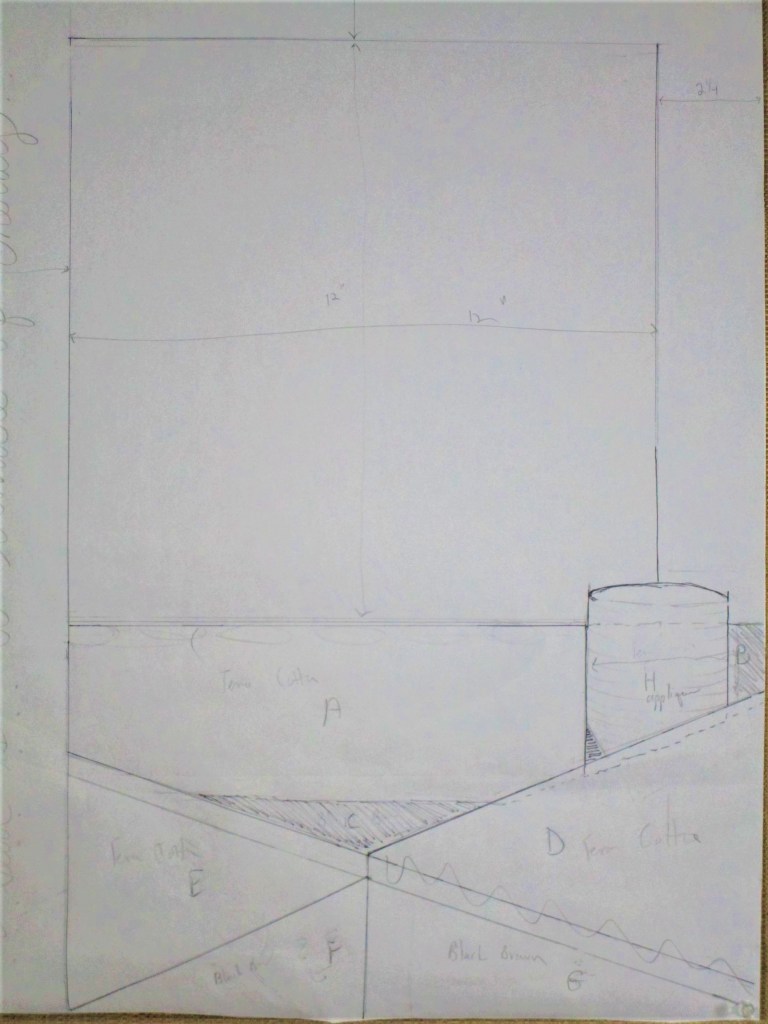
Next I traced each of the lettered sections, cut the traced images apart, pinned them to the fabric and cut each piece.

Following my decision to use a reverse-applique technique to replicate the little seed pots, I had made a template with elliptical shapes. I now traced these shapes onto the corresponding fabric pieces.

One of three sections that have seed pots.
Ellipses are cut out
Laying the cut-outs over the background fabric to check placement

Everything looked like it would fit. Starting with piece A, I sewed the pieces to each other in alphabetical order and stitched the resulting block to the background fabric.

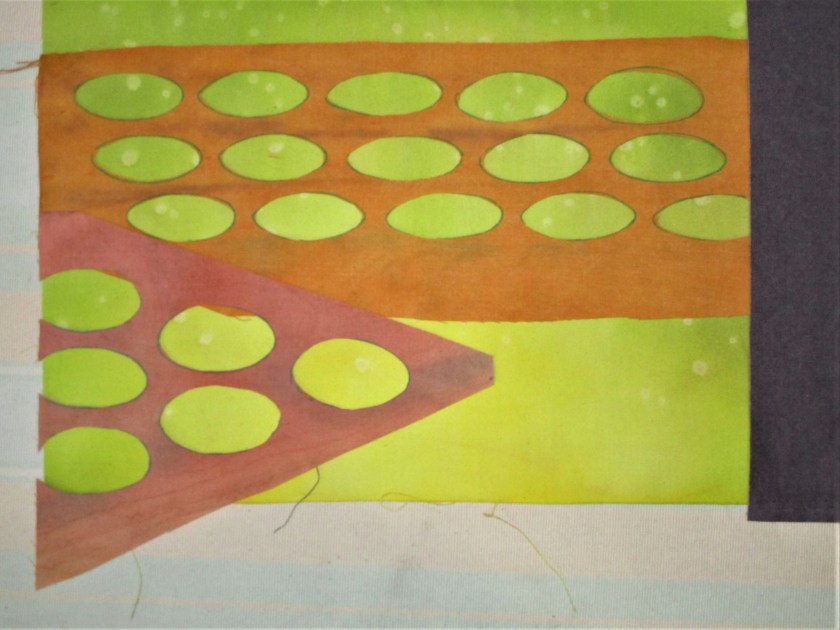
Completed piecing.

My vision is that the bright green color glowing up from each seed pot symbolizes the energy released by the seed as it germinates. You know what I mean – like the way superheroes are drawn.

Here is an image of the project as it stands now.

I awoke several times during the night to ideas about the next step swirling around. I had so many of them! When I awoke early this morning, I could recall only a few. Too bad. I guess I could force myself to get out of bed when this happens, track down my notebook and write those ideas down. But I digress.

The next steps involve adding some final touches of paint, stitching down the raw edges of the ellipses and making the quilt sandwich.

I will also practice drawing and stitching the seedlings before working them on the real thing.

Posted in collage, quilting

Sunflower Fiber Object Progress Report

For the past three days I have been working steadily on the small art quilt that was inspired by the sunflowers in my garden and influenced by Vincent Van Gogh. I’m about half way through. Today I want to share a bit about the process I am using.

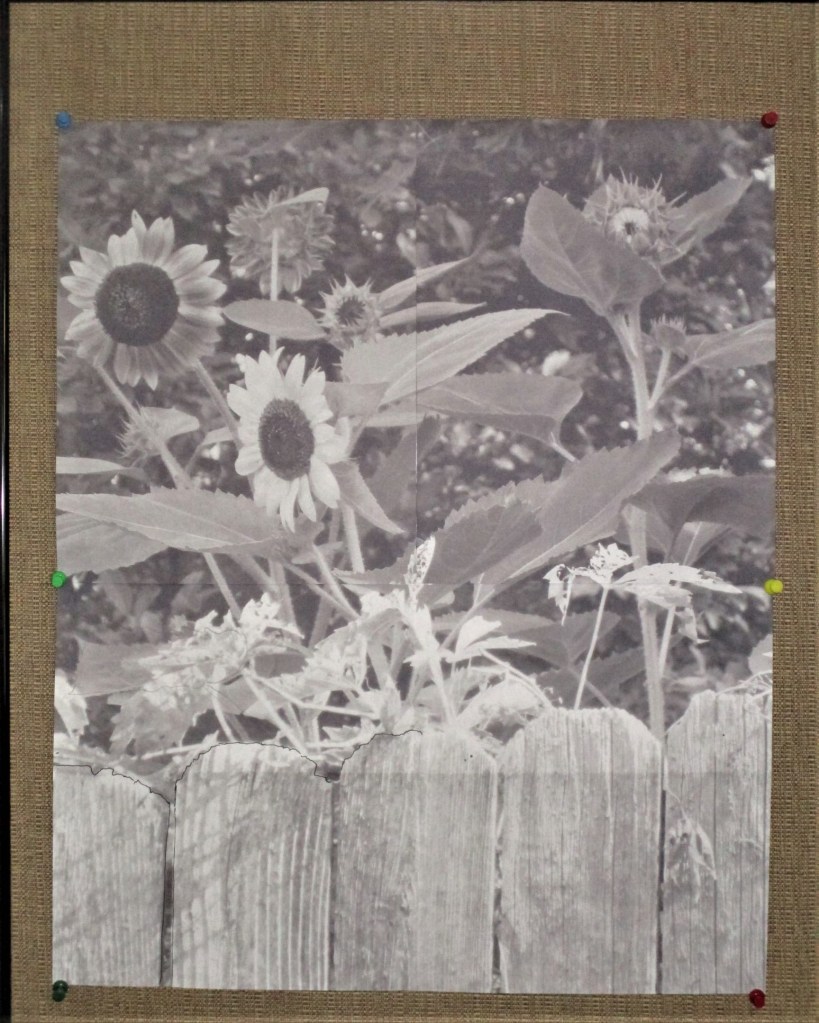
While the technique I have chosen to use is applique, the design process for most art quilts is similar. Start with an image. I used a photograph, but drawings are also good choices. Decide on size and dimension. Then enlarge the image to fit.

This enlargement is about 18 x 24. I have printed it in black and white because eliminating the color makes it much easier for me to judge relative values.

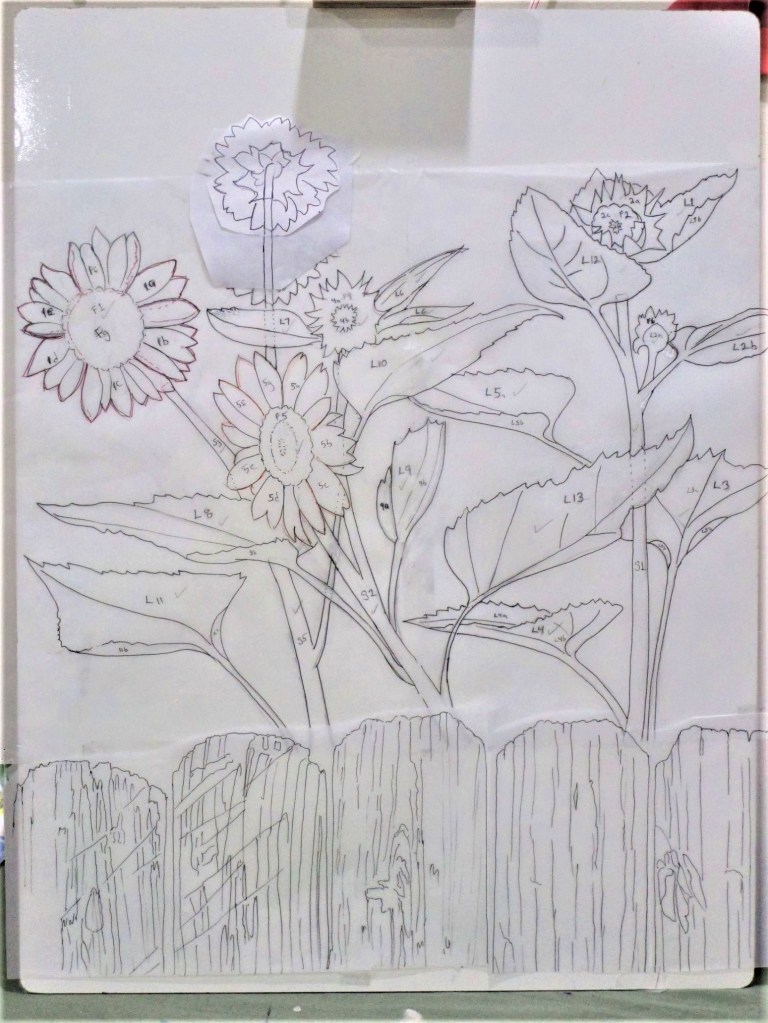
Using a tracing paper overlay, trace the image. During this stage many design decisions are made. You want to eliminate any visual clutter that doesn’t support the overall design. You can manipulate the different elements to strengthen your main thesis. For example, I altered the position of one flower and the tilt of the stems to accentuate the diagonal lines. It took me a long time to draw the pattern but I enjoyed the process.

Final Design

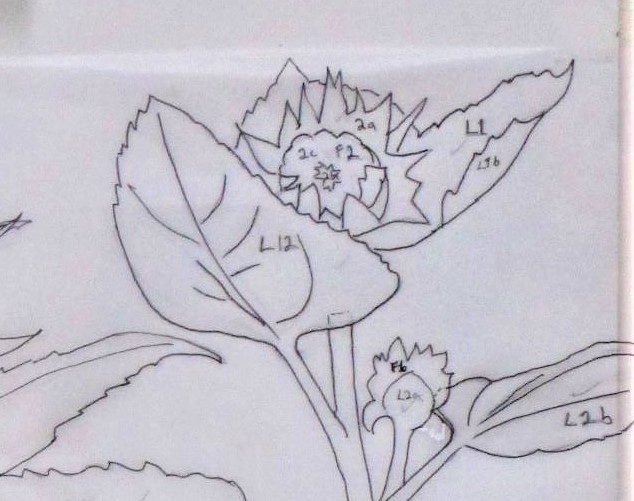
This pattern will be the map from which the entire assembly is guided. I drew in some directional lines that suggest details for painting on later. You see that I assigned numbers to every element. This will help me trace and cut out all the pattern parts.

Detail of sunflower in upper right of pattern

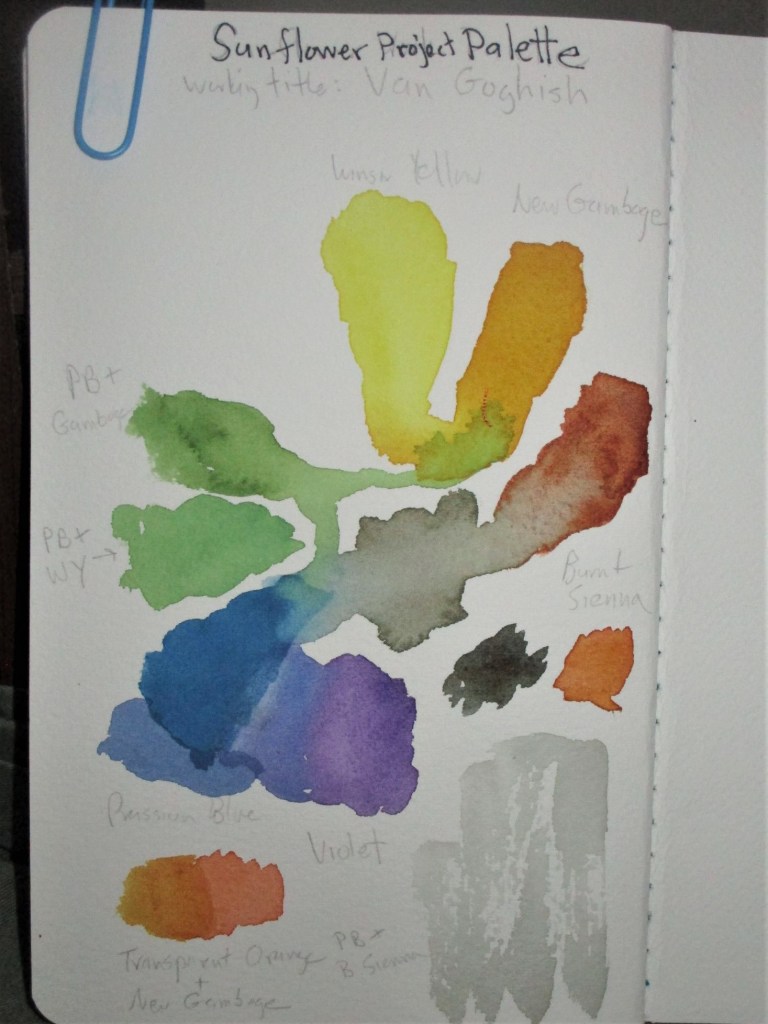
Now the part that every quilter just adores: Choosing colors and fabrics! Since I am a budding painter, I made a quick color chart in water color paint.

I’m trying to use an analogous color scheme. But my parameters are pretty wide, extending from violet through to yellow-orange. For this quilt I will assign the darkest colors to the background and the lighter ones to the elements .

Even though I did go shopping, in the end I chose fabrics mostly from my stash.

Next I traced each element onto freezer paper, cut them apart and pressed them onto the fabrics. Following the drawn lines, I cut out each pattern piece. Keeping them organized and up off the floor is the main challenge!

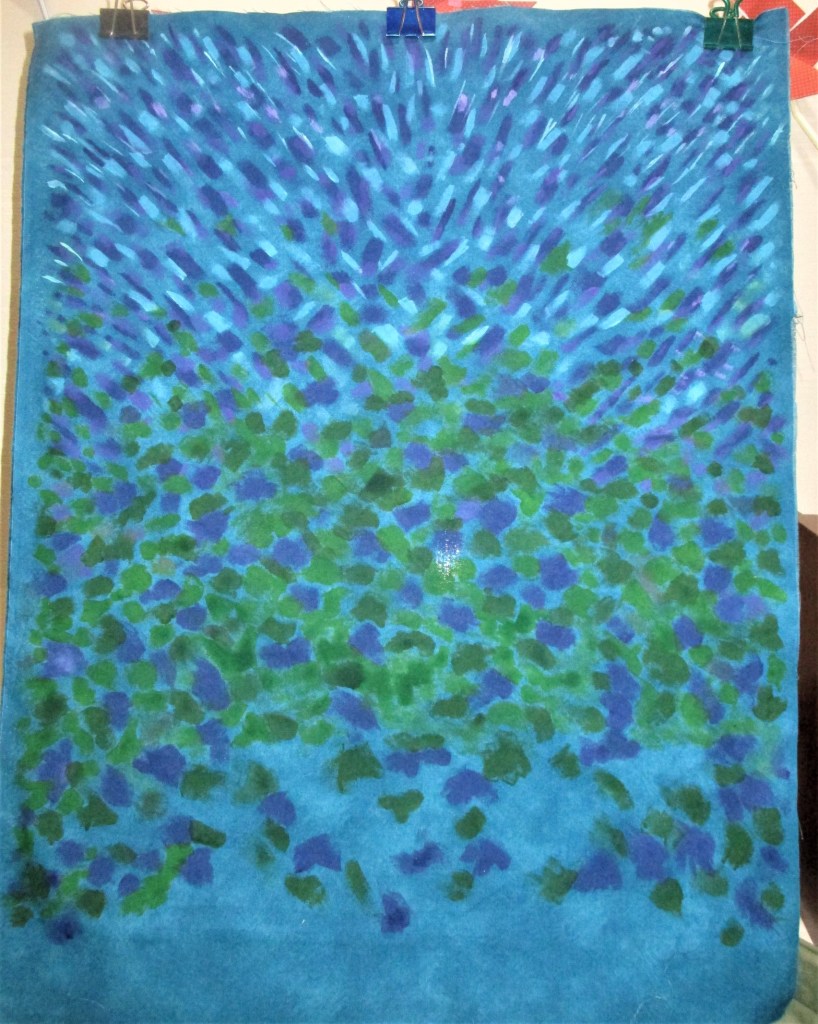
In my last post, you saw how I painted the background fabric. Here is the background again, up on my design wall and ready to accept the fabric appliques.

I use a fusible webbing called Wonder Under to glue the appliques to the background. I won’t go into detail on that step. The product’s packaging tells you what to do.

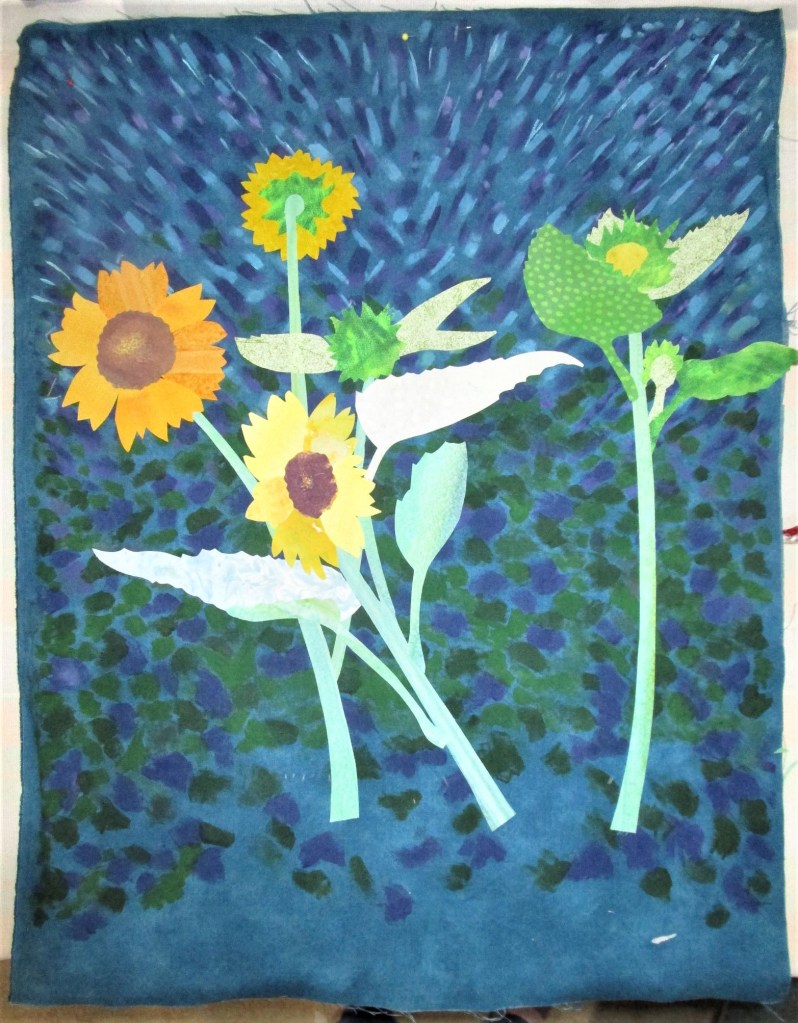
First I assembled the flowers, each of which had several fabrics. Once that was done I started attaching appliques to the background. Any pieces that lie behind another piece go down first. I started from the top. Here is a photo with about half the appliques on:

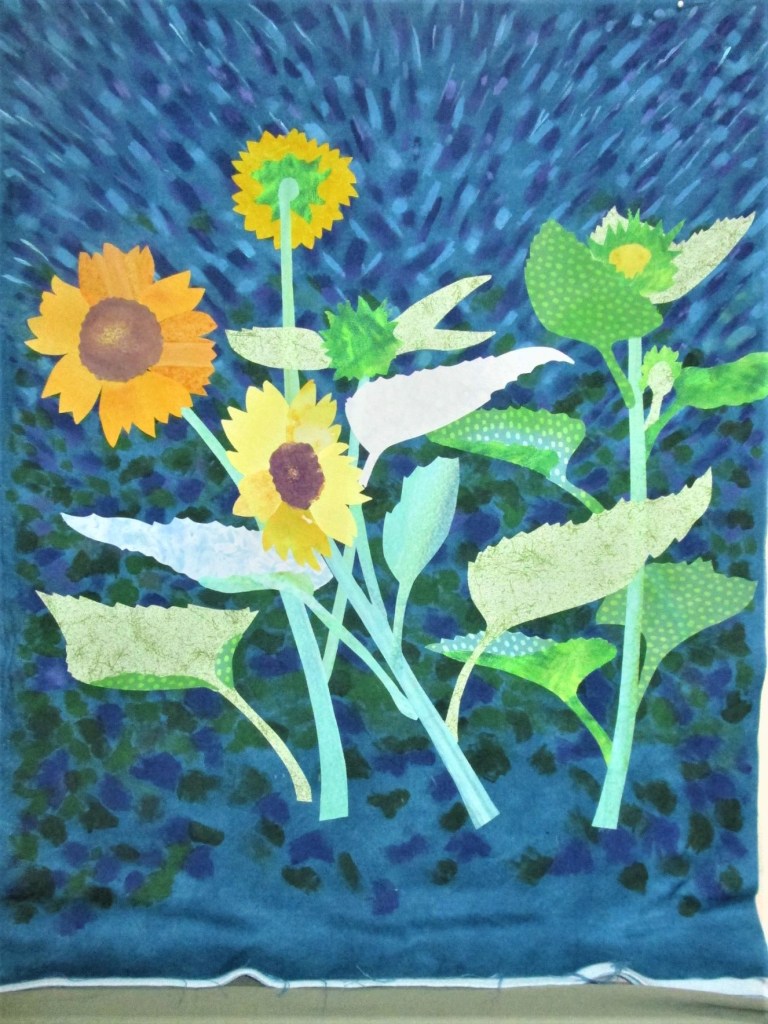
Here you see all of the flowers and leaves attached. This is where I left it yesterday.

I’m pleased with the result. I like it so well I may not even attach the fence applique – just let the flowers float in mid air. What do you think?

Posted in quilting

Rock the Block Quilt top Pieced

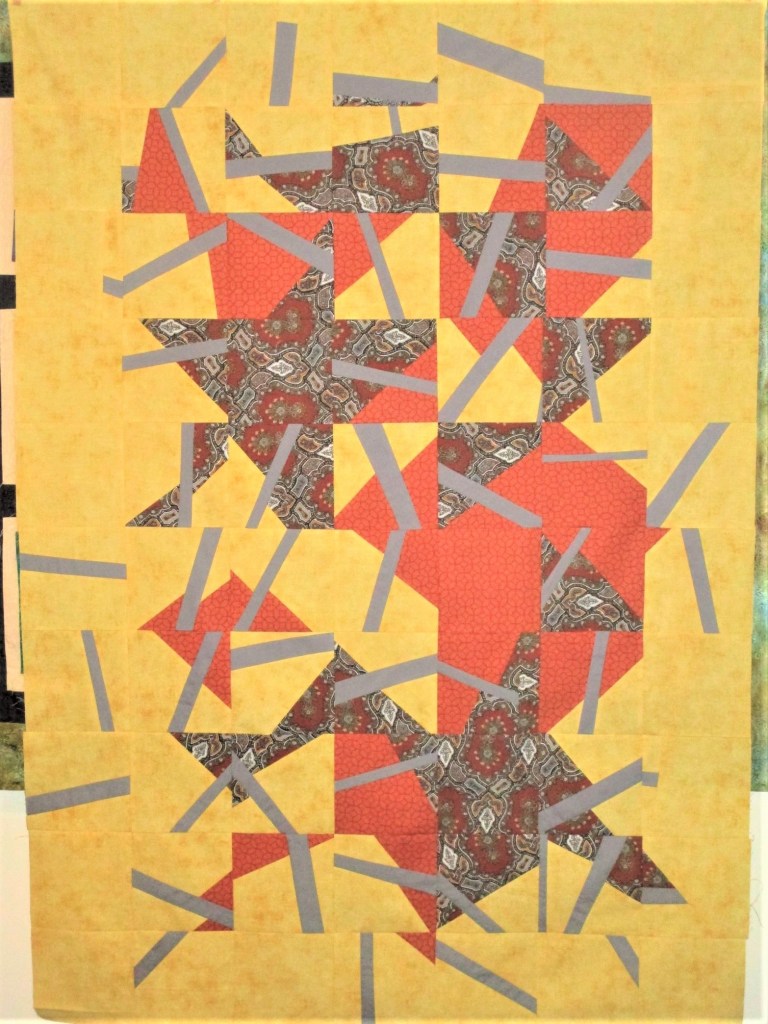
After a few days of fast sewing and meticulous pressing, my improvised Cunningham quilt top is done. Corner matching, as expected, was a bit of a pain. Promise that you won’t look very closely at them! Truthfully, I needed the practice, so all is good.

I am happy with the warm and energetic feeling that the quilt design suggests.

It has been fun to make it up as I go along. I’ve decided not to add any borders, but I still need to choose backing fabric and make a binding strip.

Posted in knitting

Milestone for Weaver’s Square Vest

Back is Finished!

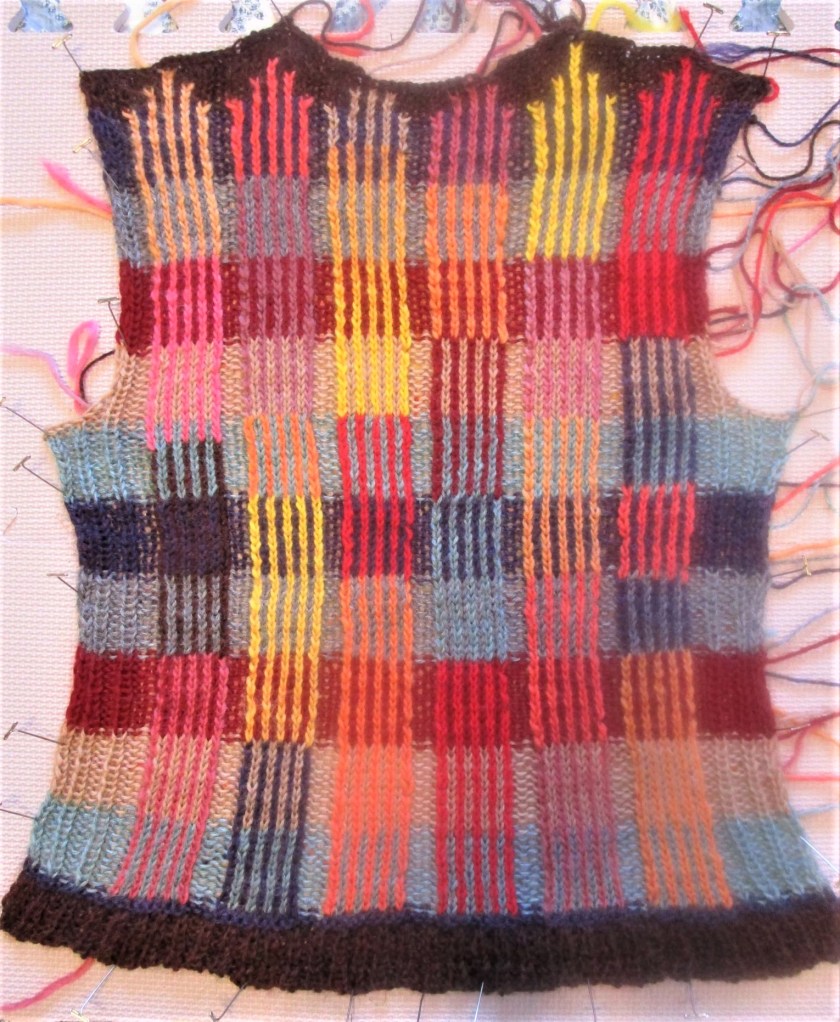
I bound off the back of the vest last night. Today it is drying on my blocking mat. Despite the fact that it looked Very Small and Narrow the whole time I was knitting, it turned out to match the gauge of my blocked swatch. Hooray! As all knitters will surmise by looking at the photo, there are a gazillion ends to weave in. That will occupy me for a few hours.

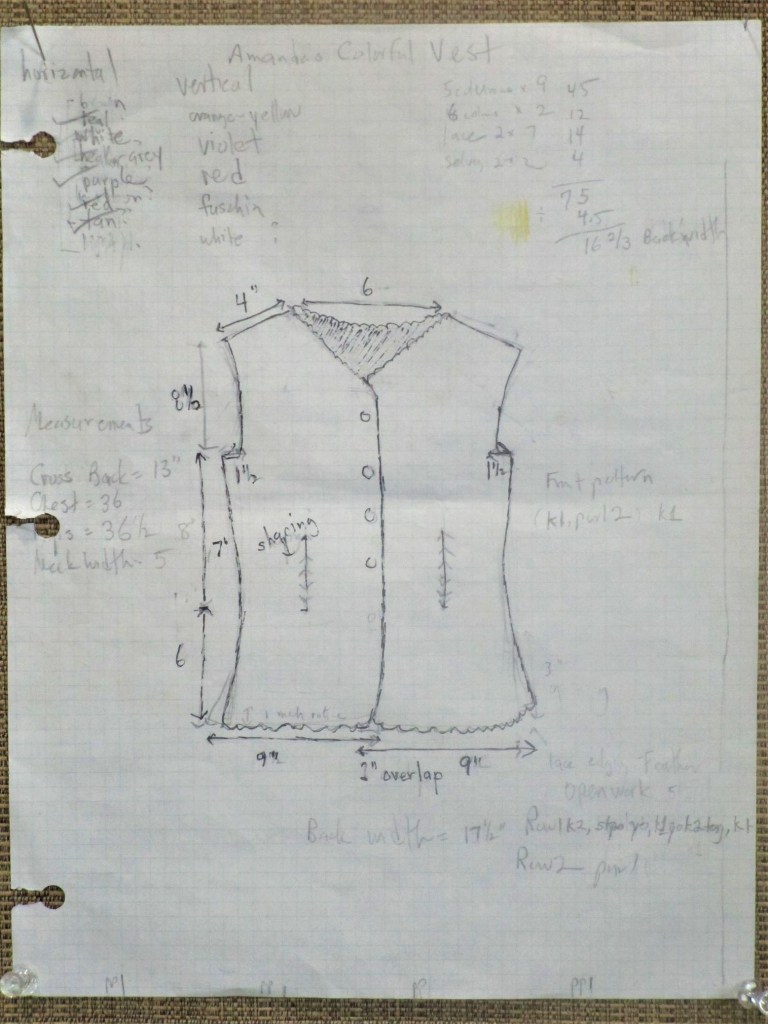
Here is the schematic I drew for the making the vest front.

I will be using a superwash Peruvian wool yarn from Knit Picks called Merlot Heather. To make the vest fit close to the body, the stitch pattern will be a broken rib stitch and there will be waist shaping decrease-increase stitches near the natural waist. Buttons?

Still undecided.

Posted in colorwork, knitting

Project Unearthed

Yesterday, as I was tidying up my studio, I came across a project bag. In it were four small balls of sock yarn and this inspiration photograph:


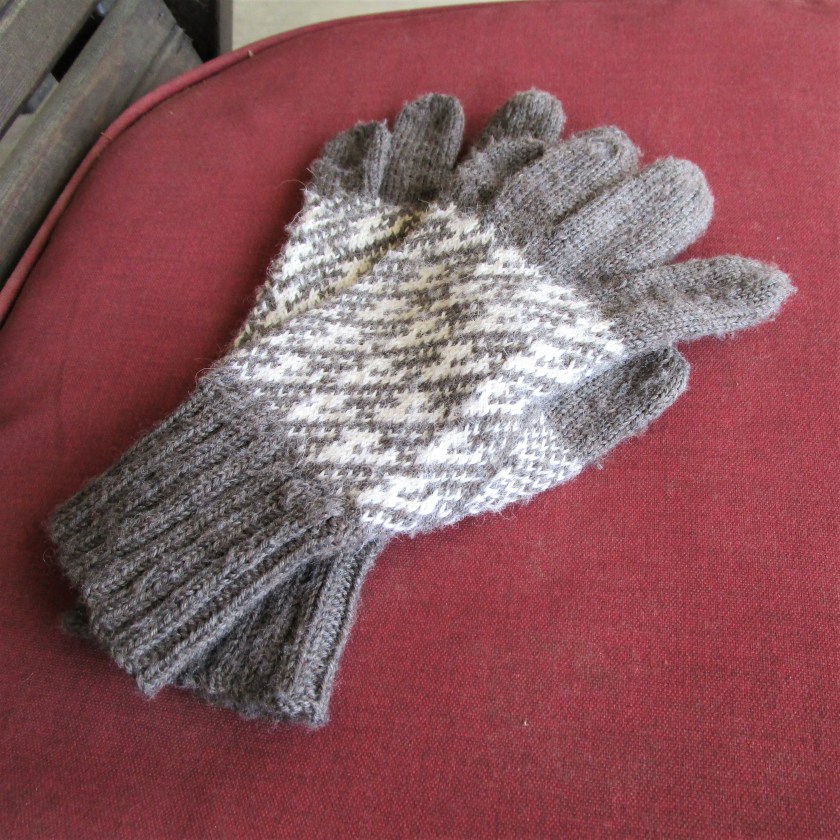
Technically, this project is half finished. I knit my first pair of gloves last winter, using an eight stitch square stranded knitting pattern that I had designed. They turned out great and I wore them frequently during the cold months that followed.

Grey is merino wool and nylon, white is alpaca

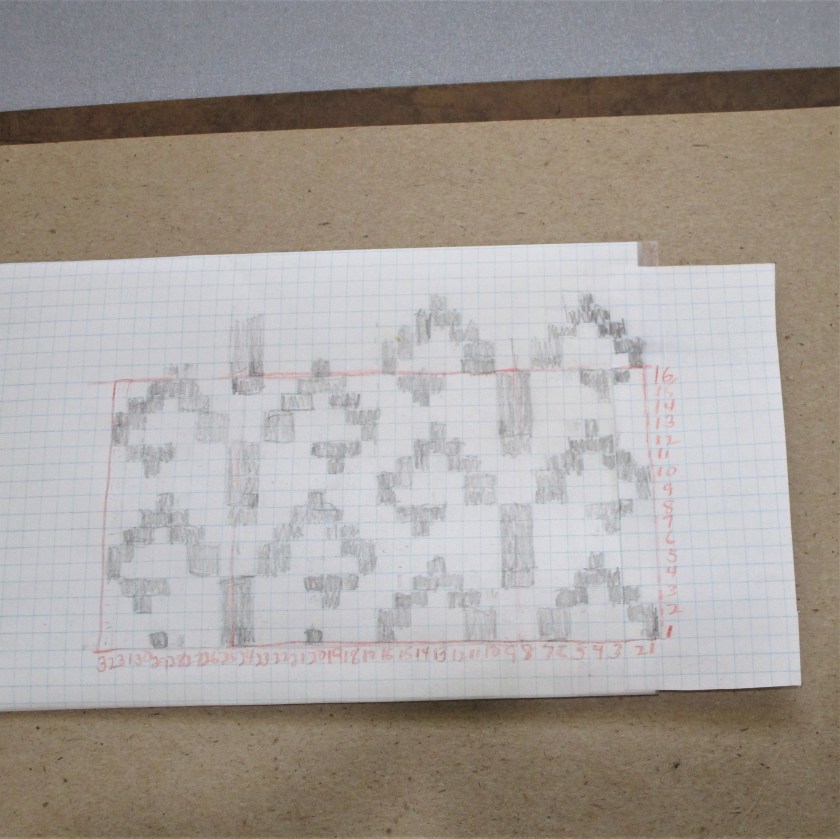
But I had intended to make patterned mitts to wear over the gloves, as a fashion statement and to give some extra warmth when needed. Today I will start this project. I don’t want to copy the inspiration photo slavishly, rather, I’d like to make something unique.  It will be a bit tricky, because 1: The design must be about 8 inches around because that is the diameter of my hand, 2. The mitts are knit in the round, and 3. I don’t know the gauge yet. I will need to determine the gauge before I finalize the design. Here is the chart that I drew:

This design suggests palm trees to me. Notice that the pattern stitch repeat and the pattern row repeat are both multiples of eight. My plan is to cast on 64 stitches, assuming that I will get a gauge of 8 stitches per inch. At least that is what I usually get with sock yarn and stranded knitting. So here is my 64 stitch swatch fresh off the needles:

Hm, it seems a little bit big.

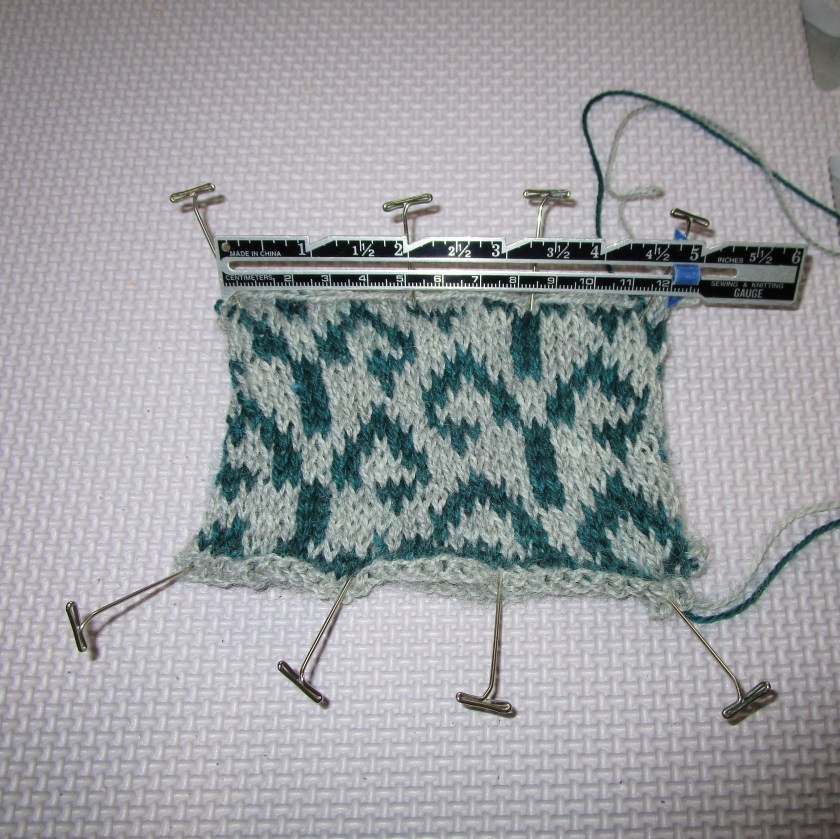
It knit up pretty well. I kinda like the design. Here is the swatch blocked:

If you have sharp eyes, you will notice that the blocked piece is 4 and 1/2 inches across, making it 9 inches around. Too big! While I could try to get gauge with smaller needles, I’m not sold on this design for the mitts. The scale is too large.
I’ll go back to the drawing board and try again. Thankfully, the cold weather is over for the next eight months.