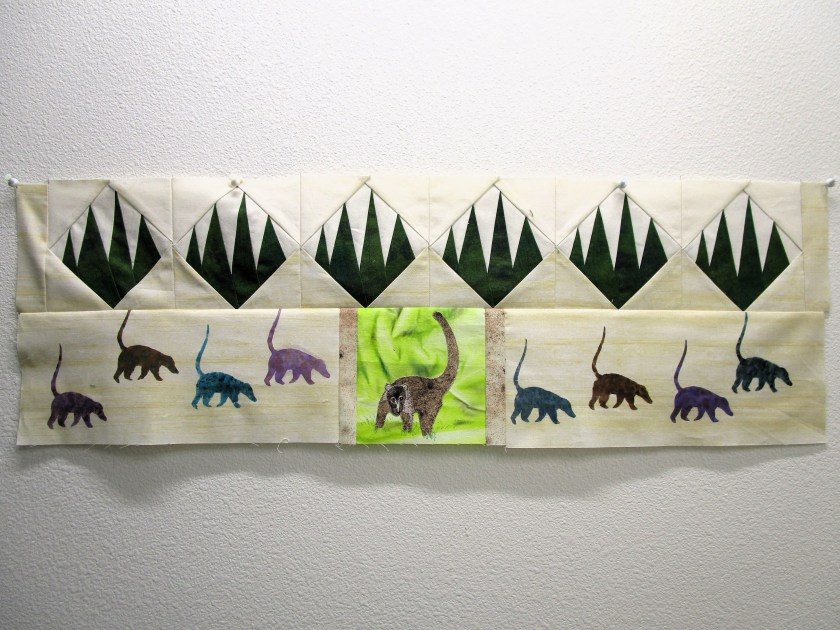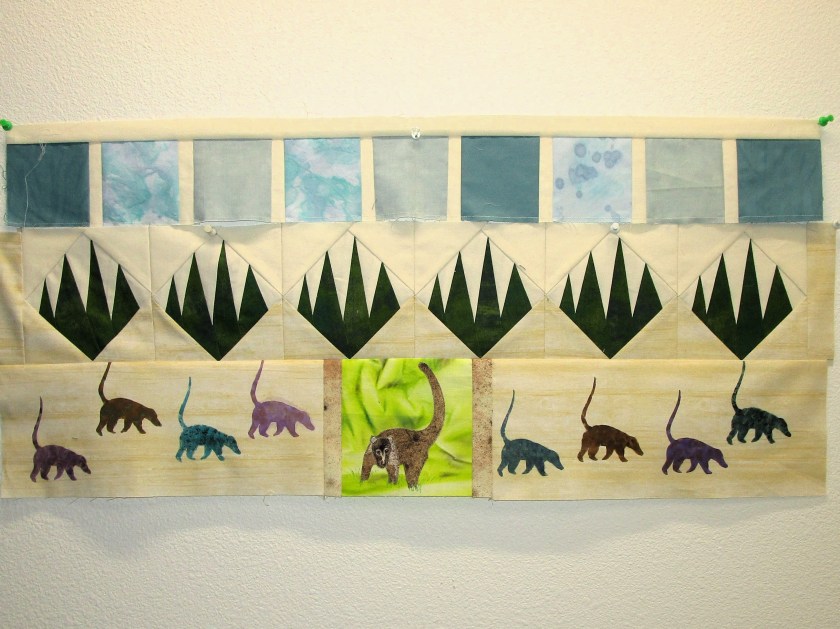
Posted in quilting, recycling

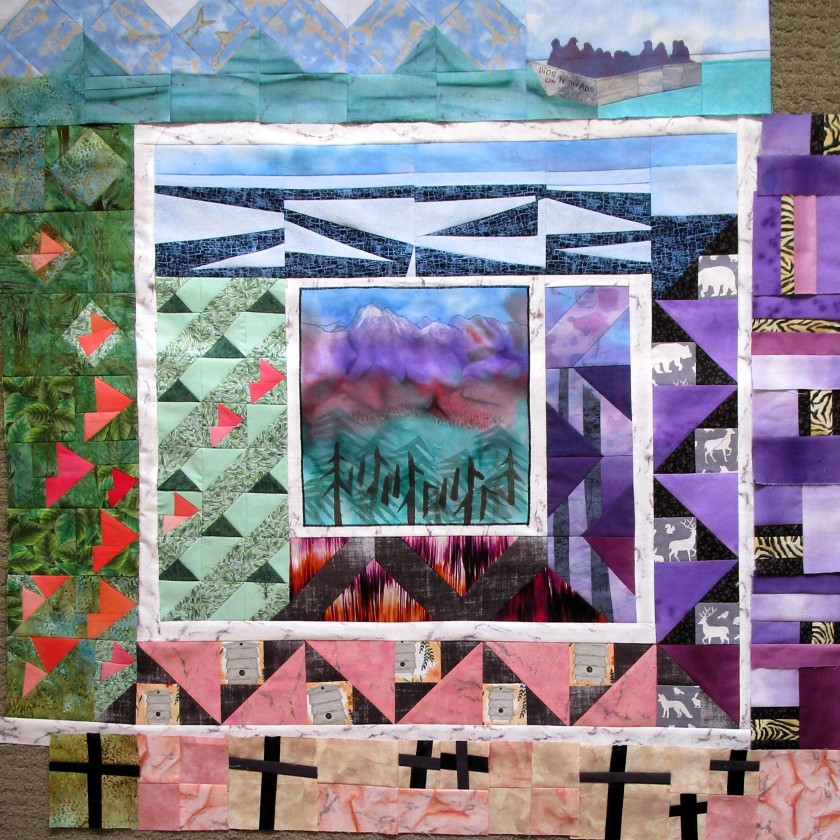
SAHRR 2024 Finish: Migration World

This is the week that Quilting Gail has designated for challenge participants to post pictures of their finished quilts. The Stay At Home Round Robin challenge is in its fourth year. It’s been a fun ride for me, and pure pleasure to see the work of other quilters as they add a border week by week.

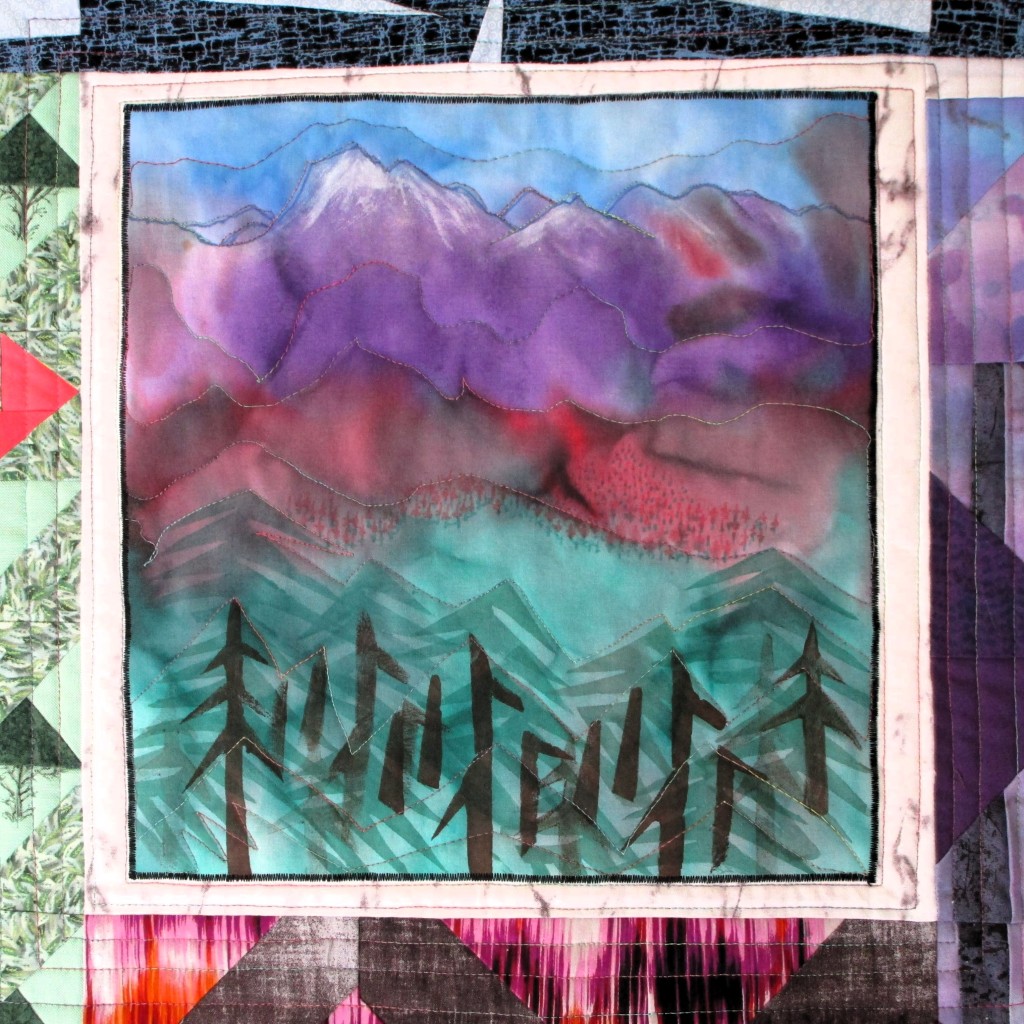
It started for me when I chose a center block from a group of experiments that I did almost five years ago. Back then I was teaching fiber arts to a group of home-schooled children. One week I had the students experiment with fabric paint on pieces of a cut-up sheet. The panel I used in my SAHRR came from the example I made, to show the students some of the possibilities of fabric paint.

Four colors of paint were applied in bands horizontally across the fabric and allowed to bleed together. When the panel dried, it looked like a mountain scene to me. I enhanced the image with opaque white paint, paint pens and stencils of pine trees.

The painted panel set the color palette for my SAHRR.

That choice led me on a path which resulted in a quilt about migration. For some time, I had been toying with designing and sewing paper pieced butterfly blocks. Could I make a quilt about the monarch annual migration to Mexico? The time I spent researching this migration led me to think about the wider issues of habitat loss and climate change. Now I had a broader story to tell with my quilt.

The weekly challenges offered by SAHRR quilters helped me to build some structure around my ideas. For that I am grateful.

Here are some close-ups of a few details I added with applique and micron pens.

And here is my finished quilt:

Just a word about the materials used: I was determined to buy nothing for this project, making it entirely with stuff that I already owned. I mentioned the cut-up sheet. In addition, I recycled pieces of clothing such as dresses and men’s shirts. The main fabric, which was used as sashing, was also divided up and painted various colors to carry it into most of the borders. Ultimately, I did have to buy a few quarter yards of black patterned fabric and the quilt’s batting.

Thank you to organizer Quilting Gail and her fellow designers who put together this year’s SAHRR challenge. You can find their work here:

And to see the finished quilts, follow this link.

https://fresh.inlinkz.com/party/7eab5849658e4307bf5cfcff8e69c998

Posted in quilting

SAHRR Round 6 and a revisit to Round 4

It is the final week of the 2024 Stay at Home Round Robin challenge. In my last post, I had part-way finished the round 5 challenge (the number 4) but was flummoxed by the Round 4 challenge (square in a square). Working many hours on my quilt this week, I managed to sort out and assemble round four, as well as the second side of round 5. If you are following this, I recommend that you get comfortable, because this is a long post.

Let me start by sharing two inspiration photos.

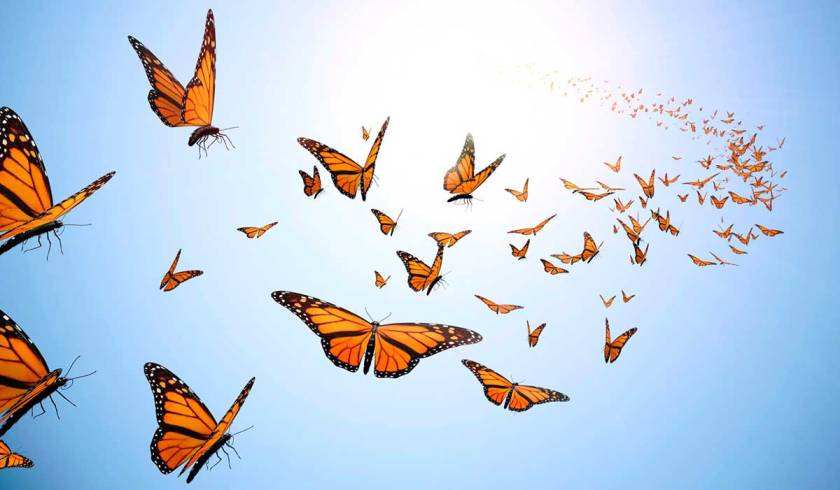
A kaleidoscope of butterflies.

A boatful of refugees.

It’s possible that the connection between these two images isn’t obvious. When I tell you that the theme of my quilt is migration, my choices will make more sense to you.

For at least a year I have wanted to paper piece some butterflies and use them in a quilt about migration. I even went so far as to design three different patterns in multiple sizes. After fooling around with them, I ended up putting them away for a later date. It’s now 2024 and, it’s clear to me that now is the time for the butterflies.

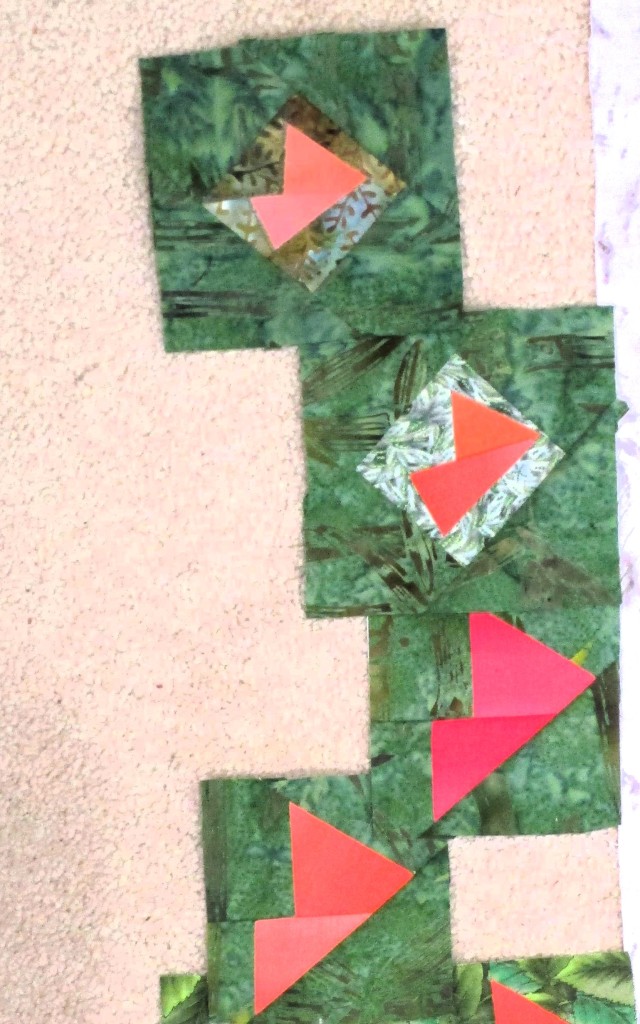
Most of my paper pieced butterflies were in plain blocks. But because Round 4 is square in a square challenge, I used two small butterflies as centers

This border took me almost three days to design and construct, but I don’t regret any of the time, or the mess left behind. The result exceeds my expectations.

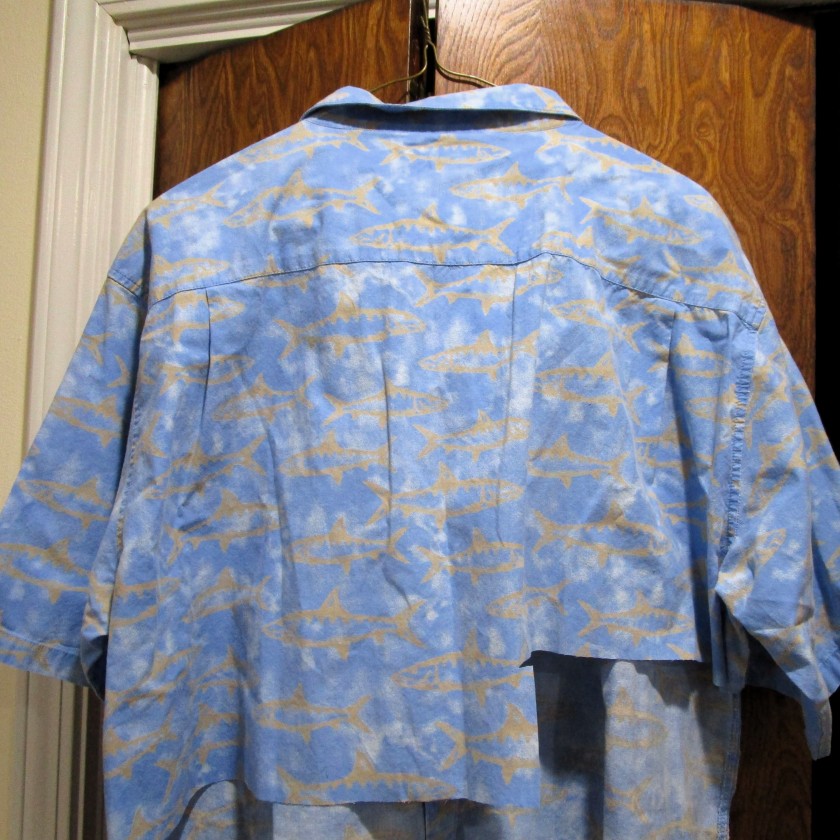
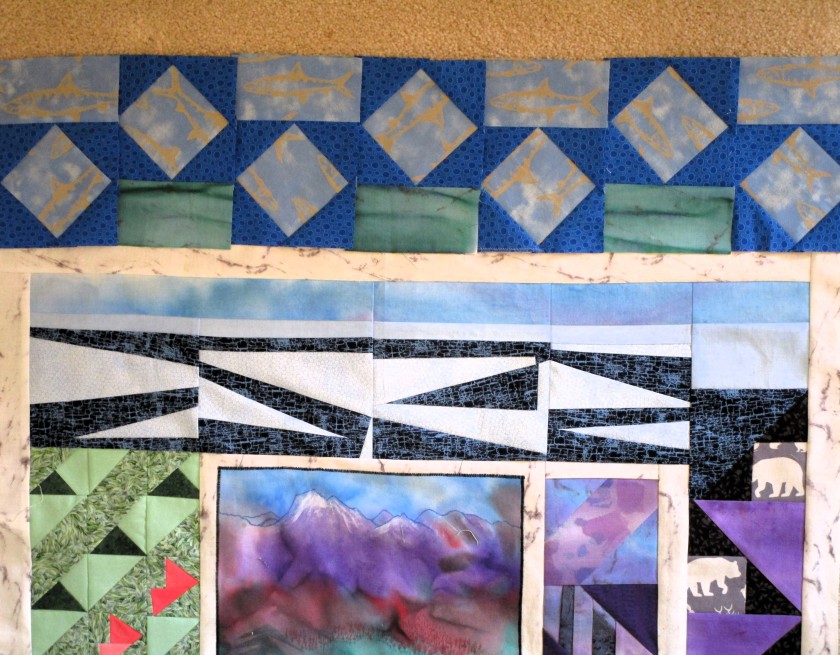
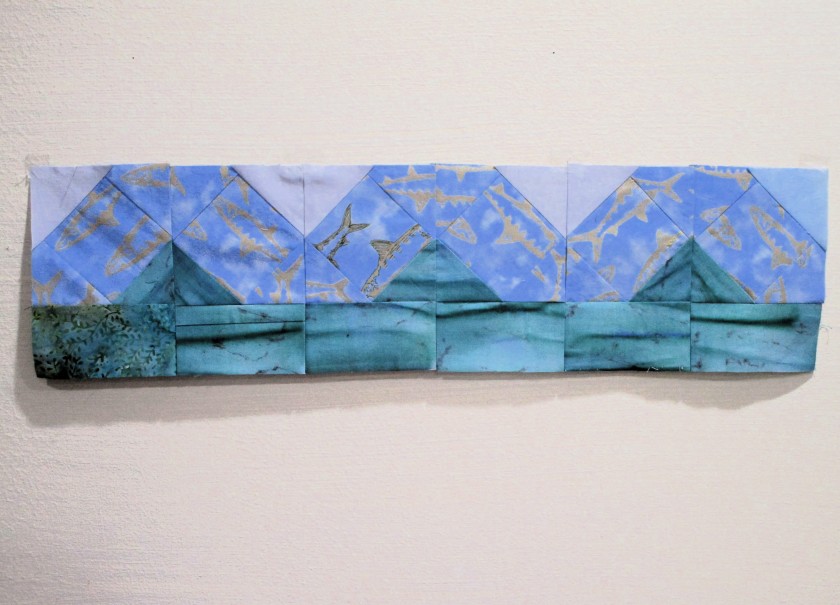
Moving on to the top border, which also is included in my Round 4. Here is the shirt I cut up to get the fish fabric.

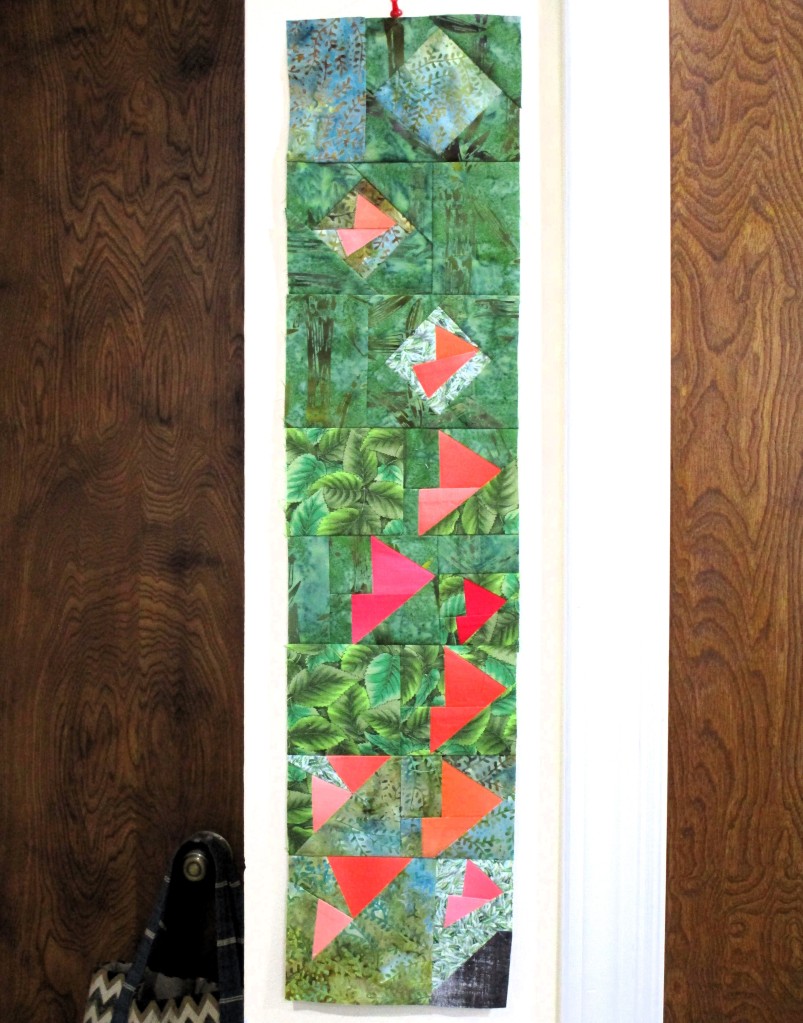
I wanted to sew the blocks in a manner that gave the illusion of fish swimming upstream. Here is my first attempt, which was a total fail.

To move forward, I did what everyone else does. I looked at other quilters’ work. I noticed one quilter put together a square in square that totally changed the appearance of the block, simply by mixing up the corner triangles’ colors. The lesson: you can use more than one color. Ahhhhh! Out came the seam ripper to completely disassemble my entire border. I threw away all the corners and made new ones. Now I have six square in square blocks that work together the way I envisioned.

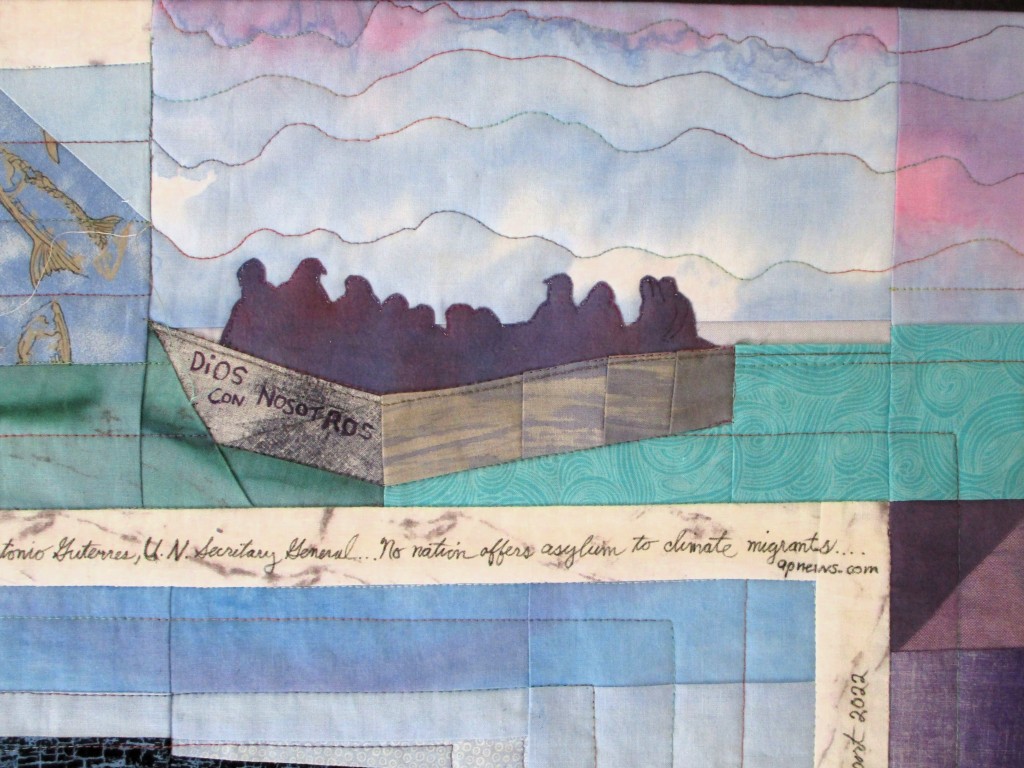
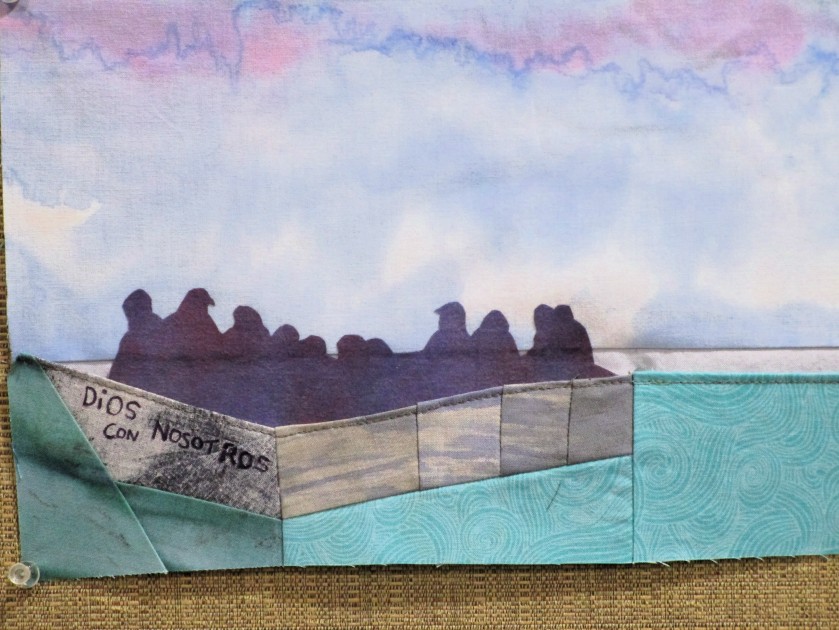
Deep, breath – on to my refugees. Using my inspiration photo, I made a sketch that caught the essential elements. Then I turned the sketch into a pattern. Because the shapes of the people are not straight lines, this part of the design was not made by paper piecing. It was appliqued to a background of sky and water.

The finished block is 12 x 6 inches.

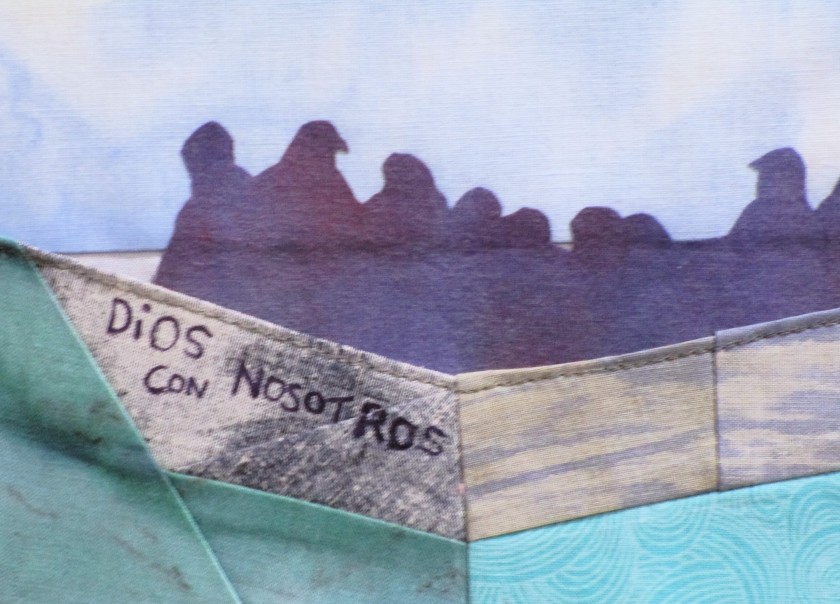
And if you look closely, you can see how I met this week’s challenge by adding the lettering that appeared in the inspiration photo.

I wrote the words with a purple fabric pen.

This morning, I threw together several four-patch blocks to fill in the right side of the quilt. And while it’s not completely sewn up, and two corners need transition blocks, this quilt top is close enough to a finish that I can post it on the linky party site.

MIGRATION WORLD

If you are still with me, thanks for reading all of this. It felt important to me to share my process. Maybe it’s a way to clear my mind for what may come next.

This week’s Linky party is hosted by Kathleen McMusing. Visit her to see the quilts of other participants.

Posted in painting, quilting

Just Trees Reveal

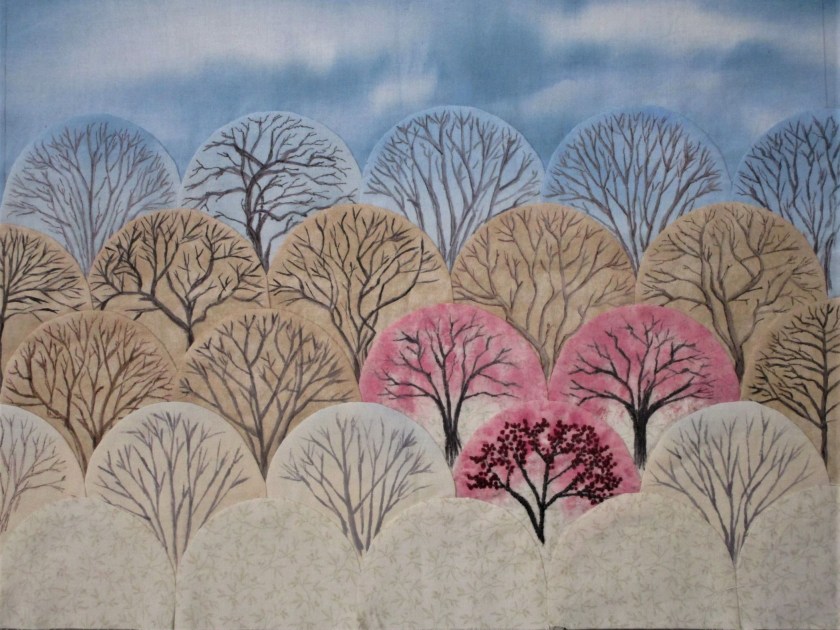
Yesterday was spent finishing up the Just Trees miniquilt. This project was inspired from the way treetops look in the winter. As spring started to move it, I had to add some color in the form of blooming redbud trees. New skills practiced: paper piecing, hand applique of clam shell shapes, using textile paint mixed with floating medium on fabric. This last technique allows a more precise line by slowing the flow of the paint into the fibers. The floating medium is made by Folk Art. Here is my miniquilt all pieced together and painted, but not yet quilted:

I decided to improve my focal point by embroidering details into the lowest redbud tree.

French knots for the magenta buds and stem stitch for the trunk and large branches.

And here is the piece fully quilted, with a border of commercially printed fabric. I used my walking foot to stitch around the applique. I free motion quilted the sky and around the border.

JUST TREES

I’m happy with the results of this fiber object. It reminds me of the view across the floodplain in my little Oklahoma town.

Posted in painting, quilting

Tree Tops and Paper Piecing

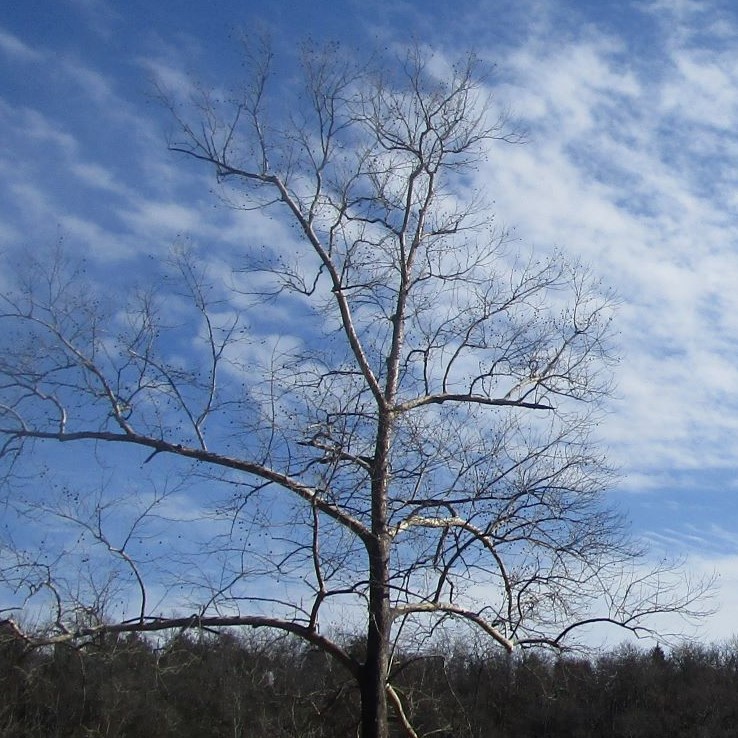
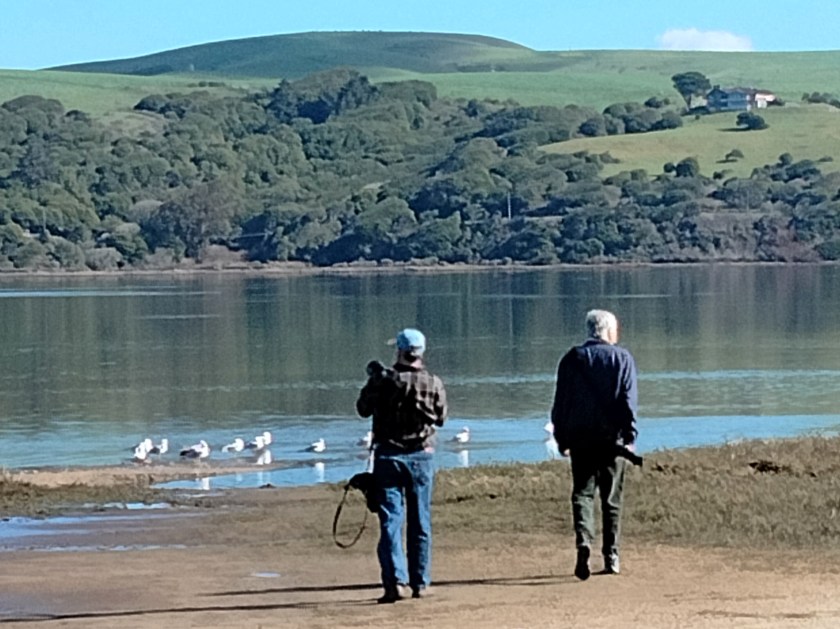
A few months ago, I had a phone conversation with my daughter while she was on a walk. As we chatted about sundry things, she said, “I just love trees. I could draw nothing but trees and never get tired of them.” I wholeheartedly agreed. In fact, I have been thinking about making a fiber object based on trees for months. To that end, I have been taking photos of the trees in their winter nakedness.

Finally I have come up with a plan and a design for the trees. And I owe it all to paper piecing with clamshells.

Non-quilters now have no clue about what I am trying to say. My apologies. But the quilters among us will recognize the context of “clamshell” and “paper piecing”. This applique shape is one of the classics. Rather than try to describe it, I direct you to Pinterest, with the instructions to search on “quilt clam shell pattern.”

Here is an example:

Cute, right? But for me, I can hardly look at this quilt WITHOUT thinking Tree Tops.

I decided to try paper piecing with clamshells after viewing a tutorial on BluPrint.com. The instructor uses the applique stitch to sew the clamshell shapes onto a tote bag.

https://shop.mybluprint.com/quilting/classes/giftable-projects-english-paper-piecing/715557

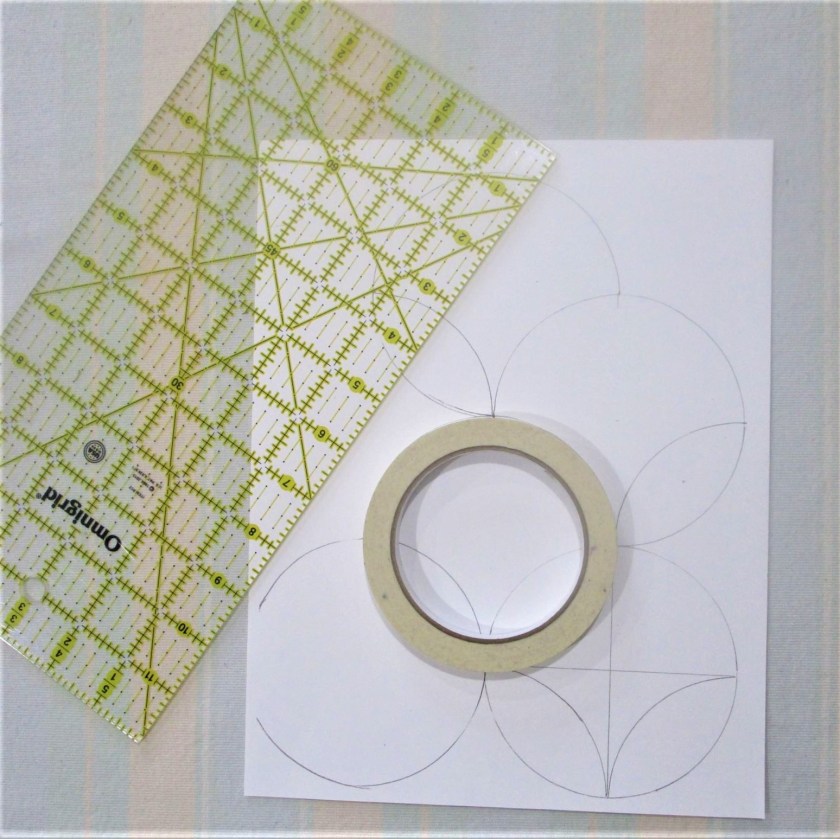
To get started, I searched for an object with a 4 inch diameter, and then drew around it until I had several clamshells.

A roll of masking tape turned out to be the perfect size.

After photo copying this sheet four times on cardstock, I had enough pieces. Each applique will need one of these pieces of paper inserted to form the half-dome shape.

Here are four of them.

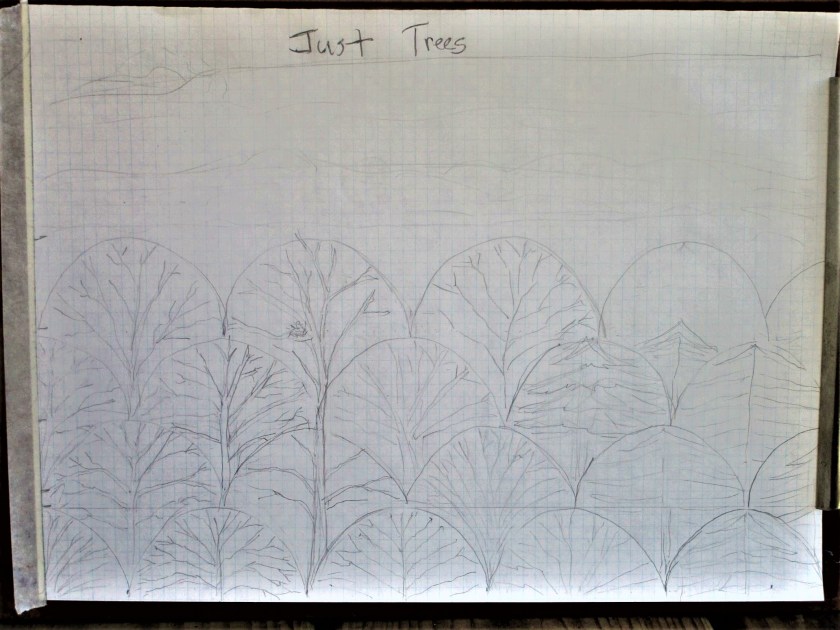
Next I made a thumbnail sketch to work out the size, applique placements and design.

Since I used pencil this image is a bit faint. So sorry.

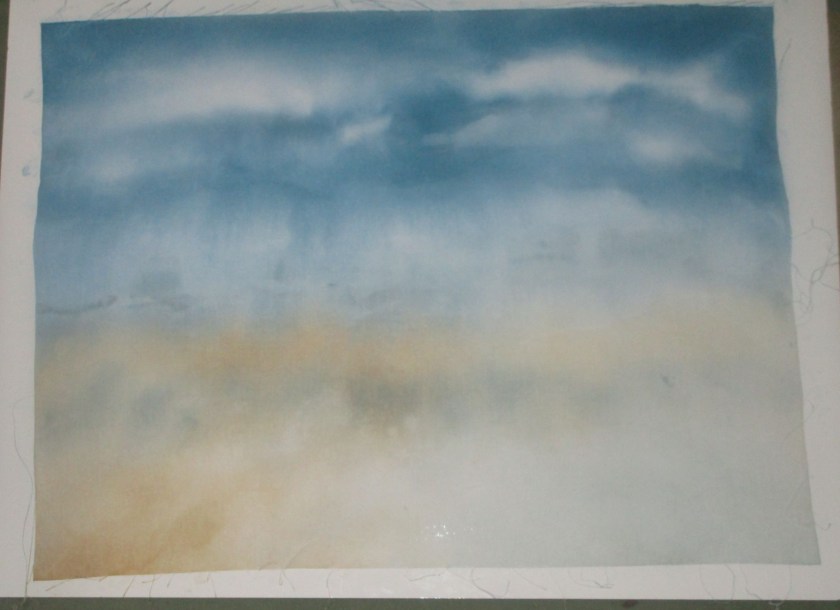
The next step was to paint the sky on white fabric. This will serve as a background and base fabric for my appliques. I used Dye-Na-Flow paint and lots of water.

At this point, I will need to practice painting the trees onto the appliques. But my mojo is flowing well, and I am excited to get this fiber object to its next stage.