Posted in painting

Learning Lessons, Trying Stuff

I’ve chosen the title to this blog because it’s the message I give students who are learning new skills in fiber arts (and other arts, in my case.) This blog is about my latest water color painting lesson and the resulting painting.

First, my inspiration. I have a lovely birdbath in my backyard. Everyday I watch the activity around the birdbath and think about painting it. So I chose it as my subject, for what I intend to be a series of paintings.

This is a morning shot. I am using this photo as a reference for my first painting of the backyard birdbath. In this first stage, I paint the subject.

I have sketched in a male cardinal to provide a focal point for the painting.

Next I used pale yellow and gold washes for the background underpainting. Let me say now that This was my Favorite Point in the process. Everything looks the way I want. The rocks, the pottery, even the background. From here on, it was a struggle.

Next came layer two. I added green to delineate the background and painted the cardinal with a wash of red. My instructor showed me how to paint a reflection in the birdbath and how to paint blades of grass in the middle ground.

Once everything dried, I added shadows to the birdbath, finished the bird, added the foreground, and dropped in a few spots of color to the middle ground. I also used a dark blue to under-paint the background. Here is the finished painting.

There’s a lot I like here, but there is plenty that I don’t.

I did Try Stuff. I Learned Lessons, and now I am ready for a Do-over.

Posted in painting

This Week’s Watercolor Lesson

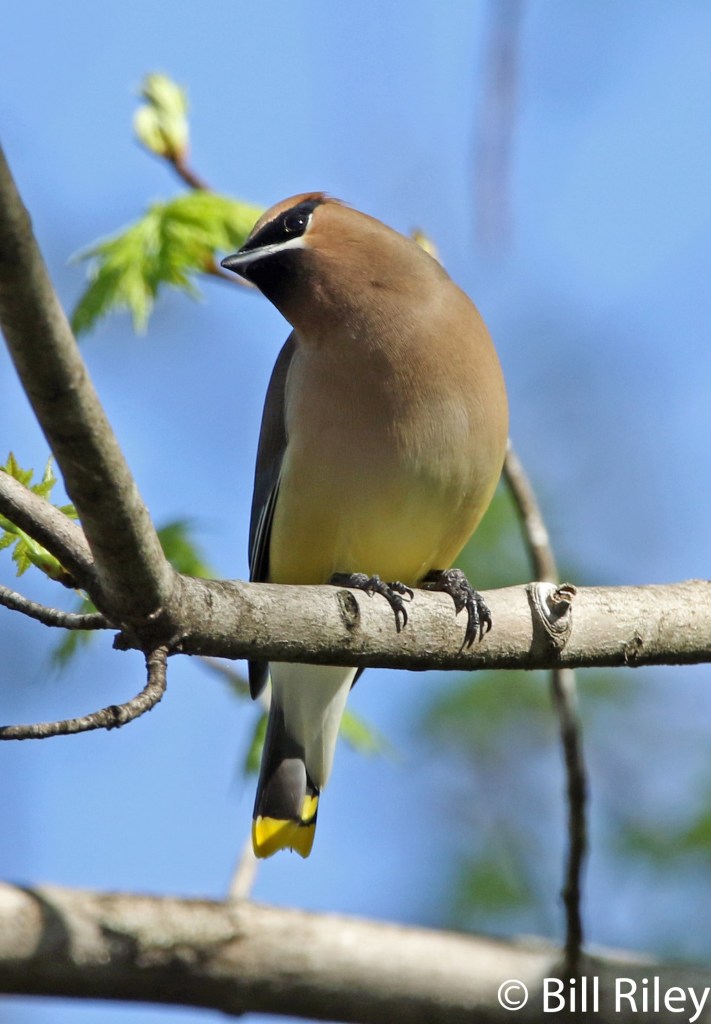
Springtime Cedar Waxwing

This is the second time I painted this bird, based on a photograph by Bill.

I’m pretty happy with my work. If I were to paint it a third time, I would choose a hot-press paper. It was difficult to get smooth washes and crisp lines on this paper. I would also use a non-granulating blue paint for the background.

I like the bird’s attitude. He is eye-balling the photographer, as if to size him up.

Posted in painting

Water Color Class Update

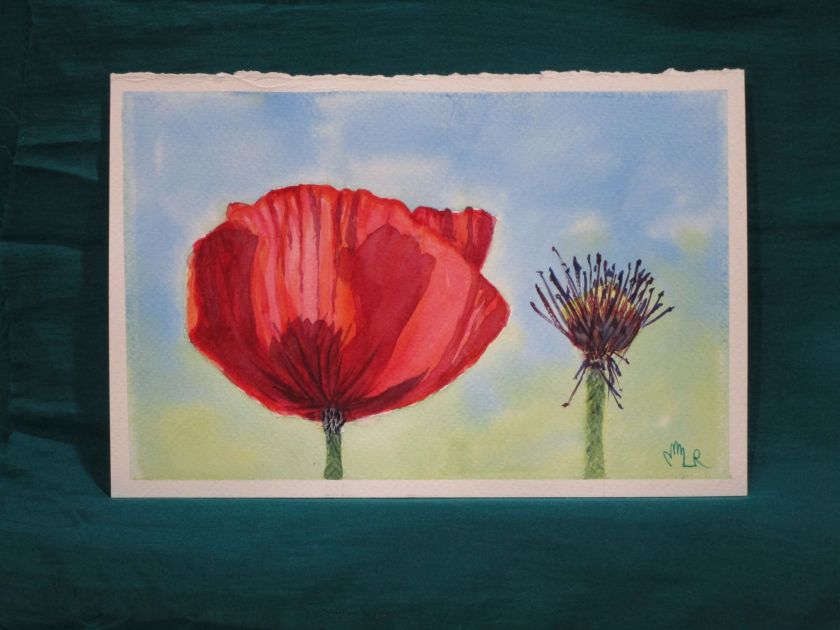
My ten week class in watercolor technique is almost over. For my first lesson, I brought an image of a back-lit, red poppy that I found on Unsplash.

The reference photo can be found here.

I chose this one because of its simplicity, and because it had a nice set of shadows across the poppy. Today I finished my copy.

I’m pleased with this work, and encouraged to begin painting more challenging subjects.

Posted in painting

Windowsill Geranium

I’m still playing around with quinacridone gold as a background wash. This time, I dropped in five splotches of violet, hoping to get some interesting browns.

I failed to take a photograph of the initial wash. But the results reminded me of the geranium cutting I started a few months ago.

The most striking thing about this photograph is that it is backlit. The leaves furthest from the viewer are the lightest. I really wanted to capture this impression in watercolor, and today is the day to try, using my quin gold washed paper.

I painted leaves on top of four violet blotches, and the pot over the bottom one. To make green, I added a small amount of cobalt blue to the gold. When that didn’t give me a bright enough color, I tried lemon yellow with the cobalt.

As I worked, I felt strongly that the painting was falling well short of my vision for it. But instead of giving up, I kept adding more layers, working the shadowed areas with violet and lifting paint from the highlit ones. Continuing to work, I dropped in white gouache mixed with a little lemon yellow into the background and also into some of the leaf veins. To finish, I layered a bit more gold into corners of the background.

I wouldn’t call this my best work. But something good is beginning to happen. There is a sense of shape – the lower right leaf is the best example. The varying layers of color are bringing a depth of color that is suggestive of the natural world.

I will be painting geraniums again, and soon.

Quinacridone gold, Winsor yellow, cobalt blue and carbazole violet on Fabriano Studio cold press paper.

Posted in painting

Experiment with Watercolor Canvas

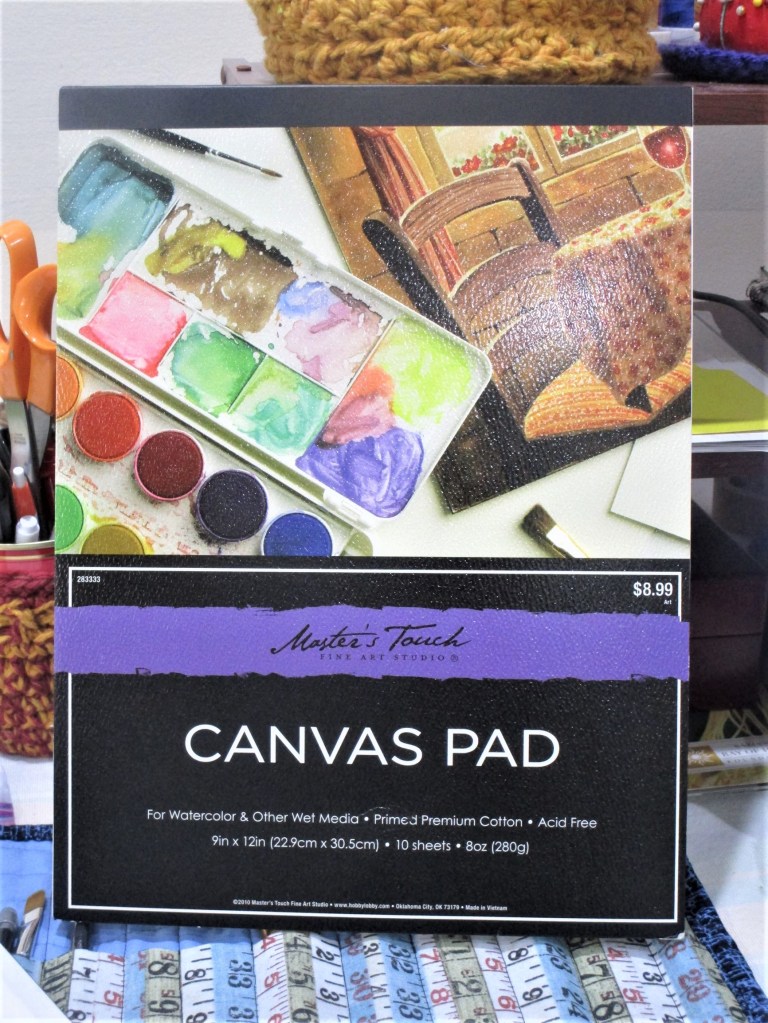
I spotted this item at Hobby Lobby, which piqued my curiosity:

It is described as a canvas pad, suitable for watercolor and other wet media. It is primed, 100% cotton. At $9.00 for 10 sheets, it’s not exactly a cheap paper. It is a soft fabric-like sheet, obviously the same sort of stuff that is stretched over wood frames used by oil and acrylic painters. Yet it promises that watercolors work as well.

I had two questions: First, does it really take paint the way standard cotton watercolor paper does? Second: Does it behave like cotton fabric? For me, that means, can I sew on it, press it and use it on an art quilt?

Today was the day to try. My current project features ducks swimming on a pond. So I got out a reference photo and started a watercolor painting.

It was weird. The paint didn’t want to soak into the canvas. Whatever primer was added made it slightly water repellent.

As I continued to paint, the canvas started to accept the paints, at least a little. My wash went down – thinly, but eventually dried just fine. Getting the colors built up on the duck took a lot of patience. Here’s what I got:

As I removed the painter tape from the edges, I noticed that the tape had not kept the paint out. So no crisp line. That’s okay, I can always cut off the margins.

Next I had to see if the paint would stay put. I wet a brush and moved it along the wash area. The paint was lifting quite a lot, and quickly. So I can’t use a painted canvas in an item that will be exposed to water.

What about heat? I took the iron to the image, pressing gently at first. With a cloth over the duck, I then pressed at a higher heat (rayon setting) and held the iron in place for several seconds.

At first, there appeared to be no effect. Eventually I noticed that the canvas had rippled in response to the heat. The paint looked fine, but I also noticed some shiny places on the ducks’ head and neck. Obviously, at least one of the paint pigments had a binder or bit of metal that melted in response to the iron.

At this point I stopped my experiments. Next time I plan to apply my needle, thread and scissors. Maybe even run it through the sewing machine.

To be continued……