Posted in collage, painting

A New-to-me Design Tool

When it comes to my painting practice, I have been in a months-long drought. While knitting like a demon, I have not been inspired to paint, either on watercolor paper or fabric, since the completion of the Oregon Native quilt in early August.

That ended after reading a post by Just Sketching, in which he describes a compositional tool that blows the “rule of thirds” completely out of the water. It is called the Harmonic Armature. This tool takes the rule of thirds to the next level. In the rule of thirds, the designer/artist divides the picture plane into three more-or-less equal parts, both horizontally and vertically. The goal is to organize the major elements to intersect one or more spots where the lines cross.
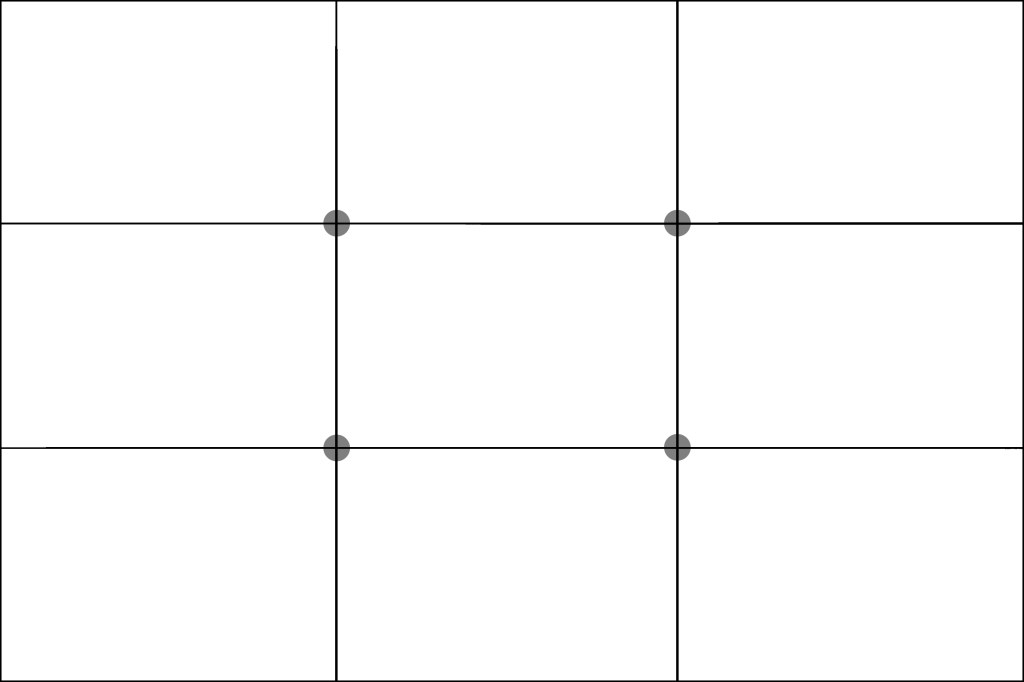
I have no trouble understanding and using this rule, but I always am left with questions about how best to lay out the rest of my composition.

Now look at the Harmonic Armature
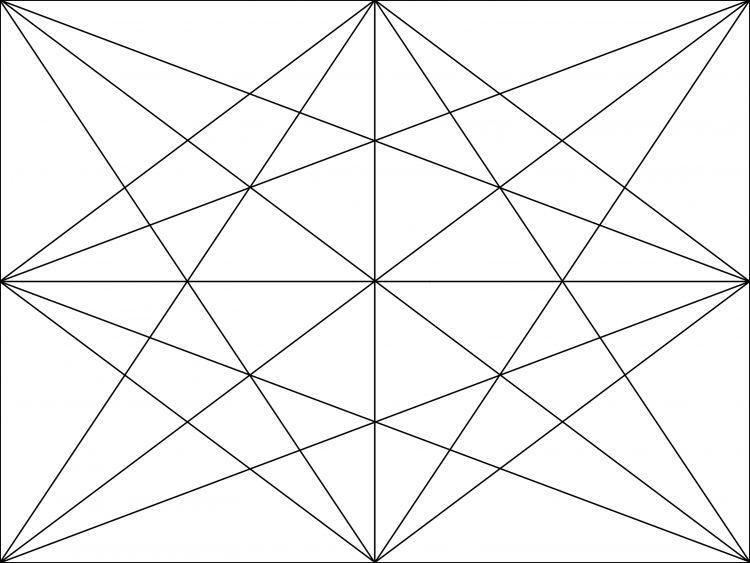
The four dots are clearly visible, but there is so much more. To get an idea of how this tool is used, have a quick listen to this video by Diante Jenkins.

I had to try this right away, so I started searching through some of my old paintings. I found one based on an excellent photograph that I did five years ago, in my early days working with watercolor paint.
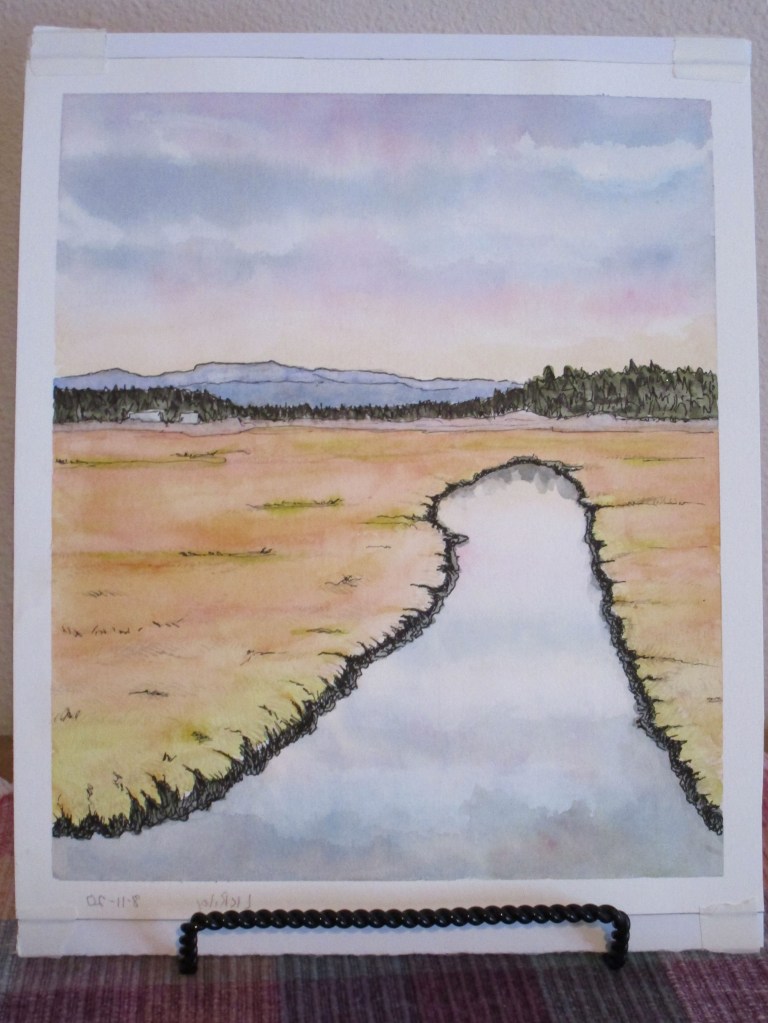
I like how it turned out, but it always struck me as too empty. This past summer, I took it to a workshop I attended on making transfer prints with a laser jet printer. I transferred a photocopy of the painting to a cradled plywood board. Then I didn’t know what to do with it . I decided to add collage to it. What it needed was something alive – like birds. But where to put them?

First, I drew the HA on an 8×10 piece of tracing paper.
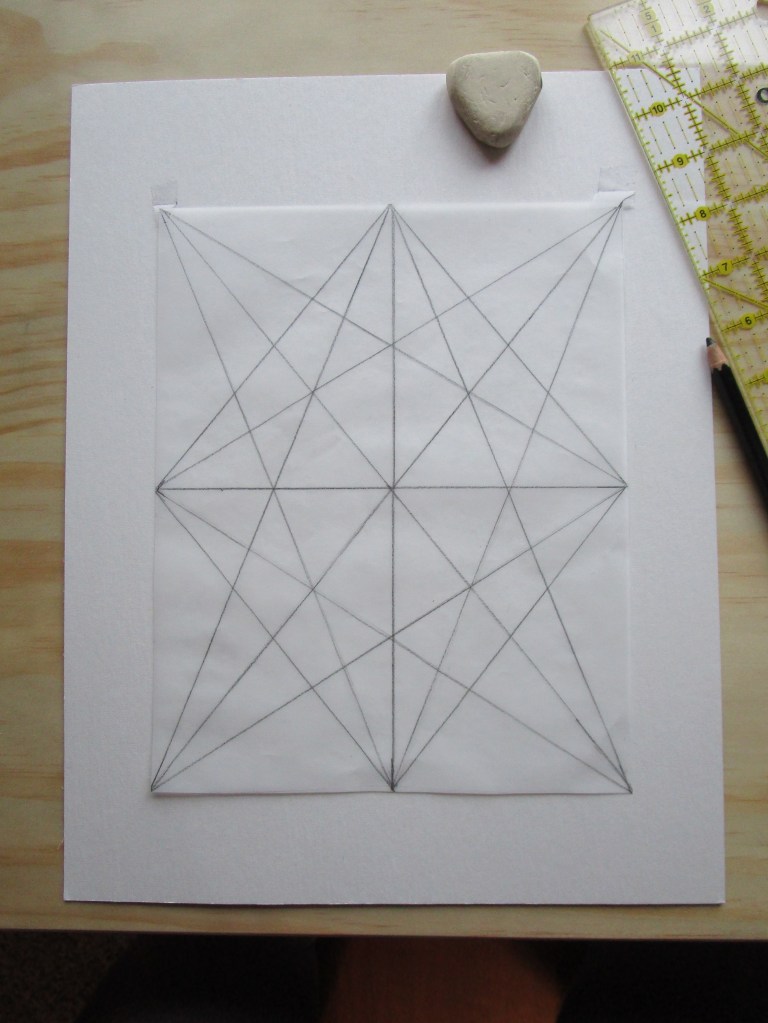
Next, I thumbed through some magazines and cut out various shapes of birds in dark colors. I also found some silhouetted figures in the magazine, which could work in my new design, so I cut these out.

After taping the armature over the print, I carefully slipped my cut-out shapes into place, taking advantage of the converging lines and focal points visible on the tool.
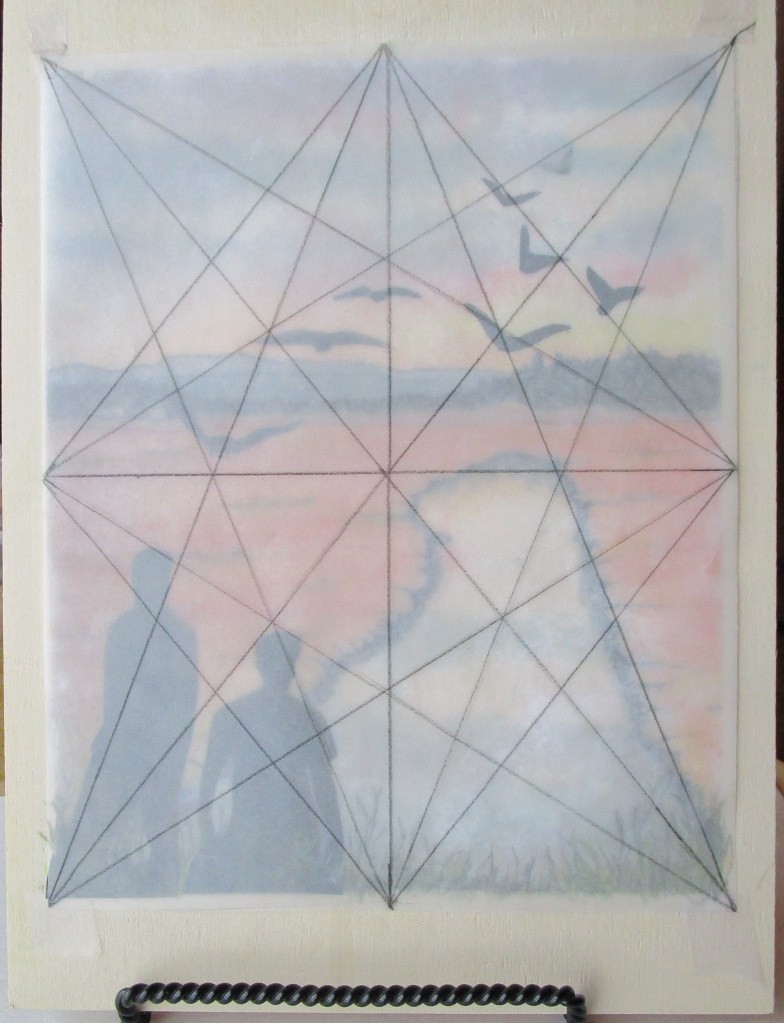
Once the glue dried, I added a few colored pencil marks to blend the silhouettes with the foreground.
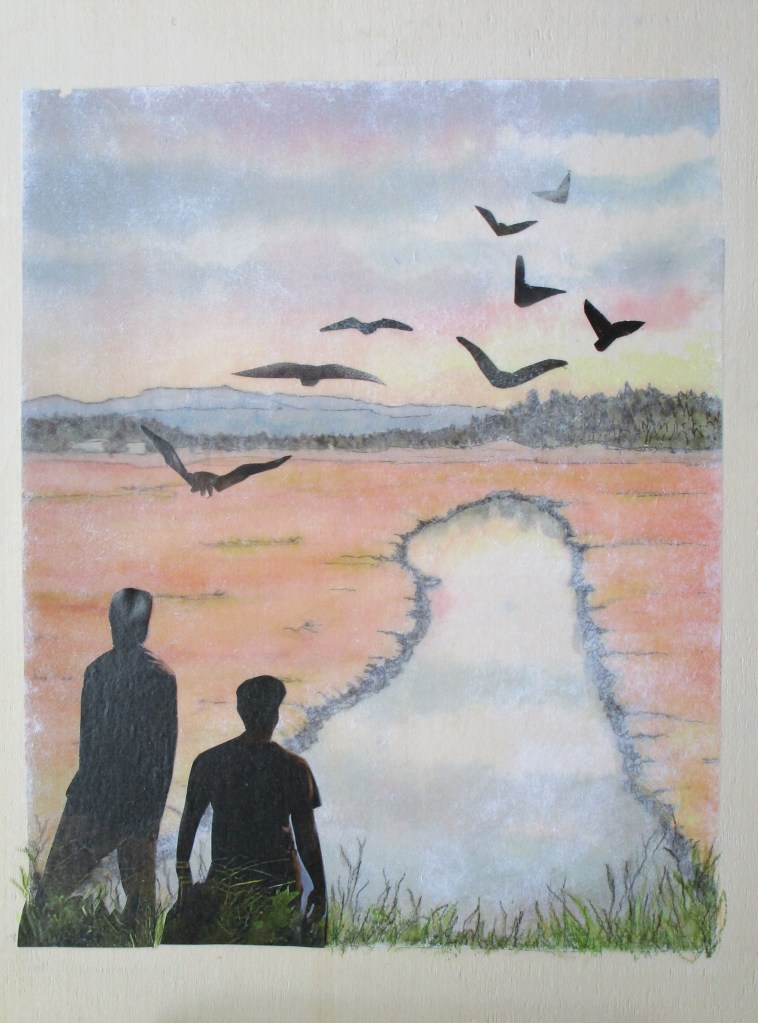
It was a delightfully spent afternoon.

Now I am keen to get out my unfinished watercolors and see how I can move them to the finish line inspired by my new tool.

Posted in hand embroidery

WIP Wednesday – The Final Panel

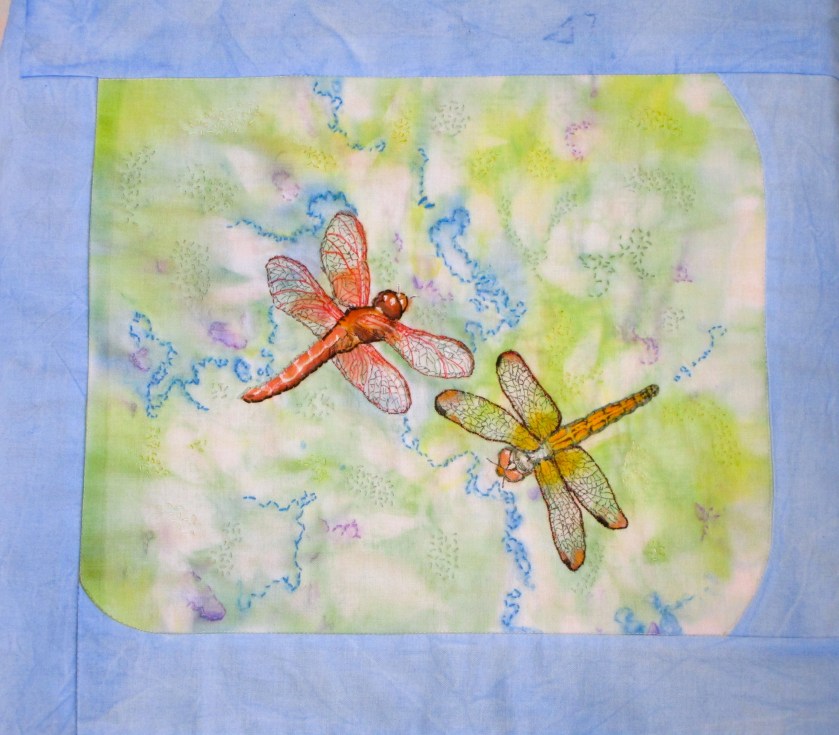
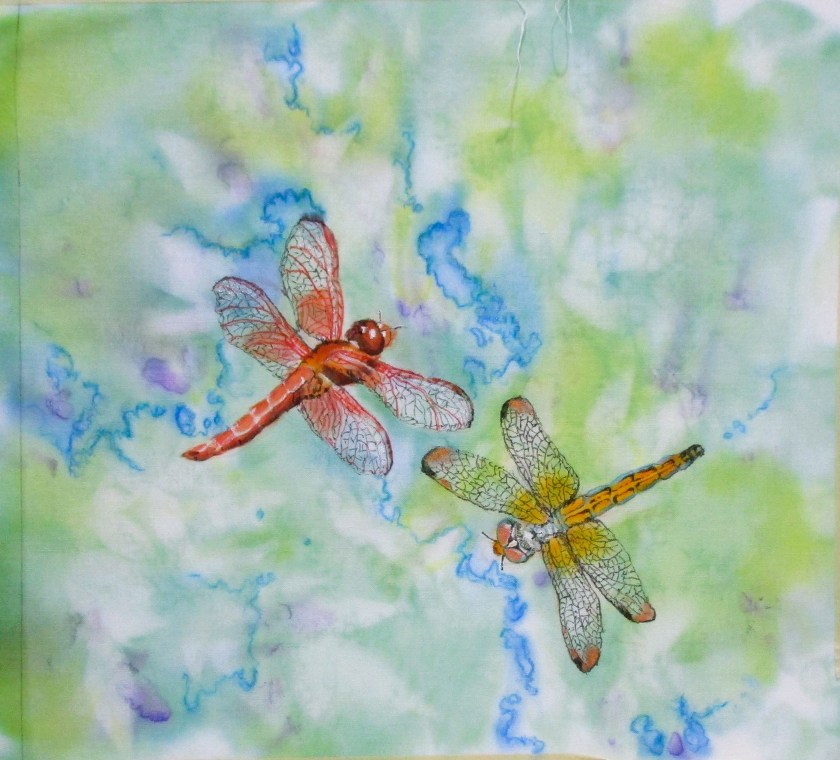
Today I stitched the last stitch in the final panel of “Here Be Dragons” art quilt. In looking back through my photography files, I discovered that I had painted the panel way back in June of 2023. Here is how it looked at that point.

Reference photography for the two dragonflies came from Bill. They were part of the 100 day project, along with all the other dragonflies that made their way to this quilt. The background was painted with Dye-Na-Flo fabric paint first, with masking used to reserve white where the insect’s bodies would be.

I then used the thicker Jacquard Textile acrylici paint to render the dragonflies, finishing up the fine details with Micron pens.

Here is the panel today.

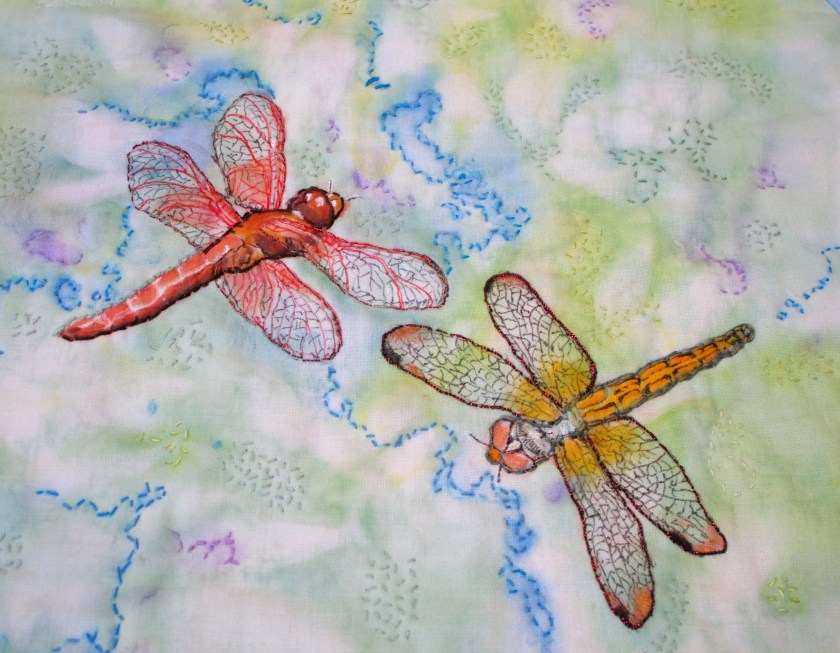
A combination of stem stitch and rice stitch outlined the subjects and enhanced the shapes in the background.

Close-up of the two dragonflies.

I believe that I will meet my deadline for getting this work ready to show in February. Some straight line sashiko sewing in the sashing, then mounting the quilt to stretchers is all that is left to do.

Posted in painting, weaving

Friday Finish: Tight Quarters

Good morning,

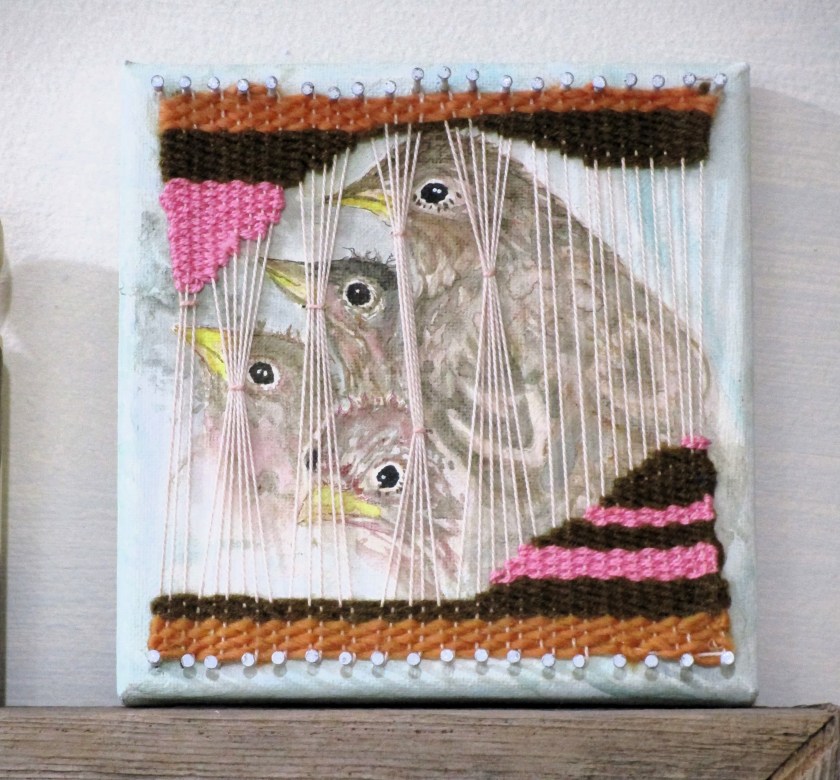
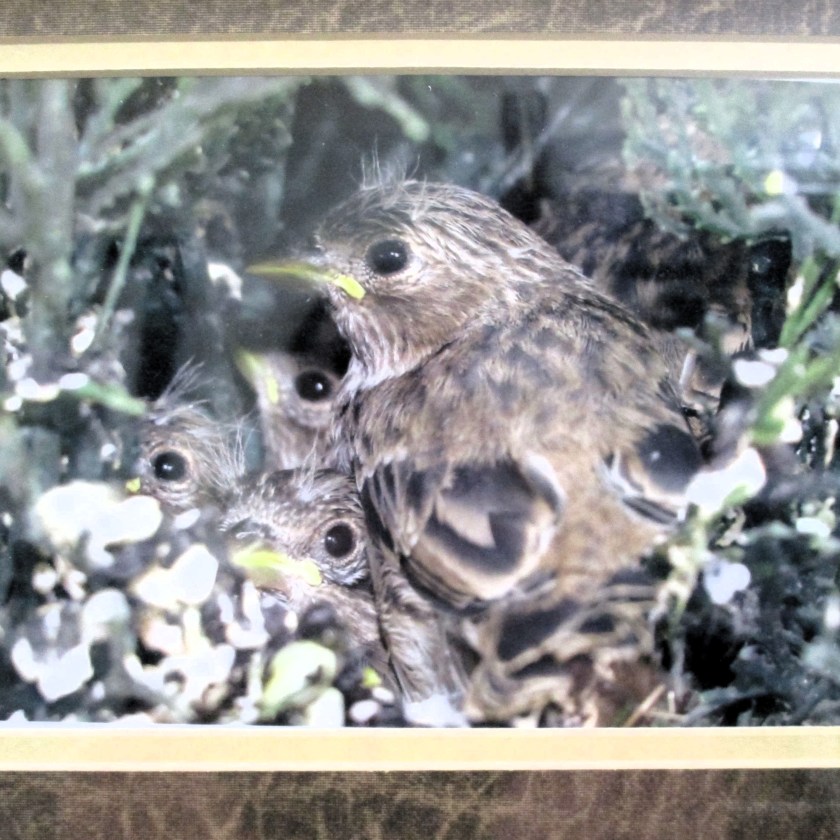
This is my mixed media interpretation of Bill’s photograph of baby sparrows in a crowded nest. I have encased my watercolor painting in a free-form weaving.

He found these hapless birds in a fake flower wreath near the door of a busy downtown business.

I did the watercolor painting on a six by six stretched canvas. After it dried, I pounded in the tacks and strung a warp of Perl cotton embroidery thread. The weaving was worked with yarn and floss in compatible colors. To finish, I poked holes through the canvas and gathered up the threads to create peepholes for the birds.

I’m not sure if I intended some kind of statement about the crowded world, or the clash of humanity and nature. Or maybe it was just a little experiment.

Posted in painting

Watercolor Wednesday: Playtime

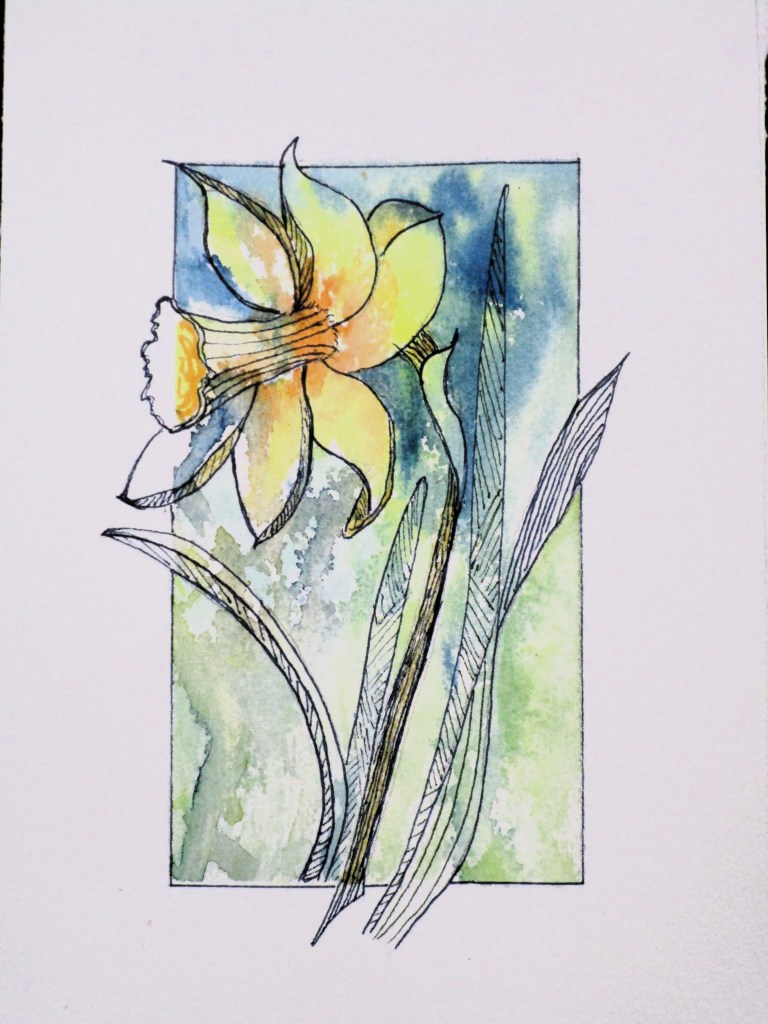
There was quite a crowd at today’s Open Studio. Cheryl Bryan decided that this session would be focused on playing with our paint. She brought examples of daffodils rendered in a stylized fashion using watercolor and pen.

Watercolor painted and photographed by Cheryl Bryan

I have been struggling with painting lately, so it was very therapeutic for me to let go and try stuff. Here is my 3 by 5 1/2 single daffodil based on the reference image.

After making the drawing with pencil, the panel was taped off and splashed with water Three colors were selected, dropped on the wet paper and encouraged to run. I used Winsor yellow, transparent orange and Prussian blue.

The paint was allowed to dry, then additional paint worked in, mostly around the edges and into the background. After drying thoroughly, the tape was removed and lines worked over the painting. I used a dark blue Micron pen. It was fun to let the elements of the image slip outside the border.

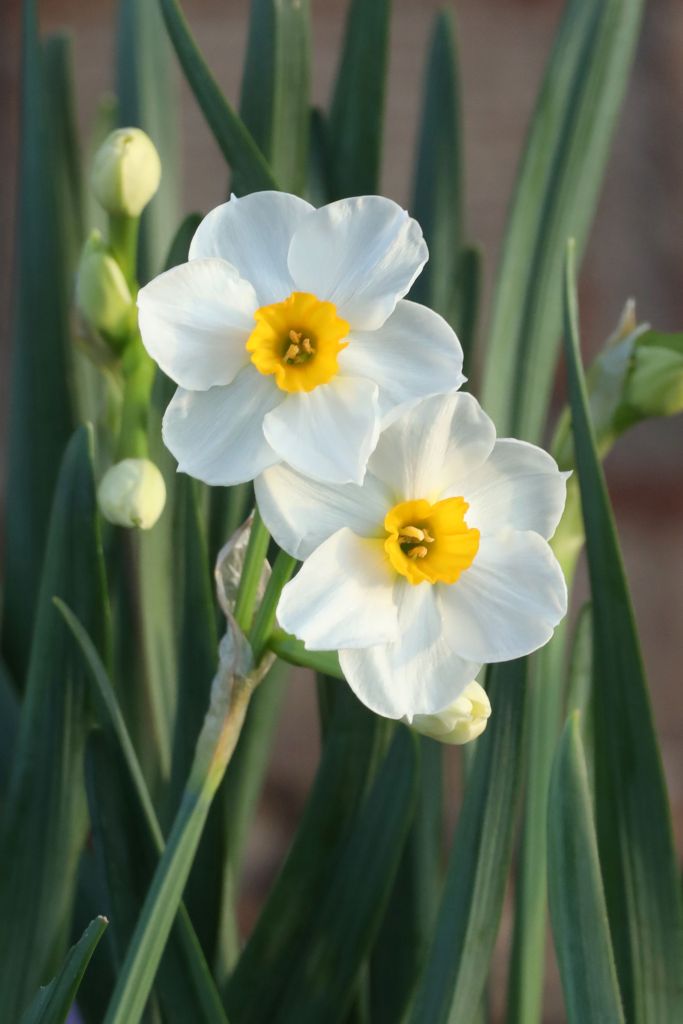
Next, I pulled out one of Bill’s photographs. He loves shooting images of the daffodils in our front yard. This variety is called geranium. They have tiny clusters of three or so flowers topping each plant.

copyright Bill Riley

Using the same technique, I worked these cuties in a cool palette of carbazole violet, quinacridone magenta and Prussian blue.

I intensified the color in the short trumpets with some watercolor pencil in gold and dark magenta.

Despite the crowded room, I ended the session feeling relaxed and confident. Now I am ready to return to a slightly bigger painting that I have started, which features a butterfly and some spring weeds. Stay tuned.

To see some of Cheryl’s gorgeous watercolor paintings, you can visit her website:

https://cibstad07.wixsite.com/mysite-1/about

Posted in drawing, painting

Watercolor Wednesday: Blaukopf Online Learning

I gave myself a gift by purchasing another Blaukopf tutorial through Teachable. This one appealed to me because it featured ink and watercolor.

https://learn.shariblaukopf.com/p/sketching-a-french-village-scene

For the first lesson, Shari walked us through the mixes we would be using throughout the course. My swatches came out nicely, despite the fact that I had no Hooker green paint and substituted Winsor green.

Our first painting was of a balcony scene in a Normandy village featuring lots of stone and pots of plants perched on a wall.

Photograph taken by Shari Blaukopf

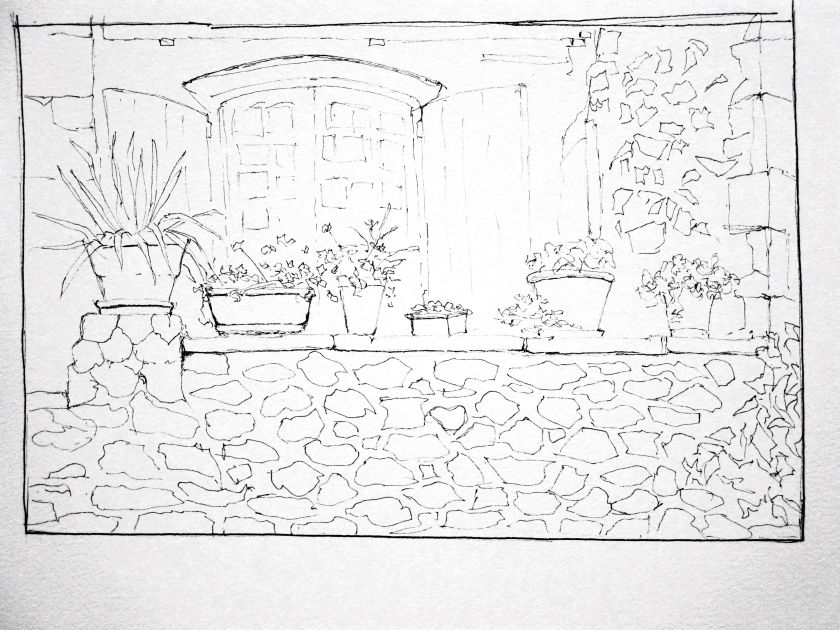
Shari suggested that we avoid pencil lines and draw straightaway with the ink pen. I am using Pigma Micron with archival ink.

Not too bad. The basic shapes and textures look as expected.

First wash.

I was so focused on finishing that I didn’t take any other images of intermediate steps.

Here is my final ink and watercolor painting of the balcony scene.

While I didn’t have fun throughout the entire experience, I got re-introduced to my watercolor paint and had enough fun for a Wednesday.