Posted in knitting

Cast-on Monday: Learn a New Stitch

As I ponder my goals for 2024, I am reminded of one goal that has history. Looking back on annual goals for three years, one item seems to pop up every year: mastering the brioche stitch. I have tried and failed.

Gentle reader, if you are not a fan of knitting, you may wish to stop reading now and move on to a post more to your taste. If you are a knitter, you are probably at least a little sympathetic. Maybe you also have tried brioche. If not, here is a wonderful example illustrating why you may want to learn it.

Njord cowl by Emelie Litwin

In brioche, there are often two colors worked together. Each row has 2 passes – one for the light color and another for the dark. It is truly double knitting and as such, makes incredibly plush and warm garments. But it has its own language with unique chart symbols used only in brioche knitting. 

Emelie’s cowl is what I lust for. But, let’s be real, my first brioche garment is more likely to be one of these:

Left: VidaFetti Headband by Victoria Ida. Right: Waystone Mitts by Alicia Plummer

After three false starts while watching a Craftsy tutorial that didn’t help me at all, I turned to Utube and got some help. Andrea Mowry’s tutorial on two color brioche worked flat broke me through my learning curve.

Here is the beginning of my swatch:

There are a few mistakes, but I let them be. Unknitting brioche is almost as challenging as knitting it is. For now, I’m happy to have dipped my toe in the murky brioche waters. It is a good enough start.

Posted in quilting

Goose Purgatory

It’s Week Four on the Stay at Home Round Robin. The prompt is Flying Geese block.

In the beginning, I was happy and excited. The flying geese block is one that I have never made, so this was going to be my opportunity to try it out. I had what I believed to be a good concept for this round. So what could go wrong?

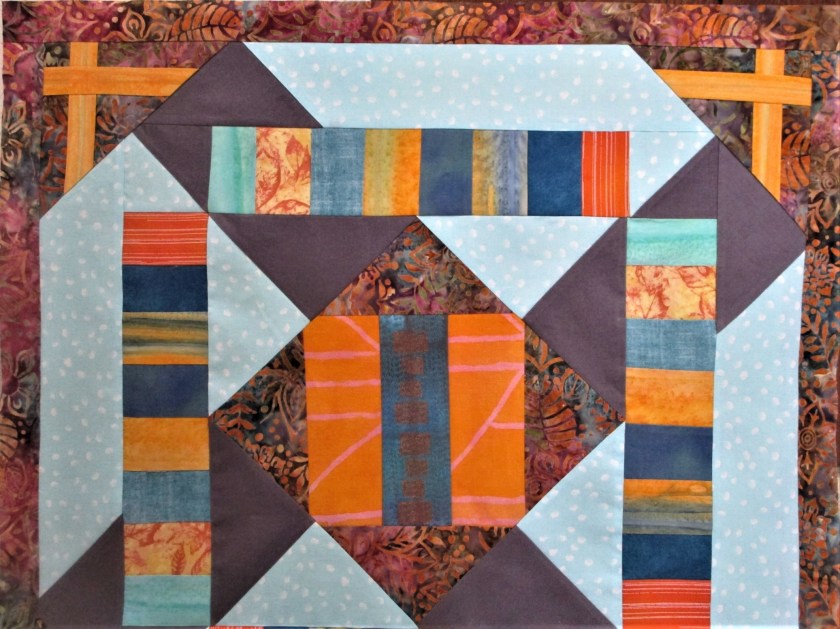
I decided to make my geese 2 by 4 inches. To make it work, I needed to bring the quilt sides up to 24 inches. I sewed on a narrow border of flowered batik fabric.

This also helps to define the pale blue octagon – a secondary shape.

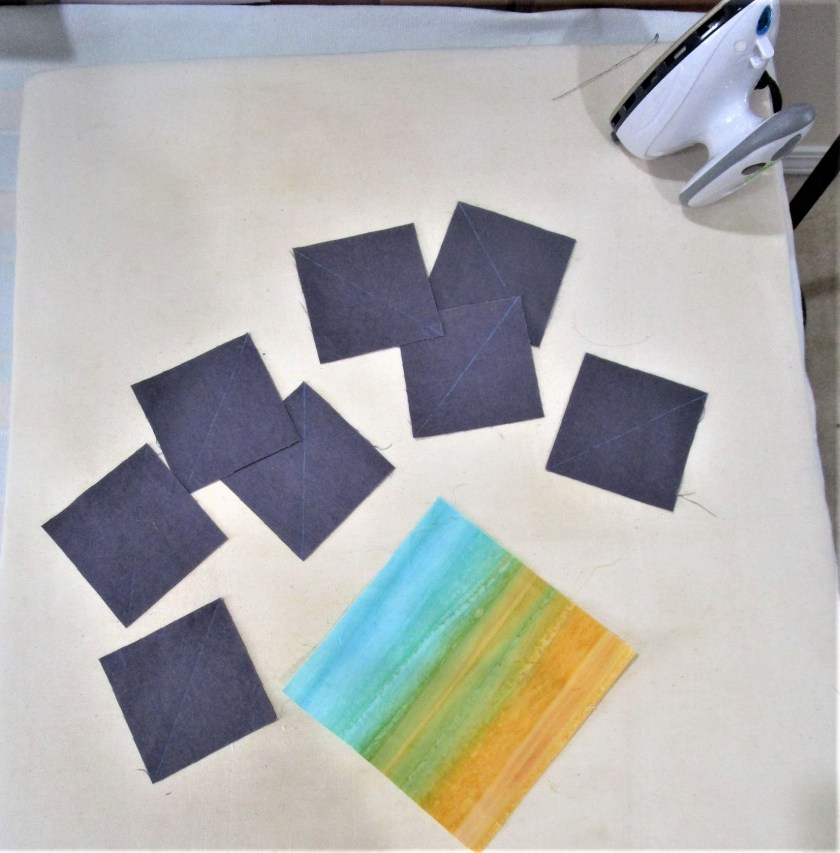
To get started with the Flying Geese, I viewed this video by Patches and Poodles for making them four-at-a-time.

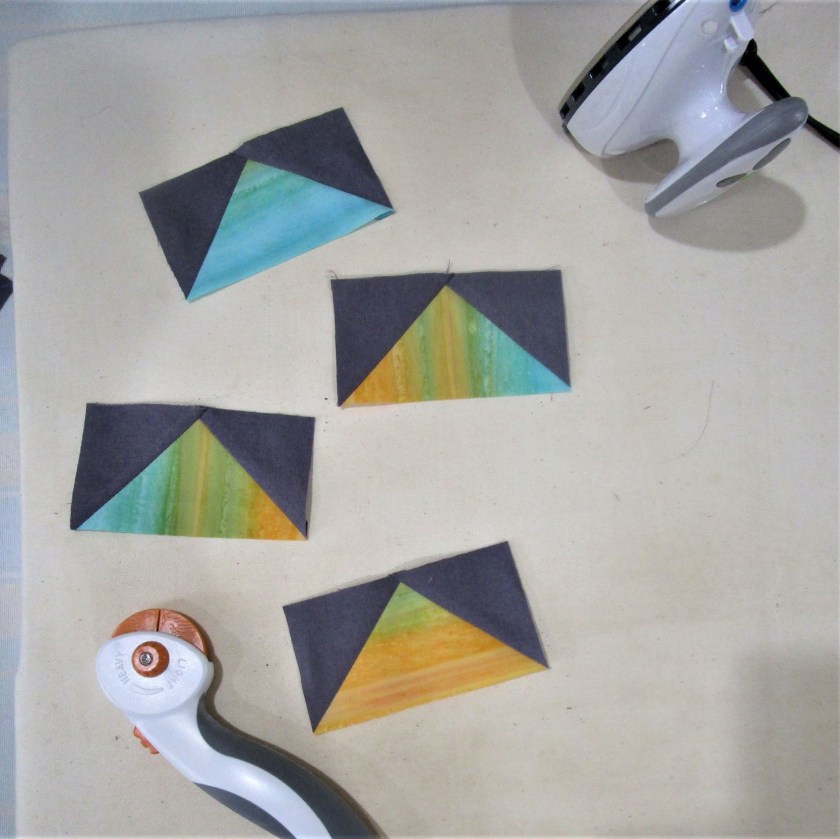
Her instructions were crystal clear. On Tuesday I made the first group.

These looked just great. I calculated that I would need 12 units per side, for a total of 48. The realization of the quantity and time required gave me pause. I decided to get started the next day.

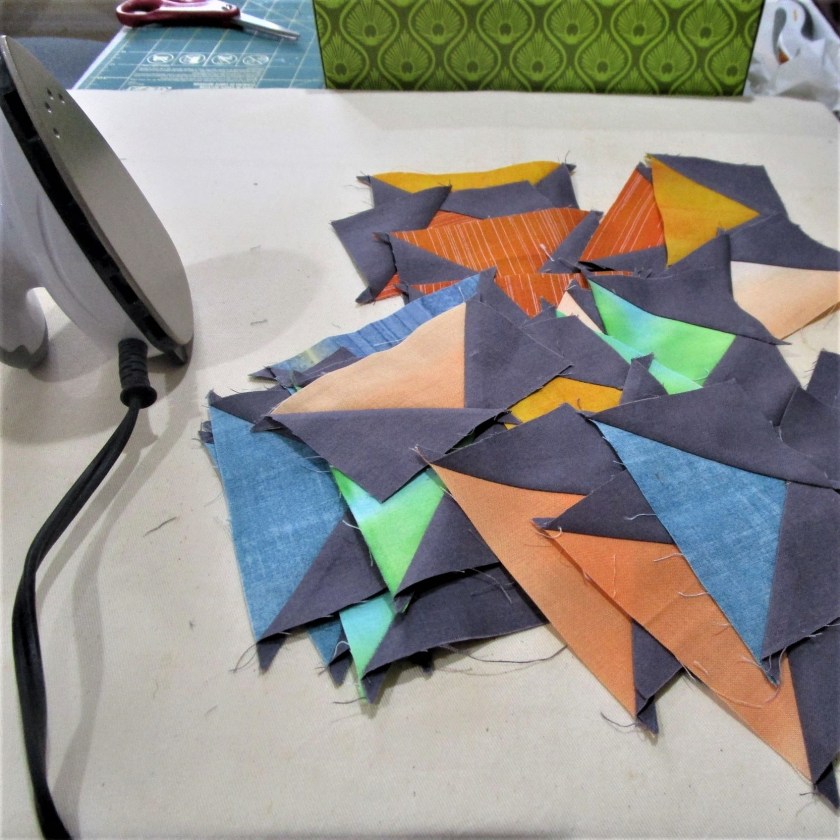
Today, I started by cutting lots of squares and sewing them into shapes using the technique I had learned on Tuesday. Soon I had quite a collection of geese.

Here they are sewn and pressed

The last step is to trim them to size. That’s when things started to go side-ways.

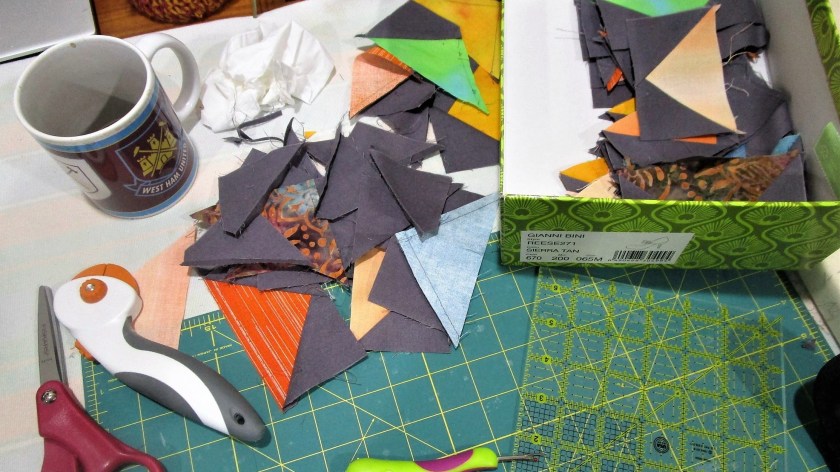
It seems that all of my lovely geese, over which I had labored for two hours, were 1/4 inch too small!!!!!!!! I had skipped over the instruction about pressing the seams open. Missing this step was enough to throw off the measurement that critical 1/4 inch. Thus began another three or four hours of re-working my flock of geese………………

By dinner time, I had managed to salvage about twenty -four goose blocks. A day has been spent and I am only half way done, with a wad of unworkable blocks left behind.

So I am bowed, but not beaten. I will go back into the fray tomorrow, starting with more fabric and a fresh rotary blade.