I am following simultaneously The Artist’s Way, by Julia Cameron and Watercolor is for Everyone, by Kateri Ewing. Here are the exercises and practice paintings I completed since Sunday.
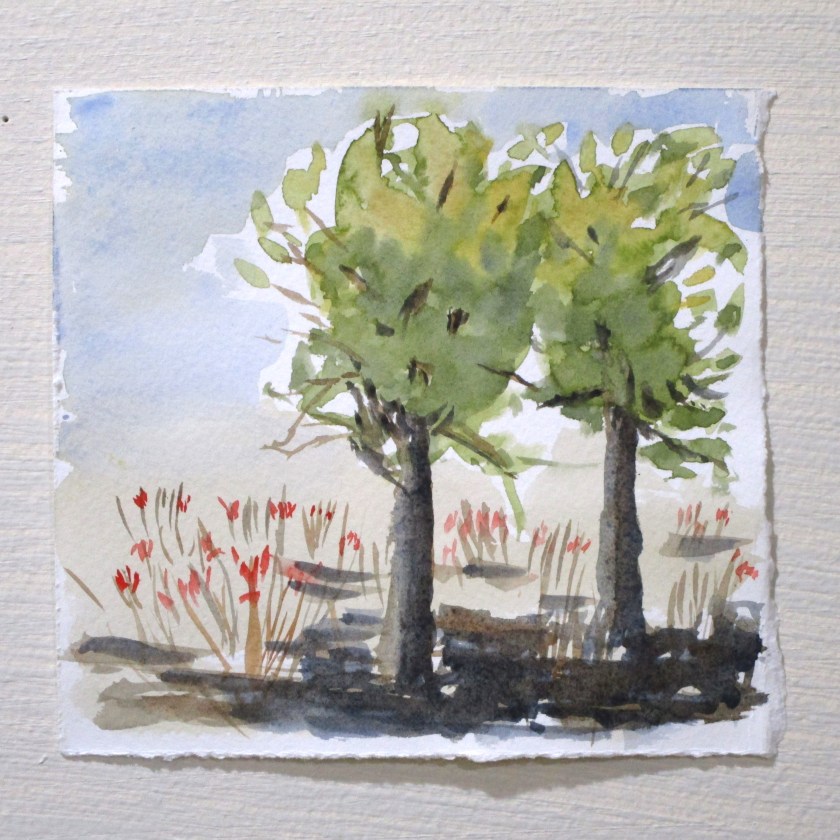
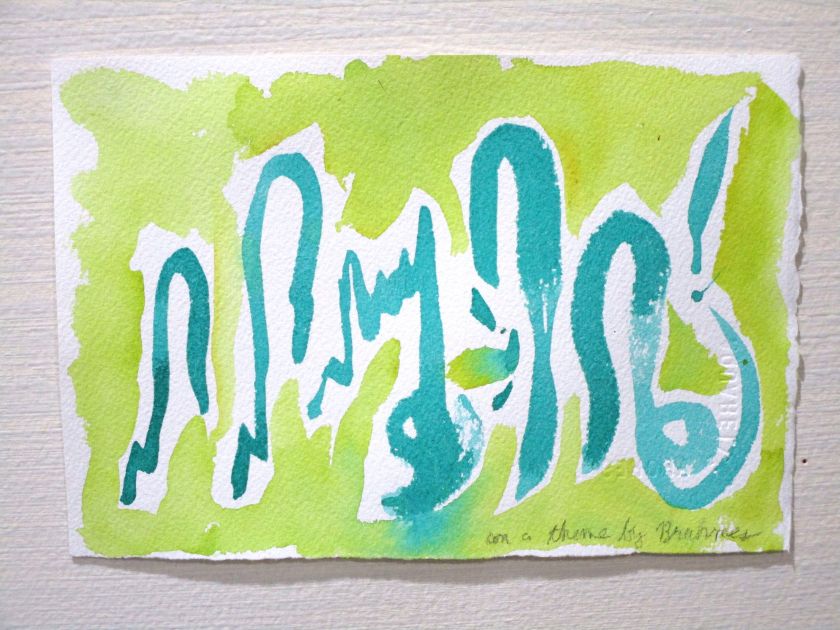
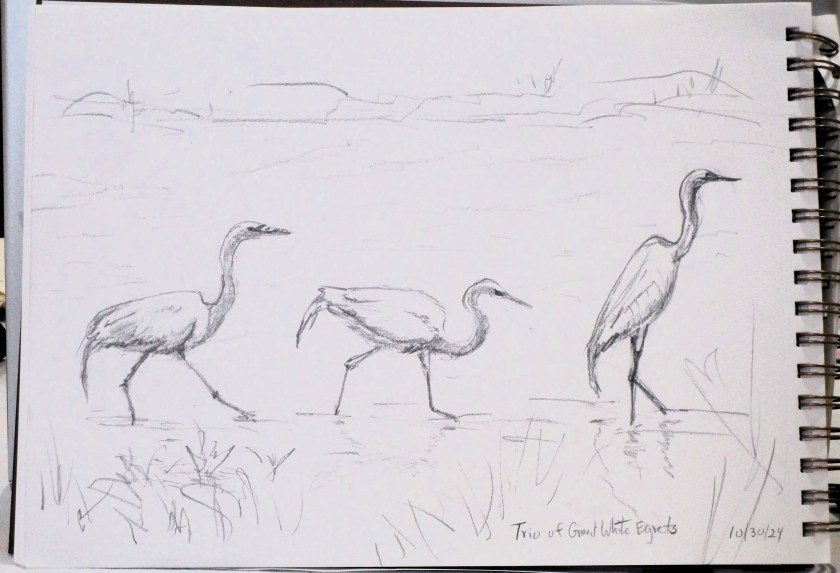
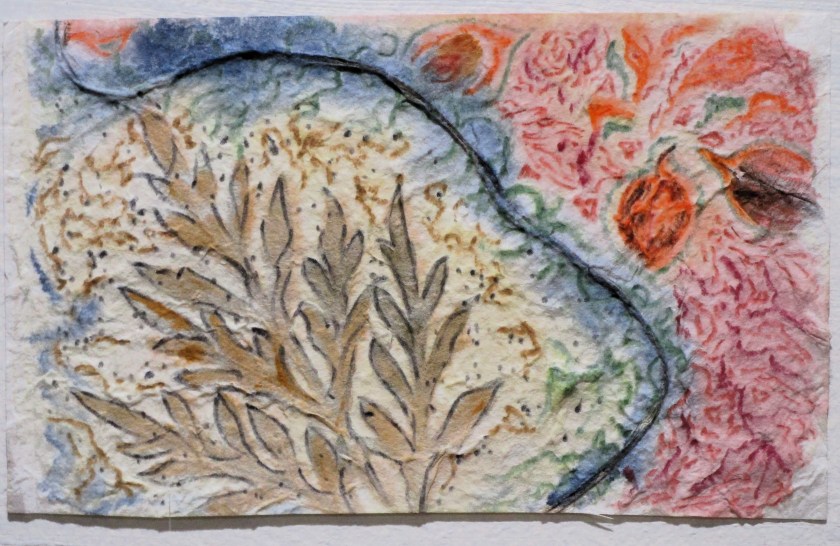
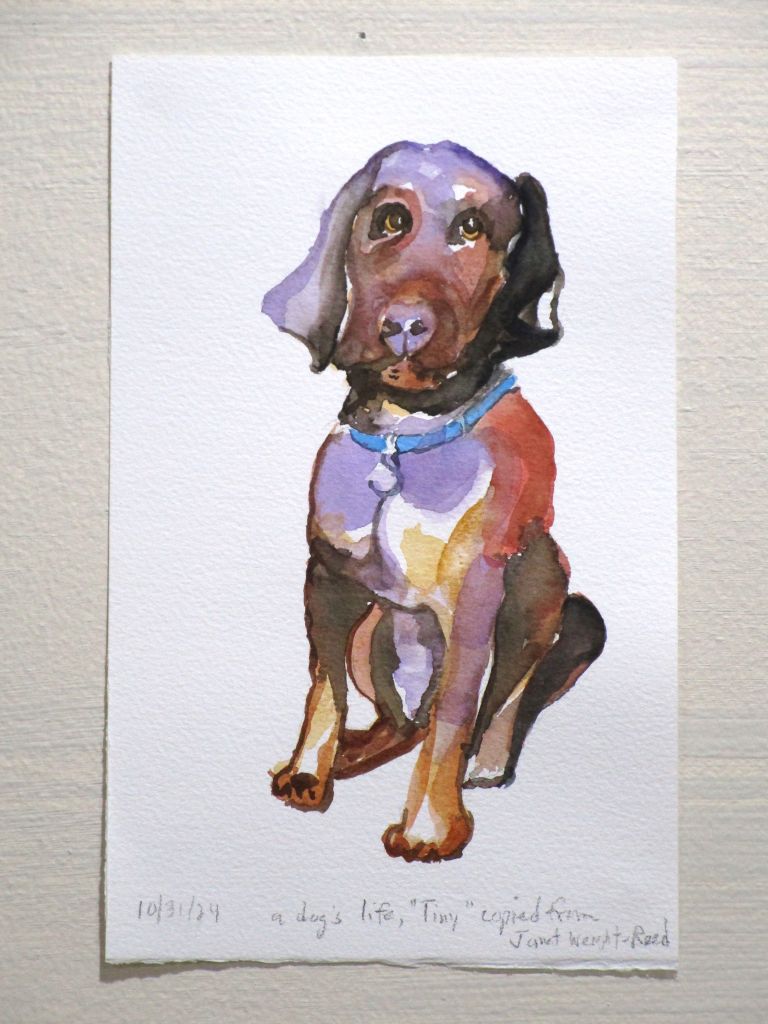
Twin TreesAbstract inspired by a melody of BrahmsA Trio of Great Egrets, based on photographs by Bill RileyAutumn Impression. Painting on rice paper that was embedded with plant materials.Portrait of Tiny, copied from a painting by Janet Weight-Reed
Ever since I wove a small tapestry on a hand-made loom, I’ve mused about weaving threads over a water color painting. So today I am playing around with the idea.
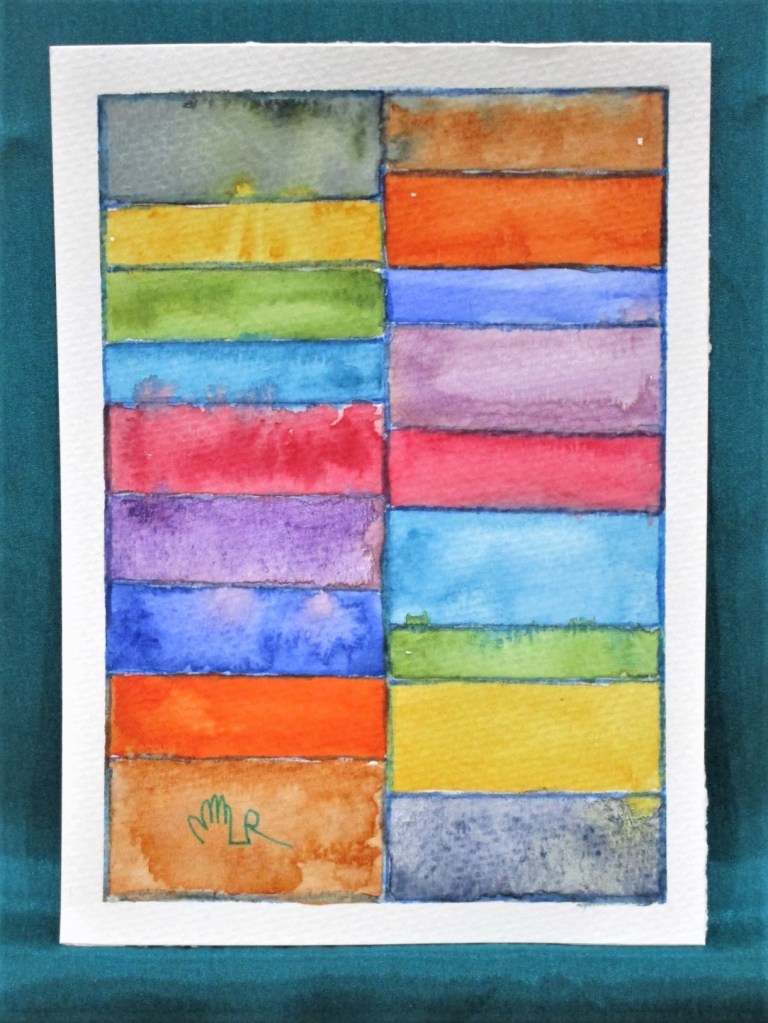
I started with this 4 by 6 painting I did last December.
It’s an exercise from Kateri Ewing’s book Watercolor is for Everyone. After drawing two columns of randomly sized rectangles, the artist applies selected colors, reversing the order of application in the second column.
I thought this painting would be a good background for my proposed thread embellishment because of its rectilinear structure. To start, I poked holes at regular intervals along the outside vertical edges. Next I stitched a zigzag pattern across the painting with no. 3 cotton twist thread in a gold color.
Now what, I asked myself. How about creating points along the thread intersections by tying knots? Okay. For this step I chose a dark cool green shade.
To further reinforce the intersections, I painted shapes with a metallic paint.
Not a bad way to spend a quiet afternoon. It was soothing and meditative. It reminded me of those picture stitch cards that I worked as a girl when learning how to sew.
Now I have a brand new perspective on what is possible with paint and thread.
Today I painted the last of the twenty-one exercises in Kateri Ewing’s book “Watercolor is for Everyone.” The proposition was to paint for at least 15 minutes everyday without a reference photo. The goal was to experience painting as a process and to have no expectations about the final results.
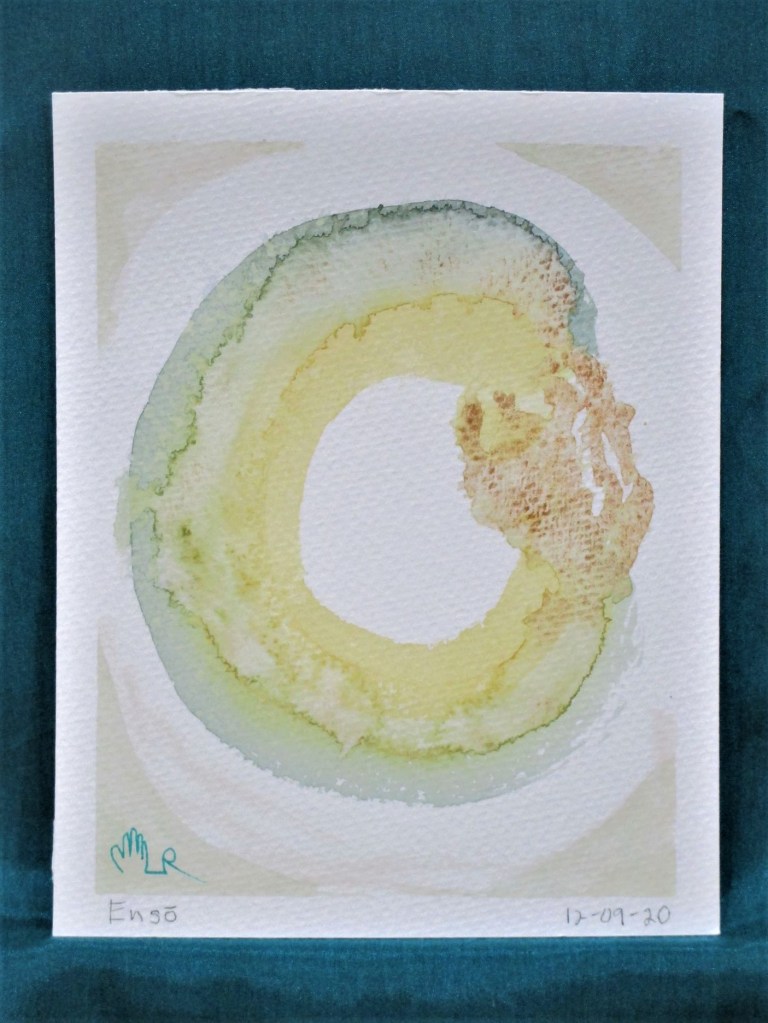
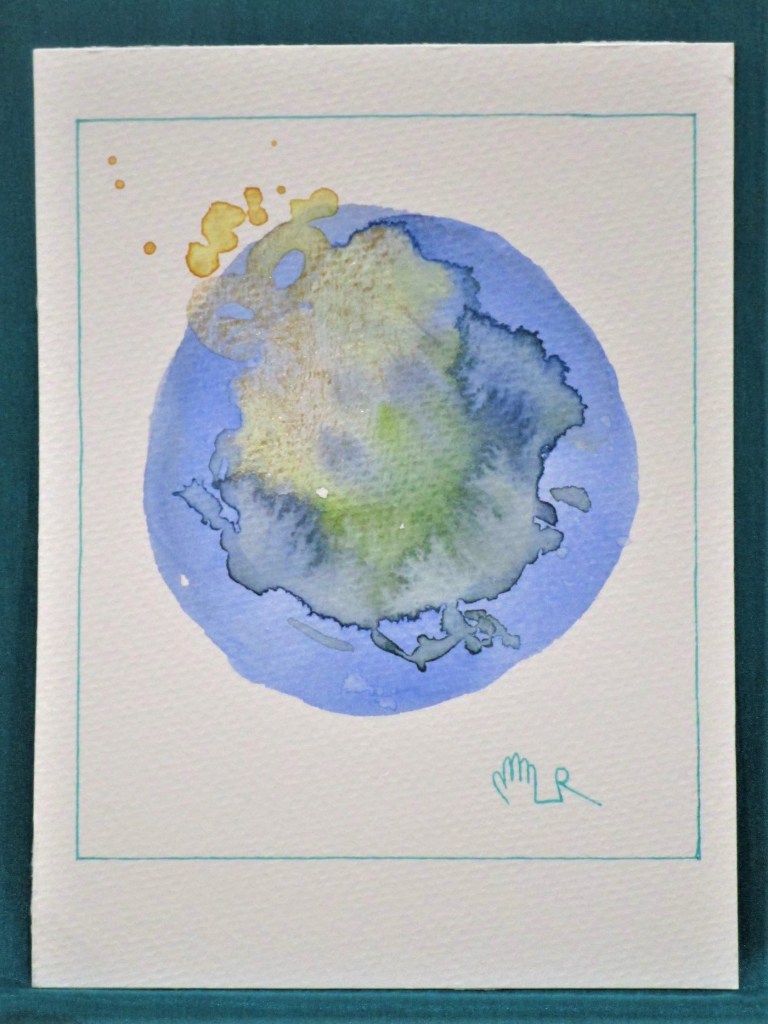
Here are some of my paintings. I worked on 4 x 6 pieces of watercolor paper using a natural fiber Sumi brush, a small round synthetic brush and a pencil. The pigments were an assortment of artist grade water colors and some metallic paints.
What I learned:
Working on a small piece of paper helped me let go of expectations on my results. I could fill the space with some very basic shapes and colors easily within 15 minutes.
Allowing the pigments to flow together taught me to be more free in my brush strokes.
Pausing to watch what happens as the paint settled and dried slowed down my brain and kept my body still. I learned what to expect from the different types of pigments – earthy, staining, and metallic – by watching how they reacted together.
Simplicity is more satisfying than complexity.
I’m a little bit sad that the lessons are finished. From now on, it will be up to me to think of new daily exercises.
To learn more about this practice, visit Kateri Ewing’s site.
These are fifteen minute improvisational watercolor sketches that I completed this week. I am following the daily practice book “Watercolor is for Everyone,” by Kateri Ewing.
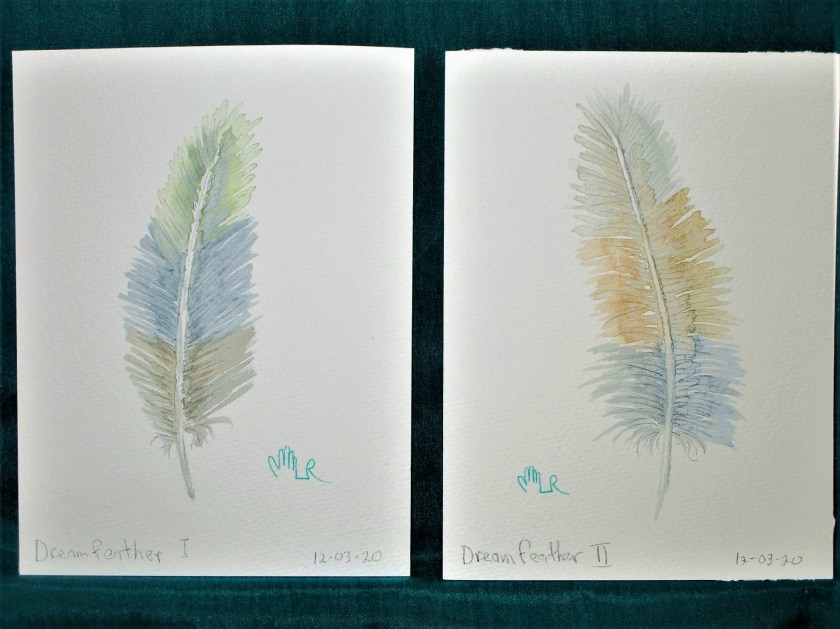
DREAM FEATHERS
Draw a curved line with a pencil. Using three different colors of your choice, paint each side of the feather with quick, light strokes. When the painting is dry, use a pencil to lightly draw lines along the paint strokes and also on the feather shaft.
THREE COLOR LANDSCAPES. Using three colors of your choice, make a quick landscape from your imagination.
Landscape with meadowLandscape with Grasses
Colors for both landscapes: Winsor Yellow, Burnt Sienna, French Ultramarine Blue. In addition to my Sumi brush, I used a no. 2 round and a rigger brush.
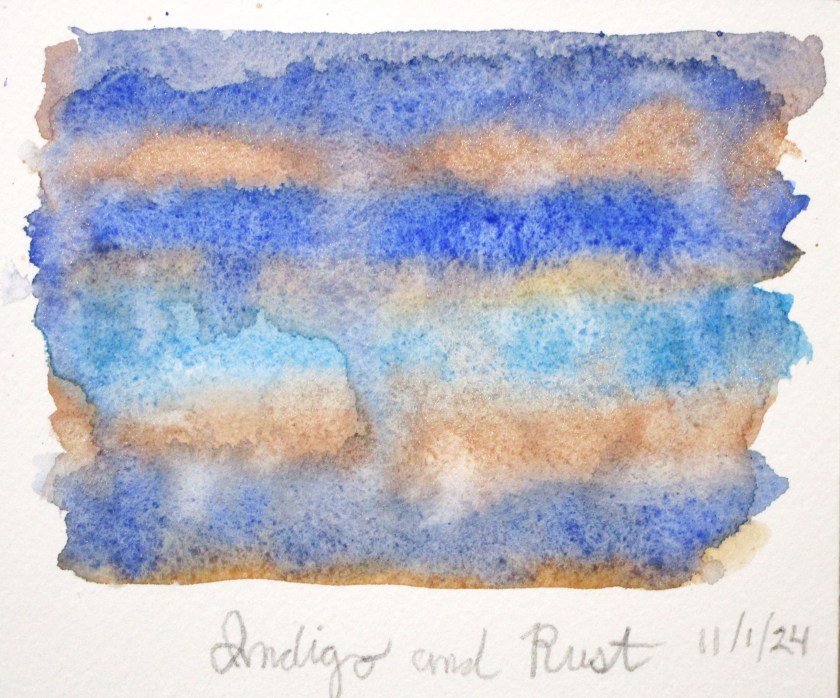
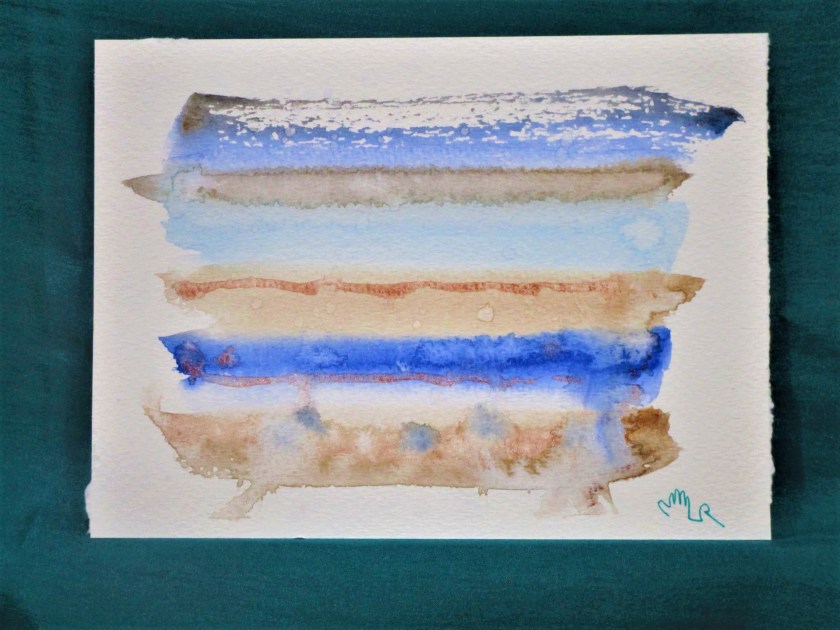
This exercise explores the complementary hues Ultramarine Blue and Burnt Sienna.
The paintings are done with paper in the landscape form. The brush is double loaded: first dipped in the blue, then the sienna. After stroking it in long stripes, a little water is added at the bottom of the stripe. Alternate striping with blue and sienna hues are continued until reaching the bottom of the paper. Metallic paint is added and then a light sprinkling with clean water to encourage mixing and mingling.
For my last sample, I was inspired by a photograph of the Irish coast. First I penciled a few lines on the paper to guide my color into the shapes of sky, water, sand and rocks. Then came the paint, followed by the sprinkle of water.
I am enjoying painting in this fast and loose style.









 Daily Fiber