Posted in painting

New Year Changes

Yesterday I got to work on changes to my studio, so that I can keep painting and sewing projects going at the same time. First of all, I put together a table top pressing board. It is a rectangle measuring about 19 by 21 inches. This addition allowed me to put the big ironing board away in the closet. I set up the card table under the window.

There is just enough room to allow me to paint on one canvas at a time, with all of the painting supplies directly at hand. To the right you see the big table that serves as my main work surface. The Bernina is on the shelf, ready to go at a moment’s notice.

To test out this arrangement, I got busy with the watercolors. I brushed washes on to two pieces of paper. My inspiration for the first painting was a photo I took when visiting Ohio in November. It is a slightly fuzzy image of Mogadore reservoir, the shoreline surrounded by bare branches.
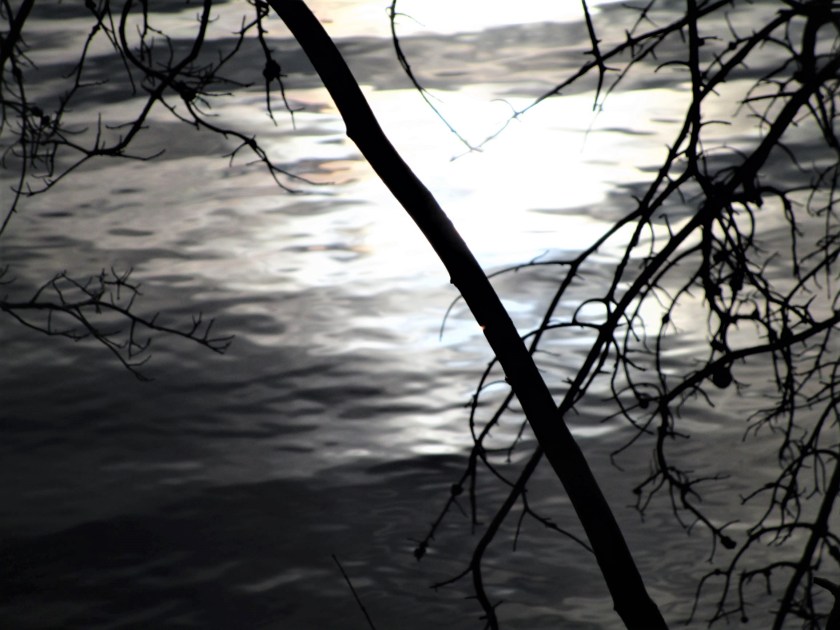
Quite a lovely, abstract landscape. Here is my interpretation of the scene using a violet and turquoise wash blended slightly.

The second piece of paper was washed with the turquoise alone – two coats to get it even. For inspiration, I flipped through some reference photos I had saved and came up with this indigo bunting.
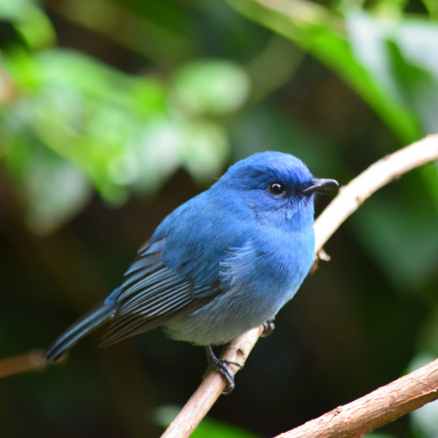
It inspired me to attempt a negative painting. In this technique, you paint around the area of the subject, drawing it out by subtracting the surrounding space. This first try at negative painting didn’t go very smoothly. I ended up having to use some white gouache on the bird to pick out the details.

Once the paint had dried, the little bird flew away. He found a perch among some of his feathered friends. I quickly snapped this photo.
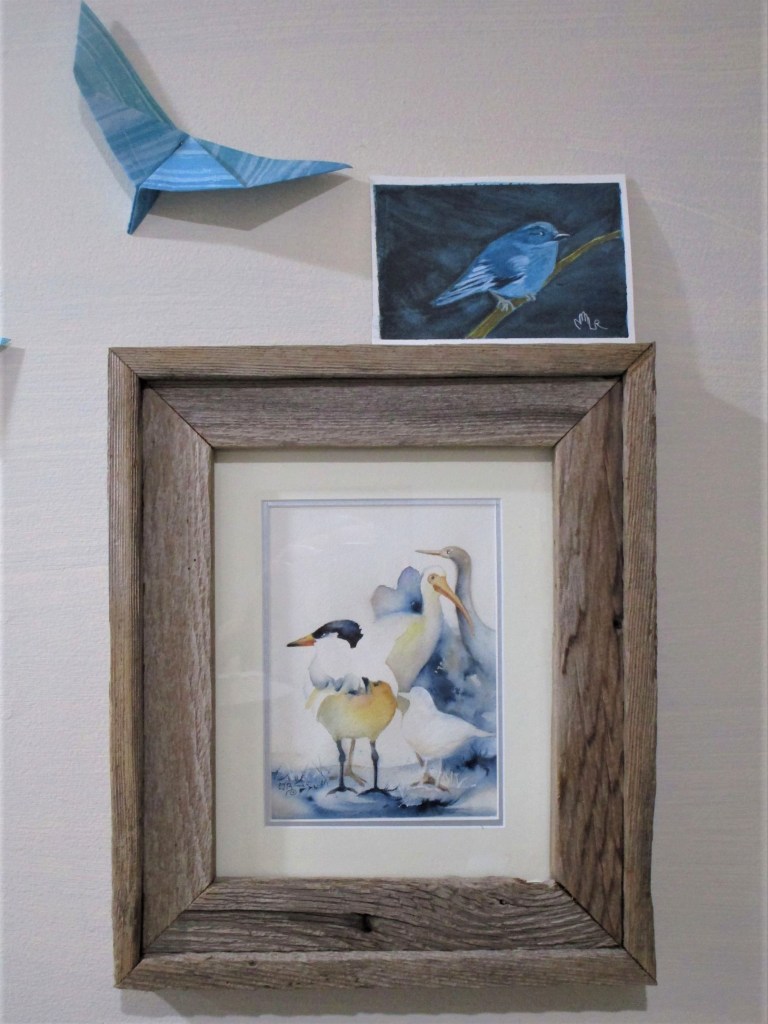
Birds of a Feather” by Cheryl Bryan. This watercolor also features negative painting

He seems so at home there.

Frame made from old fence slats by my husband.

The casual observer will notice that my background turned out very streaky. I used a combination of burnt sienna and Payne’s gray with not too much water. It took a few coats over the turquoise wash to get the uniform color I was seeking. I used quinacridone gold on his perch.

Perhaps tomorrow I will start sewing again.

Posted in painting

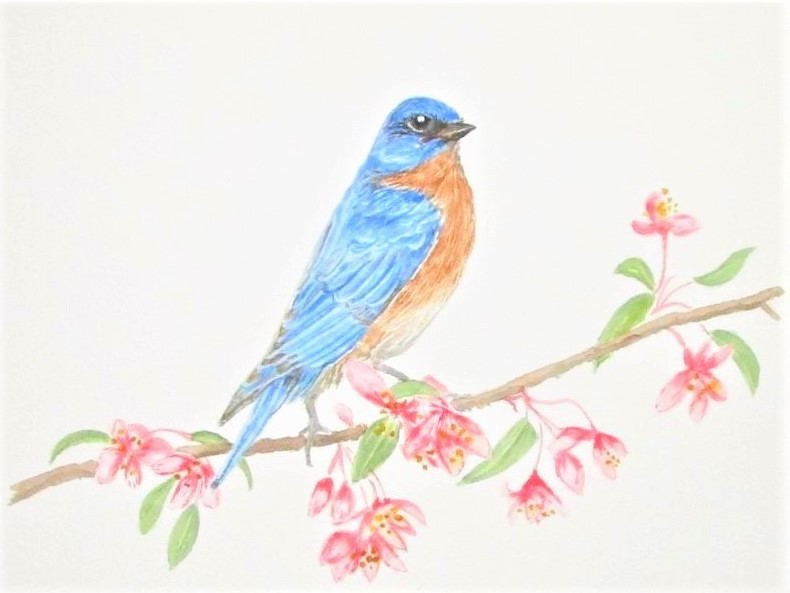
Study in Nature: Bluebird and Cherry Blossoms

Today I spent a leisurely afternoon following a tutorial by Kateri Ewing painting this bird. This little bluebird of happiness lived up to his reputation – he brought me happiness in the form of satisfaction with my efforts. I am happy with every detail of my work, except the cluster of blossoms in front of the bird’s left foot. That seems to be a hot mess.

On a more positive note, I highly recommend Kateri’s tutorials. She has a gentle, but enthusiastic teaching style and clearly loves water color painting. You can find the links to her classes here:

CRAFTSY | BLUPRINT | Kateri Ewing

My local library has just acquired her new book, “Watercolor is for Everyone.” I managed to be the first person to check it out. The book is in the how-to genre, specifically, how to develop a daily creative practice. I know there are a ton of this type of book on the market. But this one seemed right for me. I was in immediate need of emotional support for my creative efforts.

Kateri’s book guides the reader through a 21 day program of making intuitive, process-based art. There are no reference images, and very few technical instructions. The most important instruction she gives is that you give up on your expectation for results. Just show up everyday and paint for 15 minutes, minimum, drawing on your feelings and your imagination.

The process is definitely calming and even meditative.

Over the next few posts I will share some of my results from these lessons.

Posted in quilting

Final Steps on Duckweed Sample

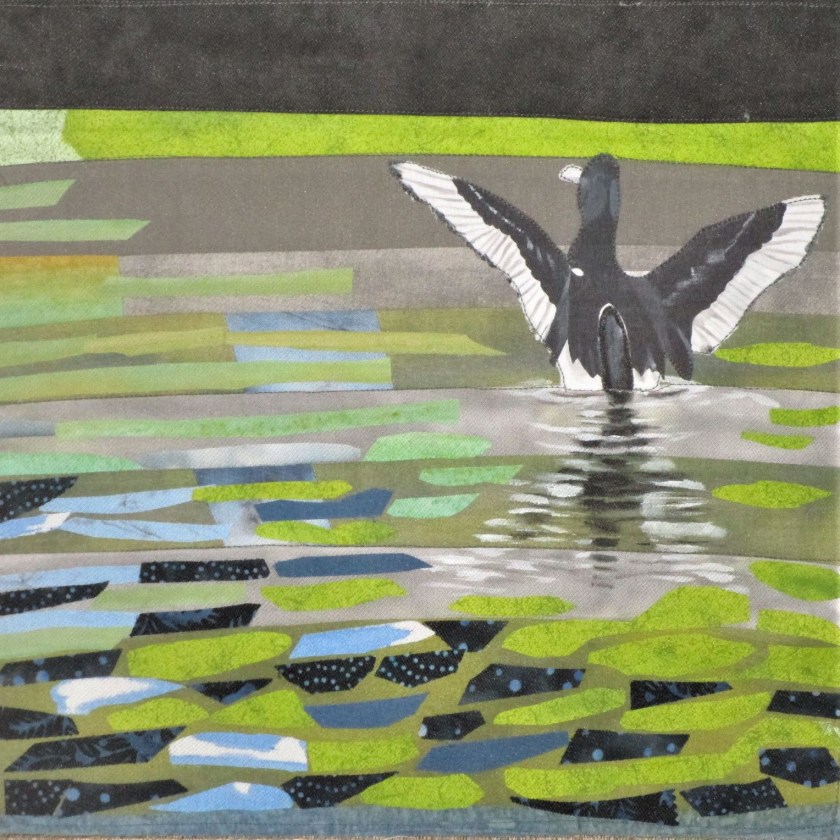
Today I finished up my practice sample for the Duckweed fiber object. This involved making the quilt sandwich and quilting.

I started with the walking foot and black thread. The stitching included wavy lines over the foreground and sewing around the duck. Next I switched to white thread and the free motion foot for creating the ripples around the base of the duck and outlining the duck’s wing feathers. I continued on my making white ripples to match the black ones in the foreground. To finish up, I used yellow-green thread to quilt the background.

As I worked, I began to like it more and more.

For the purpose of comparison, here is the inspiration photo.

And here is a close-up of my duck.

Making this piece was really good practice. I might do some things a little bit differently when I begin work on the main piece. I’ll give this project a few days rest and come back to it with fresh eyes.

Posted in collage, quilting

My Current Art Quilt Project

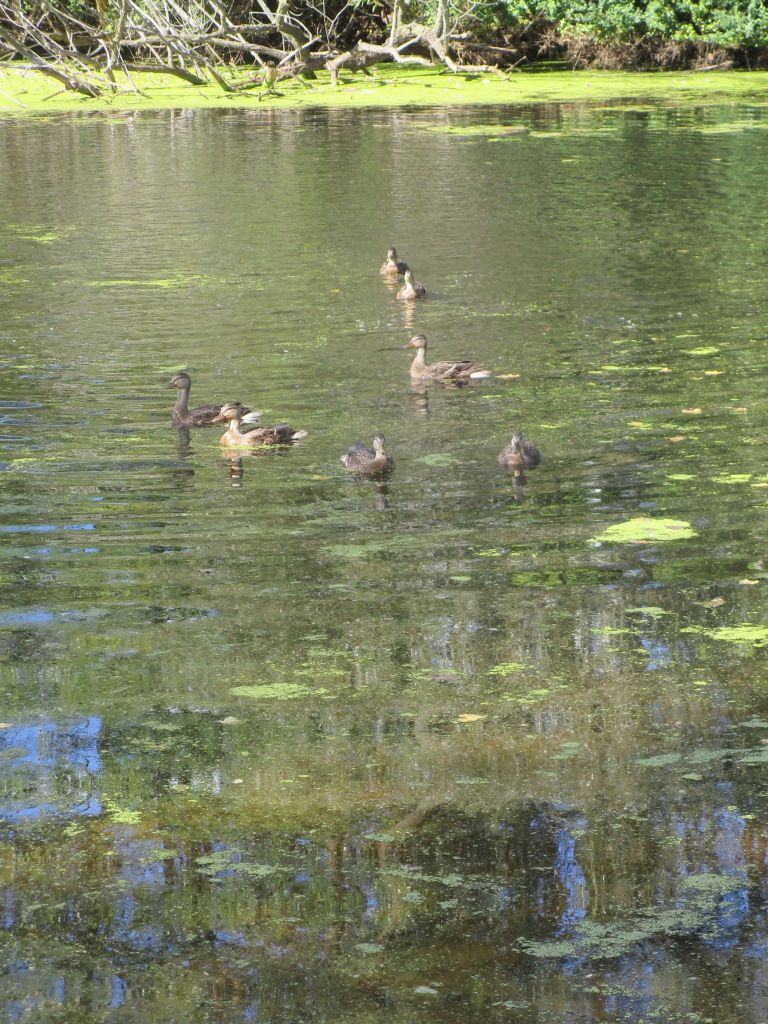
For the past couple of weeks I have been working on a new project. It’s inspired by this photo, which I captured in September at a nature reserve in Madison WI.

Mallards at Cherokee Marsh

I didn’t have any big expectations for this quick snap of a group of mallard ducks. But when I looked at it on my computer, I was captivated by the foreground – a mish-mash of colorful and spotted reflections. How might I create this look in fabric?

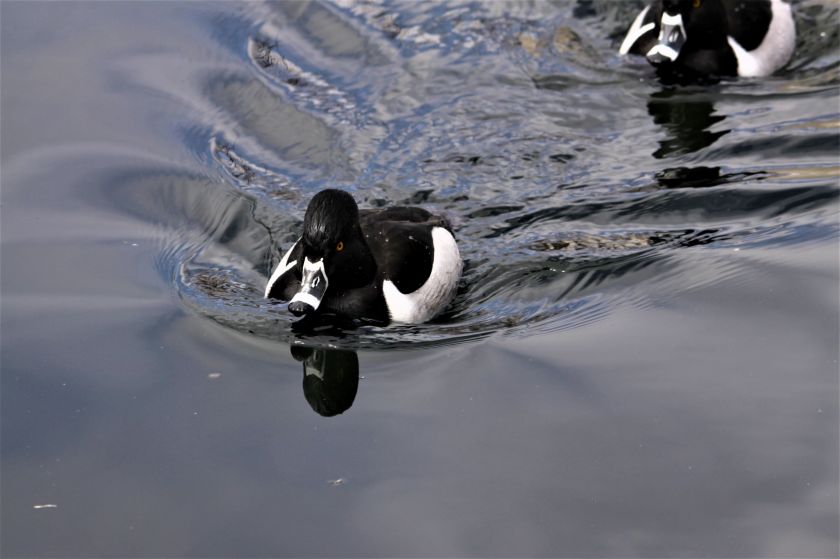
For this project I chose to use ring-necked ducks instead of mallards.

Male Ring-necked Ducks.

I love the black and white coloration and the crispness of its markings. Since this species of duck is also native to Wisconsin, I decided that it was a fair exchange.

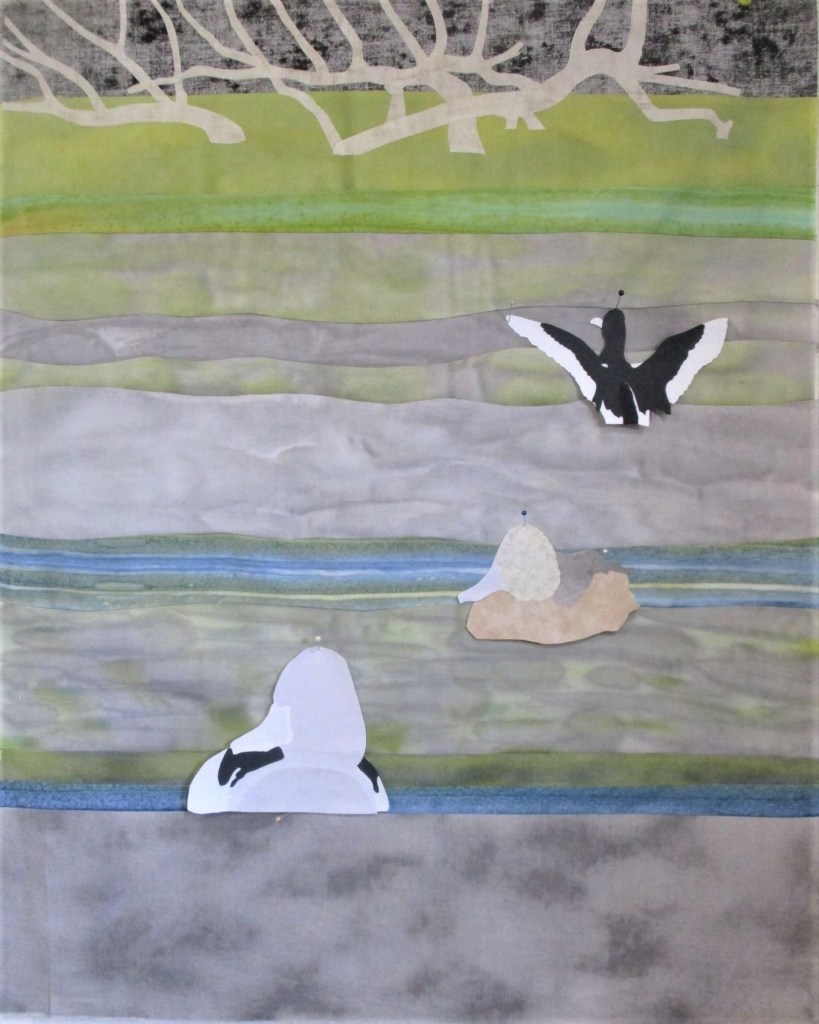
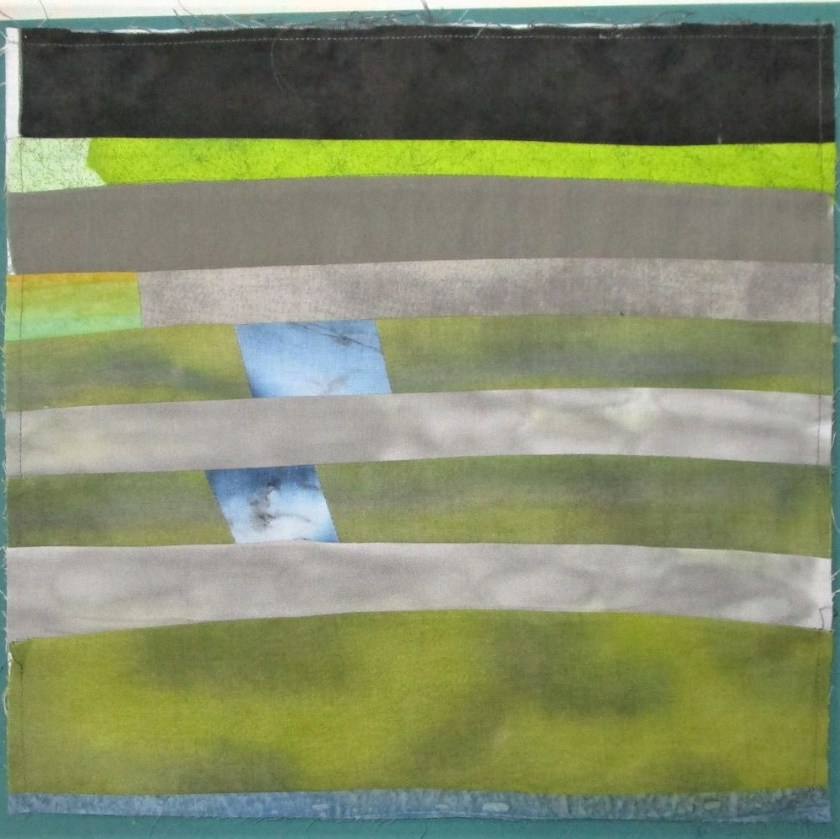
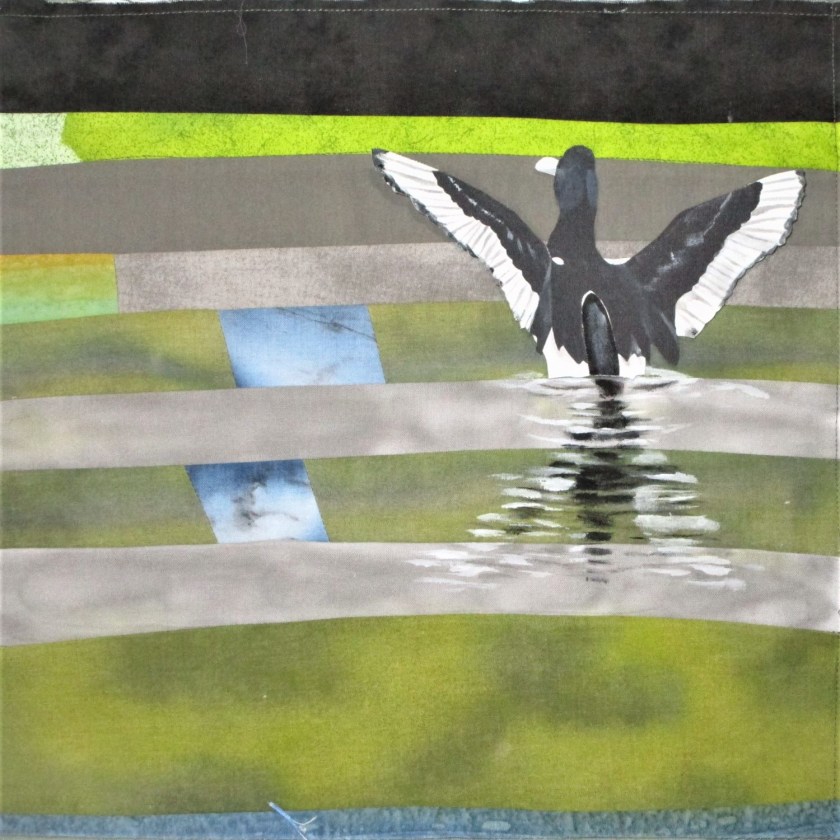
For the background, I selected some commercially printed and hand-painted fabric. these were sewn together in strips. Next I pieced together the first three ducks.

Eventually details will be painted on the ducks with fabric paint.

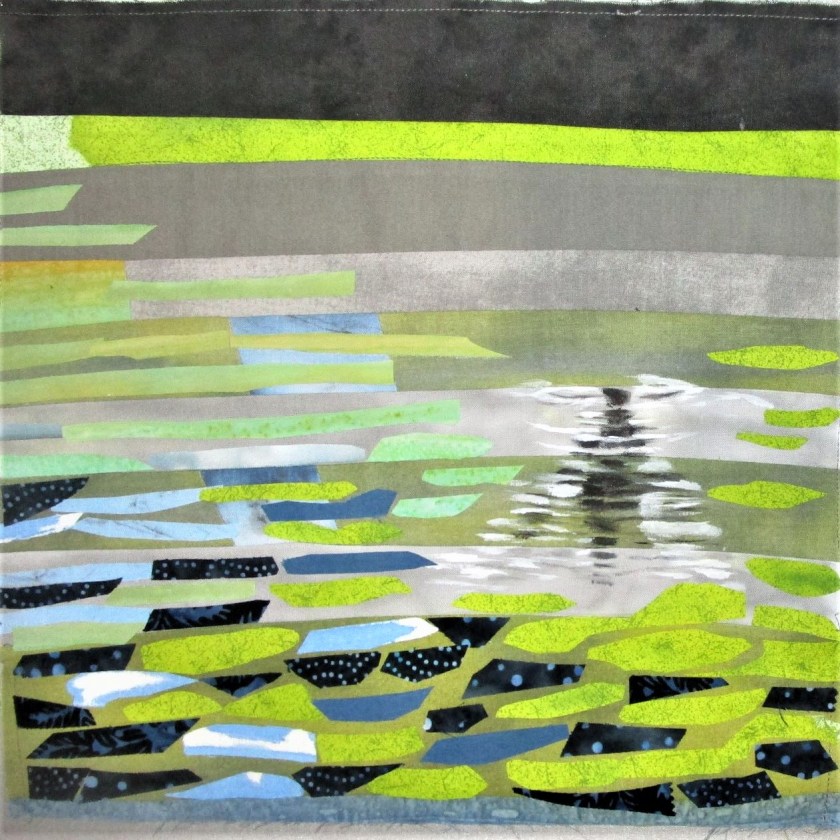
I took a pause for a few days. I want to use the confetti technique to render the mottled foreground. But this is a very new technique to me. So it makes sense to practice first.

I put together an extra duck so I could practice painting his reflection.

I like the pose of this one.

The next step? Go to U-tube to watch some instructional videos on the confetti technique. I had done this already, but the second viewing helped me work up my confident. With the prepared fabric in hand, I applied fusible webbing to the backs and cut them up into pieces. For the next hour or so, I fiddled around with layout.

Practice block with reflection and confetti foreground.

Did I mention that the title of this work is “Duckweed?” I guess I forgot to say. When I was at the marsh, it was the duckweed that really caught my attention. It was growing about the pond profusely in an intensive shade of green. This is what I am attempting to depict with my confetti pieces.

I next fused the duck in place and stitched a piece of tulle over the whole sample. The purpose of the tulle is to make the quilting easier. Here is where I left off today:

I’m fairly happy with my work. But I want to try rendering the reflection in the confetti technique instead of paint. I also want to work on the shapes of the confetti pieces.

Posted in hand embroidery, painting, quilting

Van Gogh-ish Last Steps and Reveal

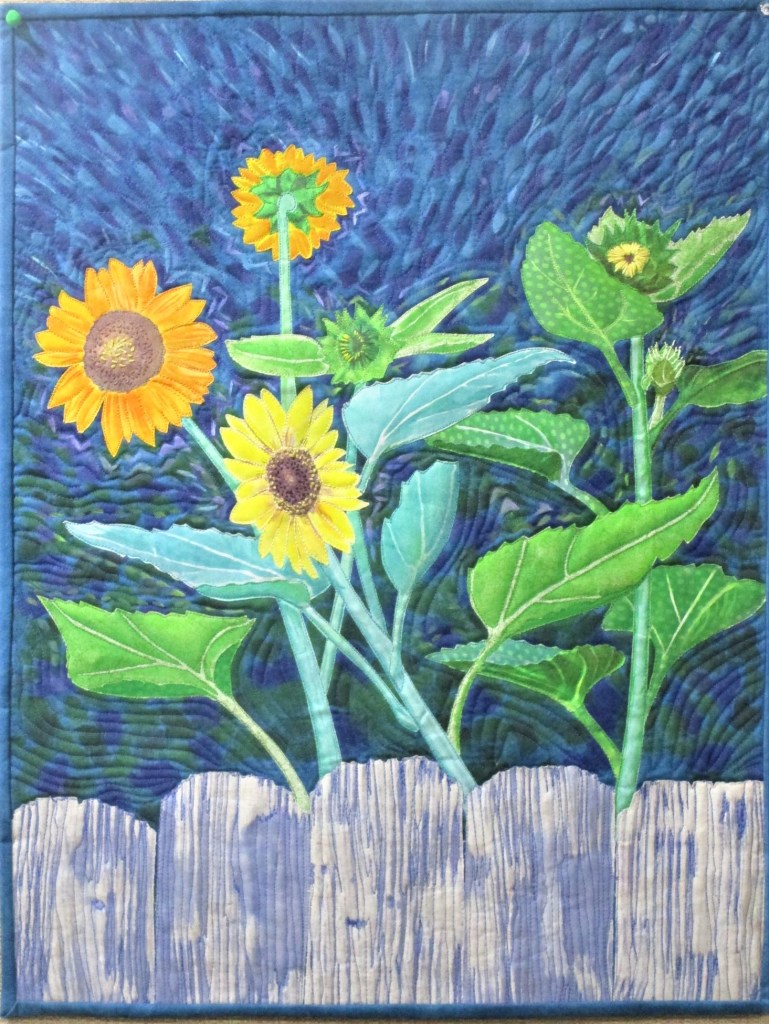
The last time I posted about my sunflower project, I had just finished fusing all the fabric pieces to the background and was beginning to embroider details on the flowers. There are only a few more steps to share.

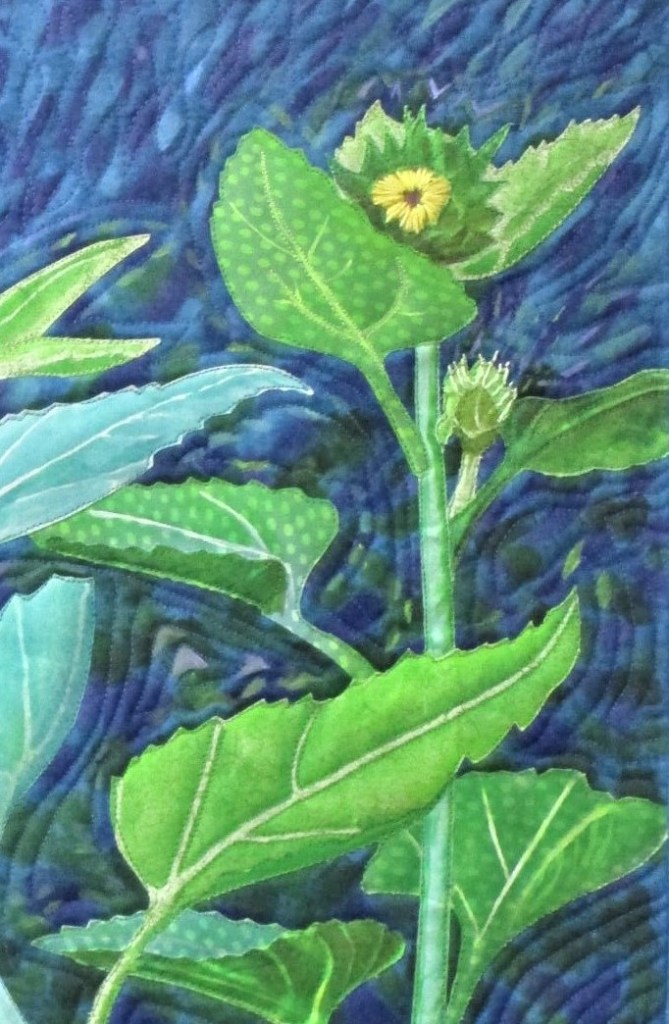
Here is a close up of the embroidery detail, which also shows the machine stitching around each applique piece.

Both of these steps took a good amount of time. I sewed around each piece using my walking foot. It is a great foot for precise work, but it only sews in a straight line. To sew down each petal and each notch in each leaf required lots of adjustments along the way.

Once the outline stitches were finished, I switched to my free motion foot to quilt the background. Now take a look at the Van Gogh painting at the top of this page. You can see, how the artist painted echo lines around the details. The pale dashes around the man’s jacket repeat the line of the jacket, and the edges of the sleeves are echoed all the way up the arm. I wanted to create the same kind of texture in my piece. So I started by sewing echo lines around the flowers and the leaves.

When I reached the sky, I sewed wavy lines around several of the paint dashes and dabs. After finishing the quilting, I bound the quilt on all sides with blue fabric.

For my final step, I mixed some paint. I painted echo lines, focusing on the upper half of the piece, and giving much attention to the flowers. Then I called it done.

Van Gogh-ish Sunflowers

I feel really happy. While this project took me many hours to complete, I find it very expressive. The quilting and the background paint lines represent the motion of the sunflowers as they sway in the wind. I like to think the echo lines represent the energy that exists in all living things.

Thank you, Mr. Van Gogh, for everything you taught me.