Posted in hand embroidery, recycling, sewing

Japanese Knot Bag

Having recently finished a wall quilt, I found myself with various pieces of fabrics left over. Instead of stuffing them into a box and shoving the box under a bed, I decided to cut the fabric into strips for the purpose of sewing them into a project bag.

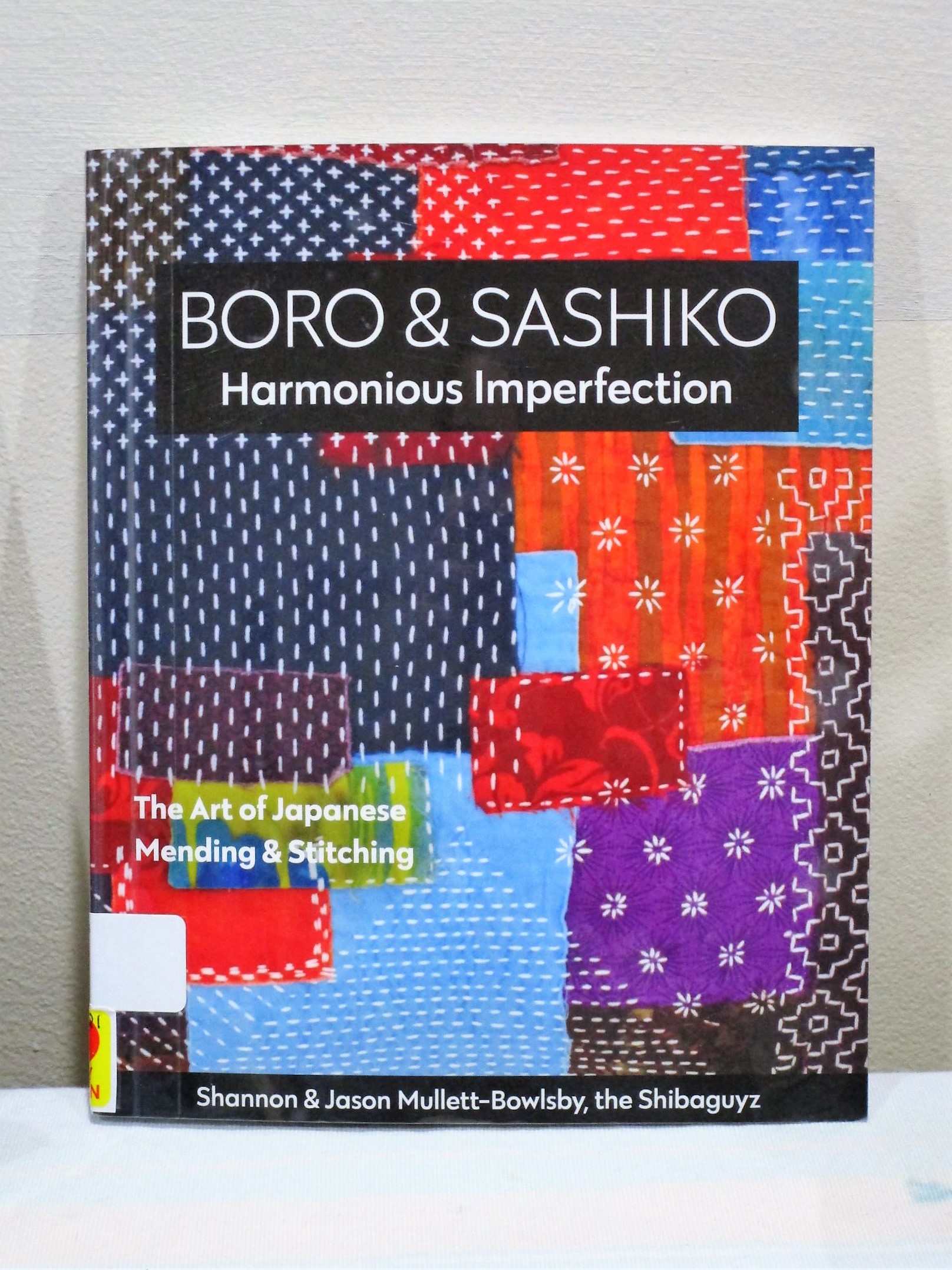
Back two years ago, I became interested in the Japanese art of stitching, aka sashiko and boro stitching. There was a pattern for a knot bag in this book by the Shibaguyz.

I did a post about it on Jan 5, 2022.
To make the bag, I would need fabrics for the base and lining, along with my strips of fabric. Fortunately, I had both. My daughter gave me some yardage of sturdy cotton flannel and my friend and co-worker Scott Perkins gave me a sample of raw silk.

Here is what I came up with using one quilt block made of a circle in a square. I then sewed strips of fabrics around it to cover all of the base and raw edges.
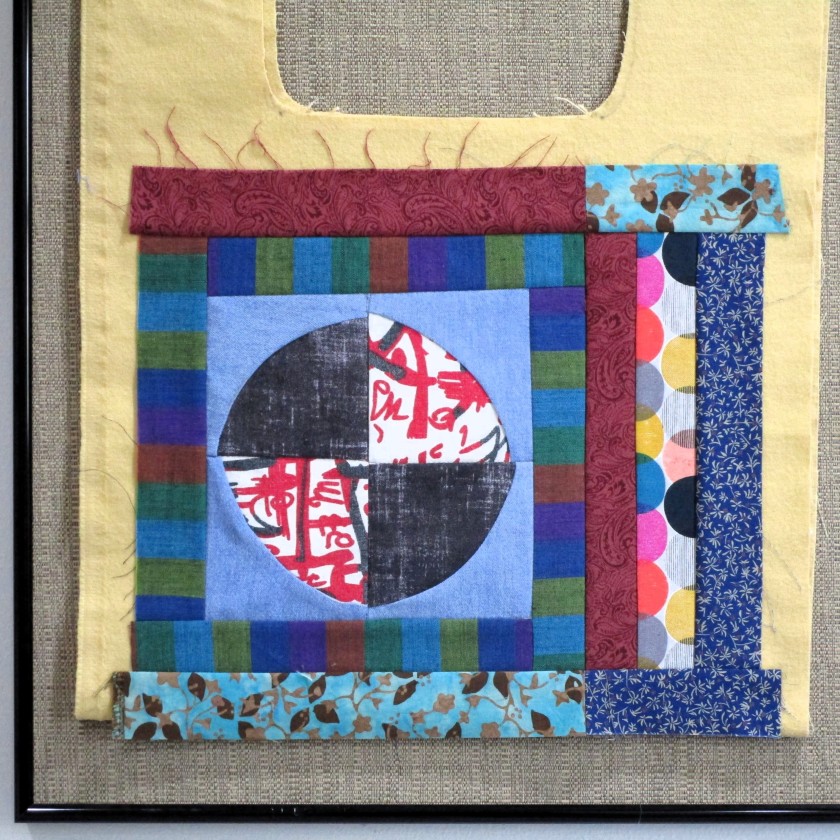
Side One
Side Two

Fabric selection included bits of three men’s shirts. (The dark red and dark green strips, and the blue chambray behind the first circle.) All three of these fabrics had been worked into the Shell Lake Story quilt. So, I am using scraps of scraps!

My next step was to sew up a lining using the same pattern as the base.
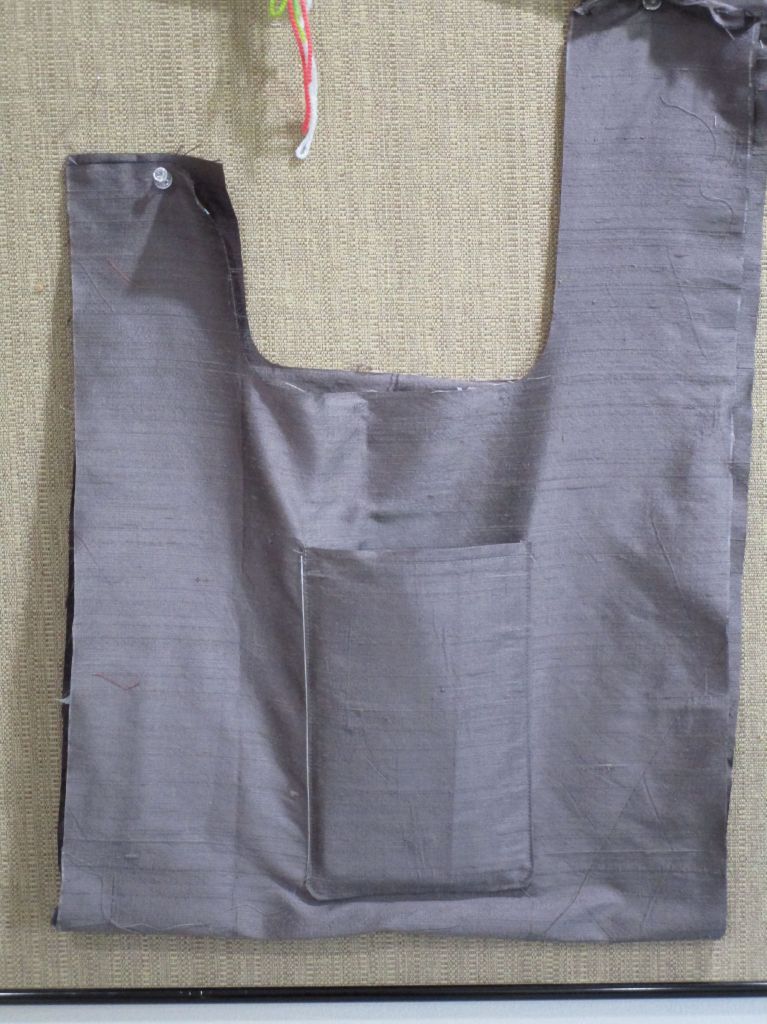
A cellphone pocket in the lining.

Adding the hand stitching took a few weeks. I marked all the stitch lines with a chalk pencil. Using white Sashiko thread I worked a running stitch in straight lines on the strips and circles around the circles.

And here is the front and back of the bag after all the top stitching is in place.

Finally, the seams of bag and lining are sewn up, the bag inserted into the lining with right sides facing and the U-shaped top edges are sewn together. This last step took me two tries, btw, so seam ripping happened.

Turning the bag to the outside, the only remaining steps were to close the strap side seams and top-stitch the opening.

To use the bag, the long handle is threaded through the short handle.

A quick look at the lining before it is turned to the inside. I love the look of the silk, and it is pretty easy to handle. Fraying was the only thing that gave me some trouble. The next time I sew with silk, I will zigzag the seam allowances

Here is the completed knot bag, filled with a knitting project.
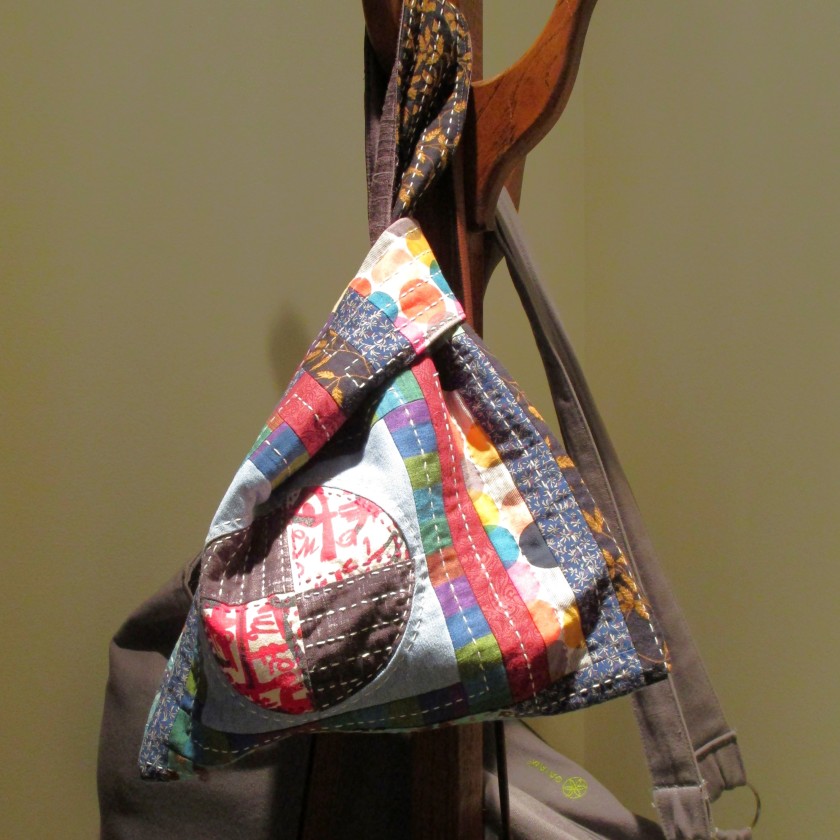
Front of bag as it hangs from a coat rack.

Back of bag.

This project was great fun (except for the seam ripping) and I would enjoy making more of these nifty bags. A larger size would be handy for bigger projects. And what a good way to use up scraps.

Posted in hand embroidery, quilting

WIP Wednesday: Hand Embroidery

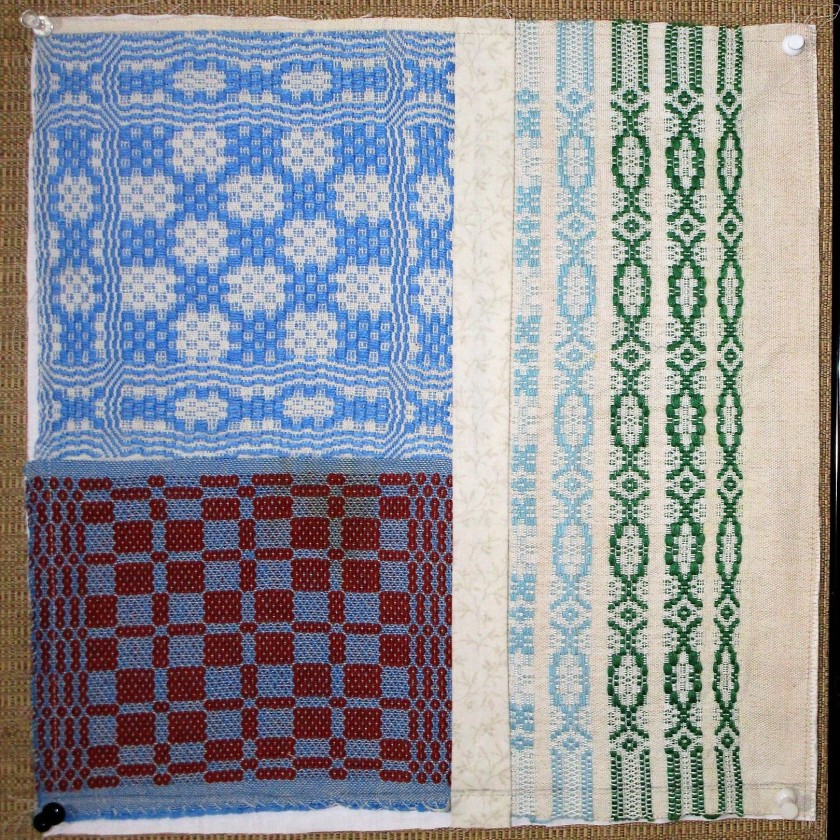
It’s been a while since I shared progress on the Howard Wabi-Sabi quilt. For this Work In Progress post, I’m showing how I hand-quilted a few of the vintage weaves that were used in this object.

After much consideration, I decided that it was OK to sew on (aka deface) someone else’s work. This change of heart came after I was in Madison recently, where I asked my daughter to show me more samples of Margaret Howard’s work.

Oh my. There was so much of it. Huge plastic bins filled to overflowing. Several samples were woven with the same motifs found in the pieces I was using in my quilt. Perhaps each piece was not that precious to the maker. They were woven, perhaps for practice, perhaps for auditioning alternative color choices.

When I picked up my quilt blocks again, it was clear to me that my stitching could accomplish its task of quilting down the batting and backing while also reinforcing the existing weave patterns. To my mind, this is enough to honor the maker.

Today I am showing two blocks with embroidery finished.

Center Block before:

Center Block after

Fire Block before:

Fire Block after:

I’m aware that the differences appear subtle in the photographs. But in person, the embroidery stitches bring some color variation and texture that was lacking.

Thanks to Amanda for adding her embroidery to the work, which jump-started my own efforts.

Posted in knitting, painting, quilting

Catch-Up Friday

Since I didn’t finish any of my fiber objects this week, I have decided to write a progress report. You see above about ten inches of the Weaver’s Square pattern, which will become a colorful vest for my daughter. This is the back of the garment. The front I have planned will be much more subdued. While working with seven strands of yarn each row has been a challenge, the satisfaction of the work and the excitement of seeing the color emerge has more than compensated for any difficulty. I have chosen to switch out the vertical colors at a rate of two or three for every band of horizontal color. As a result, the pattern has a more vertical effect.

Log Cabin Mini Quilt

Another work in progress is picture above. The quilt sandwich is constructed and some stitch in the ditch took place. At that point, I decided to work some embroidery in the flower squares and add hand quilting to the strips.

Blue block nearly finished.

I also felt that a border was essential to provide balance between the light and the dark sections of the piece. Going further, I plan to hand-paint this border in multiple hues. It will be exciting to see how well that goes, and it will take me more time.

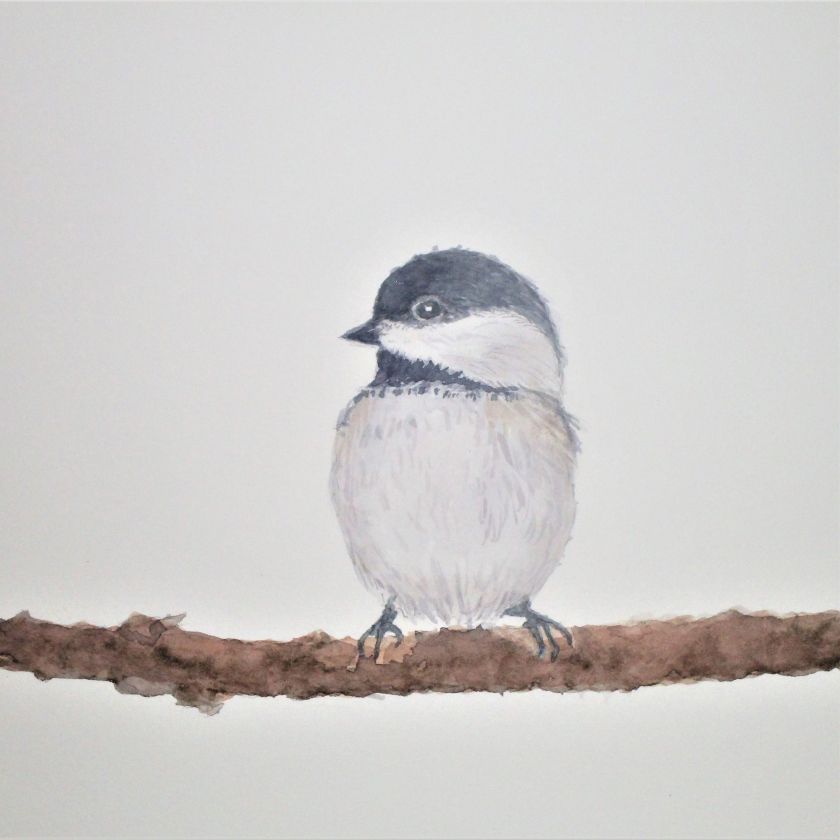
Last week-end I started a tutorial on painting with water color on paper. This class was offered on Bluprint.com. Despite a little trepidation, I am sharing my work today. Keep in mind I am a rank beginner and be kind.

Seascape at daybreak with birds.
Color Block using primary colors, salt, colored pencil and micron pens.
Realistic style chickadee

Such a fun week. Sometimes I have to pinch myself to remind me that this life is real.

Posted in colorwork, hand embroidery, quilting

Oakleaf Hydrangea – The First Leaf

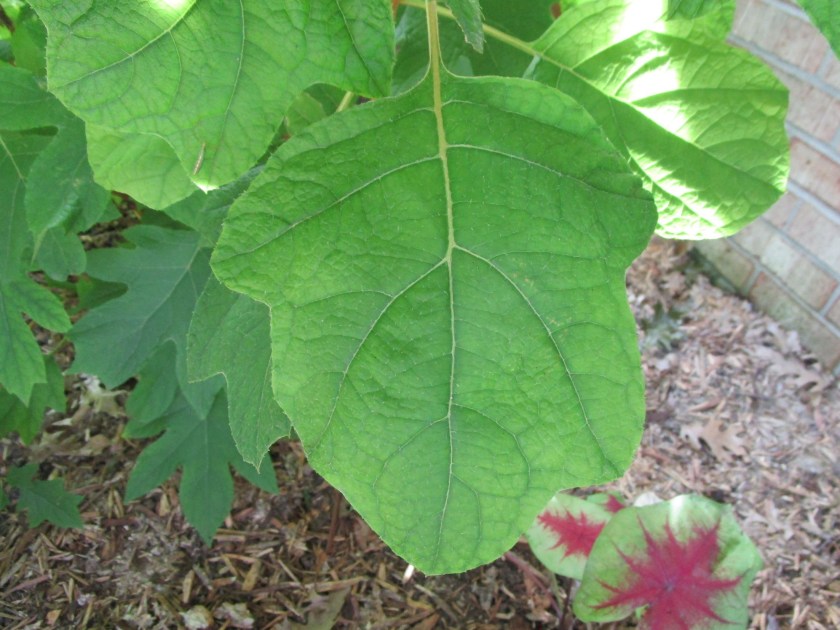
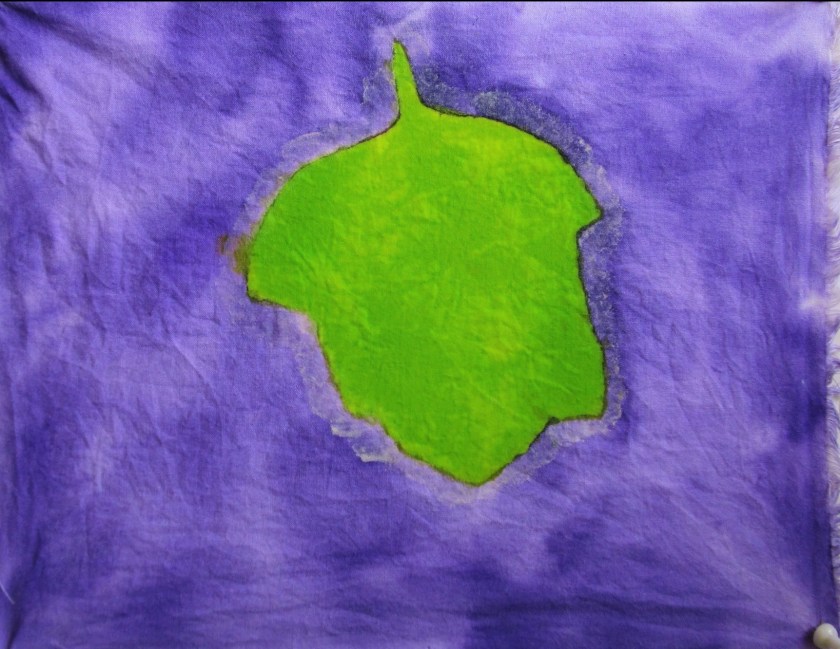
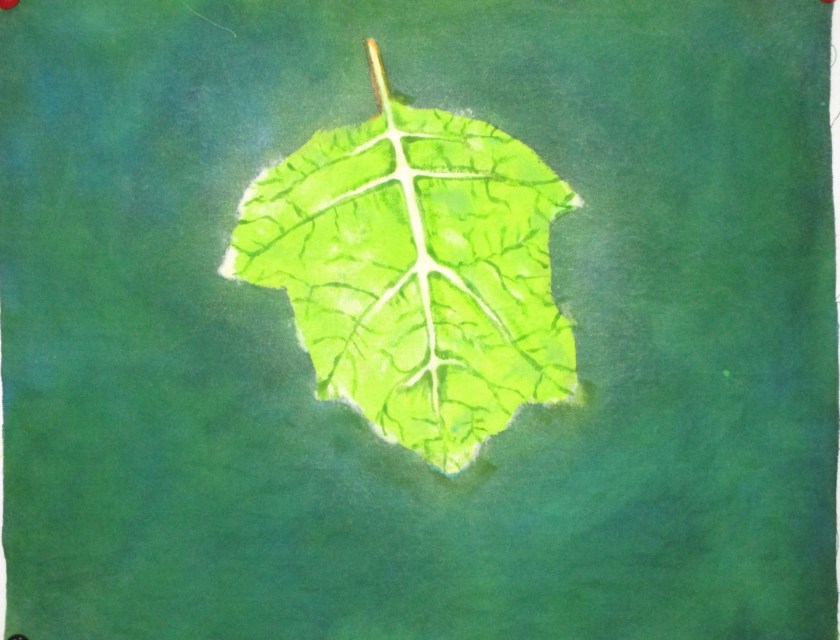
Yesterday and today I resumed work on the oakleaf hydrangea fabric paintings. Above you see the reference photo for the first leaf I am painting. I chose to do two experiments. Here are the two paintings after the first round of painting. The color wash – resist steps were complete and the paintings left to dry. In these photos, the water resist medium has not been washed out yet.

And here are the two paintings, washed, dried and with final details added, using Jacquard Textile paint inTurquoise and Goldenrod, so palette was quite limited.

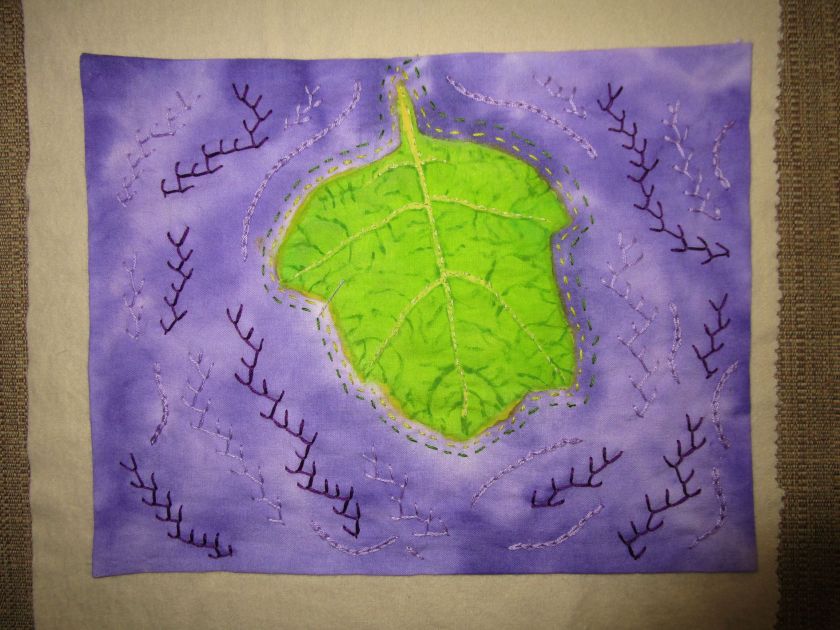
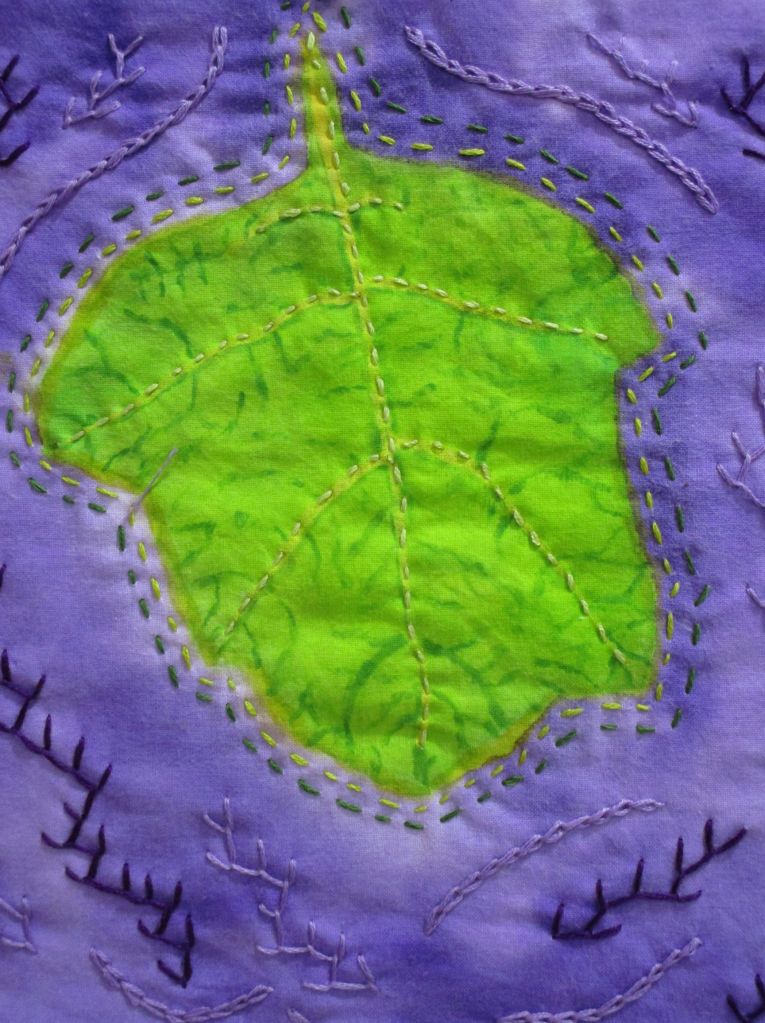
It was a learning experience, trying to paint on dry fabric with thicker paints. I discovered how to add depth to the background by dry brushing. And I learned that my skill in painting delicate lines needs work. After the pieces dried, I pressed them and continued on to the stitching phase. I chose to work with the purple piece first, hand quilting with embroidery floss. Instead of backing with regular batting, I used cotton flannel, since it would be easier to push the needle through.

I carefully stitched over the major leaf veins, and then made two borders around the leaf margin. After finishing the leaf, I just improvised the background, using two shades of purple and two stitches – feather and chain.

So far, undecided about how to stitch down the edges. The choices are blind stitch or use a decorative blanket stitch. Does anyone have a recommendation?

Posted in quilting

Jubilee Quilters Show

Yesterday I attended a show hosted by our local quilt group. To say it was inspirational is an understatement. Who knew that in our little county of 50,000 residents there were so many superb fiber artists? Because the organizers permitted photography, I took a number of images. It was hard to narrow it down to favorites, but I am pleased to share the following:

This is called a Bargello pattern.
Technically superb. How did the maker create all those perfectly round circles?
Created using a jellyroll group of fabrics. Name of quilt is “Ocean Deep.”
My favorite wall hanging quilt. The giraffe is created with dozens of flower shapes sewn atop one another. The birds and vines are fussy cut applique.
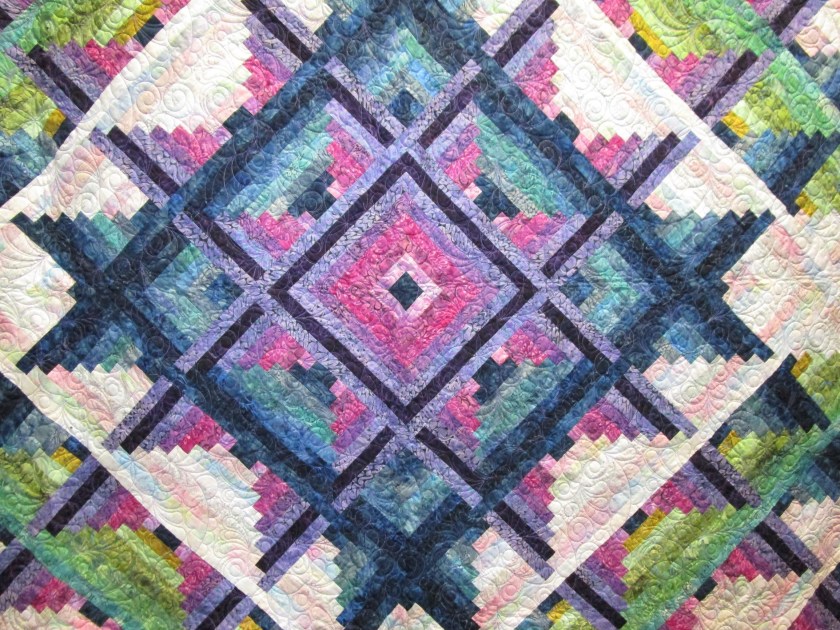
My favorite large quilt. It is a log cabin style, using batik fabrics.
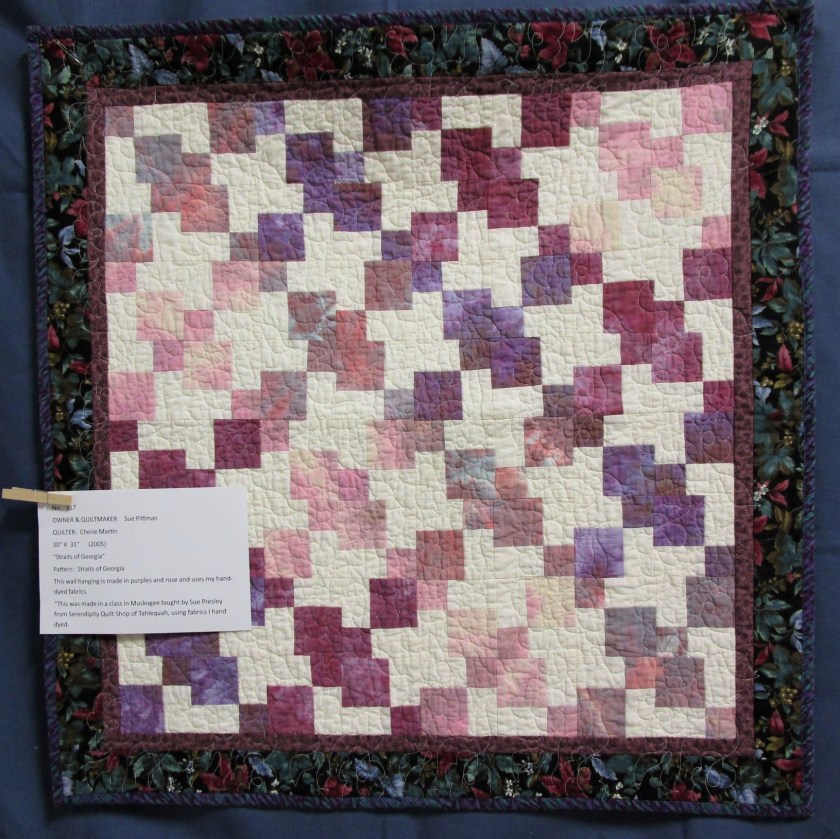
I chose this one because the maker used hand-dyed fabrics for her squares.

I admired the quilt below for its irregular and artfully placed strips, as well as for the cute applique ladybugs. The maker created it while recovering from a lung transplant. She finished the squares before passing away in 2008. Her grandmother sewed the top together.

I hope you enjoyed these quilts, and found them as inspiring as I did.