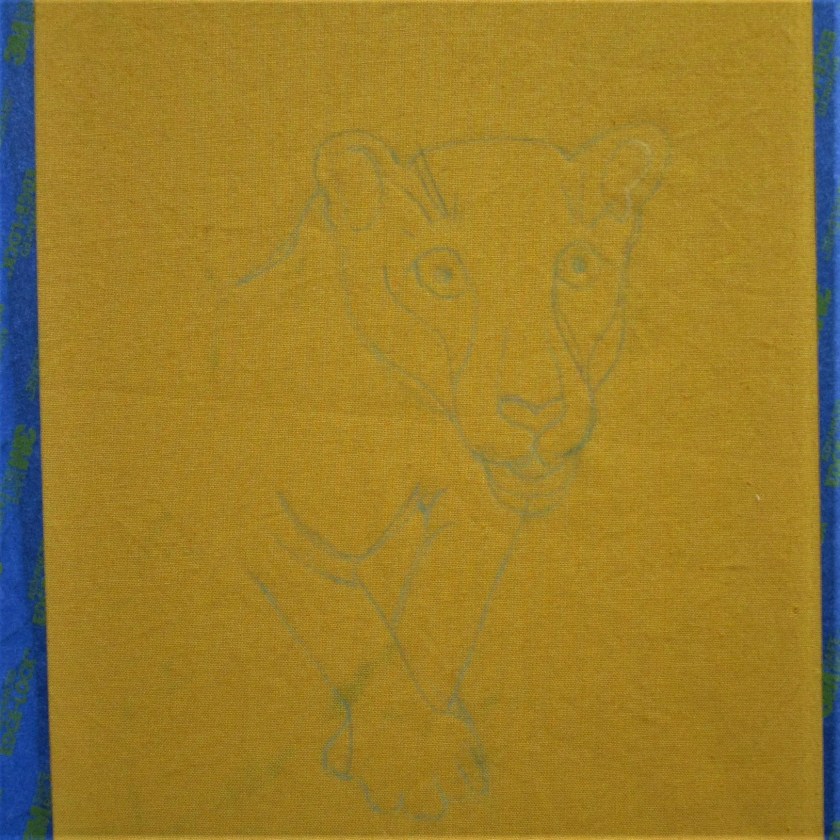
So here is what has happened since you last checked in with the haiku project. I have transferred the image of the jaguar to fabric.
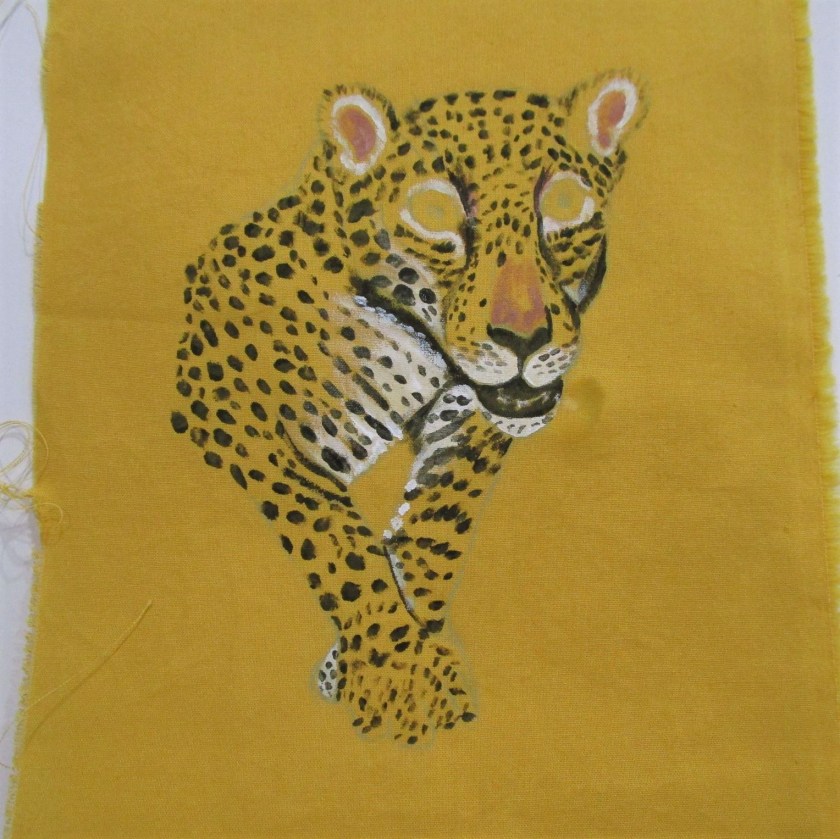
Using Jacquard Textile paint, I added the features and spots to this beast.
Next I hand embroidered the details, including eyes, ears, mouth, paws and whiskers.

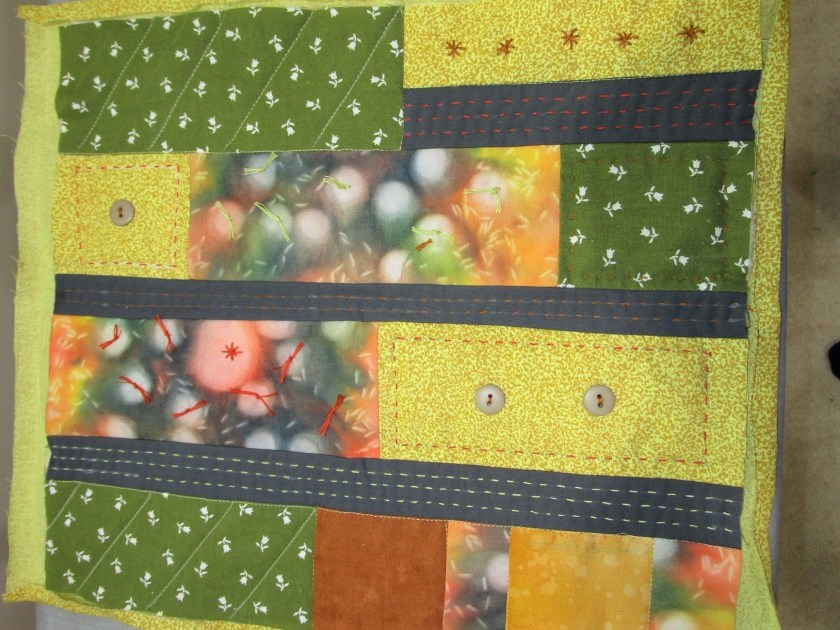
Here are the fabrics I chose, in the general layout I wanted.

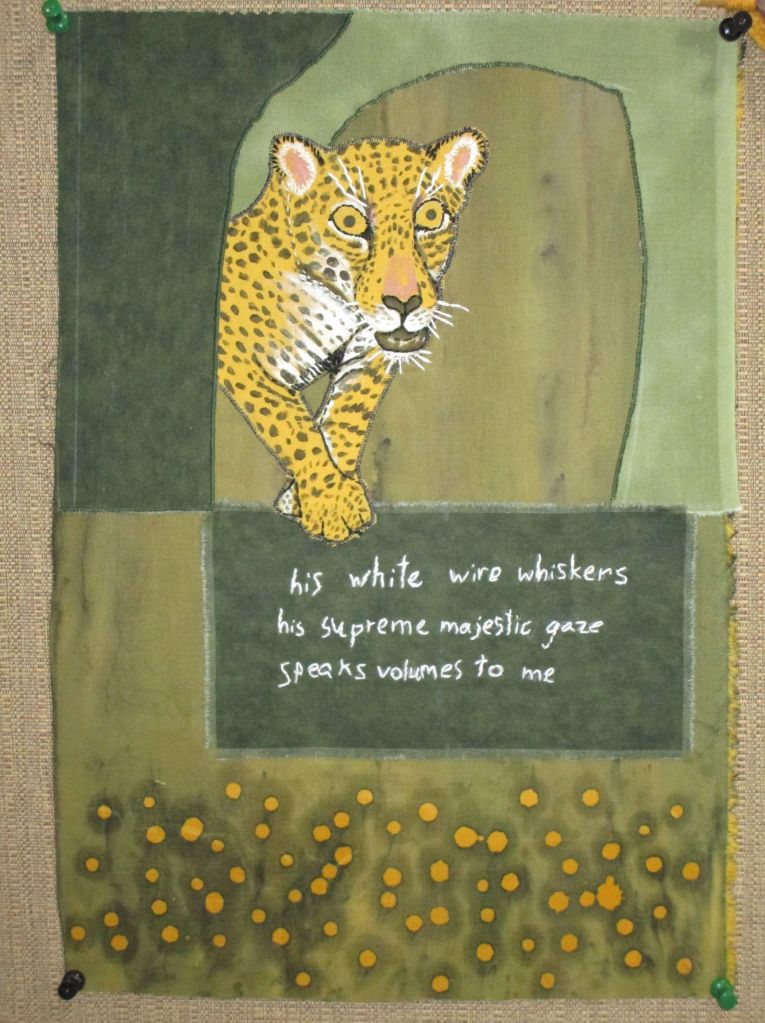
The next step was to embroider the haiku onto the dark green rectangle. It was important to me to replicate Henry’s handwriting as well as I could. I enlarged the original on the printer. Using chalked paper, I traced over the letters to mark them on the fabric. Then I embroidered the letters in white floss.

Finally I appliqued all of the pieces to the background fabric, machine-stitched around the raw edges, and embroidered the last few white whiskers on the cat. Here is the piece in its current state:
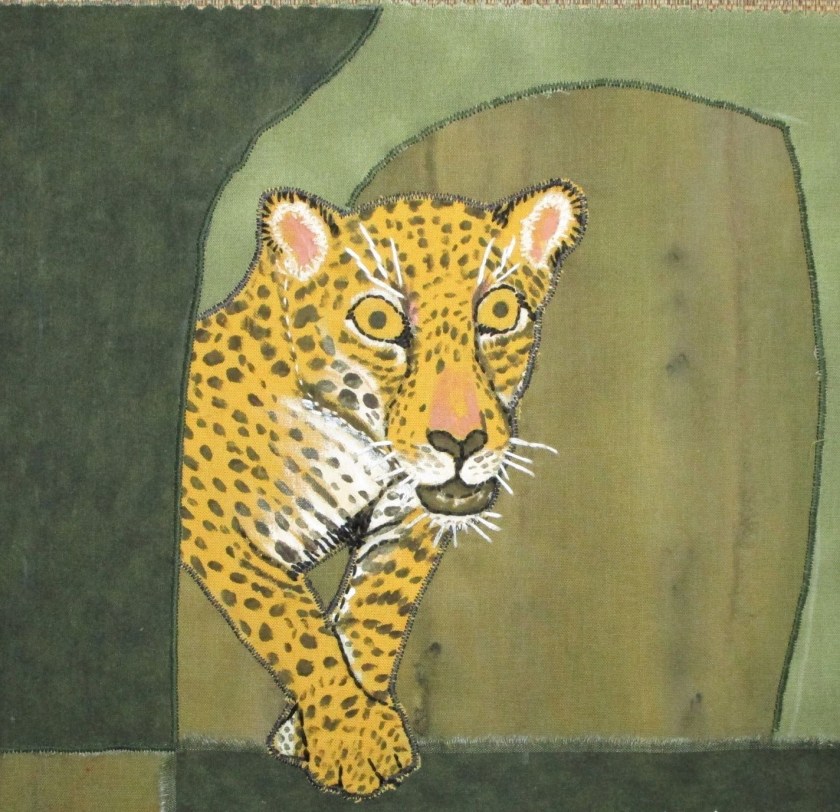
And here is a final close-up of the jaguar.
My original goal for this piece was to illustrate Henry’s poem, and to practice embroidering hand writing onto fabric. At the outset, I never expected to paint the fabric so much. But I’m glad I did it. I learned more about how to apply paint to fabric. And I ended up with a colorful and meaningful piece of fabric art.







 Daily Fiber