Posted in hand embroidery, recycling, sewing

Japanese Knot Bag

Having recently finished a wall quilt, I found myself with various pieces of fabrics left over. Instead of stuffing them into a box and shoving the box under a bed, I decided to cut the fabric into strips for the purpose of sewing them into a project bag.

Back two years ago, I became interested in the Japanese art of stitching, aka sashiko and boro stitching. There was a pattern for a knot bag in this book by the Shibaguyz.

I did a post about it on Jan 5, 2022.
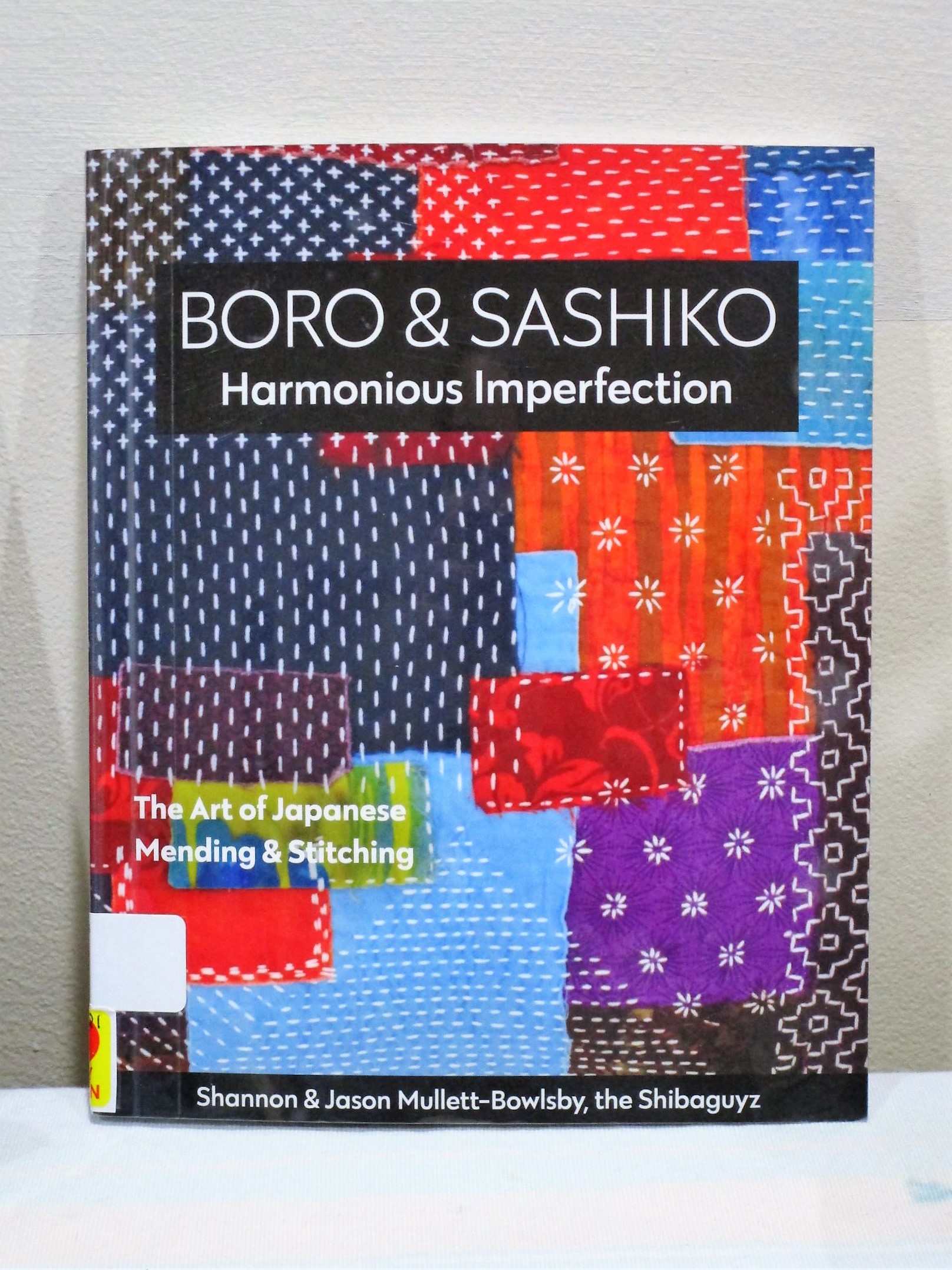
To make the bag, I would need fabrics for the base and lining, along with my strips of fabric. Fortunately, I had both. My daughter gave me some yardage of sturdy cotton flannel and my friend and co-worker Scott Perkins gave me a sample of raw silk.

Here is what I came up with using one quilt block made of a circle in a square. I then sewed strips of fabrics around it to cover all of the base and raw edges.
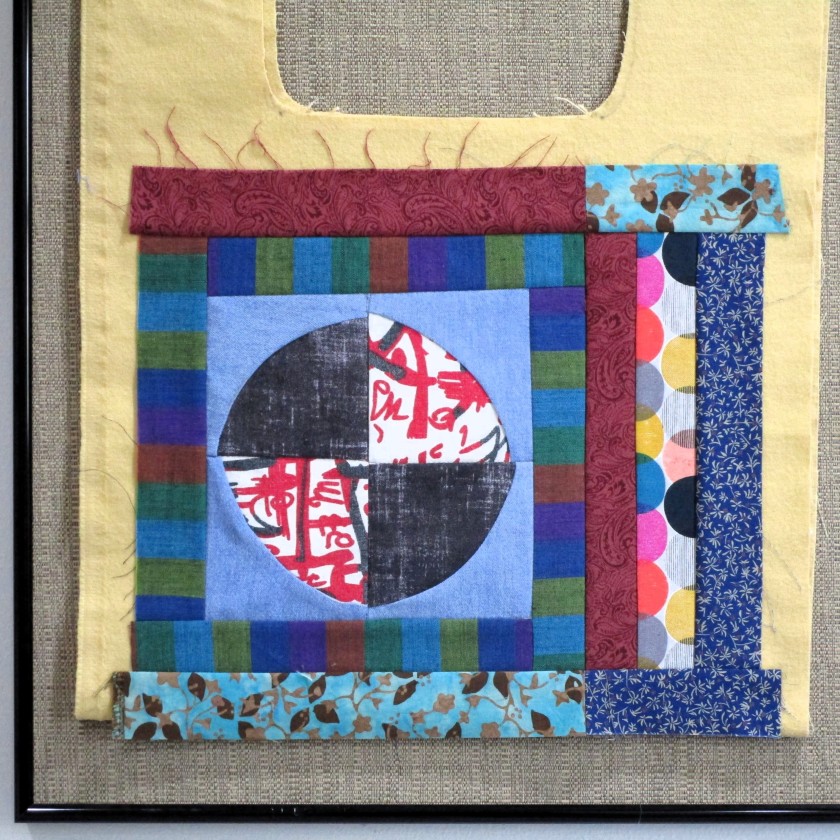
Side One
Side Two

Fabric selection included bits of three men’s shirts. (The dark red and dark green strips, and the blue chambray behind the first circle.) All three of these fabrics had been worked into the Shell Lake Story quilt. So, I am using scraps of scraps!

My next step was to sew up a lining using the same pattern as the base.
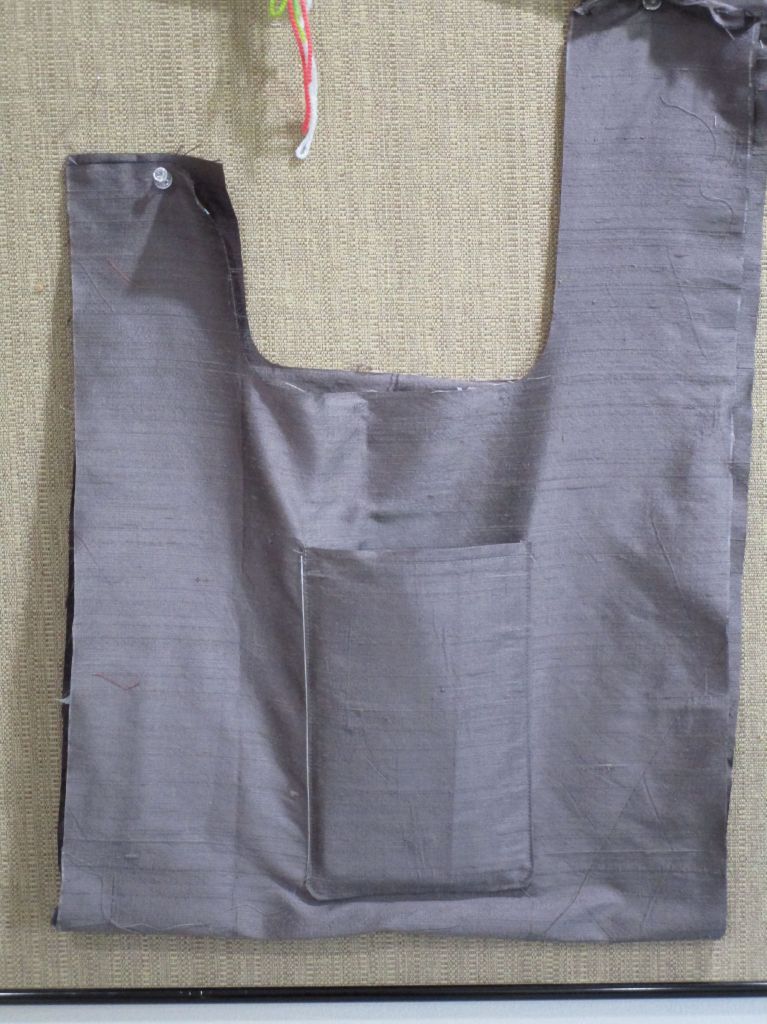
A cellphone pocket in the lining.

Adding the hand stitching took a few weeks. I marked all the stitch lines with a chalk pencil. Using white Sashiko thread I worked a running stitch in straight lines on the strips and circles around the circles.

And here is the front and back of the bag after all the top stitching is in place.

Finally, the seams of bag and lining are sewn up, the bag inserted into the lining with right sides facing and the U-shaped top edges are sewn together. This last step took me two tries, btw, so seam ripping happened.

Turning the bag to the outside, the only remaining steps were to close the strap side seams and top-stitch the opening.

To use the bag, the long handle is threaded through the short handle.

A quick look at the lining before it is turned to the inside. I love the look of the silk, and it is pretty easy to handle. Fraying was the only thing that gave me some trouble. The next time I sew with silk, I will zigzag the seam allowances

Here is the completed knot bag, filled with a knitting project.
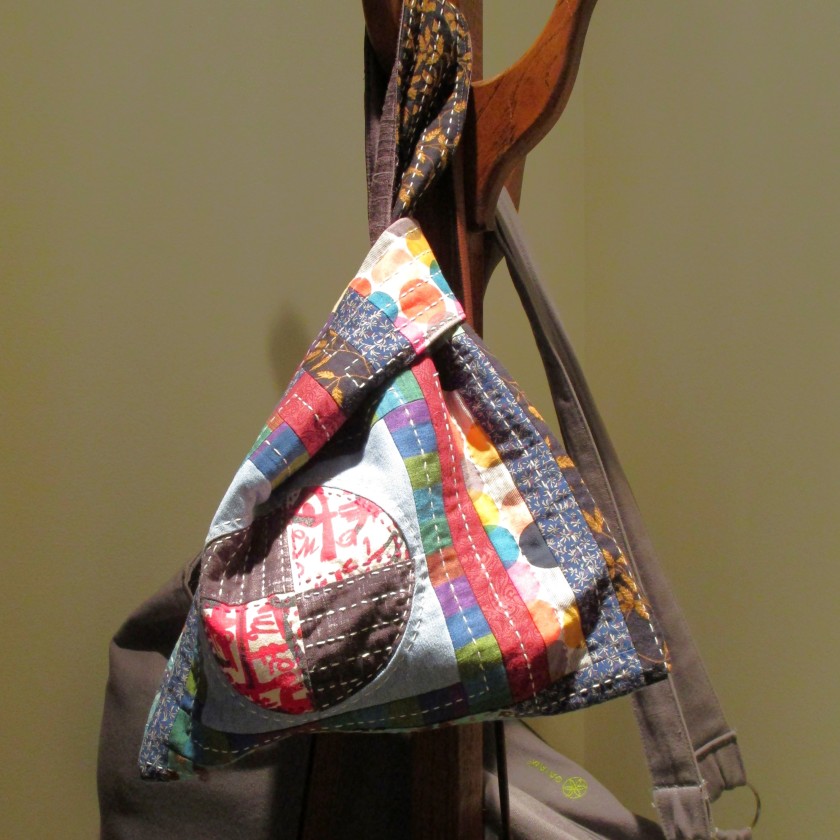
Front of bag as it hangs from a coat rack.

Back of bag.

This project was great fun (except for the seam ripping) and I would enjoy making more of these nifty bags. A larger size would be handy for bigger projects. And what a good way to use up scraps.

Posted in knitting

ThWIP Thursday – SOCK!

Back from Wisconsin and fresh off my no.1 cable needles is this fancy sock – the first of a pair for my beloved husband. It turned out to be a pretty good travel project, as long as I confined my knitting to daylight hours. Under artificial light, the tiny stitches were very difficult to navigate.

I used Kate Davies’ pattern for the Mary Delany sock, with some significant modifications. The first was to make it wider to fit a man’s foot. Fortunately, choosing a larger needle got me most of the way there. I also substituted a 6 st. by 7 row stranded pattern for Kate’s 37 stitch diamond flower pattern.

This pattern is found in 750 Knitting Stitches, the Ultimate Knit Stitch Bible. It worked up beautifully with a light solid and dark-to-medium variegated yarn.

This sock is knit from the toe up. When I got to the cuff ribbing, I switched from a size 2 to a size 1 needle. For a looser bind-off, I went back to the 2..

Now to quickly cast on its mate, before losing enthusiasm for the project!

If you’d like to try this pattern, here is the link.

https://www.ravelry.com/patterns/library/mary-delany

Posted in knitting

Cast Off Monday: Parade of Mittens

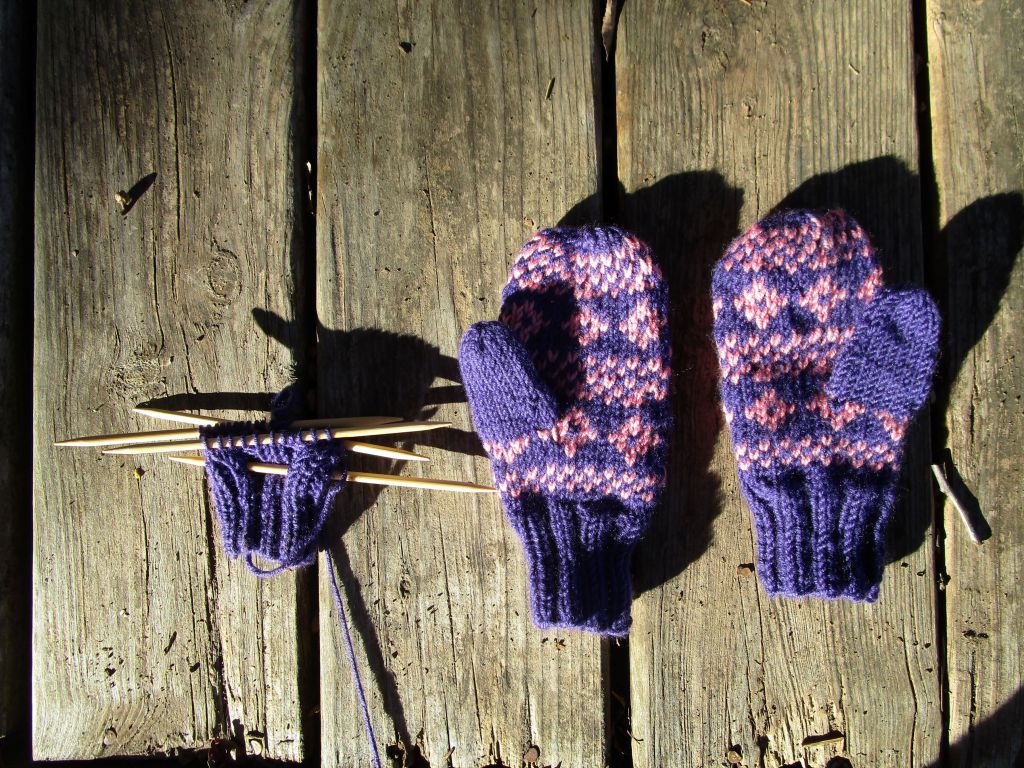
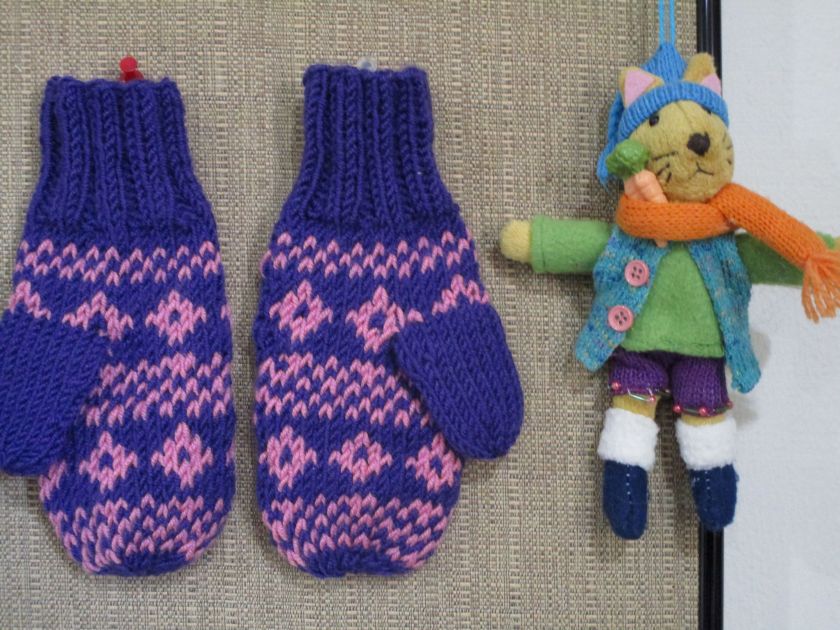
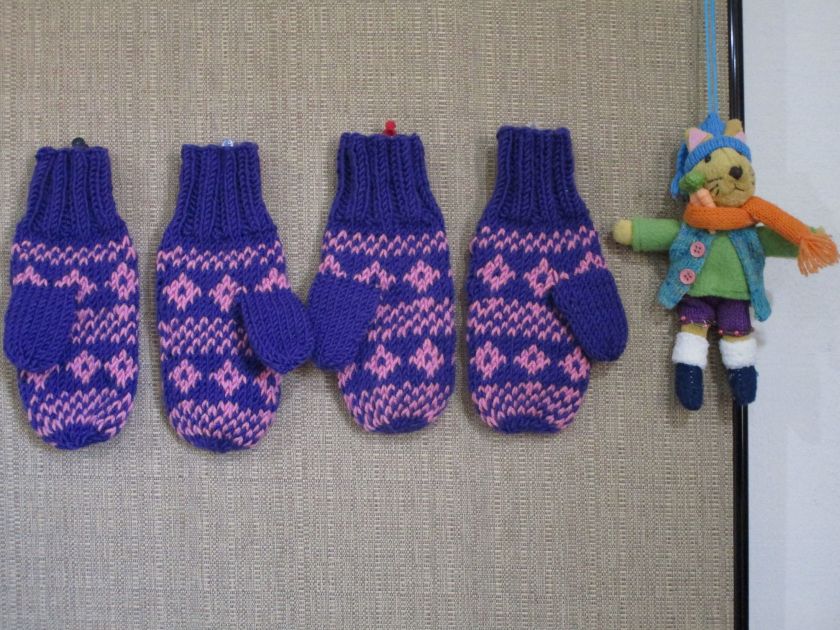
It didn’t take long for me to work up TWO pair of mittens sized child medium.

Once I got into the rhythm, I completed a mitten in a few hours each evening. The pattern made it easy to match each one to its predecessor. The yarn was soft and bouncy with a good contrast of values.

My mascot mouse approves highly.

And here is the left-over yarn. Just enough to save for future repairs.

It was a good week for busting stash!

Posted in knitting

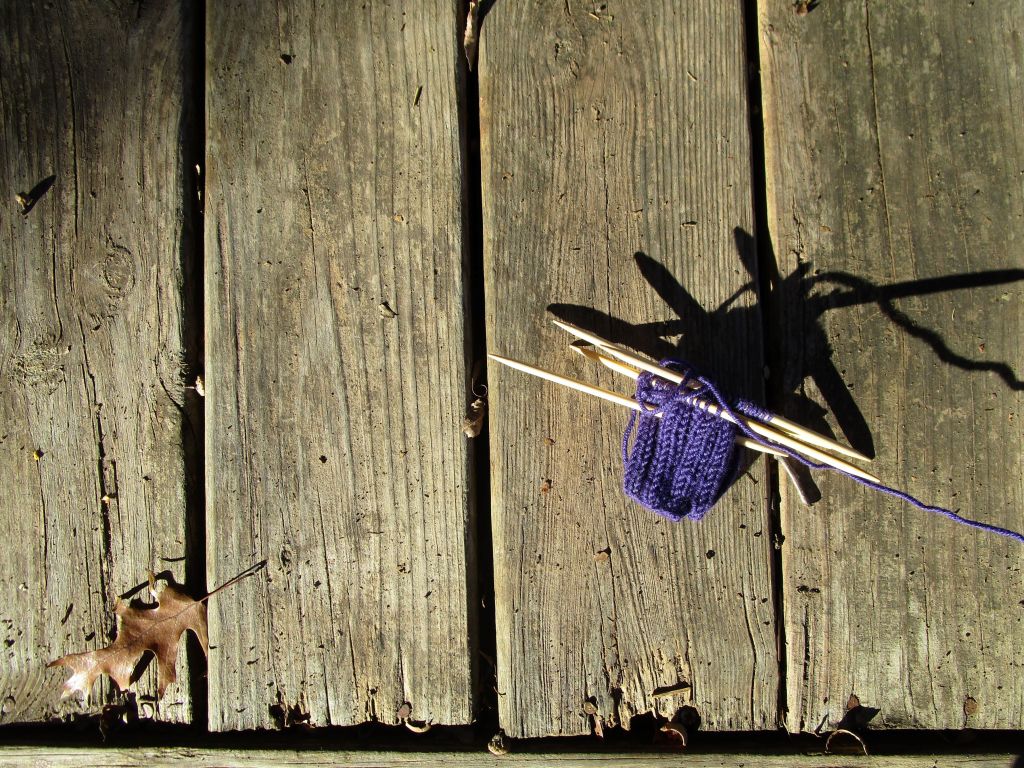
Cast-On Monday: Time for Mittens

Knitting mittens is like eating tortilla chips with salsa. They go so fast and are so much fun that it’s hard to know when to stop.

When my grandson was a toddler, I think I made four or five mittens in the same yarn. I was operating on the theory that, since they are easily lost, spare mittens would come in handy.

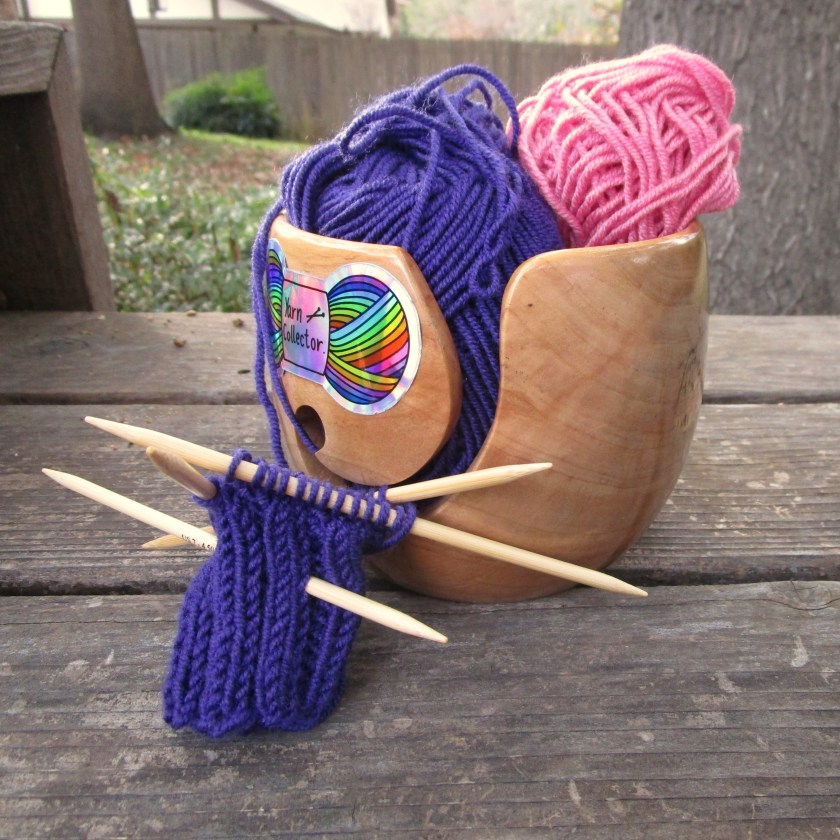
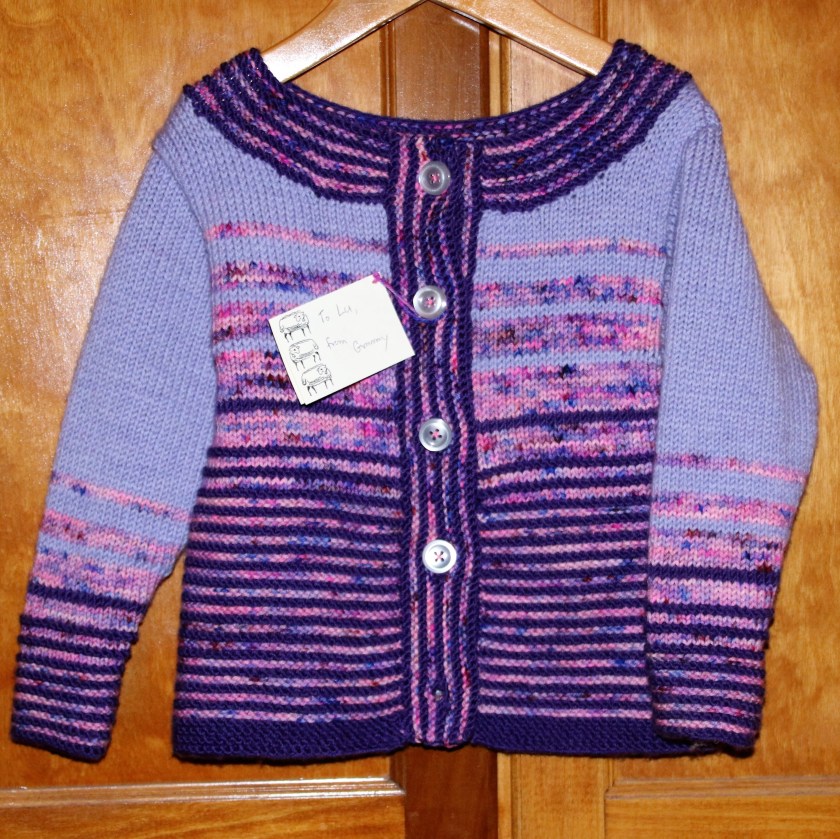
This time around I am using the purple and pink Elision yarn for the third time. That’s extreme stash-busting in my world. The skeins were purchased for Lu’s simple sweater, to complement a hand-painted merino wool skein she had selected.

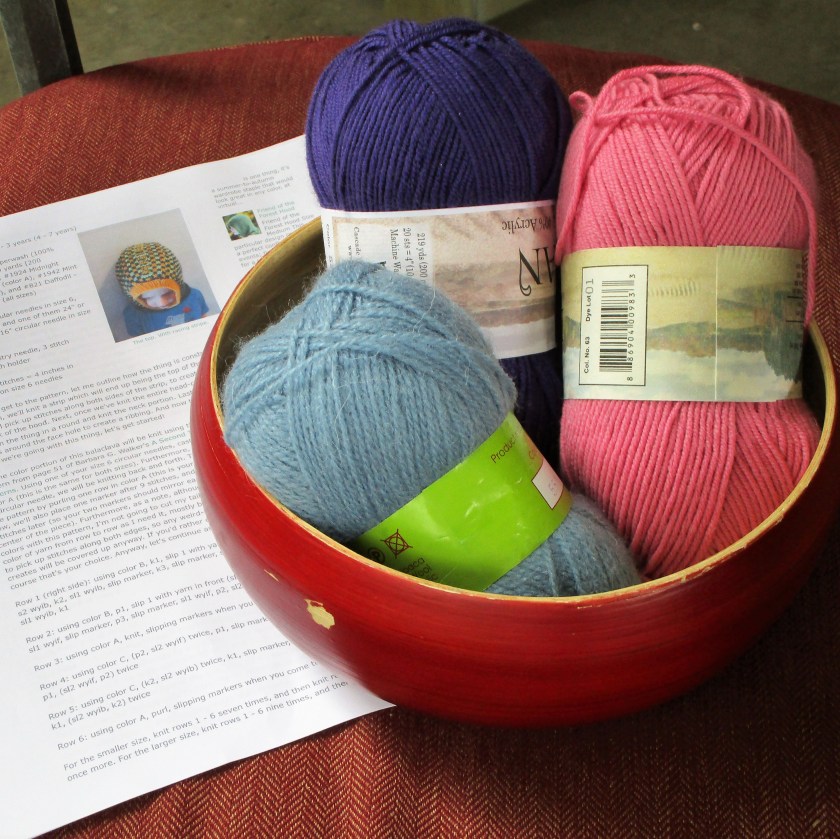
Earlier this year, I added a pale blue color to make her a balaclava.

That left a full skein of purple and a partial of pink. I am using a basic pattern to get my stitch count and proportions right……

https://www.ravelry.com/patterns/library/zen-little-fingers-and-toes-part-1-mittens

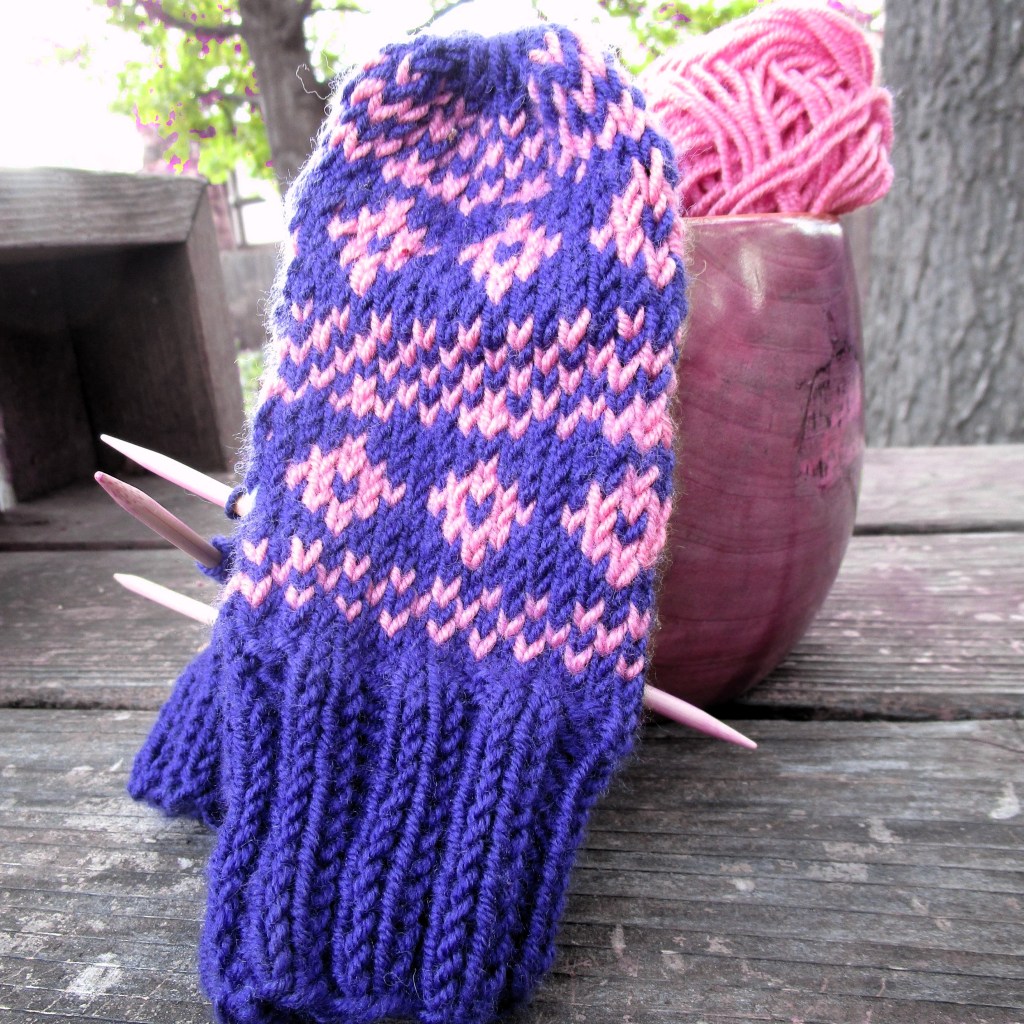
…….. but substituting a different stranded pattern: a favorite from 750 Knitting Stitches published by St. Martin’s Griffin, New York.

Diamonds in the Snow has a 6-stitch repeat. It works perfectly with my cast-on count of 36 stitches. In colors selected, the pattern looks more like Posies in the Meadow.

Now if I can only use up both colors at the same time.

Posted in knitting

Orphan Skeins: A Plan

This year I am determined to shrink down my stash of yarn. While my stash isn’t as large as those of many of my peers (you know who you are!) there are far too many orphan skeins to suit me. So, I came up with a system.

I start with one orphan skein. Next, I pull any partial skeins with the same label. These yarns generally were used together in a previous project. The next step is to grab partial skeins that are the same fiber and weight (fingering, dk, worsted, etc.) and compatible colors. Once I am happy that the yarns can be combined, they get tossed into a project bag. As of today, I have four bags.

To find a suitable pattern, I start by adding up the total yardage in each bag (a digital scale helps with this step.) This number will tell me what kind of garment or accessory is possible. For example, a pair of socks requires about 400 yards, a shawl around 800 and a sweater 1200 or more.

Now the tricky part: finding a pattern. I am a big fan of Ravelry’s advanced search tool. Using the tool, I can build a search using the parameters of the yarns in the project bag. One additional parameter I choose is number of colors. I search for a project with two or more colors. No matter how many different colors of yarn I have, I can always alter the pattern to accommodate more colors.

As of today, I have four stash-busting projects, bagged up and in the queue.

A hood for Laura Lu
A shawl for gifting to someone
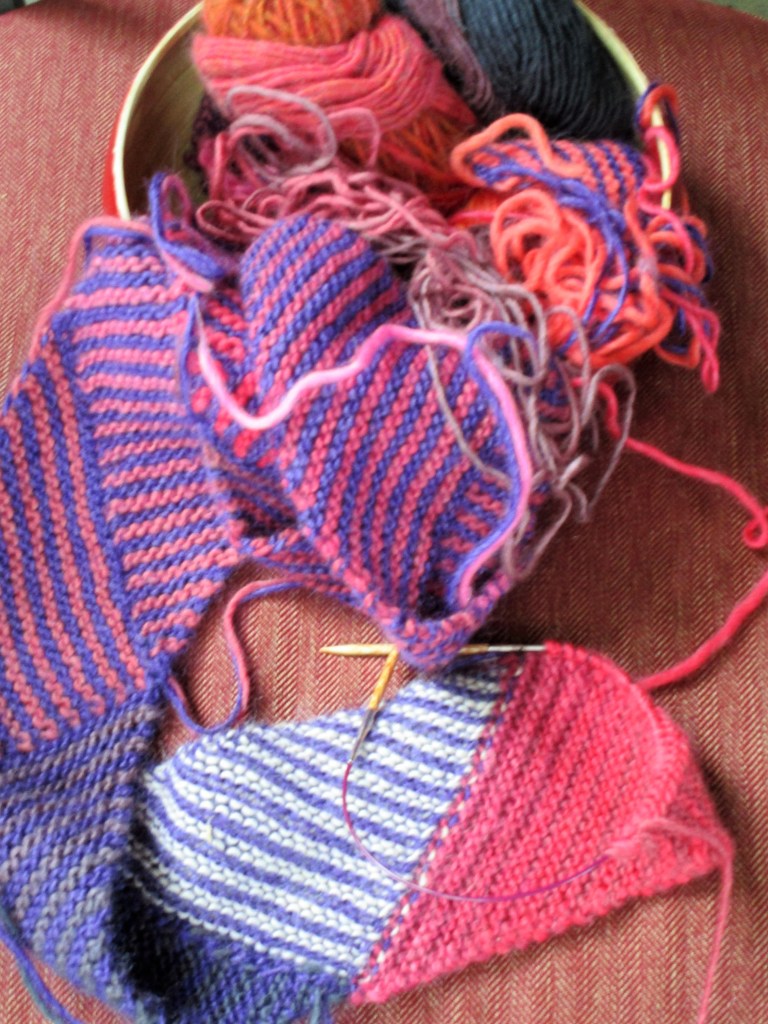
A scarf knit in garter ridge striped triangles.
A light-weight shrug in cotton yarn. (I’m always cold during the summer
in air-conditioned rooms.)

What’s in your yarn stash, and what can you make of it? I challenge you to come up with something unexpected.