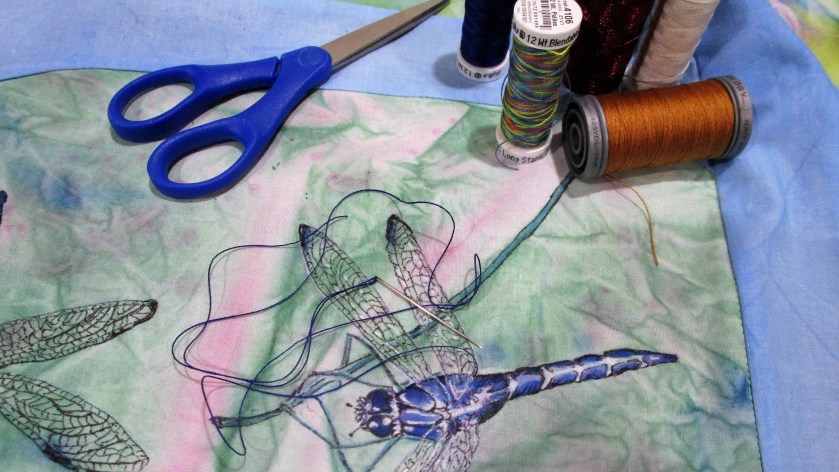
It’s been more than two months since I’ve reported on progress with my dragonfly art quilt. For the last few weeks, I have been adding detail with embroidery.
In this stage, I am using various colors of thread, including a metallic, to outline the subjects’ bodies and fill in and outline the wings. The box of machine embroidery threads that I collected from my mother’s work room contains many beautiful threads that work well together with DMC floss to enhance my dragonflies. I’m so grateful to have received it from her.
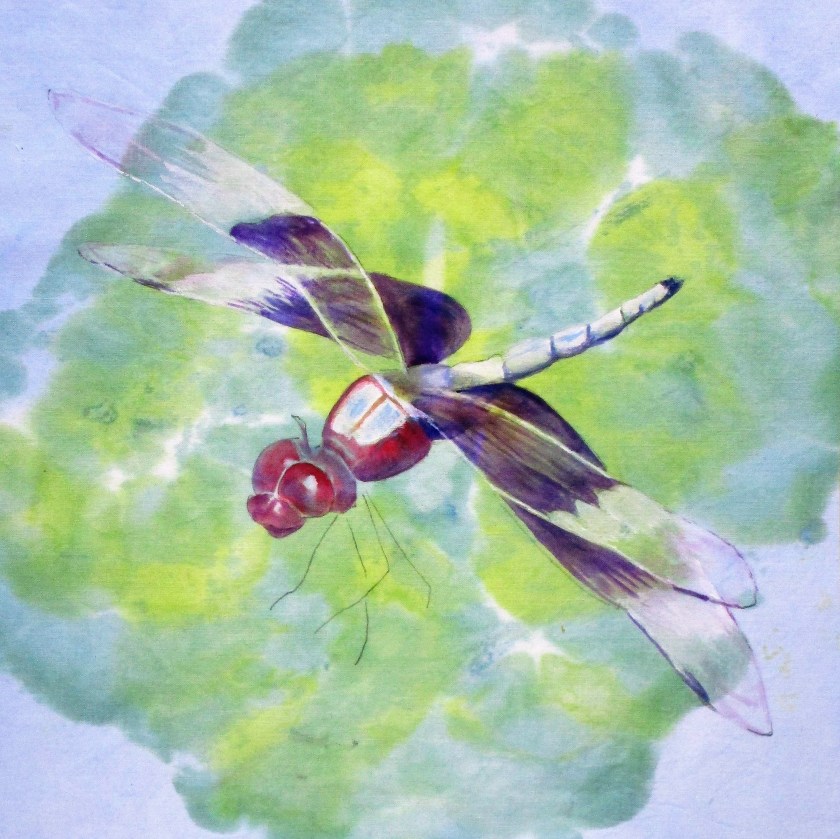
I started my work with the main panel. In the painting stage, I had indicated the wings using faint lines in a sketchy manner. Ditto for the legs.
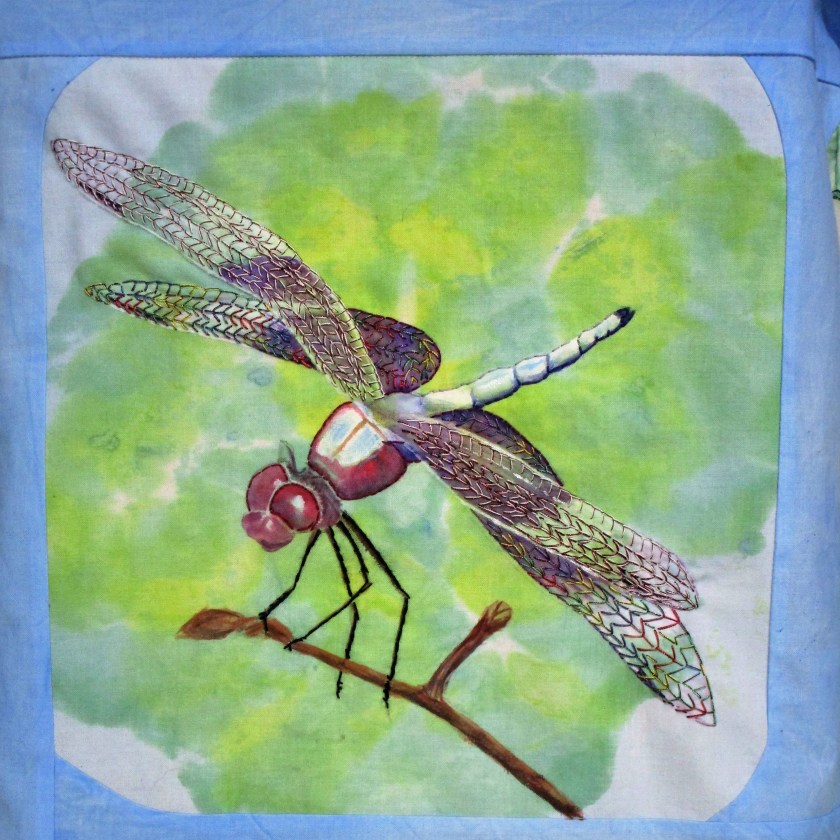
Now with metallic and matte threads held together, I stitched the delicate veining using (appropriately) the fly stitch. The legs were done in a black fuzzy thread, which helps to indicate the scaliness I observed in the original photograph.
I love the way the threadwork gives depth and liveliness to the painting.
After I’m finished embroidering the dragonfly bodies, I’ll sew on the border and backing. When that is complete, I’ll move on to hand quilting the whole thing.
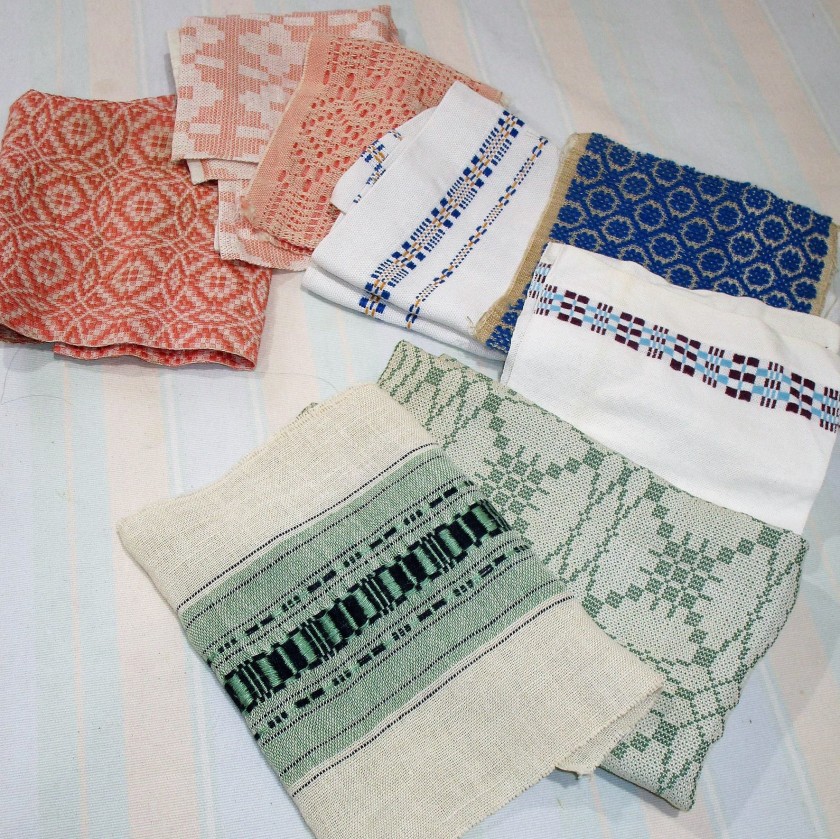
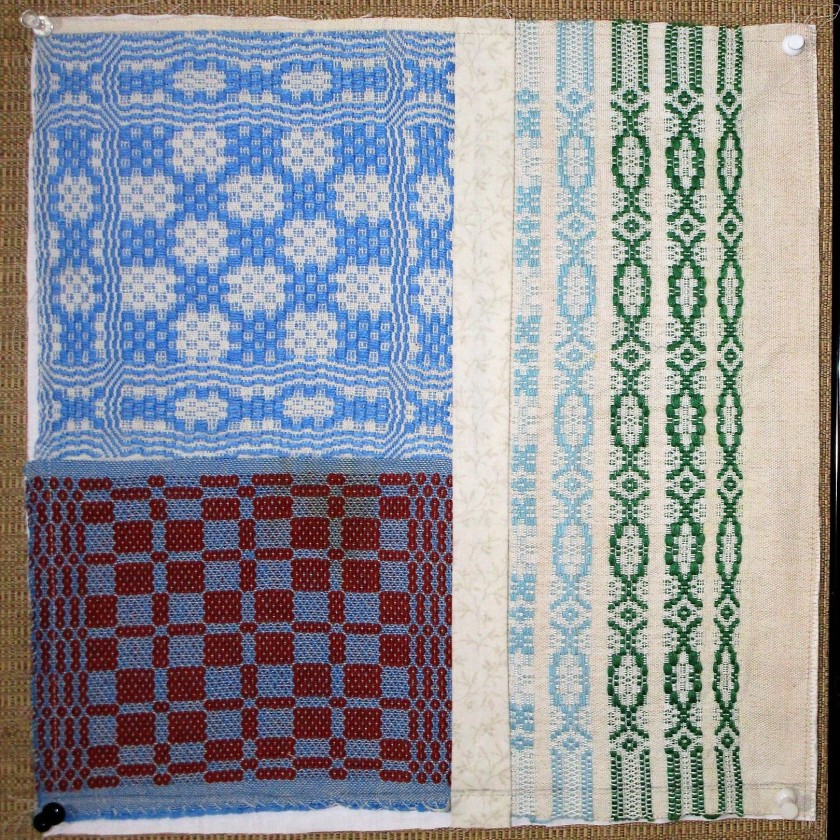
Starting back in January with some musings over passed-along weaving samples, today I celebrate the finish of a fiber object unlike anything I have done before.
Margaret Howard wove her samples on a small loom that she kept at the family’s summer house in northwestern Wisconsin. When I first saw them, I felt that these pieces could be compiled into a cohesive fiber object. As I began working with them, my mind traveled to the little cottage on the edge of the lake with the big stone fireplace. What might it have been like for Margaret, to do this work, at that place?
Before long, my own experience while visiting that same cottage began to overlay the story of Margaret in my imagination.
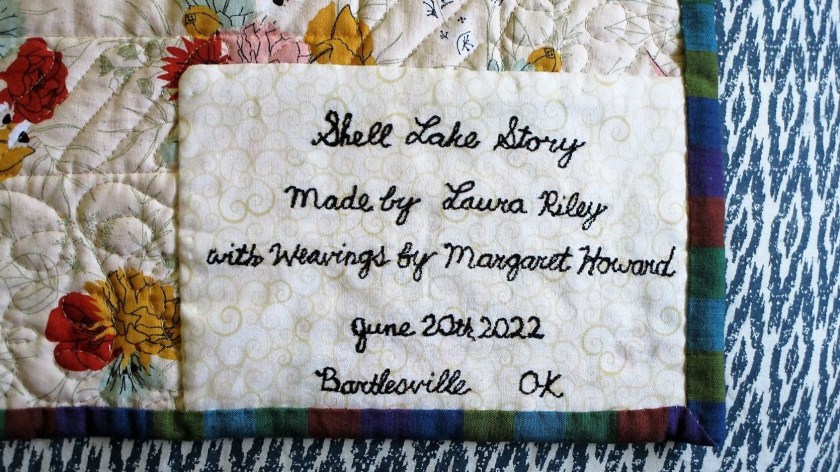
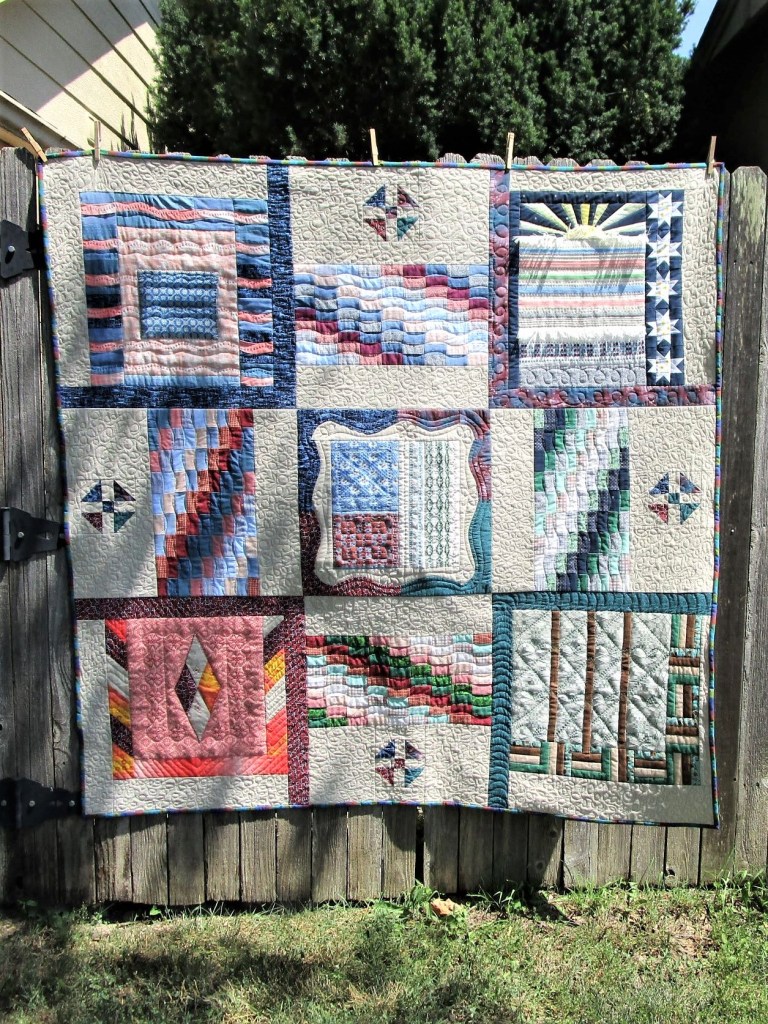
The resulting quilt is a consolidation of her history, my experience and skills, fabric from assorted cast-off shirts, fabric from my mother’s stash, and prompts from the 2022 Stay-at-home round robin quilt challenge.
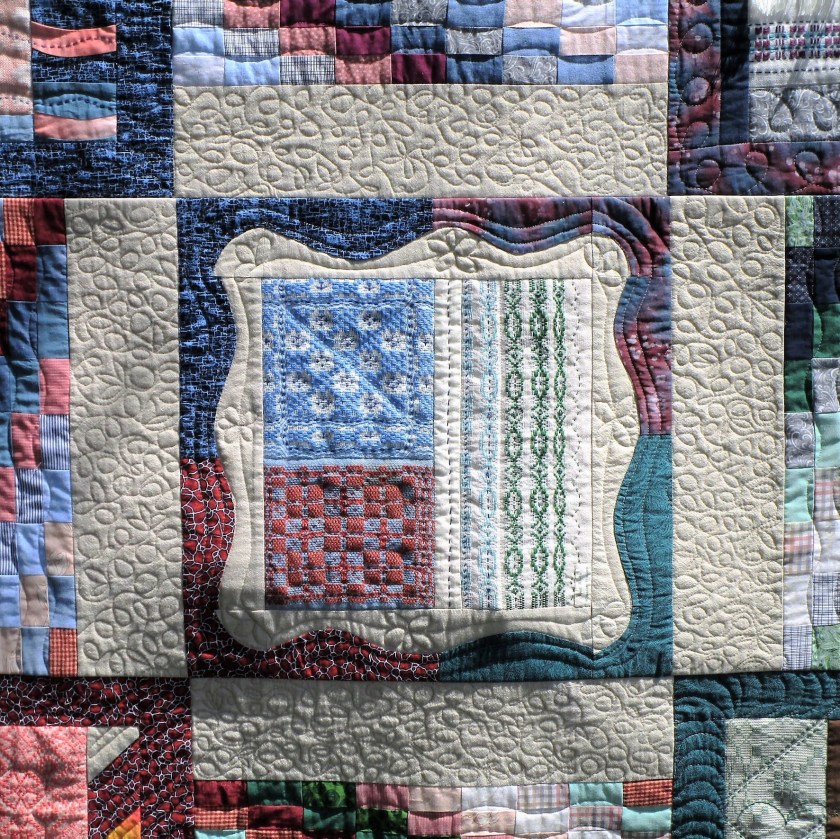
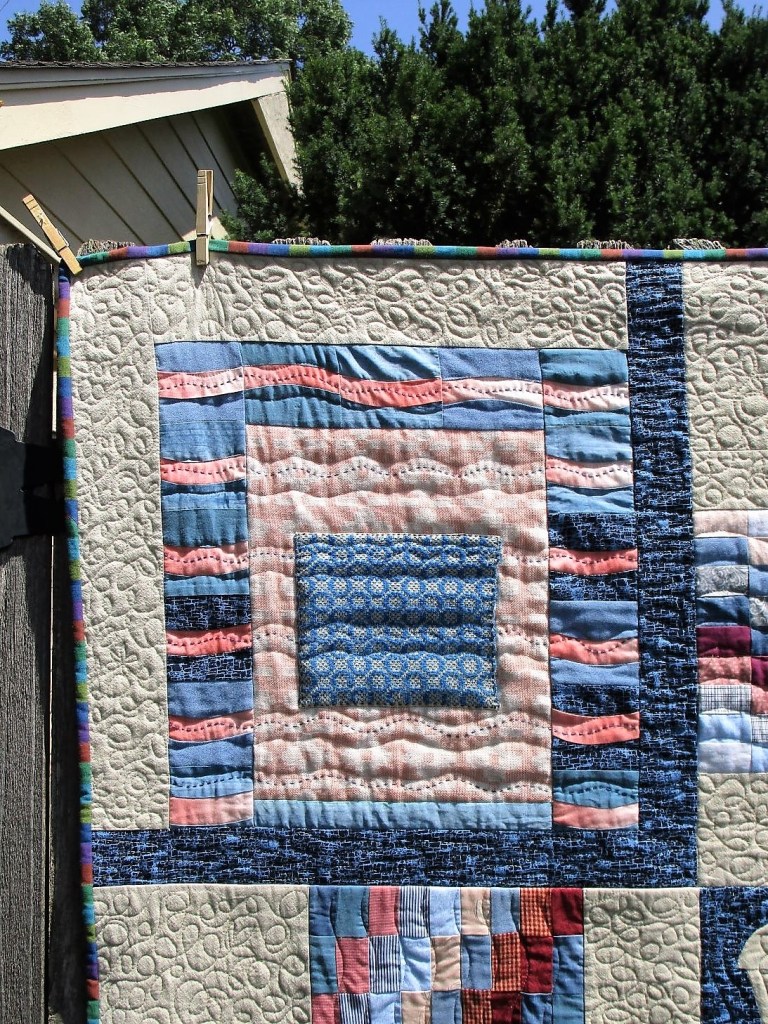
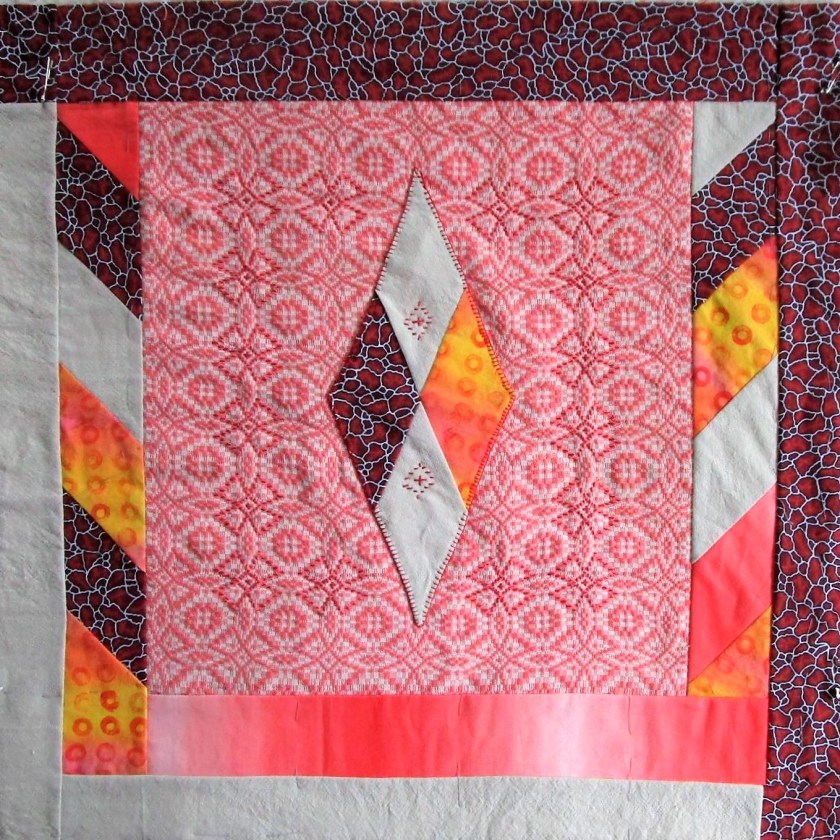
The little cottage is represented by the center block.
It holds the heart of the Shell Lake story.
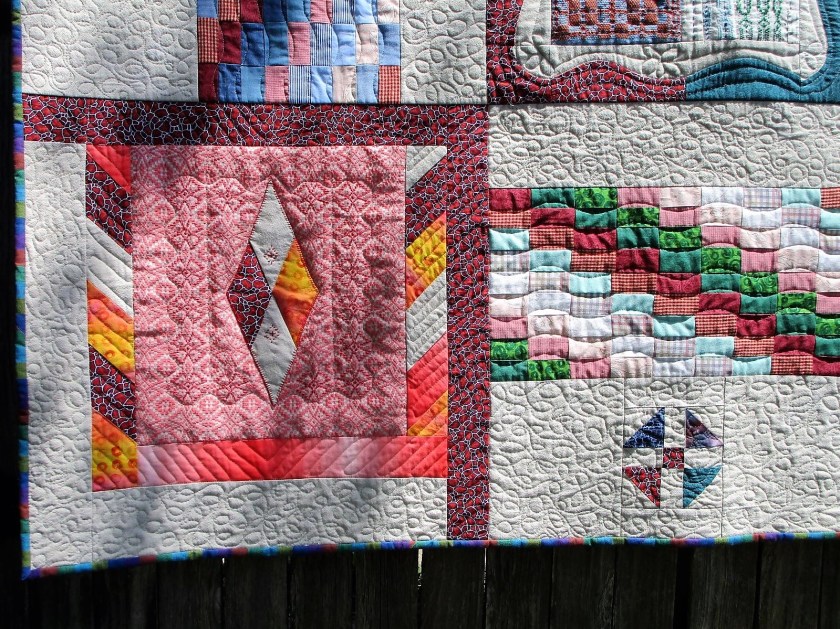
Each corner block on the quilt represents some aspect of the experience a trip to the lake house may bring. Let’s go there now.
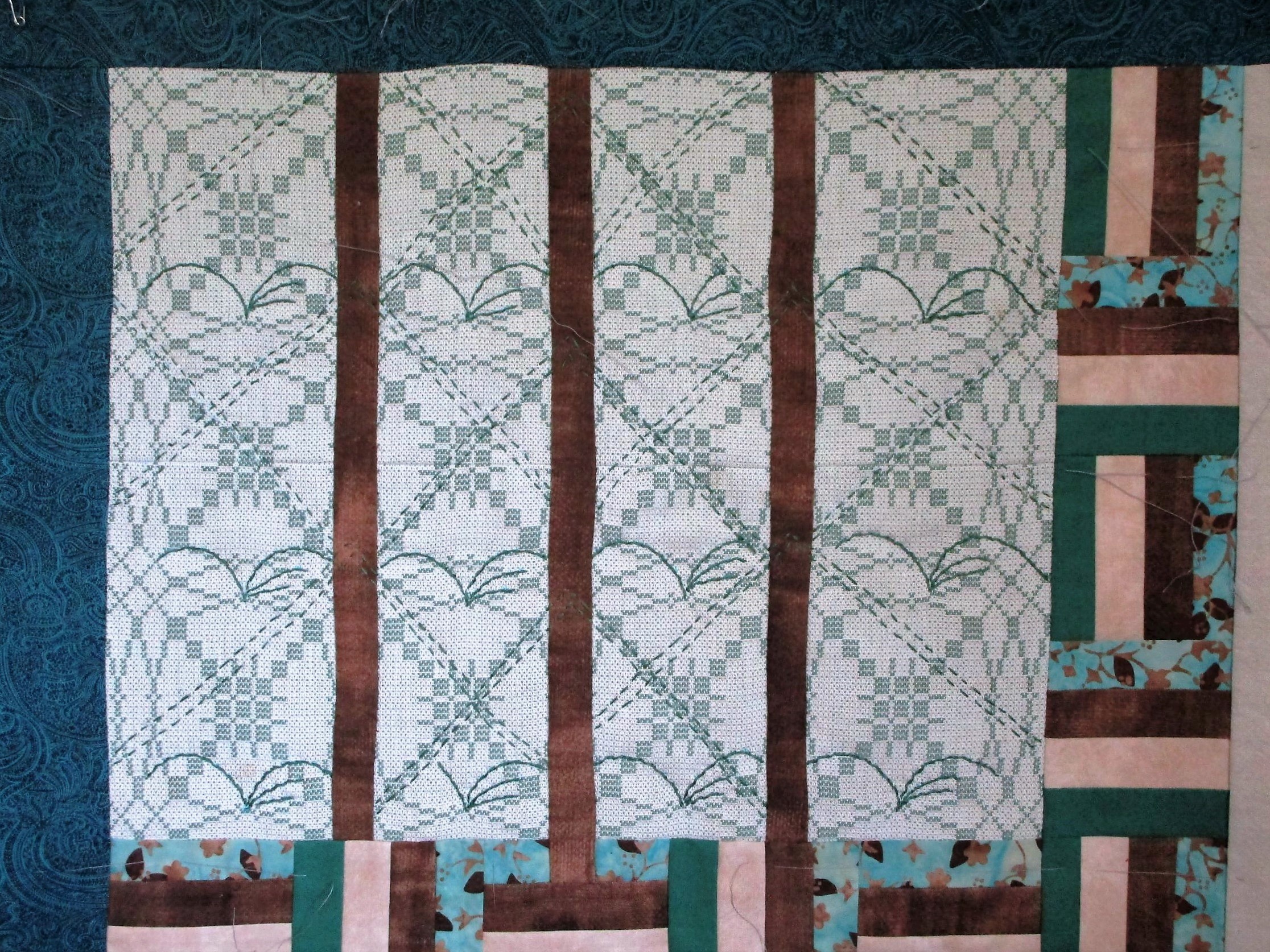
To reach the cottage, one travels through a piney wood along paths lined with ferns.
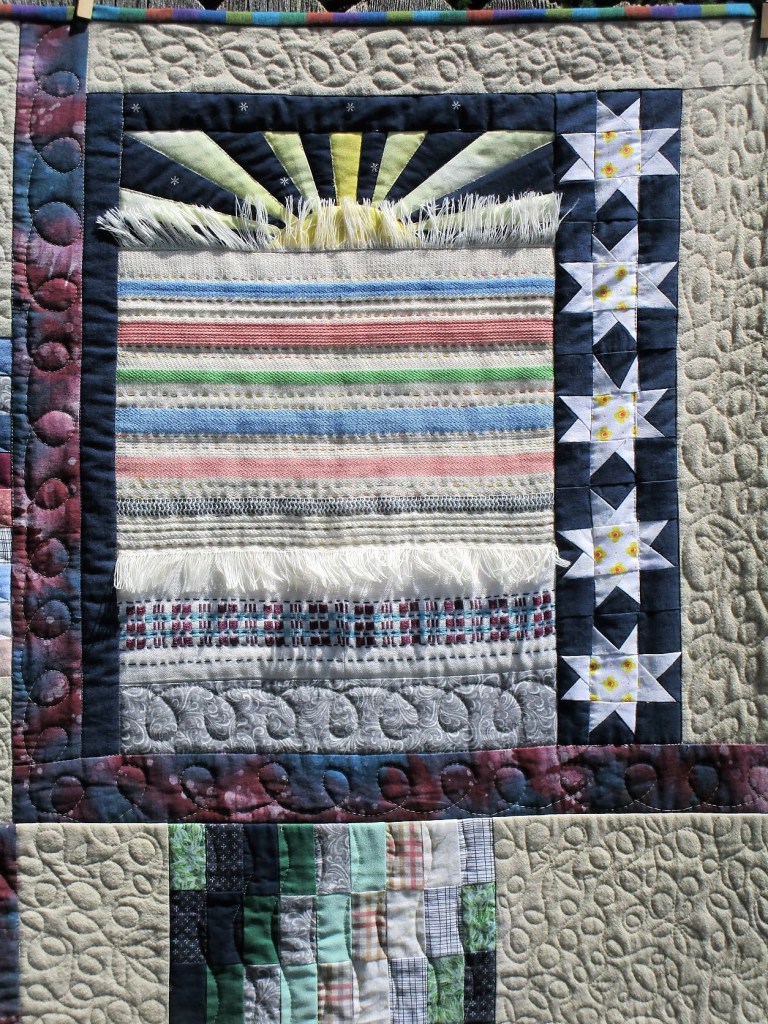
Crossing an ancient and overgrown tennis court, the visitor encounters the path to the lake. Turn right and follow the dazzling rays of sunshine to get there.
As the day turns to dusk, all camp visitors are again drawn to the lakeshore, where the sun is saluted before it disappears over the horizon. Sunsets at the lake are relaxed, and sometimes, if you are lucky, meditative.
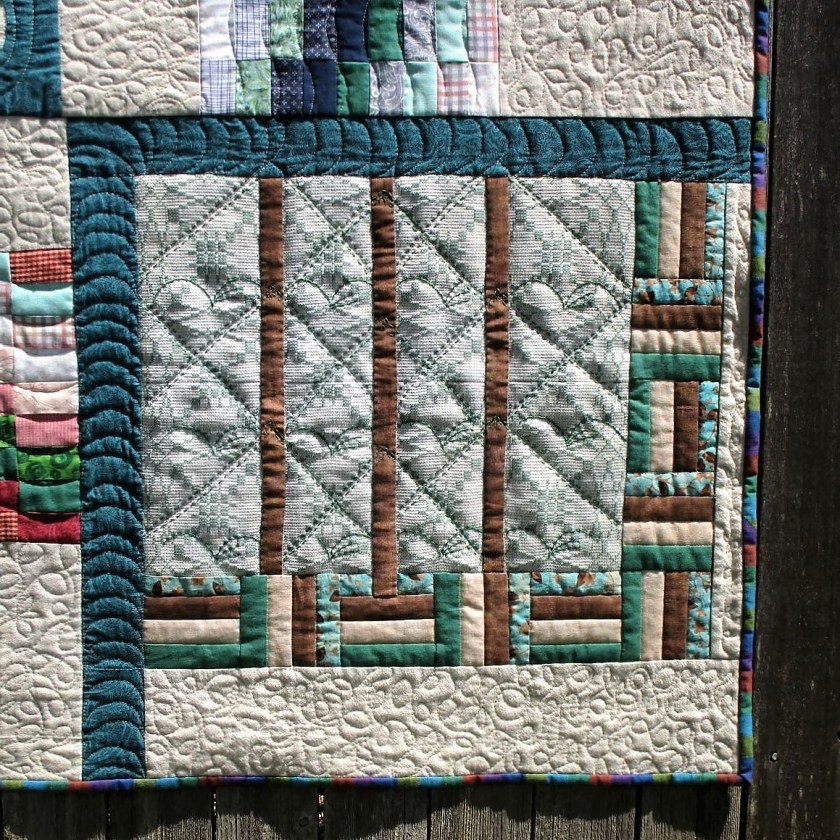
When the air becomes chilly, a fire will warm the body. While fires on the beach are jolly, often the stone fireplace is brought to life, usually in the cool morning hours.
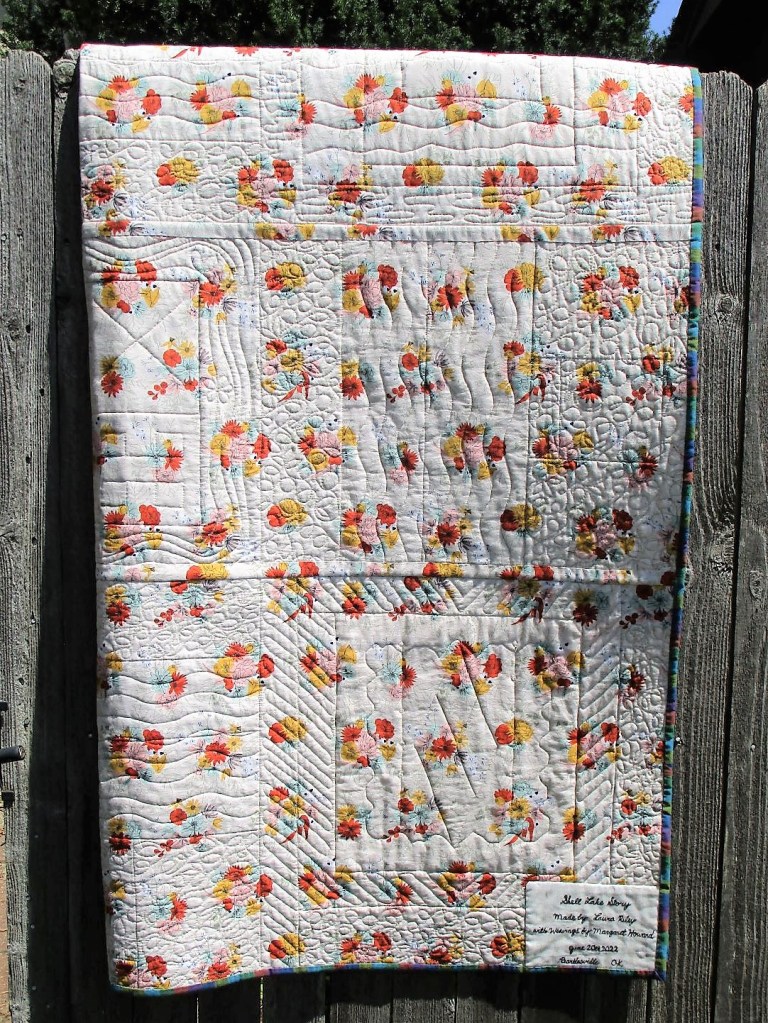
Here is a final look, showing the fabric chosen as the backing.
This little flower print has no special association with the Shell Lake story. I simply thought that the colors just looked nice.
I truly enjoyed making this quilt, and am a little sorry that the work is done.
And so ends the tale of a weaver, a fiber artist, and the quilt that grew from their intersection. Where will this object end up? I am not sure, but at some point soon, it will be released into the world. Fifty years from now, perhaps another artist will have something to add to its story,
Last Wednesday, the husband and I returned from a very long journey. Over 13 days we drove over 3,000 miles, traveling through nine states. The climax of the trip was three days spent in Ohio, assisting my five siblings in sorting the parents’ household good in preparation for distribution and sale. It’s hard to describe the physical and emotional energy exhausted during that effort, so I won’t try. I wish I could show you a lot of great photographs from the trip, but I didn’t manage to get any worth sharing.
Back here in Oklahoma, it took me a few days to settle back into my normal life. The last few were spent working on hand embroidery of the Shell Lake quilt blocks. It was a good choice for my re-entry, because I could do it slowly while listening to podcasts and drinking lots of coffee. I think that I am done, but not sure. To give me some perspective on my work, I have photographed and posted each block. Let me know if you think the woven sections have enough stitches.
CENTER BLOCK
FOREST BLOCK
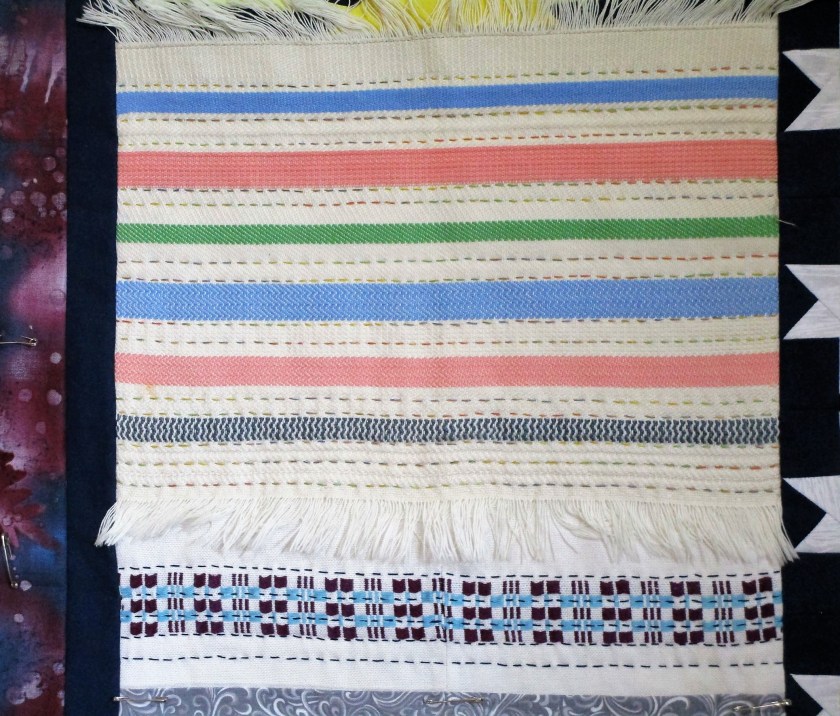
FIRE BLOCK
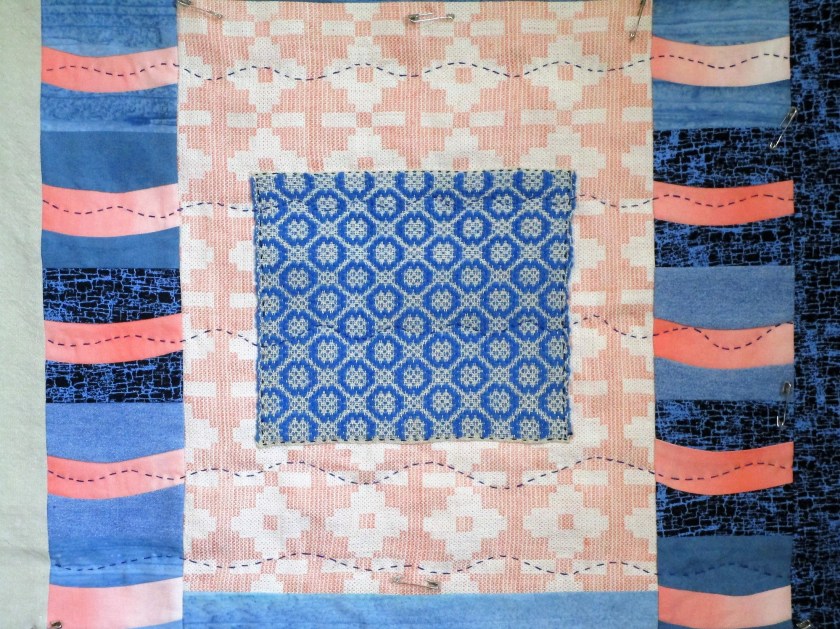
LAKE BLOCK
SKY BLOCK
On another topic, I have brought home a few UFO projects from my mother’s stash that I promised various people that I would finish. My plan is to post about each one as I work through them. If you’re not a fan of sewing and quilting, don’t jump ship yet. I will be continuing to explore watercolor painting, drawing and knitting in the coming months.
It’s been a while since I shared progress on the Howard Wabi-Sabi quilt. For this Work In Progress post, I’m showing how I hand-quilted a few of the vintage weaves that were used in this object.
After much consideration, I decided that it was OK to sew on (aka deface) someone else’s work. This change of heart came after I was in Madison recently, where I asked my daughter to show me more samples of Margaret Howard’s work.
Oh my. There was so much of it. Huge plastic bins filled to overflowing. Several samples were woven with the same motifs found in the pieces I was using in my quilt. Perhaps each piece was not that precious to the maker. They were woven, perhaps for practice, perhaps for auditioning alternative color choices.
When I picked up my quilt blocks again, it was clear to me that my stitching could accomplish its task of quilting down the batting and backing while also reinforcing the existing weave patterns. To my mind, this is enough to honor the maker.
Today I am showing two blocks with embroidery finished.
Center Block before:
Center Block after
Fire Block before:
Fire Block after:
I’m aware that the differences appear subtle in the photographs. But in person, the embroidery stitches bring some color variation and texture that was lacking.
Thanks to Amanda for adding her embroidery to the work, which jump-started my own efforts.







 Daily Fiber