Posted in quilting

SAHRR Challenge 5: Earth

We are nearing the end of weekly challenges for Stay At Home Round Robin quilt 2022. This week Quilting Gail of gave us options: We could add some appliques to our borders or make our border of rail fence blocks.

https://wordpress.com/read/feeds/102293878/posts/3830168731

I am also running out of options on my Four Elements quilt utilizing vintage weaving samples. This week I had planned to work on the element Earth. My choice of green background fabrics included these two:

I went for the wide one with concentric circles and intersecting arcs. It will represent a forest very well, once I make some appliqued tree trunks. And a bottom border of rail fence border in warm colors will ground the forest into the earth.

Here are the supporting fabrics for this block and the tool I will use to make long, skinny tree trunks.

This part went quickly. I ran some strips through the bias tape maker and ironed them flat. I think three will be enough to suggest a forest.

Quickly sewing together some strip pieces and cutting out five rail fence blocks………

…………I sewed them into a strip and laid it in place.

This is beginning to take shape. I love the print with the brown leaves. It is scaled well for my design. They look almost like real leaves scattered across the forest floor.

After attaching all of the parts completed so far, I realized that I had not considered the right border at all.

Clearly something was needed here. So, I went back to making more rail fence blocks. Adding another 3-inch border will change the proportions of my block, making it a wide rectangle instead of a square. But I felt it was still my best design choice, given the limited number of options I had before me.

COMPLETED BLOCK: EARTH

I’m delighted with the progress so far. There is still space to add some surface treatments to this block in the form of sashiko stitching, or even a few more appliques should I desire.

To see more quilts made in the Stay at Home Round Robin method, check out the link party here:

https://fresh.inlinkz.com/party/4daeef6d0bee4f99a4550c4b274ba90b

Posted in quilting

Giving it Form

The process of making up a quilt from scratch has many challenges. One I face today is building my Stay At Home Round Robin quilt around another maker’s pieces. None of the swatches are the same size or shape. How can I fit them together?

Here’s how I went about finding an answer.

The first step I took was to get them as flat as possible. Each swatch was hemmed by hand on the warp edges to keep it from fraying. As I began carefully picking out the stitches, I marveled at the how small each was. That got me to thinking about the maker, Margaret Howard. And I began to imagine her at her cottage on the lake, where she lived three months of the year. (Since this cottage is still in the family, and I had been there several times, my imagination has lots to work with.)

I imagine that, despite the passage of years, the grounds surrounding the cottage are very little changed. There are towering trees, both deciduous and coniferous, providing lots of shade. The path through the trees to the cottage are lined with wood ferns, all the way up to the door itself.

Photo by Mike Krejci on Pexels.com

Margaret is sitting in the main area of the cottage, sewing this hem. She has a view of the lake through a large picture window. While the trees now are quite tall and obscure this view, back then she likely could see the lake easily.

There were other families, her relatives, staying in cabins nearby. Each evening as the sun sank low, they gathered on the shore to toast the passing of the day. I feel certain that Margaret would join them. That bit of the beach is on the east side of the lake. The sun sets directly across the lake from this beach.

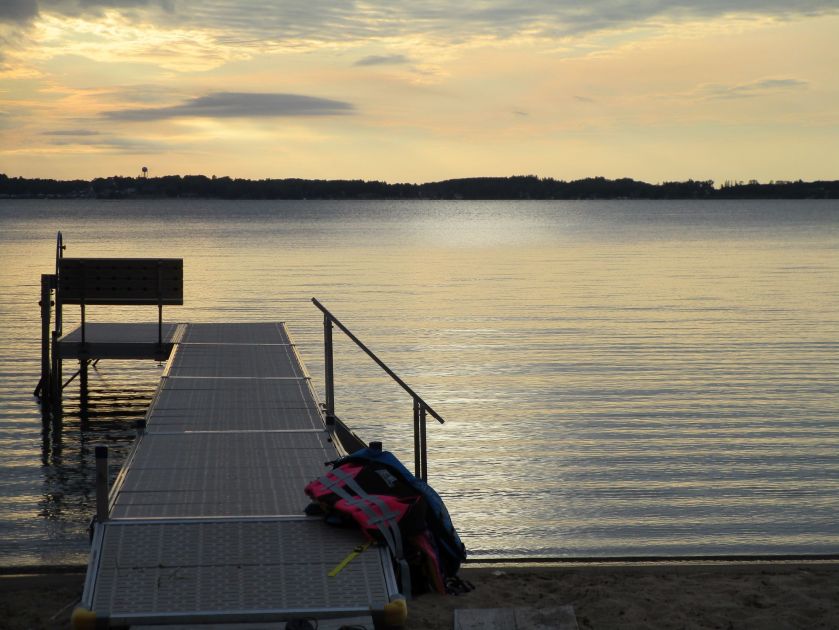
Having been there during one of these sunsets, it’s hard to describe exactly how beautiful it is. When the waves on the lake are gentle, one feels that the lake is bringing the colors of the sunset directly to one’s feet, like a precious gift.

A contemporary view of Shell Lake, with a new metal dock.

Back then, the silence must have been profound.

Of course, on special occasions, or when the air is too cold, a campfire is a must.

Photo by EKATERINA BOLOVTSOVA on Pexels.com

At this point in my musings, I brought these ideas together, and came up with a plan for the quilt. If you have been following this project in my earlier post, you saw that I sewed together three swatches to form the center block.

What if I divided the rest of the quilt into four sections, making a large block to anchor each section. And each section would show one of the elements enjoyed by the maker at her cottage on the lake – woods, fire, water, sky. Thinking more deeply about these elements, I realized that they corresponded to the basic elements described by ancient civilizations of the world: Earth, Fire, Water, Air.

To tie everything together, I did some research on the colors that the ancients associated with these elements:

Earth: Green and brown. Fire: Red and orange.

Water: Blue and pastels. Air: White and yellow.

And here is my (somewhat crude) plan for the quilt, sketched in watercolor.

This is my first go at the layout. I’m not sure about the dark sashing. But there will be plenty of time to audition some other fabrics as I work along.

Posted in quilting, recycling, sewing

Inspired by Vintage

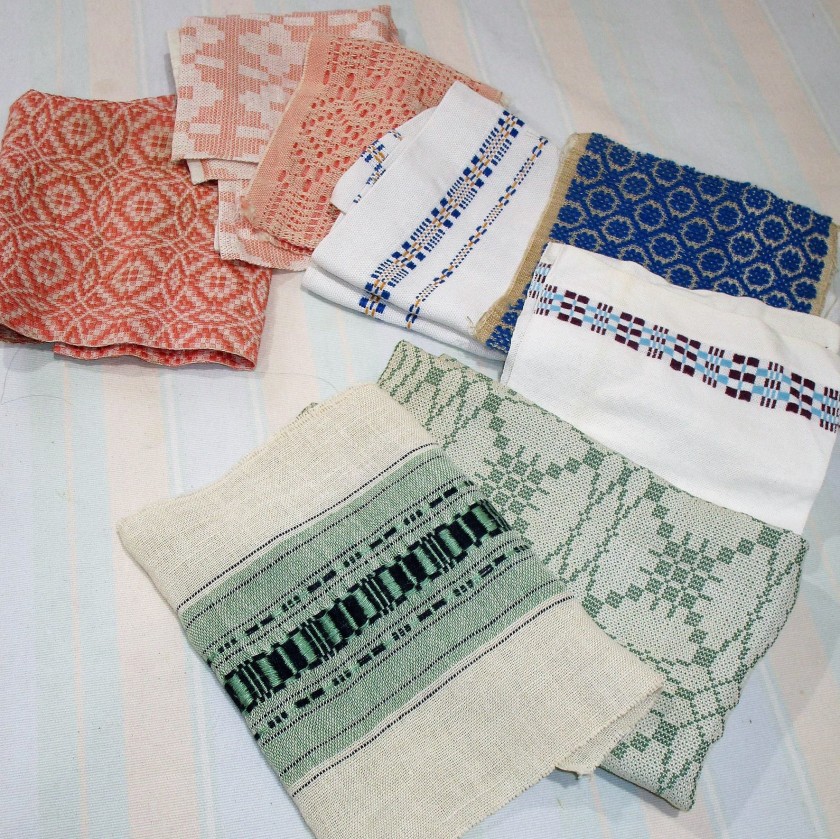
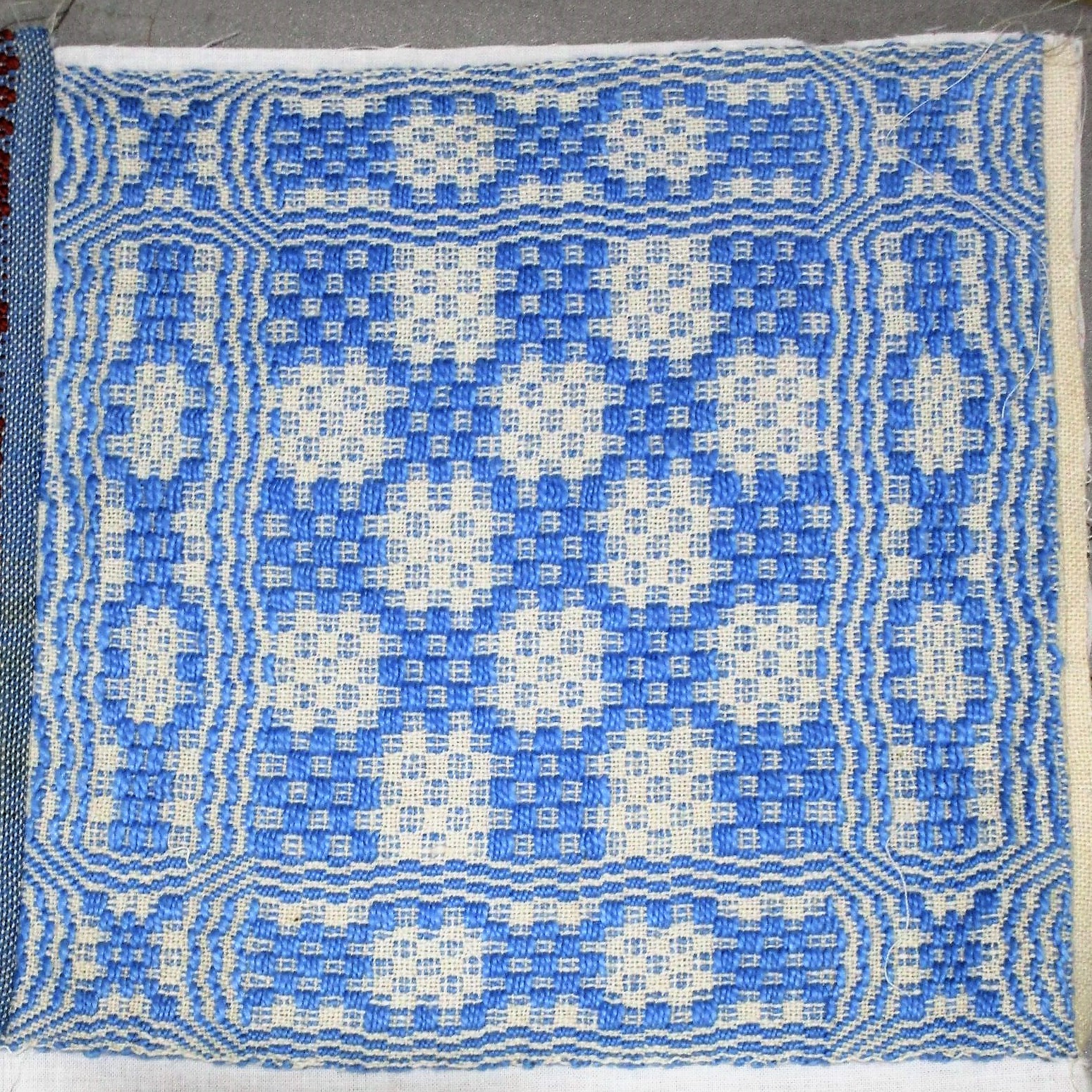
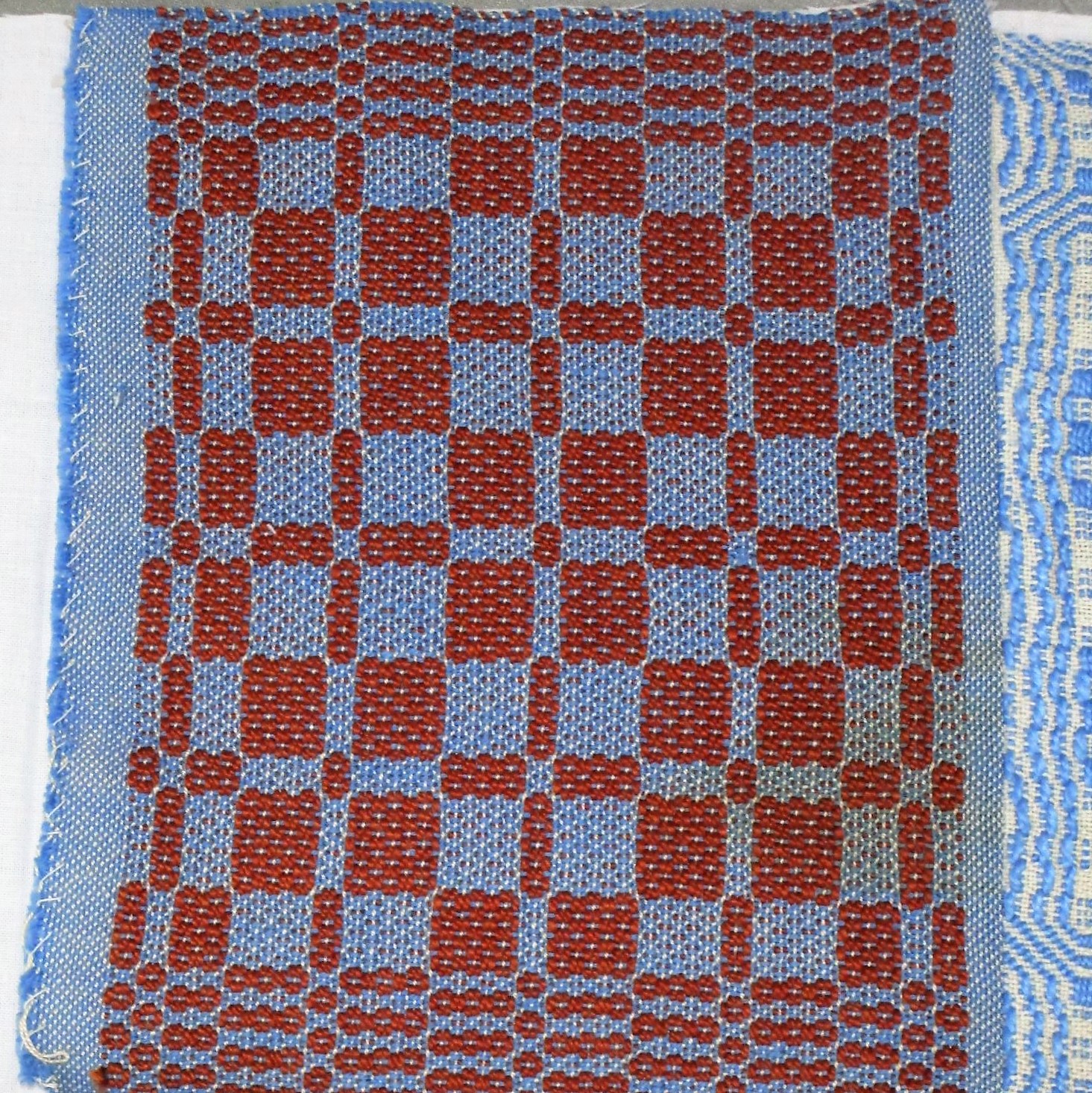
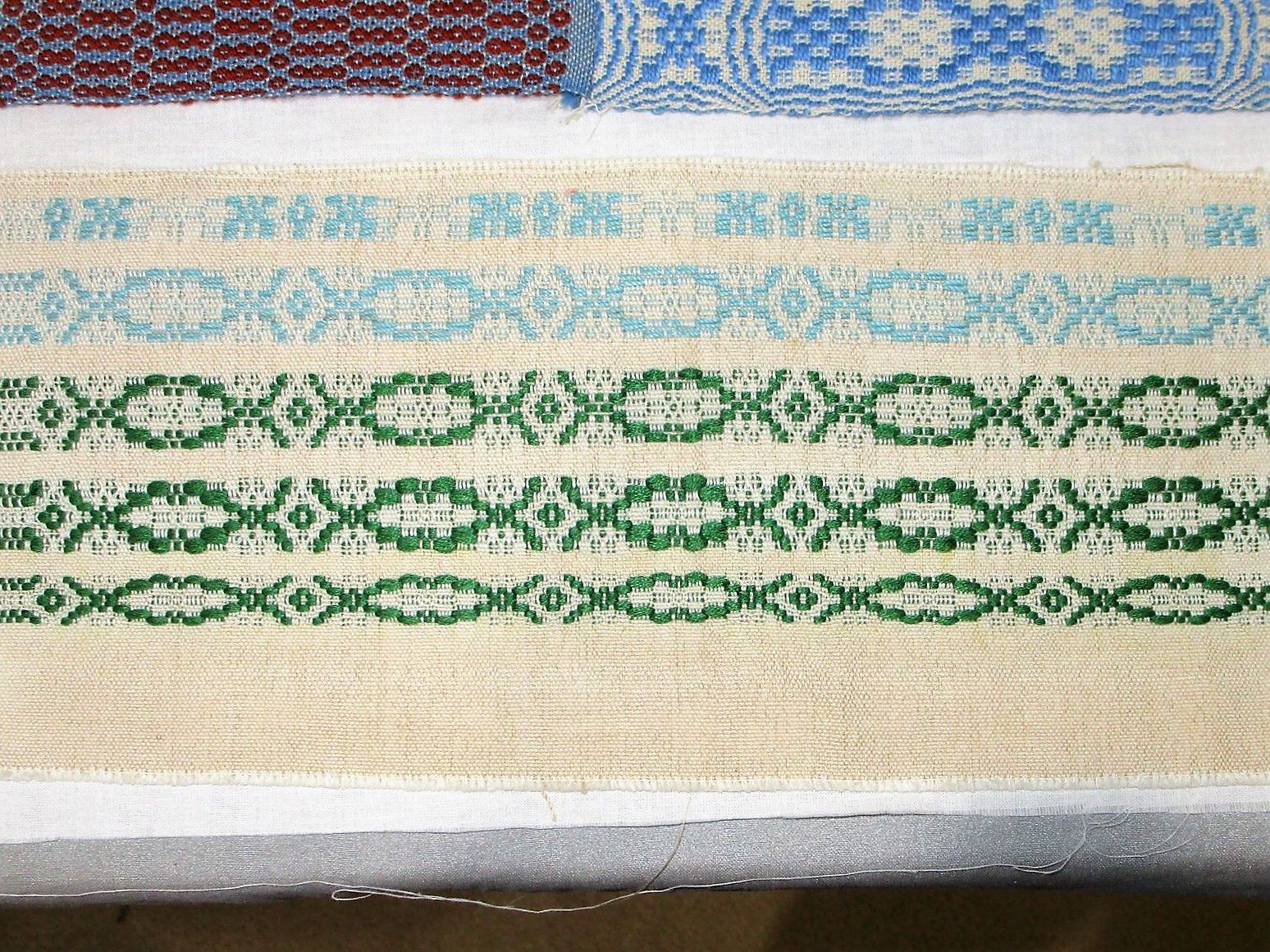
While visiting Daughter’s Family last Thanksgiving, I was invited to rummage through a stack of weaving samples. These pieces were made over a number of years by my son-in-law’s grandmother, Margaret. They were then stored away with Margaret’s son, and eventually passed into the next generation.

Here are some of the pieces that came home with me.

I was invited to keep these lovely samplers with the understanding that they could be worked into a fiber object. I feel honored to receive them.

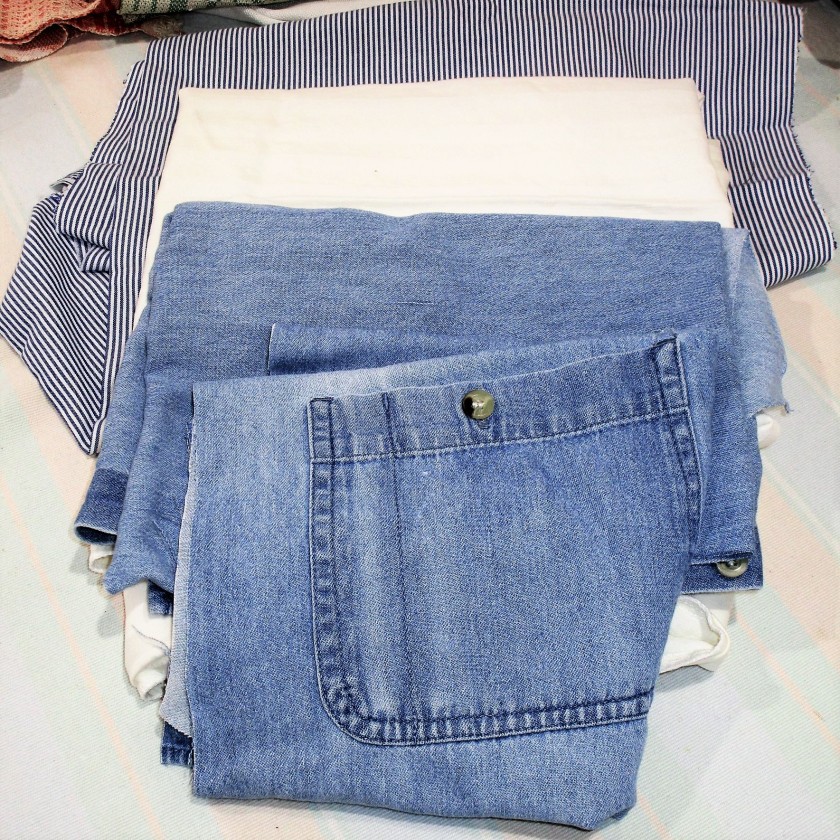
So today, I have a tiny glimpse of an idea on what to make with them. What if they formed the feature blocks in a quilt? It would be a wabi-sabi quilt, assembled with additional fabrics recycled from articles of clothing and household linens. In my stash I came across the following items that fit the description.

Cut up shirts and old pillowcases in compatible colors

I began my work by washing and pressing the linens, then examined each piece for needed repairs. It seemed to me that, while the samples were firmly woven, the weaves are much more open than standard quilting cotton. How could I stabilize them so they wouldn’t shift during quilting? This called for a consultation with quilting expert Jackie, aka, my mom.

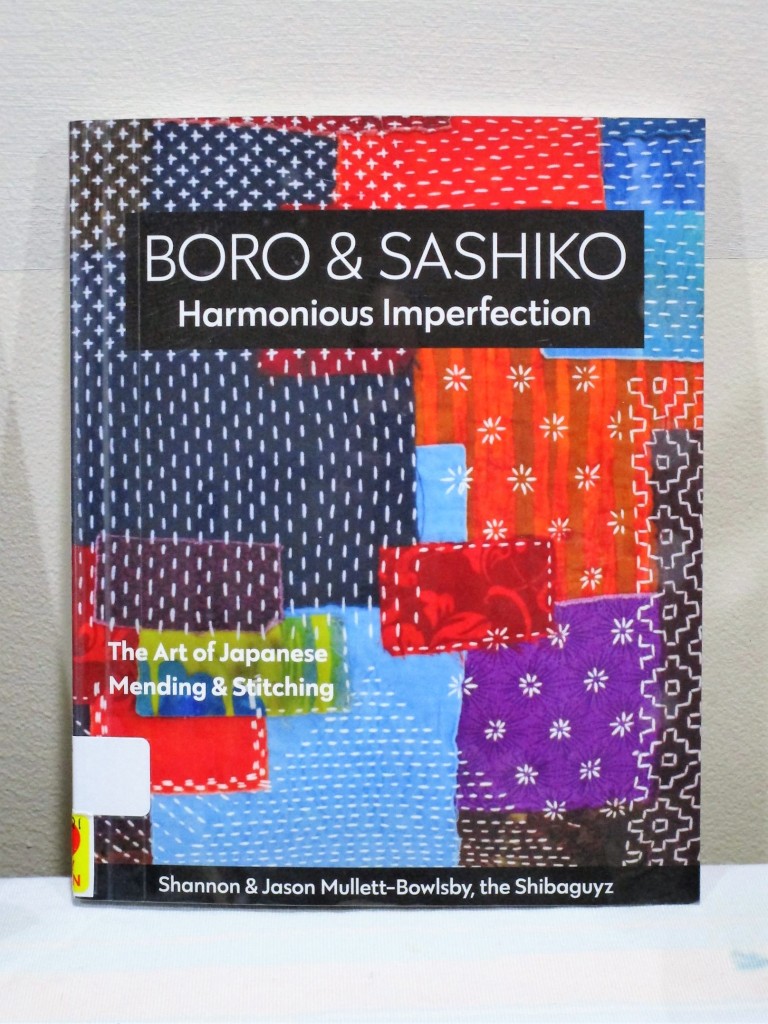
She had some great pieces of advice. Ultimately, I decided that I could sew the linens to a light-weight muslin backing, string piece style, then work in some rows of decorative stitching. This particular idea was top of mind, because I am currently reading this book on the Japanese practice of boro and sashiko.

I call this sort of happening a Convergence.

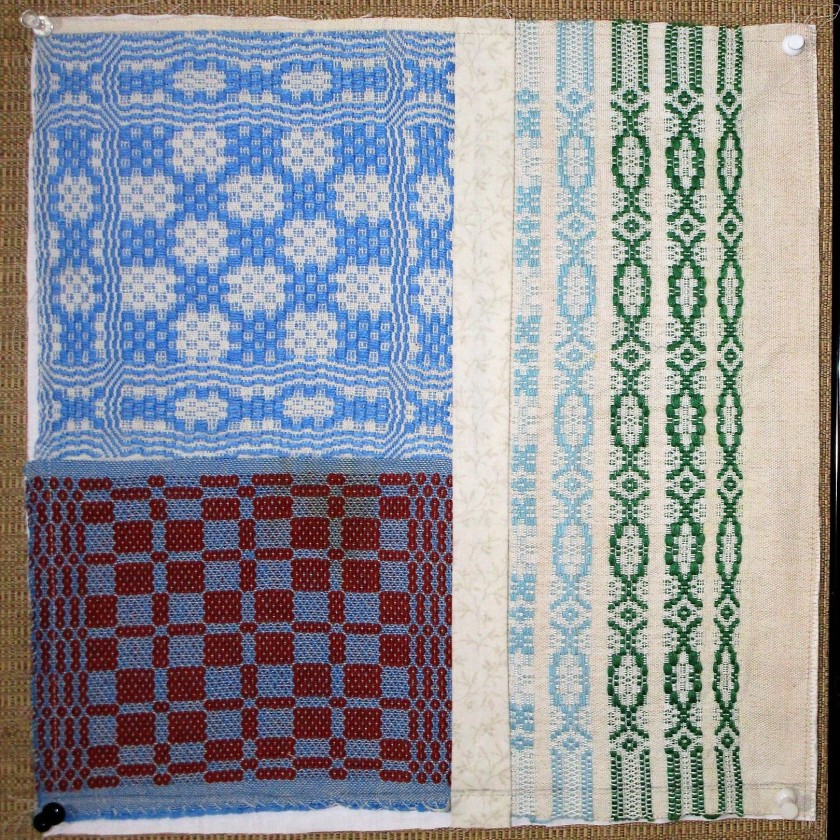
Let’s start the work with these three pieces as a center block.

They are of sizes that will fit together into a 12-inch block without cuts. The three contain all of the colors in my chosen palette, which could make an ideal focal point for the rest of the quilt.

DONE!

The next steps will be to design and sketch a layout, then acquire supporting fabrics. Maybe I can source more second-hand clothing items from local thrift stores.

Posted in painting

Belize Memory WIP

Since Sunday, I have painted several sample palettes for the imaginary Belize waterscape. I have also completed my first watercolor sketch. Its subject is the mountains and sky, including a little of the shoreline.

This type of work helps me learn how the different paints I have chosen behave in the mixing and glazing process. I also have narrowed my choices of colors.

And I’ve come to the conclusion that hot press paper will give a better result with this technique, so I’m off to the art supply store in search of same.

Posted in knitting

Wednesday WIP

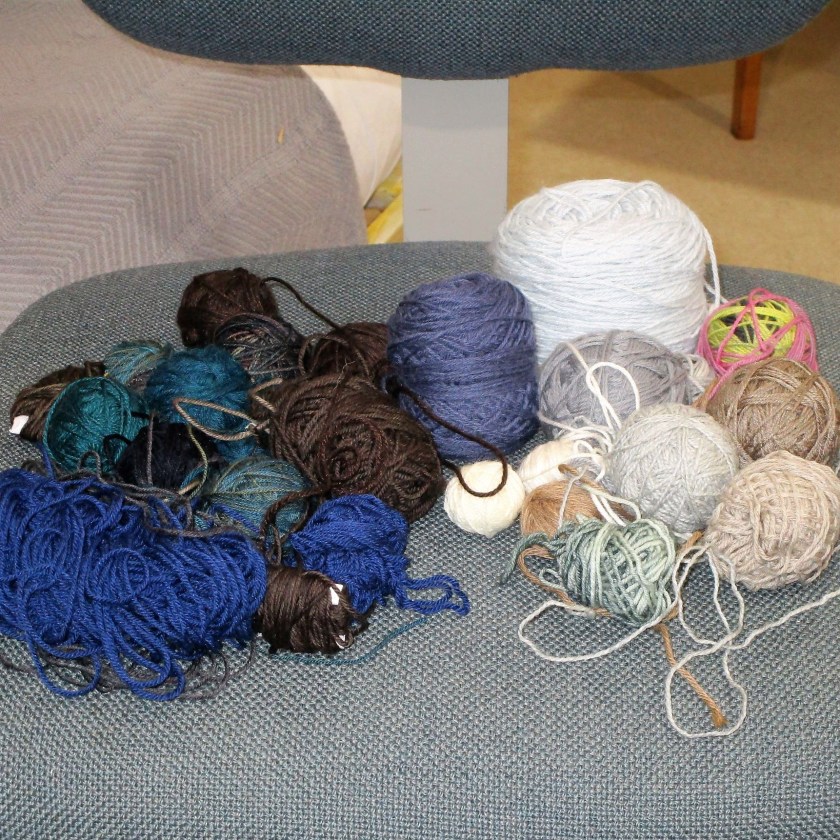
This project got its start as an example for a shawl design class I taught in August. It is also a response to the situation I’ve been griping about called Left-over Sock Yarn.

Some of you may remember this photo.

A picture is worth a thousand words. Once I truly looked at the yarn that was in the bowl, I realized that I had the makings of a multi-color garter ridge shawl. After discarding the red and green yarns, I took a cue from my own advice about color value and separated the leftovers into two piles – darks and lights.

The medium blue ball in the center is the connector between the lights and darks. I also tossed in the very pale blue full skein with a thought that it could make a good border.

The light yarns went into one bag, the darks into another. Starting with the medium blue yarn I cast on about 30 stitches and worked three ridges of garter. Initially I chose yarns by randomly drawing balls from each bags, alternating light and dark and knitting as many rows as I felt like before changing colors. But very quickly, a desirable pattern emerged – four ridges of light alternating with three ridges of dark. The extra ridge of light separated the color changes.

After working the black yarn, I started over with the darks – blue, brown, royal blue, teal, black.

I call this my Sea and Sand shawl.

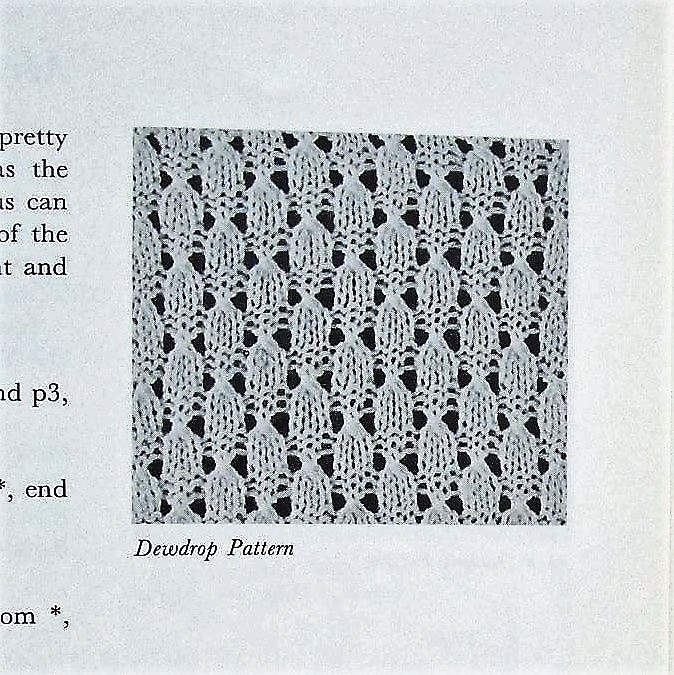
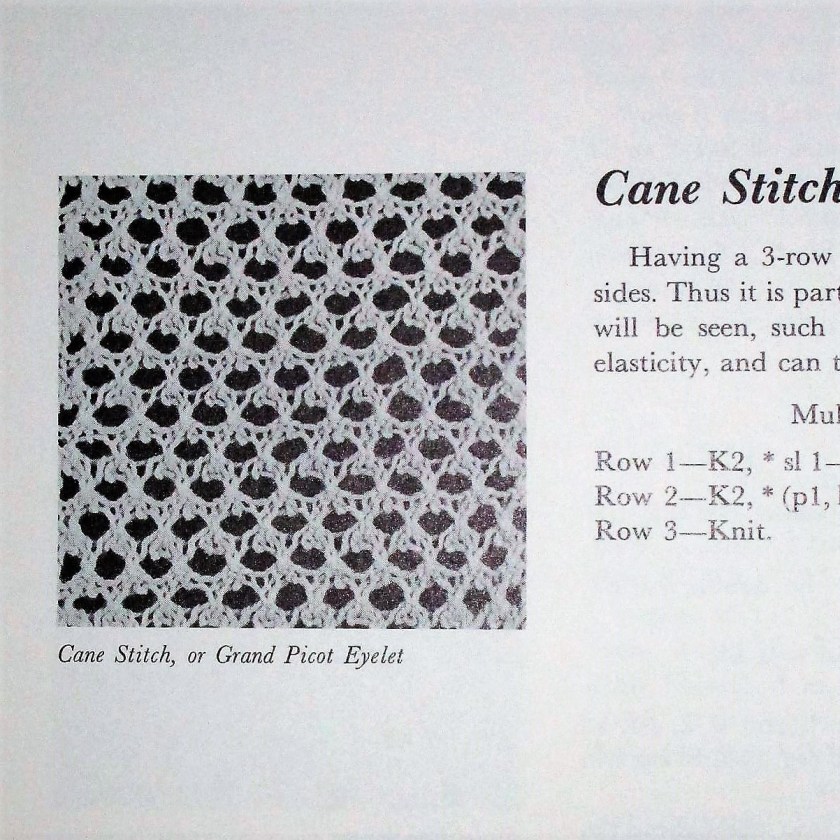
Once I get up to around 300 stitches, I’ll choose a color to make the border. My creative juices are flowing as I consider pattern options. Since it’s a shawl border, the pattern must be very stretchy. First I thumbed through Barbara Walker’s fabulous “Treasury of Knitting Patterns”(published in 1968) where I spotted a few possibilities. Here’s three that meet my criteria:

All three could work very well. I’ll be knitting some swatches of these patterns.

Thank you Barbara Walker. Your book is truly timeless.