Posted in painting

Bird of Paradise Work in Progress

I have been collecting images of the tropical flower called Bird of Paradise for a few months now. Initially I wanted to make quilt blocks with this flower as a motif. But lately, I have been charmed by this photograph offered by the San Diego Zoo, of a flower with hummingbird.
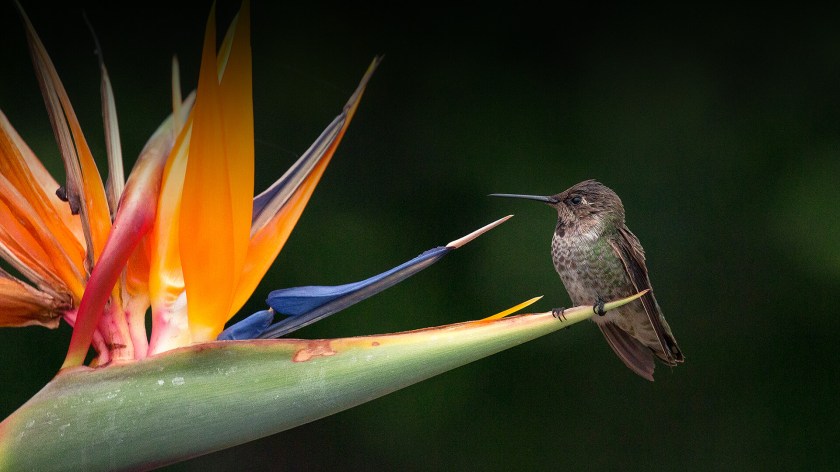
I decided it would be a perfect reference for a water color painting. There are three techniques that I could practice from this one photograph: color mixing, background washing and masking.

It occurred to me that I would be more successful if I practiced each of these techniques separately, before combining them into a finished painting. My first study was the hummingbird.
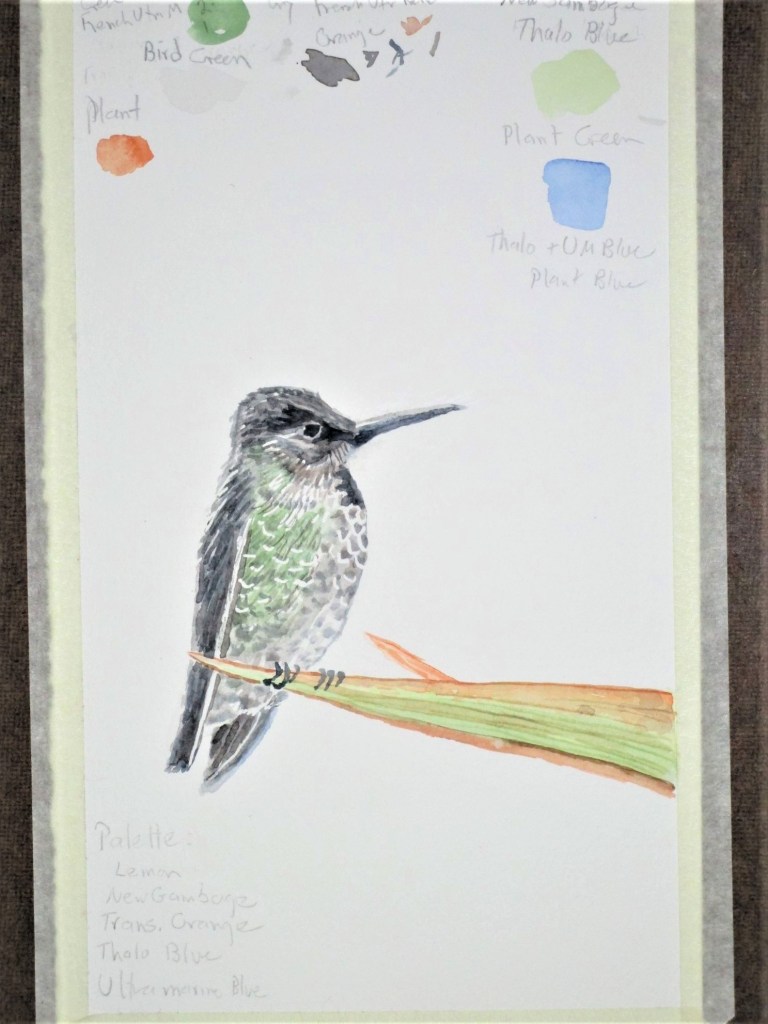
The masking fluid allowed me to reserve the white margins on the breast feathers and the wings. I think he came out quite nicely. While I was at it, I used the same paper to determine the color mixes for the rest of the painting. You can see my little notes penciled in above the bird.

As an aside – Did you know that hummingbirds are the primary pollinators for Bird–of-Paradise flowers?

Yesterday I painted a small study of the whole image. The scariest part was the very dark background wash. I used a mix of ultramarine blue and burnt sienna, with a small amount of lemon yellow to neutralize the blue.

This study is on 5″ by 8″ Strathmore travel journal

I feel I was successful in laying down the wash correctly, but it isn’t quite dark enough. There is also insufficient contrast between the bird and the background. And what can I do to make the petals more luminous?

Palette: Lemon Yellow, New Gamboge, Winsor Transparent Orange, Thalo Blue, Ultramarine Blue, Burnt Sienna, Quinacridone Red.

Posted in drawing

#inktober 2019 Week 4

Here are my drawings from the Inktober prompts for Days 21 through 26. This week I wanted to work on improving my technique.

The prompt was Treasure. I thought about the great treasures of our material culture, specifically art and the artists that created it. My portrait comes from Georgia O’Keeffe’s autobiography. In this scene she is blind and over 90 years old. The techniques I worked on here were ink washes, shadows and stippling. Also, this image allowed me to practice drawing faces and hands – both are considered challenging subjects for artists of all kinds.

After working on the O’Keeffe, my mind was lingering on Santa Fe. For the next prompt, I drew a ghost in the Loretto Chapel. Lots of line work here, as I focus on rendering architectural detail and dim lighting.

More artwork: sculptures from ancient times. I practiced stippling and the night sky.

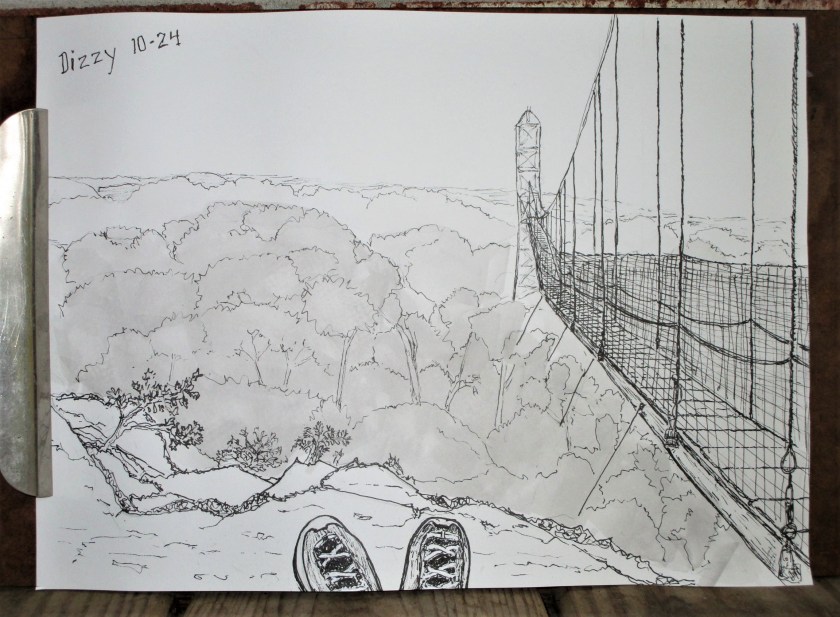
The prompt was dizzy. As one who suffers occasional episodes of acrophobia, I chose to face my fear and draw from the dizzying perspective of a high overlook. It was a challenge to get the perspectives right on the suspension bridges.

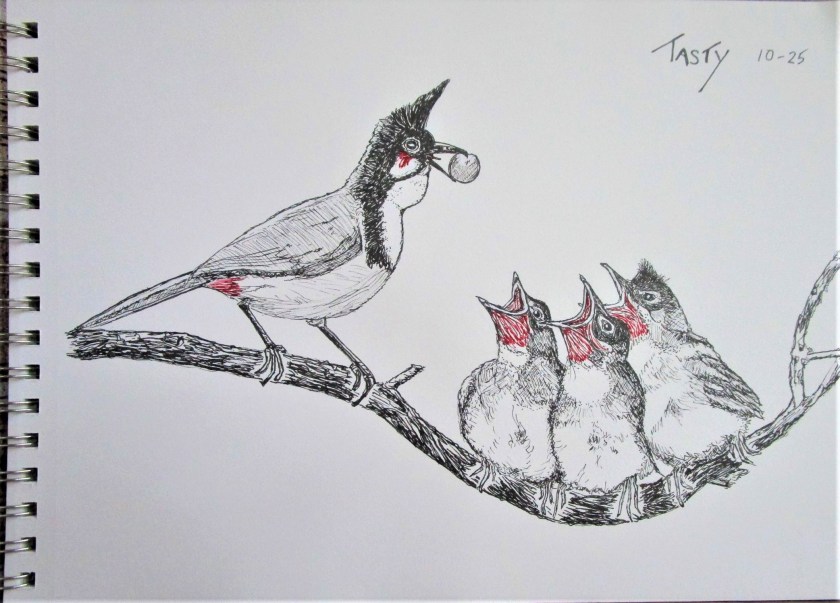
I was keen to draw some more birds. So I took advantage of the prompt Tasty and drew a momma bird feeding her chicks.

That’s all for now. Only a few days left in Inktober. I am looking forward to getting back to fiber arts, especially sewing. I have many ideas for quilted gifts.

Posted in Uncategorized

For the Birds

Photo by Bill Riley

My family is passionate about birds. We feed them, we offer them water, we count them (once a year). My husband photographs them. Over and over. I suppose we would be called bird-watchers, or, if we were in GB, twitchers. To encourage our local birds, we try to keep our yard wild enough to make them comfortable. After noticing a robin stealing fibers of twine from my garden stakes to add to his nest, I thought, that’s it! I’ll start an Air BnB for the birds.

No question about what material to choose. Natural twine or jute seems to have curb appeal for these bird brains. I decided to use crochet to make this object.

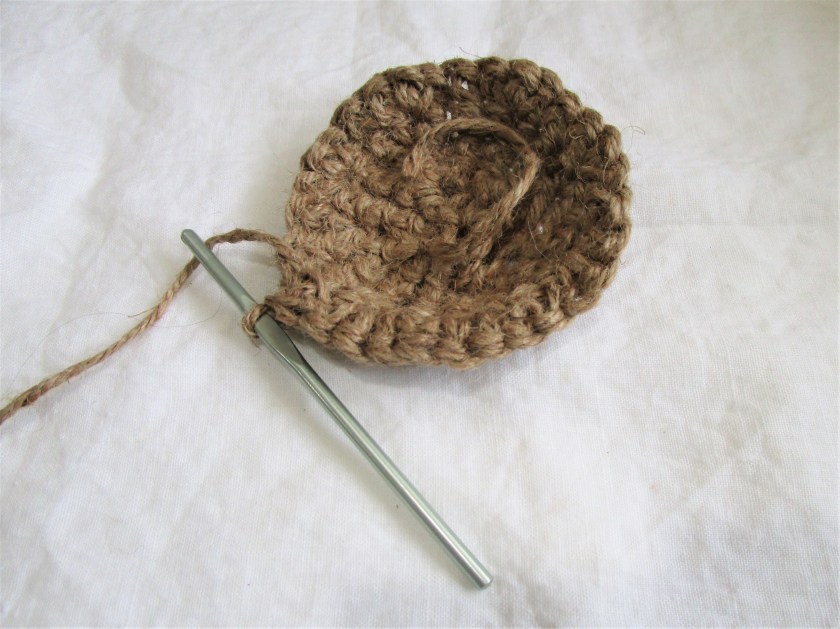
The instructions are simple, which is fortunate, because the jute was challenging to work with. Chain three stitches, and form a ring by slip stitching the last chain to first. Single crochet inside the ring ten times. Next row, chain two, single crochet two stitches , then make two sc in the next stitch, continue this pattern around back to the beginning. Slip stitch last and first stitches together. Repeat this row until the base of the nest measures between 3 and 6 inches in width. It will look something like this:

Next, single crochet in each stitch all the way around, slipping stitch and chaining two stitches at the end of each round. Stop when the sides are 3 inches tall.

My nest ended up 4 inches wide by 2 and 1/2 inches tall

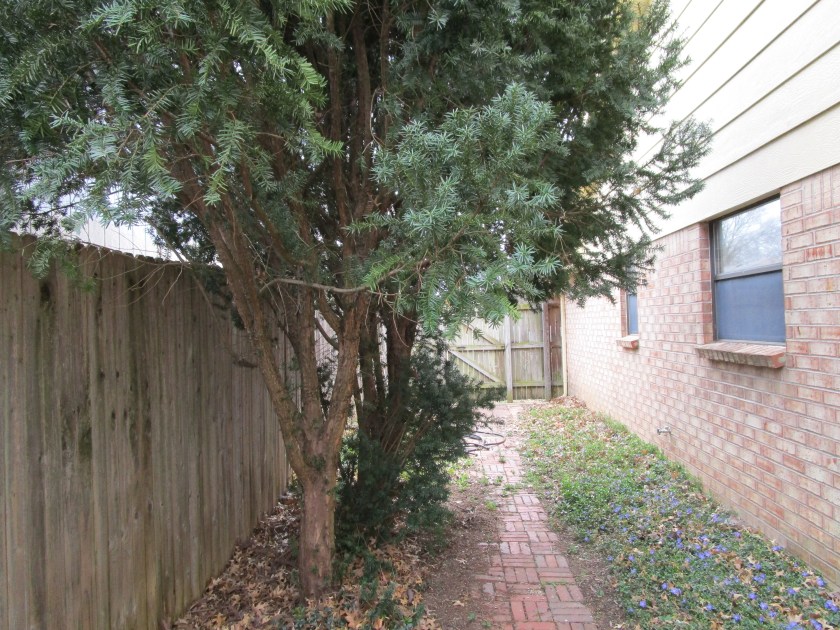
Where to put it? I’m told that real estate is all about location. For the birds, that means not too low, not too high, not too visible, not where the cats prowl. Fortunately, we have a row of yew trees in our side yard.

I will be pleased if a pair of our feathered visitors choose to move in.