Posted in collage, painting, quilting

Friday Finish: Badlands

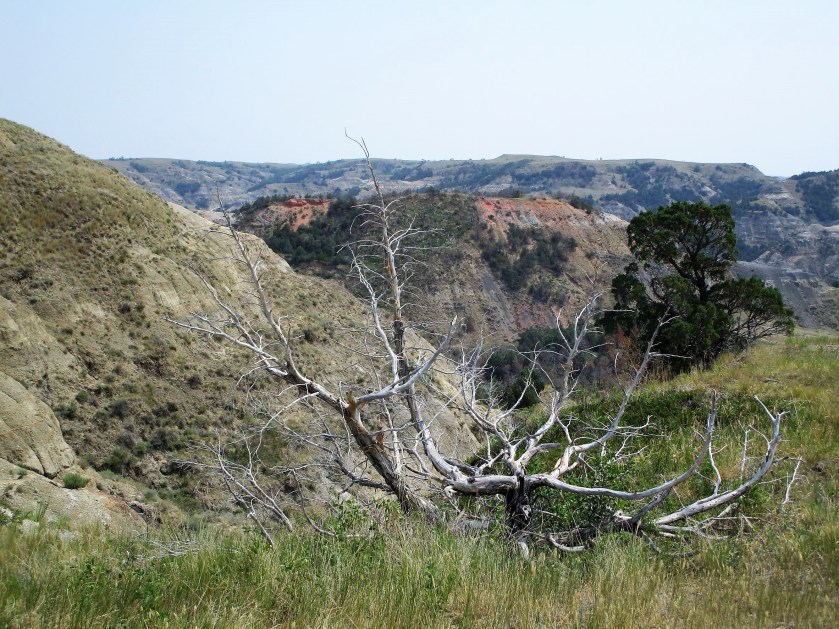
The inspiration for this art quilt came to me during our trip to Roosevelt National Park in July of 2021. I was captivated by the sandwich layering of rock, running in parallel lines that eroded down over thousands of years. It suggested to me a string pieced quilt. For the next several months I thought about my concept and puzzled over how I could bring it to life in fabric.

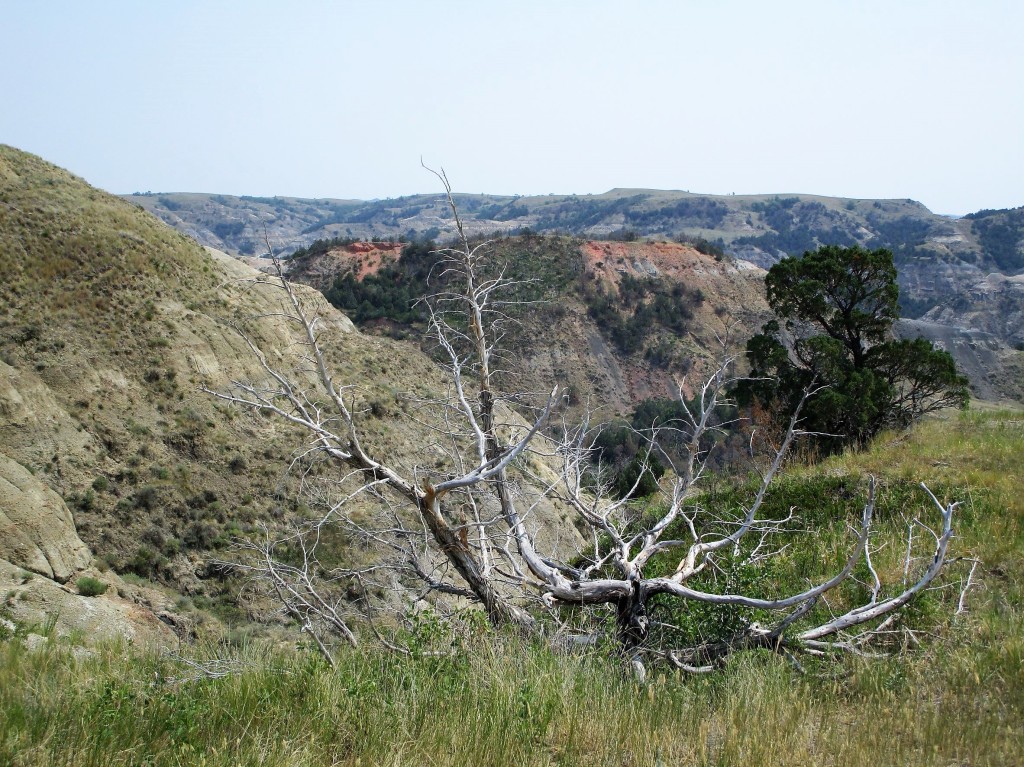
Our photographs were disappointing. It was high noon, and pervasive smoke dulled the light. No shadows were in evidence and the colors were muted. I decided to rely on an internet image for my working reference photo,

Photo from vangorentalmn.com

To get from concept to finished art is a long process. I started by making a value sketch. Next, I drew a pattern to scale, identifying major segments and eliminating excessive detail.

Here’s the part all fiber artists (including myself) find extremely creative: choosing fabrics. Since I like to use watercolor, I painted my swatches. After assigning a hue and value to each segment on my pattern, I picked out the fabrics to best achieve my color scheme of orange, blue-purple and blue-green.

Here’s an aside about the fabric I chose. Ultimately, I couldn’t find fabrics that had the colors and textures that I needed. To get there, I painted on printed fabric for most parts of the quilt. I also selected a few batik prints that were close enough, with only minor adjustments to color.

With the design decisions made and fabric selected, I began to assemble the quilt. All of the techniques that I used in making this quilt I learned from two fiber artists: Annette Kennedy and Gloria Loughman.

http://annettekennedy.com/about

https://www.glorialoughman.com/about

I thank these artists for giving me the skills I needed at the time I needed them.

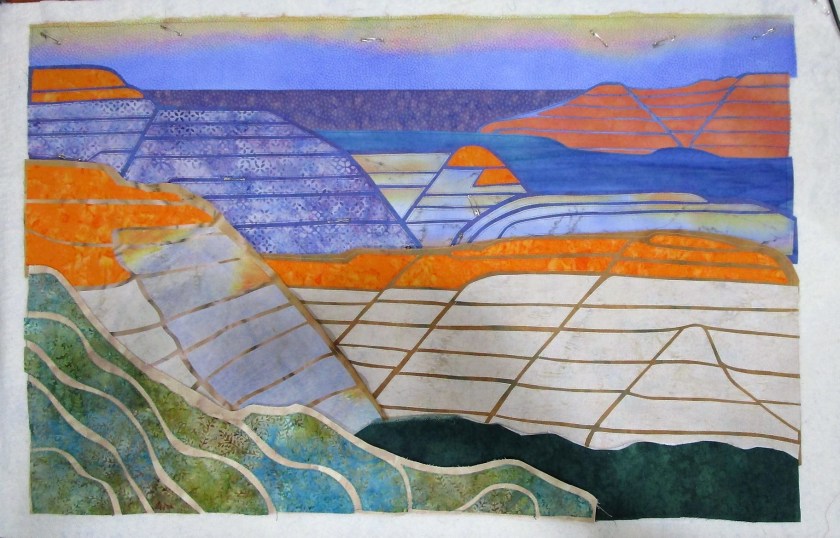
And here is Badlands in its final form:

The design is invigorated by lines running in parallel diagonally and horizontally. Where the diagonals meet, triangles are formed. These shapes lead the eye to the center where two focal points have a quiet conversation across the river valley.

As a final note, I want to acknowledge the influence on my style of pop artist David Hockney. A print of his painting, Garrowby Hill, hangs over our fireplace.

My imagination has traveled that blue road countless times over the past twenty years.

Posted in quilting

Work in Progress: Badlands

When I last wrote about this art quilt project, I was waiting on a delivery of fabric.

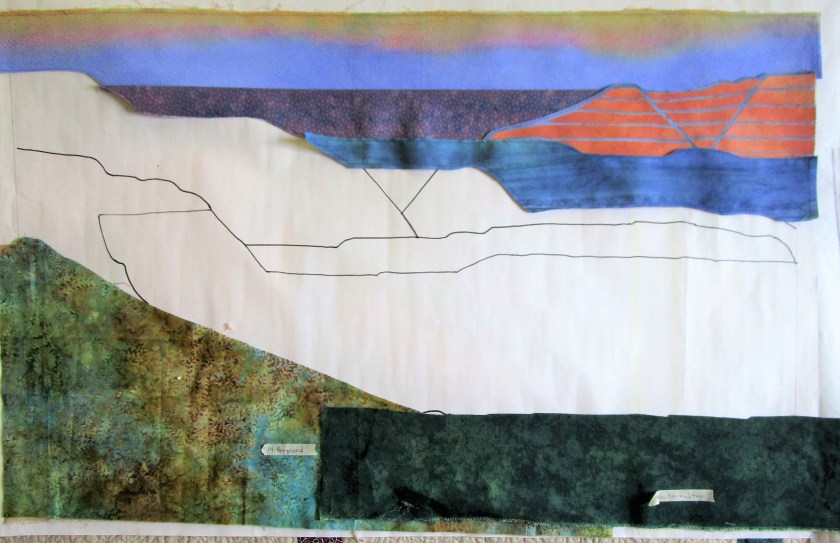
Here is what my quilt looked like at that point.

I had selected some fabrics from my stash. The sky and horizon segments had been painted and positioned. My first module of background ridges was cut-out, fused and stitched together. I liked it a lot. But it was clear to me that I needed more orange and purple fabrics to really represent the scene as I designed it.

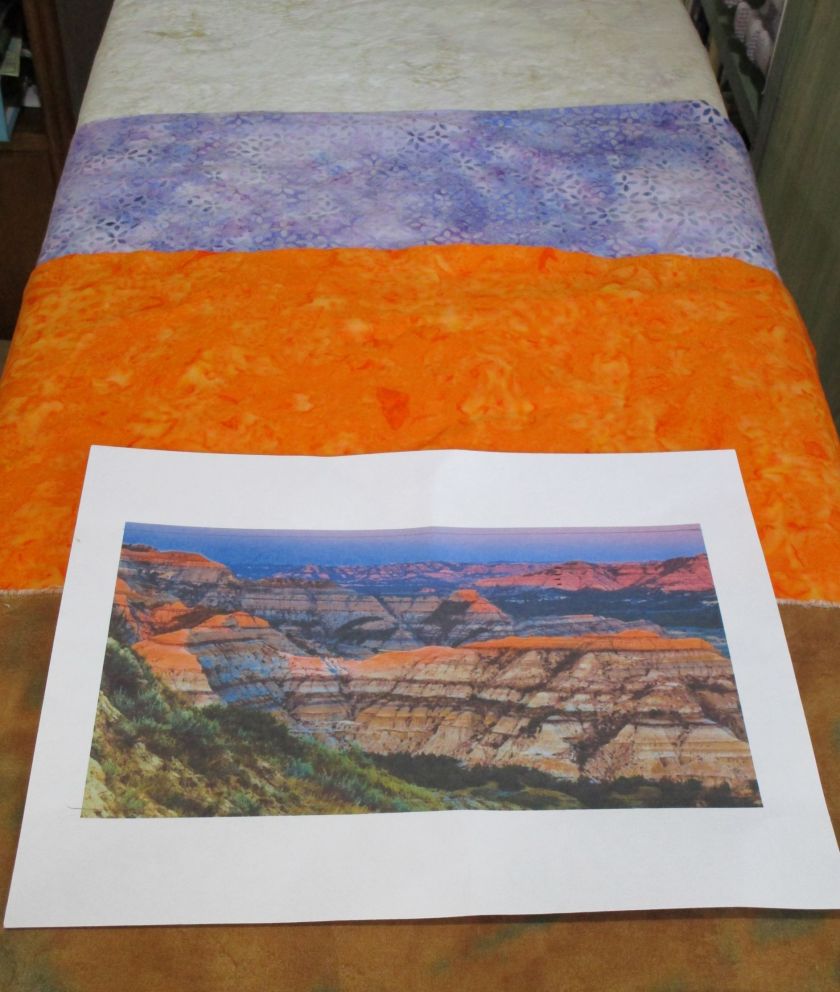
This photo shows my reference image and the three batik fabrics that arrived from Fabric.com last month. I was pretty impressed that the fabric colors looked just like they did on my computer screen.

So, full steam ahead with the work!!

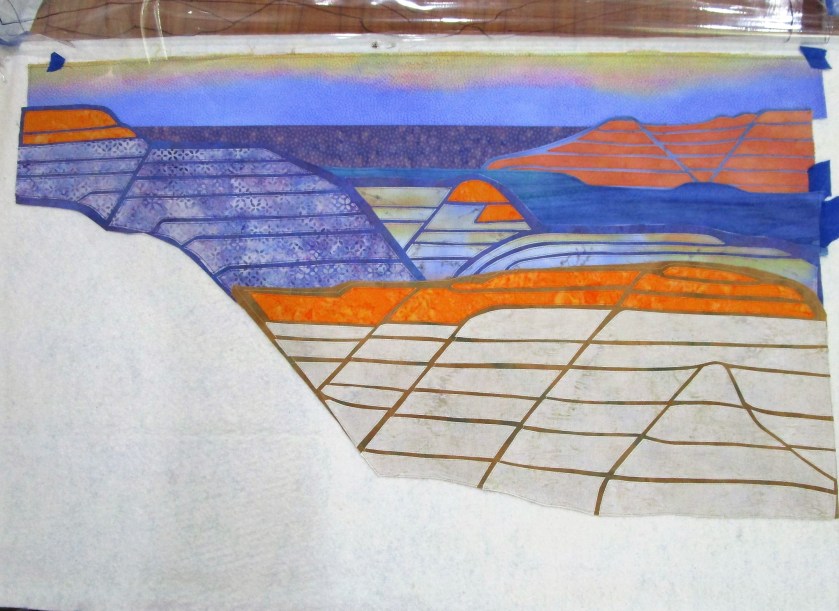
Half-way assembled:

In this photo all the segments are finished and in place but one – the lower right. You see the segment’s base fabric that I plan to use.

At this stage I am very encouraged, and kind of excited. The lines and colors of the work represent my inspiration very well.

After I finish sewing down and quilting the background and middle ground, I will turn my attention to the focal point and foreground. Then comes a bit more painting of details before the final assembly.

Posted in knitting, painting, quilting

A Couple of WIPs

Yesterday I officially lost at yarn chicken.

AHWWWWWWW!

I have about 16 rounds plus the toe left to knit. Grr. So I wandered through my stash to see if I could find a good substitute and come up with a gameplan.

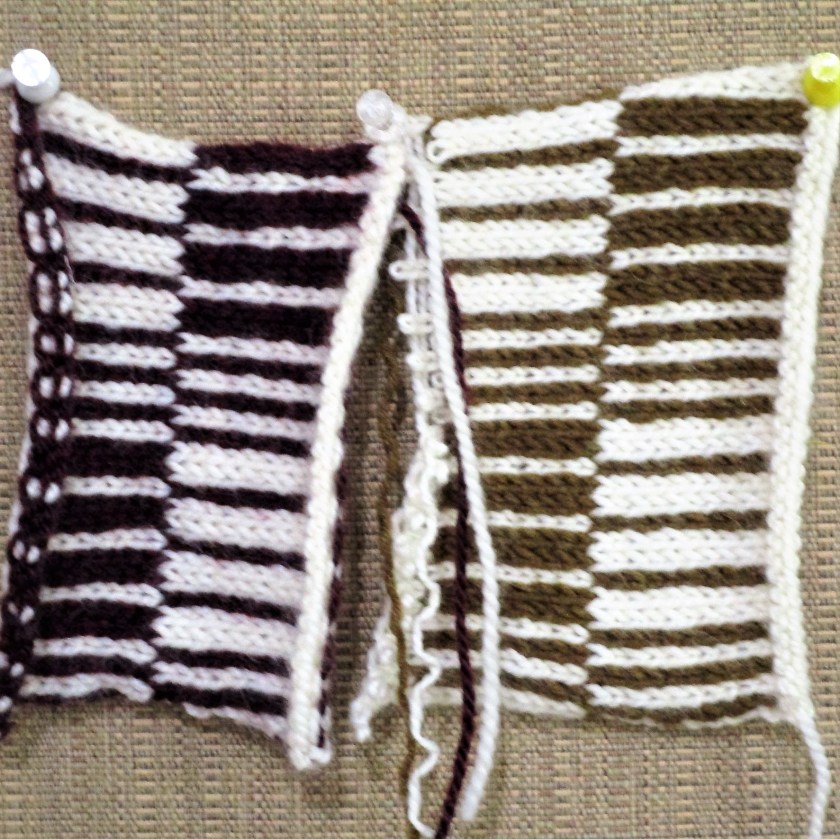
This morning, entering my studio, I suddenly spied The Swatch. Then I remembered that I had knit two swatches for this project! Both of them included the cream yarn.

SAVED!!!!!!

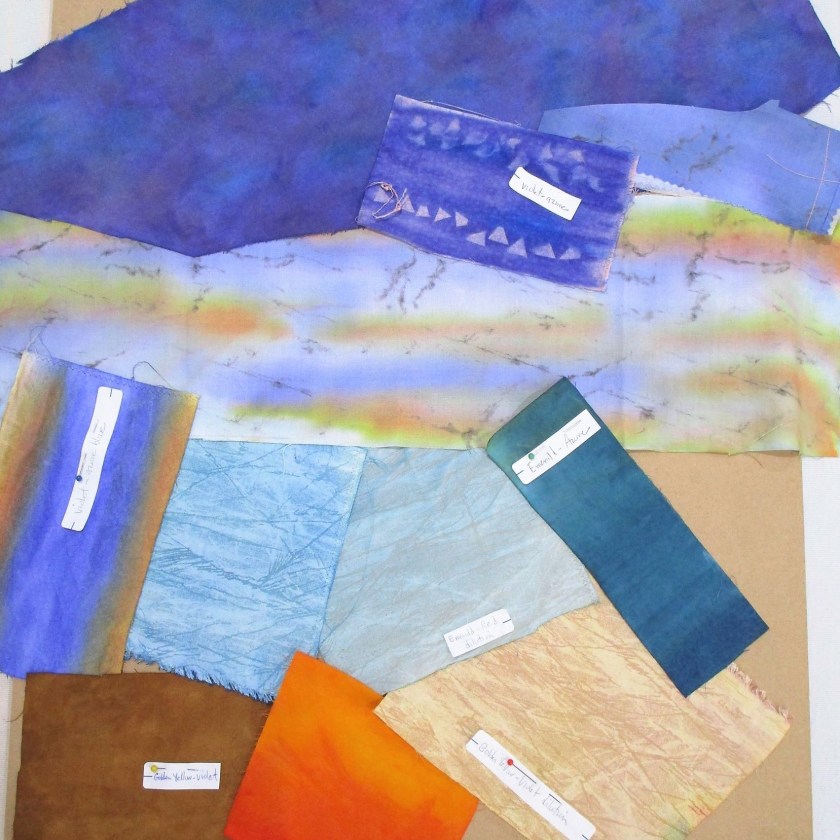
In other news, I have been painting fabric for the Badlands quilt. Here is a group of color samples in my chosen palette.

I also spent a lot of time simplifying my sketch and making a pattern on freezer paper. This pattern will become the cutting guide for the quilt’s segments. I don’t call them blocks, because they are all different shapes, following the major lines of the subject.

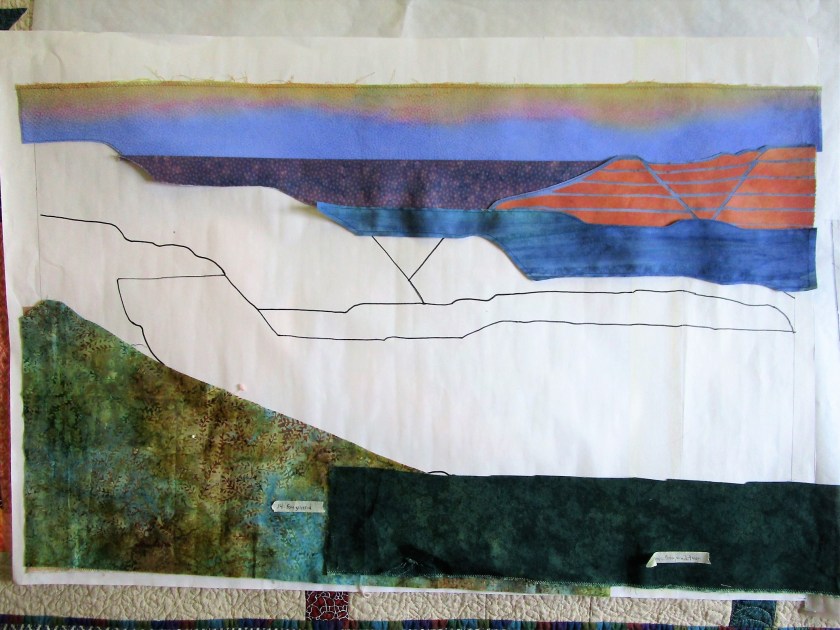
I actually got underway with cutting and sewing some of these segments, starting from the background.

Progress photo.

I’m pretty happy with the work so far. But now I am waiting on fabric to be delivered. In acknowledgement of my rather crude fabric painting skills, I broke down and bought some batik fabrics with colors for the middle ground of the design.

In the meantime, I plan to paint the backing fabric and make the quilt sandwich this week. Then I will be ready to move forward as soon as the package arrives.

Posted in quilting

SAHRR 21 Round 4 – Checkerboard

My week has been a bit full – which is quite a change of pace for me. Among other things, I received my first COVID-19 vaccine jab yesterday. (sore arm today.)

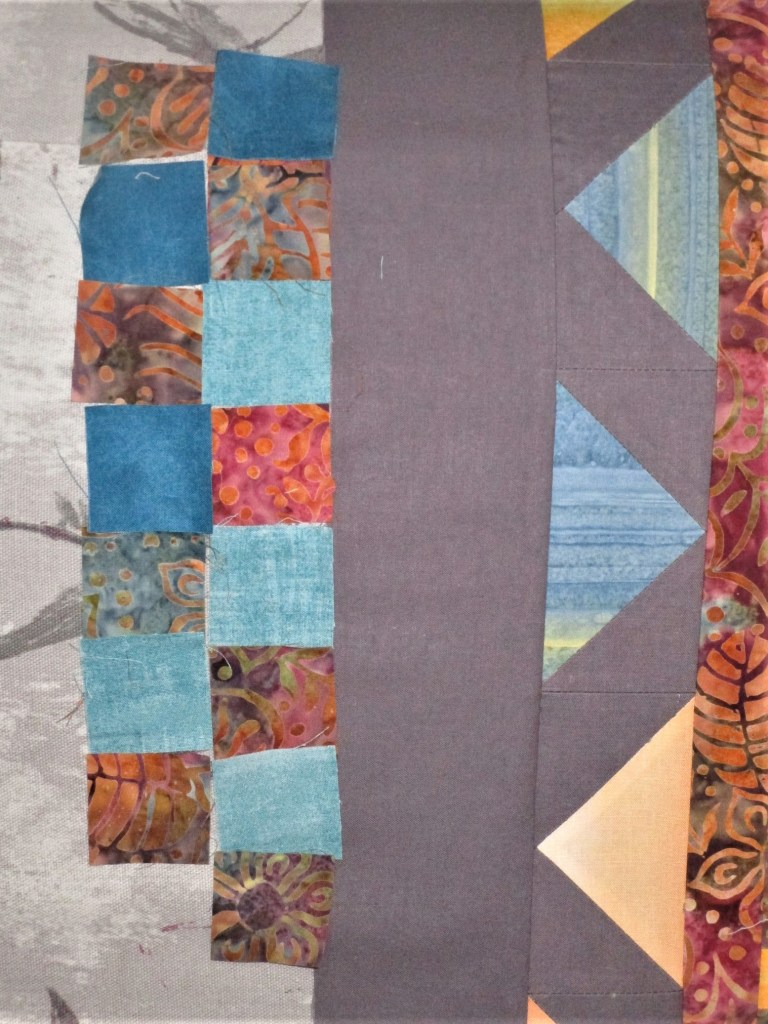
None the less, I have been working steadily on this week’s challenge – checkerboard. I quickly decided it was important to make a definitive break in the design. It is desirable to separate out the triangular rounds from the checkerboard border, which will be strongly square. To make this, I added a wide coping border in the dark grey fabric.

I like the way the geese triangles now look like stained glass pieces.

To me, the checkerboard border can be a mosaic tile border. To achieve this effect I chose to use all medium toned fabrics, including the flowered batik. Here is a small mock-up for my design, using 1 1/2 inch square pieces.

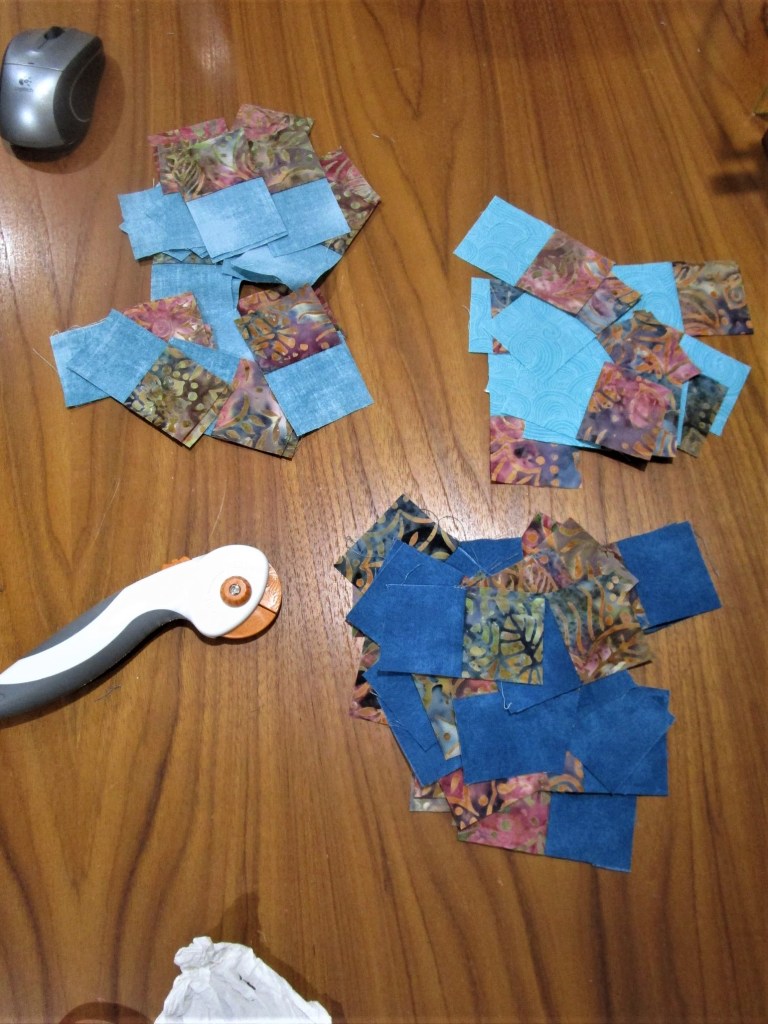
The first step is to cut and sew together several strips, then cut the strips cross-wise into paired squares. Here you see the three piles.

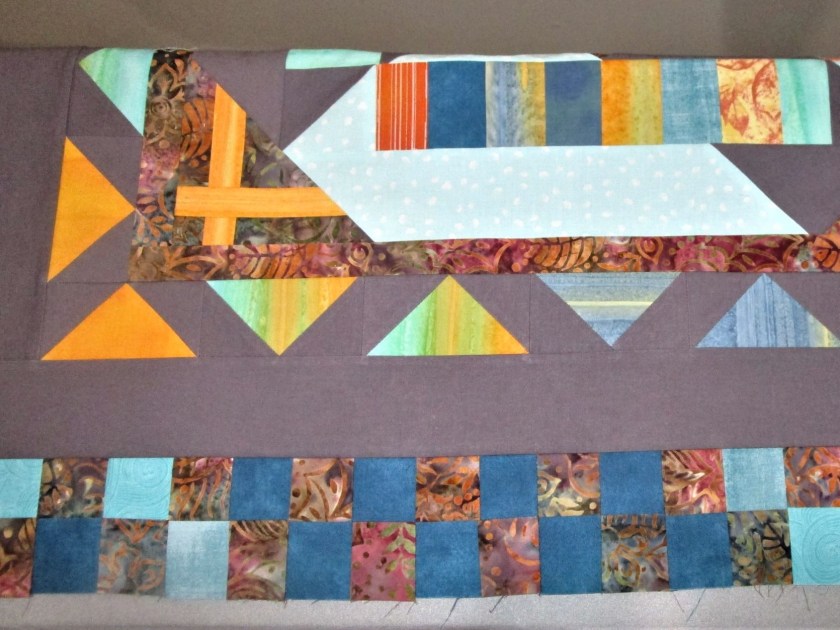
Next I joined these strips into four square blocks, then joined the blocks into long strips. It took me a while to make the first side. For one thing, I again failed to true up the blocks before attempting to sew on the border. Soon, however, I was fully in the swing of it. The first side…………

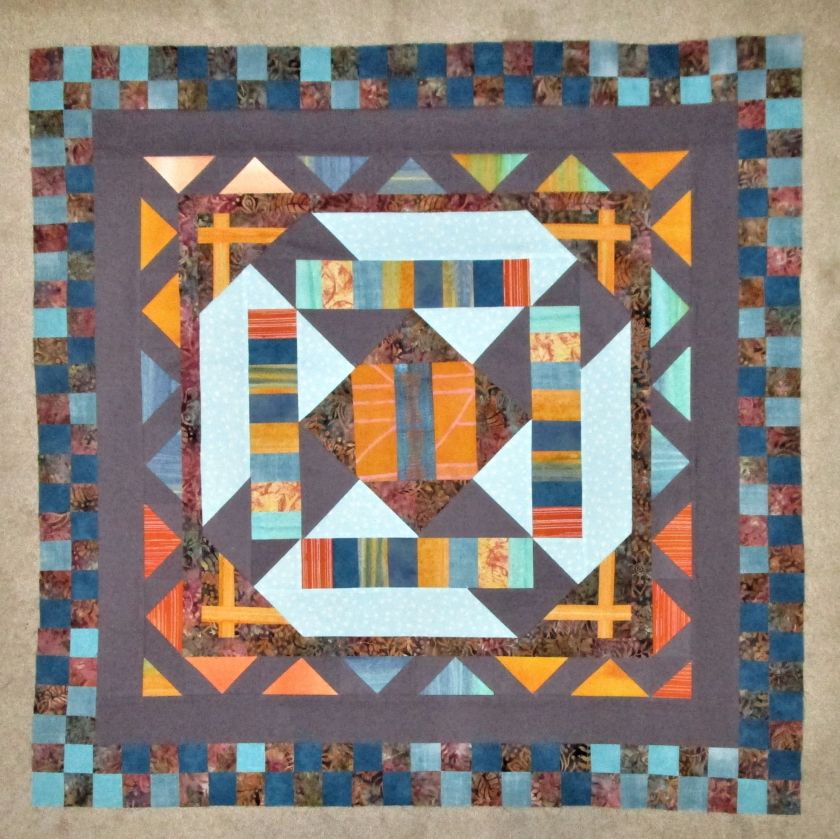
……. and finally, all sides completed. There are a total of 48 four-square blocks used.

I like it pretty well. Despite my best efforts, there are some ripples. (Thankfully there are no pleats.) I can try to smooth them out by removing, adjusting, and re-attaching the checkerboards.

I’m ready for the next challenge, although I will probably have to buy more fabric.

Posted in quilting

SAHRR Round 2 – Angular Puzzle

On Monday I learned that the next prompt for the stay at home quiltalong was Plus Sign. As in the past round, several challenge participants had their additions up and posted on the first day. I was not so quick to get to work. First of all, I wasn’t sure where I should place a plus sign on my project. Secondly, I wasn’t sure what technique I wanted to use I considered all of these options in turns:

  • Nine patch blocks made with contrasting strips
  • Painted on, either freehand, stamped or stencilled
  • Applique
  • Reverse applique

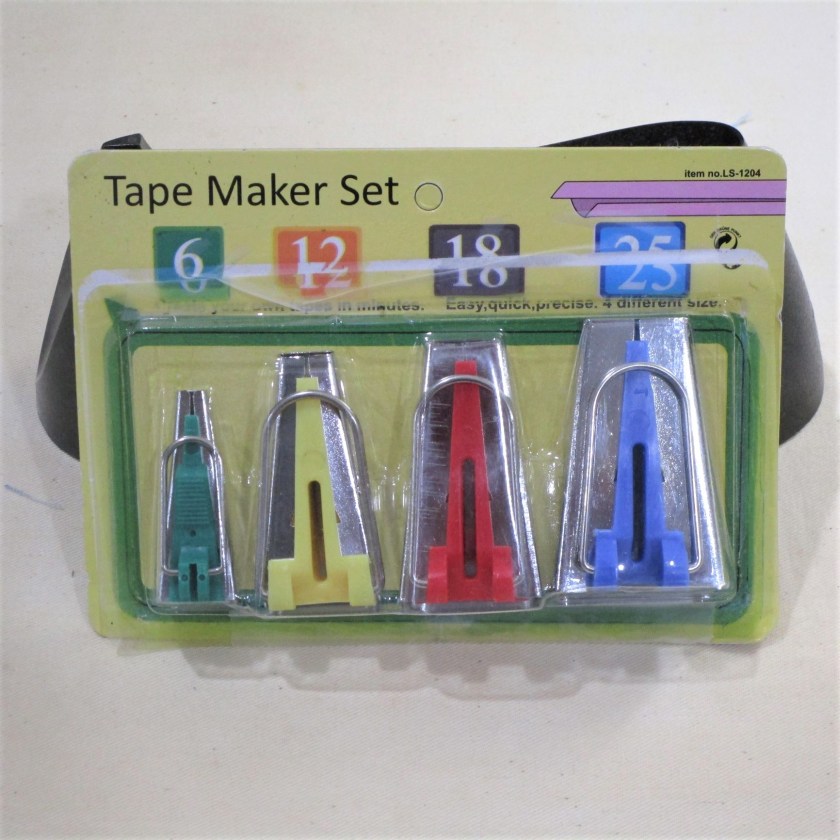
As I awoke this morning, I had the answer – really, it came to me just as I got out bed! I remembered this little tool stuffed away in my sewing cabinet:

I would make plus sign appliques, but I would do it with fabric strips run through the bias tape maker. This tool folds under the raw edges making a very even tape, very quickly.

It turned out to be the only part of the project that was quick.

My first goal was to bring the gray X motif, which had a prominent place on this work, to a graceful close. To do this, I cut and pieced a border using the light blue and dark grey fabrics, with the grey piece matching the angle of the X already in progress.

Here are three of these borders, sewn and ready to be pressed.

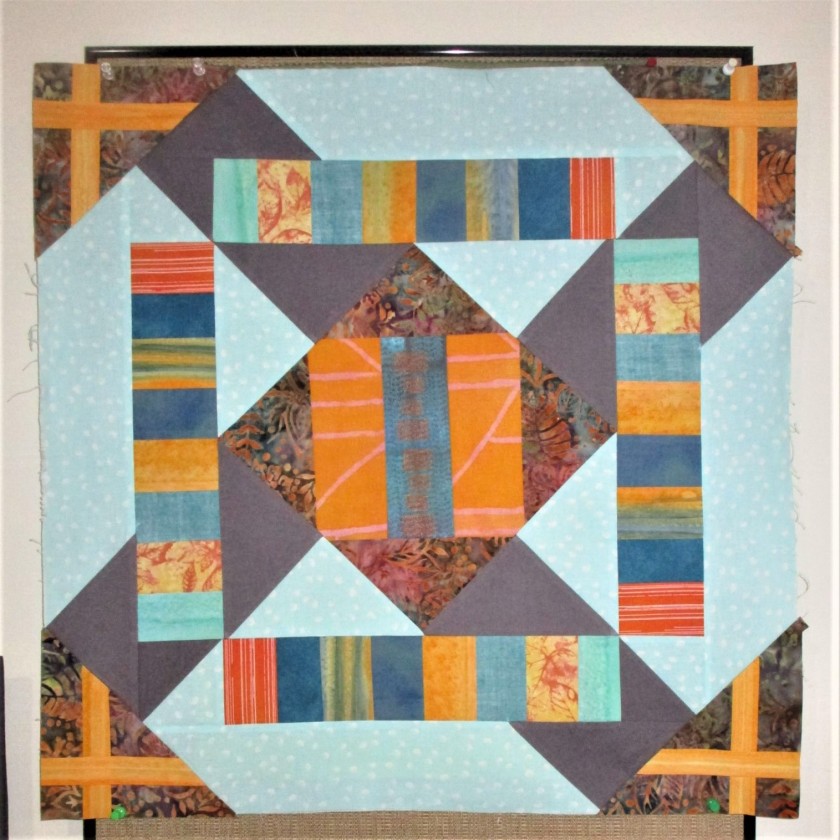
When sewn in place, the grey X get its rectangular legs finished up.

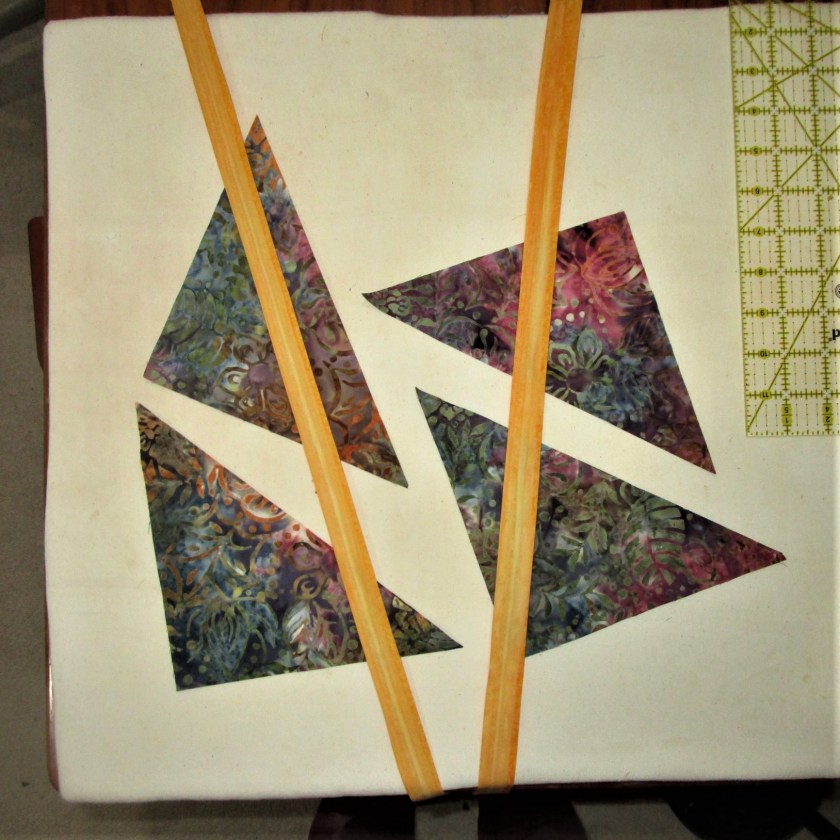
Now I am ready to add the plus signs. It’s time for the floral batik fabric to make another appearance. I cut it into four triangles to finish the corners. It is here that the plus signs will appear.

Corner triangles and tape, ready to be fused together

One of the problems I had with using the plus sign motif is that it looked like a stubby, ungraceful pair of sticks to me. To solve this issue, I decided to elongate two sides of it. The long legs will come from the edges of the triangles, with the cross happening at a right angle in the corner.

All of this sounded very simple to me, in terms of the construction steps. This is where my lack of experience kicked in. After prepping the pieces, I started sewing them in place. Nothing would line up correctly! I measured each triangle, but didn’t find anything wrong with their angles. After spending an hour or so, sewing on and removing a few triangles, I finally realized that I had failed to true up the border edges. What a rookie mistake!

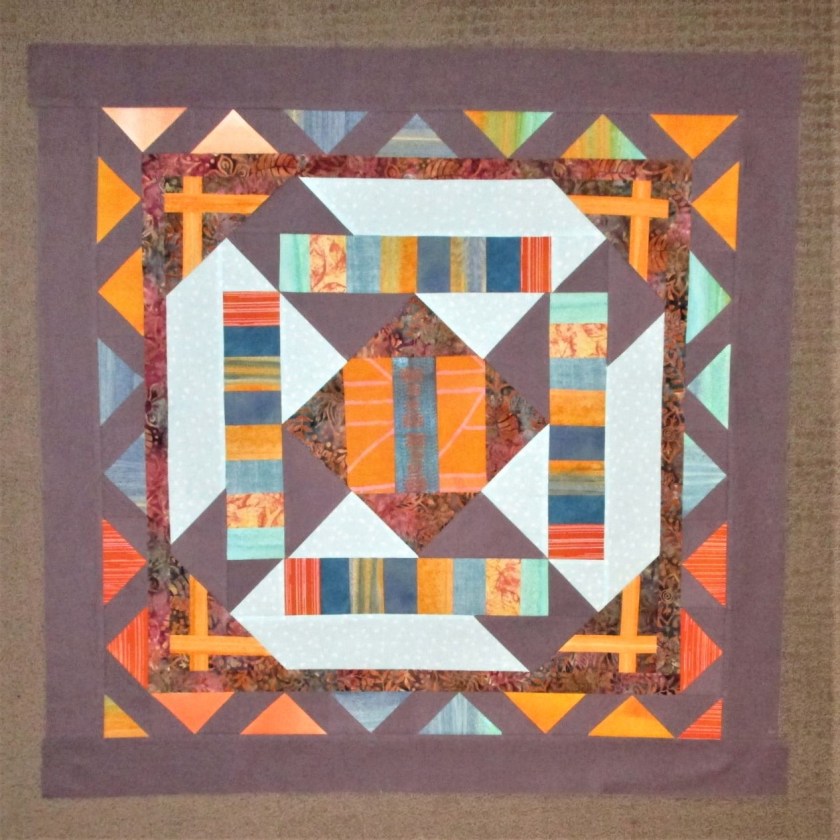
Eventually I sorted out the 90 and 45 degree edges and sewed everything together.

To see some of the other quilters’ work, you can visit their posts.

Here: