Posted in embellishing, painting, quilting

Experiment with Stitch and Slash

While perusing available art quilt technique tutorials, I discovered another use for my hand-painted fabrics. Carol Ann Waugh teaches a modern take on reverse applique in her class on Craftsy. She calls it Stitch and Slash. It was inspired by the traditional molas made by the Kuna women of Panama.

In Carol’s interpretation of the mola, four pieces of fabric are selected and layered together. Then a design is chosen, marked on the back of the pile and stitched into layers. The similarity with the traditional molas stops here, when Carol gets out her seam ripper and slashes away at the assembled fabric Instead of nice, neatly stitched edges, she ends up with frayed, textured ones.

Okay, I thought, I have the perfect set of fabrics to try this out.

The two painted pieces are layered with a dark green batik print and a brown textured print. You see here the back side of the brown fabric, which I will be using for the top layer. Nearly all of the this layer will be cut (or torn) away.

Here is the back of my piece, showing marks stitched through.

Getting started with the slashing: You see in this photo all the top layer is gone, part of layer two gone, and the center of the circles showing the bottom layer.
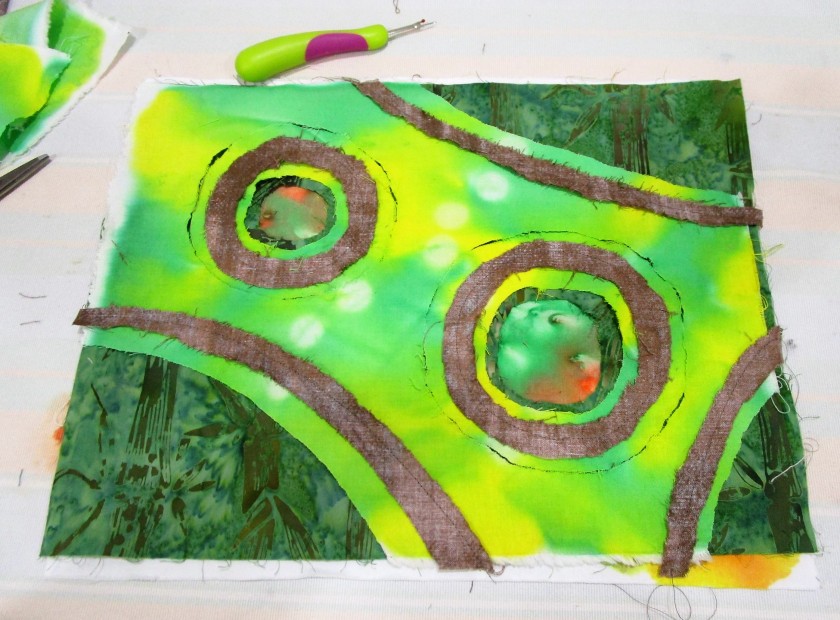
This ripping took more time and was a little trickier than I expected.

All the excess fabric is now removed.
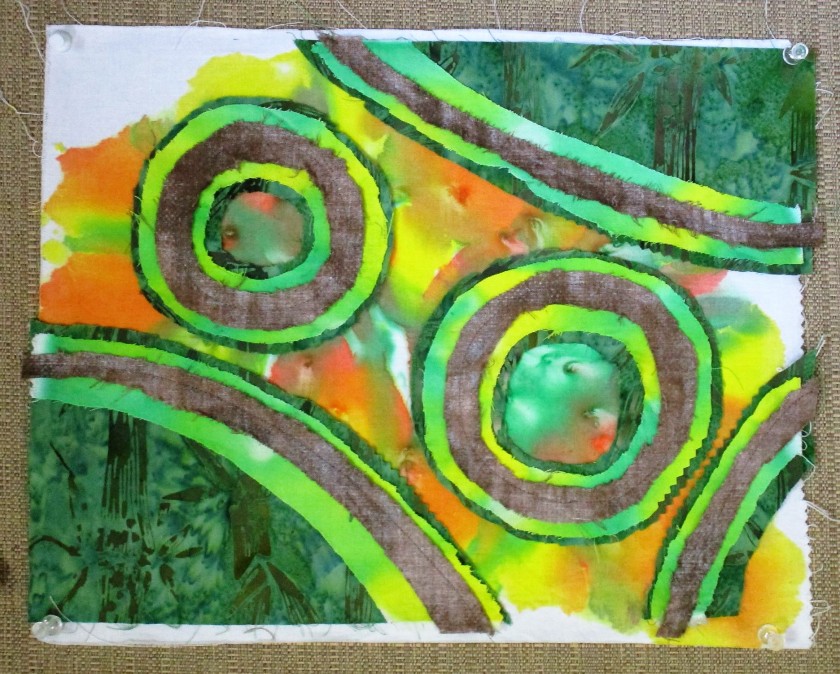
I was excited by how well the painted design is showcased.

The next steps are really just embellishments. To start, various ribbons and yarns are couched down over the seams. (Couching is just a zig-zag stitch worked over the ribbon/yarn/cord.) After that, it’s time to explore thread and machine embroidery options. I went with metallic yarns and threads in warm colors and dark shades.
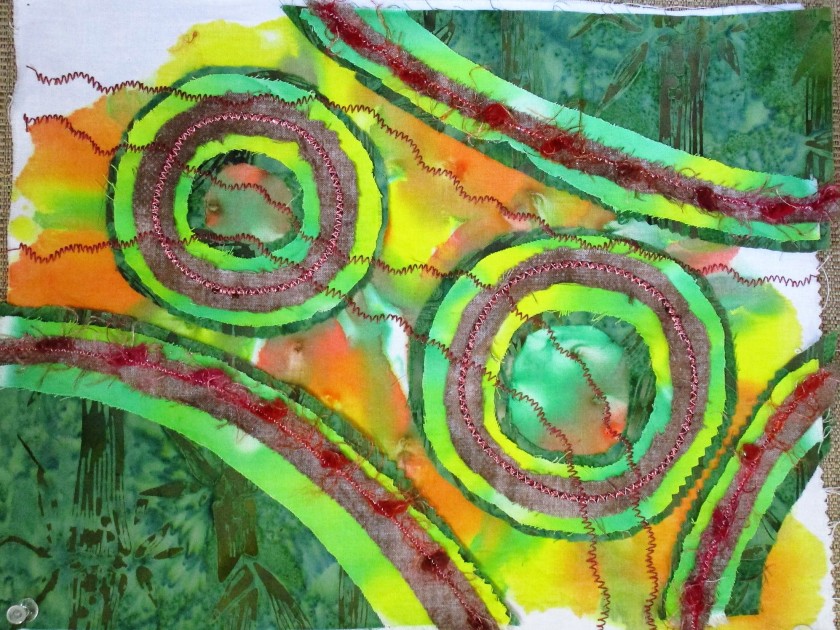
To finish up, I made a quilt sandwich with batting and backing and stitched it together using free motion quilting.

My Stitch and Slash sample suggests to me how much the trees are suffering from drought and temperatures above 100 degrees. I will call it Heat Wave.

You can find Carol Ann Waugh’s class here:

https://www.craftsy.com/class/stitch-slash/

Posted in colorwork, painting

Spring Green

I like Spring. I like just about everything about Spring. It’s the time of year when we can sleep with windows open, the days are getting longer and warmer. The earth’s growing things burst forth with an abundance of new growth. Most of that growth starts out in a yellow-green color that I call Spring Green.

Photo by Pixabay on Pexels.com

This luscious shade can be painted with a mixture of lemon yellow and cool blue pigments.

Last spring, I was inspired by a post on Kate Davies’ blog showing a view from her garden shed. The weather was wet. There were big raindrops dripping down the glass. While the view itself was out of focus, it was radiantly colored – mainly in spring green.

It was so inspiring that I tried to capture the color sequence on a piece of cotton with fabric paint.

I think I was successful. After I painted it, the piece languished on my design wall for a year. I was busy with other projects that had overtaken my attention. But with the coming of spring I feel inspired to return to the subject. The painted cloth will become the background of the art quilt. For the foreground, I will focus on seedlings.

Photo by Akil Mazumder on Pexels.com

This quilt will challenge my technical abilities as I intend to hand embroider the plantlets using wool yarn and/or cotton floss.

Slow Work is in my future.

Posted in knitting, painting, quilting

Year 2020 in my Rearview Mirror

My usual practice on New Year’s Day is to clean out my clothes closet, eliminating all those items I no longer wear and taking stock of any needs for replacements. But this year? Staying at home 90% of the time? Who needs new clothes! I fell into a consistent pattern of wearing jeans or stretch pants and cotton knit shirts.

So today, I will ignore my closet and instead look back at the work emerging from my studio. In glancing at my 2020 posts, I realize how much my work has changed since I started this blog in 2019. What comes to the front are the forays into making art quilts and painting with watercolors. But I’ll start with my first love –

KNITTING

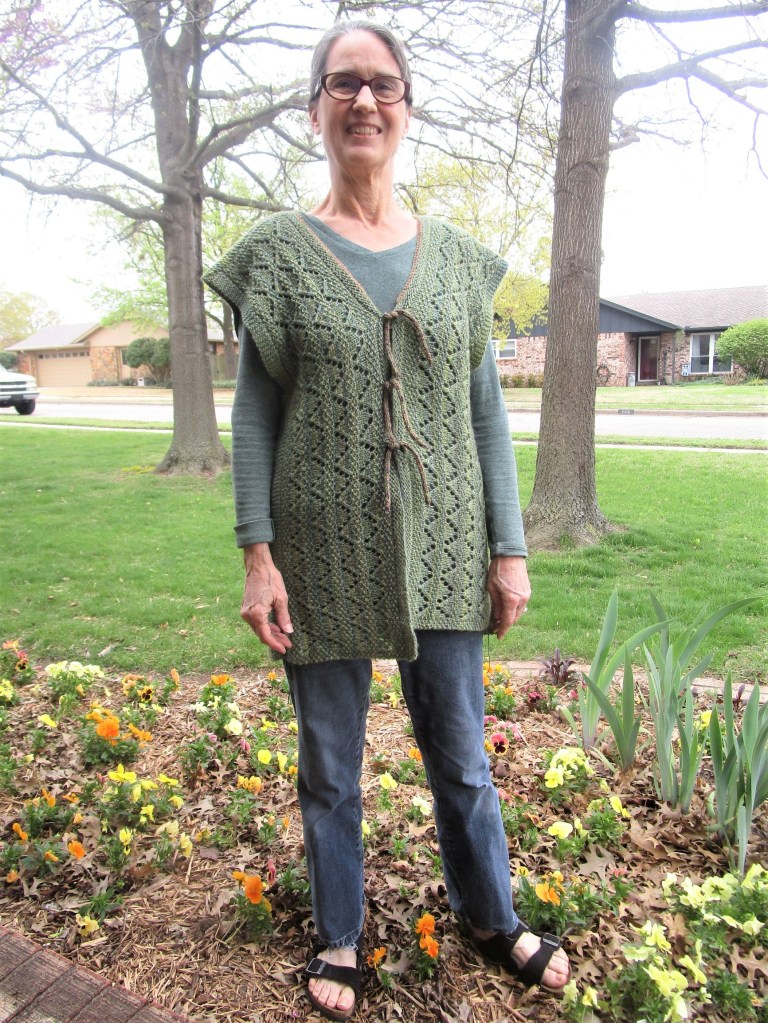
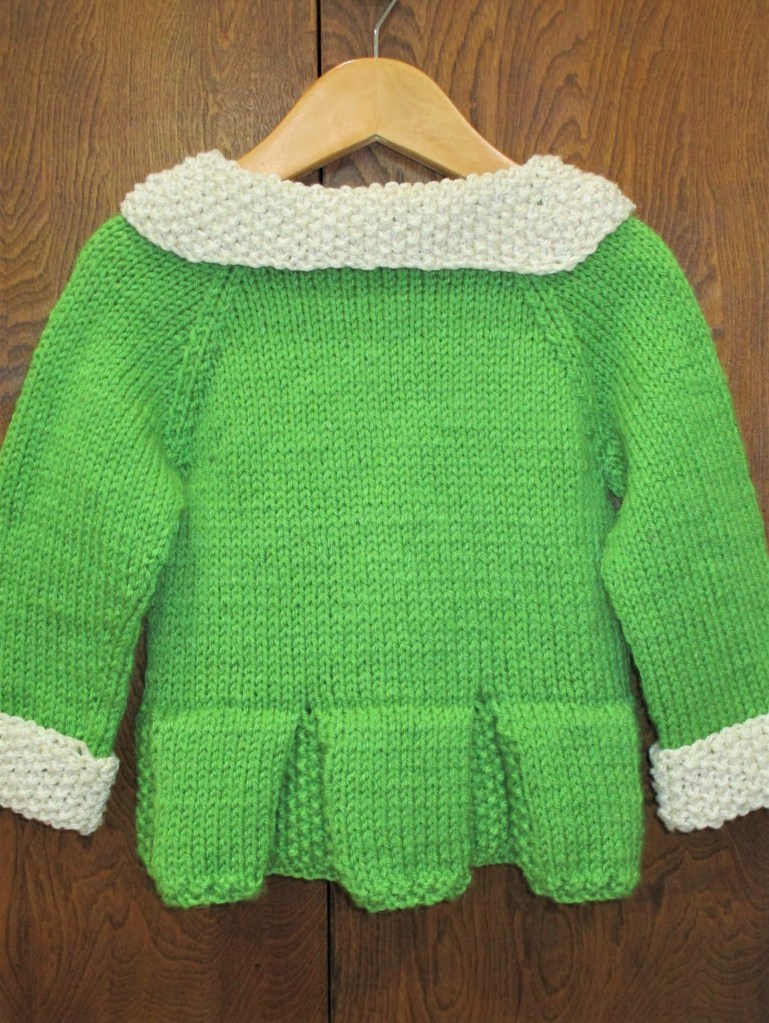
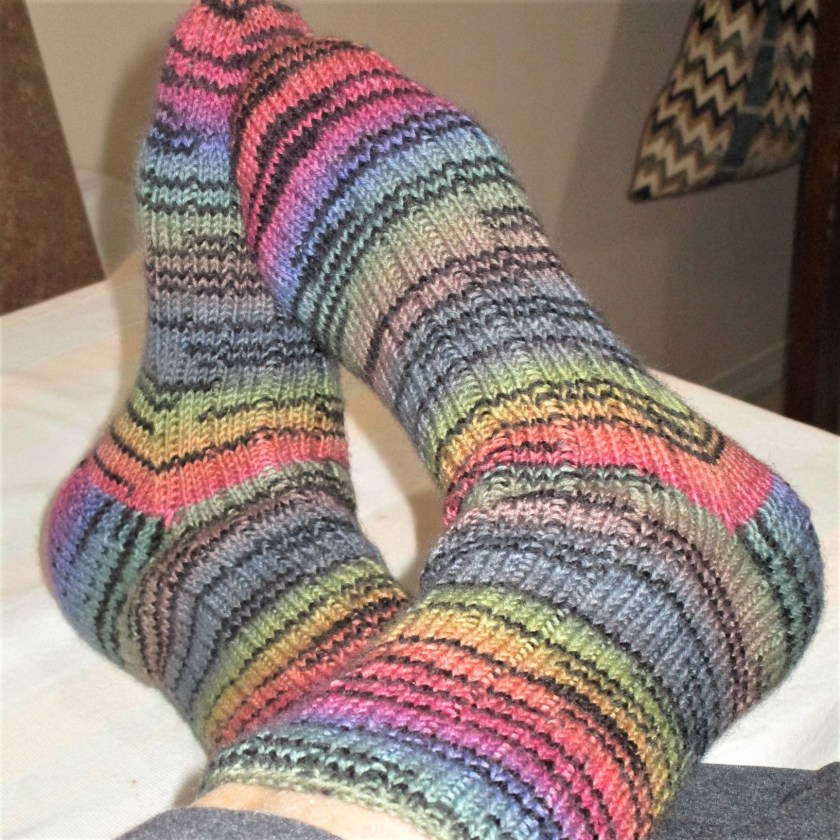
While this year was not a high point in creative design, my output was strong. I completed 3 hats, 4 pair of socks, a toddler sweater, a dress, a top down cardigan, a serape and a water bottle holder. My most complex object was the Weaver’s Square vest made for my daughter.

Technically, I did design this garment. But the fair isle pattern on the vest’s back was adapted from one I saw on Knit/Lab’s website. I don’t take credit for that part. The vest turned out pretty great and she loved it. Here are a few photos of some other knits I made this year:

I finished the year with two UFO’s – a pair of men’s socks and a pair of gloves.

PAINTING

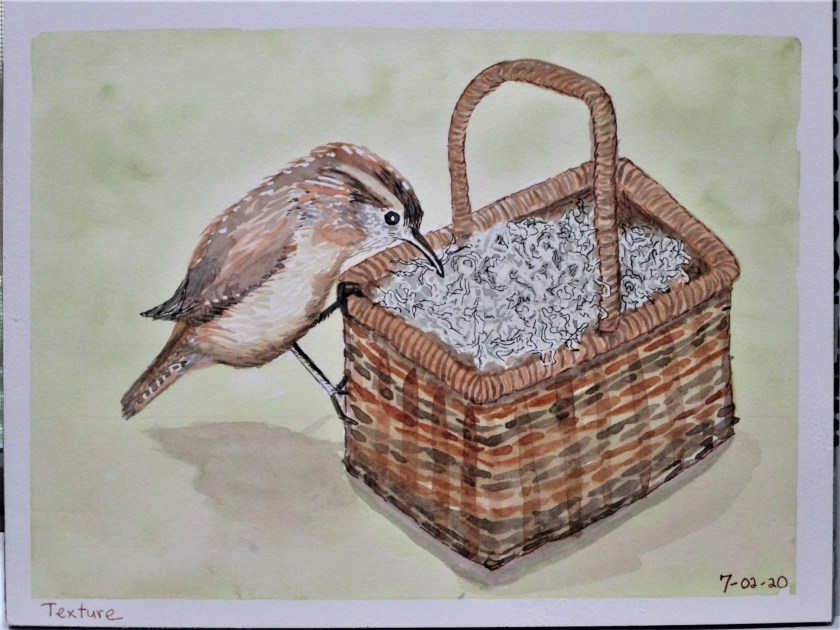
Last year I was focused on learning to sketch. But this year, I was determined to start painting. To that end, I joined the local art association and signed up for some on-line classes. Anyone who has tried to paint with watercolor will freely admit that the medium has its own set of challenges. I spent the year more disheartened than encouraged. In July I followed the daily challenge on World Watercolor Month, organized by Charlie O-Shields of Doodlewash. That’s when I started to see some improvement. I began by painting copies of other people’s photographs. Eventually I was able to paint from my own photographs, from life, and from my imagination. Here are a few favorites.

QUILTING

Confession: I learned how to quilt only for the purpose of realizing my fiber ideas. So there are a lot of technical areas of quilting that I choose not to pursue. While my favorite thing to do with fabric is to paint on it, I am willing to piece fabric into a quilt top when my inspiration seems to require it. I use commercially printed fabric as well as hand painted fabric for these pieces. During the past year I learned how to mount small art quilts onto stretched canvas. This allows me to present them as works of art suitable for hanging.

At the beginning of 2021, I find myself with a number of unfinished objects. I also have more ideas than I have energy to pursue.

So perhaps my goal for the new year needs to be a narrowing of ambition. The hardest part is deciding what to leave behind. I love it all.

Posted in collage, quilting

My Current Art Quilt Project

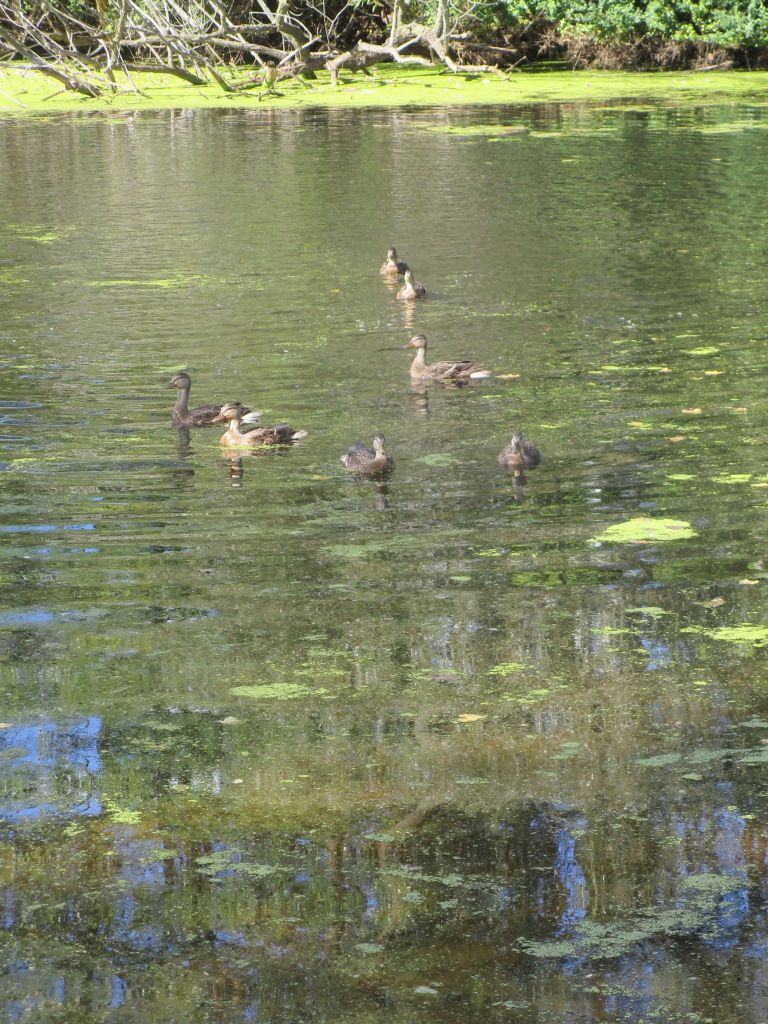
For the past couple of weeks I have been working on a new project. It’s inspired by this photo, which I captured in September at a nature reserve in Madison WI.

Mallards at Cherokee Marsh

I didn’t have any big expectations for this quick snap of a group of mallard ducks. But when I looked at it on my computer, I was captivated by the foreground – a mish-mash of colorful and spotted reflections. How might I create this look in fabric?

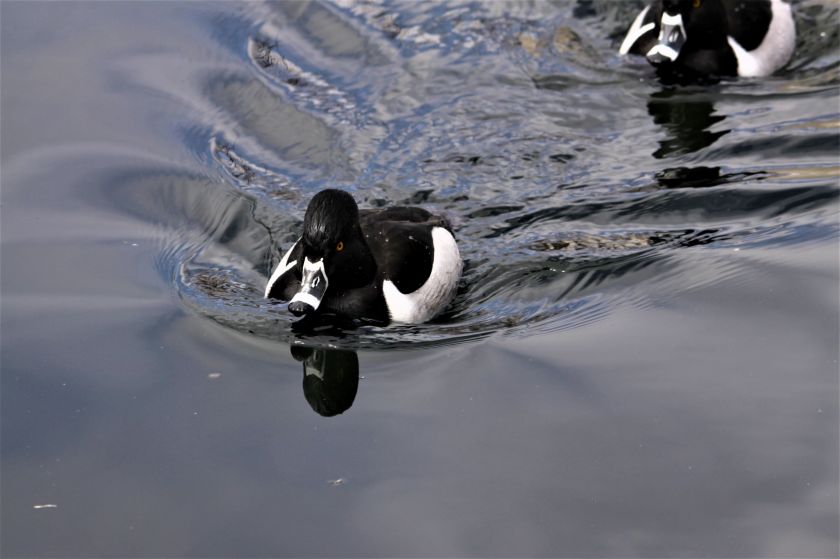
For this project I chose to use ring-necked ducks instead of mallards.

Male Ring-necked Ducks.

I love the black and white coloration and the crispness of its markings. Since this species of duck is also native to Wisconsin, I decided that it was a fair exchange.

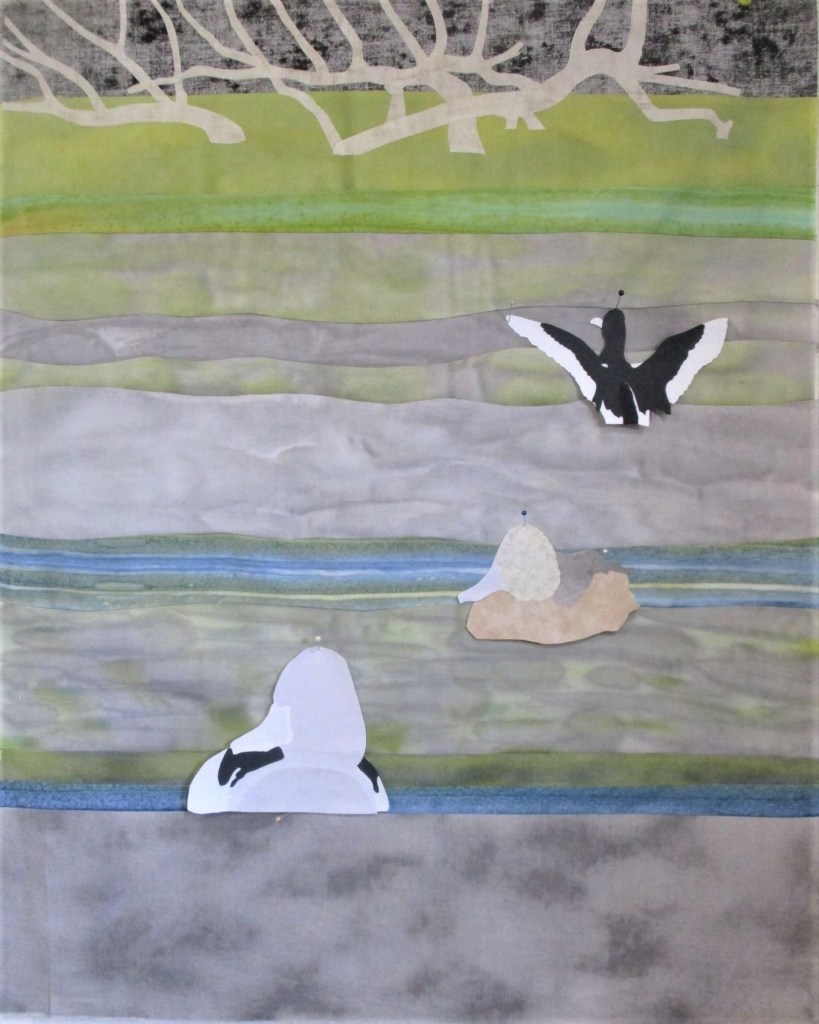
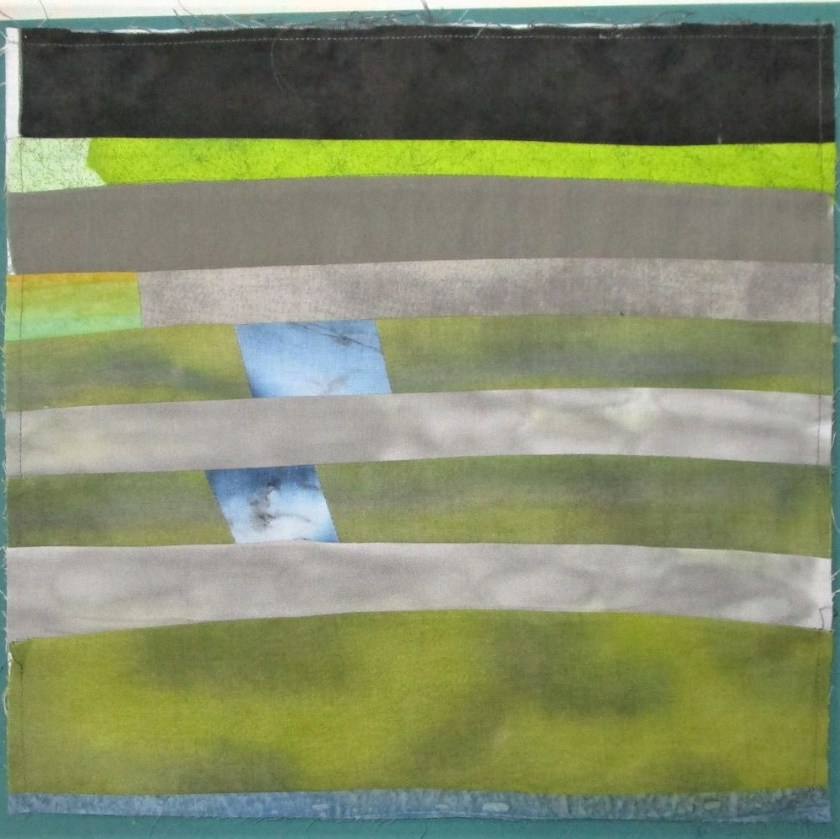
For the background, I selected some commercially printed and hand-painted fabric. these were sewn together in strips. Next I pieced together the first three ducks.

Eventually details will be painted on the ducks with fabric paint.

I took a pause for a few days. I want to use the confetti technique to render the mottled foreground. But this is a very new technique to me. So it makes sense to practice first.

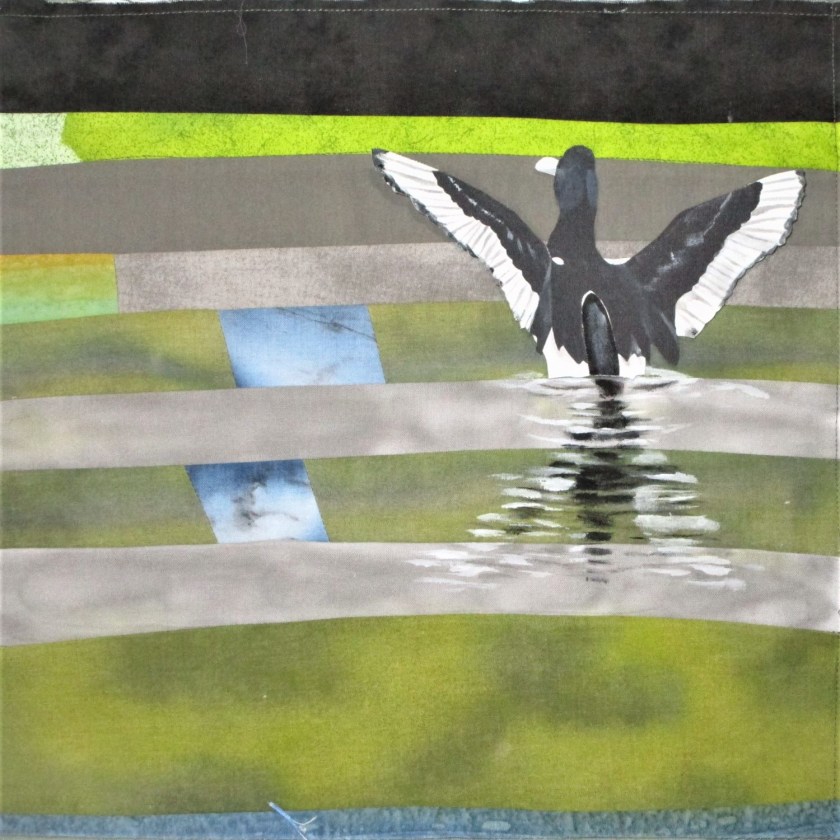
I put together an extra duck so I could practice painting his reflection.

I like the pose of this one.

The next step? Go to U-tube to watch some instructional videos on the confetti technique. I had done this already, but the second viewing helped me work up my confident. With the prepared fabric in hand, I applied fusible webbing to the backs and cut them up into pieces. For the next hour or so, I fiddled around with layout.

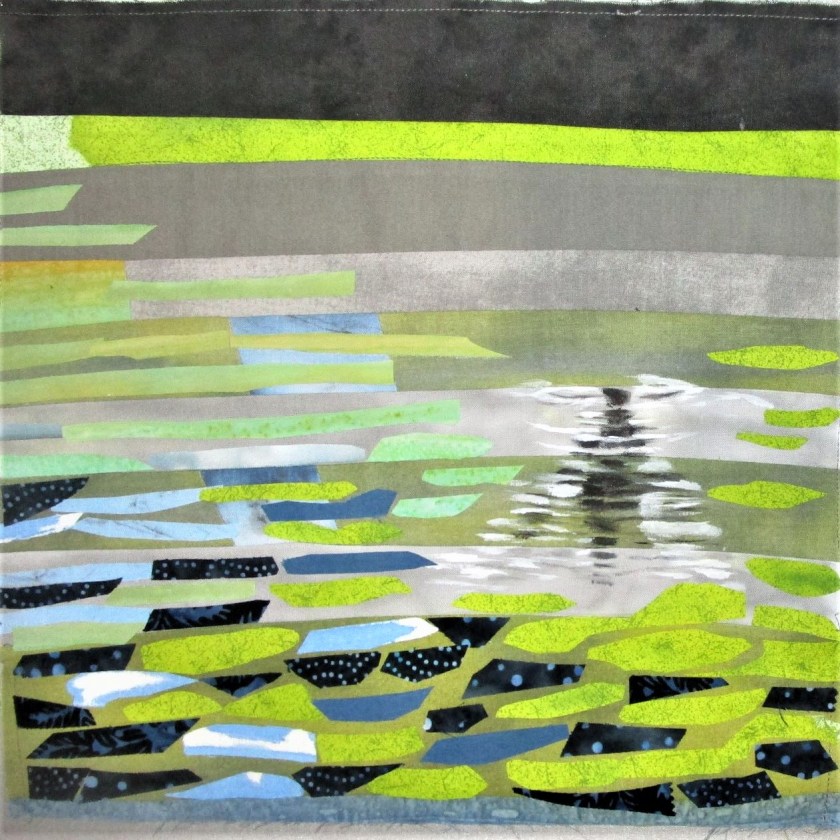
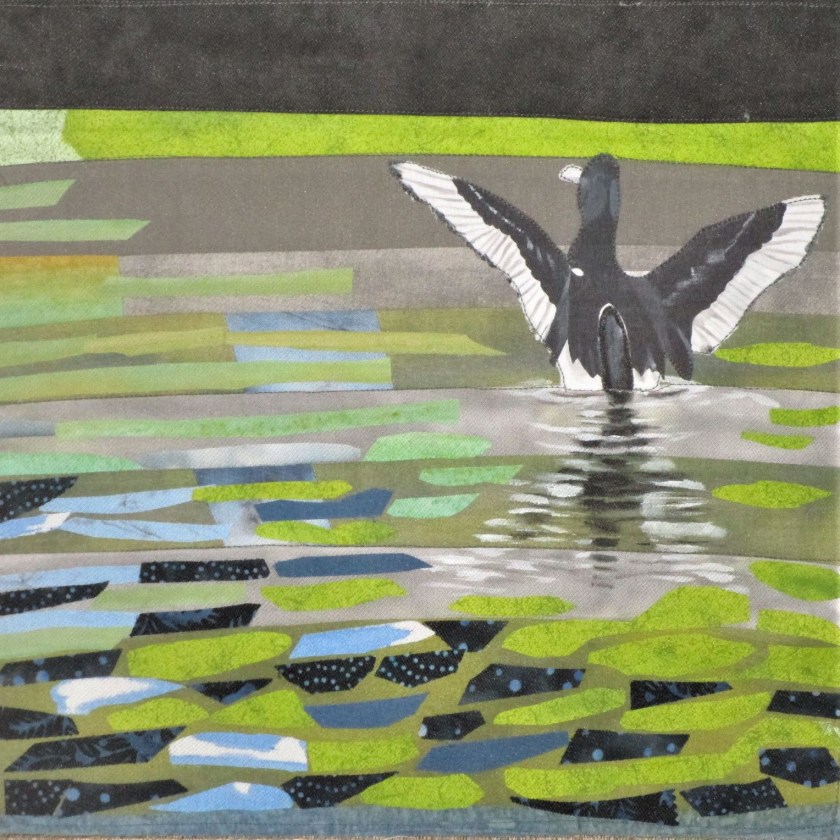
Practice block with reflection and confetti foreground.

Did I mention that the title of this work is “Duckweed?” I guess I forgot to say. When I was at the marsh, it was the duckweed that really caught my attention. It was growing about the pond profusely in an intensive shade of green. This is what I am attempting to depict with my confetti pieces.

I next fused the duck in place and stitched a piece of tulle over the whole sample. The purpose of the tulle is to make the quilting easier. Here is where I left off today:

I’m fairly happy with my work. But I want to try rendering the reflection in the confetti technique instead of paint. I also want to work on the shapes of the confetti pieces.

Posted in painting

Sitting on the Fence

……..about the fence.

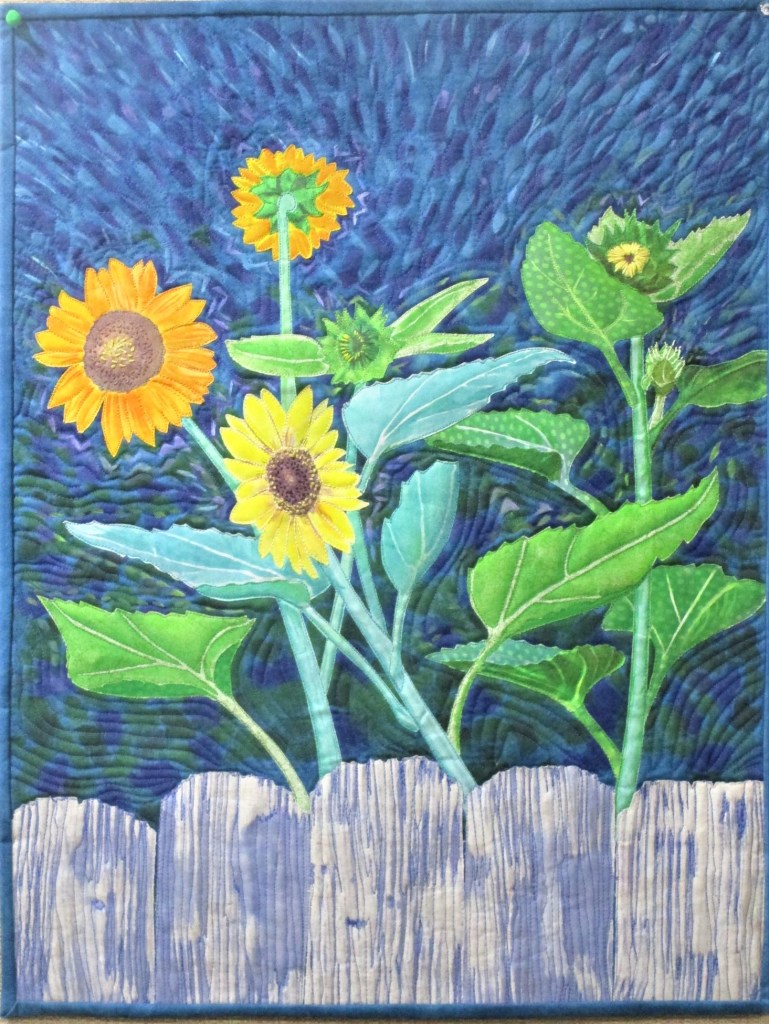
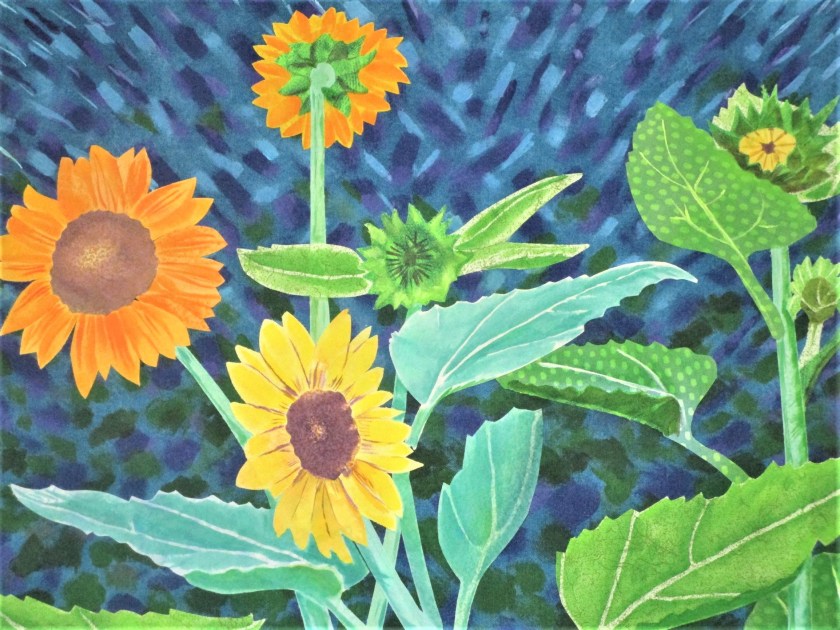
Today I finished painting the Van Gogh-ish sunflower scene.

Close of up the flowers.

I’m very happy with my work. I also applied a wash of paint on the fabric that will become the fence. But I’m just perplexed about whether the fence works with the rest of the piece. Here it is:

I like the texture – it’s quite true to the real thing. I even like the violet color. It’s the tone of the violet that I’m not sure of. And I don’t think the light tan base color works well with the rest of the palette.

There are a few options:

  1. Start over with new fabric. I have white and a white on white print that might work.
  2. Apply another light wash over this fabric. Since the paints are transparent, a cool shade of blue would blend with the background and make the violet areas look blue-purple.
  3. Stick with what I have and modify the fence color by painting highlights in an opaque paint and stitching texture with thread in colors that fit the palette.
  4. Omit the fence and let the sunflowers float on the background.

What do you think?