Posted in hand embroidery, knitting, painting

This Week’s Work – Branching out

In week three, The Artist’s Way has me focus on Recovering a Sense of Power. The words for focusing are Anger, Synchronicity and Shame. In Watercolor is for Everyone, the daily practice work seems to be mostly representational, as opposed to abstract.

I am also sharing my fiber work from this week. Let’s start with that.

Knitting: I’m a bit errant in not posting about my newest project. I’ve chosen a cowl design by Andrea Mowry. It’s super lovely.
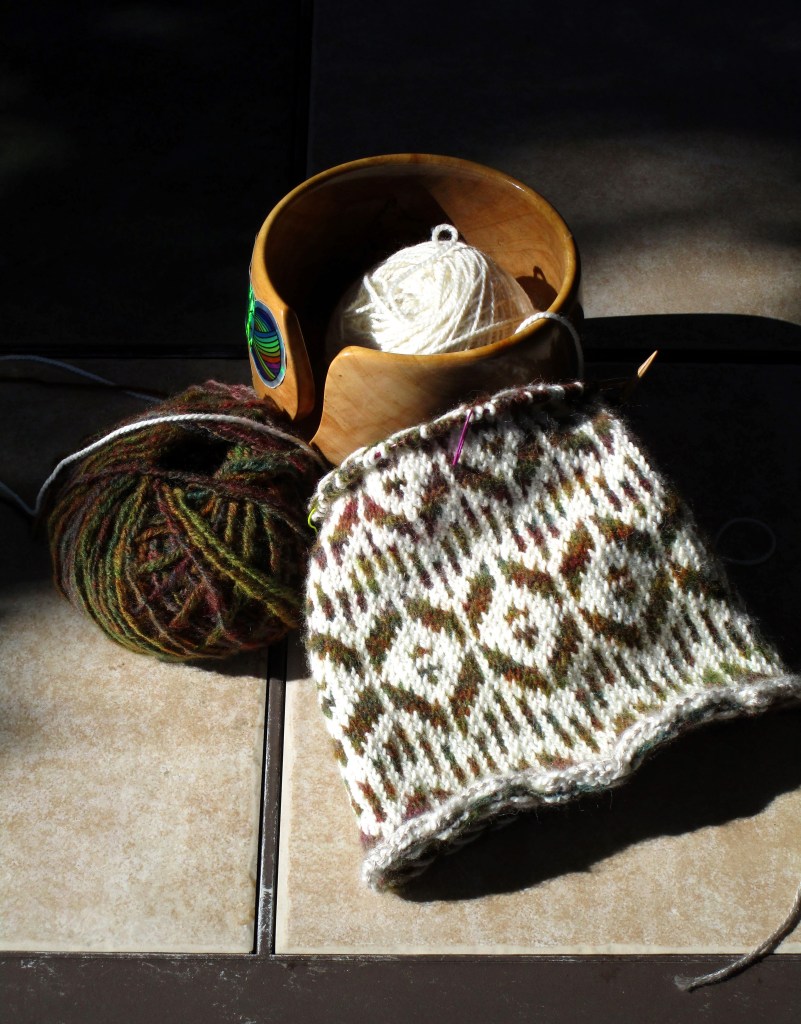
I’ll do a full post on this project next week.

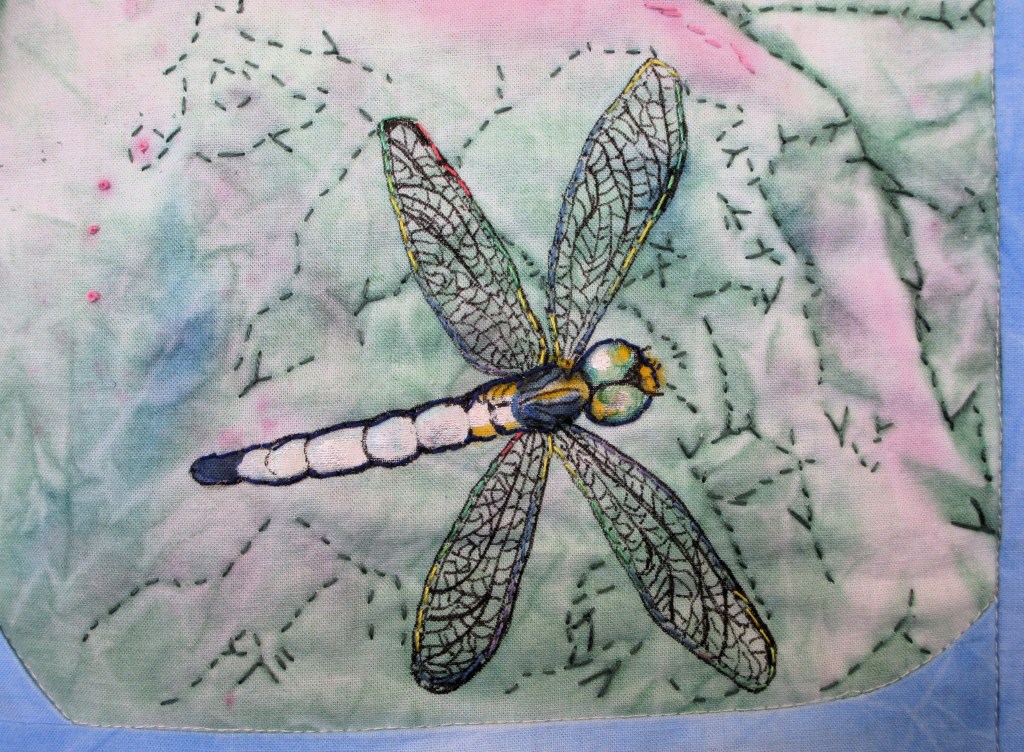
I have also returned to an art quilt that has been languishing since last year. I call it Here be Dragons. This week, I spent my evenings hand-quilting one of the panels.
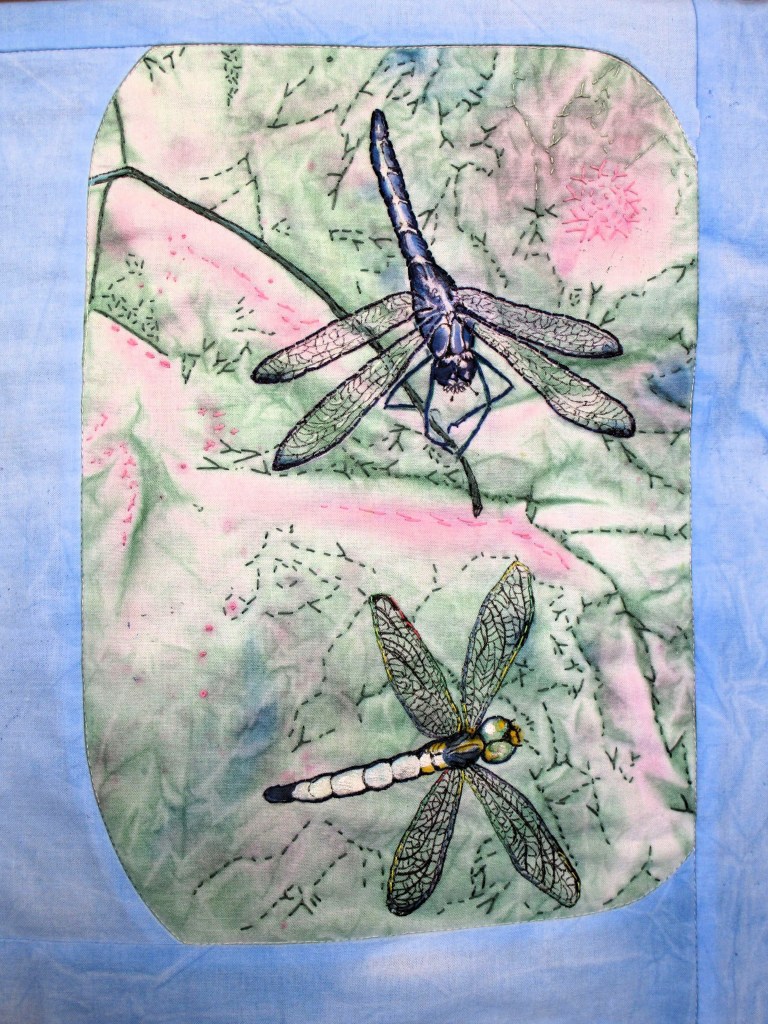
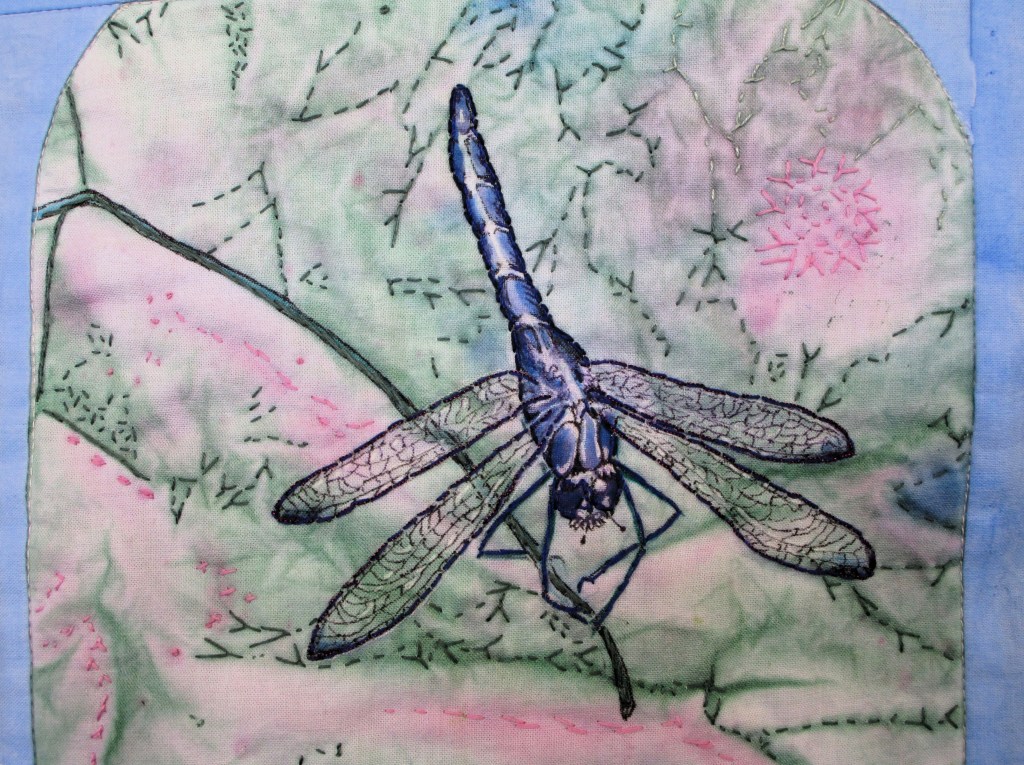
Bill’s photographs provided the reference for my dragonflies. The background and dragonflies were painted onto white cotton fabric with textile paint and micron pens. Next I embroidered detail on the dragonflies. The final step is to work embroidery stitches into the background as a way to marry together the three layers of the quilt. It is slow work, but I am determined to carry on and get this piece mounted and displayed before year end.

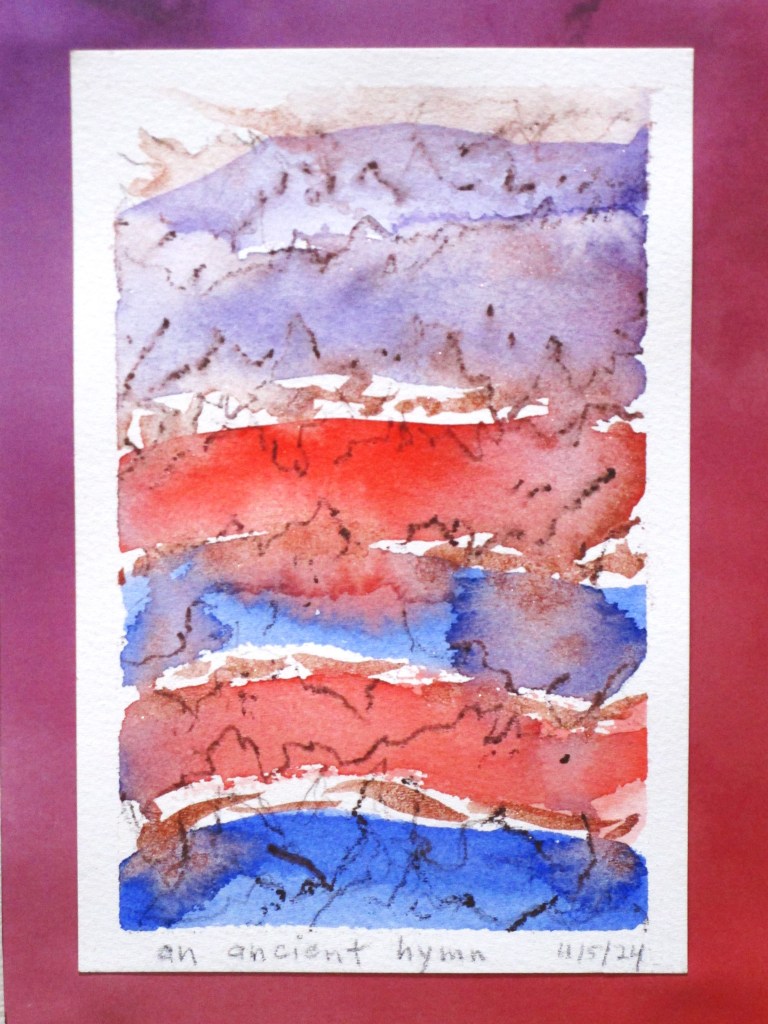
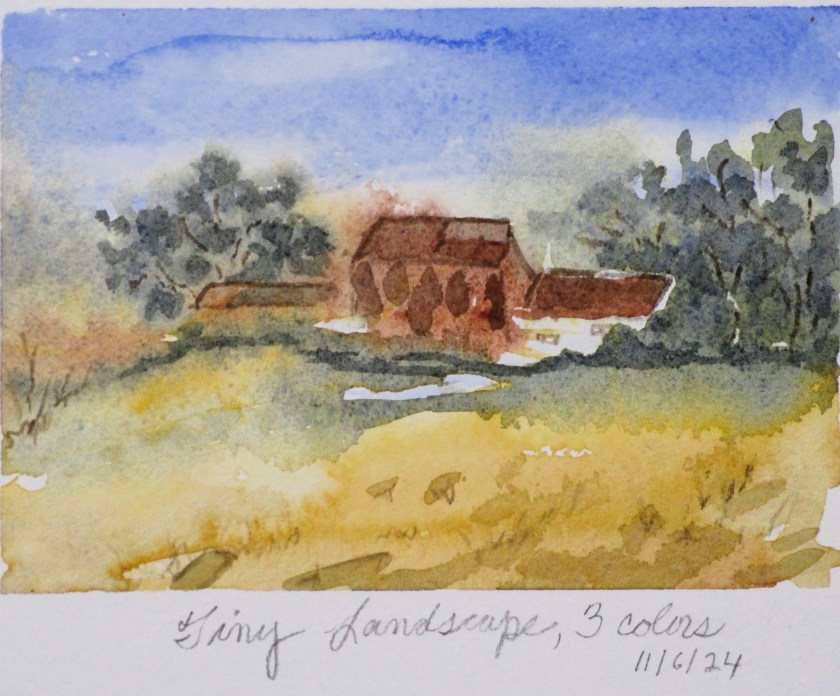
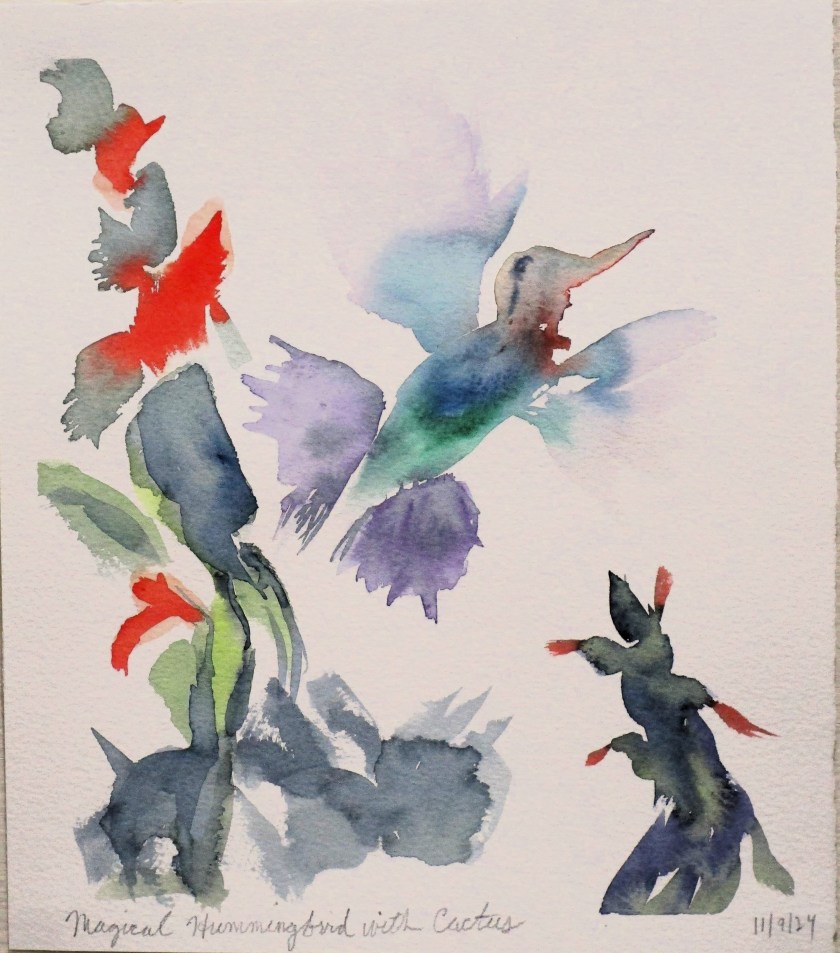
Here are the watercolor exercises completed this week.
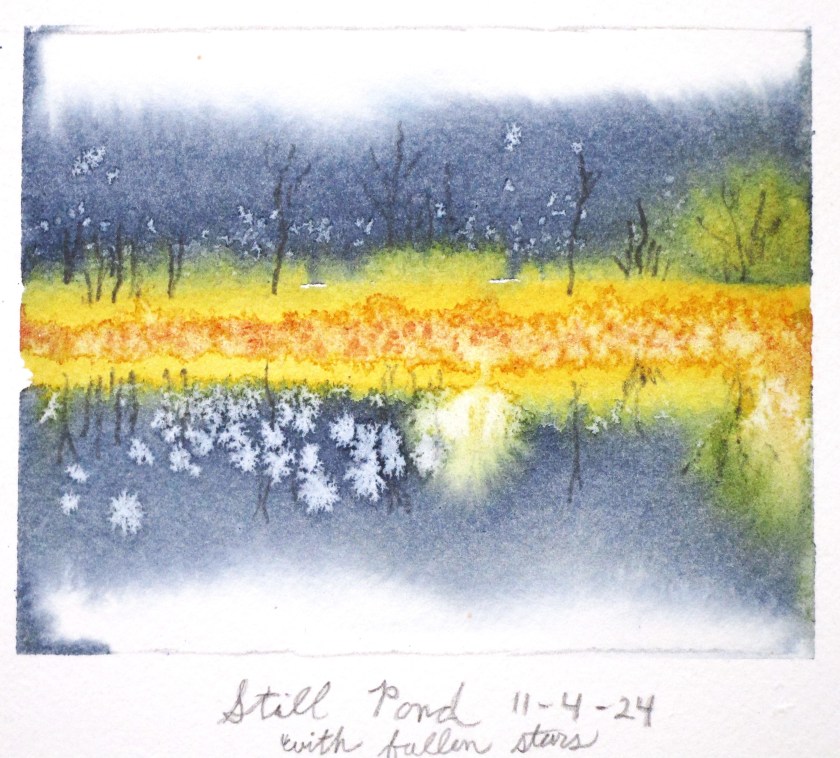
This little landscape was based on a photo I took of a Wisconsin farm.
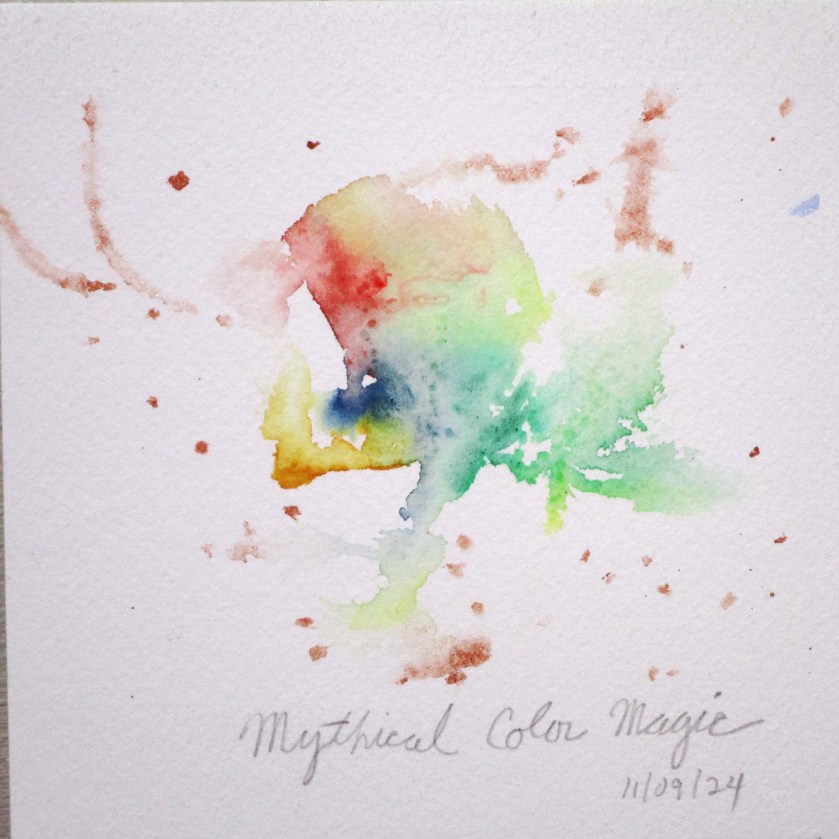
My magical hummingbird is inspired by Janet Weight-Reed’s beautiful hummingbird paintings. I used a photograph from this month’s National Geographic for reference.

Thank you for reading.

Posted in quilting

In Progress: Pieced Landscape Art Quilt

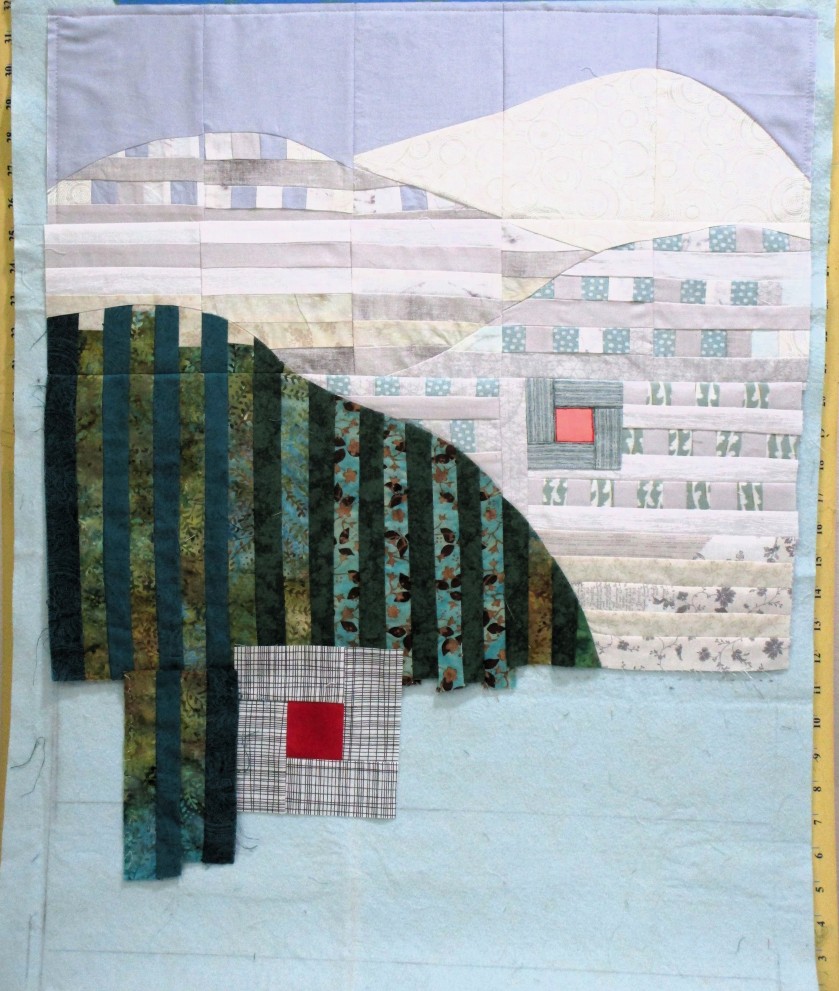
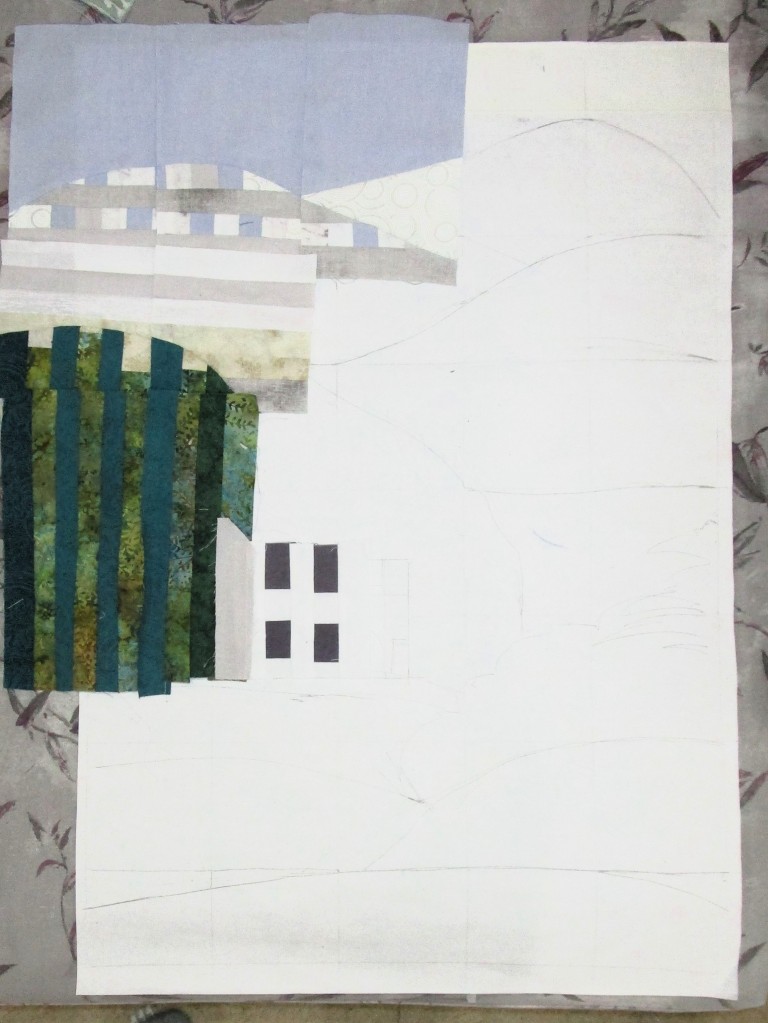
Today I’m catching up on the abstract landscape quilt that I started in mid-May:

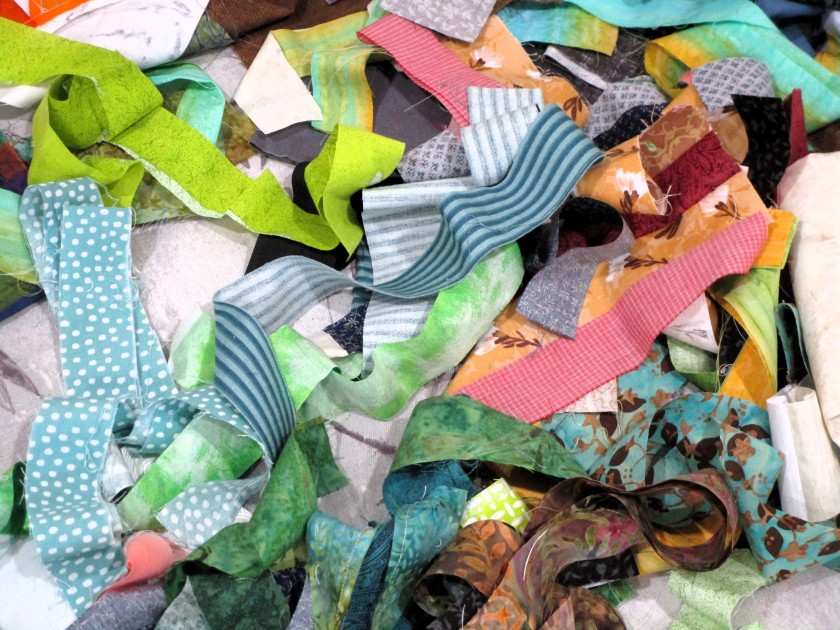
Obsessed by Strips

I would say nothing has changed, but I would be lying. During the planning phase, I started to think about Japanese quilts – most likely because I recently purchased two books on modern Japanese quilting by Susan Briscoe. She is a textile artist who worked in Japan for many years as an English teacher. In her book, Japanese Quilt Blocks to mix and match, she features 125 patchwork, applique and sashiko blocks in a modern style that is inspired by tradition. Textiles recycled from kimonos and other garments give the blocks an Asian look.

Consequently, I decided that my original plan was not abstract enough. I discarded the house block already constructed and made one using the Japanese block called Sunken Hearth.

In fact, I made two hearth blocks – one in bold colors for the middle ground and one in faded pastels for the background. This second block is located half-way up the mountain in the foggy part of the landscape.

I redrew the upper right corner of the design from clouds into a mountain. You could think of it as Mt. Fuji. The fabric is a white-on-white print of spirals, suggestive of clouds to me.

As of today, I am about 2 thirds finished with the piecing phase. I have completed four rows out of seven.

By the way, I have a new favorite tool:

This flexible flat-bottomed shape is a technical drawing tool that belongs to Bill. He got it back in his college days for a class. Using this tool, I can match up a long curve which crosses over two different blocks. I Love it.

One more Japanese touch will be added to the lower right corner. In the reference photograph, there is a group of red-twigged shrubs behind a stone wall. I plan to use the Pieced Ogi, aka Folding Fan, to abstract this feature.

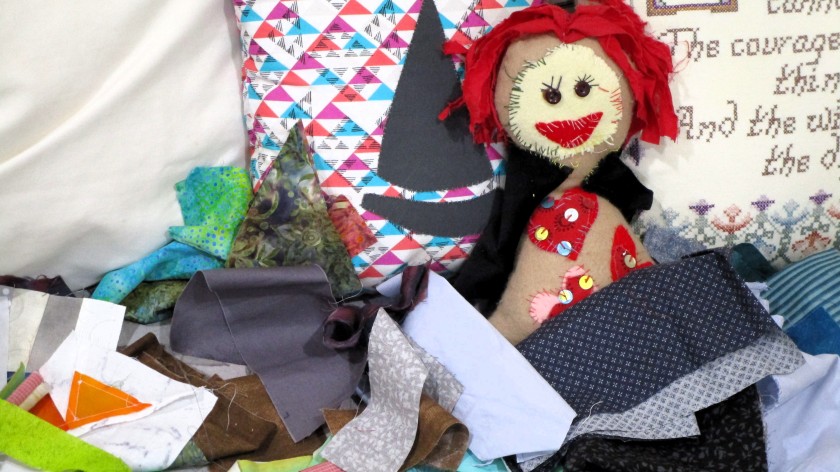
Are you making something from your scraps? Do share.

Posted in quilting

Obsessed with Strips

Since completing the Japanese Knot bag (which turned out quite well, IMHO,) I keep thinking about the potential of making art by sewing strips of fabric together. Casting around for some inspiration, I thought about making another abstracted landscape art quilt. Last year’s landscape quilt was inspired by a visit to the Badlands at Roosevelt National Park. My technique of choice for that piece was layered applique. It interests me to try another landscape but this time piece it with blocks made of fabric strips.

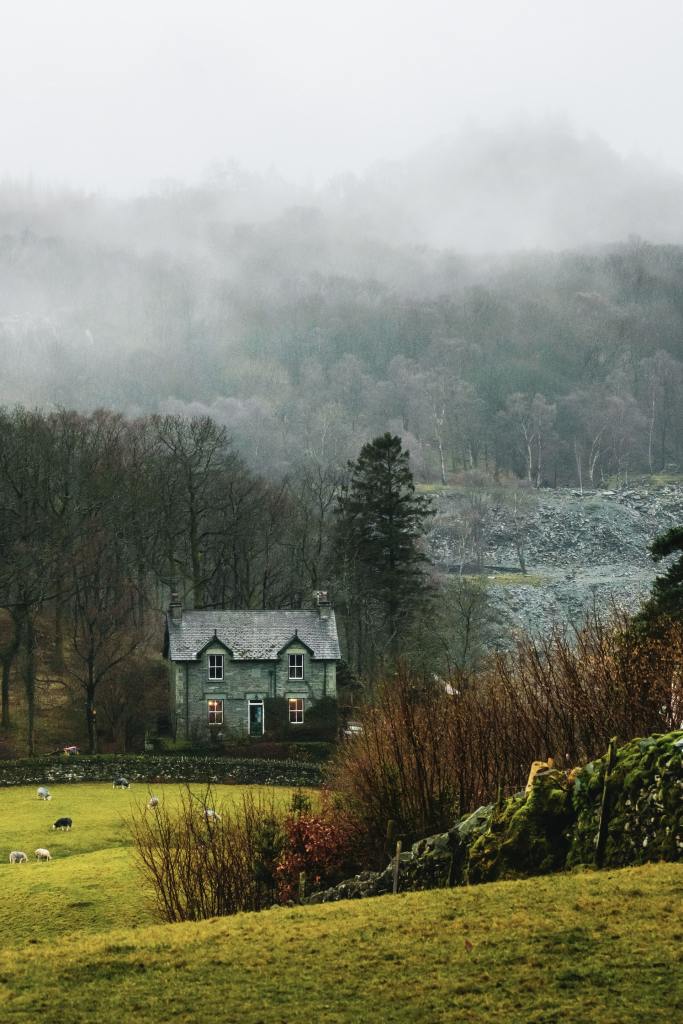
In searching suitable references, I returned to this evocative photograph by James Kemp which I had found on Unsplash a few years ago.

james-kemp-bXFEiuZtk64-unsplash

I love the contrast of pale foggy high places, with a midground of dark trees and a foreground of warm grasses and red twigs. If I can simplify the big shapes and translate the photo’s colors to fabric scraps, it could work.

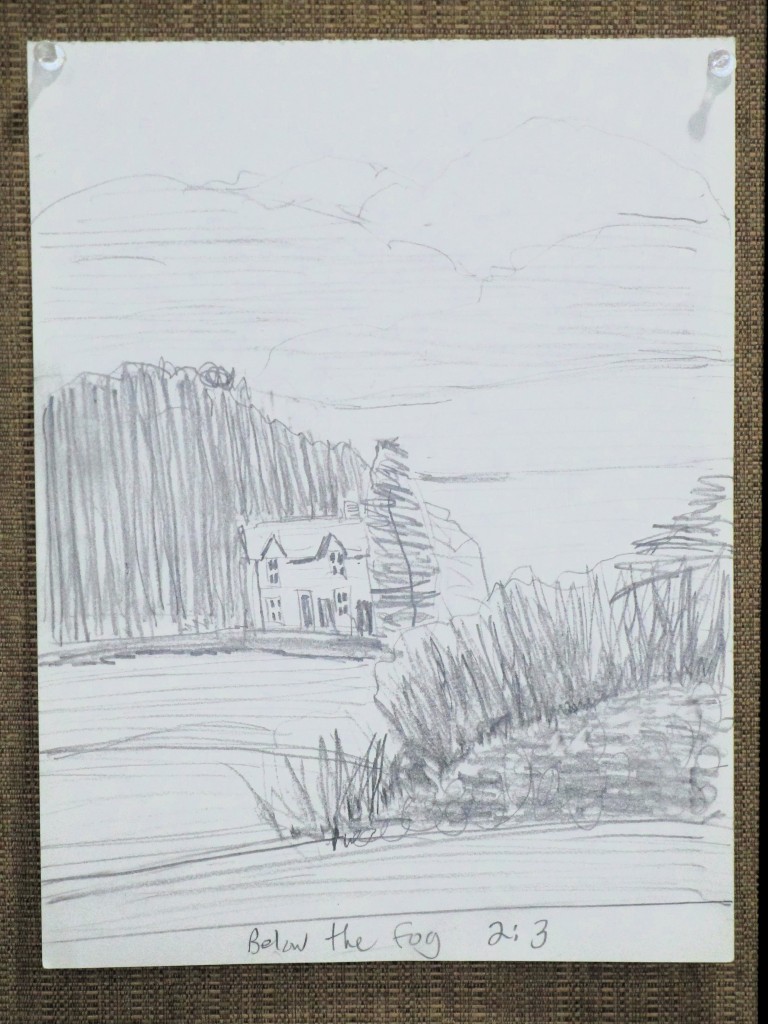
Next I did a quick, scribbly value sketch.

I transferred the major lines to a giant Post-It note, which happened to be full-size for this project. I next drew in a grid of 4 x 4 squares. Using 4 inch blocks, I will need to make 35 blocks.

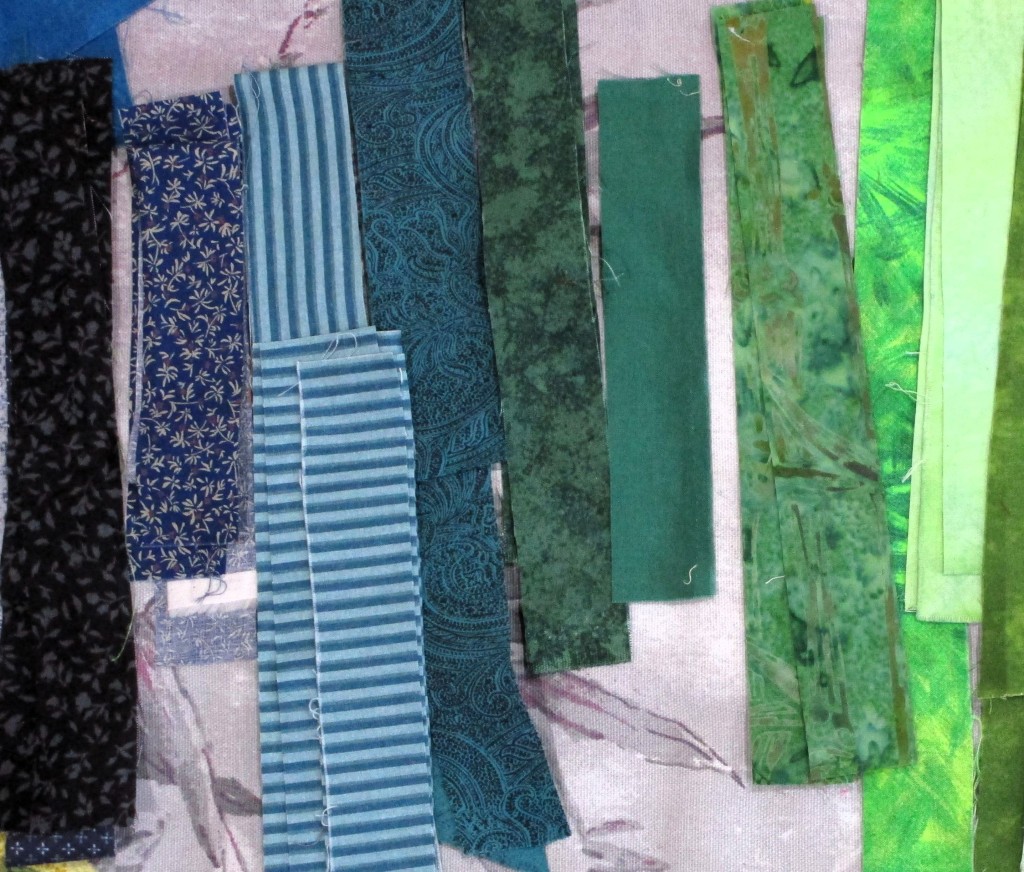
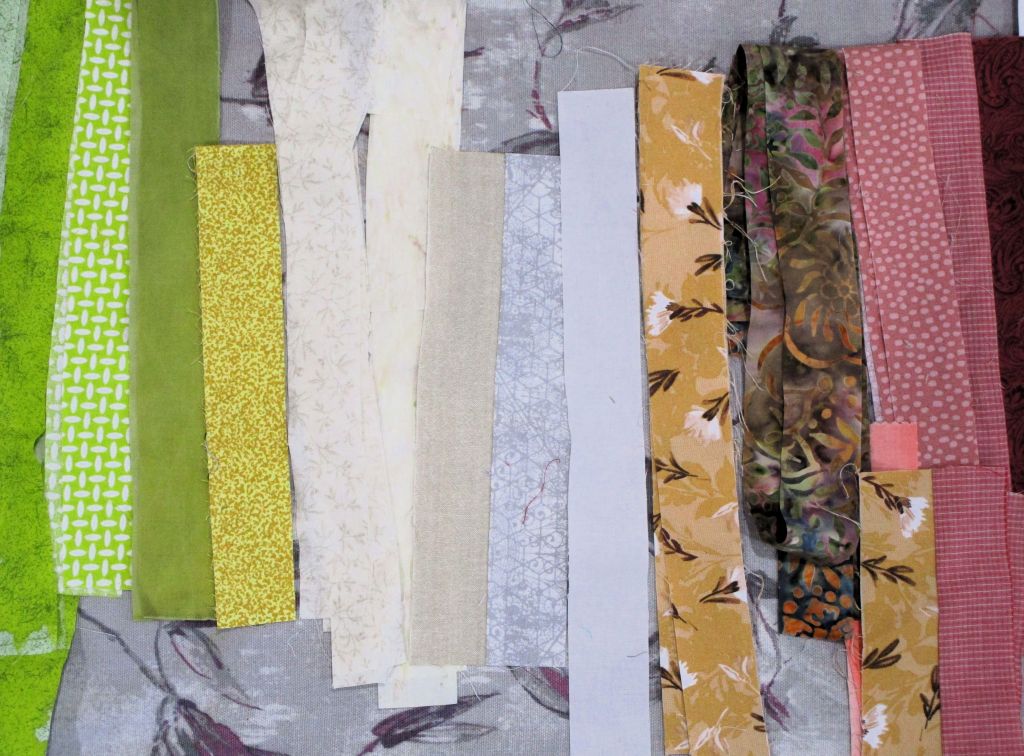
I started cutting my strips and sorting them by color.

Using the image as my guide, I built sets of six strips, arranged them along the grid and cut them down into squares.

The whole project started to spin out of control. Weirdly enough, instead of getting frustrated, I was drawn into working with more effort and thought.

Two days later, things looked something like this.

No, look away Nothing to see here!

Ah, more like this.

Sad little blocks. Believe me, it does look better IRL than in this photo.

I predict that if it keeps raining, and I can’t go outside and play, I’ll continue to cut, strip and sew on this project.

Posted in quilting, sewing

Here’s what came today

Earlier in the week, Quilting Gail had let me know that my name was randomly selected to receive a door prize for participating in this year’s Stay At Home Round Robin quilt challenge. I was thrilled to learn that the prize was Aurifil thread! Of all the gifts that were sponsored this year, the thread was the one I had my eyes on. I’ve been wanting to try this superior brand of thread for several months now, ever since a certain big box store discontinued offering its line of quilting thread – I’m pointing at you, Hobby Lobby!

The Necessities House Collection includes four neutral shades ranging from white to black. For piecing one’s quilt, this covers all the colors that one would need to get the job done. I can’t wait to try it out in my Bernina machine.

So here is my shout out to Gail and her cohorts for organizing the challenge.

And here’s my shout out to Aurifil for its generosity in sponsoring SAHRR 2024.

To see the quilt I made for the SAHRR 2024 challenge, click here.

Posted in quilting, recycling

SAHRR 2024 Finish: Migration World

This is the week that Quilting Gail has designated for challenge participants to post pictures of their finished quilts. The Stay At Home Round Robin challenge is in its fourth year. It’s been a fun ride for me, and pure pleasure to see the work of other quilters as they add a border week by week.

It started for me when I chose a center block from a group of experiments that I did almost five years ago. Back then I was teaching fiber arts to a group of home-schooled children. One week I had the students experiment with fabric paint on pieces of a cut-up sheet. The panel I used in my SAHRR came from the example I made, to show the students some of the possibilities of fabric paint.

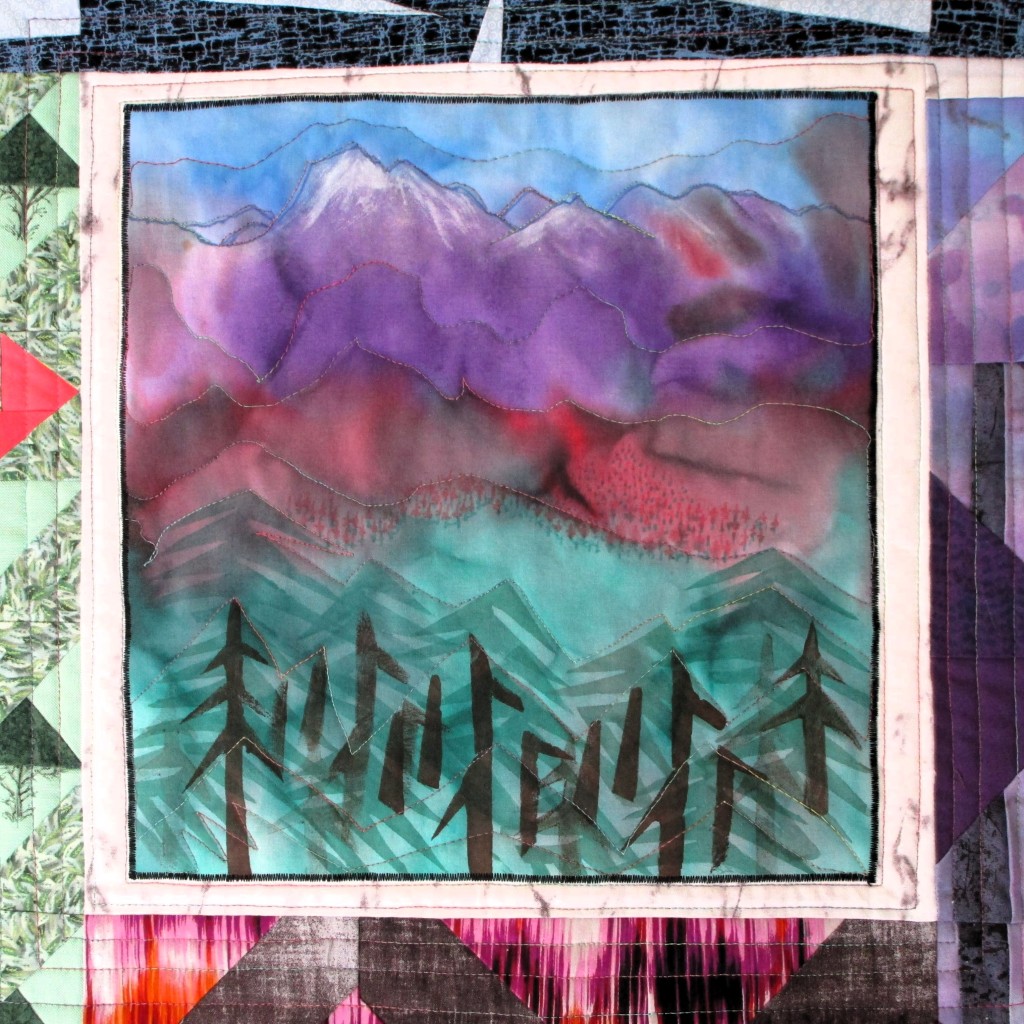
Four colors of paint were applied in bands horizontally across the fabric and allowed to bleed together. When the panel dried, it looked like a mountain scene to me. I enhanced the image with opaque white paint, paint pens and stencils of pine trees.

The painted panel set the color palette for my SAHRR.

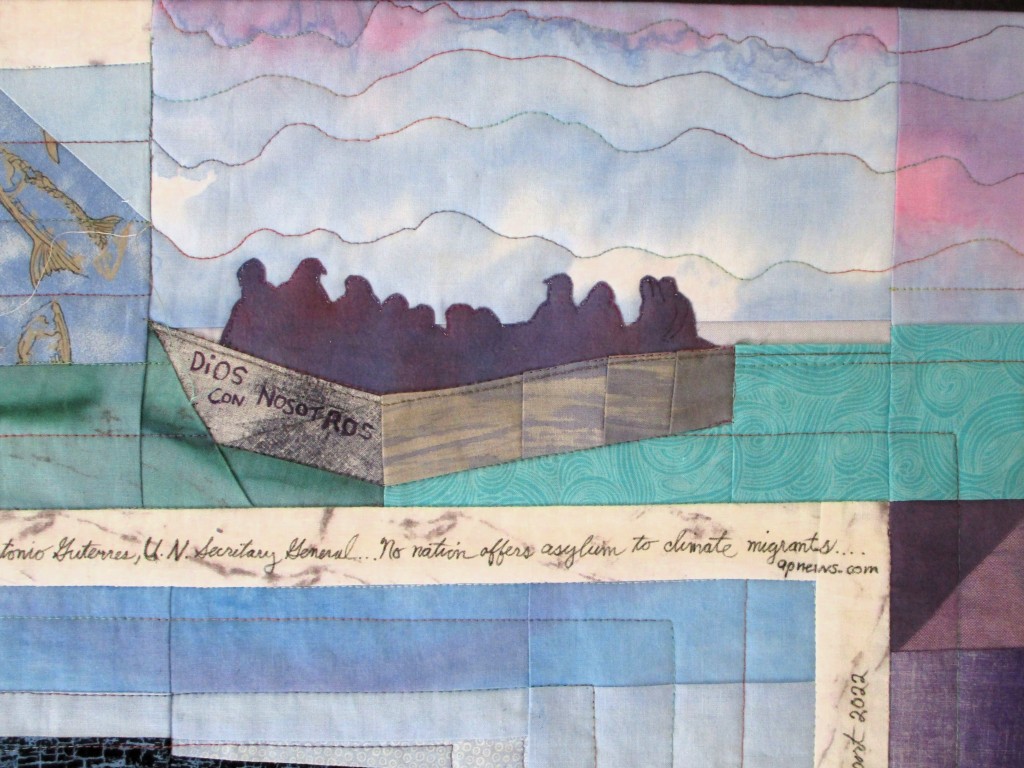
That choice led me on a path which resulted in a quilt about migration. For some time, I had been toying with designing and sewing paper pieced butterfly blocks. Could I make a quilt about the monarch annual migration to Mexico? The time I spent researching this migration led me to think about the wider issues of habitat loss and climate change. Now I had a broader story to tell with my quilt.

The weekly challenges offered by SAHRR quilters helped me to build some structure around my ideas. For that I am grateful.

Here are some close-ups of a few details I added with applique and micron pens.

And here is my finished quilt:

Just a word about the materials used: I was determined to buy nothing for this project, making it entirely with stuff that I already owned. I mentioned the cut-up sheet. In addition, I recycled pieces of clothing such as dresses and men’s shirts. The main fabric, which was used as sashing, was also divided up and painted various colors to carry it into most of the borders. Ultimately, I did have to buy a few quarter yards of black patterned fabric and the quilt’s batting.

Thank you to organizer Quilting Gail and her fellow designers who put together this year’s SAHRR challenge. You can find their work here:

And to see the finished quilts, follow this link.

https://fresh.inlinkz.com/party/7eab5849658e4307bf5cfcff8e69c998