
Celebrating the 49th anniversary of the first Earth Day. Perhaps if we listened more often and more closely, we would figure out a way to save our planet.
Celebrating the 49th anniversary of the first Earth Day. Perhaps if we listened more often and more closely, we would figure out a way to save our planet.


In the traditional prayer flag arrangement, the flags are laid out in a specific order from left to right. Five colors represent the five elements The first is blue. It represents the sky and space. My blue prayer is in gratitude for the orbs of the sky: the sun and the moon. This piece is made with applique on dyed muslin, machine embroidered, stenciled and marked.

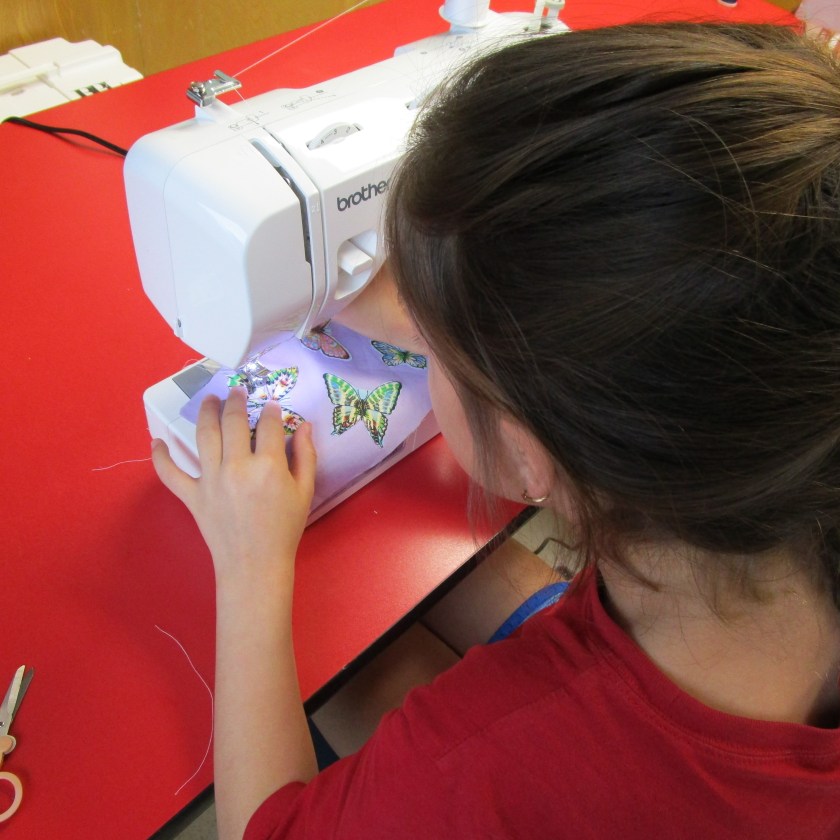
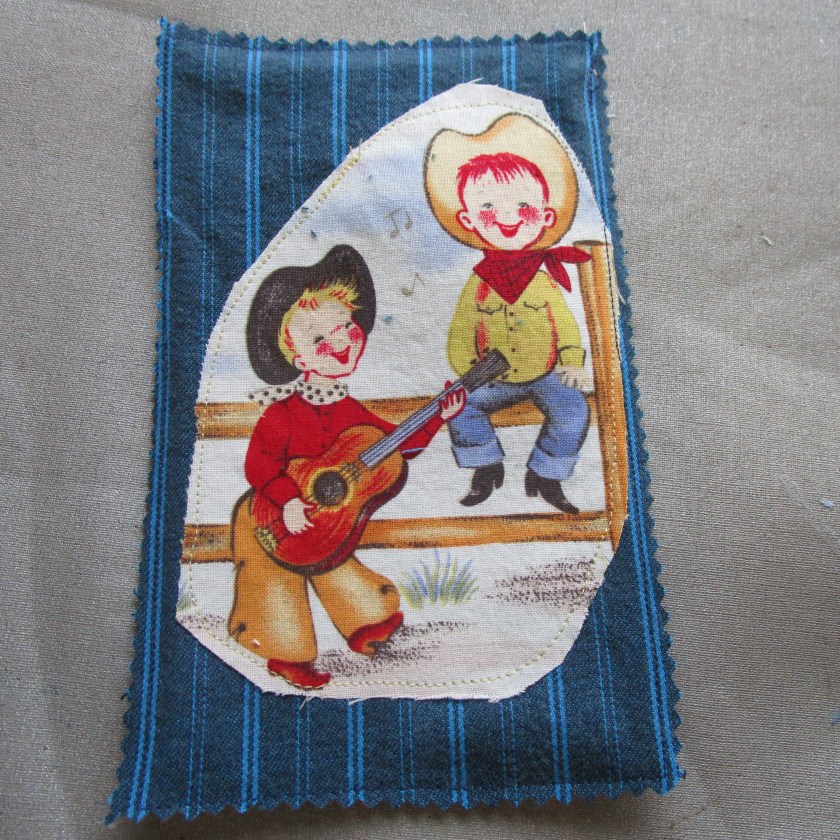
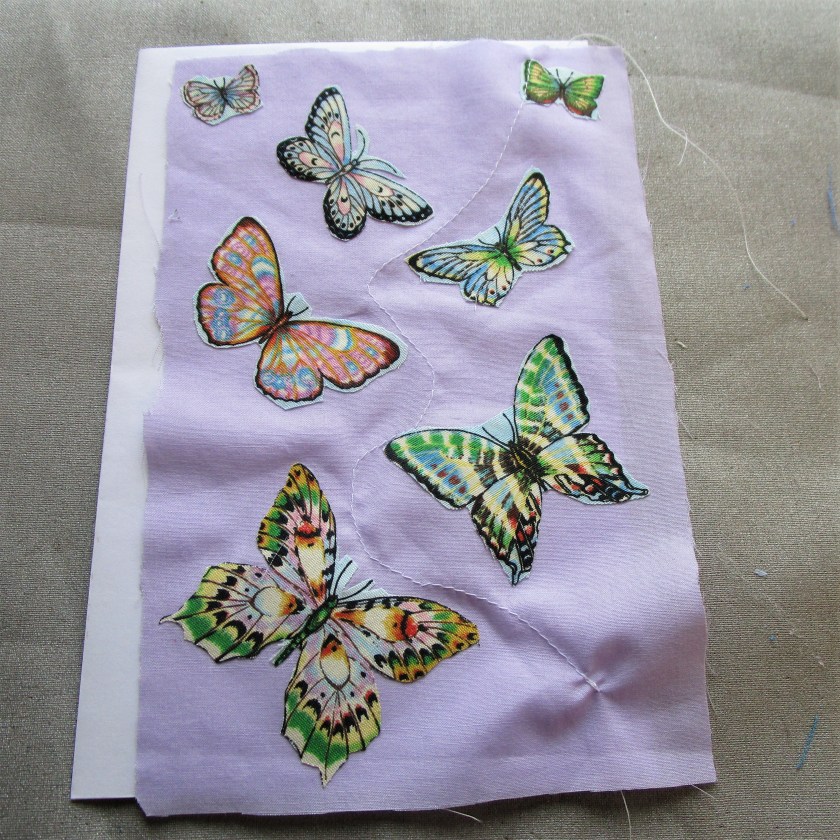
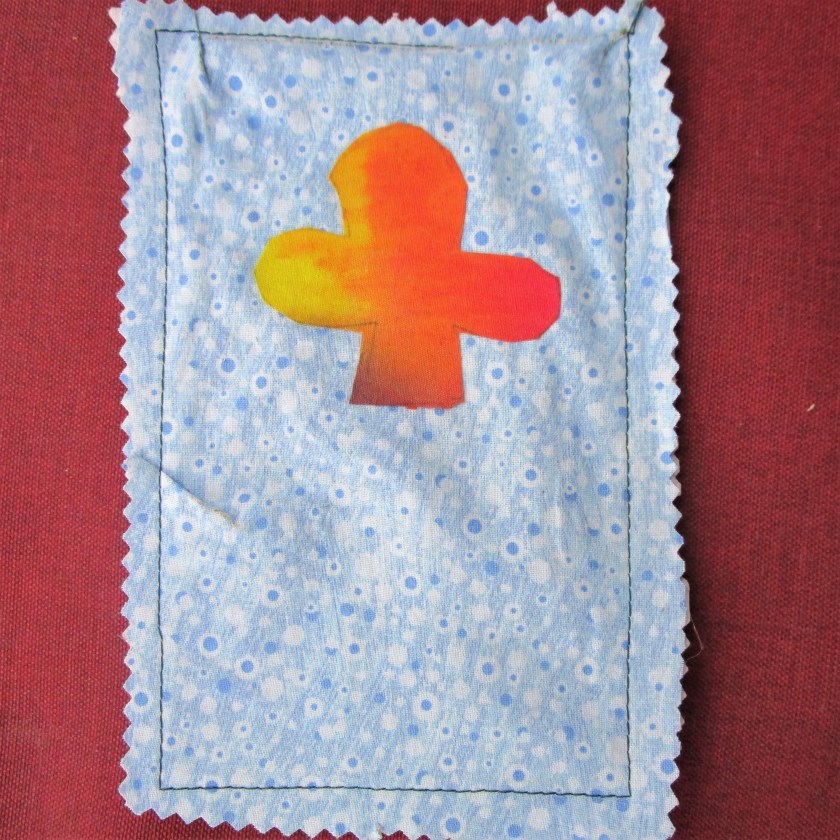

Today’s fiber object is motivated by necessity, not just fun. You see, last week I started my fiber arts students on machine sewing. They all seemed to love it. This week, I promised a project using the machine to sew applique. “What’s applique?” they all asked. After puzzling over what type of project to introduce, I took a page from my own playbook and settled on making greeting cards. This is a cross between the seed packet project and the paper woven letter project.
MATERIALS: 2 or 3 colors of cotton fabrics, Wonder Under fusible web, medium weight fabric stabilizer, ( I used Pellon) thread, fabric pen or Sharpie, card envelope.
Measure and cut background fabric and Pellon to be the same size as the envelope. Set these aside. Choose a shape or pattern for your applied design. I chose to make a tulip in a pot, because I had some flower patterned fabric. Cut pieces of Wonder Under about the size of your pattern shapes. Draw your shapes on the smooth side of the web if you are not using an image on the fabric. Position the smooth size of the Wonder Under up, and press it on the wrong side of your patterned fabrics pieces.

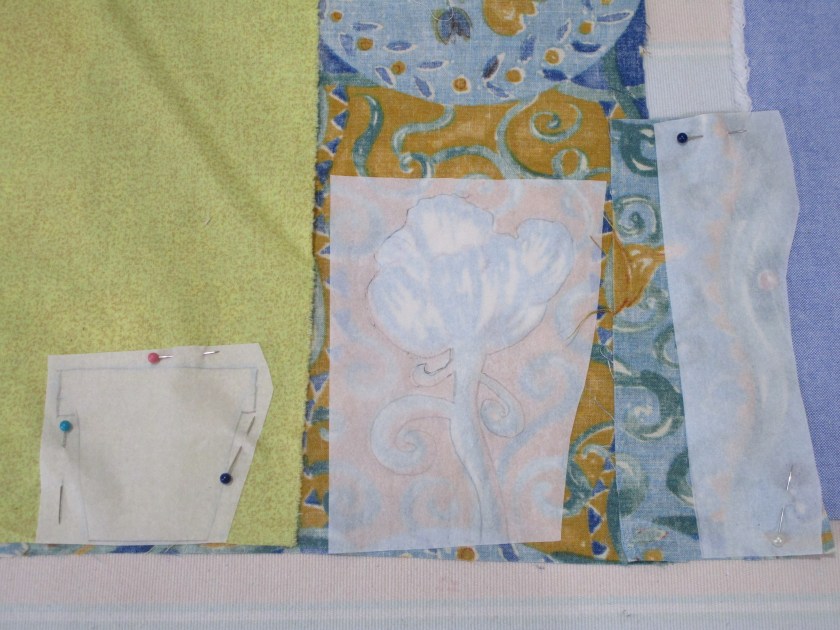

Cut out the shapes. Pull off the paper backing so that the adhesive is exposed. Arrange your shapes onto your background fabric and press in place.


Stitch around the shapes of your design with a straight stitch, using matching or contrasting thread. Pin the Pellon to the back of the piece. Stitch around all the edges with a 1/2 inch seam allowance. Trim the edges with pinking shears to within 1/4 inch of the edge stitching.


Your card is ready for your message. Write on the back side. Use an ultra-fine Sharpie to write a nice long letter, or use colored markers to print a short wish.
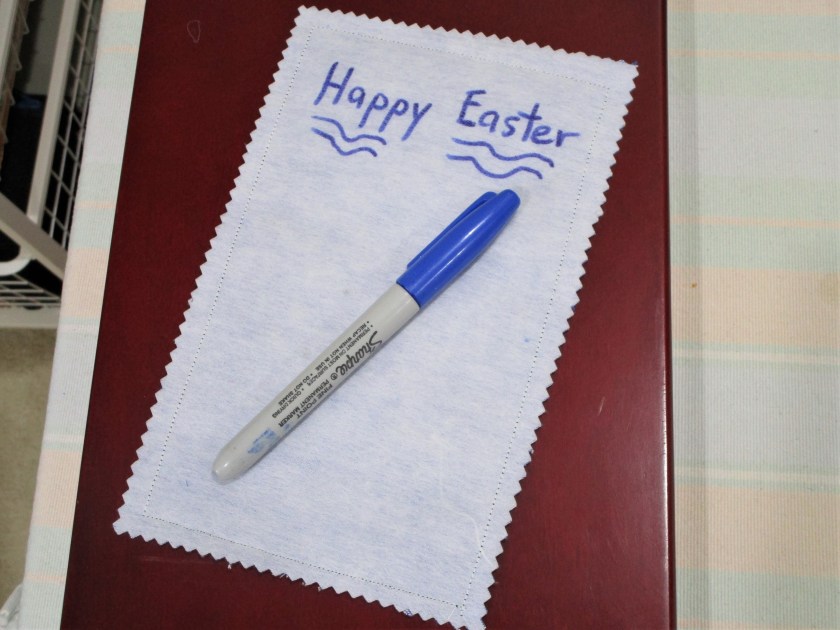
All done and ready to mail.


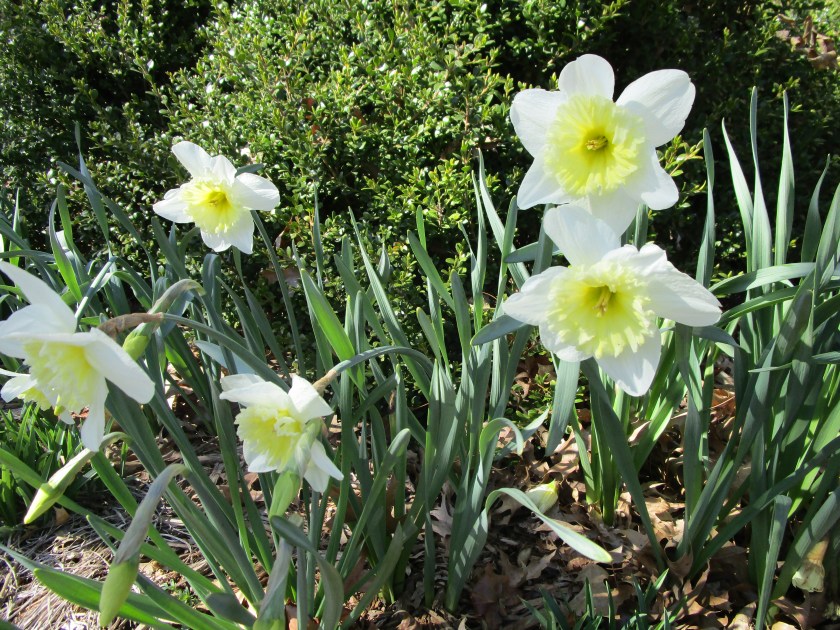
While we were away from home, spring fully arrived. Once the daffodils open up, it’s time to think about gardening. I love spring, and I love planting. To me, it’s about beginnings. The garden offers many inspirations for working with fiber. Heck, nearly all fibrous things that I know of started out as plants!
For today’s project, I wanted to draw from the imagery of the old-timey seed packet. Here is a fairly simple example that might have been sold 70 or 80 years ago:

I really like the slightly ornate lines drawn around the edges of the packet. I’ll be turning again to the Bernina to come up with my version.
First I made a basic drawing of the center image,

traced the parts, and cut the tracing into pattern pieces. These were pinned onto red and green fabric and cut out. The backdrop is a piece of cotton bed sheet. The pieces were attached to the backdrop with fusible webbing.

Next I used satin stitch to outline the tomato parts and secure the rough edges of the fabric. I added the label (Burts Seeds.) To render the filigreed edging of the original image, I used an embroidery stitch which resembles ivy.

Perhaps tomorrow I will plant some seeds from a real packet.

 Daily Fiber