Posted in painting

Crayola Fun

For the past week, my head has been buried in this project:
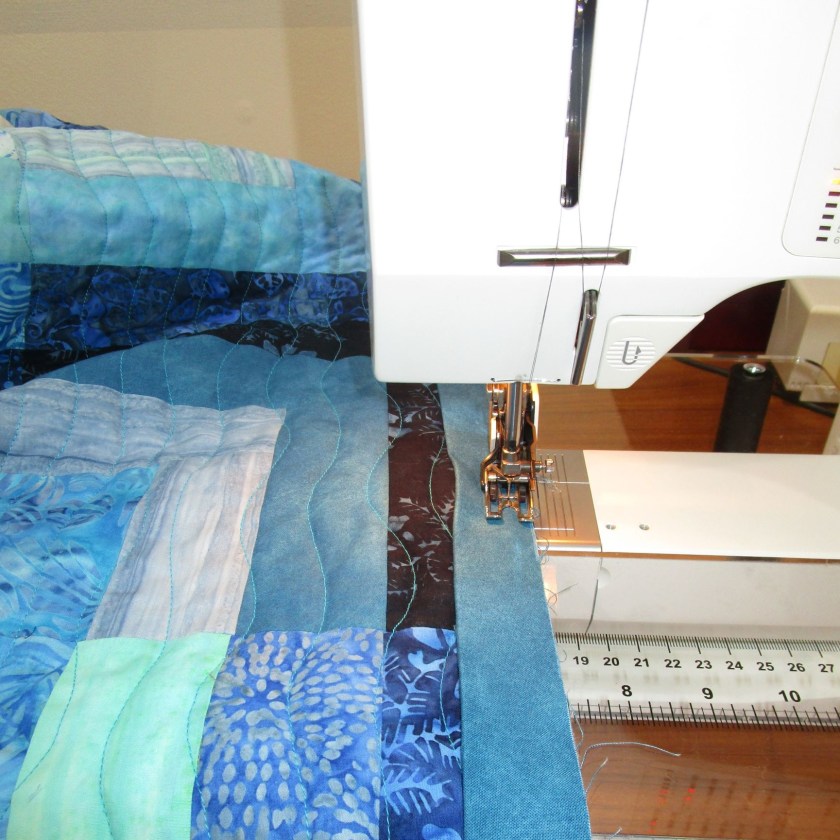
Under the Sea Quilt – applying binding

Well, today I finally finished it. The big reveal will happen on Friday. You will have to check my post then if you want to see final pictures. As a little break from all the sewing, I took inspiration from Jennell Willey, of “In the Artroom” Check out her blog about using crayons with water color paint as a form of resist.

https://wordpress.com/read/feeds/104869669/posts/2887562195

Because I have been watching hummingbirds whiz back and forth in my backyard, I decided to feature one in this little warm-up exercise. She is approaching a group of tumbling down trumpet vine blossoms.

Next comes a wash of color. I chose turquoise, orange, yellow and blue, to pick up on the crayons I used in the drawing.

A little splatter won’t hurt this painting.

After it was mostly dry, I added a bit of darker green to outline the vines.

And here is the finished painting, dried and with tape removed.
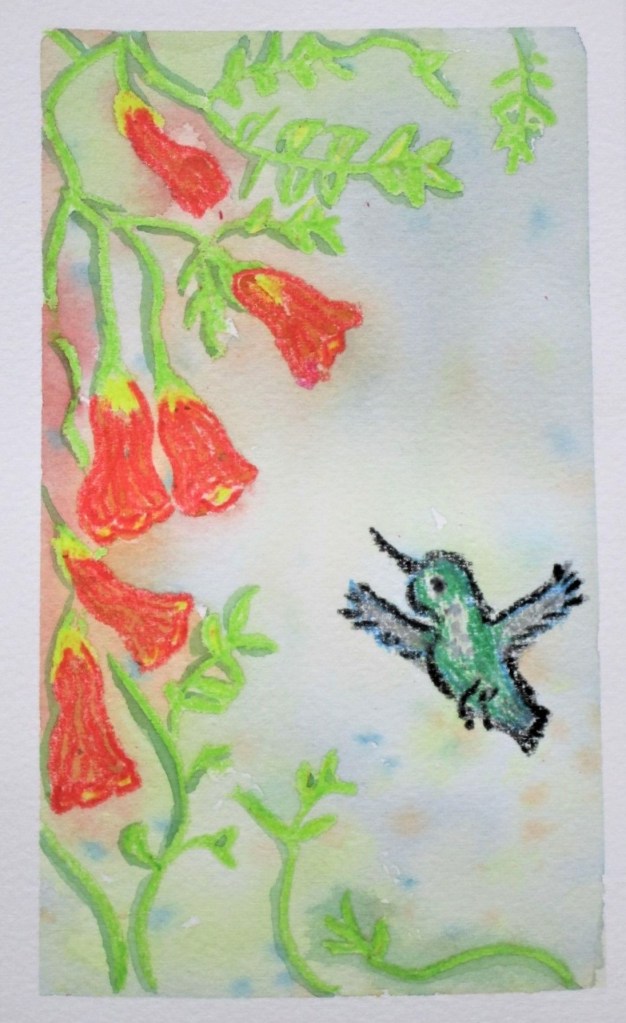
It took all of twenty minutes to make and was very relaxing. If I wanted to explore this technique further, I would sharpen my crayons a bit to get a more precise line. This would be a great technique to use in making greeting cards.

Posted in painting

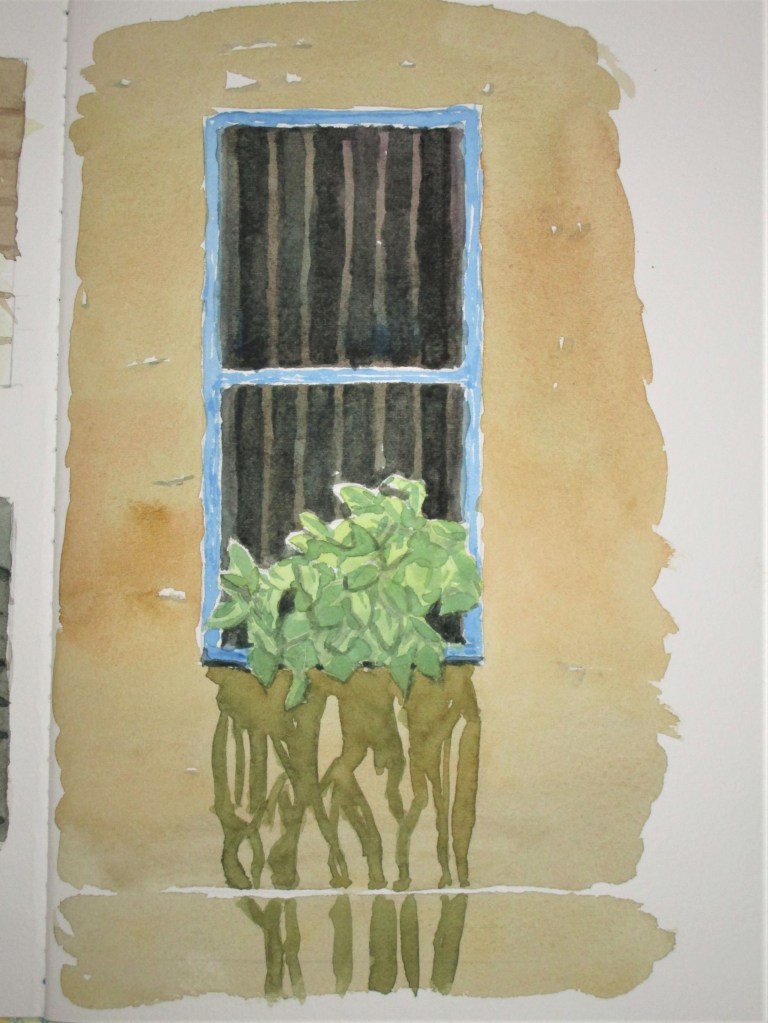
Structure in the Garden

This blog is about my first watercolor on-line tutorial from Shari Blaukopf. She is a Montreal-based artist who specializes in urban sketching. First let me say, I enjoyed it. The reference photo is of a barn wood clad schoolhouse relocated to an urban garden somewhere in the Pacific Northwest.

My first challenge was to draw and ink the essential lines of the image. I took my time over this step, since it is critical in setting up the rest of the painting.

By the way, I’m working on Arches cold-press watercolor paper for the first time. This premier paper is much beloved by watercolorists.

Next I completed the preliminary washes for the sky, building and flowers.

After letting these dry thoroughly, I went to work on the shrubbery and trees. Shari gave instructions on how to mix eight different greens using various blue and yellow paint. This part was really hard for me, partly because I didn’t have all of the paints that she used in her mixes. I had to substitute.

To me, the various green areas look like they don’t belong together.

I let the paper dry for almost a week before I got around to adding the final details. First the lawn went in, then dark green for underpainting the brighter greens. The barn wood got more shading before all final details were added using a small round brush. After drying, I dabbed some white opaque paint onto the flowers to give a little sparkle to the scene. Here is my finished painting.

This is the first time I successfully painted a mass of foliage. I also learned how to paint a lawn and the order to use in painting flowering plants. I’m betting that I will use these techniques in many future paintings.

Shari Blaukopf’s blog is found here:

Posted in knitting

Sock Saga

This story may sound like whining, but it’s not my intent. It’s more like a true confession. You see a beautiful sock in this picture. The dirty truth is that it took me three tries to get this one sock knitted.

The yarn is a cashmere blend by KnitPicks which I acquired to make my husband a pair of luxury socks. Incredibly soft and delightful to work. I started knitting with great enthusiasm and high hopes.

Instead of using the tried and true Woodman’s sock pattern by EZ, I wanted to get “a little fancy”. So I chose an interesting – and free – pattern off the internet. It featured a sort of herringbone stitch on the cuff and instep which rolled beautifully around the foot.

Almost immediately I ran into trouble. The pattern was described as suitable for both women and men and was offered in four sizes. I started knitting the medium size but quickly discovered it was going to be too small. So I frogged it back. After measuring around the widest part of hubby’s foot, I cast on the largest size and tried again. It took me forever to knit to the end of the gusset.

The resulting sock was enormous. When tried on hubby’s foot, it draped itself loosely around his instep. Clearly I needed to start over – again. It was painful to frog it, especially as I had already spent a few weeks on the project. But I did. Afterward I trashed the fancy pattern.

Okay. Let’s start right. I went up a needle size and got gauge for a generic medium size men’s sock. Then I modified the Woodman’s sock pattern to suit a fingering weight yarn. Within a few days I was ready to try this on hubby again.

Perfect fit.

Elizabeth Zimmerman Woodman’s sock is written for worsted weight yarn. It was originally published in 1963 as a newsletter. Now you can find it in The Opinionated Knitter, published by Schoolhouse Press.

https://www.schoolhousepress.com/books.html

Posted in quilting

Under the Sea Progress Update

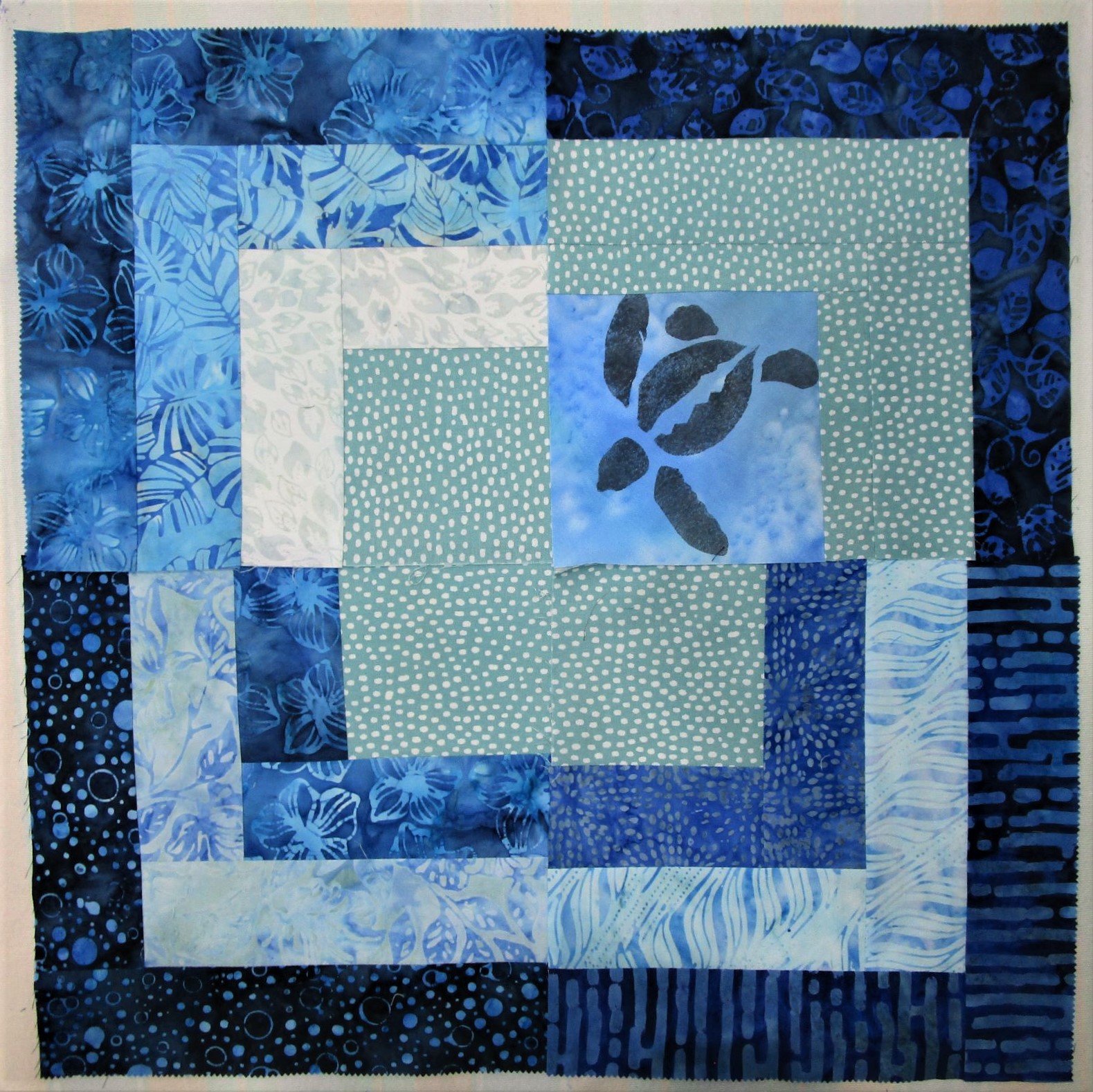
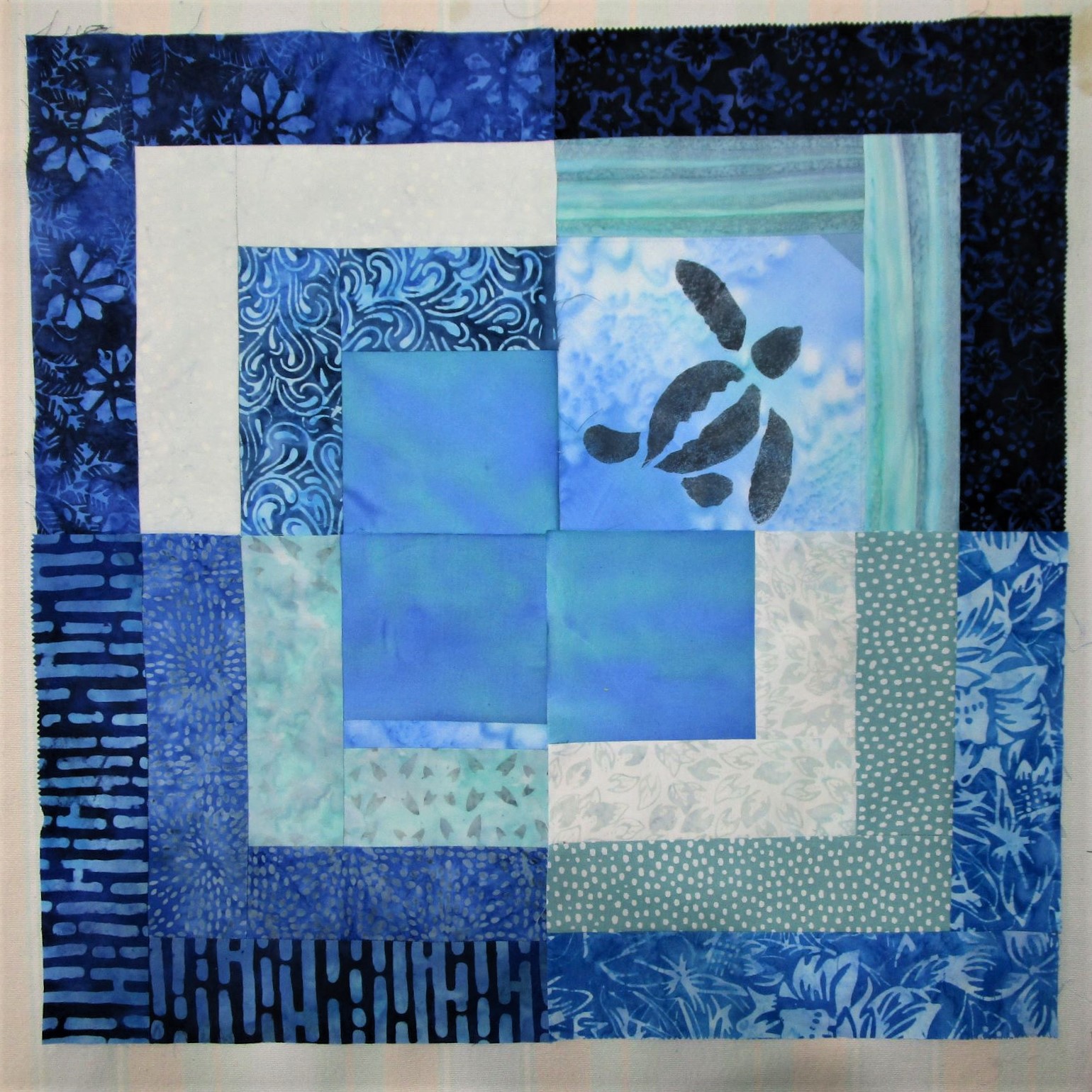
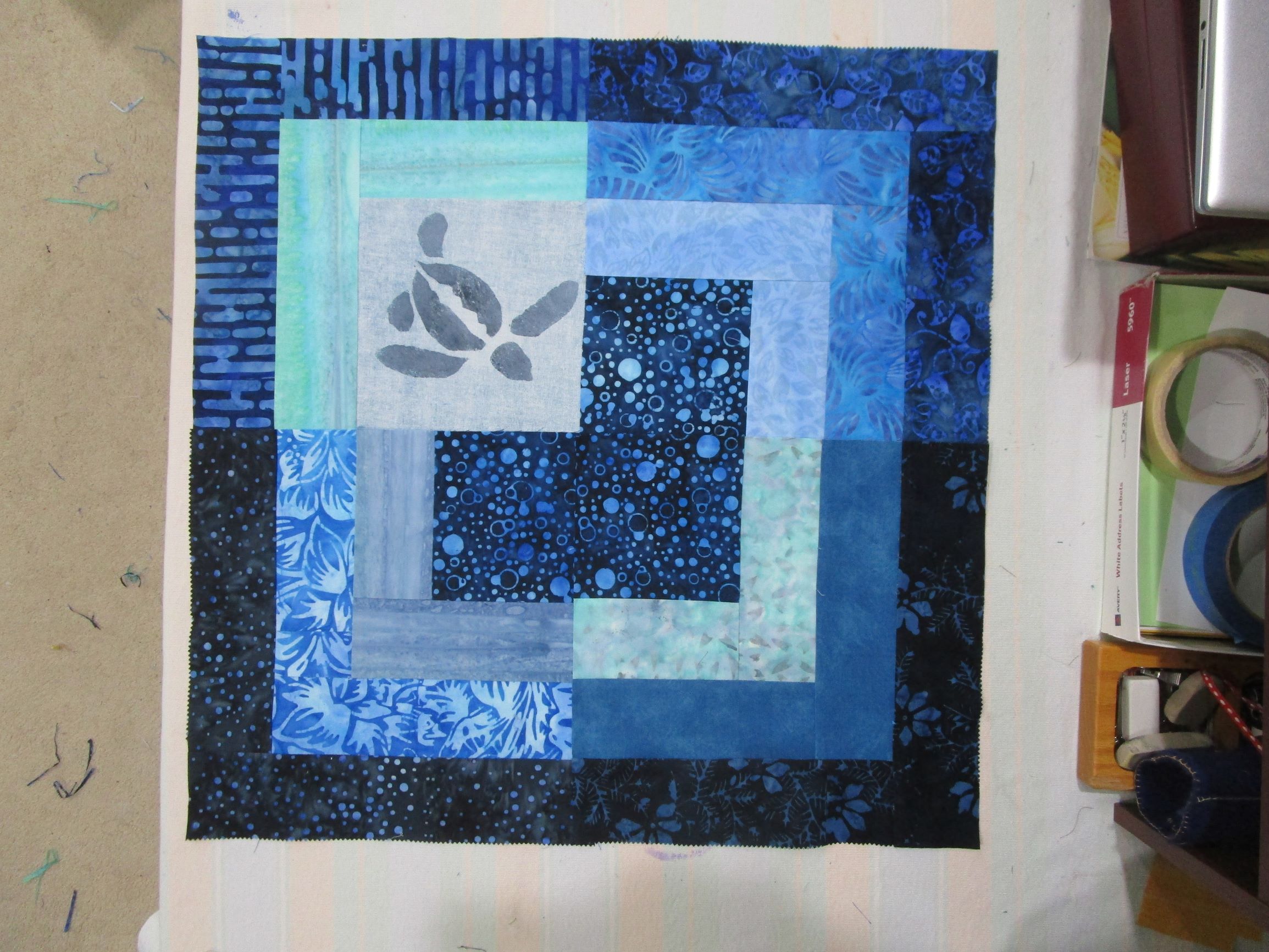
Today I finished assembling all of the log cabin blocks for Under the Sea quilt. While arranging the blocks in groups, I quickly realized that my original plan did not serve the overall design. So I switched to a layout in which each group of four blocks is rotated with the center squares touching. Now I have ten groups surrounding a central panel with the large sea turtle in the middle. Here is an overhead view.

This image excludes the top three groups. I couldn’t fit it all into the photo.

I’ve had so much fun coming up with images of underwater creatures. Ultimately, I decided to make my focus life found on a coral reef. Here is the center panel with some tropical fish, big and baby sea turtles, and an assemblage of sea horses…..

Next to and surrounding the panel can be found some jelly fish

The stinging tentacles will be added after the block is assembled.

… a living sand dollar (did you know that this animal is a type of sea urchin?)…..

….. a group of starfish, more tropical fish, and four additional baby turtles swimming across four different sections of the quilt.

Working with the batik pre-cut strips was such a pleasure. First of all, hey, I didn’t have to cut them. Secondly, the front and back of the fabric is the same, so you never end up with the wrong side on front. And finally, the fabric was so tightly woven that no twist or stretch happened while under the needle. This made the boring parts of piecing go quickly. I could spend time designing and painting my little sea creatures.

Next up will be sewing the blocks together, choosing a backing fabric and the actual quilting. There is a long way to go before this project can be put to bed. (Ha!)