Posted in quilting

SAHRR 2025 Border 1 Japanese style

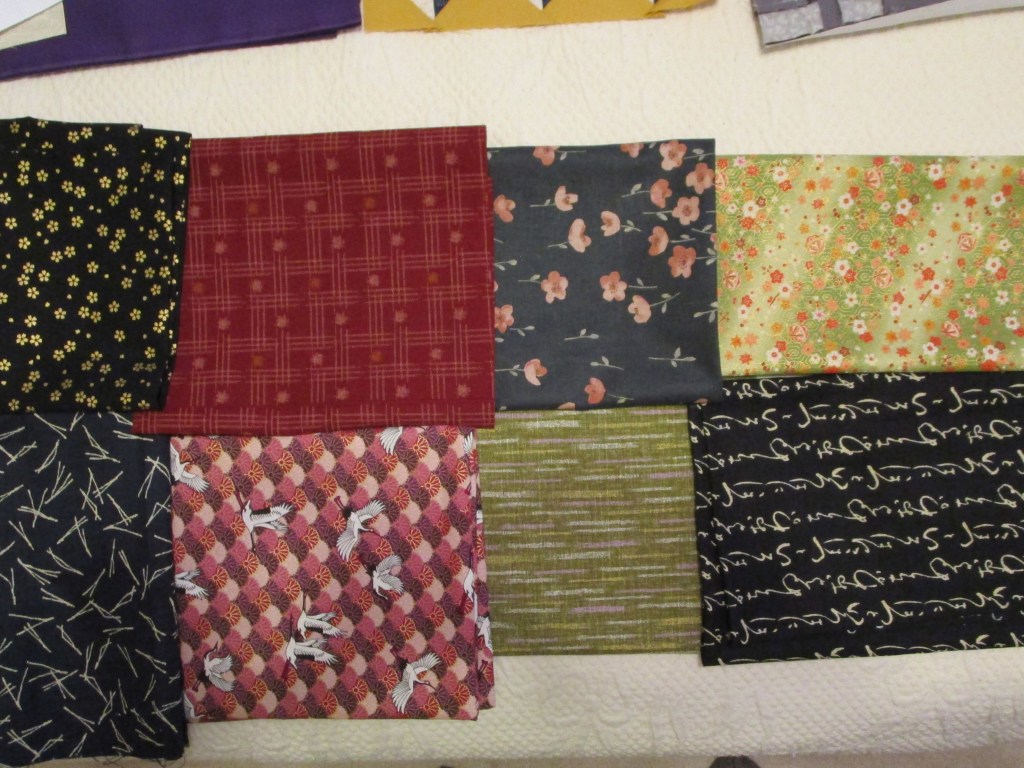
I wanted to write a bit about the traits of Japanese style quilting compared to Western style quilting, but today’s schedule is a bit tight and the posting deadline is here. I’ll just show a few pictures. Or maybe I’ll use bullet points:

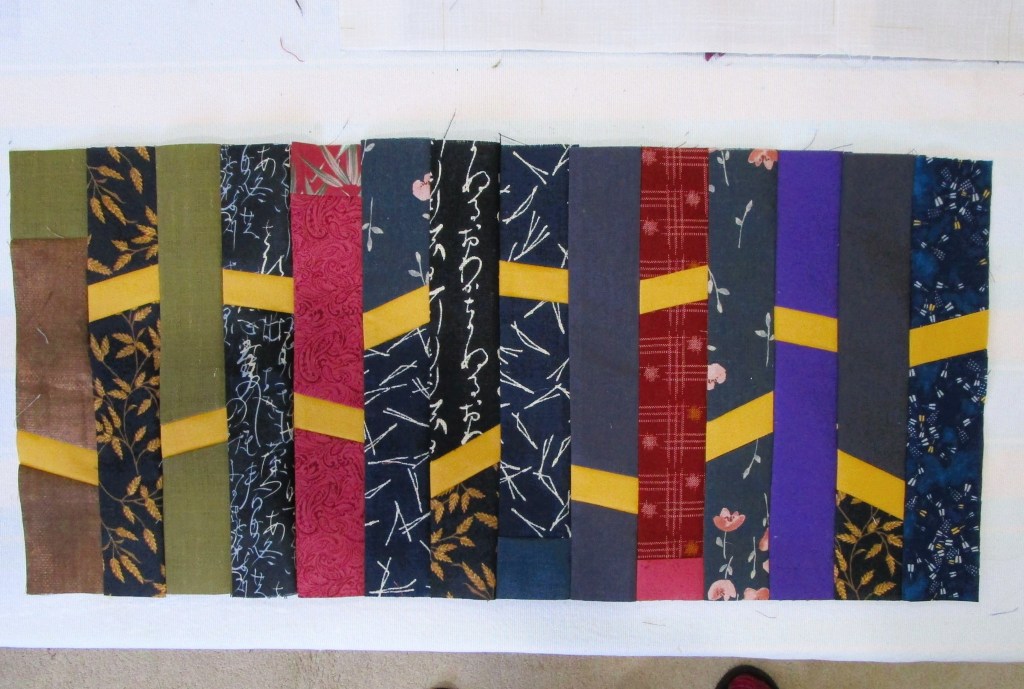
Types of fabric: plain cotton, woven patterns, large and small scale dyed patterns, stencil dyed cottons, silks and wool.

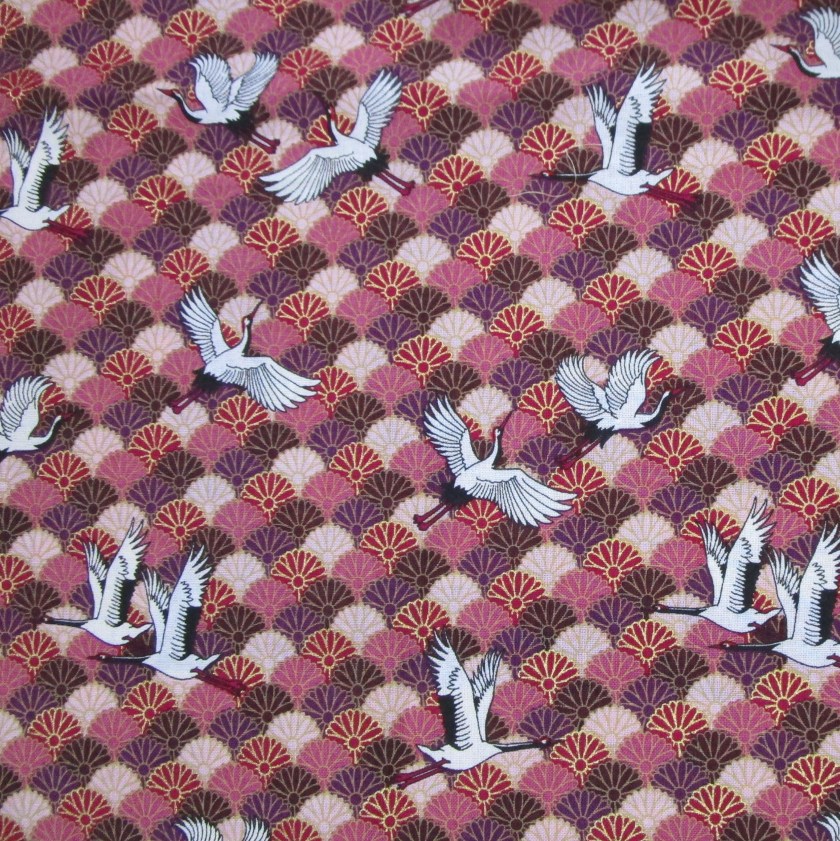
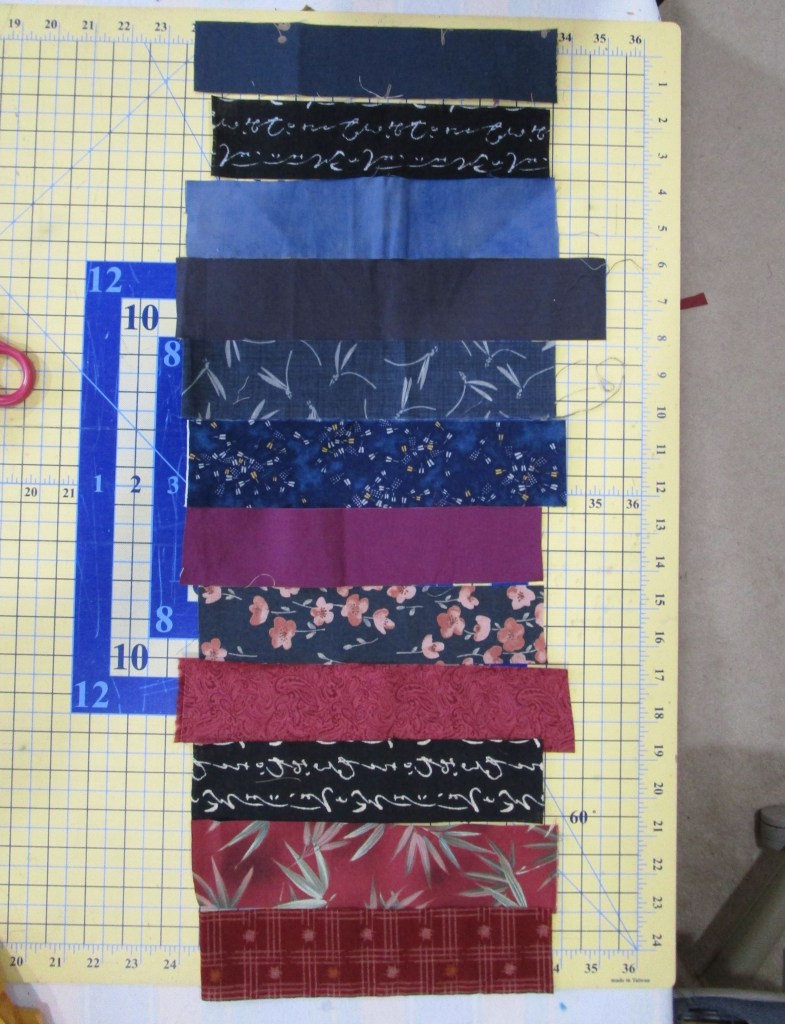
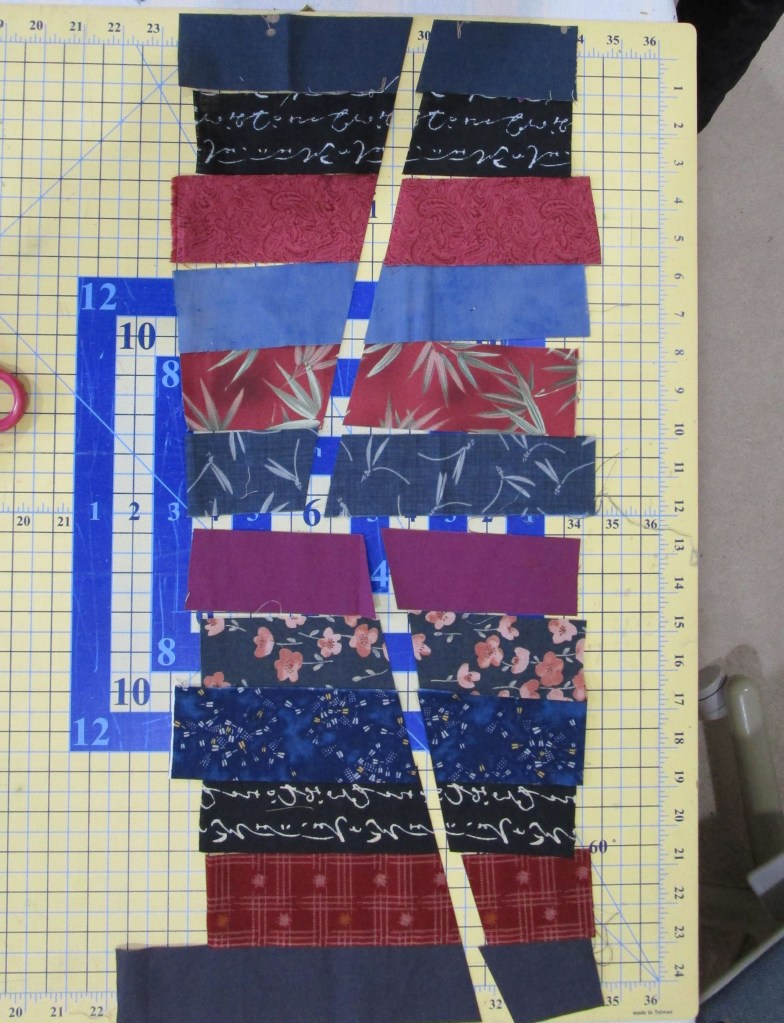
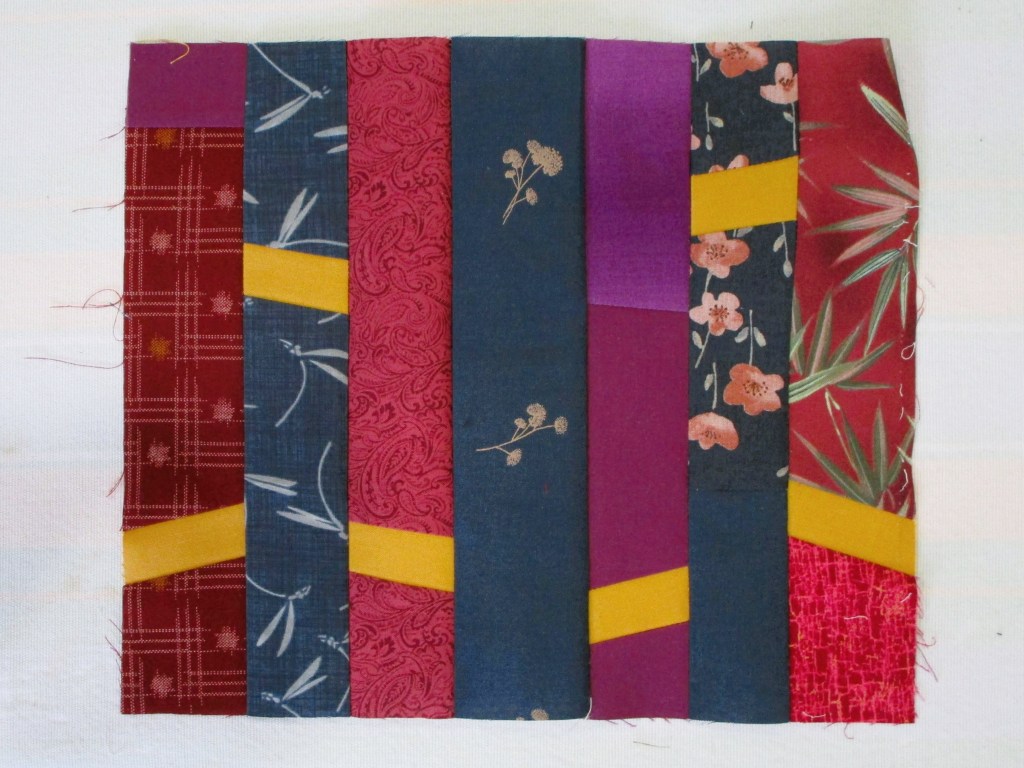
I tried to choose colors that were present in the center block.

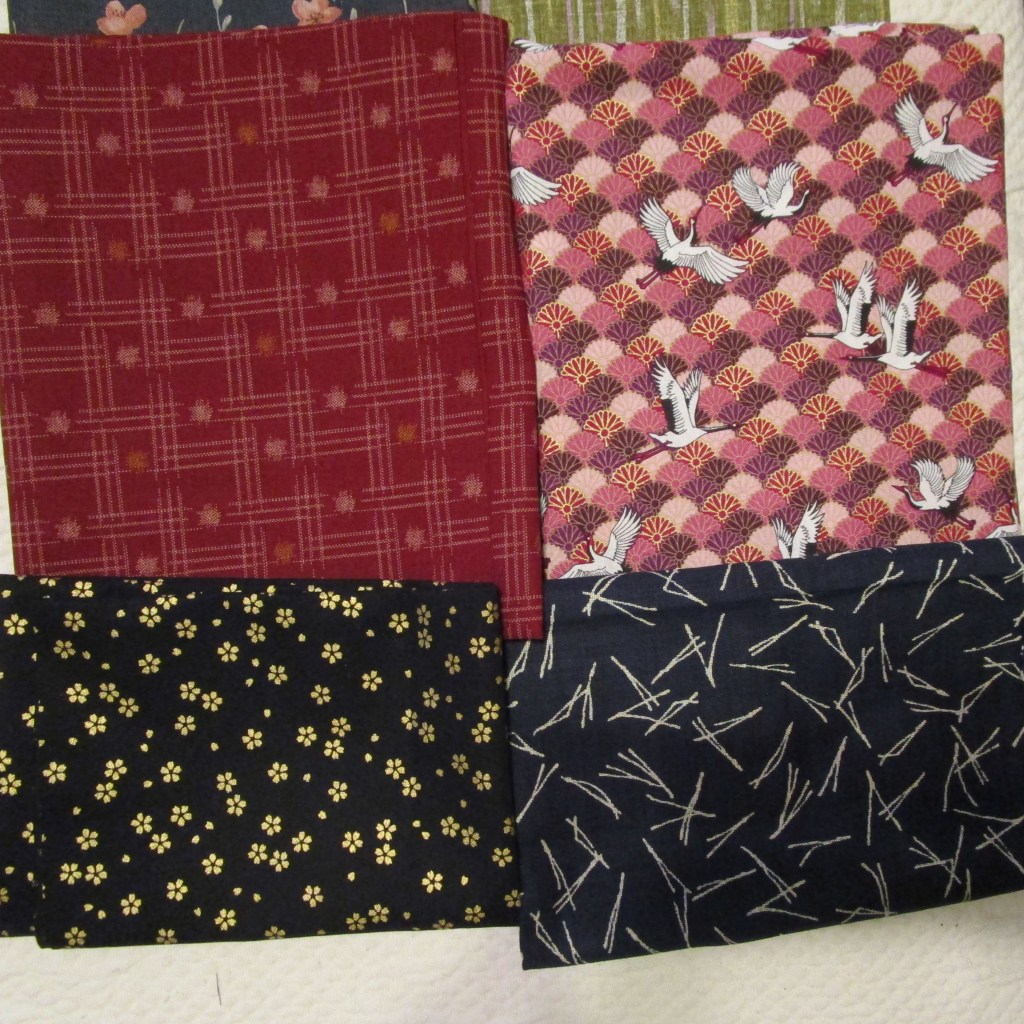
From my mother’s stash
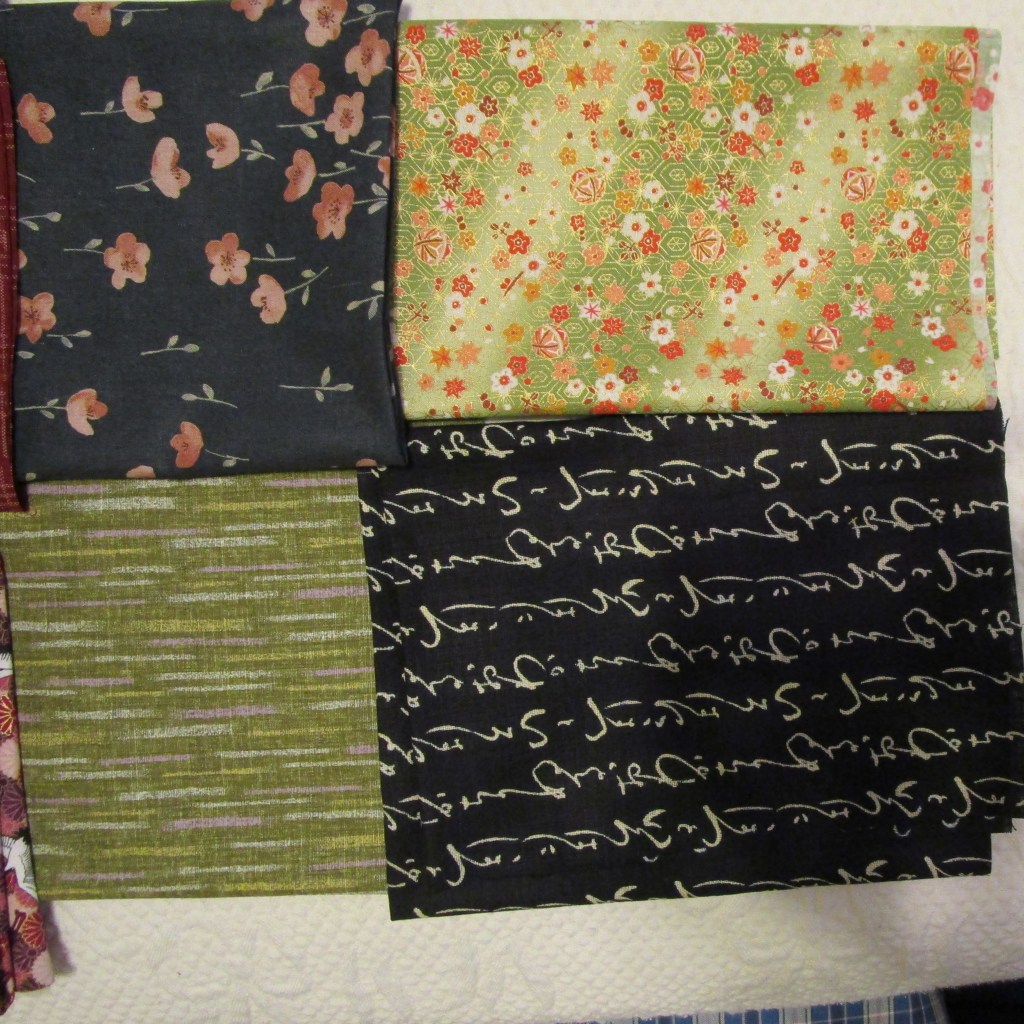
From my own stash
A few fabrics purchased from Hobby Lobby

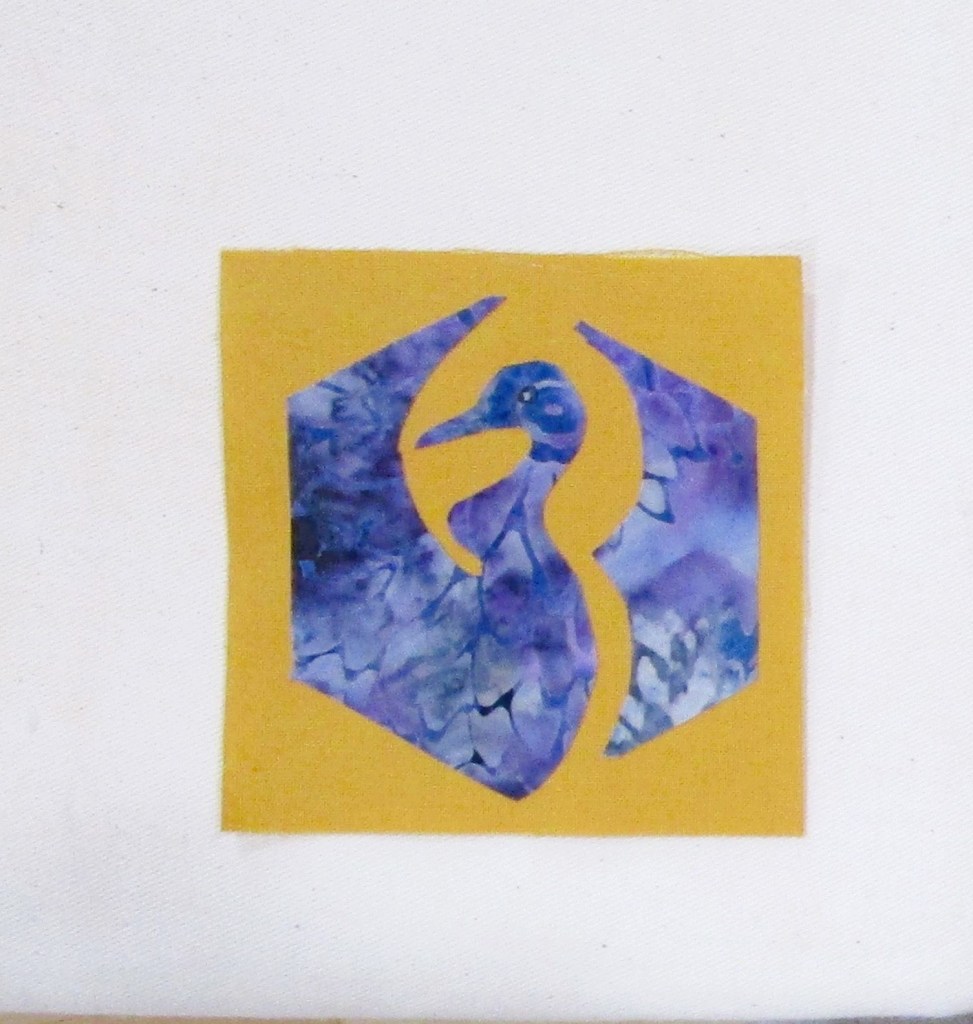
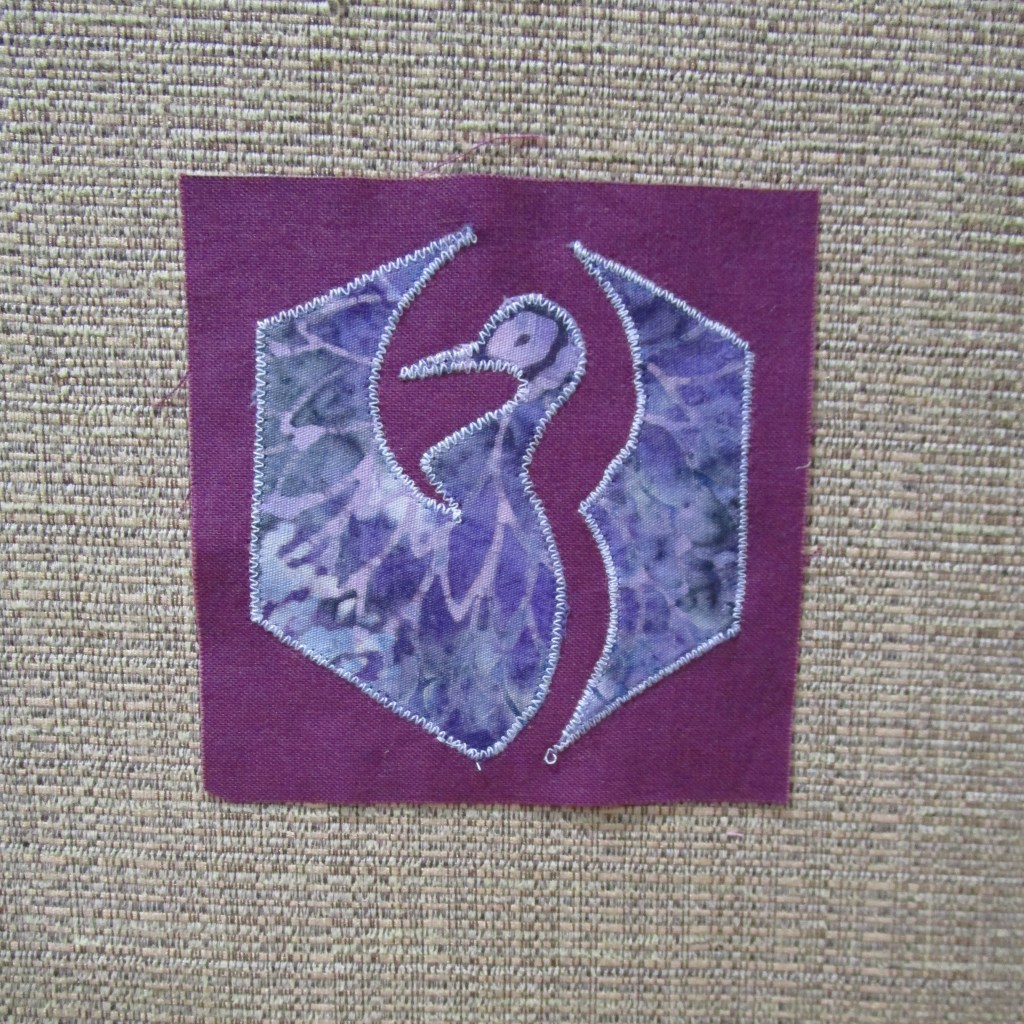
Block categories: patchwork, Sashiko, Kamon (traditional family crests worked as applique or sashiko) and Takarazukushi (good fortune symbols worked in applique.)

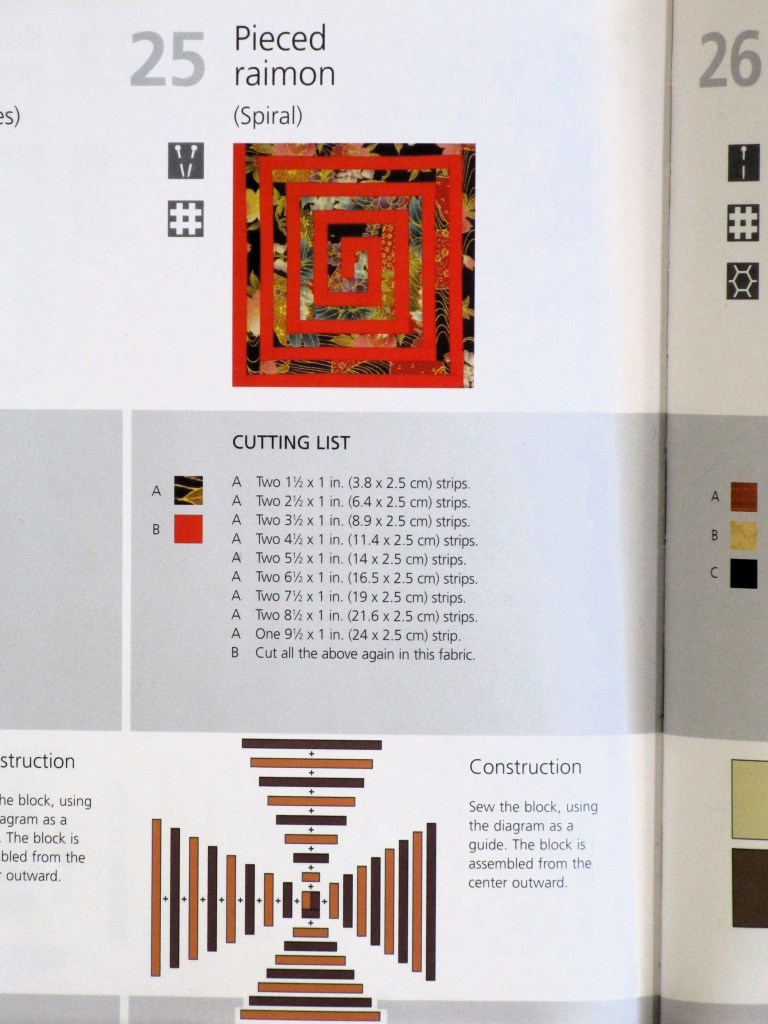
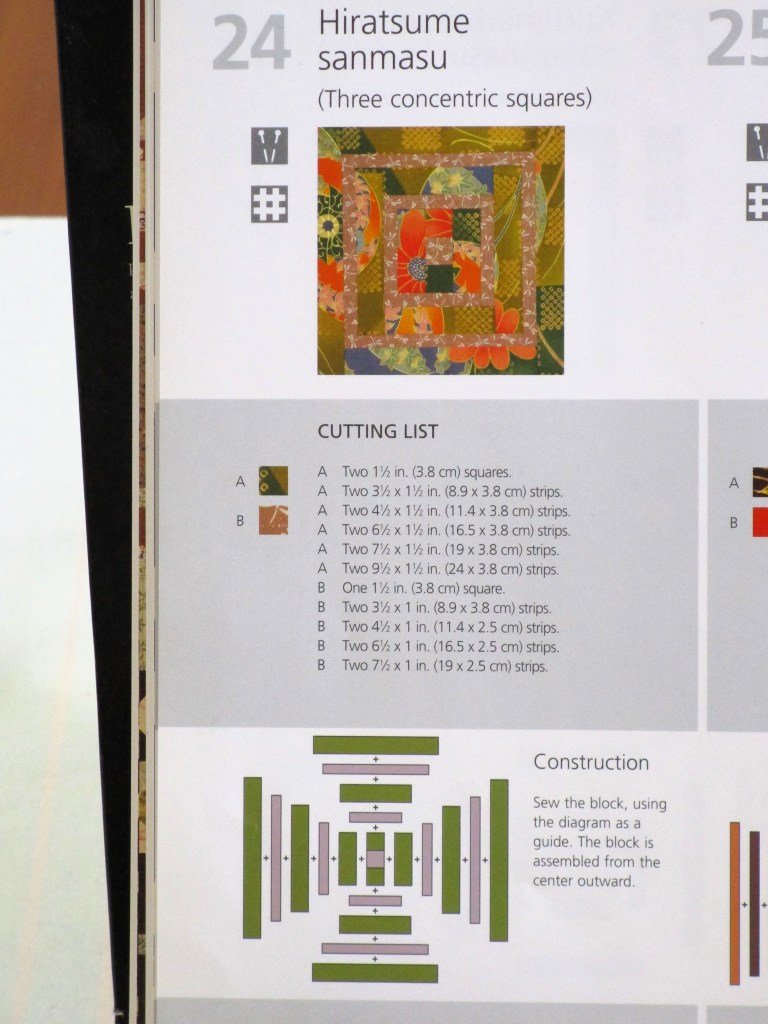
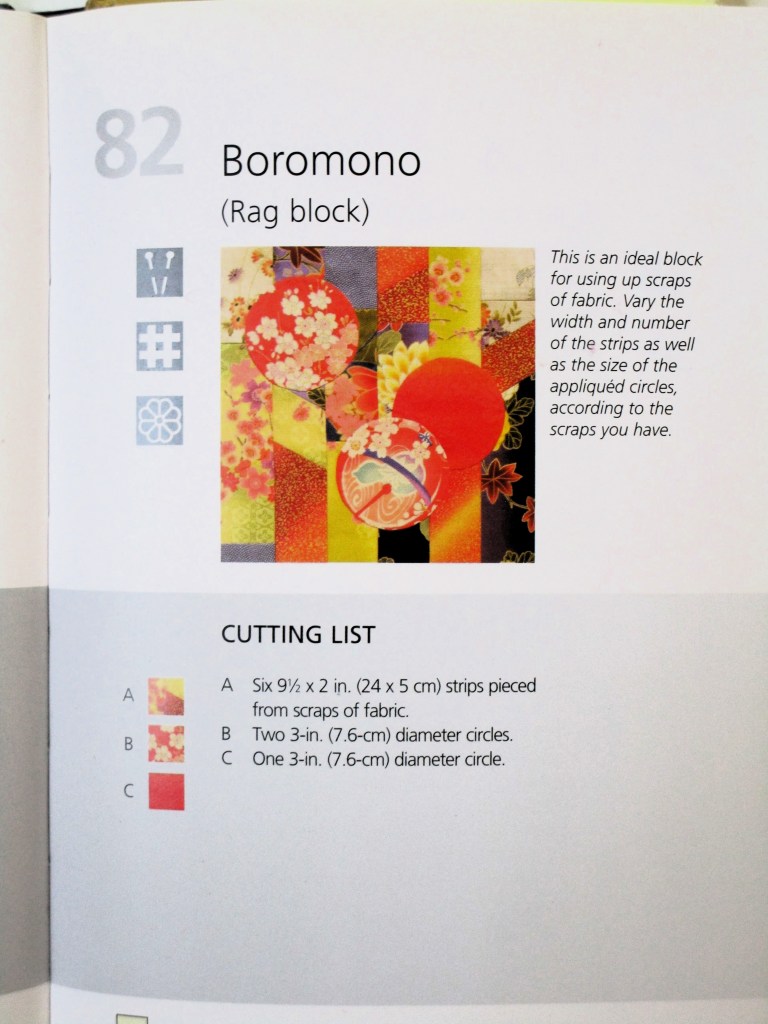
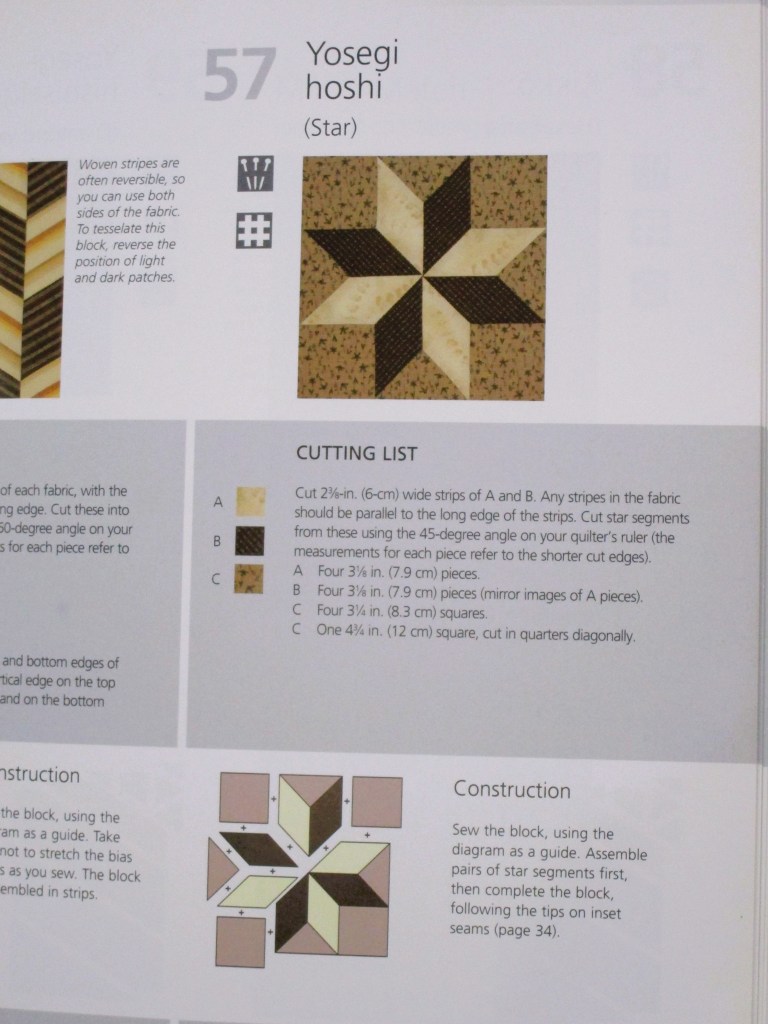
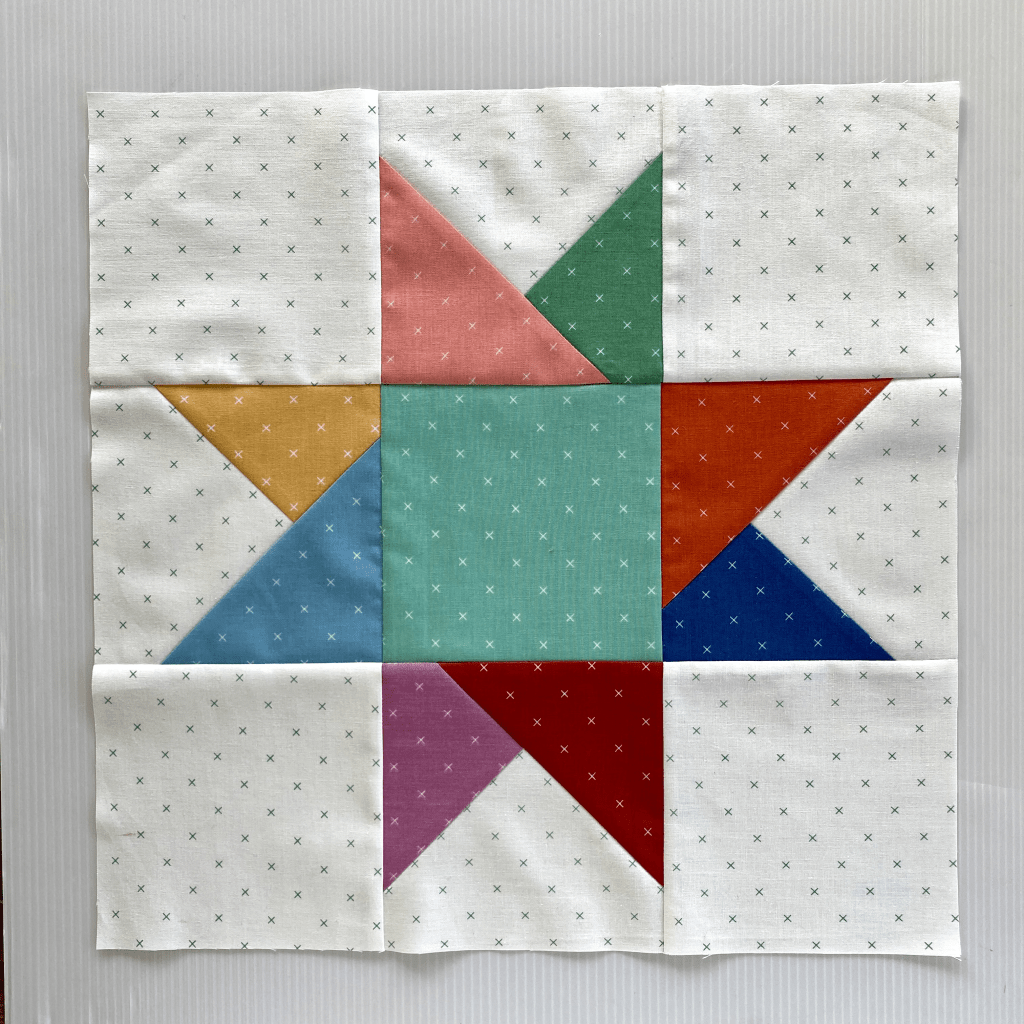
Now to the clue: Kathleen suggested King’s Crown pattern for this round, or choose a block that begins with a K, or that begins with the first letter of my name, L. I immediately thought of Log Cabin. But turning to my Japanese block design book, I saw no examples that looked like a log cabin. In studying the block names, I realized that the “L” sound is absent from the Japanese language! Lots of blocks start with a K. I settled on this pattern – Kumiko – which translates to Lattice.

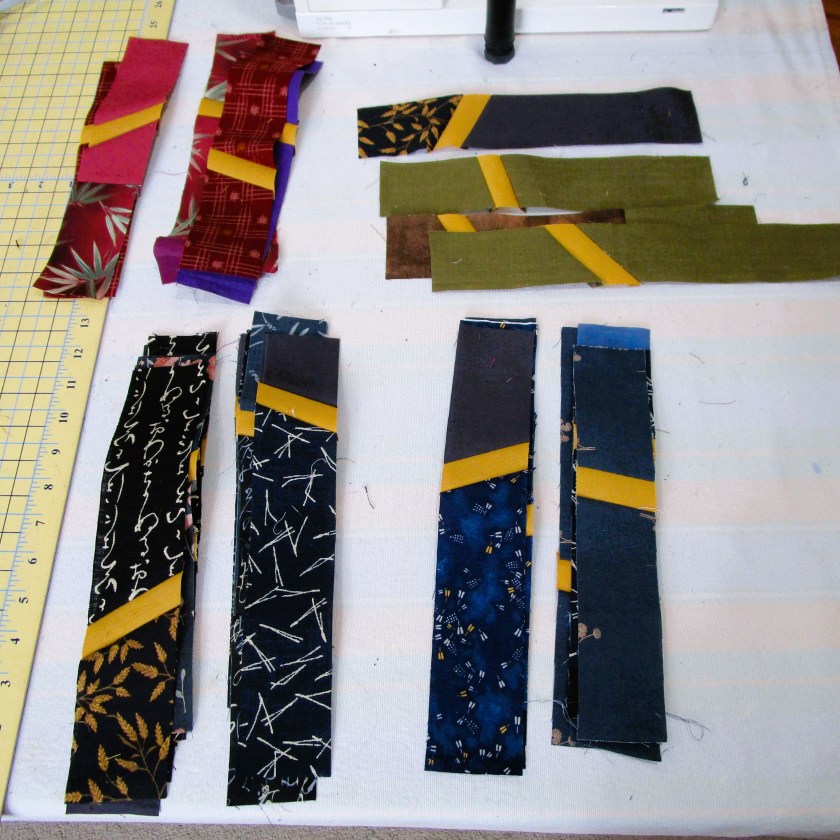
And its construction begins with making four strip-pieced squares built around a center square. Hm, that resembles the beginning of a log cabin.

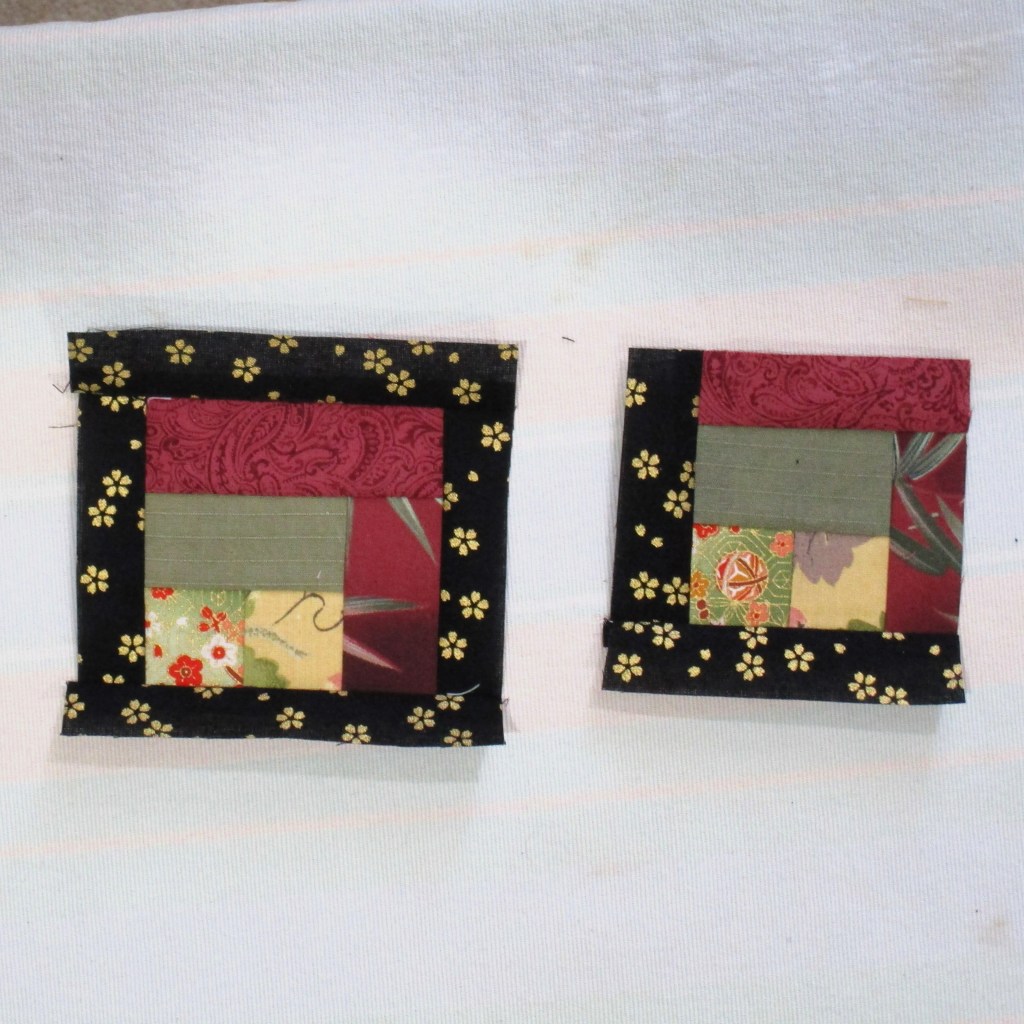
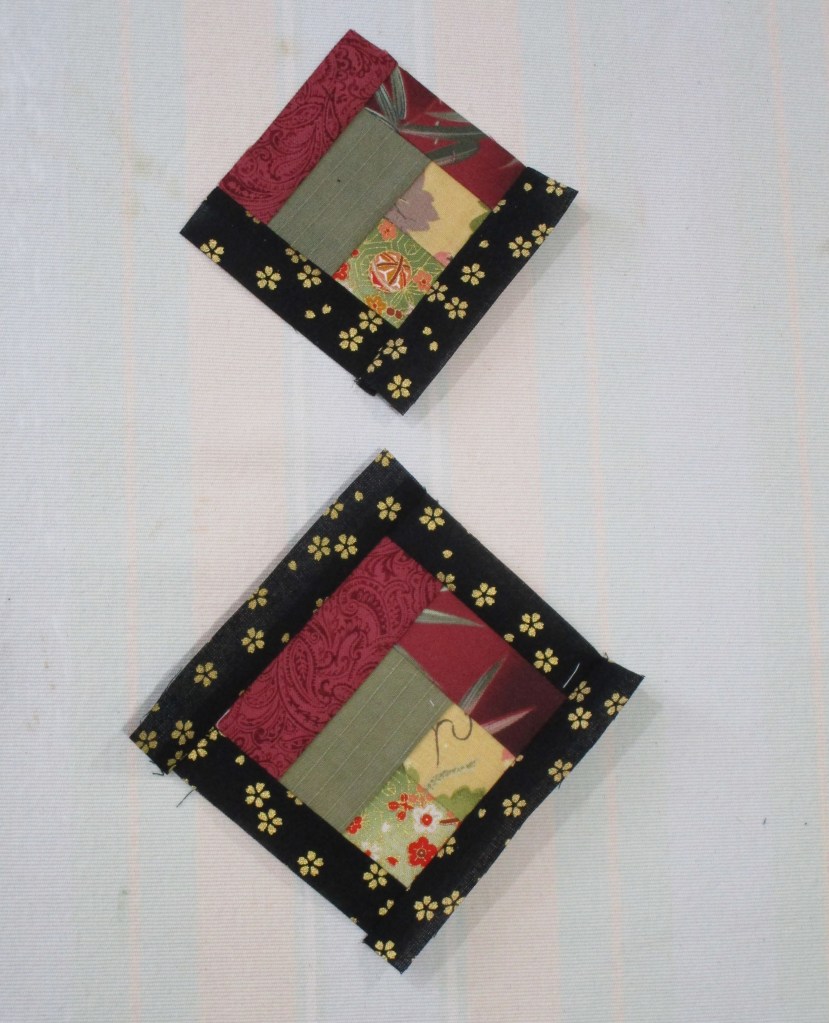
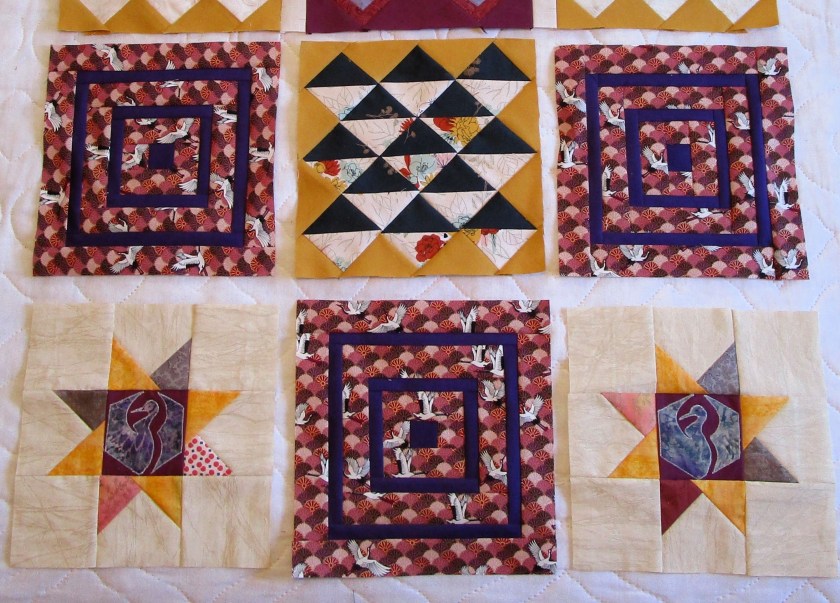
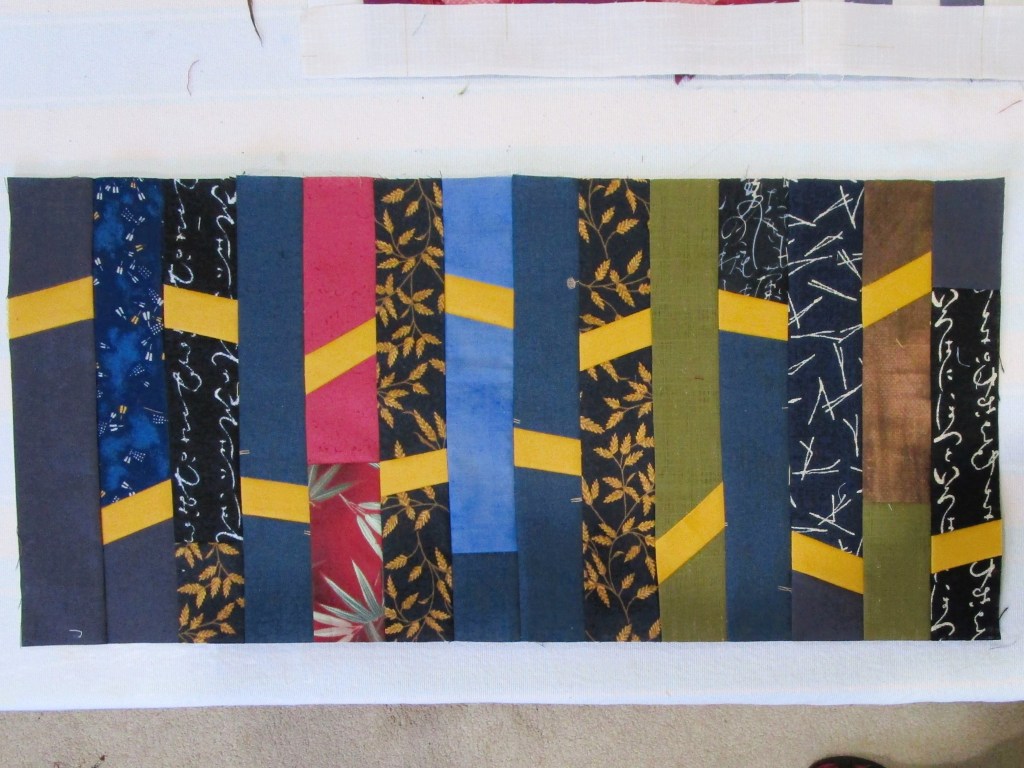
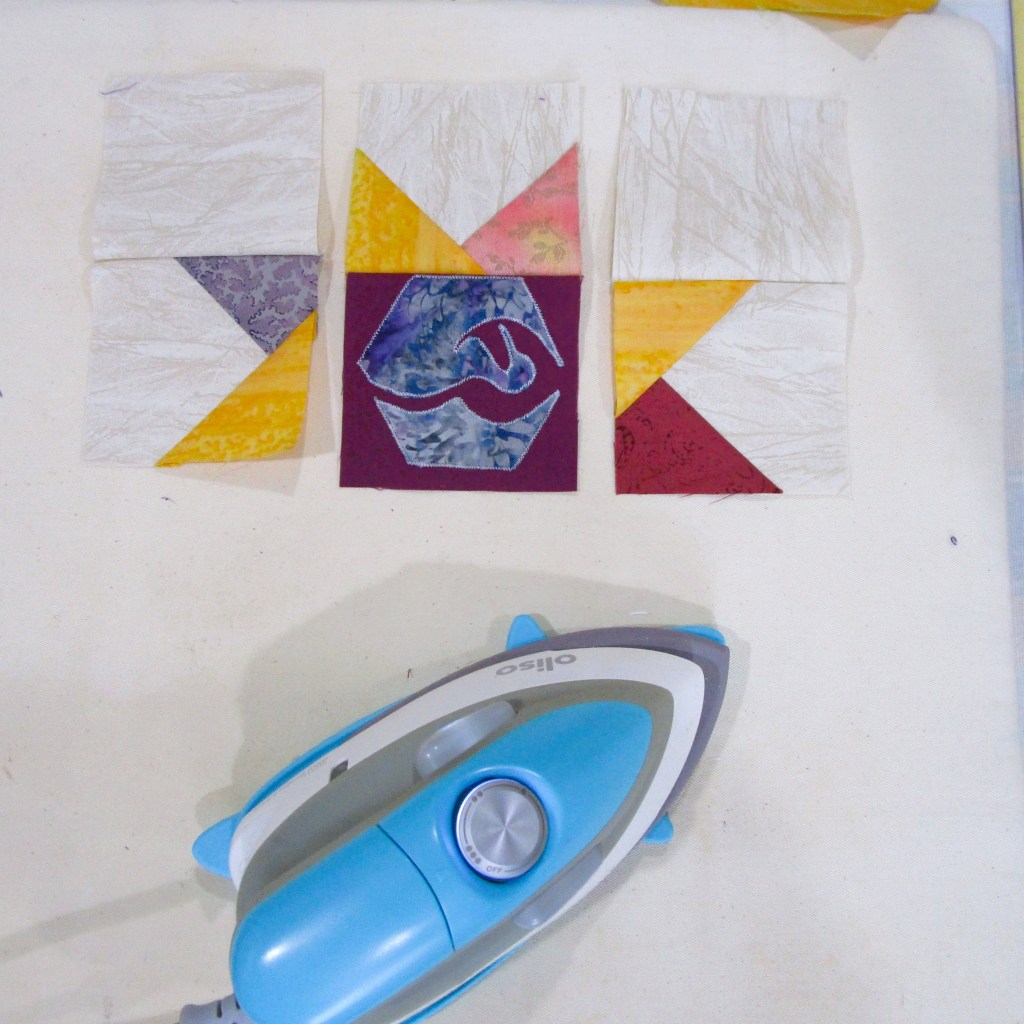
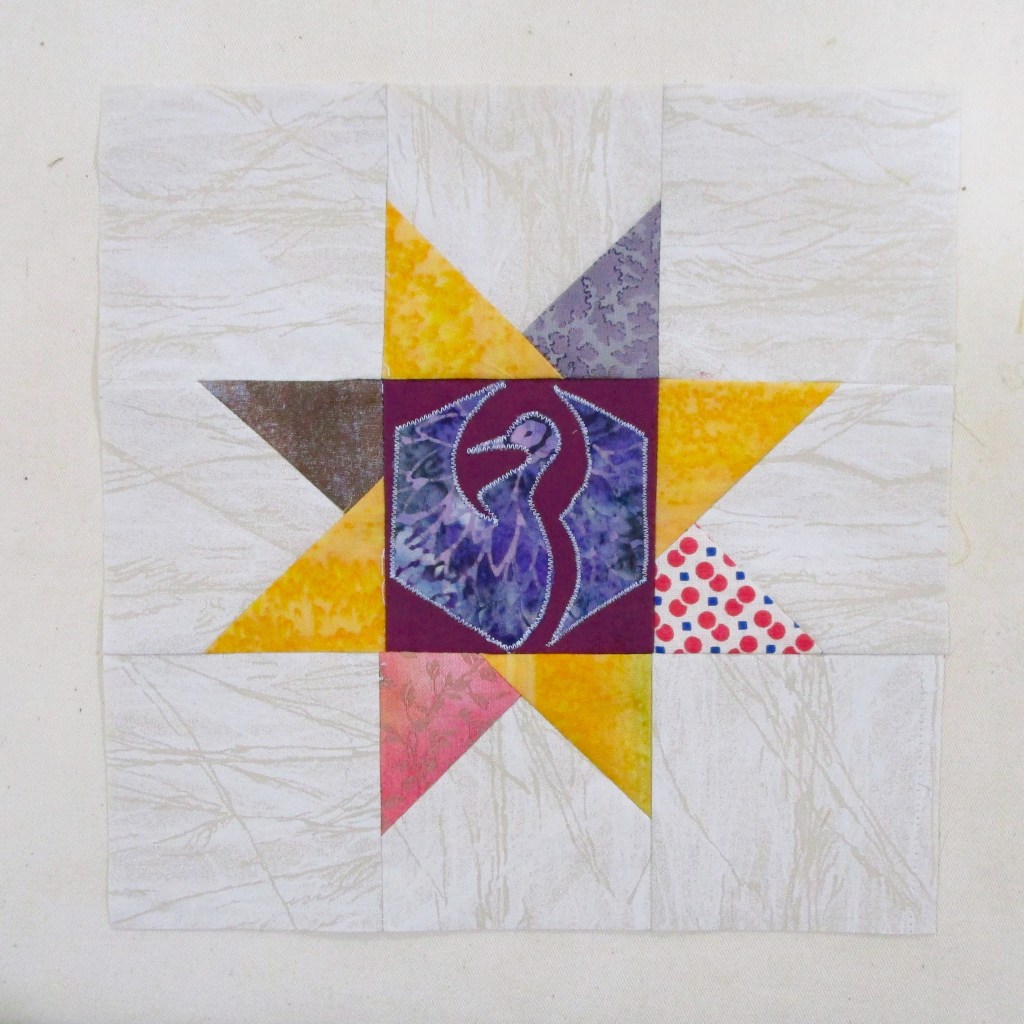
And here is my first block for Border One.

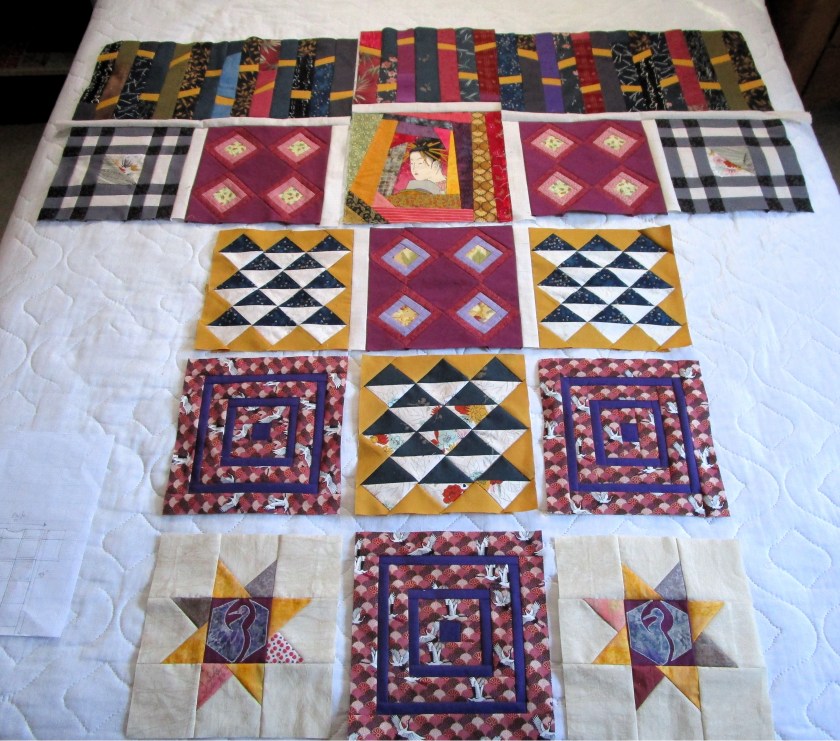
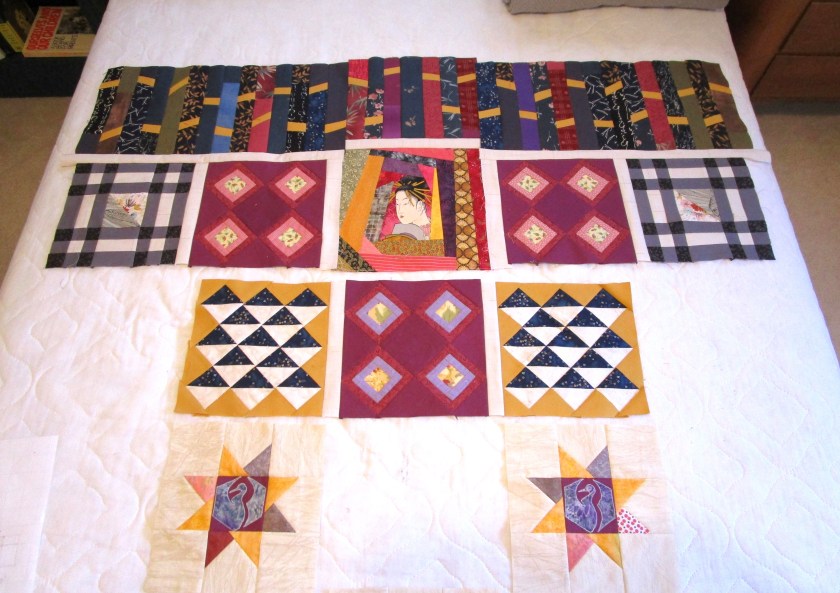
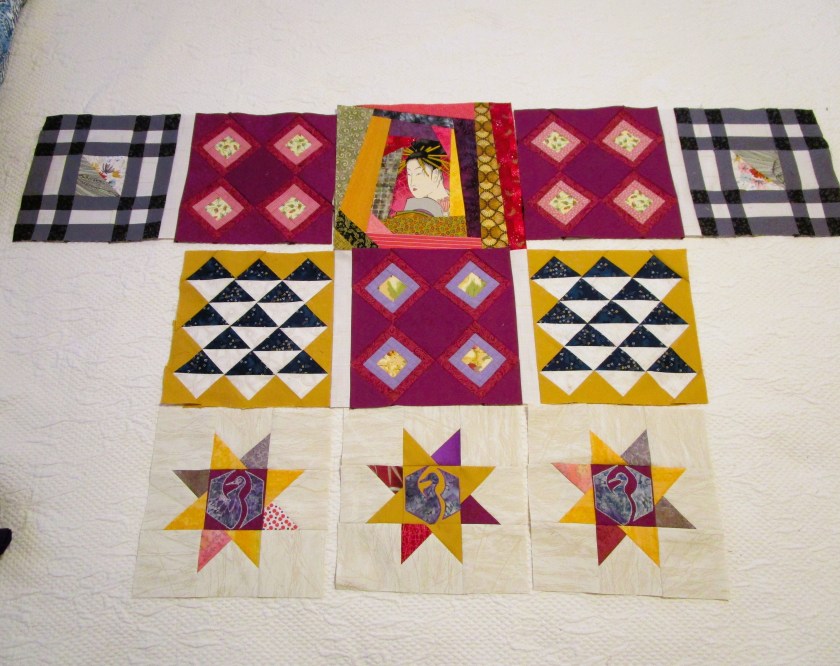
I ended up making three blocks, which I plan to place just below the center block row.

And so the first round is done, and my post written before the Linky party closes.

I see that my chosen path will hold much challenge if I stick to the plan.

If you want to follow along with Stay at Home Round Robin, here are the hosts and the weekly schedule. Check out their posts!

Posted in hand embroidery, painting, quilting

Friday Finish: Here Be Dragons

After eighteen months in process, my multi-panel quilt that explores the dragonfly is finally finished. The painting and the assembly of the quilt took place in 2023. Then it languished while I fiddled around with hand embroidery. Finally, I made the commitment in December 2024 to get this WIP done. It took an opportunity to display it at an exhibition to set me in motion.

I would be remiss if I didn’t acknowledge the role Bill’s photographs had in inspiring me. Here is a gallery of some of his dragonfly images.

I also did research into the creature, to better understand what I was seeing. I was always puzzled about the legs. In flight, they are not visible. When the insect is perched, one can see either one, two or all three pair of legs. Why is that? I learned that the legs are swiveled back and held flat against the body, just like an airplane’s landing gear. The dragonfly catches its prey in flight, grabbing hold with its legs. When resting, the legs have no function. Dragonflies cannot use their legs to walk. That’s why they seem so motionless when perched.

Anyway, the quilt is finished, except for the label and the hanging wire. It will go on display February 6, along with my Badlands quilt, at Prairie Moon Exhibition, The Center, Bartlesville, OK.

Posted in hand embroidery

WIP Wednesday – The Final Panel

Today I stitched the last stitch in the final panel of “Here Be Dragons” art quilt. In looking back through my photography files, I discovered that I had painted the panel way back in June of 2023. Here is how it looked at that point.

Reference photography for the two dragonflies came from Bill. They were part of the 100 day project, along with all the other dragonflies that made their way to this quilt. The background was painted with Dye-Na-Flo fabric paint first, with masking used to reserve white where the insect’s bodies would be.

I then used the thicker Jacquard Textile acrylici paint to render the dragonflies, finishing up the fine details with Micron pens.

Here is the panel today.

A combination of stem stitch and rice stitch outlined the subjects and enhanced the shapes in the background.

Close-up of the two dragonflies.

I believe that I will meet my deadline for getting this work ready to show in February. Some straight line sashiko sewing in the sashing, then mounting the quilt to stretchers is all that is left to do.

Posted in quilting

SAHRR 2025 – yes, I’m participating

After telling myself that I had too many projects going at the same time I had decided that adding SAHRR to the mix would not be a good idea. Then I changed my mind. What’s this all about, you may ask?

After my mother had a stroke, I assisted my sisters in cleaning out my mother’s crafting room and disposing of the contents. One project bag contained some intriguing fabric panels depicting Japanese geishas. I took these home.

There are four in all. She also had various bits of Japanese quilting fabric, including cotton fat quarters and some lengths of yellow silk.

I became enamored with the idea of making a Japanese-style quilt, to the point that I bought a few books to learn how.

So, getting back to SAHRR. I decided that my center block could be one panel.

I worked on it a little to get its dimension down to 11 and 1/2 inches. My plan is to make a row-style quilt that will be suitable for turning into a kimono-style robe. I’ll match up each week’s clue to one or more block patterns from this book.

All the blocks are designed to finish out at 9 inches. This plan could be a good work-out for my problem solving skills.

And when I am finished, I will have something made with my mother’s fabric selections, to remind me of how much she loved to sew.

To see the SAHRR 2025 participants’ center blocks, click here.

Posted in drawing

Sunday Sketch Colored Pencil

For today’s sketch, I wanted to try to draw a photograph of a sunset that Bill took during our trip to Italy several years ago.

This is the view from Medieval Assisi, which sits on a hill well above the surrounding landscape. He had shared it with me during our joint “100 Day Project,” back in 2023. I had never quite finished making 100 pieces of art out of Bill’s photos. This one I had wanted to turn into an art quilt. I had even done a fabric pull in anticipation.

It seems like an impossible task when I think about it now. But the first step is always to get a good drawing, from which to make a pattern. For this drawing I used graphite and colored pencils.

There’s no way for pencil to get the lustrous glow of a sunset the way a photograph can. But I did manage to render the shapes reasonably well.