Posted in quilting, sewing

Blocks with Curves

At a quilt show I attended recently, I saw several quilts that featured circular piecing. It looked so mysterious. How did they do it? Here is an example from the show.

I am very interested in making contemporary quilts in a similar style. So it is necessary for me to learn to this technique. For today’s exercise, I will be making blocks with pie-shaped wedges sewn into the concave edge of a background fabric. I turned to U-Tube for a little help. One of the instructors is Leslie Tucker Jenison. Here is a tutorial on fitting concave and convex shapes together. https://www.youtube.com/watch?v=4vT08esPfzw

My design inspiration was the sun and planets. Because of the fabric selection I had available to me, I decided to make a piece featuring a gaseous planet.
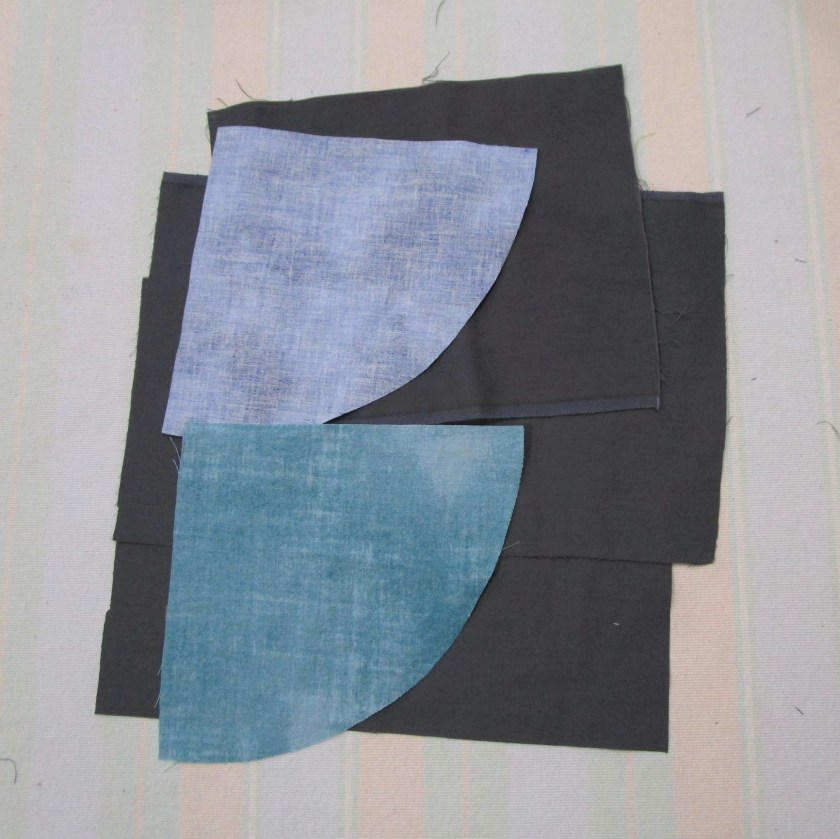
Dark grey for the background fabric, green and pale blue for the pie shapes.

After cutting out the two types of blocks, I marked the curves with a compass. The trick is that, at the curved line, the pie shaped piece needs to be 1/2 inch wider than the background piece, to accommodate the seam allowance. I used a compass to draw the curves and cut them out with scissors. Here are the four blocks pinned and ready to sew.
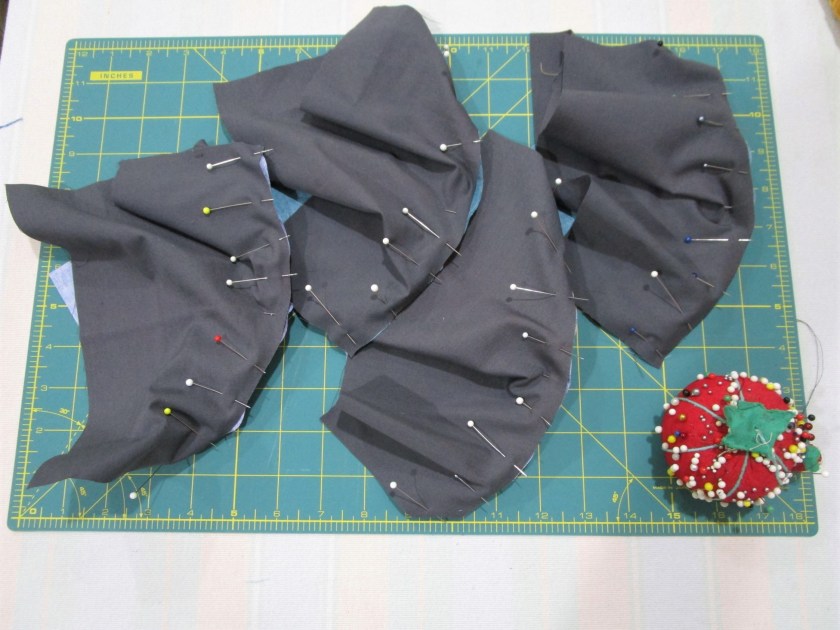
It’s important to mark and pin the two centerpoints and align the block edges. Then place a pin about every inch. Stitch with the concave piece (background) up, so that you can ease the curve. Here are the blocks before pressing.

I have most the points matched up pretty well. Next is to sew the pairs of top and bottoms together and then sew the center vertical seam, matching the pie shape edges and nesting the center seam.

My planet block, sewn and pressed

I’m relatively pleased with this first attempt. Only the lower right block is slightly off. The final dimension is 18 and 1/2 inch square – a very good size for a cushion cover.

Posted in quilting

Little by little, piece by piece

So far my quilt-making efforts have been limited and tentative. I have a pretty good grasp of applique technique, and can put together a log cabin block. Now it is time to move on to new skills. To celebrate my decision, I have acquired a few more items.

Twelve inch square blocking ruler, Fisker 45 mm rotary cutter and wash away adhesive tape

For the past three days, I have been viewing lessons on BluPrint.com and checking out U-Tube videos. Now I am ready to try an exercise in free-motion quilting. The lesson, “Free Motion Quilting Essentials,” was presented by Christina Cameli on BluPrint. First I selected some fabrics to piece together into a practice block.

These remind me of a cheese plate.

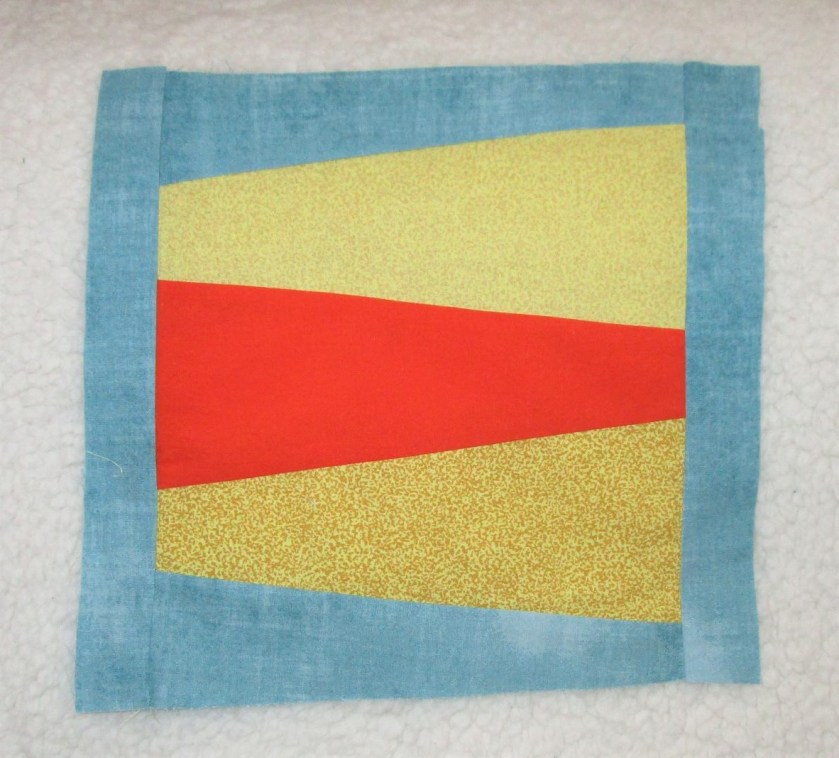
Here is the block assembled.

Before I continued on to the quilting, I squared the block using my new Omnigrid ruler. Then I made the traditional quilt sandwich of backing, batting and top. I used a muslin top for the first practice stitches.

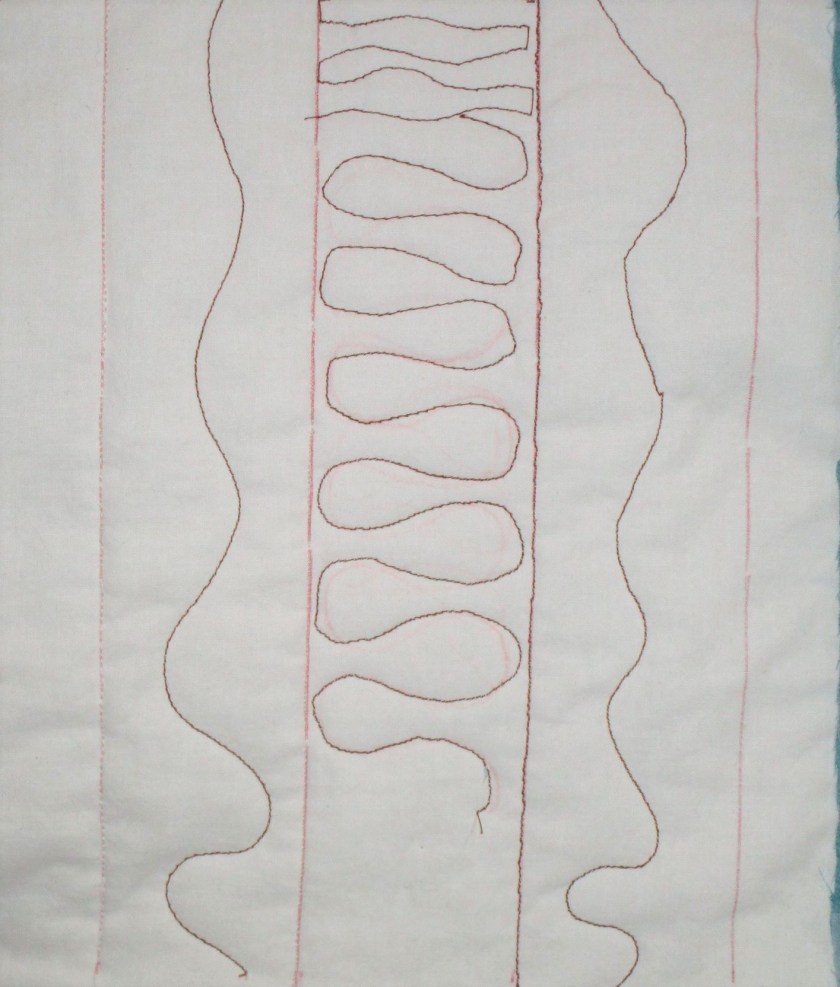
It took a little effort to get my Bernina working correctly. I had to clean out the lint, change needles and try a couple of different threads. Here are my first efforts:

Pretty wobbly. I discovered that I got better results by working from right to left instead of left to right. This may be due to my left-handedness. Whatever the reason, it was a relief to find a method that gave improved results.

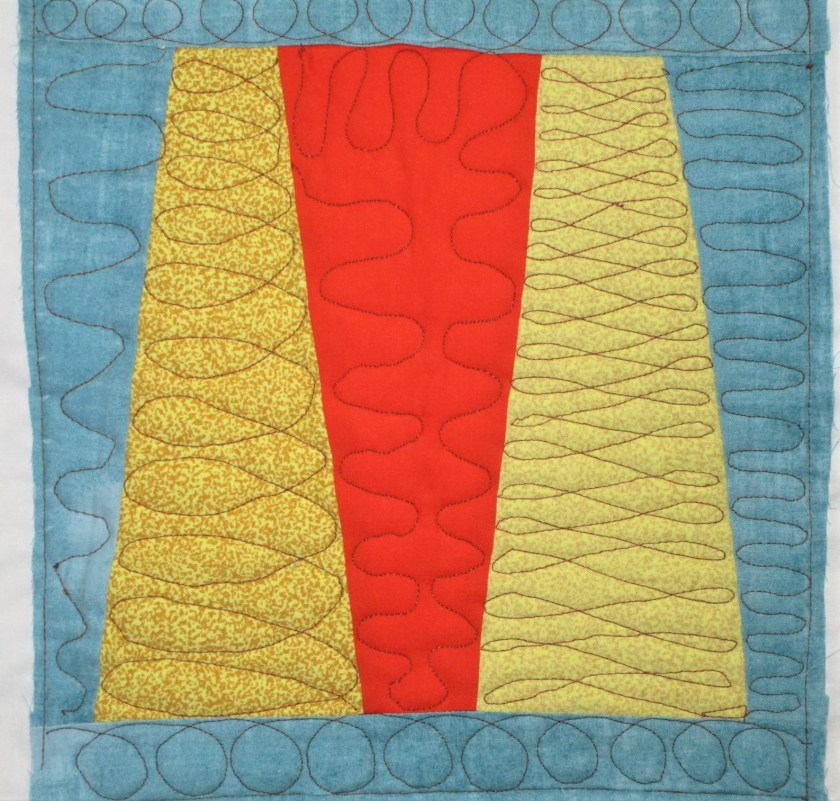
WIGGLES AND LOOPS.

The block shows a little more mastery of technique. I do believe that I will need several hours of practice before I am comfortable with free-motion quilting.

Posted in crochet, knitting

Playing with Dolls: The Purple Yogi

Like many women in my demographic, I get my exercise by practicing yoga. I don’t remember when I got the idea to make a purple yogi, but I know where. It was during a yoga session. While searching for a drishti (otherwise know as a focal point) in the middle of forming tree pose, my eyes glanced at a ceramic yogi in seated position. Breaking my concentration, I thought, “Wouldn’t it be fun to make a posable figure from yarn and wire?”

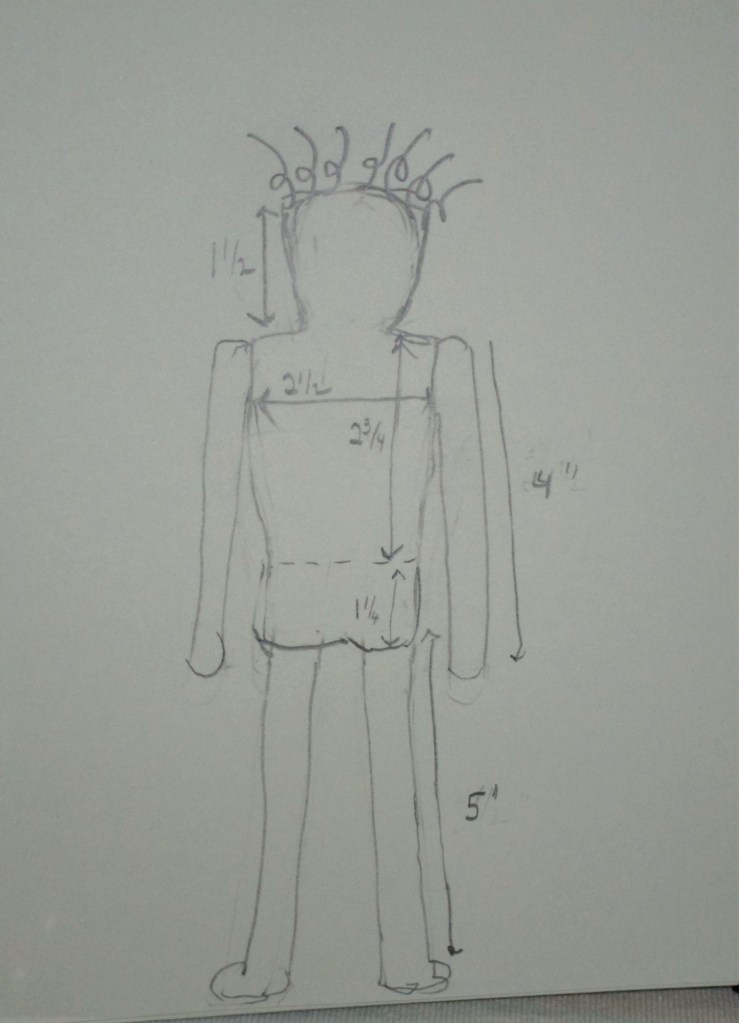
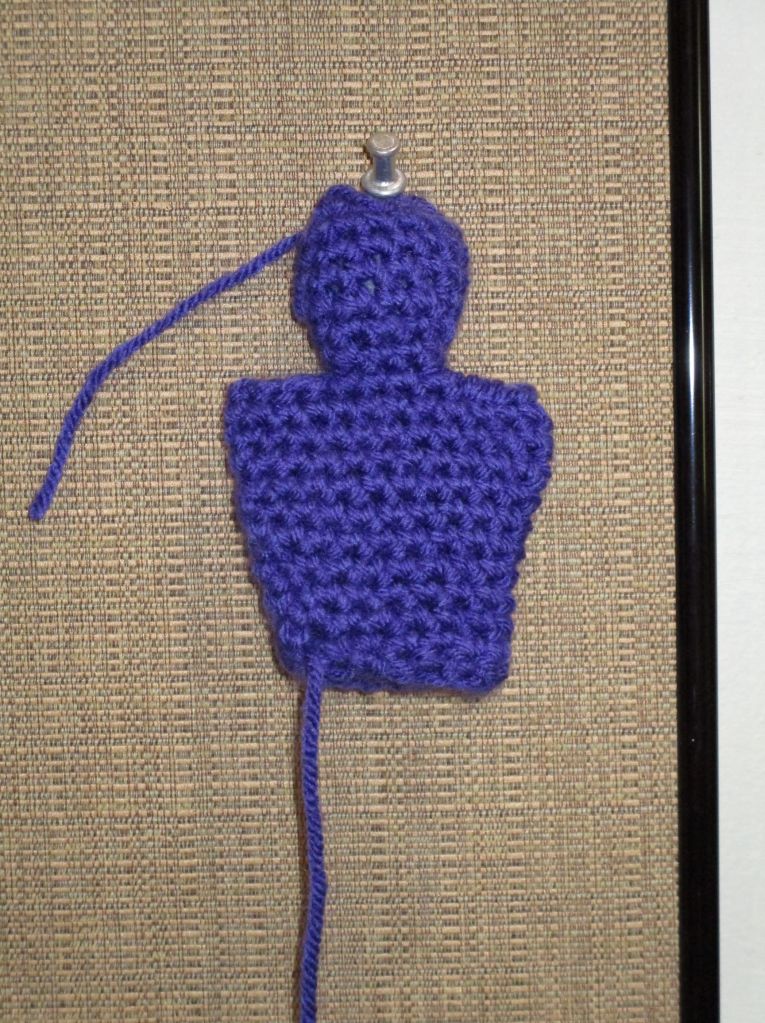
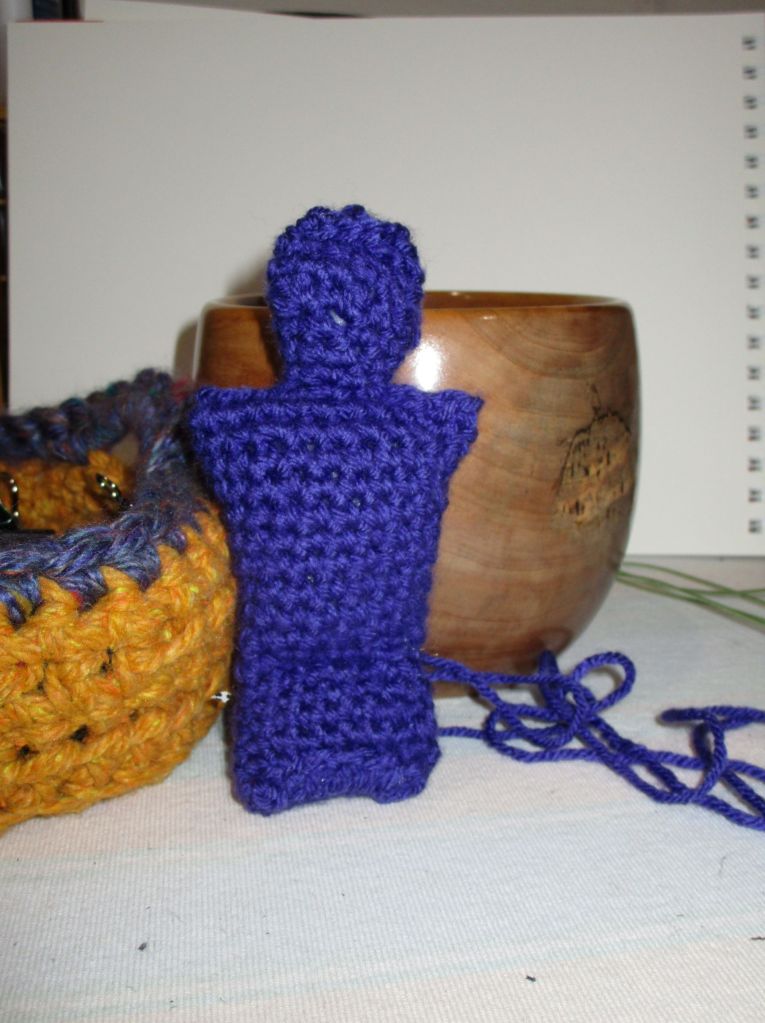
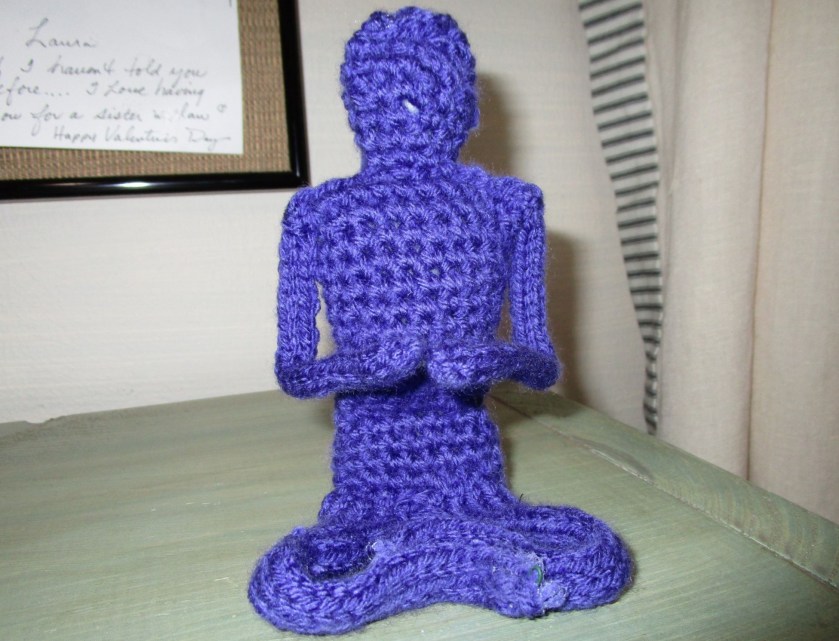
Thus was conceived the Purple Yogi. He is constructed of yarn, florist’s wire, a little fiber fill and some white glue. The gestation period was about three months, and the birth itself took two half days of work. I started with a sketch, and proceeded in single crochet to make his torso and head.

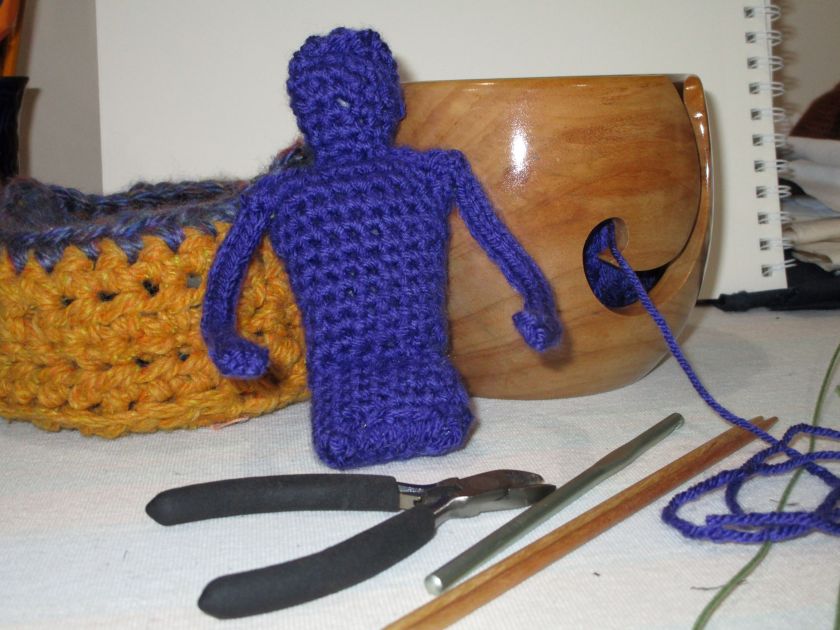
Next I crocheted down from the waist to make a pair of manly hips. The arms were knit in I-cord. One wire was inserted through the body at shoulder height and slipped inside both the arms.

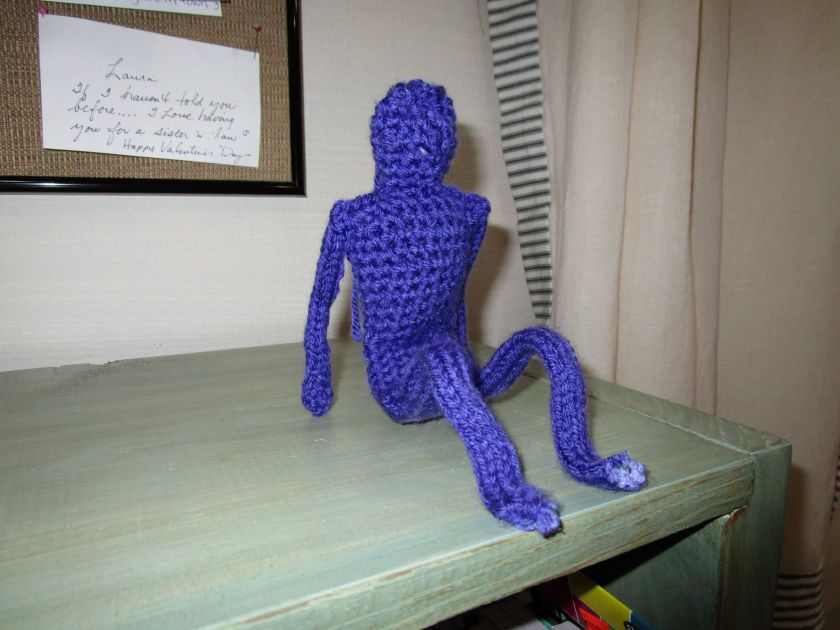
The legs came next. I inserted a wire through the hips, with loops where the ball sockets would be. A wire was inserted into each loops and stretched down for the legs. The I-cord legs had two increase rows, to make them a more tapered shape. Then the knitted legs were slipped over the wires, sewn to the body, and a little glue added to shape his feet. Here is the completed doll.

Yogi is sitting still while his gluey feet dry.
Here he is in seated pose, ready to start his first yoga session.

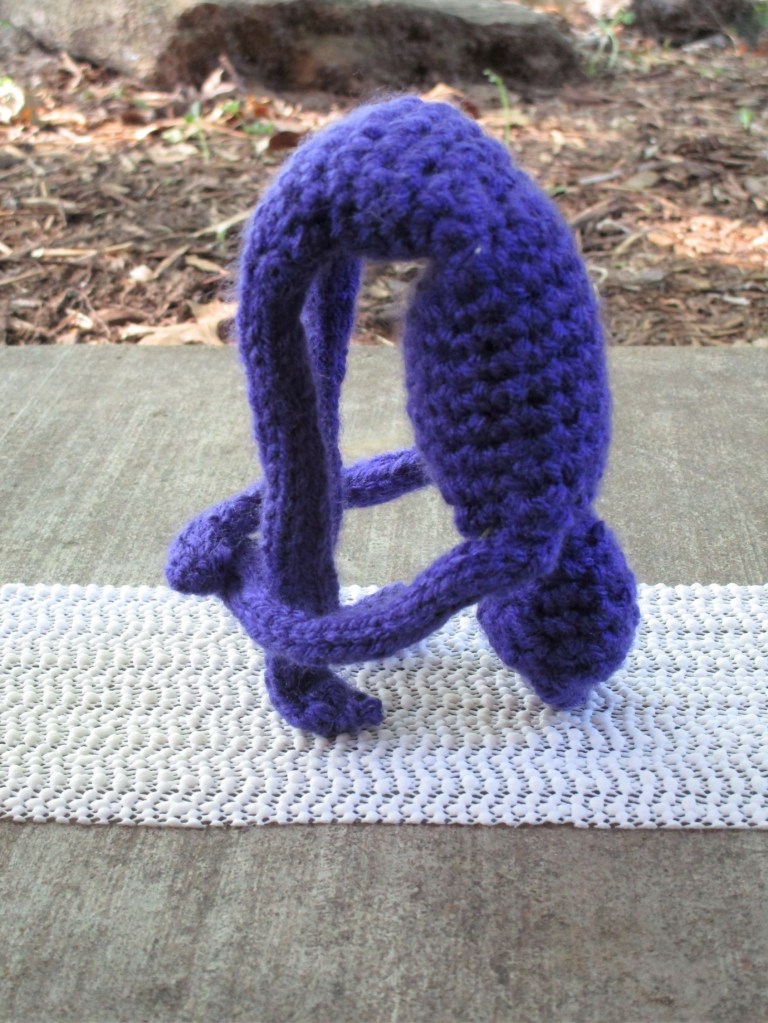
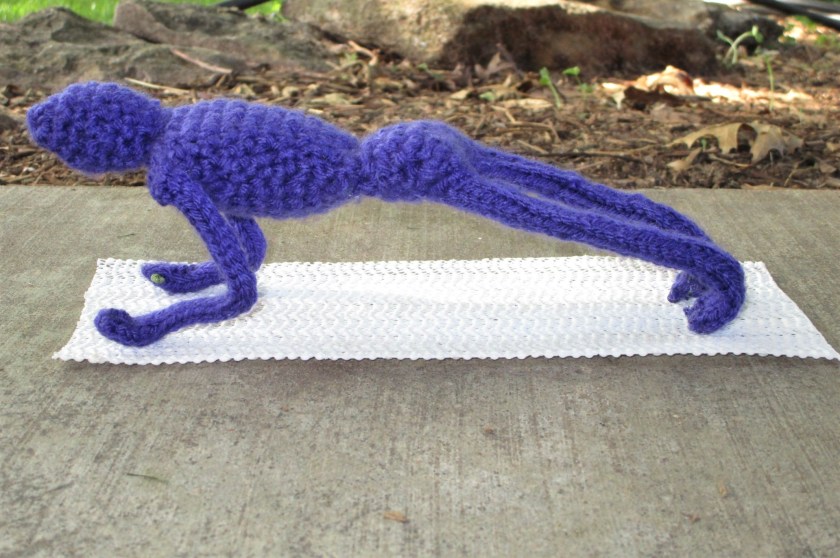
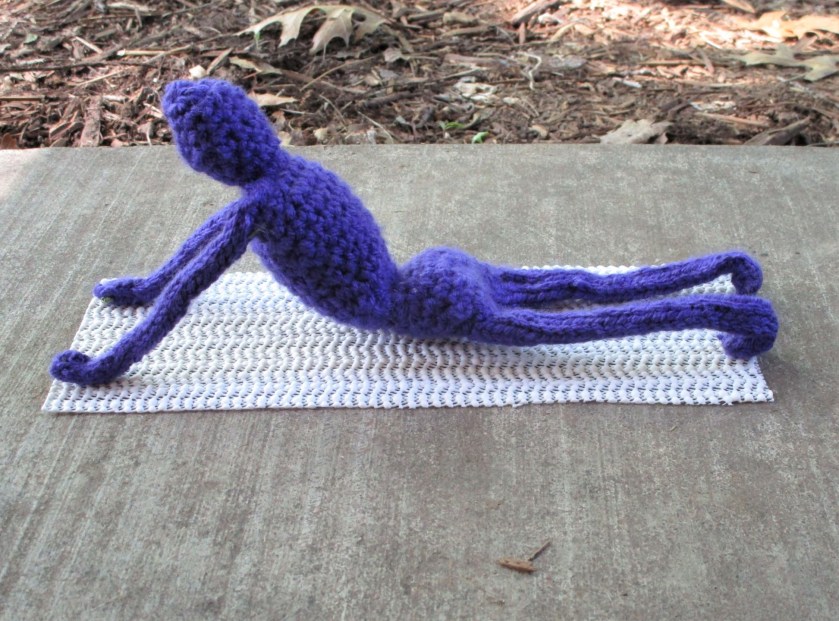
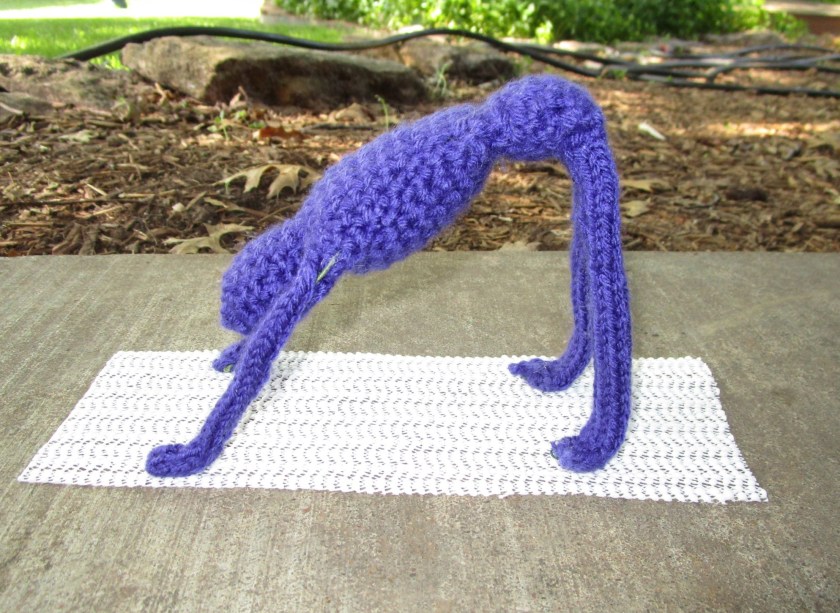
I discovered very quickly that he could not sustain a pose without a sticky mat. I cut one out of a rug grip pad. Okay, Yogi, let’s strike a pose or two!

FORWARD FOLD
PLANK
COBRA
DOWN DOG

This project really made me smile. It’s good to play, even if one is a bit old for dolls.

Posted in recycling, sewing

Wabi-Sabi 2

I spent the better part of yesterday afternoon sewing the little wabi-sabi blouse. Getting to know the automatic button stitch on my Bernina was a bit of an eye-opener. It took four practice button holes before I was ready to attempt it on the garment. So the buttonhole is fine now, but I am having some fit issues.

Finally I called my daughter, to discuss the blouse and check her measurements. She was enthusiastic about my progress so far. Then she casually mentioned that the blouse was constructed with the buttons on the BACK. What?

After the call, I put on the blouse, switching it around so buttons were in the back. Sure enough it seemed to drift into place over my body.

A new point of view.

I will need to adjust the button locations (most of them are not centered over the button holes) and take in the band to match daughter’s measurement. Otherwise, this little turnabout is done!

Posted in recycling, sewing

Wabi Sabi

A Japanese philosophy that has been around since the 15th century, wabi-sabi is all about finding beauty in imperfection. It means keeping your old stuff, especially if you really love it. A few high quality garments are more valuable than a bunch of new, poorly constructed items of inferior fabric. Sometimes a few minor repairs will keep your treasured frock in circulation. It’s really okay if the repairs are visible.

When I was explaining this concept to my daughter a few months ago, she said that she had just the thing for a wabi-sabi treatment. What she brought me was a silk blouse, in a muted print of neutrals that had become worn and torn. She said that she wore it often, but no longer, due to rips and thin places in the silk. Could I do something with it?

I wish I had taken a photo of the blouse as she handed it to me, but alas, I did not. Here is what the garment looked like after I had cut out the damaged sections.

Three months have passed since I gained possession. This morning, I decided it was time. Last year I had purchased a largish silk blouse in similar colors at a thrift store for a few dollars. This might be a good source of fabric for the wabi-sabi blouse.

My plan is to cut this blouse lengthwise along the stripes, and use the pieces to rebuild the yoke of daughter’s blouse. Here is a sample of the fabric.

And here is a sketch of my intended alterations.

Without a pattern, I set about cutting and sewing, cutting and sewing. First I made some strips from the thrift store blouse and used them to create a band at the underarm area. This was stabilized with ultra-light weight fusible interfacing. Next I cut two triangles from the front of daughter’s blouse and trimmed the edges with black silk. These pieces were then sewn to the band. A few alterations to the back also included black silk edging.

It’s the end of the day, and here is a photograph of the wabi-sabi blouse.

Progress is good. If all goes well tomorrow, I will finish the structure, make a buttonhole, sew the buttons back on, and maybe add some decorative elements.