Posted in quilting, recycling

Addressing UFO Sewn Objects

Six months into my adventures with Daily Fiber Fun, I find myself surrounded by a bunch of Unfinished Objects. Here they sit, silently reproaching me for leaving them in a partial state of completion: unfinished, unused, unloved.
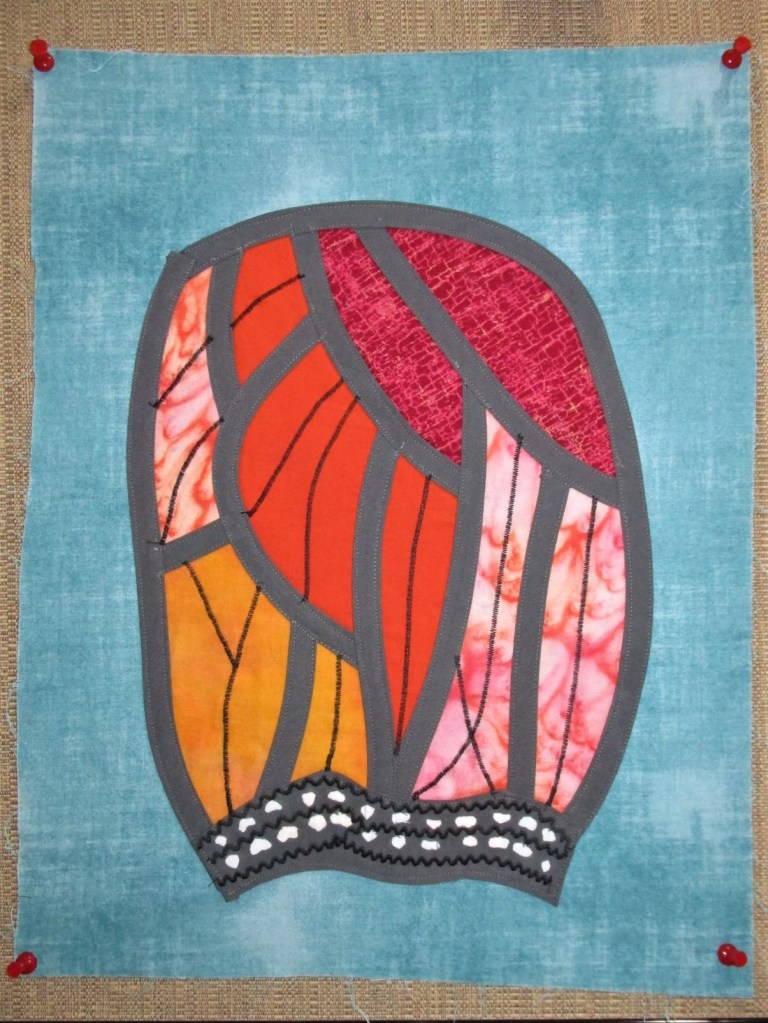
Resolved to address the cries, I have selected this guy to work up into an FO.
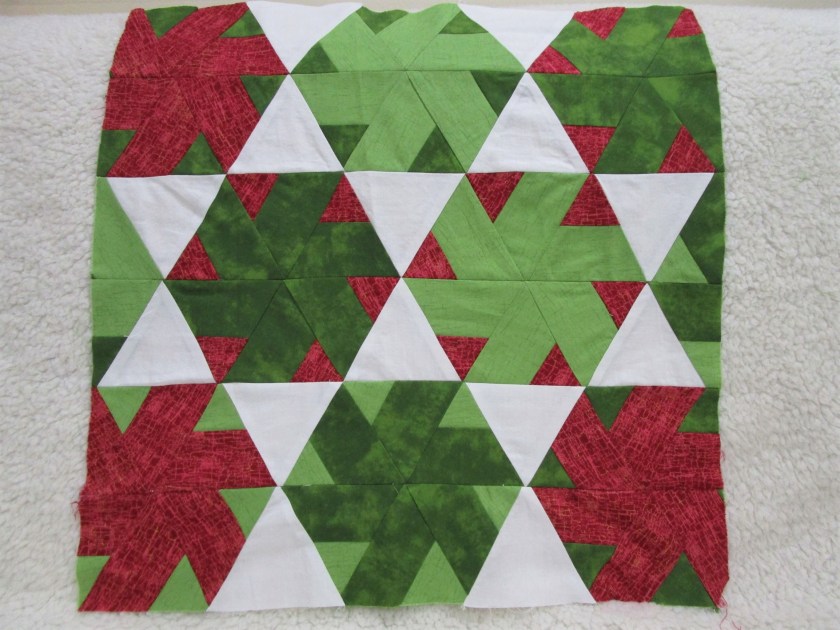
I made this 21 inch square block of hexagons during my week of learning to piece angular shapes. The teacher behind my success is Joanna Figueroa and her class on Bluprint, “Smarter Strip Quilting.” Since I had a bunch of fabric left, I turned to Joanna’s class again for another lesson. This time, I used the same type of piece – a 60 degree triangle, but cut in a way that makes diamonds.
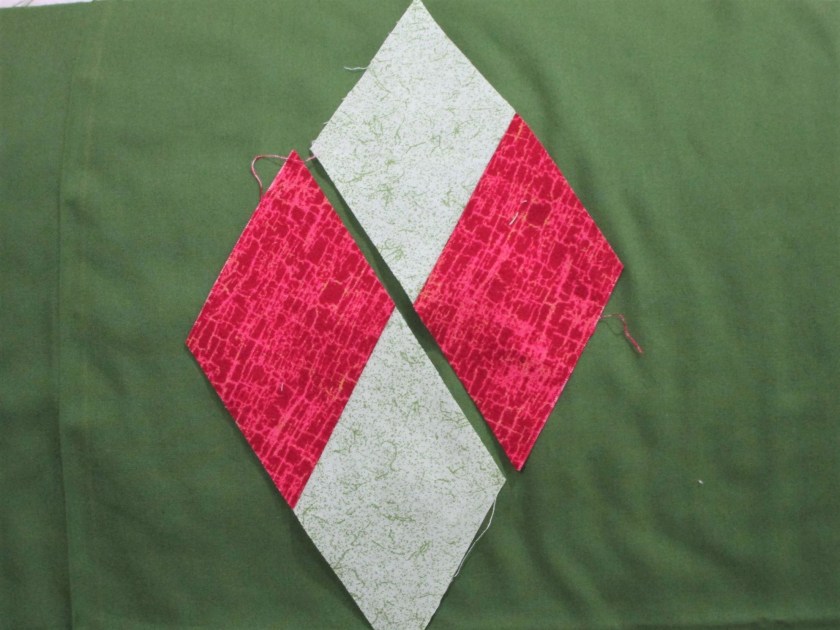
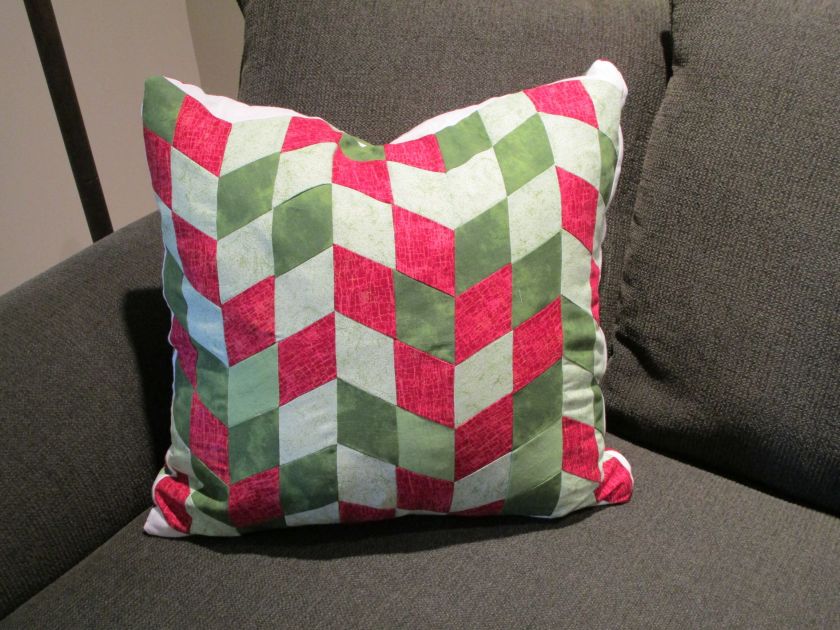
I reasoned that this shape would work nicely with the hexagons as the back side of a large sofa cushion (!) After sewing and cutting many 1/2 diamonds, I came up with an arrangement that ignores the diamond shape (!) I’m going with chevrons instead.
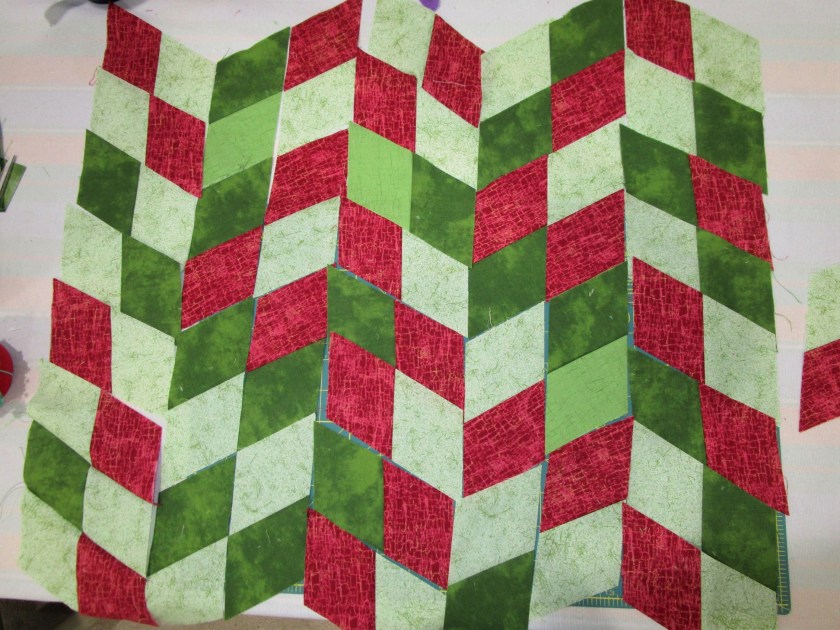
Five columns of diamond shapes, roughly 21″ wide.

Skills that I learned in class the first time helped me speed through any little technical difficulties encountered while making this block.
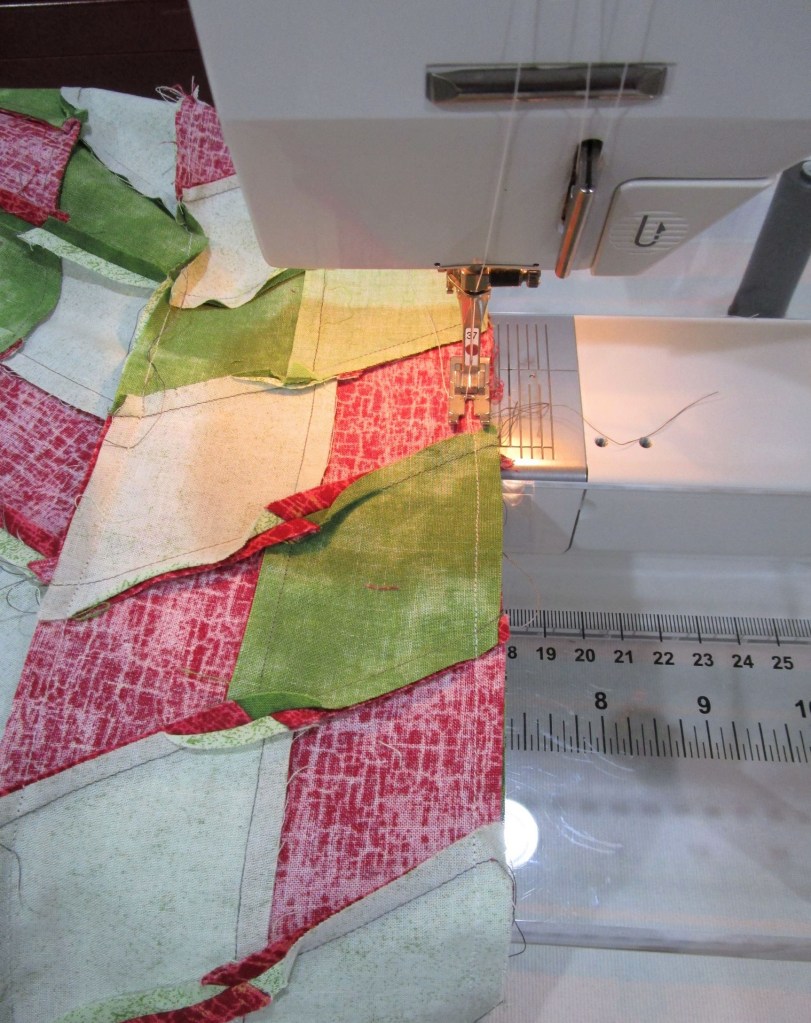
Nesting the seam allowances together makes it a breeze to match points.

That said, it still took me the better part of Sunday and Monday to make.
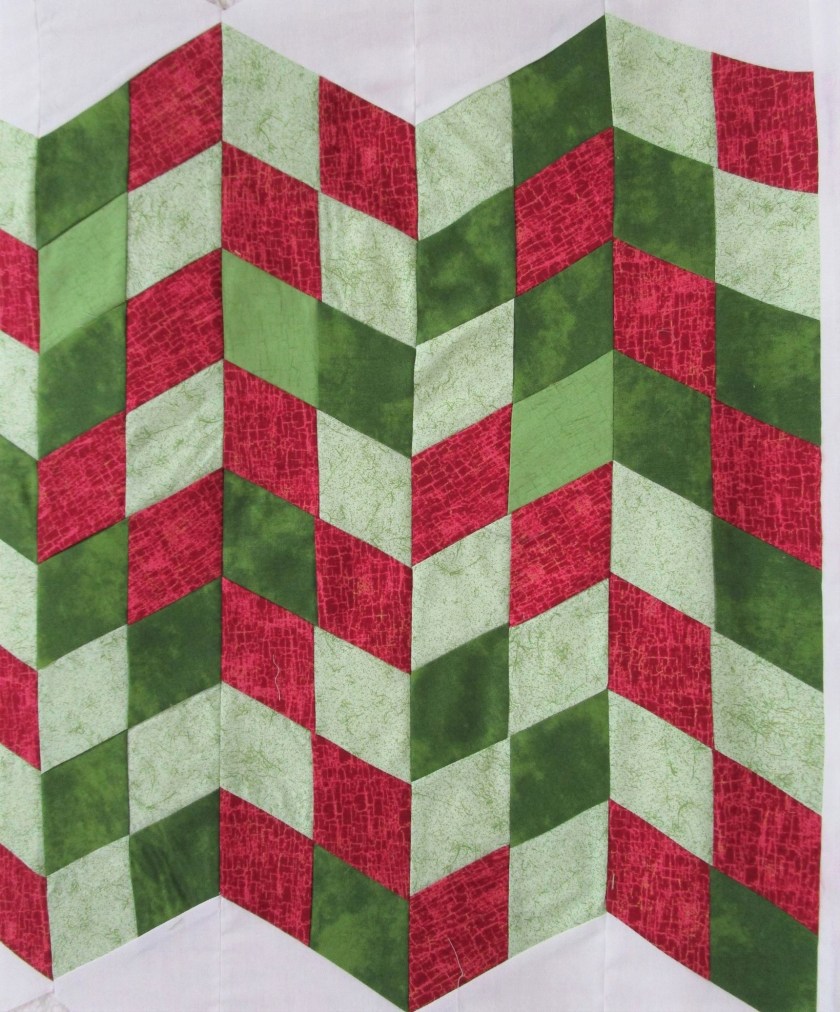
I added white triangles to balance and fill the chevron ends.

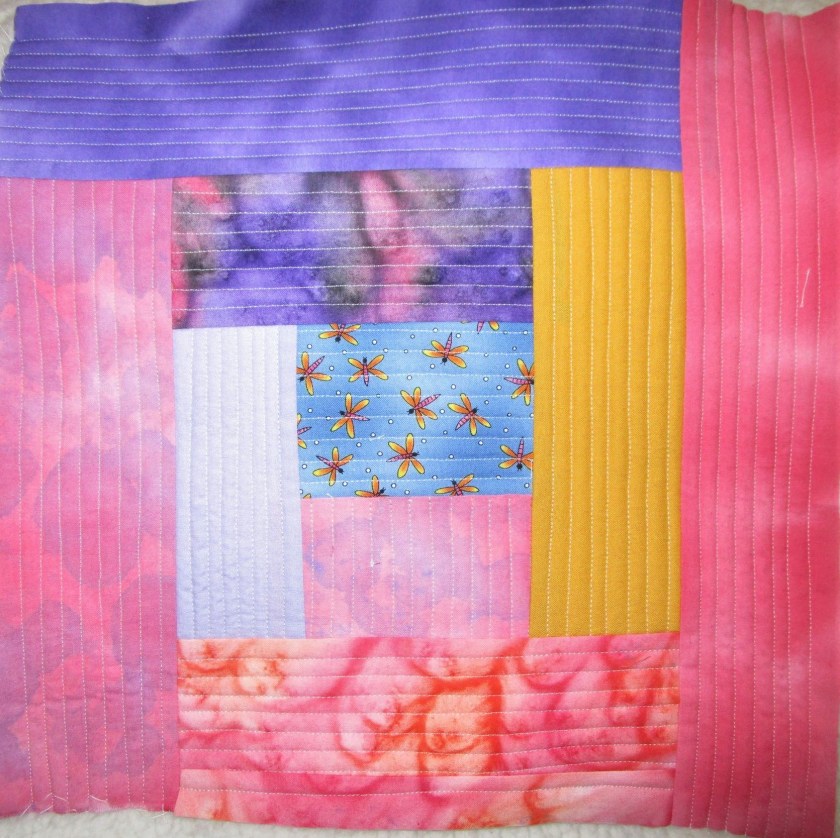
The next step is quilting. There was so much going on in the chevron block, I decided not to risk messing it up with bad machine quilting. But I did choose to quilt the hexes, using parallel and dot to dot machine quilting technique.
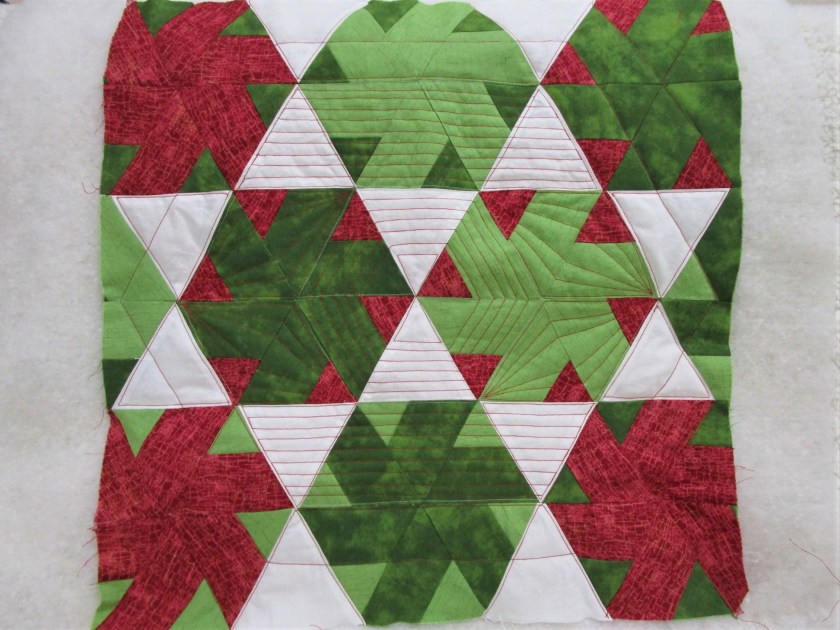
I Love the red cotton thread.

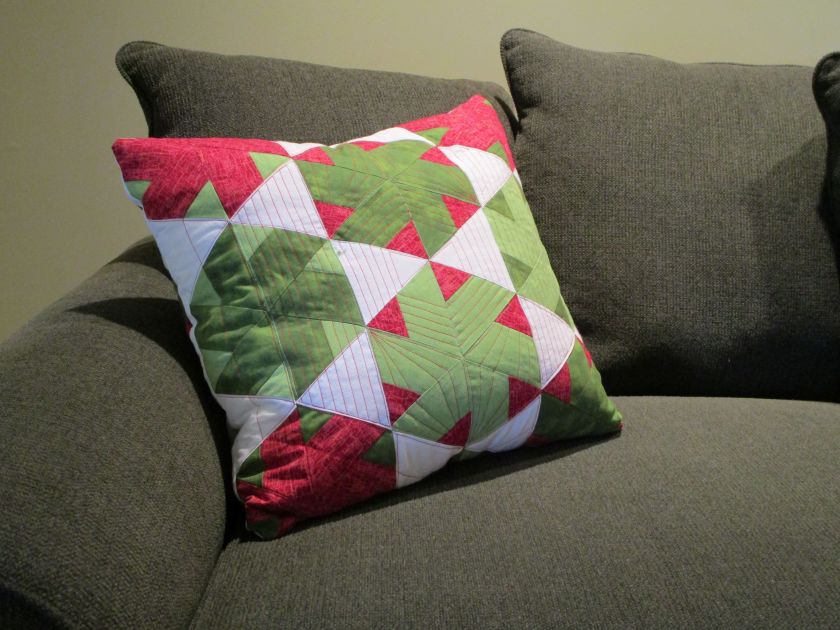
Now to construct the pillow: I recycled a zipper from a disassembled cushion and a king-sized feather pillow which had got slightly mashed over the years. After I squared up the two blocks, the zipper was inserted into a side seam and the four sides sewn together. Using 1/2 inch seams and zig-zagging the seam allowances make it sturdier. Here is the completed pillow, resting peacefully on my sofa:
And here it is showing the chevron side:
Which side do you like better?

A big shout-out to Joanna Figueroa. You can find her class here: https://shop.mybluprint.com/quilting/classes/smarter-strip-quilting/40436?utm_expid=45q-ktsMT9eh9lDyPHy43Q%3A2&utm_referrer=https%3A%2F%2Fwww.mybluprint.com%2Ftopic%2Fquilt&redirect=svodPlaylist&skipMod=true

Posted in crochet

Crochet in the Round Workshop

The first fiber arts workshop I will teach this year takes place in October. I selected crochet in the round because minimal skills are needed to make basic shapes. There are no long chains to work into, no need to turn the work and it is easy to keep track of the number of stitches in each round by using one marker. I am so excited about the patterns I have found in researching for this workshop!

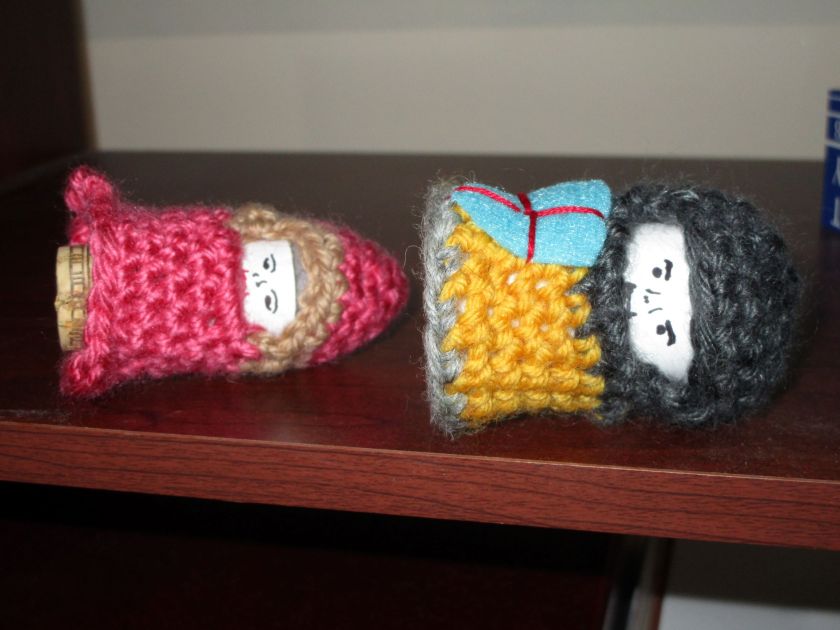
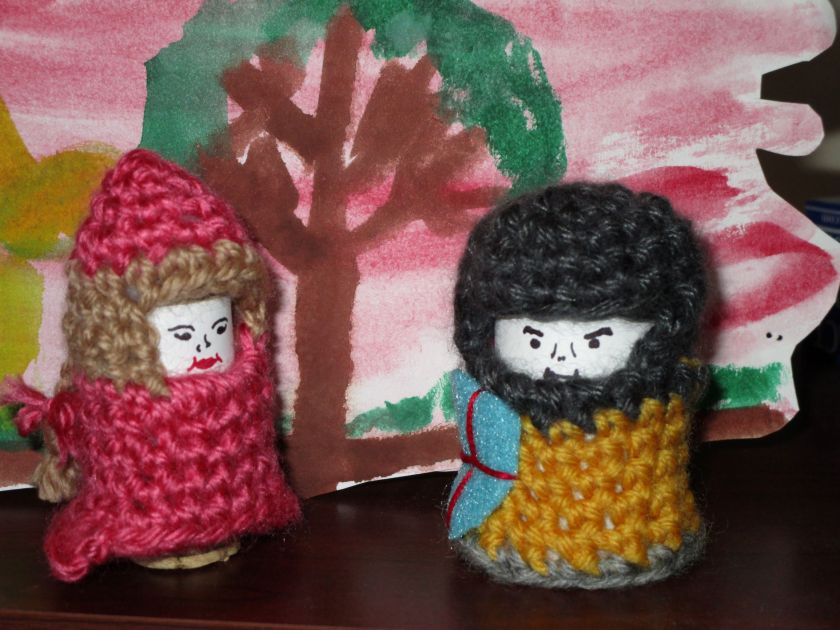
May I present Princess Pigtail and Knight Greyling of Corkshire?

This adorable characters can be crocheted in less than an hour and require only a small amount of yarn. For the princess, I used a wine cork as the filler. The knight is filled with a tall thread spool.

Both patterns are available free. The knight is by LucyRavenscar http://lucyravenscar.blogspot.com/2010/02/cork-and-crochet-knights-ninjas-and.html

The princess is by Tarkheena Crafts: http://tarkheenacrafts.blogspot.com/2014/04/crochet-pattern-princess-fleurette-of.html

Have fun making these little figures!

Posted in knitting

Finishing the Baby Fern Sweater

I had stopped working on this project until I could verify the baby’s arm length. My original design allowed for an 8 inch sleeve. To learn the truth I took a tape measure to the lake house. While she attempted to evade measurement by considerable wriggling, I won the battle, and determined her arms were 7 inches long. In the interests of planning for growth, I made the sleeves 7 1/2.

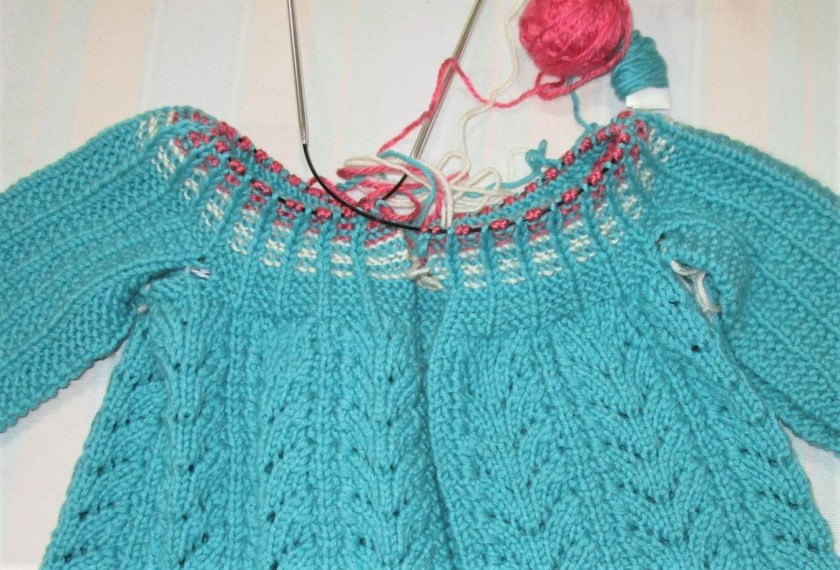
Finally moving on to the yoke. Remember, Elizabeth Zimmerman’s battle cry: Knit body to underarm, sleeves to underarm, unite! Here is the sweater after the yoke was worked as far as the first round of decrease.

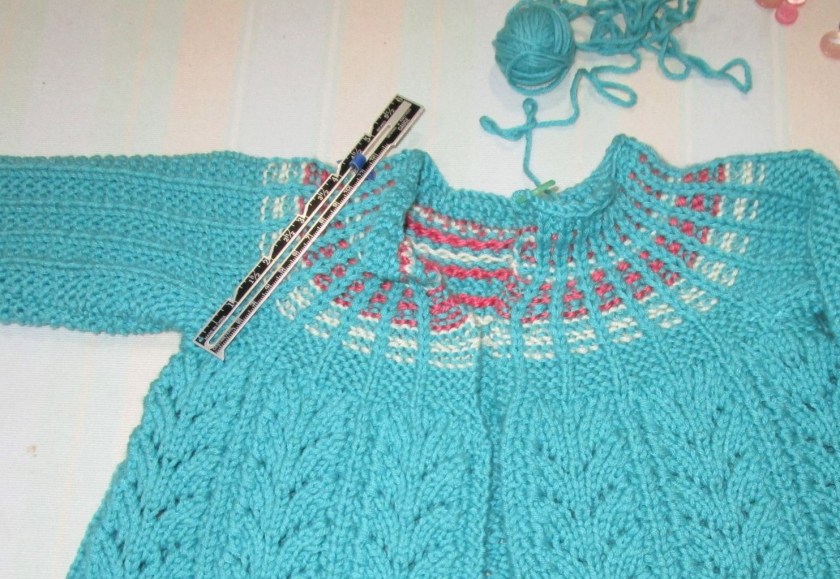
My plan to keep the stockinette stripes evenly spaced worked out well. As I began to run out of yarn I added the white and pink stripes. The blue ribs were carried through by slipping those stitches in the white and pink stripes.

Yoke worked to 4 inches in depth. Per the EZ method, three rounds of decrease happen at 1/2hf, 3/4th and 4/4th of the yoke, or in this case, 2, 3 and 4 inches.

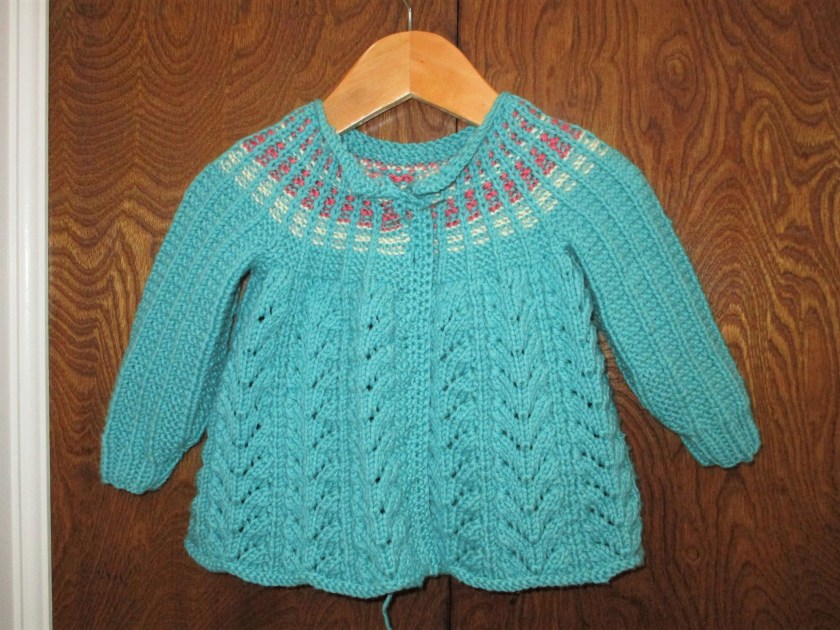
After sewing up the sleeve seams and grafting the underarm seams, I decided to use single crochet to finish the front edge including six button holes – 2 in the yoke, 4 in the body. Here is the sweater, knitting complete.

Now I’m off to my LYS to buy the buttons.

Posted in recycling, sewing, weaving

Fiber Fun at the Lake House

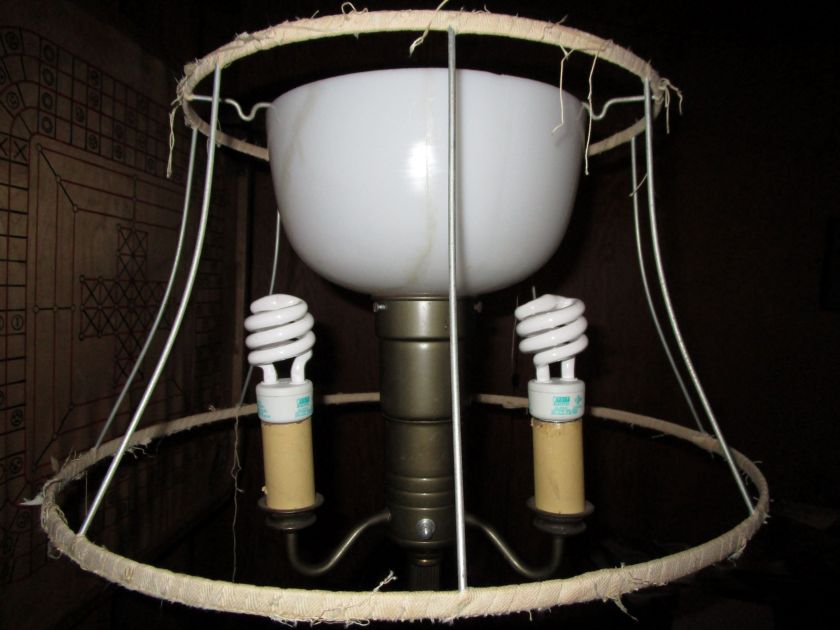
While I and my family were soaking up the sun and splashing in the water at the Lake House, my daughter proposed that we work on a fiber project together. The family lake house, which was built in the 1950s, contains random pieces of furniture and what nots from several decades. The object of attention is a floor lamp with a silk shade that had disintegrated completely. Used in its present condition, the unshaded light got into everyone’s eyes. She thought we could solve this problem.

Of course, the Lake House Challenge is to make it work with limited materials and tools. After a bit of brainstorming, during which we rejected piecing panels together and shirring or gathering fabric, we came up with a weaving concept. We had on hand a few bed sheets and a ball of cotton blend yarn.

Yarn is left over from the Luna Moth baby dress project.

Fortunately, Daughter had brought her sewing machine.

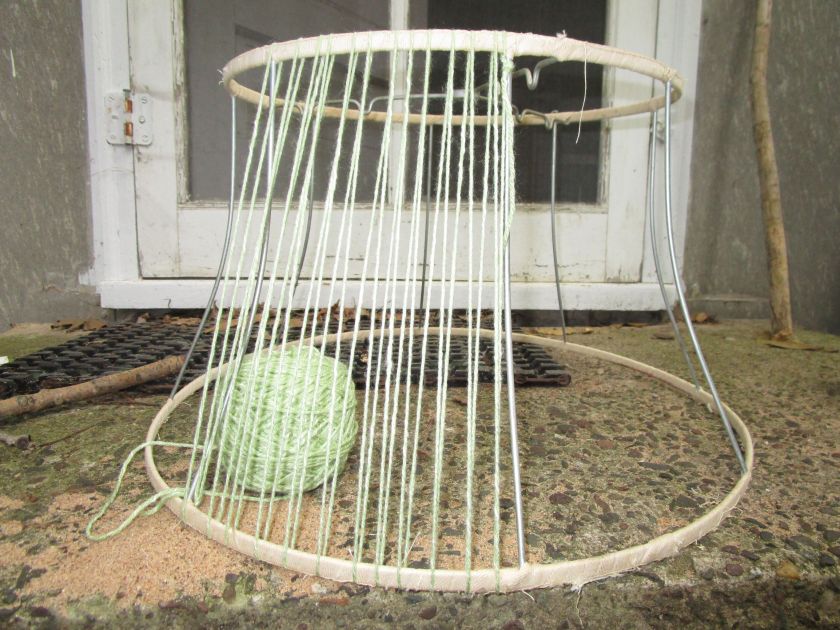
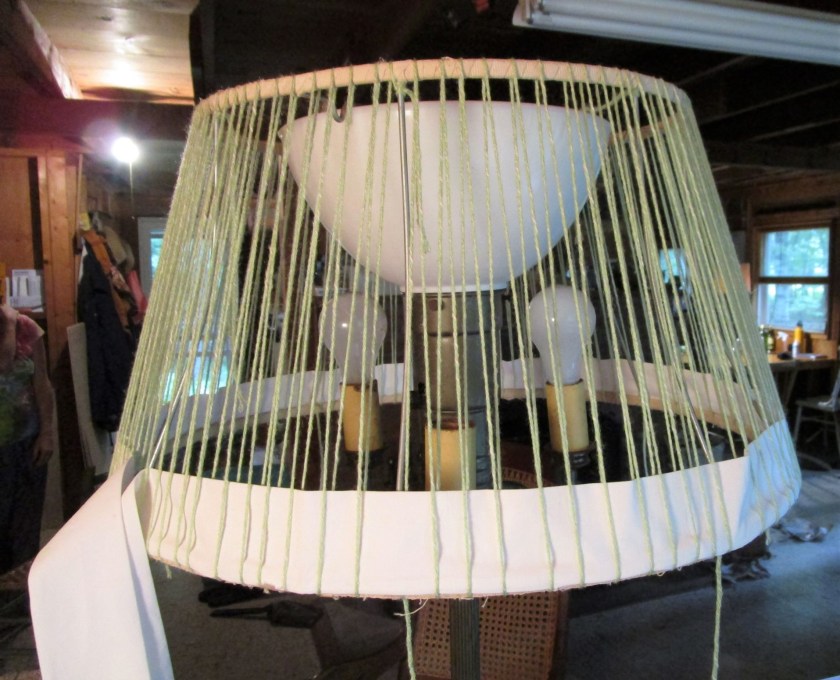
I took on the task of warping the yarn over the lamp shade frame and she hemmed and turned the strips of white sheet. They were about 2 inches wide. We thought we would need six rounds. Here is the shade with the warp in place and the first round of weft weaving.

It took a few days because it was possible to work only while the baby was sleeping. She sewed together the two ends of each strip and trimmed up the yarn.

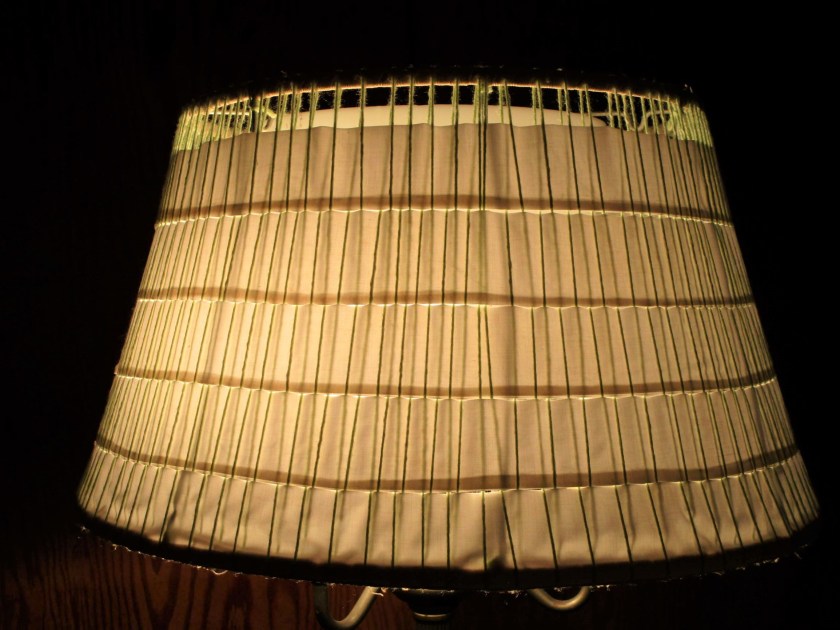
FINISHED LAMP SHADE.

We agreed that it was pleasing to the eye in a bohemian kind of way.

Posted in embellishing

Fun with Embellishments

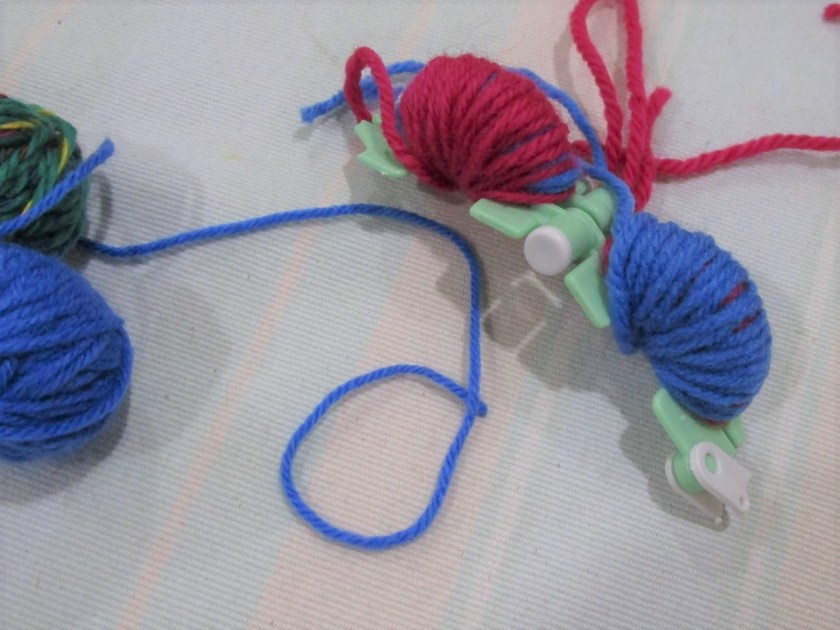
This school year I will again be teaching fiber arts to students age seven and up. I’ve organized the sessions into 4-week workshops. One workshop will explore techniques to use in embellishing clothing and other fiber objects. Today I am learning to make pom-poms using these:

It seems like an easy, anyone-can-do-it craft to use up extra yarn, so I’m all for it.

What I learned in my first attempt is that the instructions included with the tool were incomplete. I got lots of bits of yarn falling out of the plastic holder.

After a quick trip to U-Tube – source of every craft technique in the world – I discovered that the yarn needs to be wound until the holder’s center is filled completely. Then, when the holder is closed and the yarn cut, compression keeps the cut bits together long enough until they can be tied up with a piece of yarn.

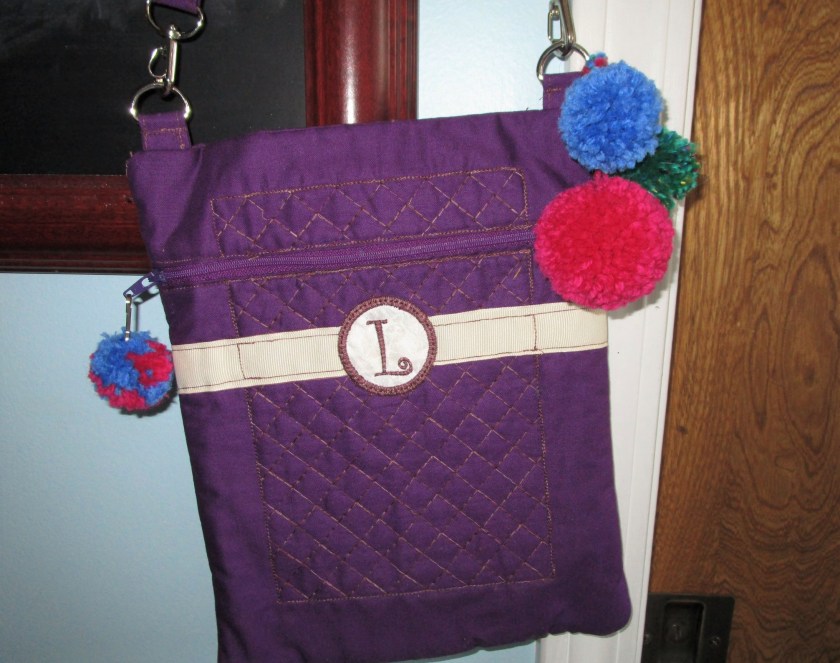
I made one medium and three small. Here they are decorating a cross body bag.

I’m confident all the students will have a great time making pom-poms. I can’t wait to see how they use them to jazz up their clothes One final note: Don’t lose these little pieces, or your pom-pom makers will be useless.