
Artist Robert Indiana played a central role in the development of assemblage art, hard-edge painting and Pop art. As a young artist in NYC, he scavenged for materials which he would craft into free-standing structures he called “herms.” I met him in 2004 when he came to town for a solo exhibition of his paintings and sculpture. A fairly retiring man, he did enjoy the company of women. He was happy to stay and chat with our (largely) female staff before the opening event, but quickly disappeared from the scene when invited guests began to arrive. My craft of today is drawn from Indiana’s 1960s series of number paintings. These works were loaded with personal symbolism for the artist. To Indiana, the number 6 signified the prime of life. Let’s see how well I can translate it into a knitted piece.
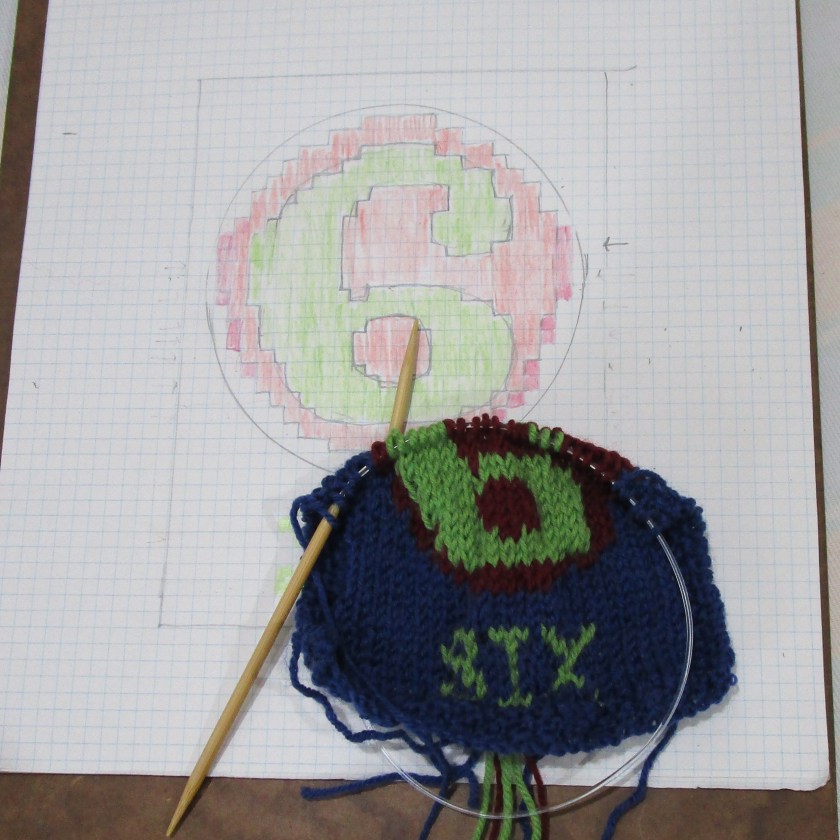
Here is the chart I drew fashioned after the number 6 poster.

Obviously, translating a curvilinear design into a chart is a bit dicey. Let’s see what happens when it is knit up.

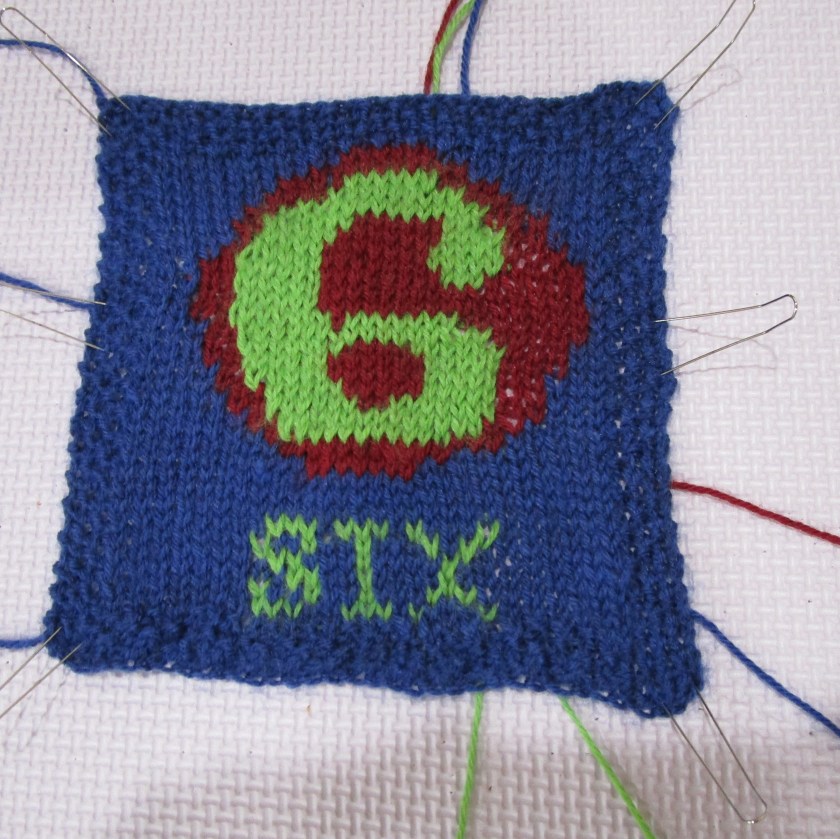
Below is the washed and blocked piece. While in the water, it is important to pull the piece in all directions. This helps even out the stitches and the rows.
I’m not fond of all numbers, but I’m very fond of 2 and 6.
– Robert Indiana
To learn more about Robert Indiana, visit http://robertindiana.com/work/



 Daily Fiber