As I knotted off the last thread of the binding’s slip stitch, I drew my quilt around me and snuggled down into its folds. It is wrong to be in love with one’s own work?
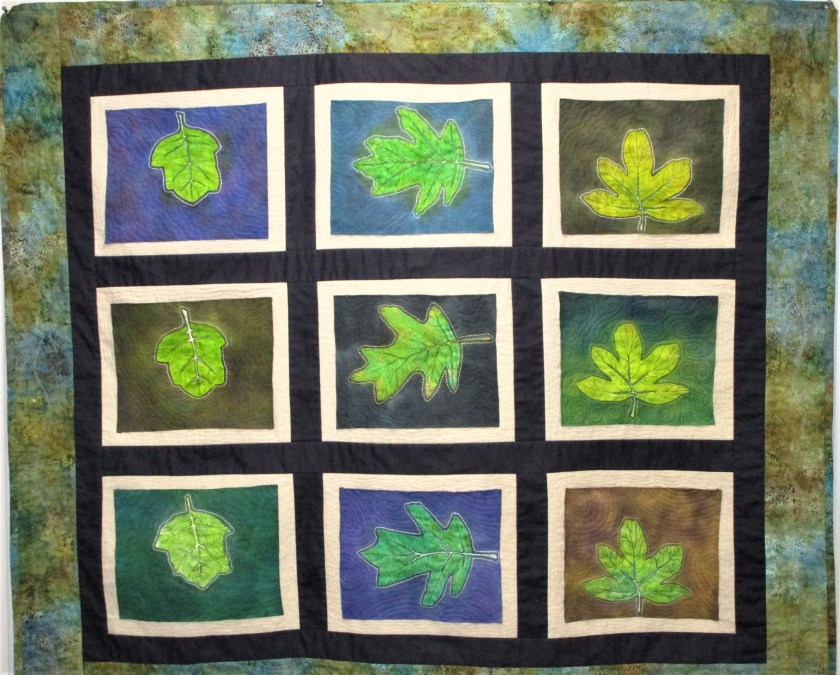
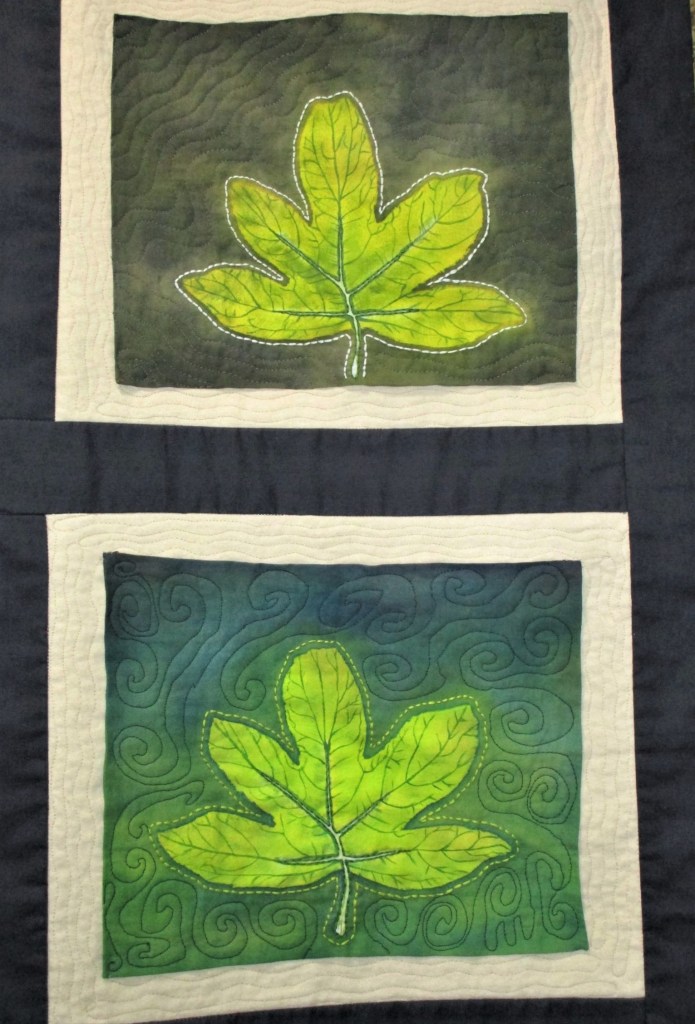
This little lap quilt turned out very much the way I had hoped it would. The dark sashing focuses one’ eye on the beautiful leaves, as if each was a boxed jewel. I loved quilting in free-motion over under and around the leaf shapes.
The batik fabric of the border matches many colors in the blocks. And the botanical pattern on it suggests the sort of wooded area where one might find an oakleaf hydrangea shrub in the wild.
“Oakleaf Hydrangea Study” Hand painted cotton, cotton flannel, and commercial printed fabric; hand embroidered and machine quilted free motion style.
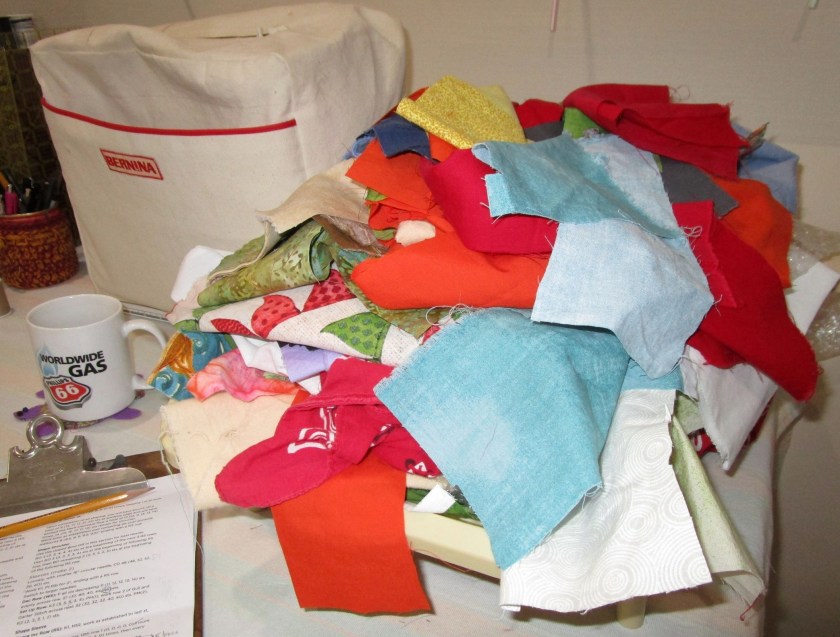
This past summer has been a wonderful time of learning for the fiber artist in me. I have viewed dozens of tutorials, focused primarily on quilting. “Don’t ever throw away your scraps,” is advice that I heard from an art quilter, early in my training. Well, I took her advice, and look where it has got me. I desperately need a system for managing these fabric pieces!
By nature I am not a messy person. I like to make my bed and wash the dishes. When I began my journey with fiber, I organized a space which I believed possessed ample work room and plenty of storage for tools and materials. It was great, as long as I stuck to yarn crafts. But once I ventured into fabric work, things went wonky. (FYI “wonky” is a technical term used by quilters.)
I share my closet with the family’s camping equipment. It also houses the ironing board, a small set of drawers and shelves for my yarn stash. The stash is relatively modest, but it now fills the shelves. My bookcases contain paint, books, tools, my fabric stash and sewing machine. But the scraps have proven recalcitrant. If left tossed in a basket, they are impossible to work with.
So this is my plea: Who of you has solved the Scraps Dilemma, and will you share your solution with me, a frustrated fiber artist?
I have been sewing like a mad woman, trying to finish the Oakleaf Hydrangea quilt. It’s very close to finish now – needing only the binding sewn on. I ran out of thread yesterday just as I was finishing quilting. So today, I am giving that project a rest to celebrate the change of seasons.
For the first day of autumn, I am making a block using a technique that I haven’t tried yet: reverse applique. My idea is to do a tree silhouette, with negative and positive images of each tree half. When describing this to my husband, he came up with the idea of making each side equal – to acknowledge that the first day of fall has day and night of equal length. I agreed and got to work on a sketch.
I chose a charcoal gray fabric to make the reverse portion of the image. Here is it, all cut up and smeared with glue.
My background fabric will be a gold print, to represent the forest in fall. Here is the positive image glued to the background and the final block with both images in place.
The other pattern I wanted to try is the Maple Leaf. I have seen really pretty quilts made in this pattern. I plan to use up left over hand painted fabric from the hydrangea quilt as the background color.
Green for the background and orange for the maple leaves.
I found instructions for this pattern on The Spruce Crafts website, by Janet Wickell. Maple Leaf is an exercise in half square triangle construction. Here are the stem pieces, made with one orange and two small green.
Okay, I didn’t takes pictures of every step in constructing the remaining squares. Basically, you make four half square triangles in the two different colors, then combine one solid background, three solid leaf color squares, the stem and four half triangles to make each block. I made two blocks. Here is the finished object.
I will add some stitching on the tree square, and perhaps quilt a bit on other parts of this work. But right now I am off to buy more thread.
Janet Wickell’s site and instructions for the maple leaf pattern are found here:
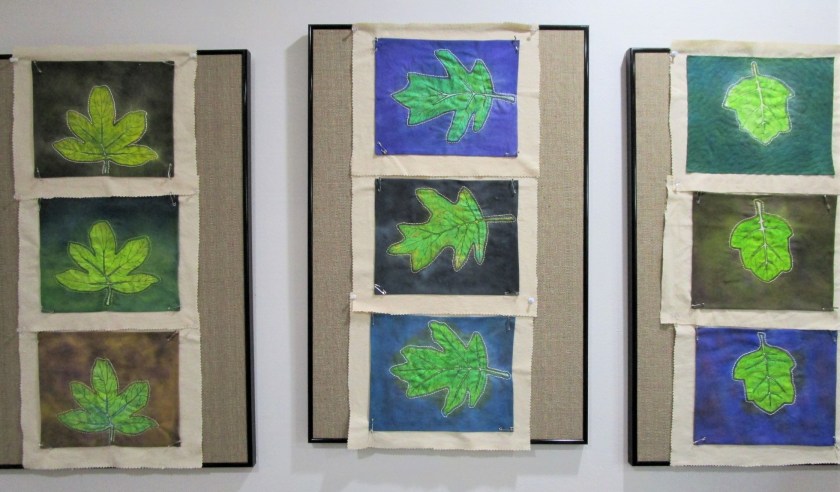
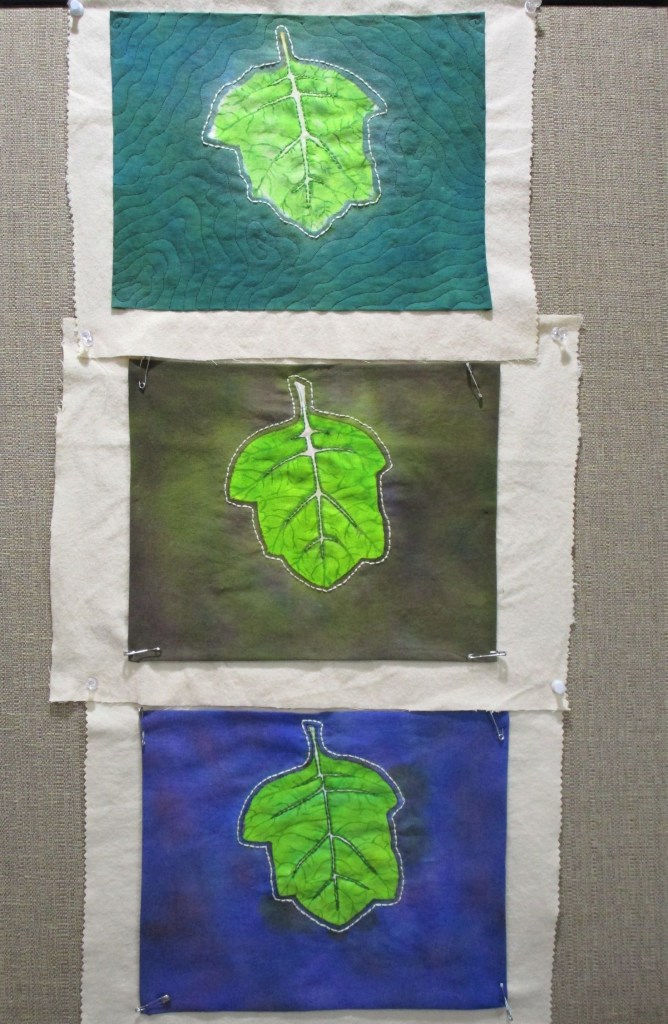
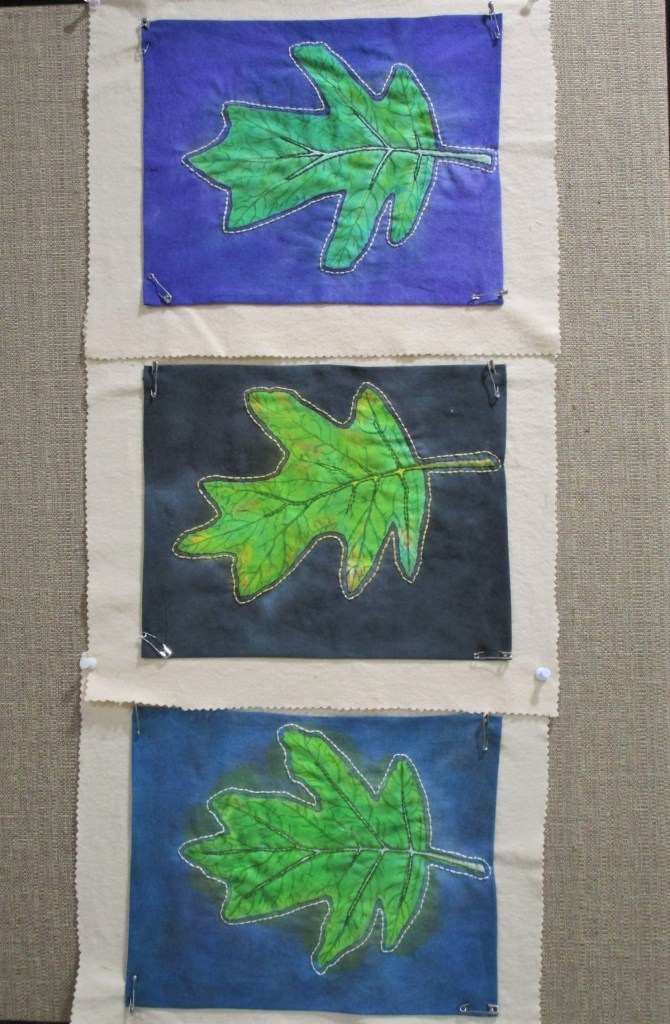
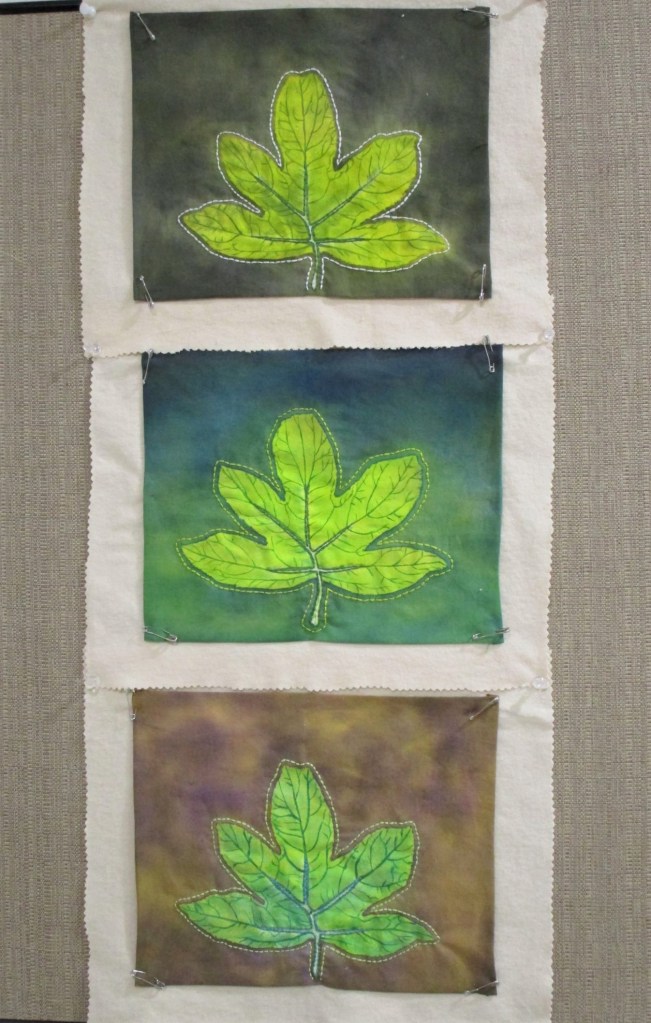
Today I am writing my 100th post on Daily Fiber blog. I am pleased that this milestone arrives at the same time as another mini-achievement: the completion of my oakleaf hydrangea block series. After some consideration I determined that the final block count will be nine, as you see pinned to my wall boards in the photo above.
Decisions still need to be made on how to finish. After consulting with a few friends, I have settled on the arrangement of blocks and the decision to use a dark border around each block as if it were an individual painting. Also, I will add a border around the whole quilt – width and color yet to be determined.
Here are some close-ups of the groups;
As you can see, only the first block is quilted so far. I will finish the quilting after assembling each row.
Hand-painted cotton fabric , hand embroidered with a flannel background. Each block is 10 by 12, including flannel border.
Who loves going to the fair? If today’s attendees are representative, I would say everybody! There’s a lot to see and a lot to do. Our county fair focuses on all things agriculture, but also includes some things that city folk enjoy, like growing flowers and taking photographs. Here is what I did at the fair today.
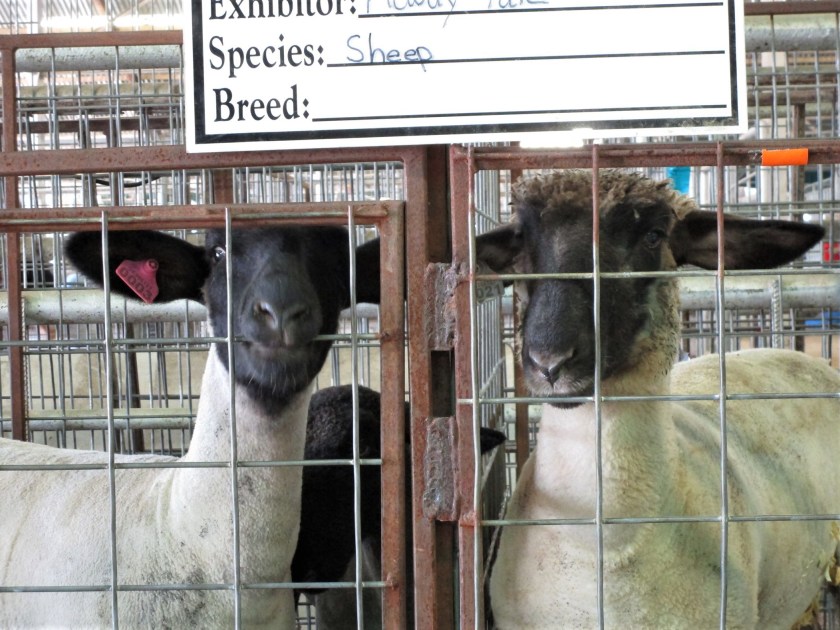
I checked out all the Fiber Providers:
Alpaca buddies
Eager Sheep
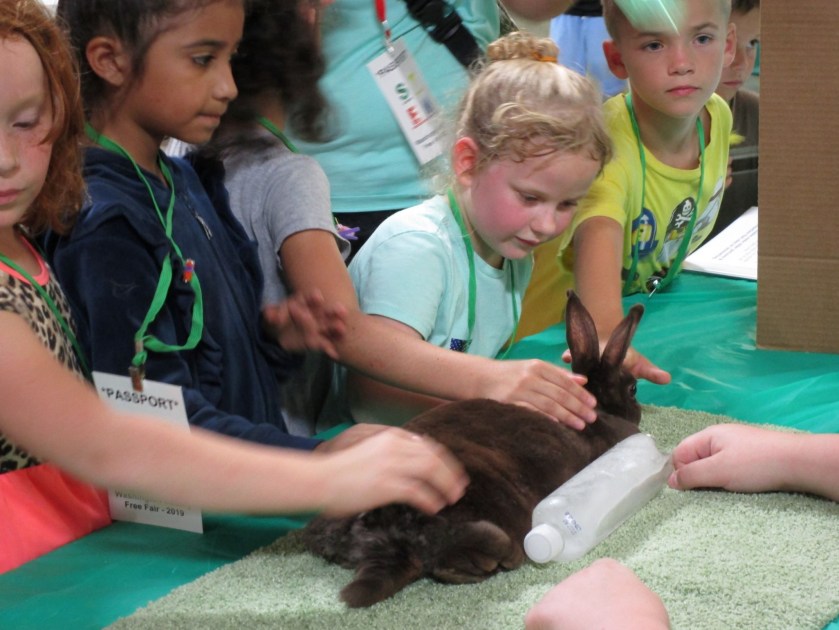
Furry Rabbit, petted by kids while curled up to an ice block
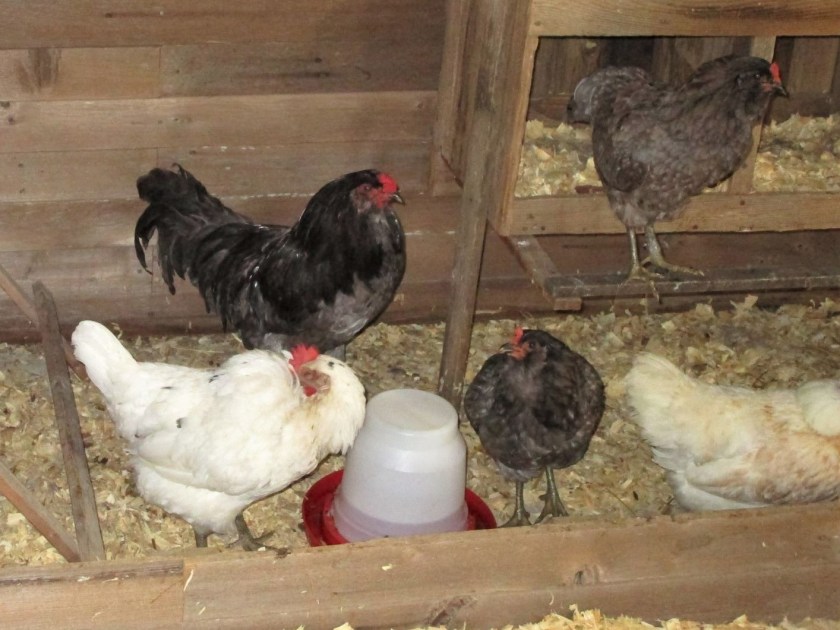
Some chickens managed to get into the picture.
Oops, NOT fiber providers, just cluckers and layers.
And I got a good look at the various needle arts entries.
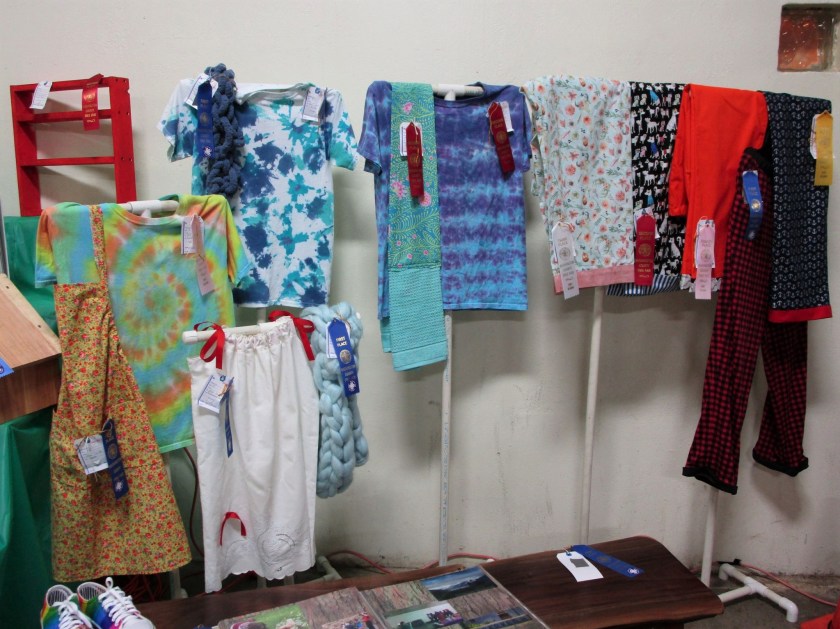
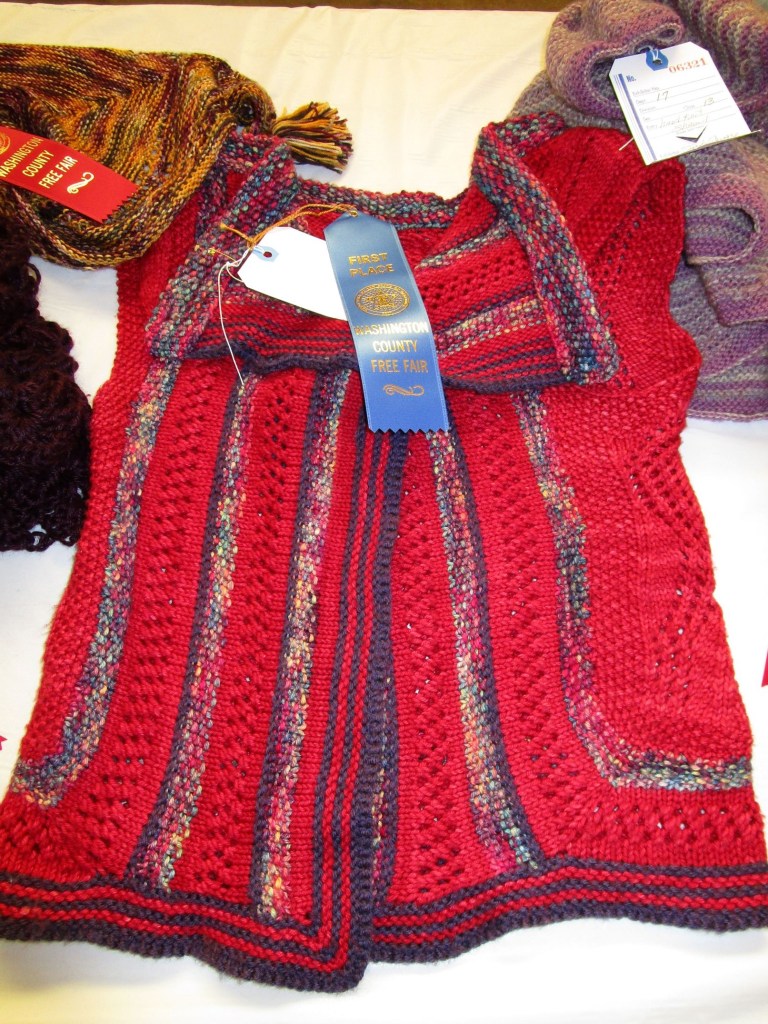
4H kids garments
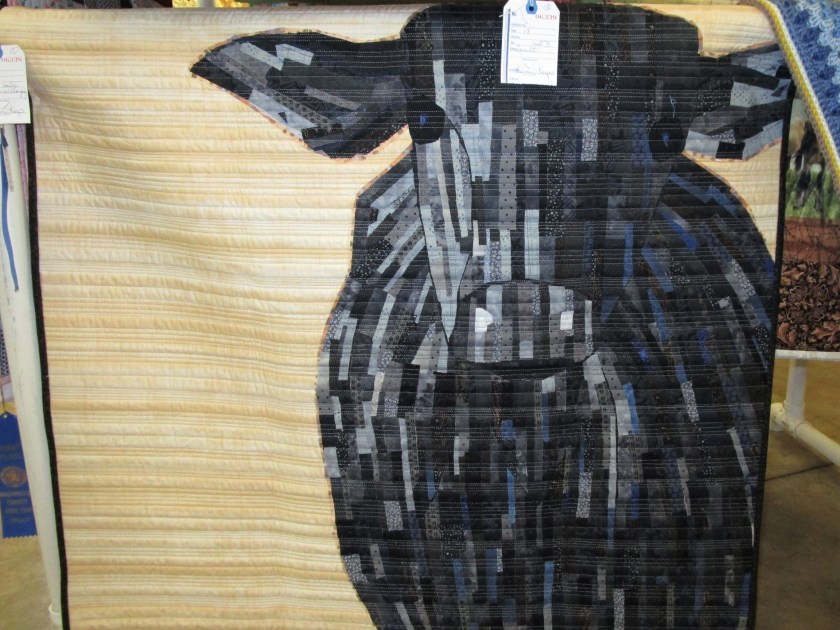
Raw-edged applique quilt winner
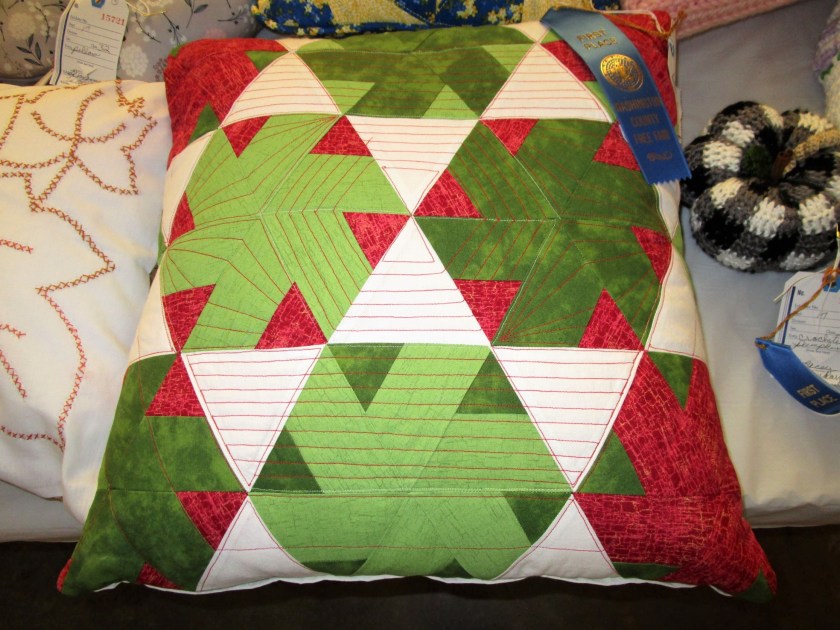
Grand Champion modern quilt
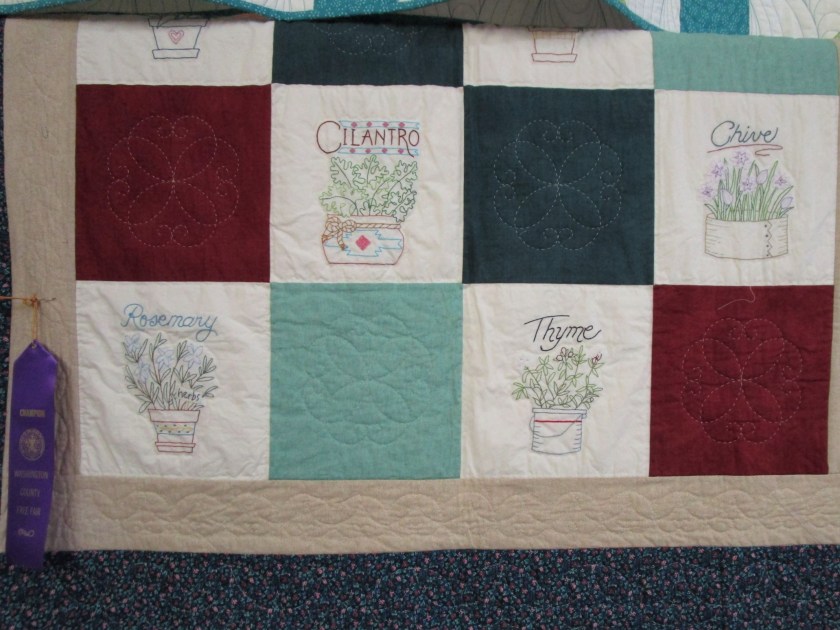
Grand Champion hand embroidered and hand quilted quilt
Sadly, there were not near as many needle arts entries as there were in past years. Achieving a couple of blue ribbons for my two was not that gratifying.
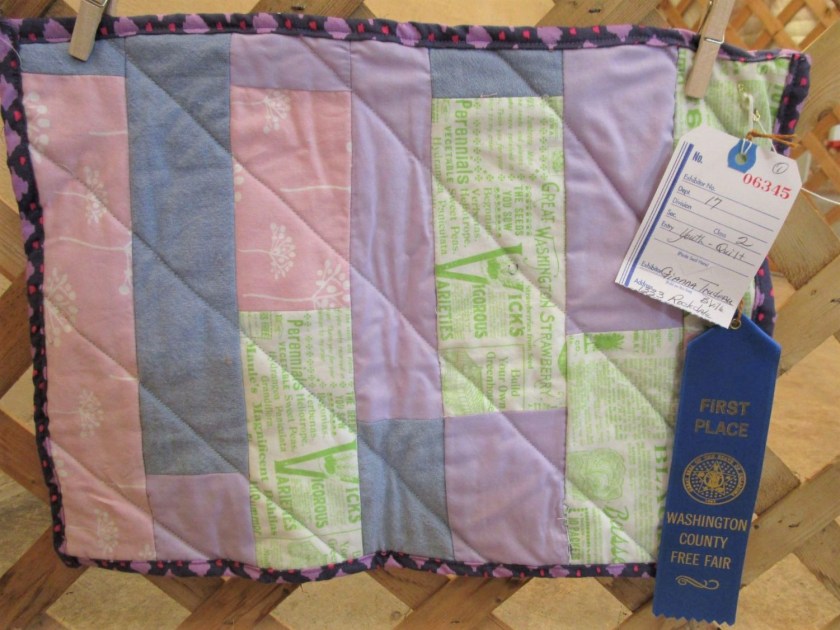
But I was very pleased to see that some of my fiber arts kids had entered items that they made during our class last year. Here is Gianna’s Blue-Ribbon strip quilt.
Going to the fair felt so nostalgic to me. It made me wonder: How many more years can the county fair tradition continue into the 21st century? Are needle arts as a craft doomed to die out? Or can they be revived in a brave new world?









 Daily Fiber