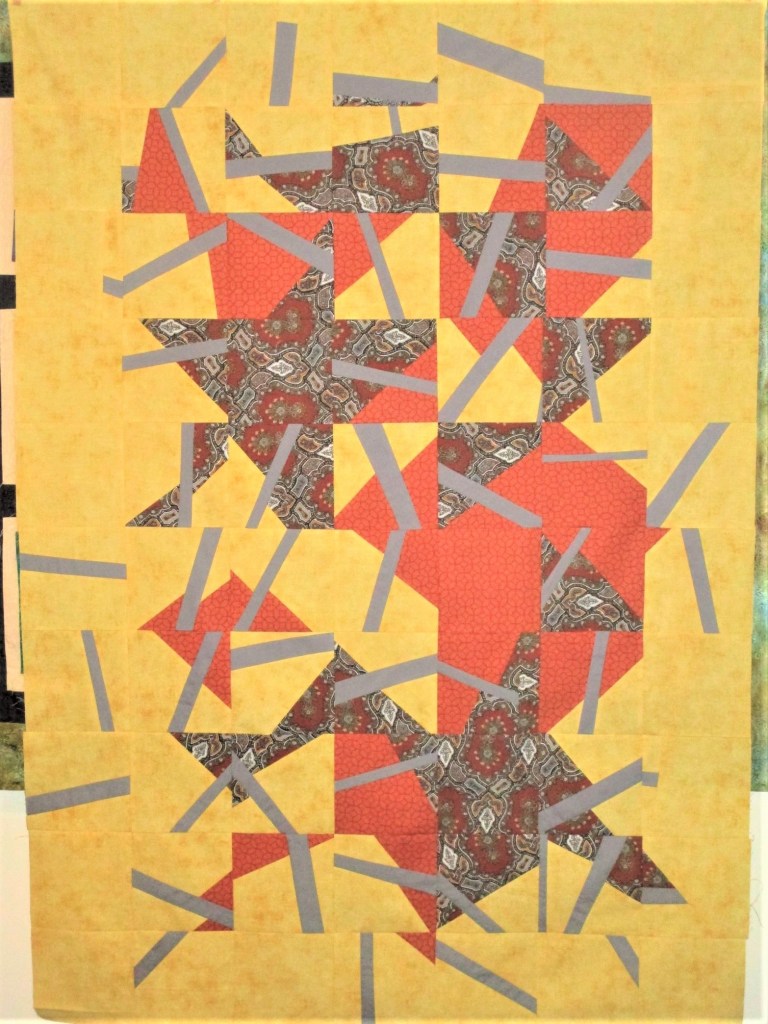
After a few days of fast sewing and meticulous pressing, my improvised Cunningham quilt top is done. Corner matching, as expected, was a bit of a pain. Promise that you won’t look very closely at them! Truthfully, I needed the practice, so all is good.
I am happy with the warm and energetic feeling that the quilt design suggests.
It has been fun to make it up as I go along. I’ve decided not to add any borders, but I still need to choose backing fabric and make a binding strip.
I came to learn quilting almost as an afterthought. As I started to get ideas for making fiber objects, I became aware that I lacked the skills I needed to realize them. Thus started my quilting education. There are some things about quilting I like – choosing fabrics, developing my design, adding surface details and actually doing the quilting. The things I dislike are cutting many identical pieces of fabric, squaring up blocks and especially matching corners.
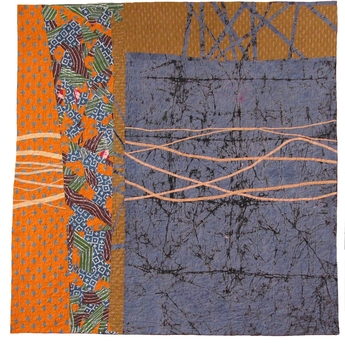
So naturally I am drawn to improvisational piecing. Joe Cunningham (aka Joe the Quilter) and his process were a revelation to me. He offers the promise of freedom. Freedom from all the dull parts of quilting, which leaves more time for fun. The quilt featured at the top of my post is one of his. His website can be found here:
Joe Cunningham has been a professional quilter since 1979. His philosophy is unique. He doesn’t use patterns. He designs out of his head, adjusting things as he goes along. He has no specific end in mind. He explains that as the quilt approaches the finish, he finds out what it will look like. He practices randomness, chance and serendipity. To this end, his method relies on chance from the first cut.
As an example, the class I took with Joe featured a quilt called “Rock the Block.” Here is how to make it:
Step 1: Choose three fabrics. Include one big print. The other two can be prints that don’t necessarily go with the big print. Also choose a solid color that you will cut into narrow strips, which Joe called “sticks.”
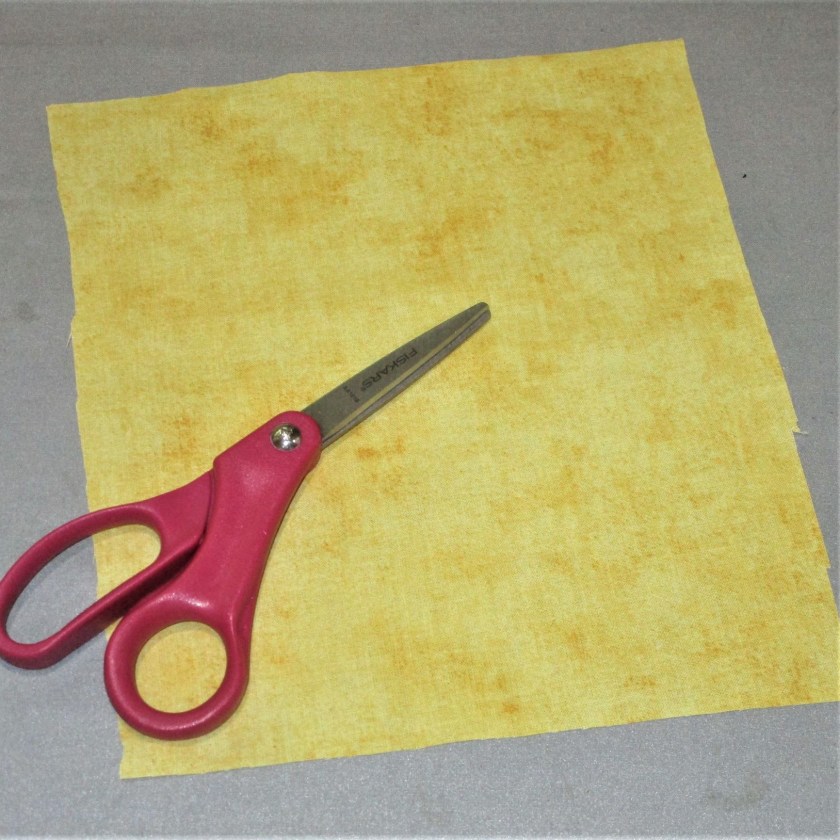
Step 2. Cut out a square. It doesn’t need to be perfect, but does need to be bigger than 7 inches.
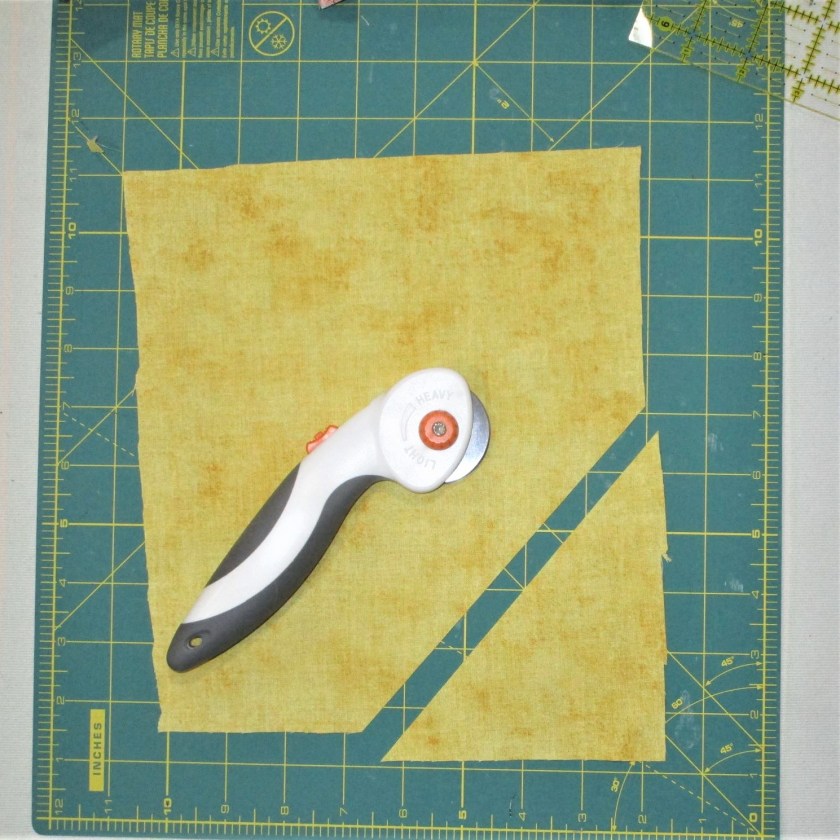
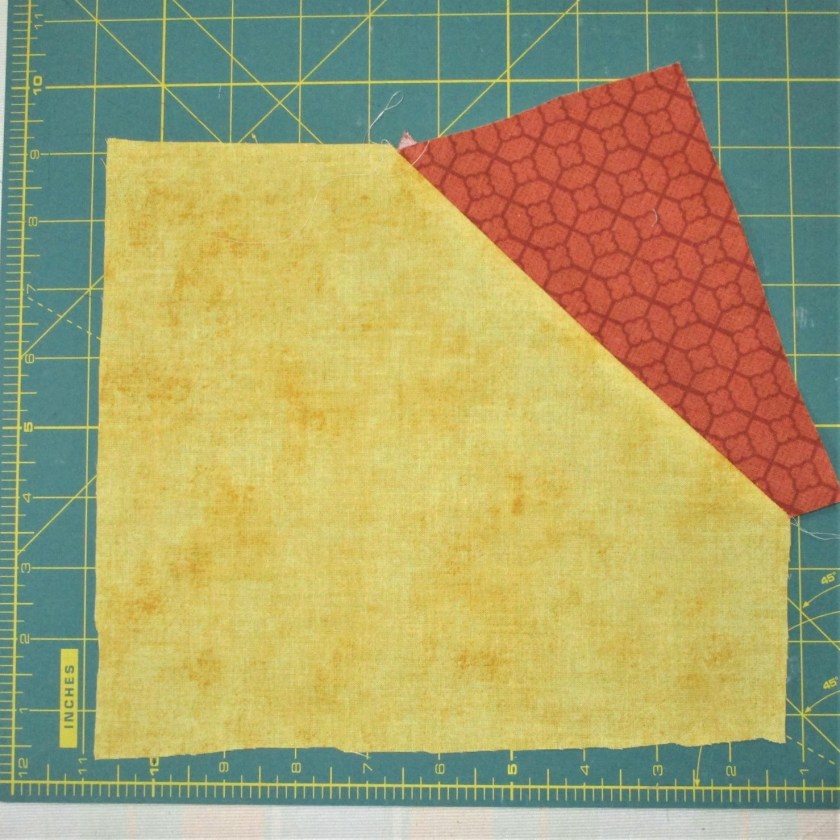
Step 3. Cut off a corner.
Step 4: Cut out a triangle from one of the other fabrics. Sew it to the square at the cut edge.
Step 5: Cut through the square, across both pieces of fabric.
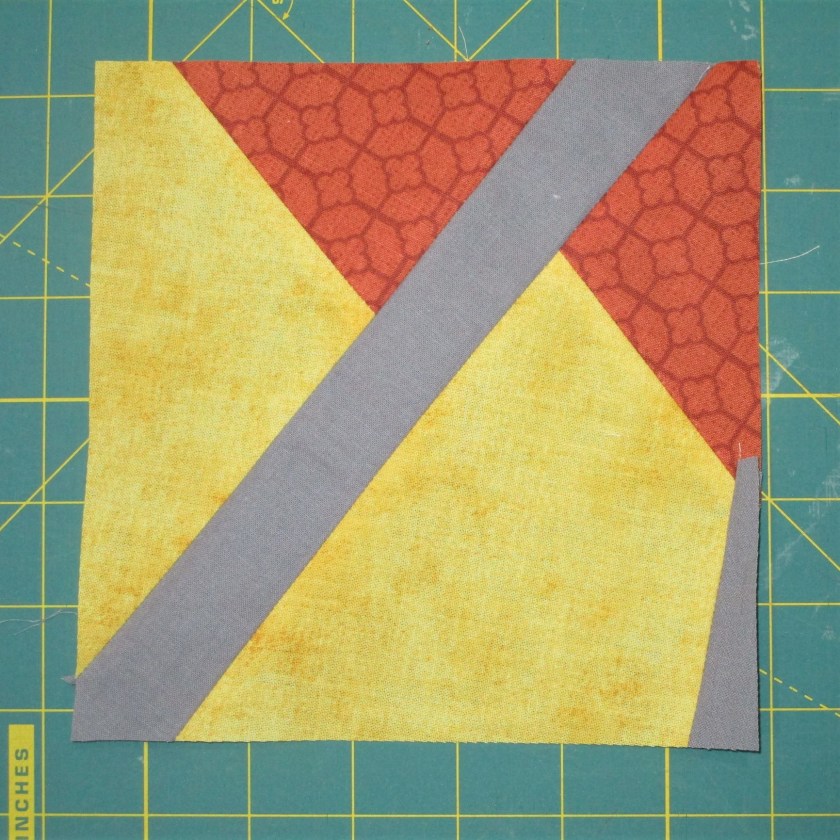
Step 6: Sew in a stick.
Step 7: Press seams open and trim the block with a 6 and 1/2 inch square ruler.
Repeat steps 2 through 7 until you have enough blocks for the size quilt you want to make. Use all the different combinations of your three fabrics. Your blocks might look like these.
Or they may look entirely un-like these!
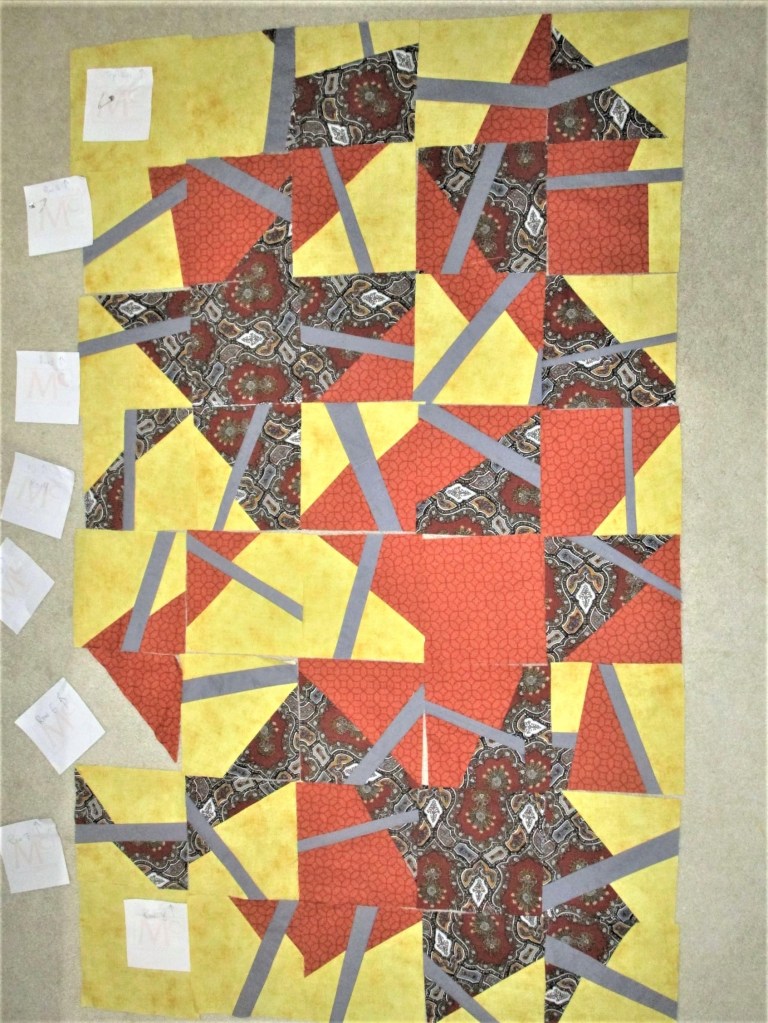
Now the fun begins. Lay out your blocks in rows. Move them around, arranging the blocks until they look “pleasing to you.” Lacking a design wall, I laid mine on the floor.
This arrangement is pleasing to me.
So far, this has been painless. Nay, it has been truly pleasurable. I plan to add more yellow blocks around all sides. Some of them will have patterned fabric crumbs and a few “sticks” sewn into them. Some may not.
While I acknowledge there will be corners to sew, I plan to adopt a laisser-faire attitude about the matching part. If this sort of design process is intriguing to you, I suggest you check out Joe the Quilter’s website to see more of his quilts.
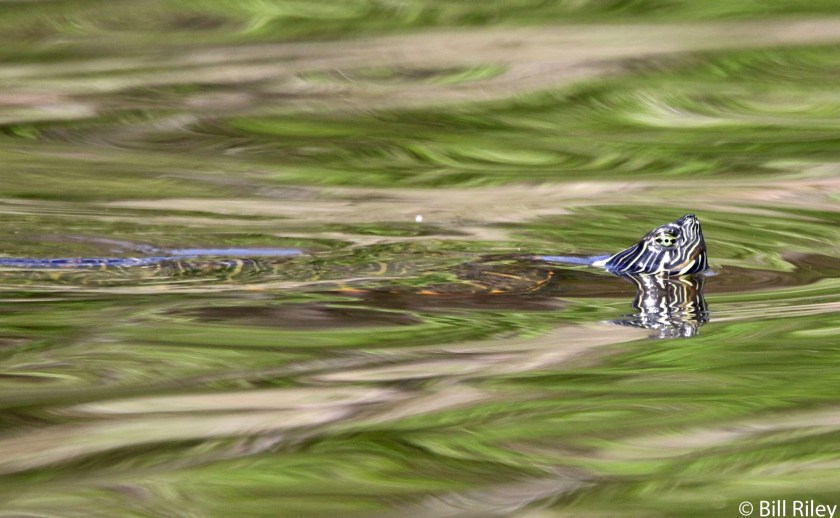
It’s been a while since I shared the turtle in the pond fiber object. As a reminder, it was inspired by a photo taken by Bill on a recent camping trip at Lake Montgomery.
I loved the light, the colors and the texture of this image. I knew right away that I want to create my own version in fabric.
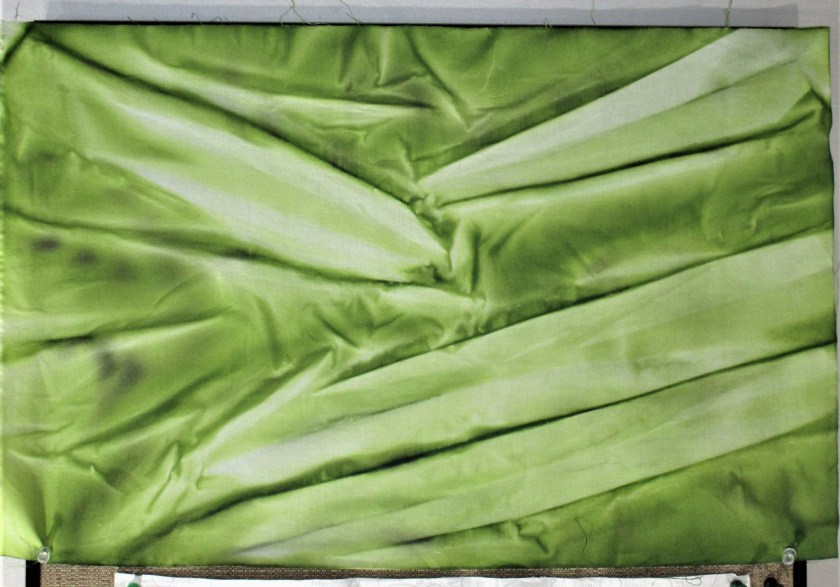
Here is a recap of how I processed this inspiration. First of all, I used fabric paint and the Shibori technique to render the background on cotton fabric.
The piece is about 15 by 20 inches.
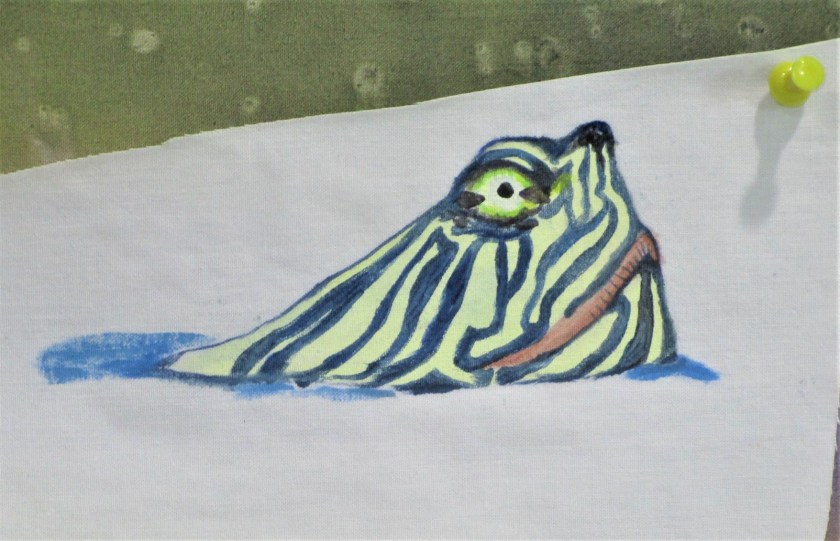
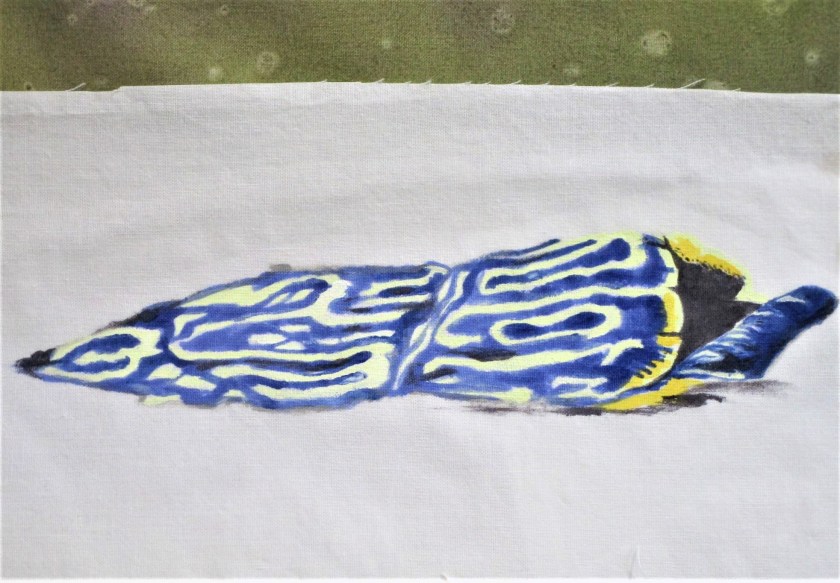
After the paint dried, I added another layer to render some shadows. Next I painted the two halves of the turtle onto white fabric…….
I chose to let the upper part of the turtle shell rest above the water line.
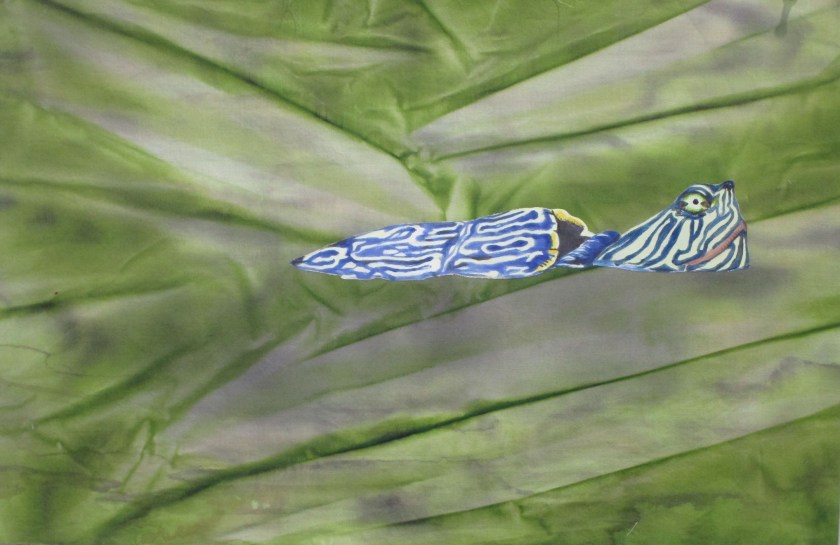
……………..… and appliqued them to the background using fusable interfacing.
This is how things stood while I pondered what other elements would enhance the image.
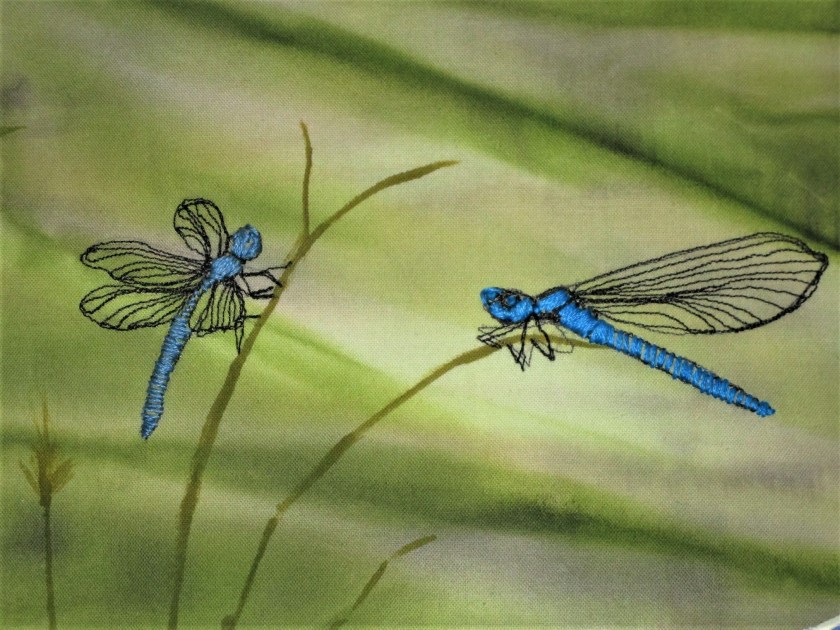
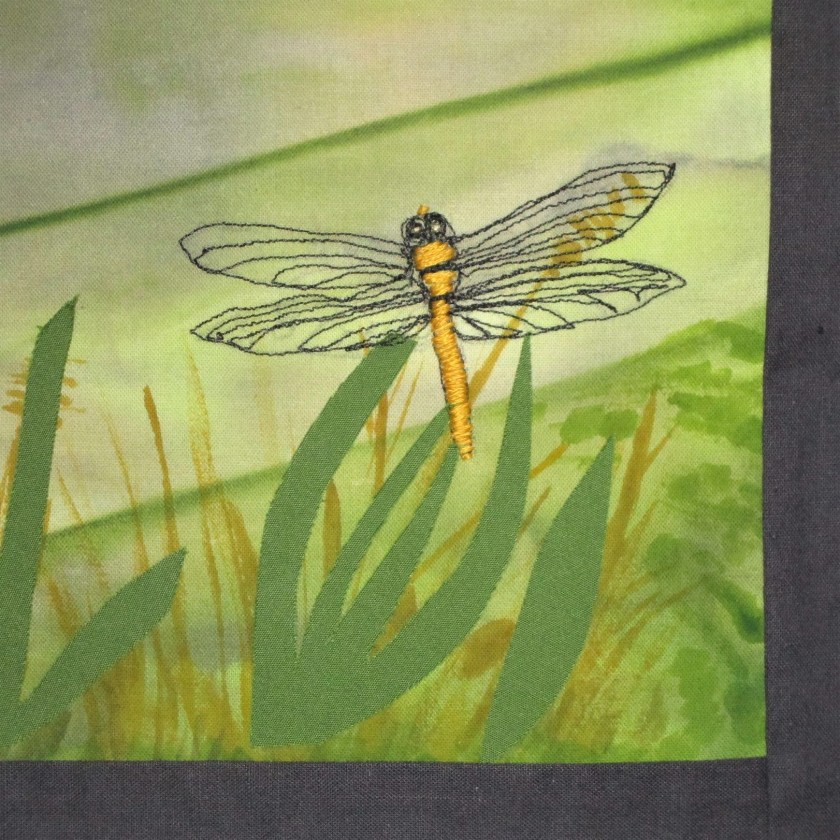
I decided on a few damselflies. More images by Bill were consulted. I picked three beauties, hand embroidered the bodies with floss and machine stitched the wings.
You can see the water plants I added in the foreground using applique and paint.
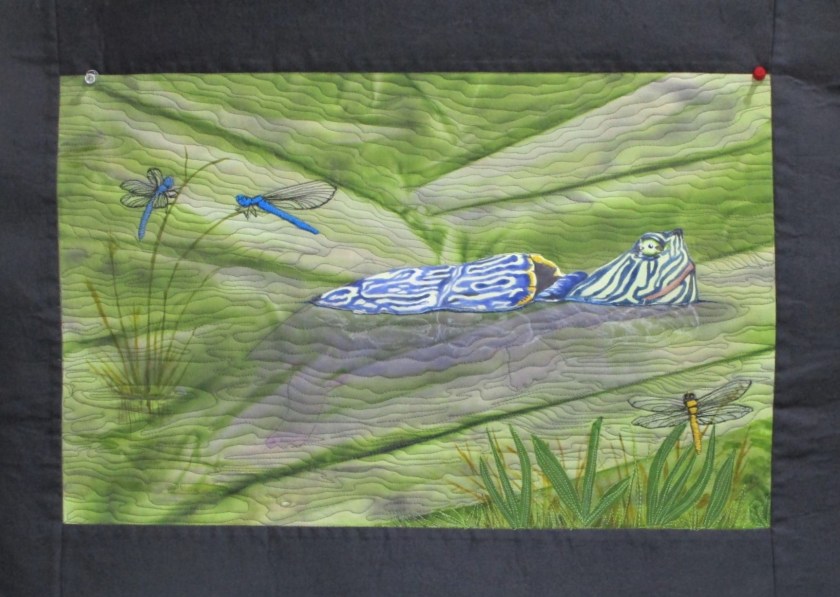
I sewed on a black border and then paused. This week I finally got around to quilting. My intent was to make the stitch lines look like pond ripples.
How did I do? Are they watery enough?
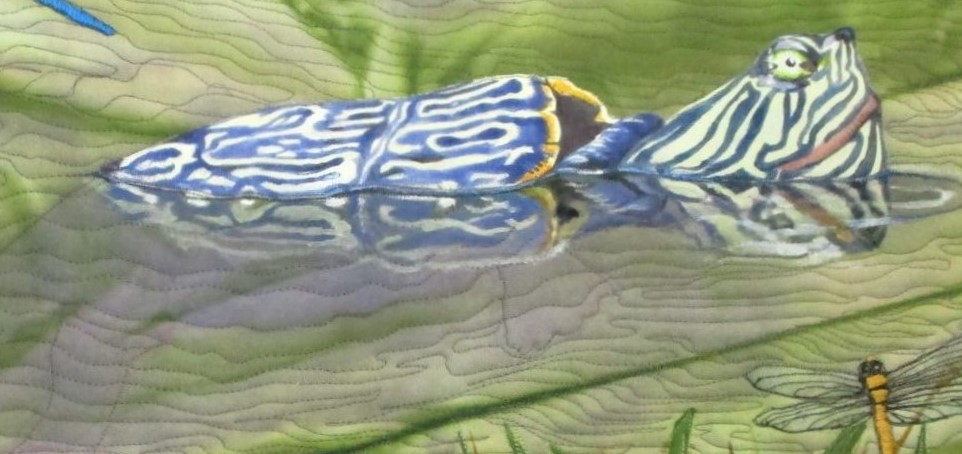
It took a lot of pondering and a dose of courage to add the turtle’s reflection. The only real option was to hand paint it using opaque Setacolor. So I did.
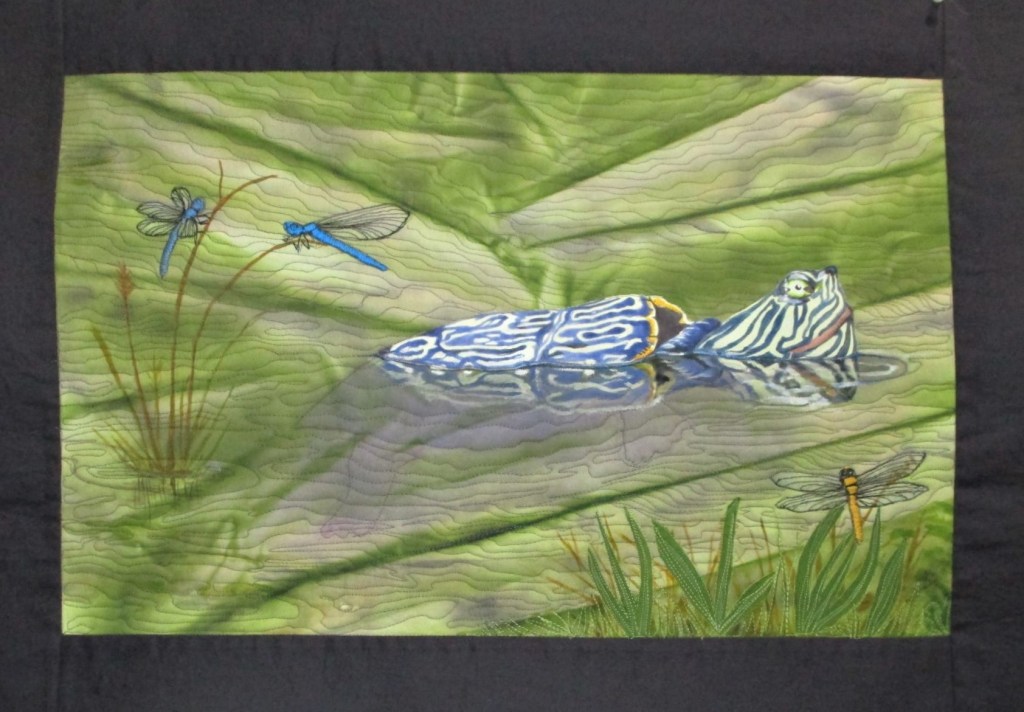
And here is the finished project.
Springtime at Lake MontgomeryDetail of reflection
This fiber object is now a wonderful reminder of a very special camping trip.
Here’s the Thread Art Baby with border and binding complete, mounted on an 18 by 18 artist canvas. It turns out that the finished dimension was Not a perfect 18 by 18 square. The damask napkin alone was shorter by one inch than it was wide. I chose not to square up the piece. So I had to fill in some color on the canvas.
I’m still happy with this one, and glad that it is now on my studio wall.
This is a qualified finish. I still need to quilt the border and bind the edges. But the creative work is essentially done. I chose to use echo lines to quilt the background. The work went swiftly and smoothly.
The cotton damask fabric is a joy to work with. I had the benefit of a fresh needle in my machine, thanks to the delivery of my on-line order from Bluprint.com.
Following the example of Lola Jenkins, I used Prismacolor pencils to color the image. I had never tried this medium on fabric before. But by working slowly and carefully, I managed okay, rendering shadow and highlights modestly. Here she is as of today.
Here is a close-up of the subject.
I noticed that a damask vine landed smack in the middle of her onesie. I didn’t plan that placement, but serendipity happens. So I chose to leave it unpainted and embroidered a running stitch around it.
At 18 inches square, this piece is a good size for framing or mounting on artist canvas. Perhaps the arts supply store will open soon and I can buy what I need. In the meantime, she will be tacked up on one of my foamboard panels, allowing me to admire her on a regular basis.