Posted in quilting

Giving it Form

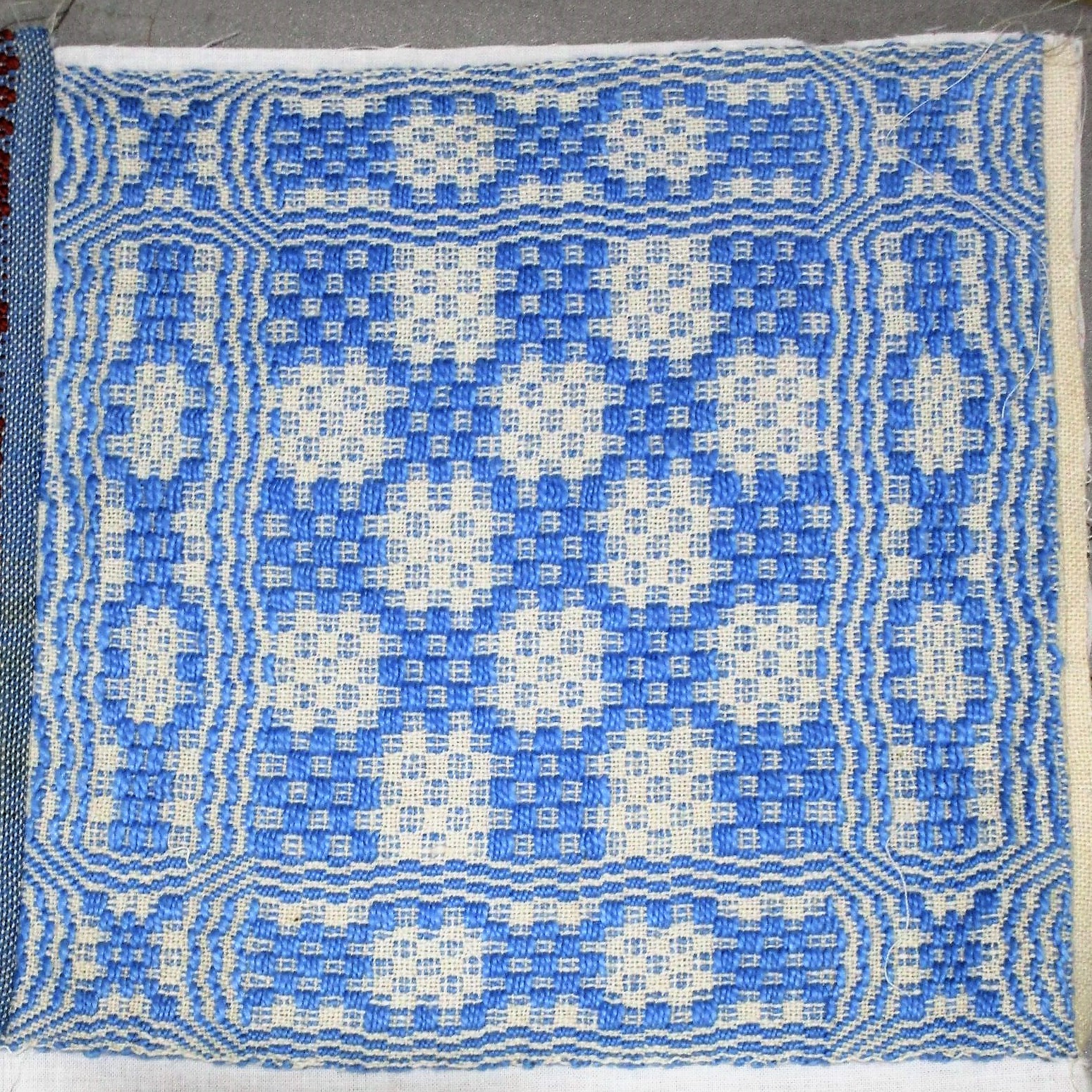
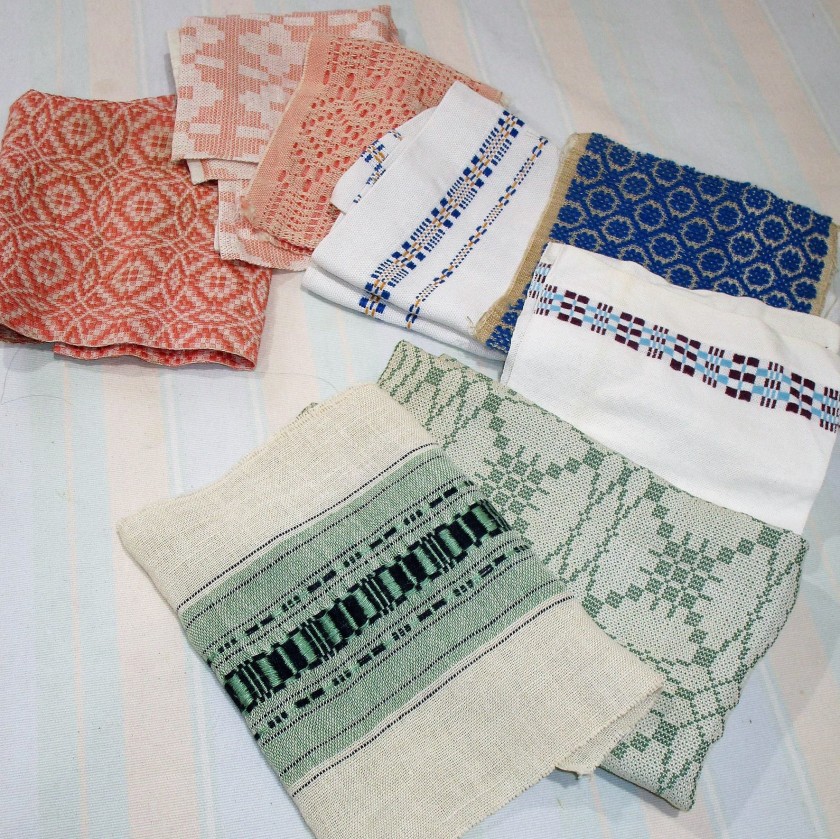
The process of making up a quilt from scratch has many challenges. One I face today is building my Stay At Home Round Robin quilt around another maker’s pieces. None of the swatches are the same size or shape. How can I fit them together?
Here’s how I went about finding an answer.

The first step I took was to get them as flat as possible. Each swatch was hemmed by hand on the warp edges to keep it from fraying. As I began carefully picking out the stitches, I marveled at the how small each was. That got me to thinking about the maker, Margaret Howard. And I began to imagine her at her cottage on the lake, where she lived three months of the year. (Since this cottage is still in the family, and I had been there several times, my imagination has lots to work with.)

I imagine that, despite the passage of years, the grounds surrounding the cottage are very little changed. There are towering trees, both deciduous and coniferous, providing lots of shade. The path through the trees to the cottage are lined with wood ferns, all the way up to the door itself.

Photo by Mike Krejci on Pexels.com

Margaret is sitting in the main area of the cottage, sewing this hem. She has a view of the lake through a large picture window. While the trees now are quite tall and obscure this view, back then she likely could see the lake easily.

There were other families, her relatives, staying in cabins nearby. Each evening as the sun sank low, they gathered on the shore to toast the passing of the day. I feel certain that Margaret would join them. That bit of the beach is on the east side of the lake. The sun sets directly across the lake from this beach.

Having been there during one of these sunsets, it’s hard to describe exactly how beautiful it is. When the waves on the lake are gentle, one feels that the lake is bringing the colors of the sunset directly to one’s feet, like a precious gift.
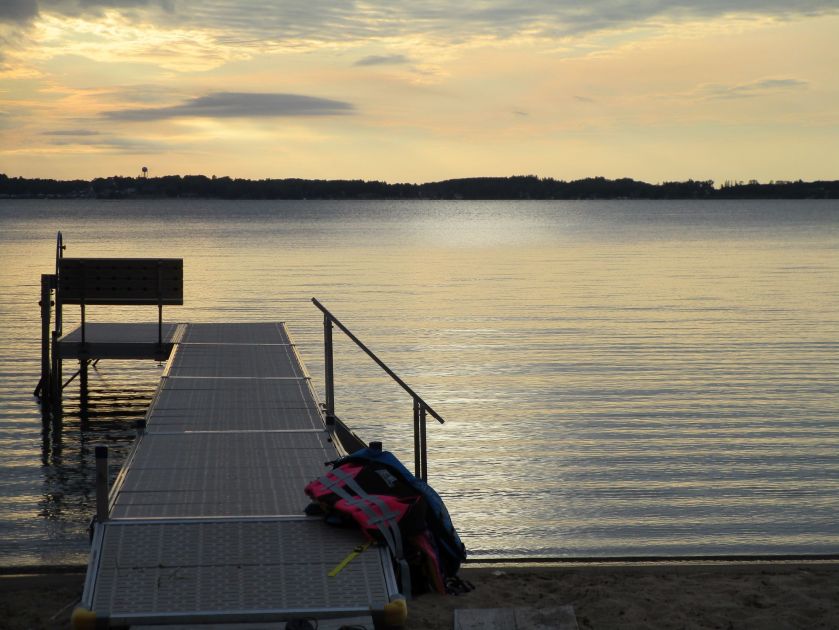
A contemporary view of Shell Lake, with a new metal dock.

Back then, the silence must have been profound.

Of course, on special occasions, or when the air is too cold, a campfire is a must.

Photo by EKATERINA BOLOVTSOVA on Pexels.com

At this point in my musings, I brought these ideas together, and came up with a plan for the quilt. If you have been following this project in my earlier post, you saw that I sewed together three swatches to form the center block.

What if I divided the rest of the quilt into four sections, making a large block to anchor each section. And each section would show one of the elements enjoyed by the maker at her cottage on the lake – woods, fire, water, sky. Thinking more deeply about these elements, I realized that they corresponded to the basic elements described by ancient civilizations of the world: Earth, Fire, Water, Air.

To tie everything together, I did some research on the colors that the ancients associated with these elements:

Earth: Green and brown. Fire: Red and orange.

Water: Blue and pastels. Air: White and yellow.

And here is my (somewhat crude) plan for the quilt, sketched in watercolor.

This is my first go at the layout. I’m not sure about the dark sashing. But there will be plenty of time to audition some other fabrics as I work along.

Posted in quilting

Another Round Robin Quilt Challenge

Quilting Gail is at it again! She has organized five of her quilting friends in a stay-at-home round robin quilt for 2022. I’ll not go into details about how it all works. Instead, I’ll recommend that you check out Gail’s blog.

Last year was a blast for me. I was greatly challenged to expand my quilting skills. In the end I loved what I made. Its success was due in a big way to the weekly challenges, requiring me to stretch my imagination while improvising my design.

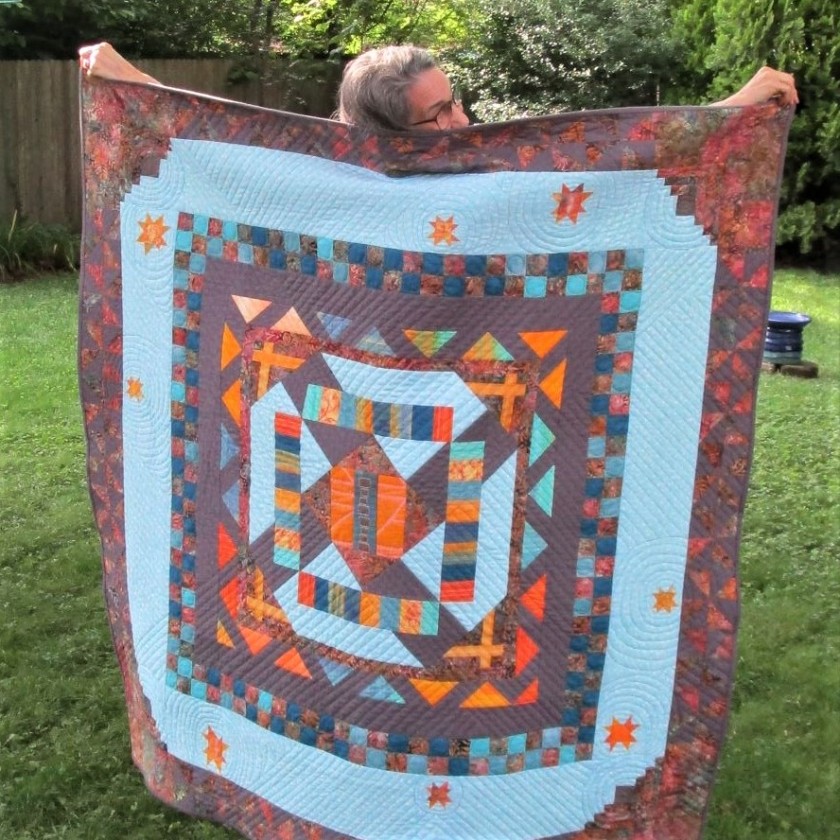
Expanding Universe lap quilt, made during the 2021 SAHRR quilt challenge.

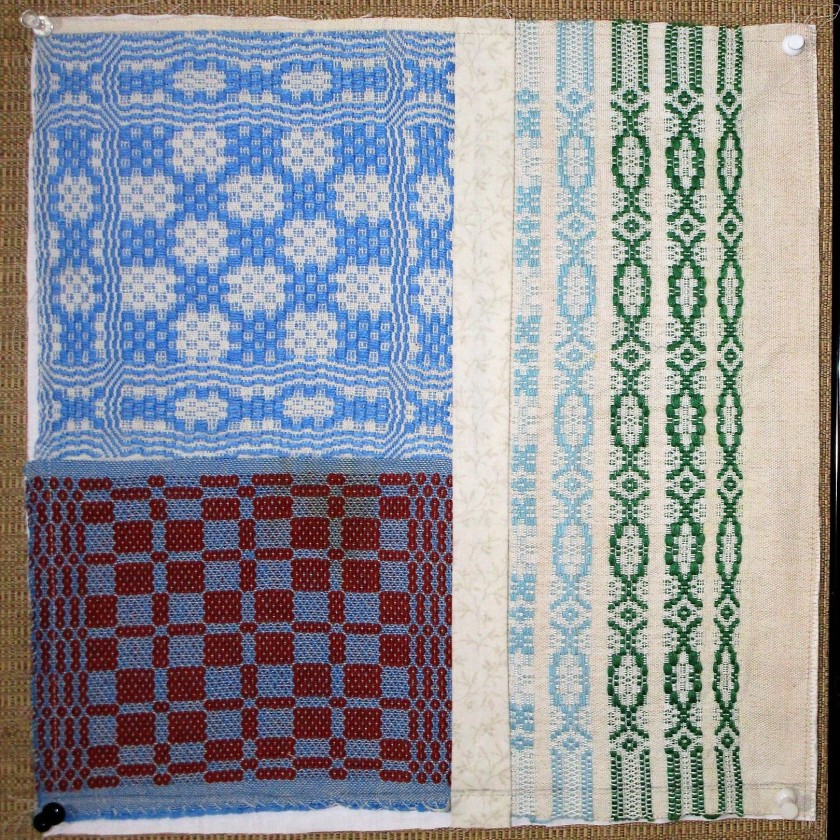
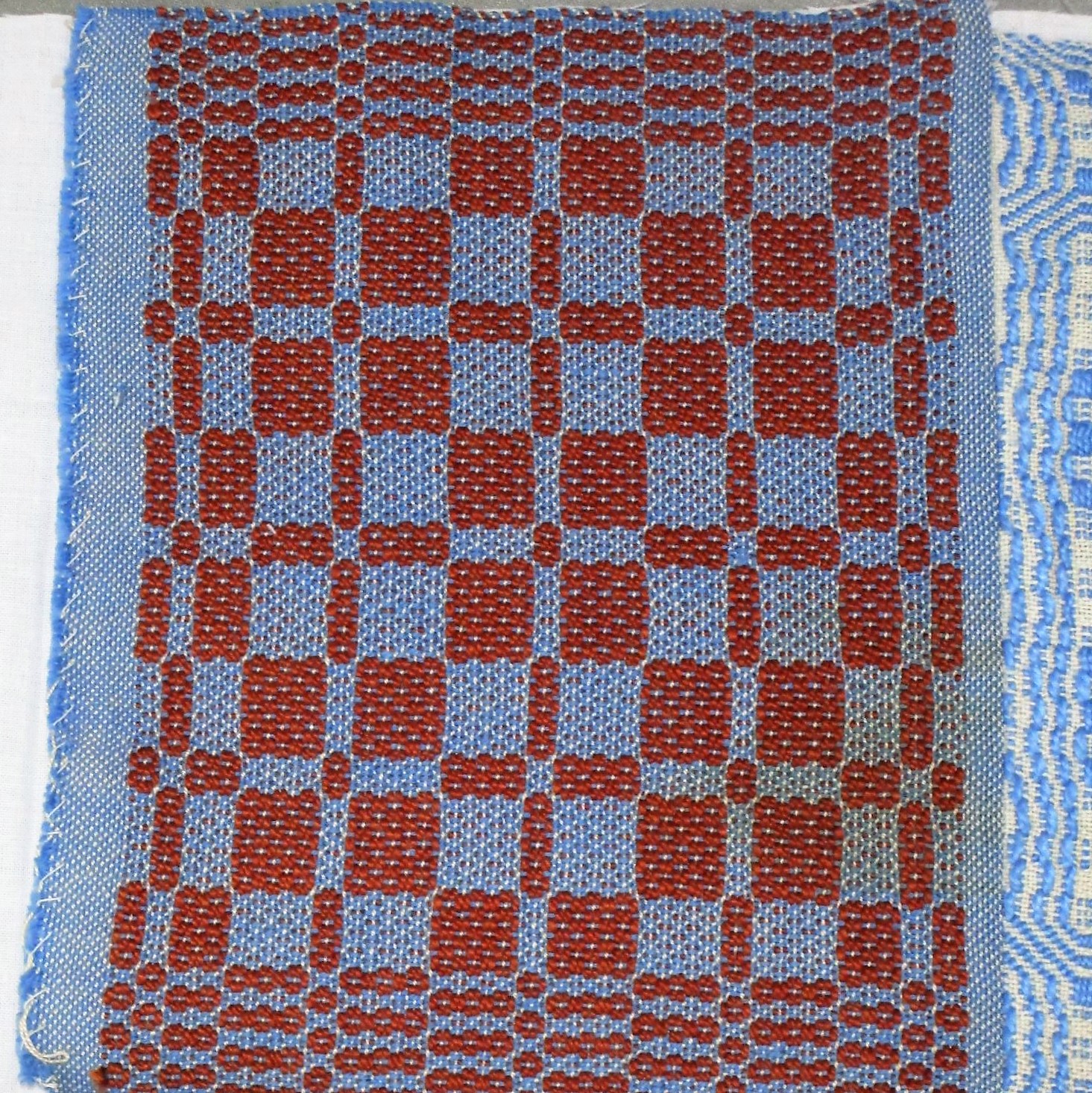
I have an unconventional approach for this year. It will involve quilting together hand-woven vintage fabric samples that have been entrusted to me by my daughter. Here is my center block using three samples. It will have finished size of 12 inches square.

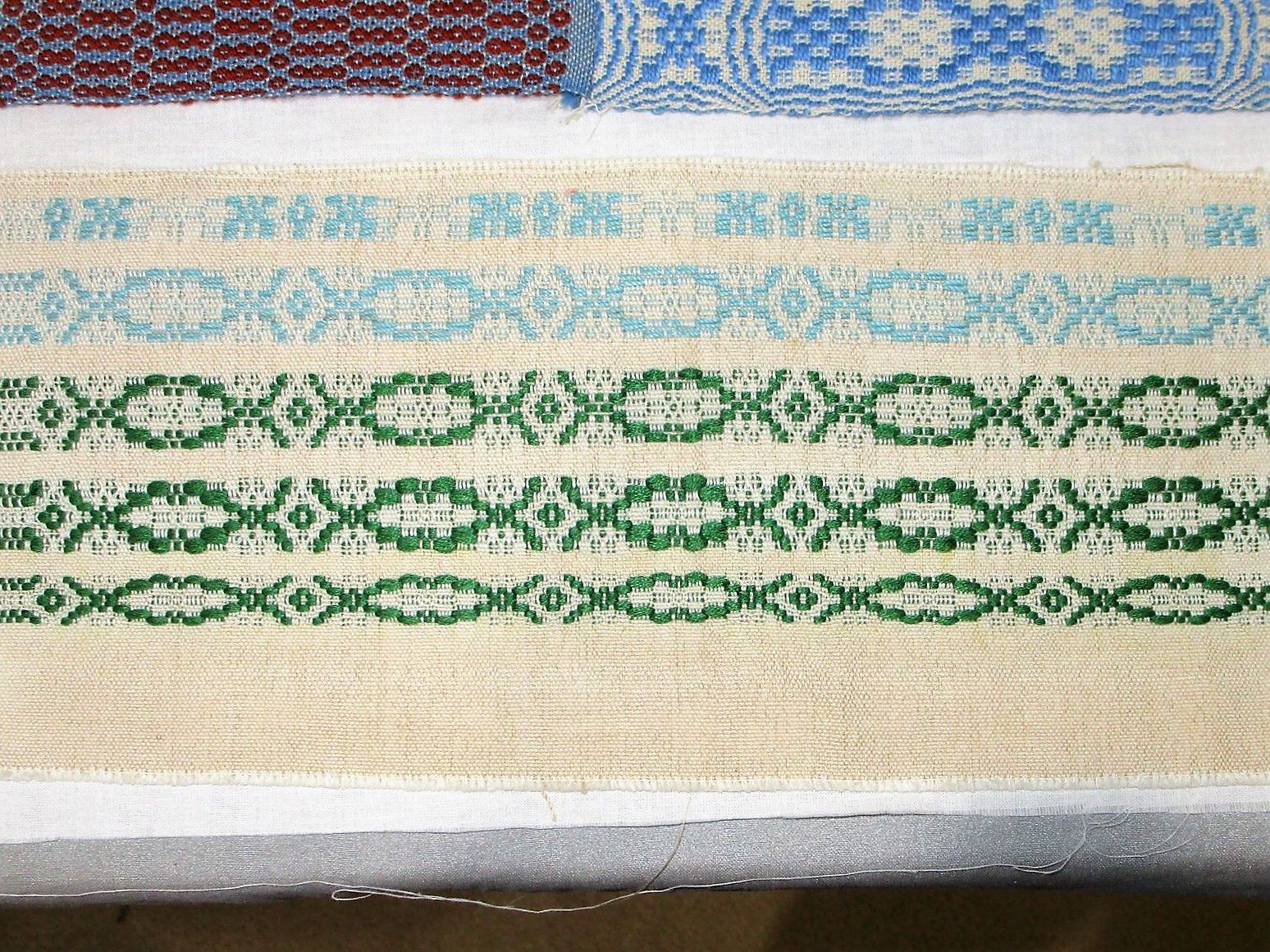
In addition to the wonderful textures of the weavings, this block cements together a split complimentary color palette utilizing red-orange as the primary color with blue and green as the supporting colors. Below are pictured more pieces, which will illustrate the palette clearly.

If this type of project interests you and you want to see more center blocks, check out the co-hosts’ posts, here.

Posted in quilting, recycling, sewing

Inspired by Vintage

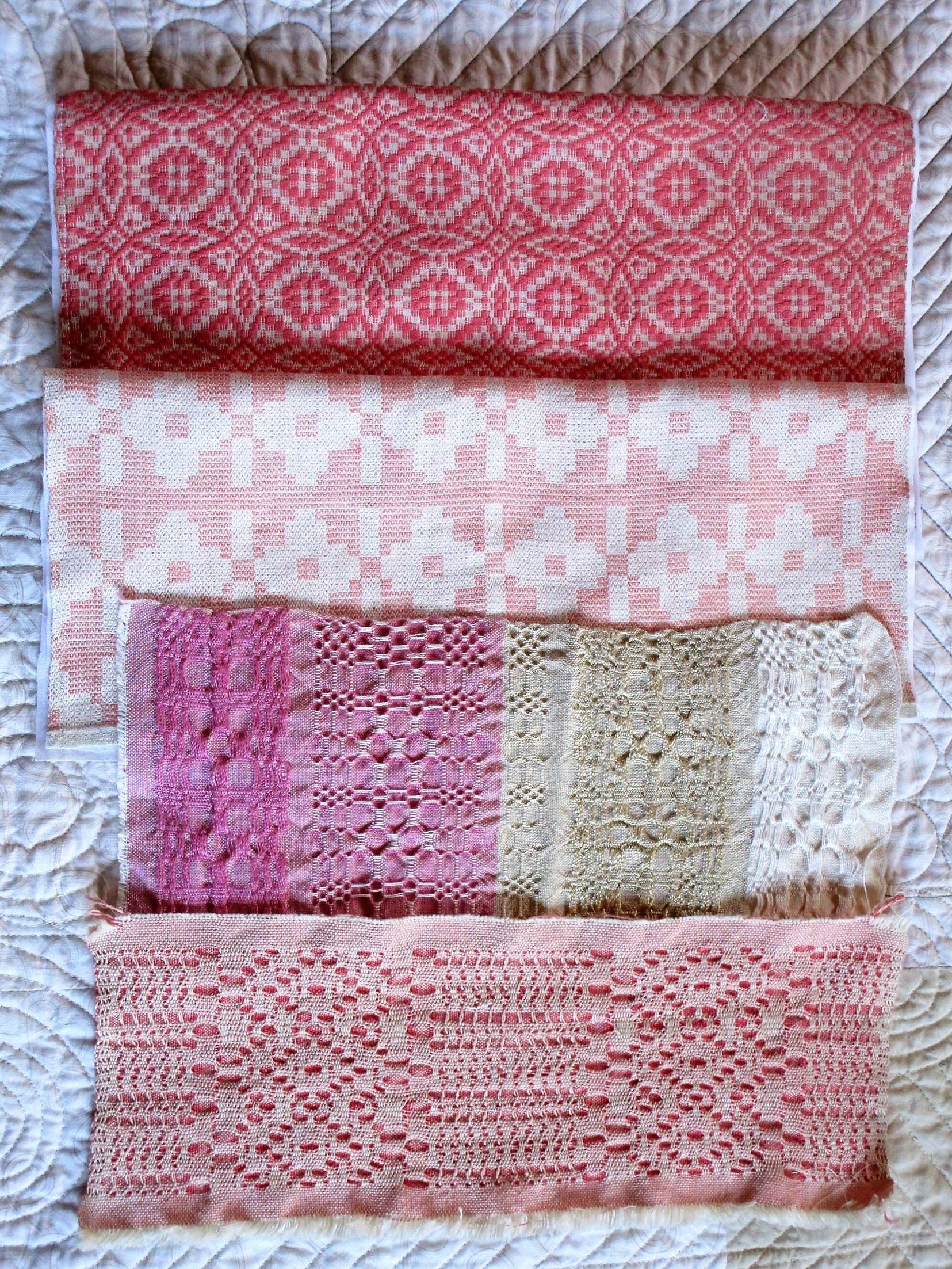
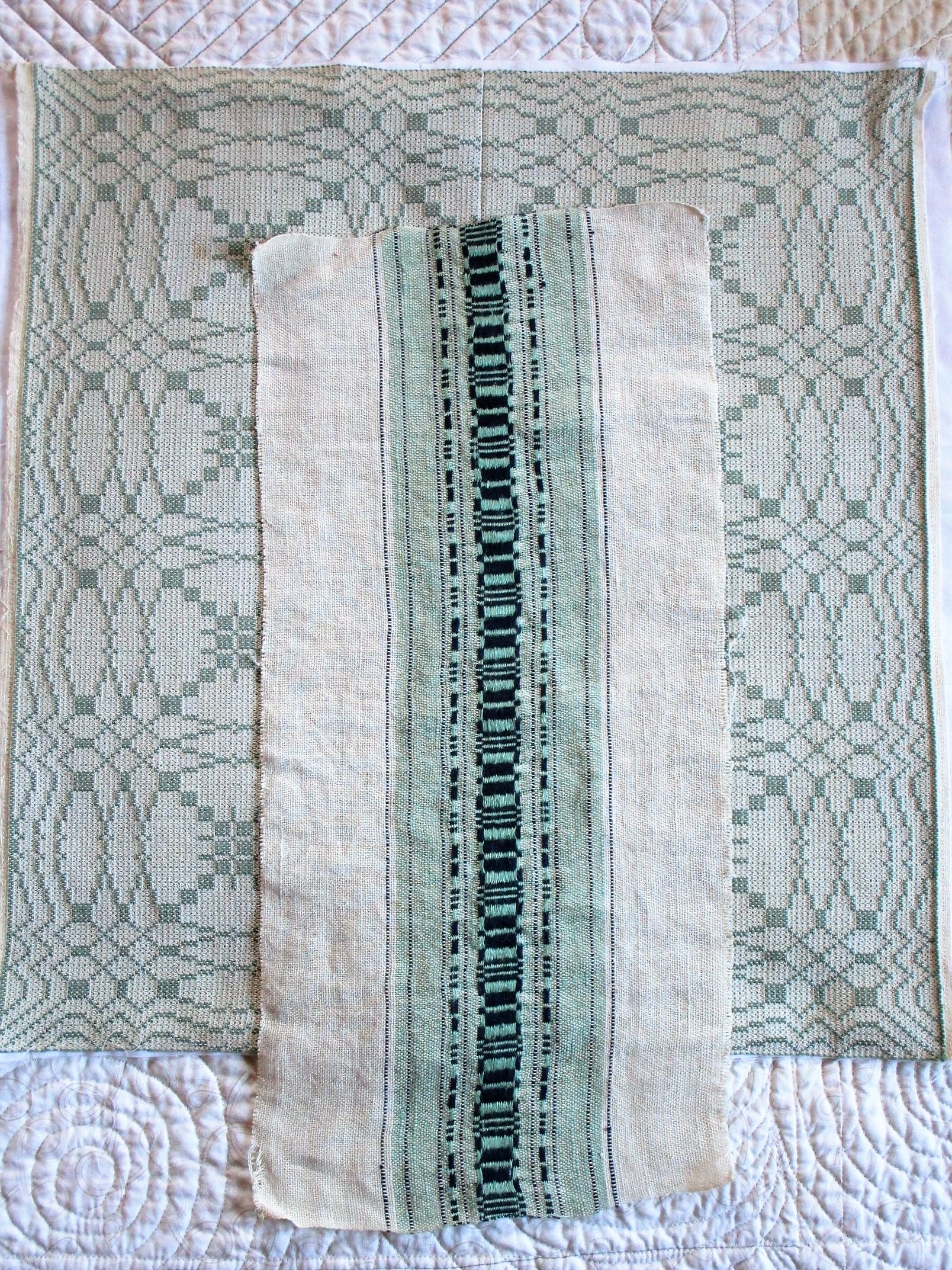
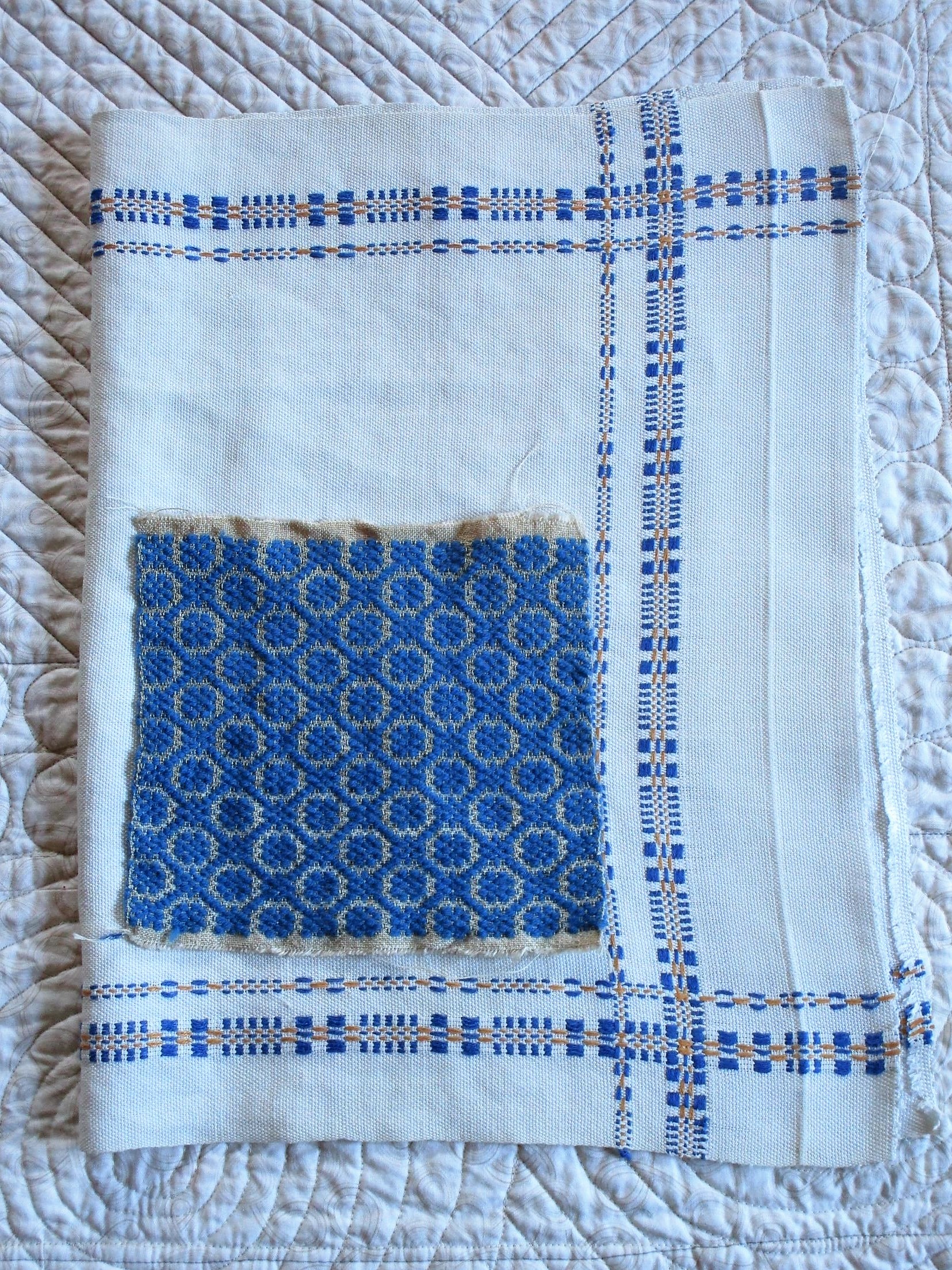
While visiting Daughter’s Family last Thanksgiving, I was invited to rummage through a stack of weaving samples. These pieces were made over a number of years by my son-in-law’s grandmother, Margaret. They were then stored away with Margaret’s son, and eventually passed into the next generation.

Here are some of the pieces that came home with me.

I was invited to keep these lovely samplers with the understanding that they could be worked into a fiber object. I feel honored to receive them.

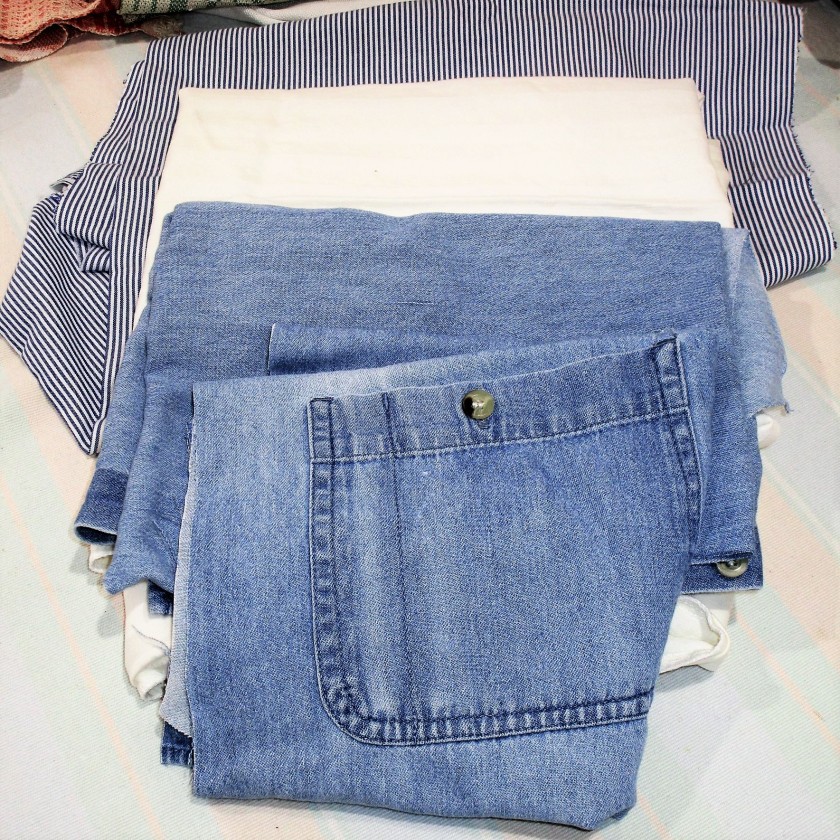
So today, I have a tiny glimpse of an idea on what to make with them. What if they formed the feature blocks in a quilt? It would be a wabi-sabi quilt, assembled with additional fabrics recycled from articles of clothing and household linens. In my stash I came across the following items that fit the description.

Cut up shirts and old pillowcases in compatible colors

I began my work by washing and pressing the linens, then examined each piece for needed repairs. It seemed to me that, while the samples were firmly woven, the weaves are much more open than standard quilting cotton. How could I stabilize them so they wouldn’t shift during quilting? This called for a consultation with quilting expert Jackie, aka, my mom.

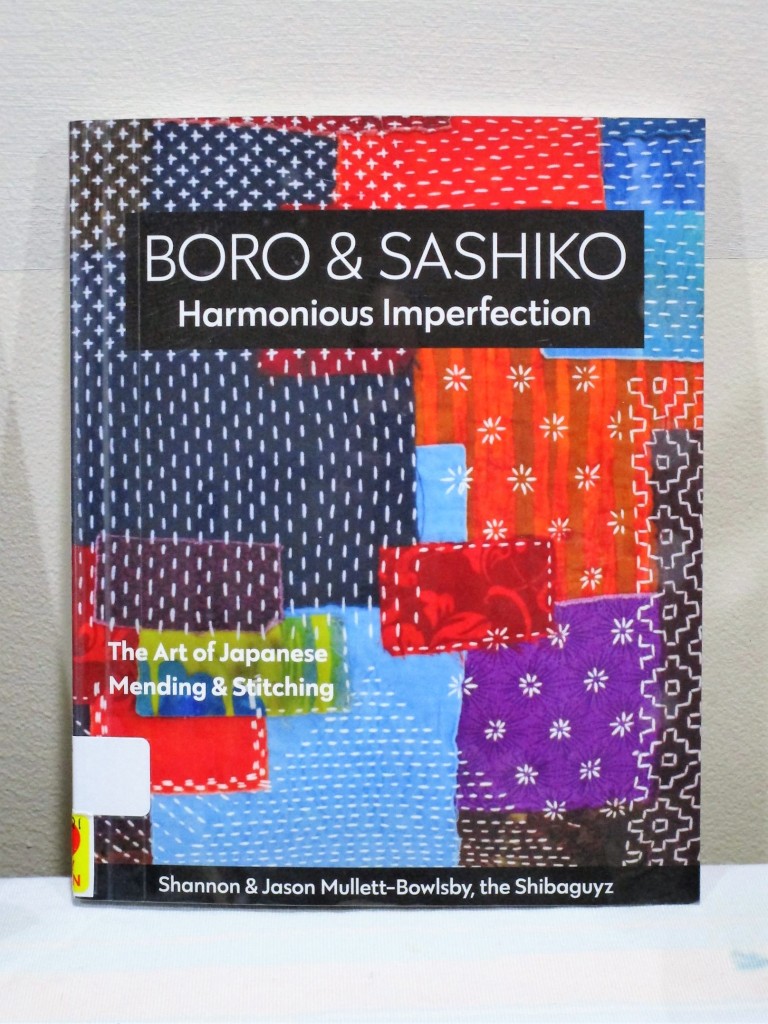
She had some great pieces of advice. Ultimately, I decided that I could sew the linens to a light-weight muslin backing, string piece style, then work in some rows of decorative stitching. This particular idea was top of mind, because I am currently reading this book on the Japanese practice of boro and sashiko.

I call this sort of happening a Convergence.

Let’s start the work with these three pieces as a center block.

They are of sizes that will fit together into a 12-inch block without cuts. The three contain all of the colors in my chosen palette, which could make an ideal focal point for the rest of the quilt.

DONE!

The next steps will be to design and sketch a layout, then acquire supporting fabrics. Maybe I can source more second-hand clothing items from local thrift stores.

Posted in drawing, knitting, painting, quilting

The Best of 2021

As the snowflakes drift gently down – and blow slightly sideways – across the backyard, I thought I would take some time to review projects I completed in the past year. No, dear reader, I won’t drag out all of them. Instead, let’s focus on the best loved, by you, in each category.

KNITTING

I wanted to start with knitting, because it seems I spent a lot of time doing just that. I even ventured into teaching knitting, just a little bit, for my local arts association.

It seems there was a three-way tie for the best knitting project of 2021. So I have to go with the most charming one. And who better to model it than little LL?

POLKA-STRIPE VEST, WITH BUTTONS AND POCKETS

https://wordpress.com/post/dailyfiberfun.wordpress.com/3734

Runners up were Gentle Curves Shawl and Woodsmen’s Socks

DRAWING

I was pleased with the progress I made in this medium. It helped me to take classes from Ross Meyer. His lessons on getting high values using graphite were most informative. I also began to develop a more personalized style with casual portraits using ink and watercolor washes. The winner in this category is my sketch of H as a toddler sitting with Cat.

Also strong contenders: Happy Father’s Day and Hummingbird at Fuchsia.

PAINTING

My personal goal for this year was to improve my watercolor paintings. At the beginning the year, I painted a little bit everyday on paper the size of postcards – a very doable goal, which lasted only one month. I put my money where my mouth was and paid for in-person lessons. This helped me a lot.

Surprising to me, the most successful watercolors were some of these small experimental ones. A post called “Back to My Routine” got the most attention for this 6 x 9 painting of a stormy sky.

https://wordpress.com/post/dailyfiberfun.wordpress.com/3968

Equally popular were these two:

SUNSET AT THE WASH
WAXWING REPEAT

QUILTING

In the early months of the year, I spent time making quilts. I gained skills by following along with a group that was sewing Stay-at-Home Round Robin quilts. Not only did I learn a lot but I was really happy with my finished object.

EXPANDING UNIVERSE LAP QUILT

Two other quilted objects of note were this art quilt……….

CATBIRD SINGS

and a twin sized quilt made for LL featuring dogs and cats.

ANIMAL FRIENDS

And that’s a wrap for 2021. What does the new year hold for me and my art? I haven’t come to any conclusions yet. But whatever I choose, I’ll make it worthy of my time and effort.

Posted in collage, embellishing, quilting

Catbird Sings Reveal

In his Guide to Birds, David Sibley describes the gray catbird’s song thusly:

” …a rambling, halting warble with slow tempo…low hoarse notes with high sharp chips and squeaks interspersed….little repetition and little mimicry.”

…..which is, while accurate, a rather dry and technical explanation for what I heard that day:

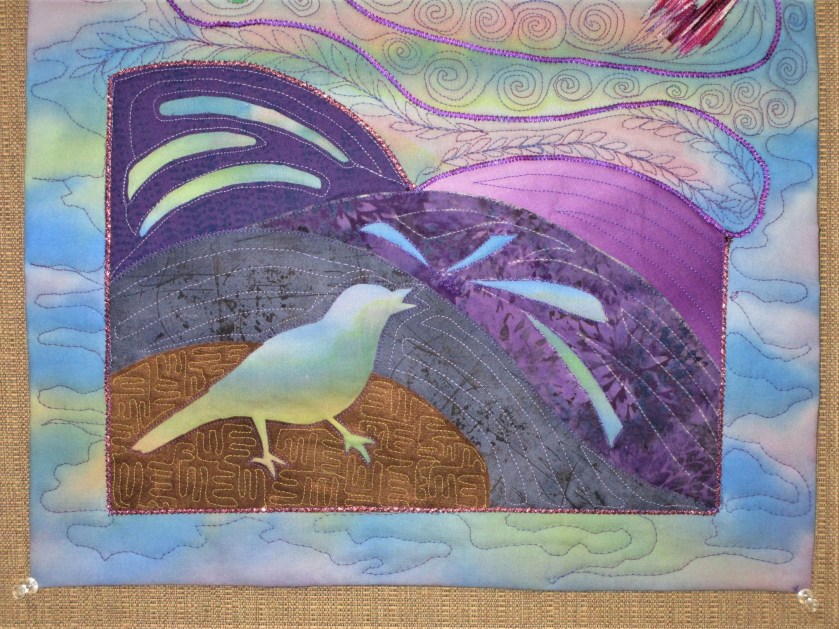
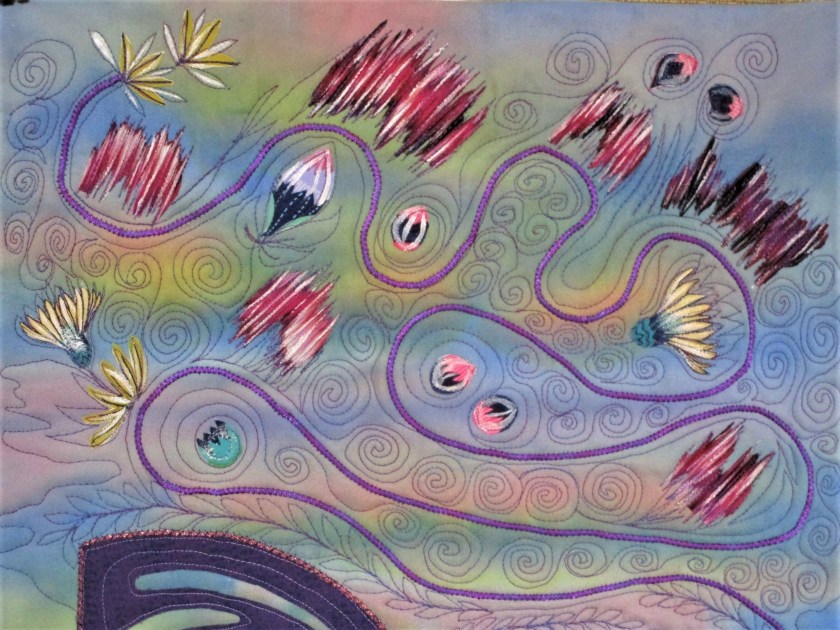
Catbird Sings

In my final arrangement of this fiber object, I ditched the blue fabric which I was going to use as a framework for the “notes and chips.” Instead, I let the purple satin cord act as a highway for the eye to travel to each vocal outburst. I also unified the color of the lower section by overpainting the batik print using violet.

Close up of bird hidden in purple shrubbery

The free motion stitching wasn’t overly planned. I mostly just followed the clues given by the appliques and the color changes in the background.

Upper section finished with closely spaced stitching and pearlescent paint

I hope you enjoy “seeing” this catbird’s song, as much as I enjoyed listening to it.