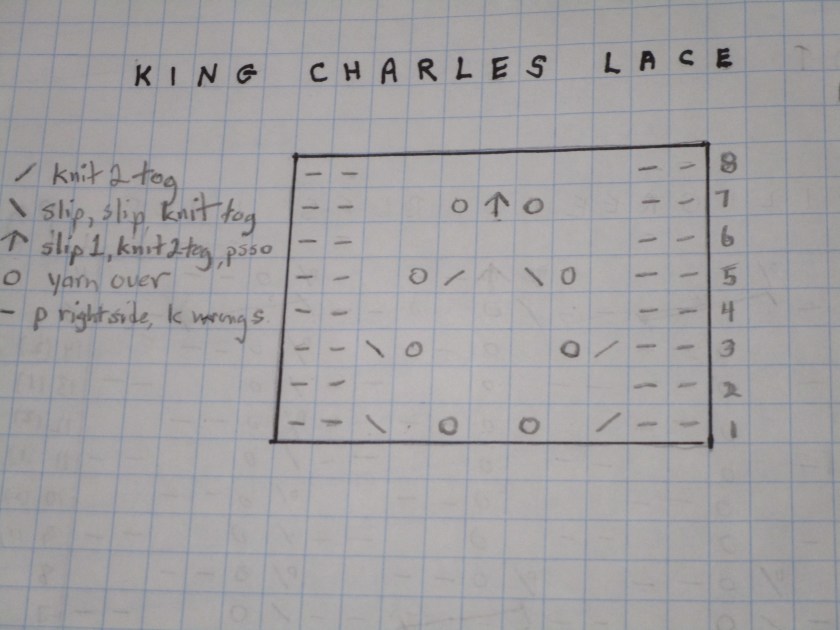
For many knitters, working lace is like entering the third circle of hell. First of all, there’s the language barrier. What is this strange talk? K2 *(KB1, k1) 2x, k1, p3, k1; rep from * skpo, k2. And that’s just one row! And then there’s the navigation. Where exactly am I on the pattern, and why doesn’t my swatch look like the example? Needless to say, I hired a navigator when I finally decided to learn lace. Eunny Jang teaches Lace Knitting: Basics and Beyond at craftsy.com (now blueprint.com) She taught me that working from a chart is the way to go. It’s just like a road map. Yes, there are some symbols you must learn, but the chart gives you an overall picture of how to navigate the design. You can see where you have been and where you are going. I immediately began to chart out every lace stitch in my knitting dictionary. Here is a link to Eunny’s class: https://shop.mybluprint.com/knitting/classes/lace-knitting-basics-beyond/35243
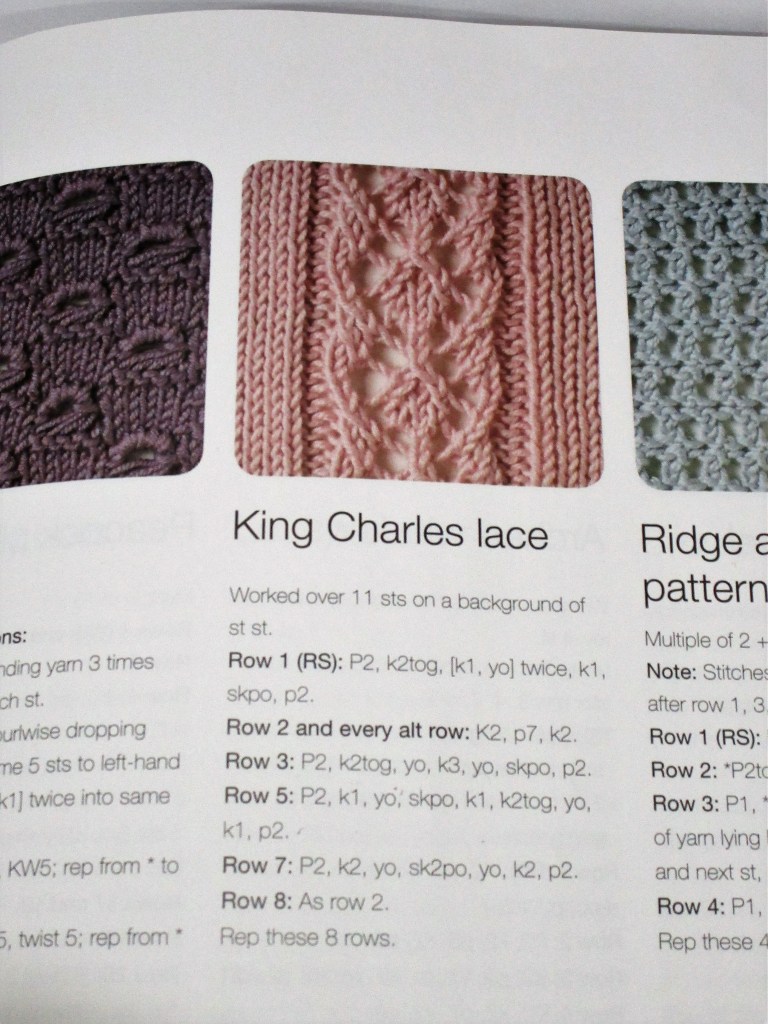
So I am looking for a lace pattern that will complement the Lace Crescent Rib pattern that I swatched yesterday. King Charles Lace seems to be a good candidate. It has about the same number of stitches and is eight rows long. Best of all, it features the same pair of purled stitches bordering the lace center, just like Lace Crescent Rib has. Here is the pattern as it appears in my stitch dictionary:
Here is my hand-drawn chart of the pattern: Notice the ‘legend’ of symbols.

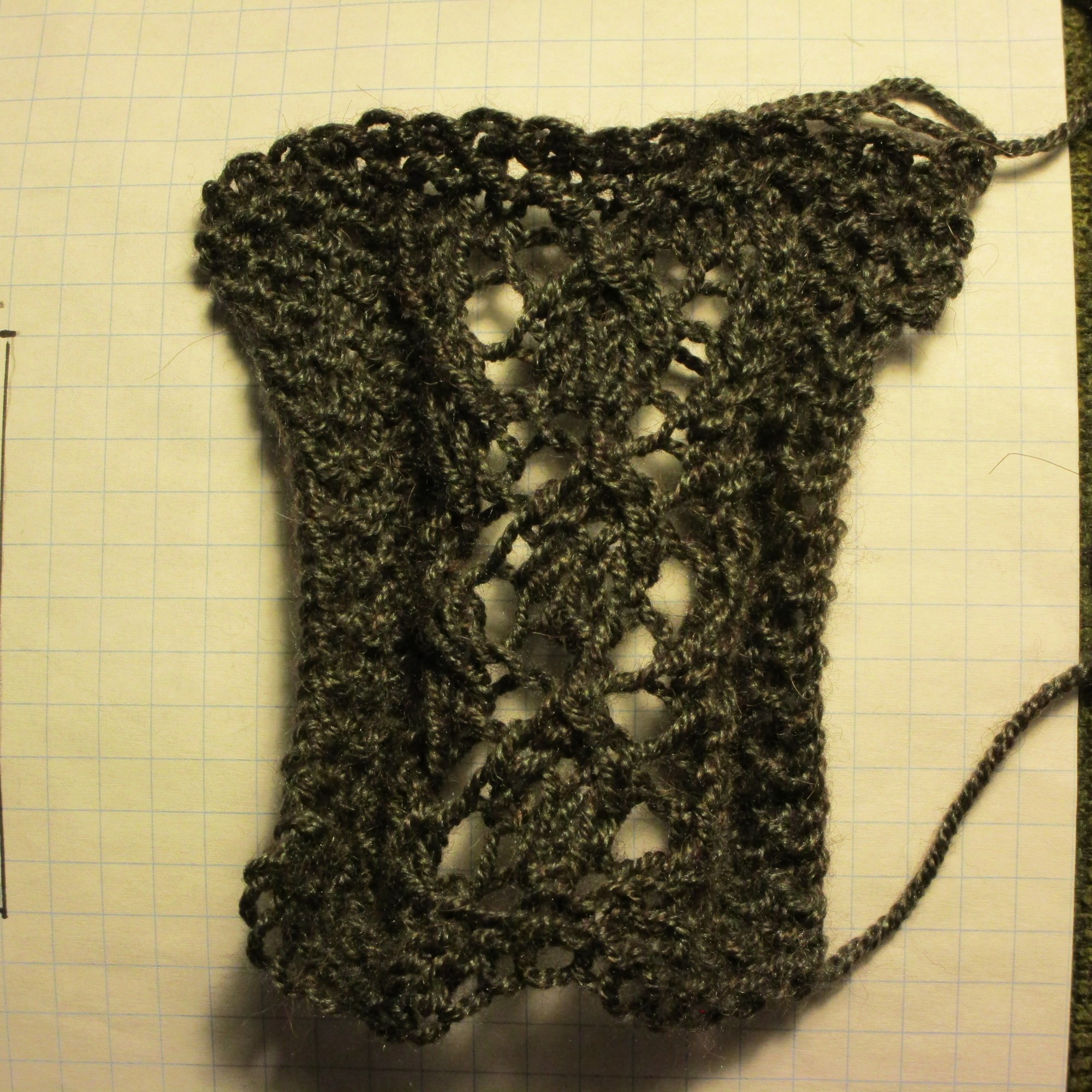

- Set up for lace. I used a few edge stitches in garter stitch. Cast on loosely. I used the knitted on method. You could also cast on with a larger needle. Knit 3-4 garter rows at the beginning to keep the swatch from curling. The pattern repeats can be punctuated with markers. This helps you keep straight with the pattern, especially if you are working a large number of repeats.
- Middle photo is completed swatch. I gave you 3 pattern repeats. Use a loose cast off, so the lace can stretch. I did knit, knit, knit 2 tog through back loop. Repeat until all stitches are used up.
- Completed swatch is its warm soapy bath. Again pull the piece in all directions while it is soaking, so the stitches even out.
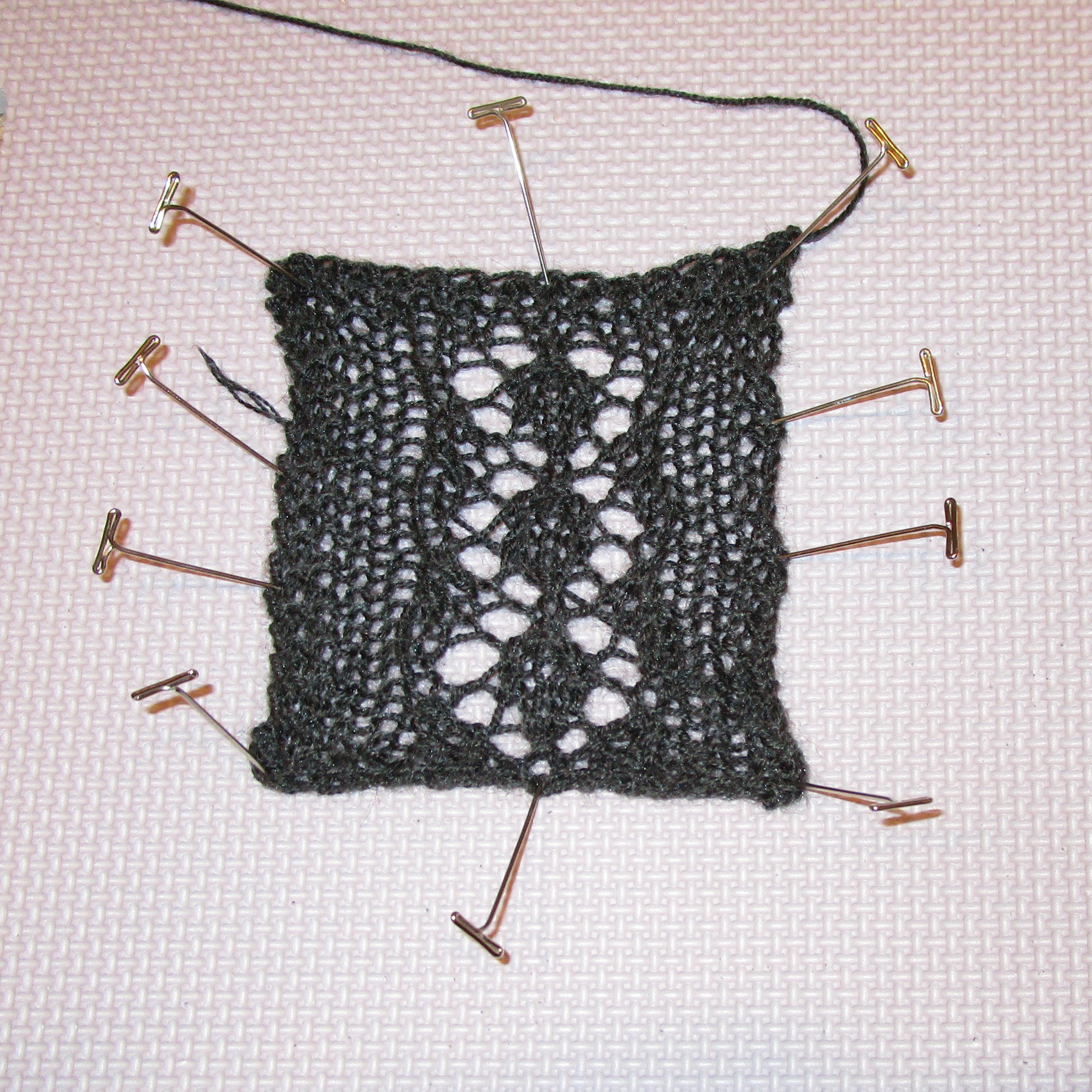
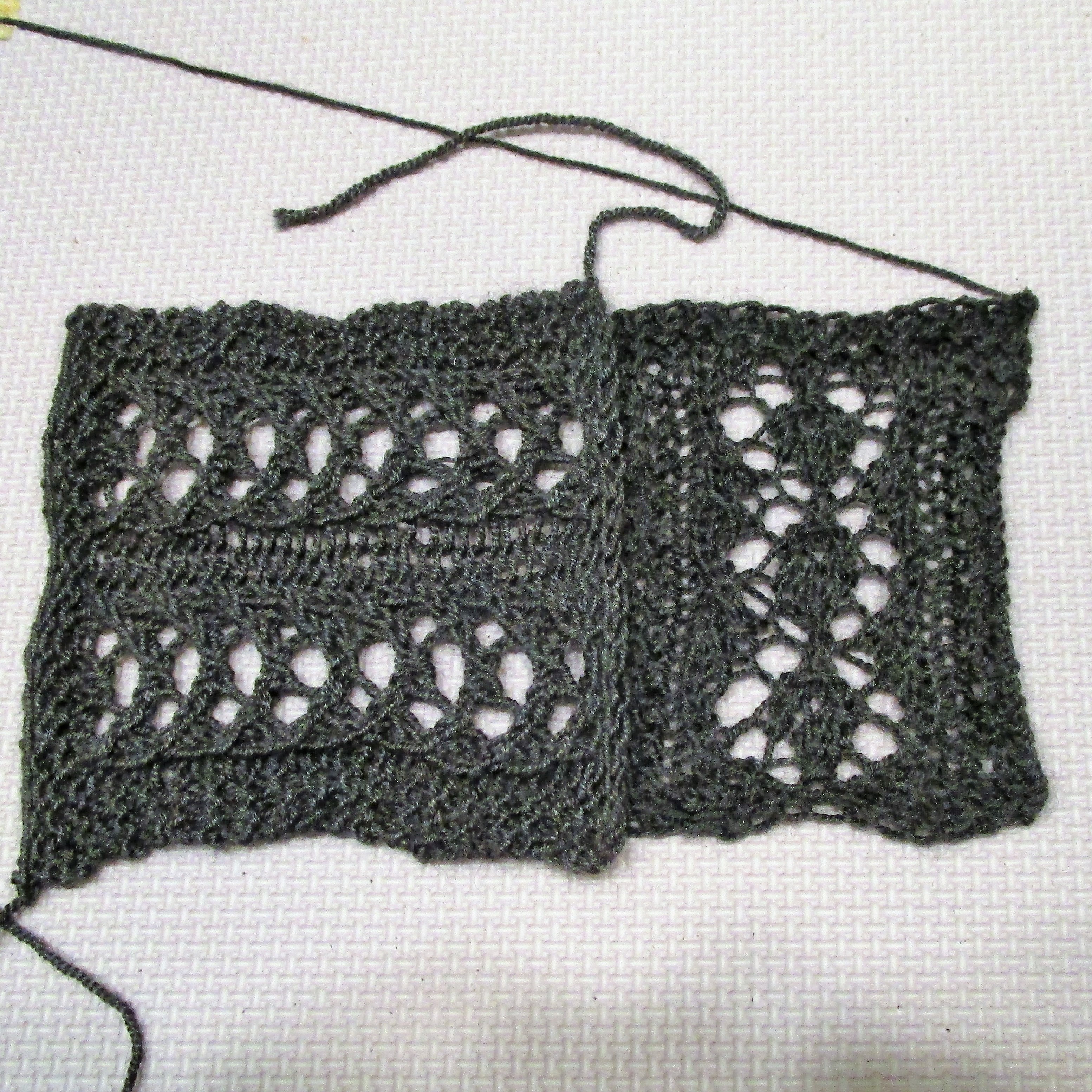
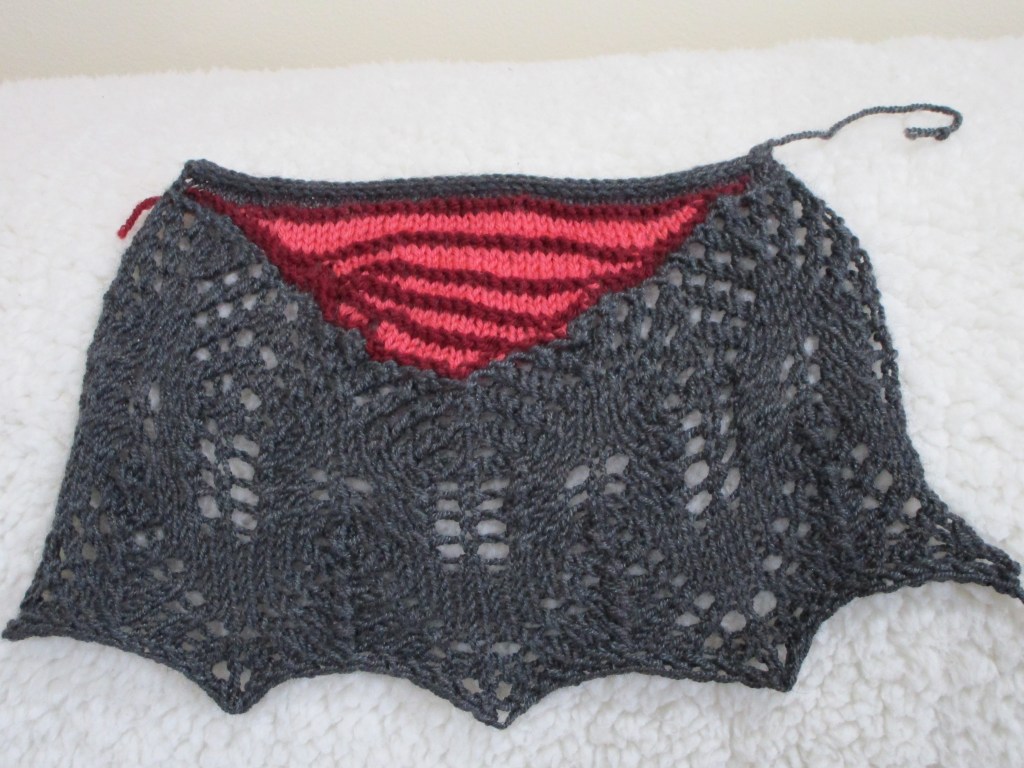
I’m pleased with the results. The first image is the blocked King Charles Lace. The second image shows how the two patterns might look on a triangular shawl. Okay, so imagine the KC lace worked up the center back of the shawl, with repetitions of the Lace Crescent Rib running along both sides. It works.



 Daily Fiber