Posted in collage, colorwork

Inspired by a Bird

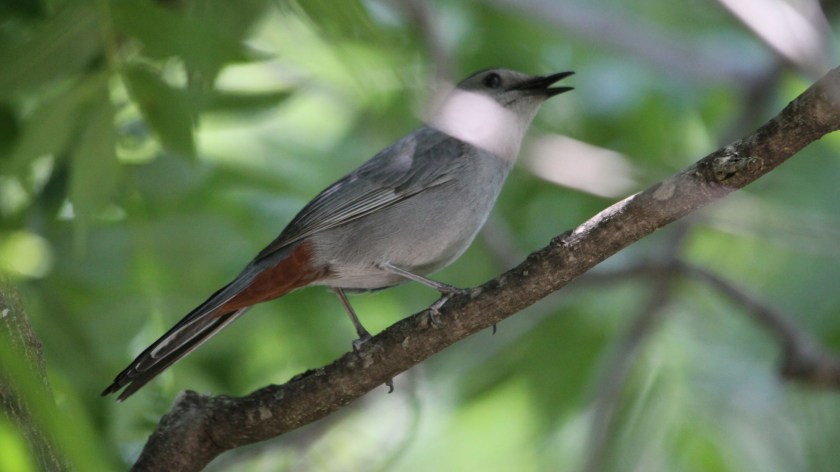
The idea for this fiber object came to me one morning while porch-sitting with a book. It was a gorgeous day, but I was poring intently, with all my focus, on the book in hand. Surprisingly, I no longer remember what I was reading. The probable cause of this memory lapse was the very thing that intruded upon my thoughts. A catbird had begun an insistent and virtuosic song. The sound tore my mind from my book and into the present moment. Looking about, I failed to spot him. So instead of continuing to search with my eyes, I closed them and sat back in my chair.

Pretending that I possessed synesthesia, I imagined what that birdsong might look like, if it were visible. There were deep chortles and murmurs, but also squeaks, shrieks and ascending melodies. It went on and on. And on. Eventually the catbird flew off.

Here’s what I wrote in my journal: “Sky-inspired painted background. Reverse applique to suggest an unseen bird. Throaty -chortling purples, warm tones high pitch trills – bright white squeaks. dashed gestural lines to suggest direction of pitch. Parallel wavy lines for a musical staff.”

All very poetic. But I want to make a piece of visual art, and as such it must have form.

This week I got underway. Since my fabric paints were out, I started with the background. On a piece of white quilting cotton I stroked colors that I thought would make a good sky at daybreak – pale blue, violet, peach and gold. I achieved this rather startling canvas:
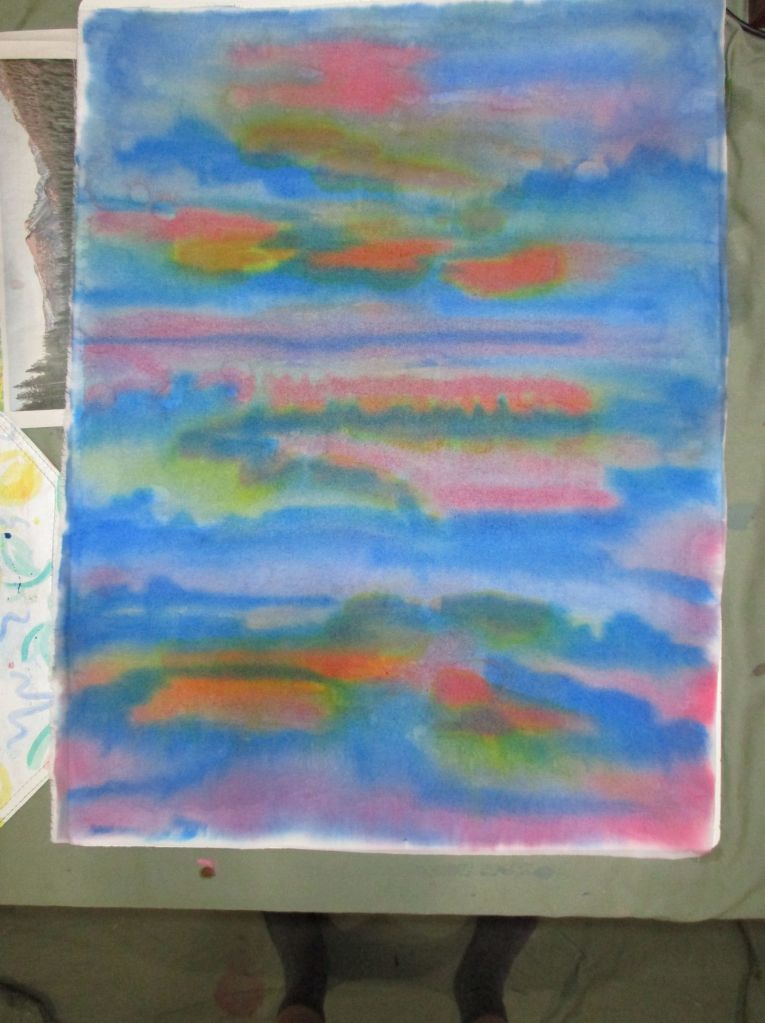
Paint is still wet here

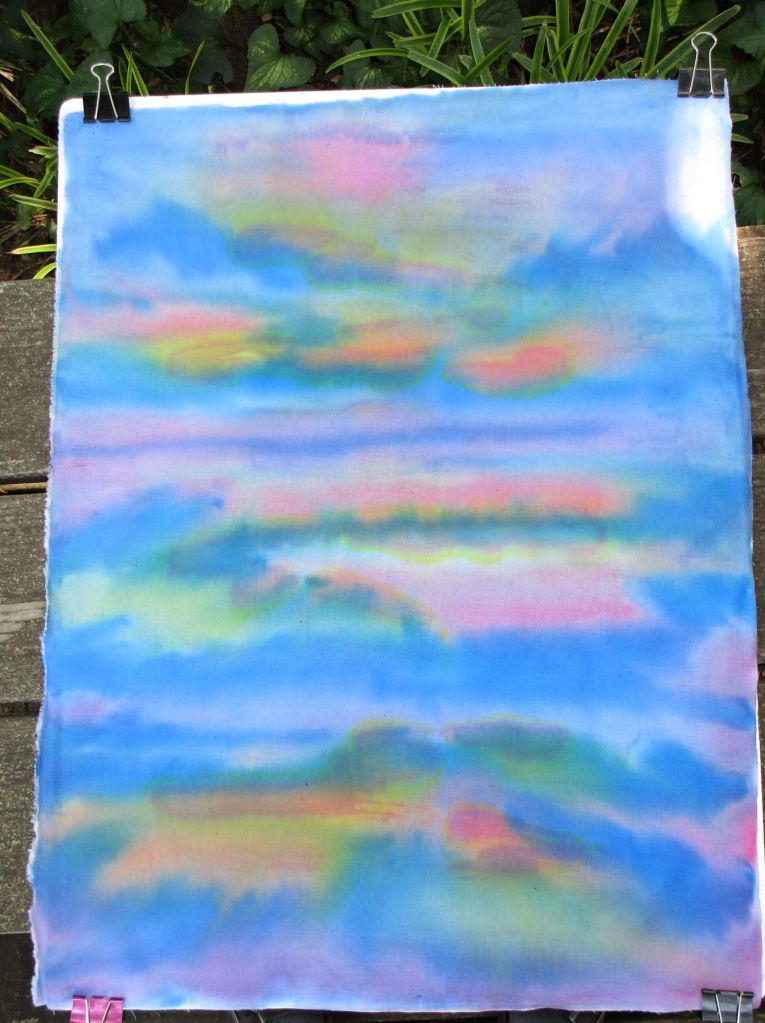
What sort of a sky has leaf and dark green in it? None I’d ever seen. I was prepared to set it aside and start again. But on second thought, I chose to continue with this background. The unconventional sky colors can represent the effect of birdsong on the air. Here is my bright background after it dried.
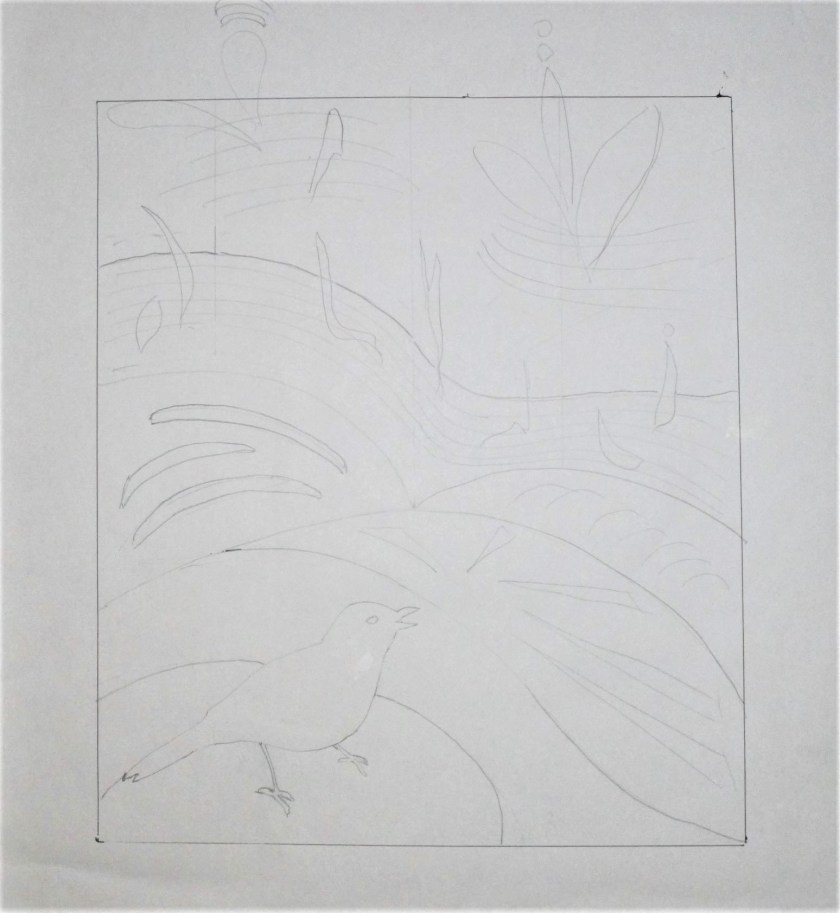
Next comes the sketch. I put the catbird’s silhouette in the lower left.
Now the hard part. Searching my fabrics for the colors mentioned in the journal, I found some purples and some brassy bright scraps. Also a few interesting prints. Most of yesterday was occupied with choosing, cutting and attaching fusible to the back of my chosen fabrics. Here is what this applique quilt looked like at the end of the day.
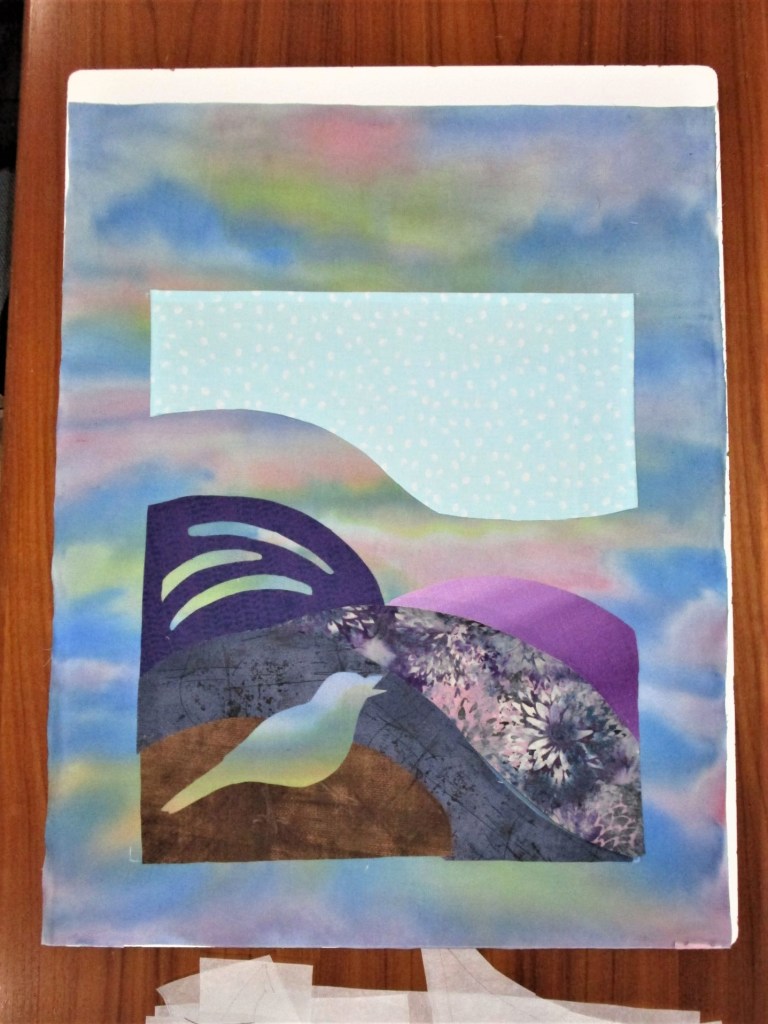
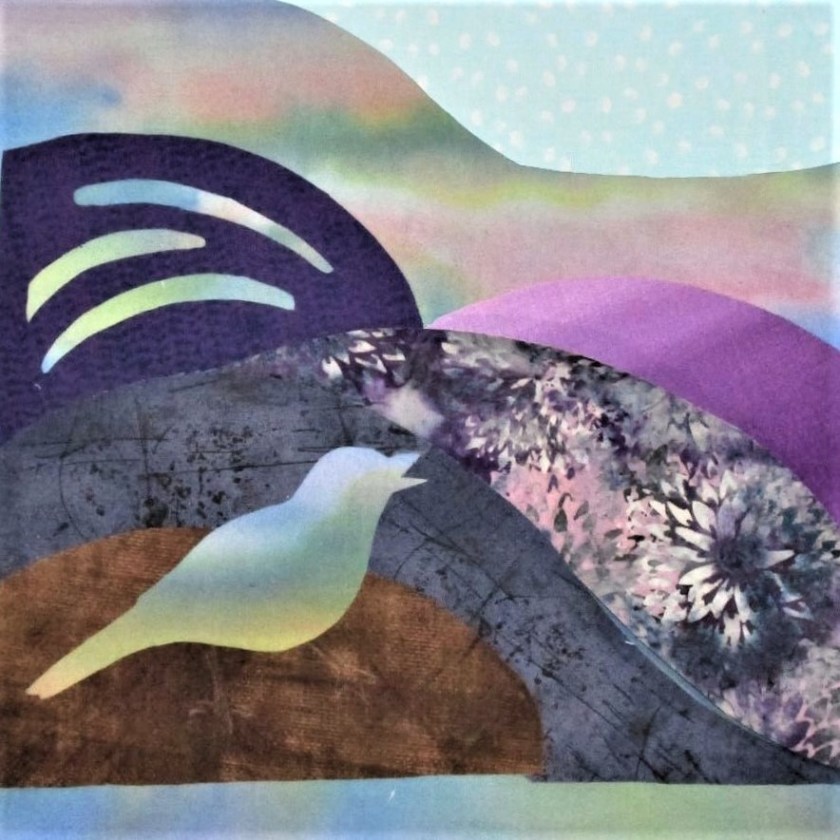
“Catbird Sings” stage one
Close up

While I am keen to get on with this work, I need some supplies. So I will have to pause pending a visit to the craft store.

Posted in collage

Collage 101

I am standing firmly at the nexus of art and craft this week.

On Tuesday I attended an introductory class at my local art association’s studio. About ten of us were there to learn how to do collage technique. Our instructor was Debbie Finch

Here she is giving us some preliminary instruction.

After selecting a subject and tracing it onto a canvas board, we spent a lot of time hunting through magazines to find images with colors that we wanted to use.

Debbie offered the option to use a pattern of a peacock for our design.

Some chose to use it,

Others brought an image or improvised from what they pulled out of the magazines.

There was one artist who clearly came with an idea in mind. She worked swiftly and finished her collage in about an hour.

Note the googly eyes, which she must have brought to class.

Kerry told us this was to be a gift for a grandchild. I was impressed – very impressed.

Me – I started out pretty well. I was prepared. I had brought a copy of my hummingbird drawing, and had pre-selected magazines and torn out several pages in advance. But after three hours of struggling with paper and glue, I had barely finished the background.

Debbie was kind enough to compliment my ” blending of soft shades.” Hm.

I took it home, and have been fussing over it for the last two days.

I soon realized that the collage technique does not lend itself to realism. As I worked through my magazines, I was taken by some appealing images unrelated to my original design. In the end I inserted a woman’s face, a tree frog and a trio of flies onto the surface. I’m going for Whimsy.

To finish up I added a little metallic paint and a few pen lines.

MAGICAL HUMMINGBIRD

Before I can seal the collage with top coat, I will need to buy a wide flat brush. I have no desire to ruin my 1 inch flat watercolor brush by using it to spread glue.

Posted in collage, quilting

My Current Art Quilt Project

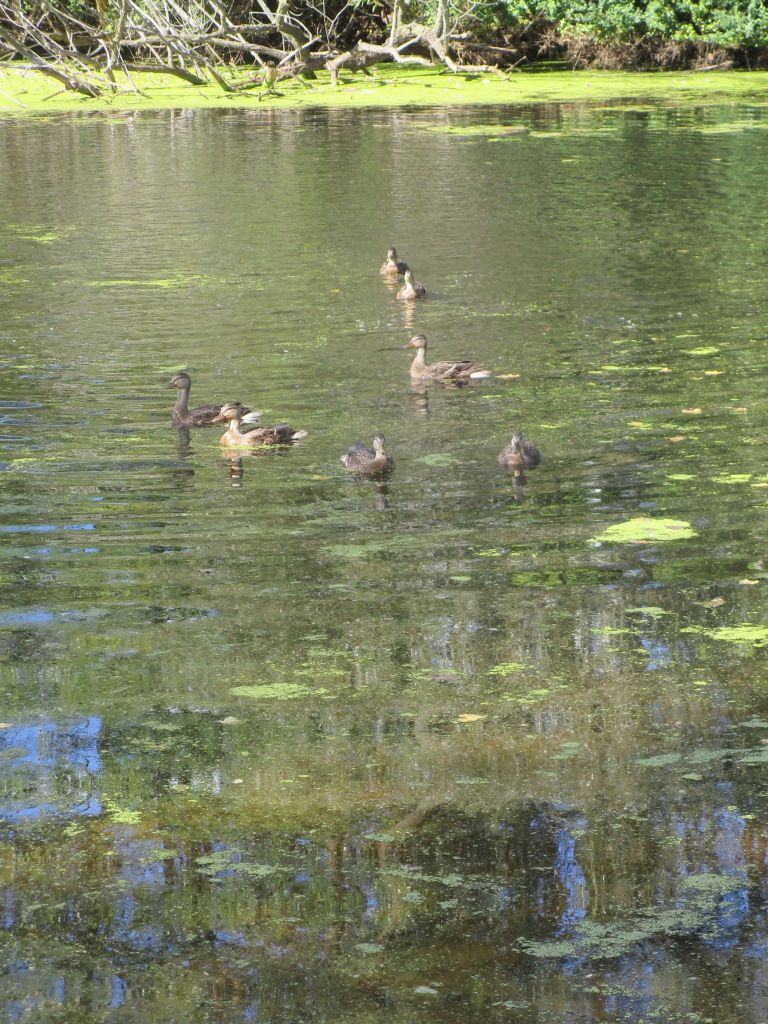
For the past couple of weeks I have been working on a new project. It’s inspired by this photo, which I captured in September at a nature reserve in Madison WI.

Mallards at Cherokee Marsh

I didn’t have any big expectations for this quick snap of a group of mallard ducks. But when I looked at it on my computer, I was captivated by the foreground – a mish-mash of colorful and spotted reflections. How might I create this look in fabric?

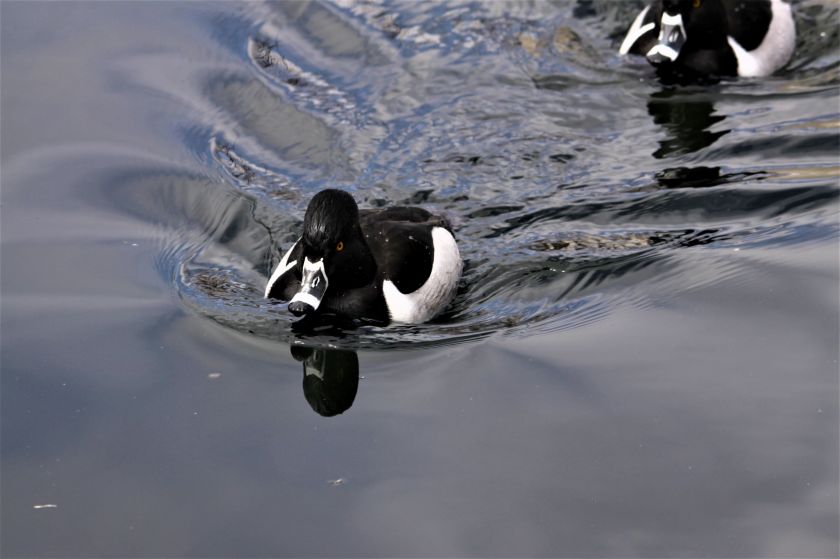
For this project I chose to use ring-necked ducks instead of mallards.

Male Ring-necked Ducks.

I love the black and white coloration and the crispness of its markings. Since this species of duck is also native to Wisconsin, I decided that it was a fair exchange.

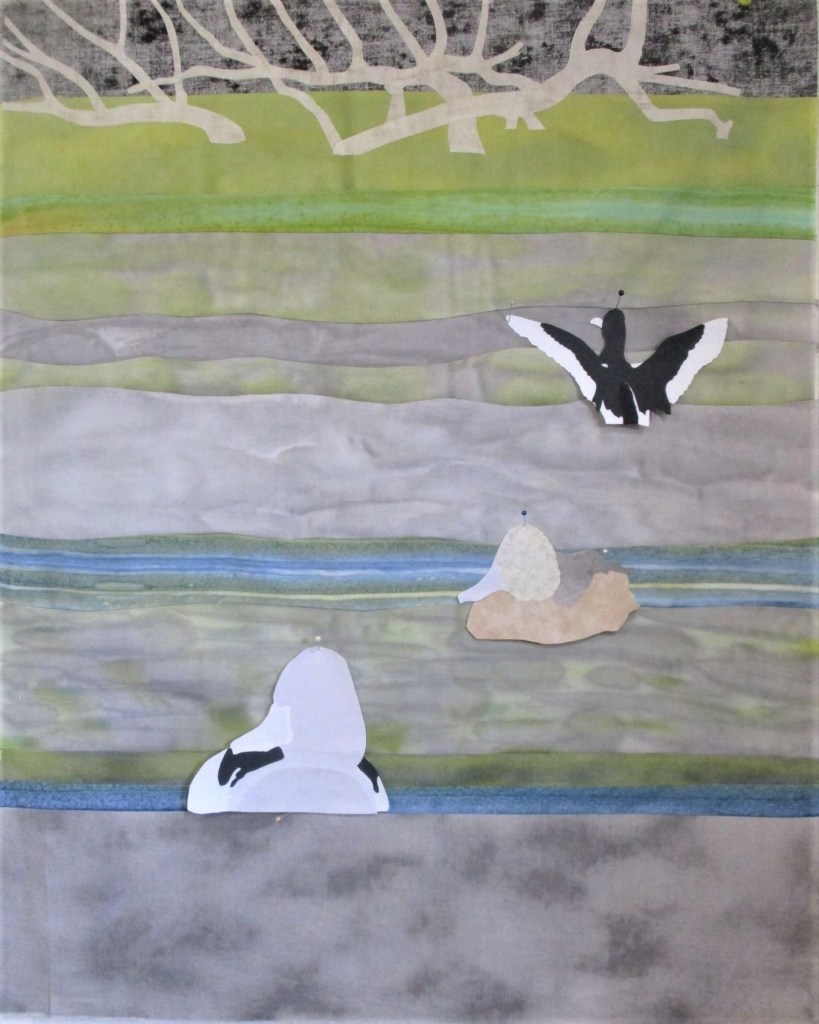
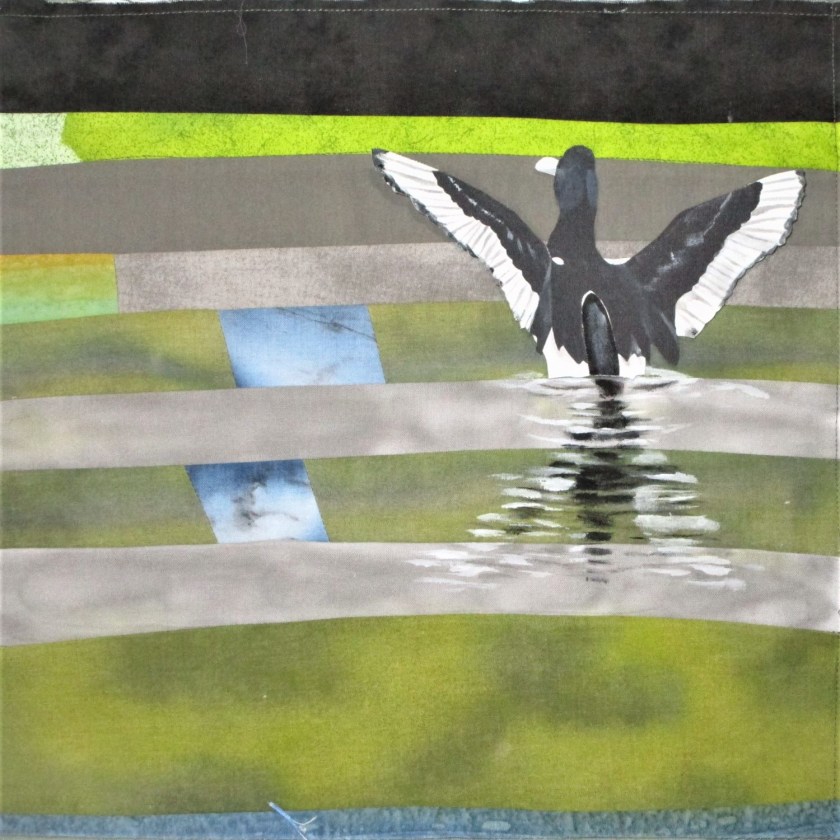
For the background, I selected some commercially printed and hand-painted fabric. these were sewn together in strips. Next I pieced together the first three ducks.

Eventually details will be painted on the ducks with fabric paint.

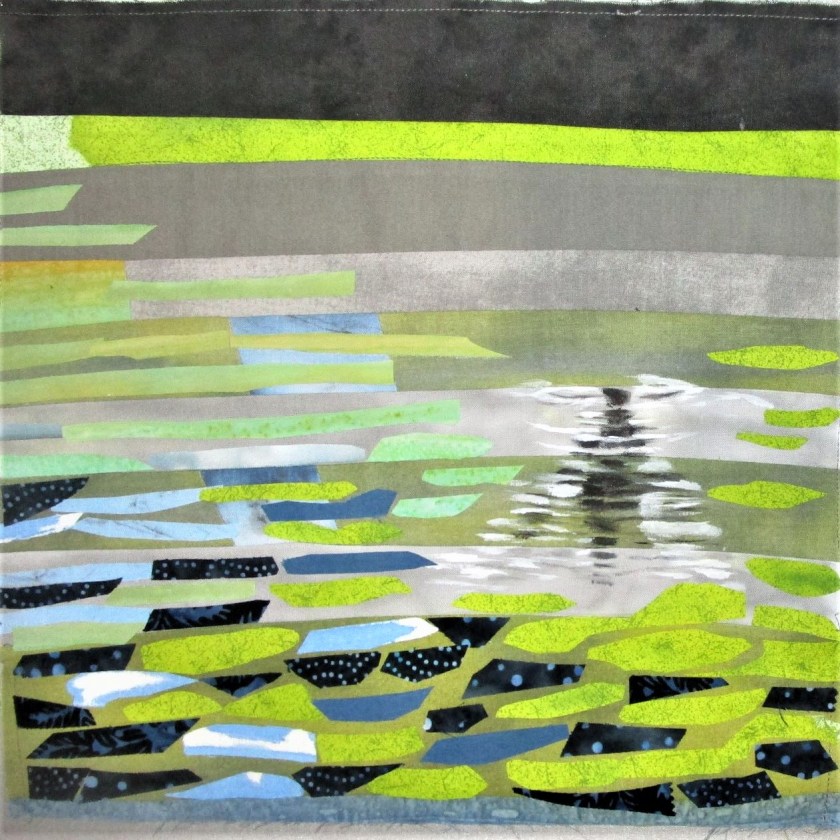
I took a pause for a few days. I want to use the confetti technique to render the mottled foreground. But this is a very new technique to me. So it makes sense to practice first.

I put together an extra duck so I could practice painting his reflection.

I like the pose of this one.

The next step? Go to U-tube to watch some instructional videos on the confetti technique. I had done this already, but the second viewing helped me work up my confident. With the prepared fabric in hand, I applied fusible webbing to the backs and cut them up into pieces. For the next hour or so, I fiddled around with layout.

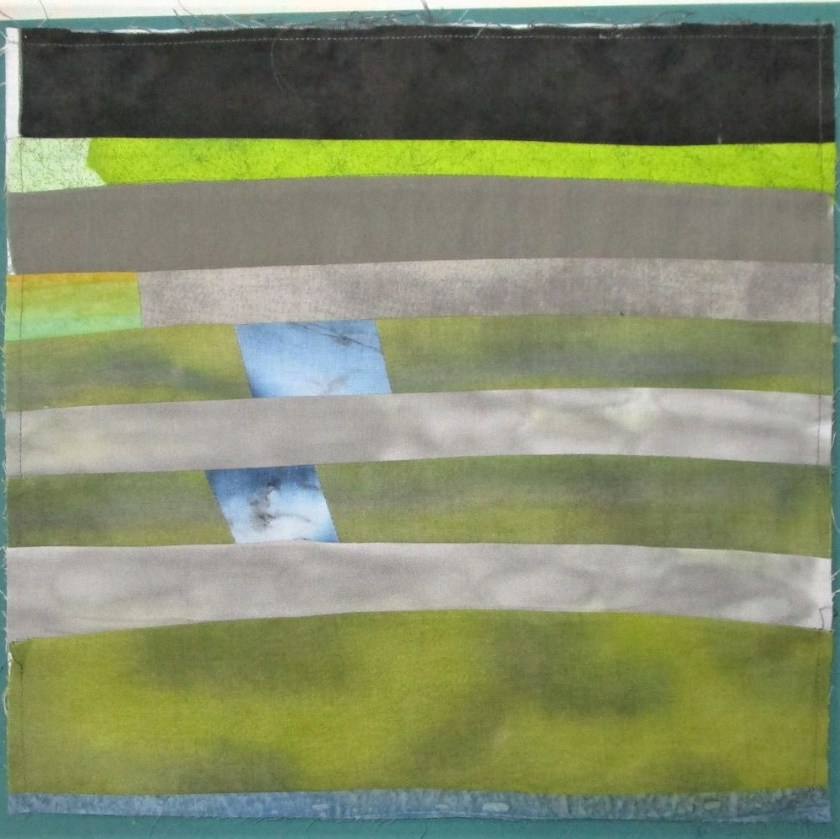
Practice block with reflection and confetti foreground.

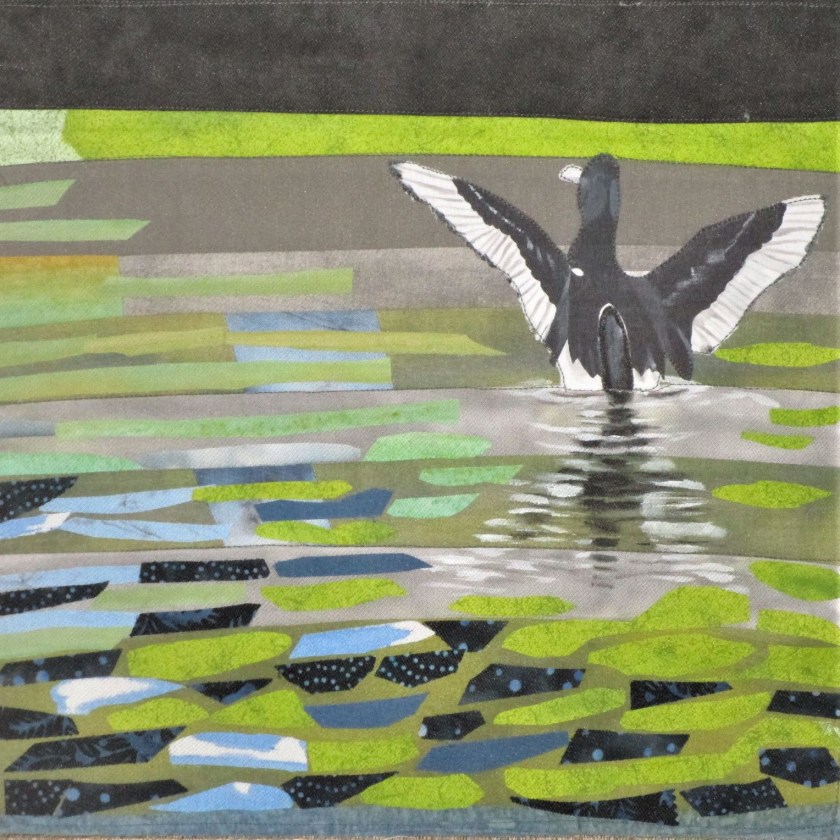
Did I mention that the title of this work is “Duckweed?” I guess I forgot to say. When I was at the marsh, it was the duckweed that really caught my attention. It was growing about the pond profusely in an intensive shade of green. This is what I am attempting to depict with my confetti pieces.

I next fused the duck in place and stitched a piece of tulle over the whole sample. The purpose of the tulle is to make the quilting easier. Here is where I left off today:

I’m fairly happy with my work. But I want to try rendering the reflection in the confetti technique instead of paint. I also want to work on the shapes of the confetti pieces.

Posted in collage, quilting

Sunflower Fiber Object Progress Report

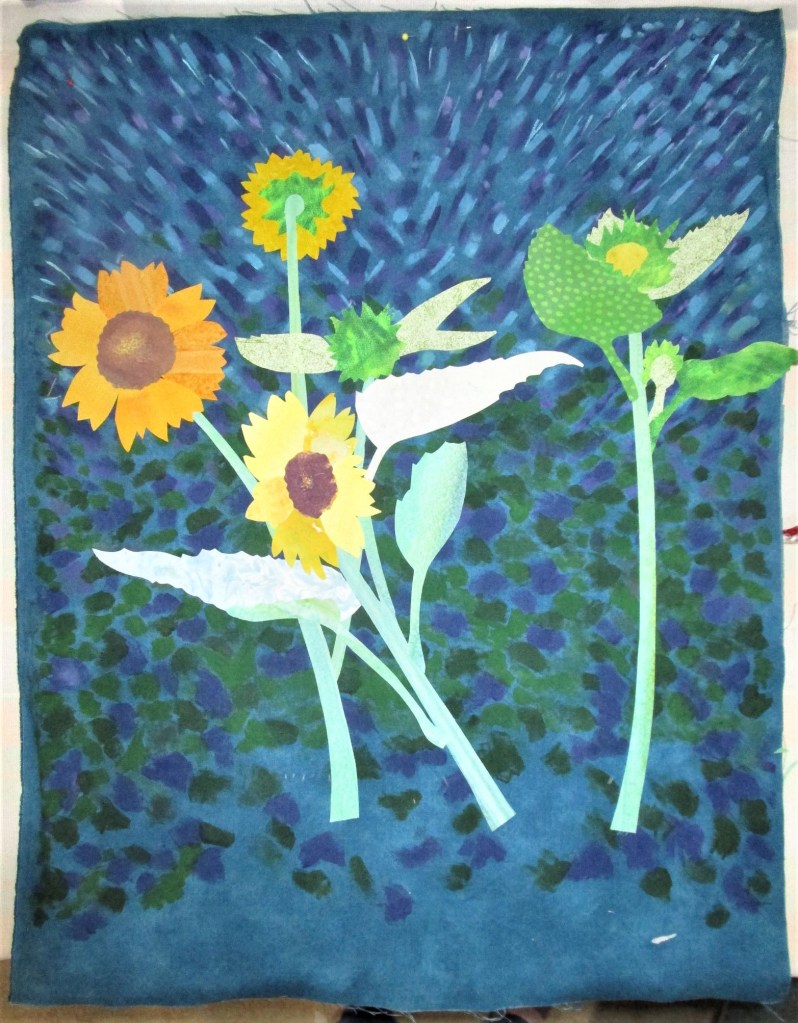
For the past three days I have been working steadily on the small art quilt that was inspired by the sunflowers in my garden and influenced by Vincent Van Gogh. I’m about half way through. Today I want to share a bit about the process I am using.

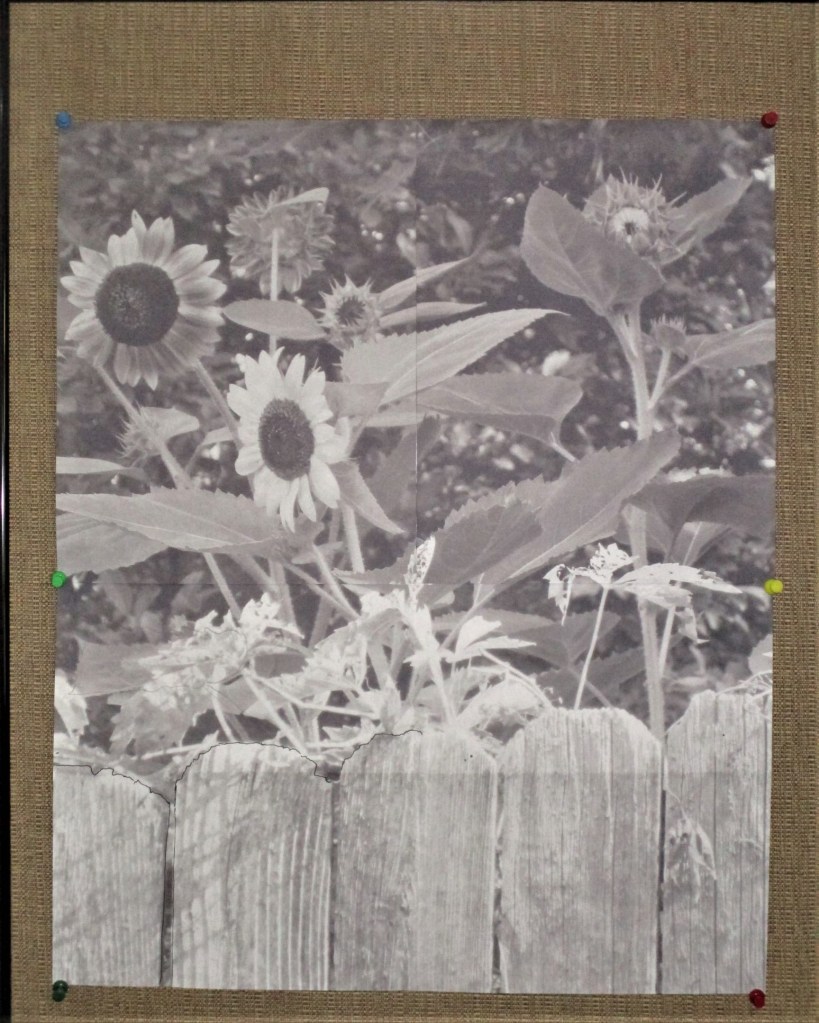
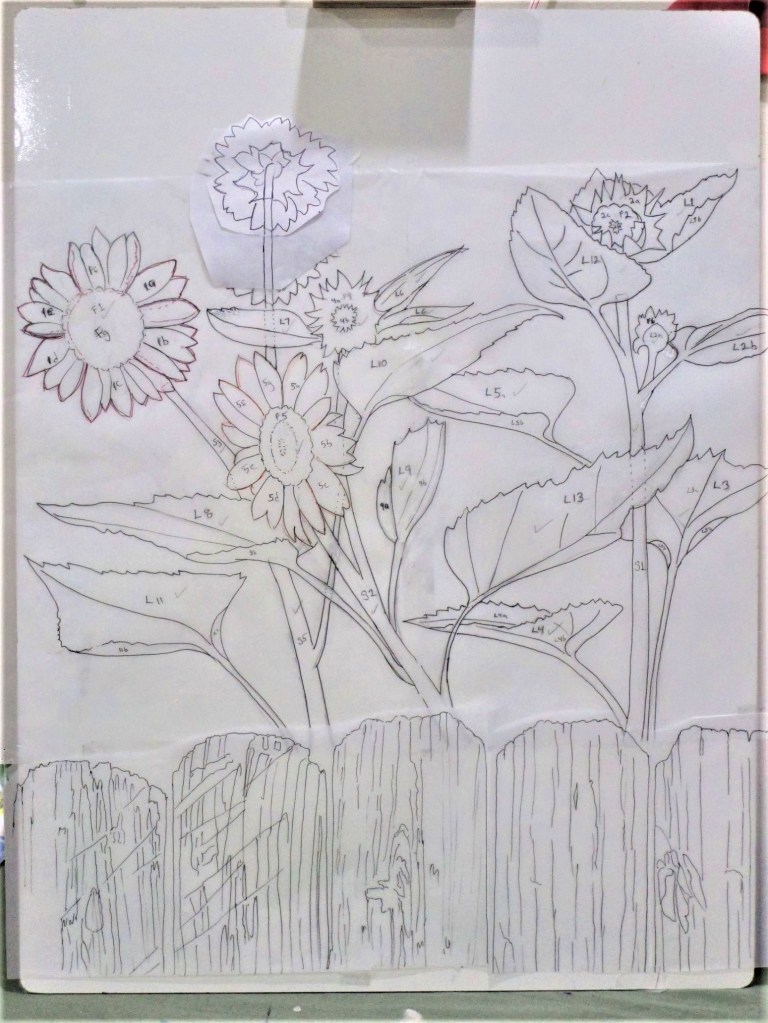
While the technique I have chosen to use is applique, the design process for most art quilts is similar. Start with an image. I used a photograph, but drawings are also good choices. Decide on size and dimension. Then enlarge the image to fit.

This enlargement is about 18 x 24. I have printed it in black and white because eliminating the color makes it much easier for me to judge relative values.

Using a tracing paper overlay, trace the image. During this stage many design decisions are made. You want to eliminate any visual clutter that doesn’t support the overall design. You can manipulate the different elements to strengthen your main thesis. For example, I altered the position of one flower and the tilt of the stems to accentuate the diagonal lines. It took me a long time to draw the pattern but I enjoyed the process.

Final Design

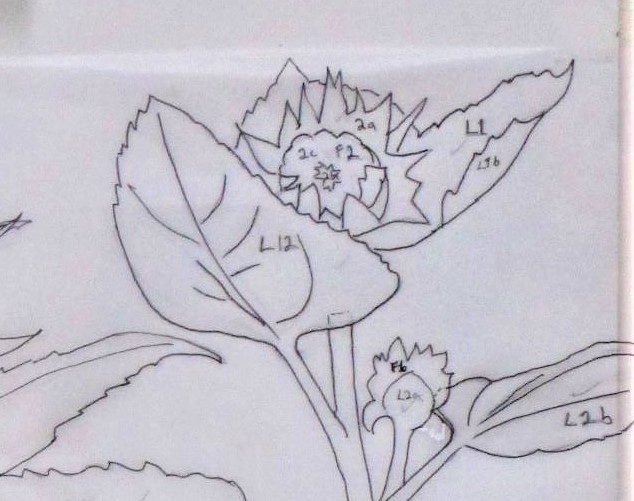
This pattern will be the map from which the entire assembly is guided. I drew in some directional lines that suggest details for painting on later. You see that I assigned numbers to every element. This will help me trace and cut out all the pattern parts.

Detail of sunflower in upper right of pattern

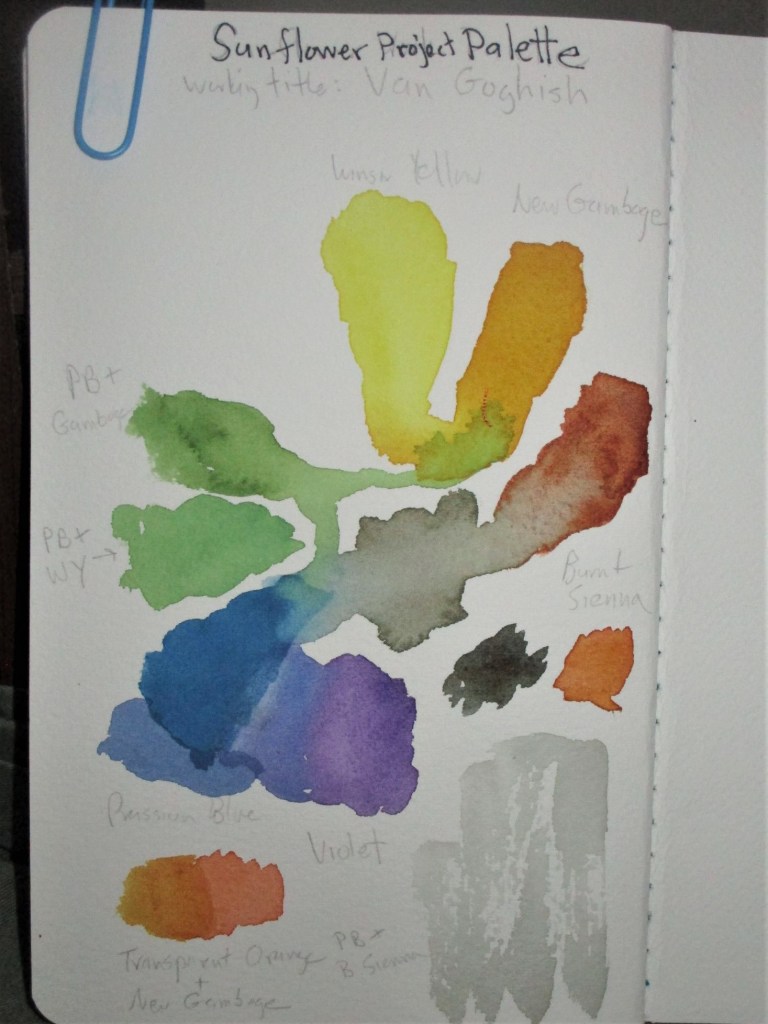
Now the part that every quilter just adores: Choosing colors and fabrics! Since I am a budding painter, I made a quick color chart in water color paint.

I’m trying to use an analogous color scheme. But my parameters are pretty wide, extending from violet through to yellow-orange. For this quilt I will assign the darkest colors to the background and the lighter ones to the elements .

Even though I did go shopping, in the end I chose fabrics mostly from my stash.

Next I traced each element onto freezer paper, cut them apart and pressed them onto the fabrics. Following the drawn lines, I cut out each pattern piece. Keeping them organized and up off the floor is the main challenge!

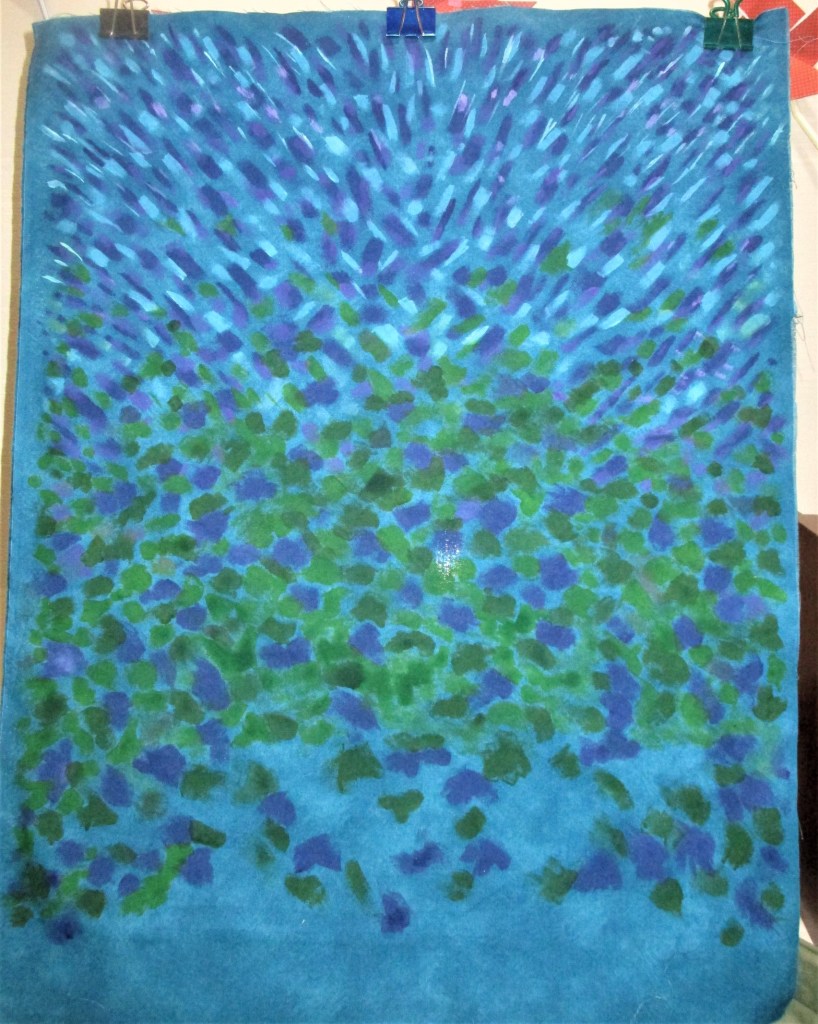
In my last post, you saw how I painted the background fabric. Here is the background again, up on my design wall and ready to accept the fabric appliques.

I use a fusible webbing called Wonder Under to glue the appliques to the background. I won’t go into detail on that step. The product’s packaging tells you what to do.

First I assembled the flowers, each of which had several fabrics. Once that was done I started attaching appliques to the background. Any pieces that lie behind another piece go down first. I started from the top. Here is a photo with about half the appliques on:

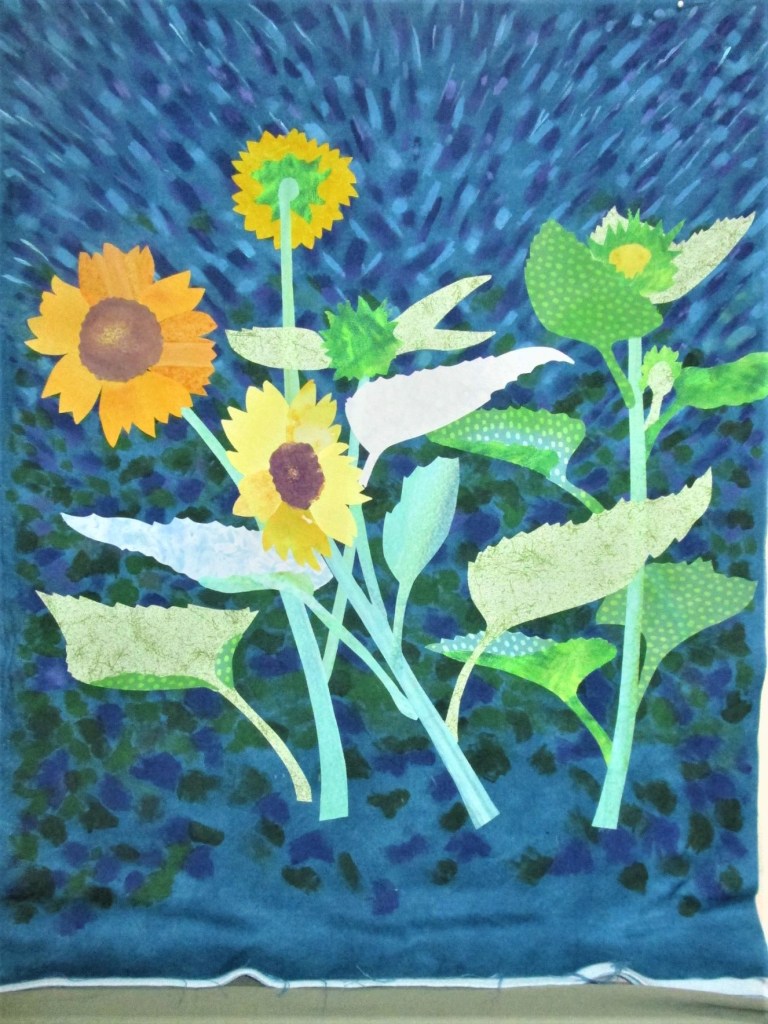
Here you see all of the flowers and leaves attached. This is where I left it yesterday.

I’m pleased with the result. I like it so well I may not even attach the fence applique – just let the flowers float in mid air. What do you think?

Posted in collage

Paper Week Finale

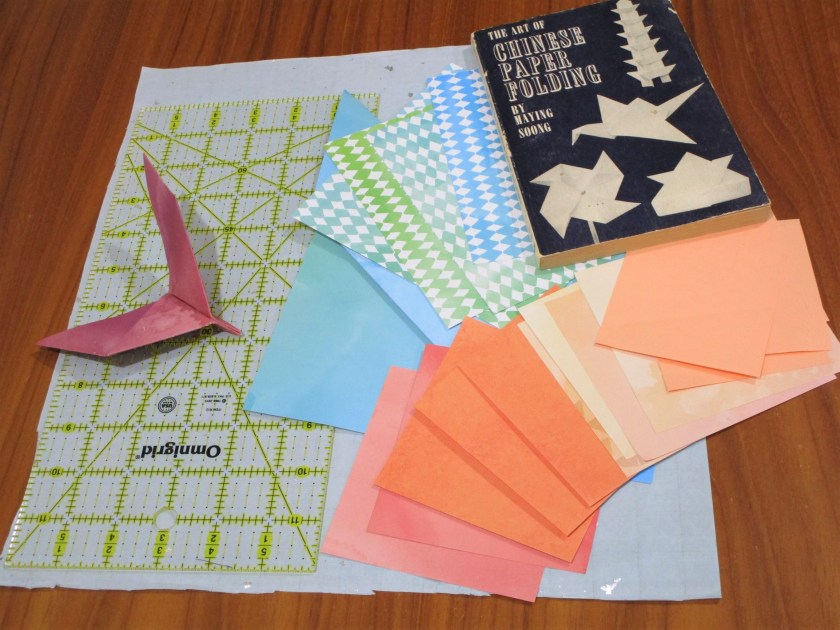
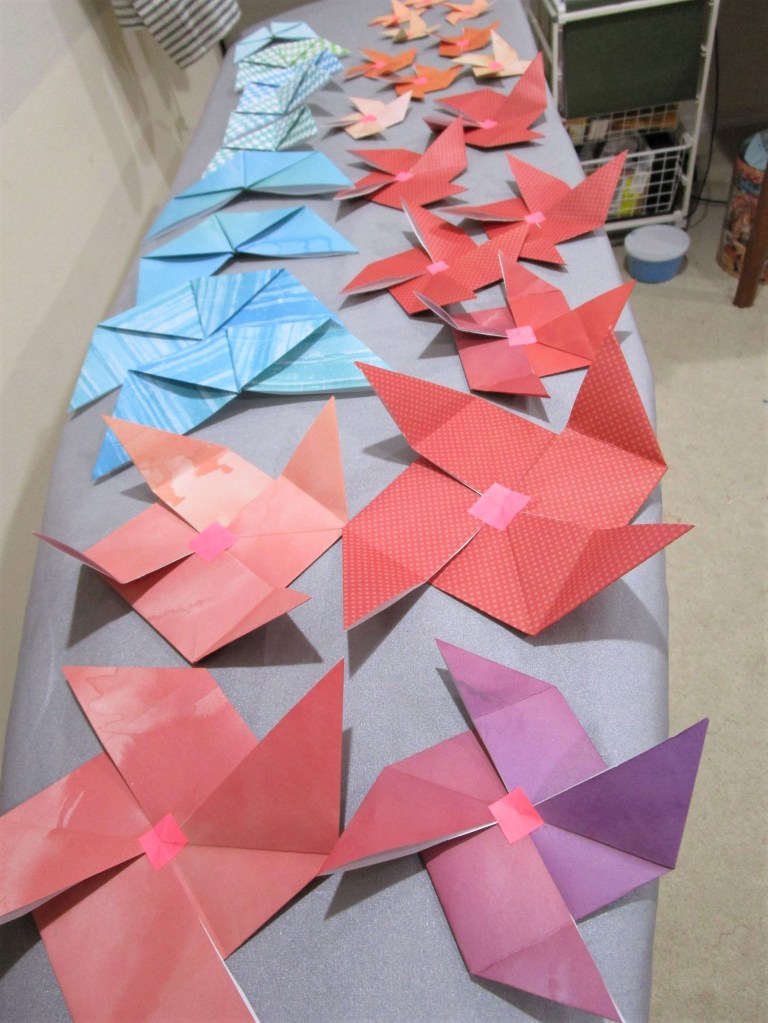
Lately we have been hearing unflattering news about China – unfair trade practices, intellectual property theft, and so on. Today I want to be grateful for some of the good things we have received from the Chinese, such as Paper! And let’s not omit the art form of folding paper. The word origami is from Japan, but the Chinese were creating objects of folded paper as early as the 10th century. Today I am using The Art of Chinese Paper Folding, by Maying Soong for instruction in making my pieces. She explains that in China, paper objects are made with only a single sheet of paper and one’s hands. No pasting or cutting is permitted. “It is the most interesting, inexpensive and useful art for children and grownups.” For this project, I will be making two forms – pinwheels and birds. The bird form reminds me of seagulls. So my theme for this work is the beach. Here are some of the papers I am using. In addition to colored copy paper, I have 12 x 12 inch scrapbook sheets.

When my husband was a boy, he enjoyed making origami shapes, so I invited him to help. He measured and cut the majority of the paper that I am using. As I began to work, it started to rain. It was so peaceful, sitting and folding, listening to the rain hit the roof and the thunder rumble in the distance. What a satisfying project for a wet, somewhat cold day. After a few hours, I had folded all the pieces and laid them out ready for the installation.

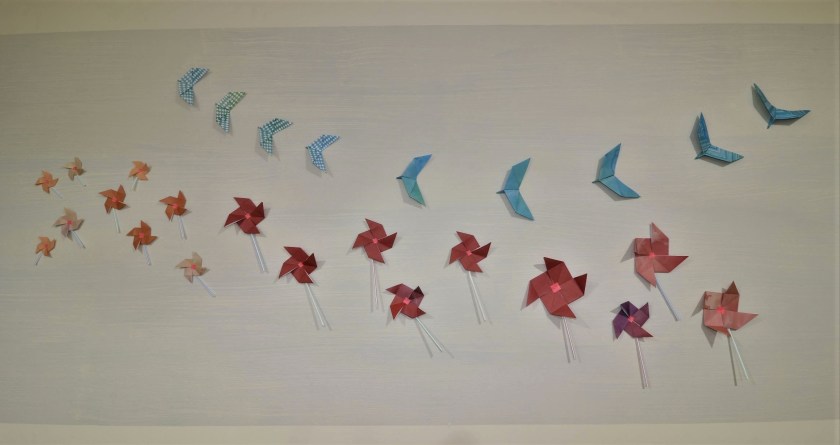
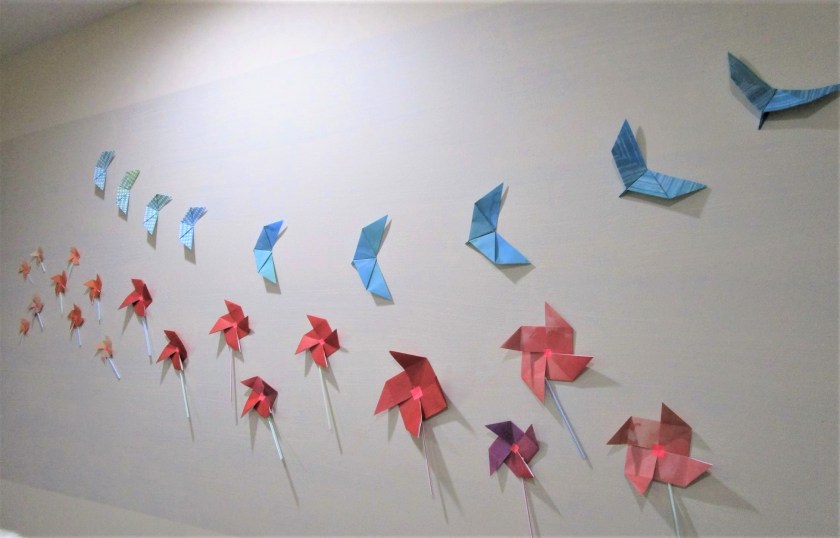
Pinwheels in warm colors, Birds in cool colors. I folded several sizes of each.

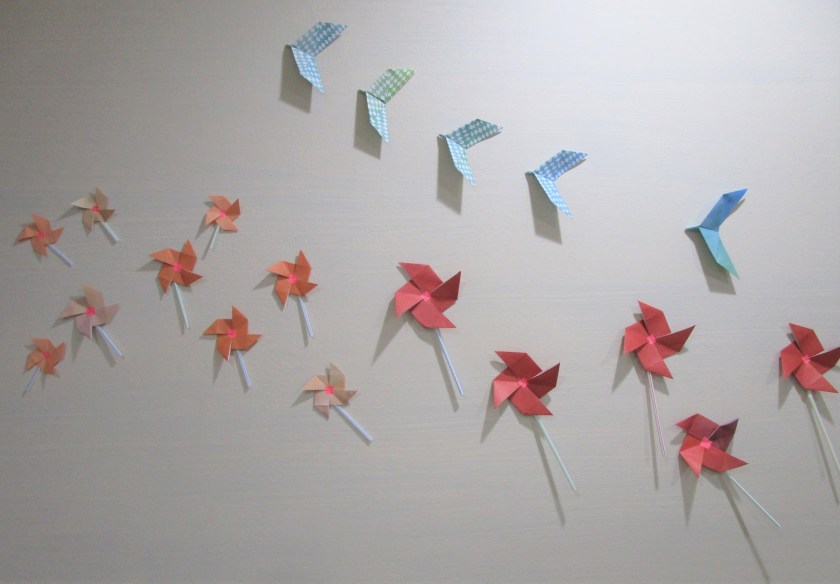
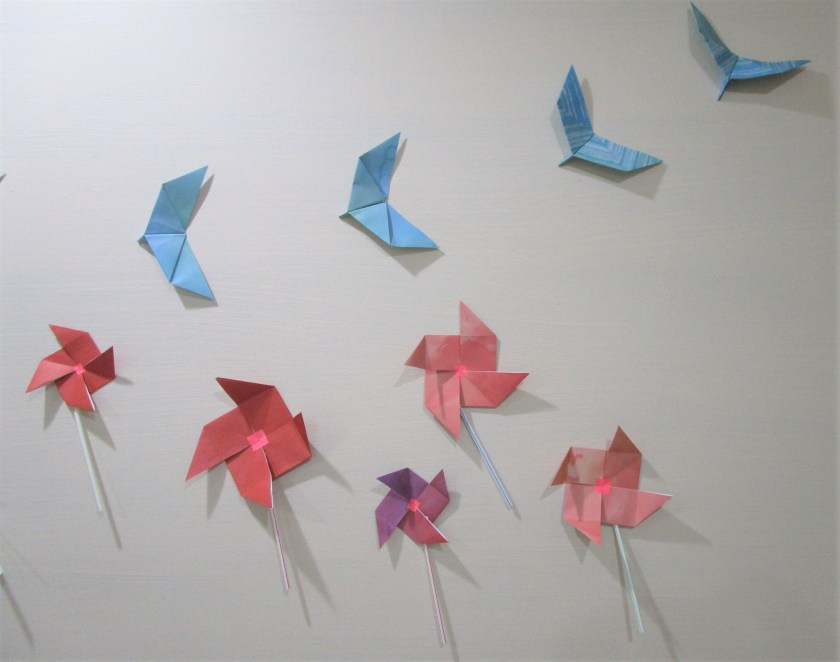
The origami is installed across the east wall of my studio. It measures about eight feet wide by three feet tall. Photography was tricky. Bill took the wide-angle shot which you see at the top. Here are my photographs, including the approach to the piece while entering the room, the left side detail and the right side detail.

I call it Breezy Beach Day.