One of six children, I was raised by a busy mom, who instilled in me a love of fabric. Though I learned to sew and knit at a young age, it was the arrival of my first grandchild that pushed me into action. A long-time knitter, I am now ready to explore all things fiber.
I am now a fiber artist without a studio. Yesterday I packed the final box of my materials, tools, supplies, journals, finished paintings and works in progress. With no access to my stuff, there can be no new reveals. For now, I’ve decided to share some of my earlier posts, starting with this one, written and photographed about one year ago. Please enjoy the pretty posies. I’ll return to normal (I hope) in about two weeks.
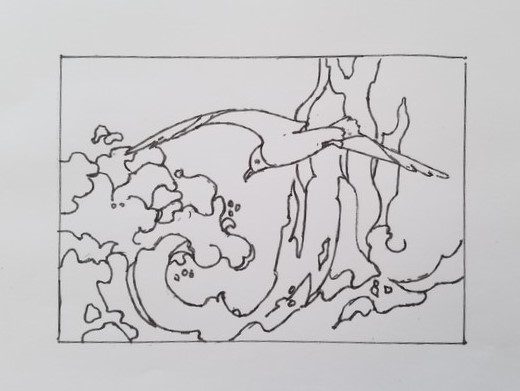
Taking a break from packing boxes this week, I decided to attend Open Studio at my local art association for a class conducted by mentor Cheryl Bryan. This will be my last class with Cheryl before I move away. She sent us this sketch…..
……and told us we would practice painting with only two colors. We were to choose two that, when mixed together, created a neutral black.
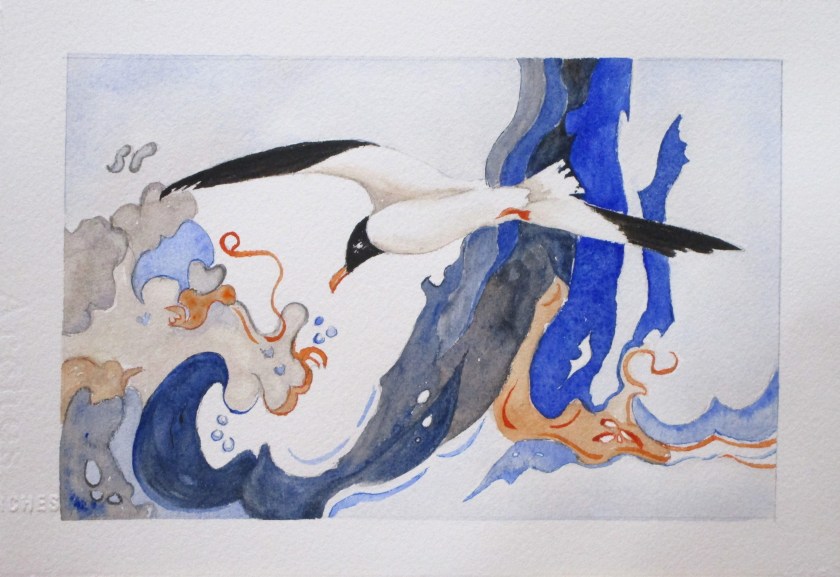
I chose to make my own sketch instead of tracing Cheryl’s. I followed her general design but simplified the line work in the lower left area. My chosen pigments were Winsor and Newton’s Ultramarine blue and transparent orange. This is one of my favorites for a good black, as I discovered when painting Winter Chicks in 2023.
The following morning, I cleaned up my edges, adjusted a few values and added tiny and minimal details using Micron pens and a soluble graphite pencil.
This was a fun, easy class that produced a highly-stylized result. I loved every minute. I call this one Dancing with a Seagull. It is 9 by 6 inches on cold press Arches paper
I will sorely miss these Open Studio sessions, the people at the association and especially instructor Cheryl Bryan. It will be hard to find another group like it in my new home. I’ll check in with Cheryl periodically, in the spirit of Apprenticeship.
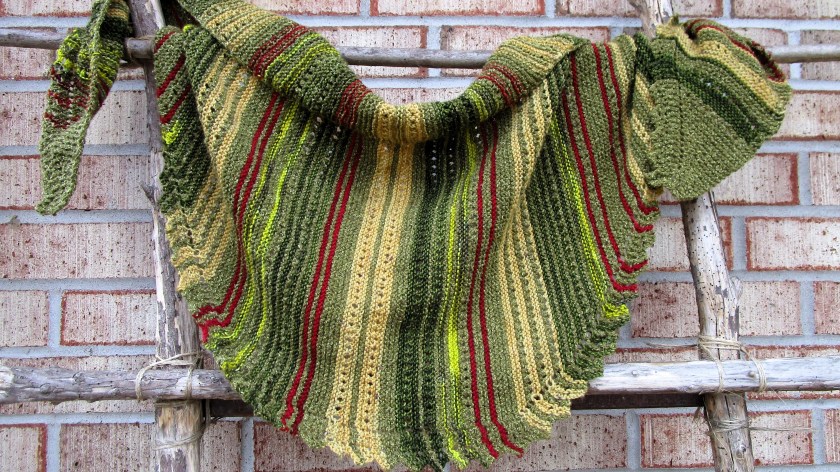
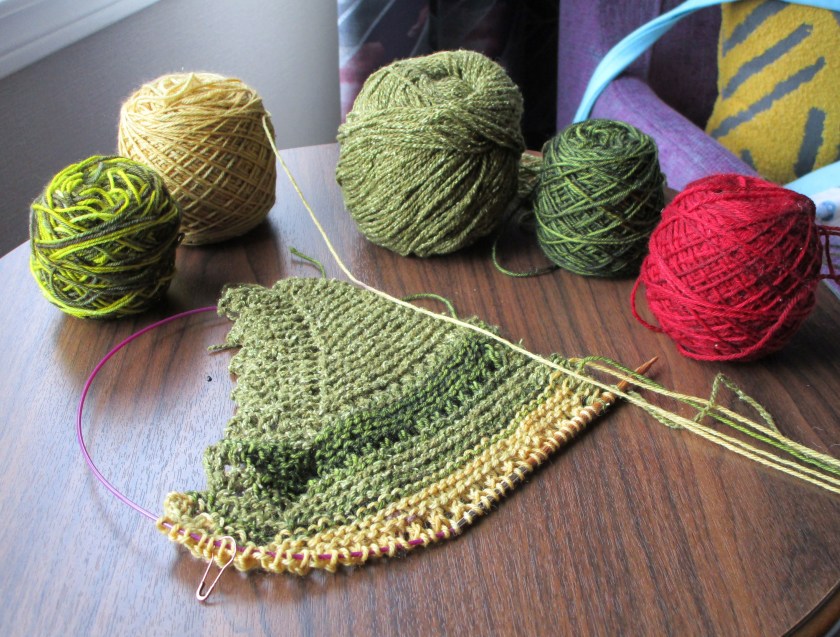
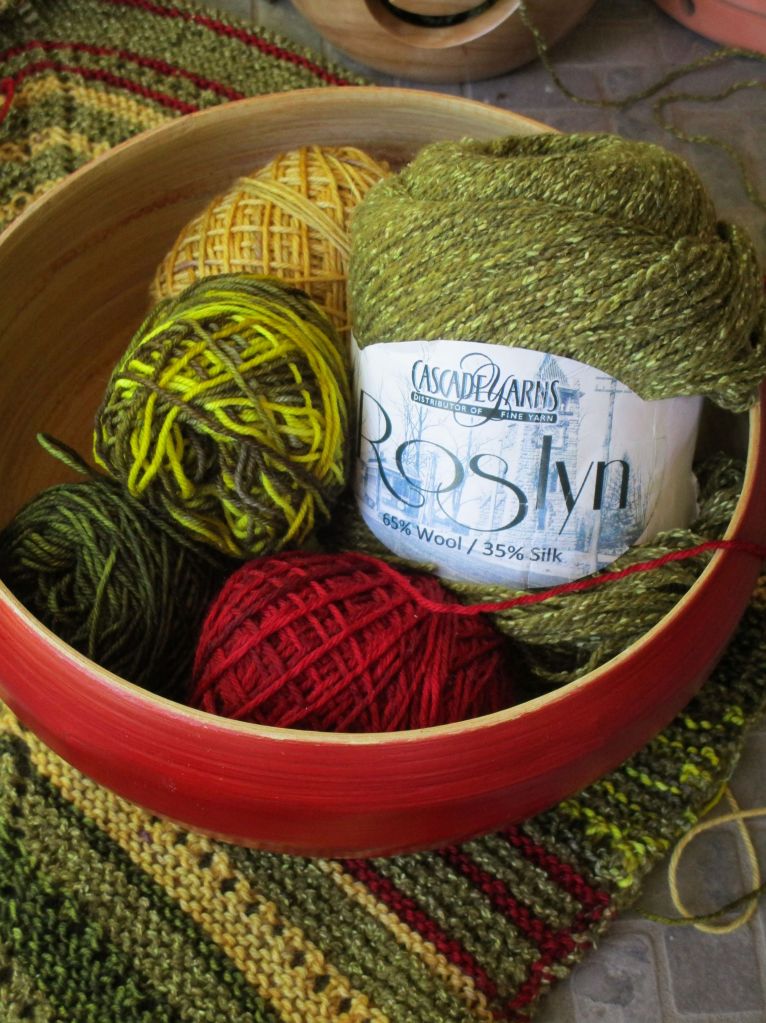
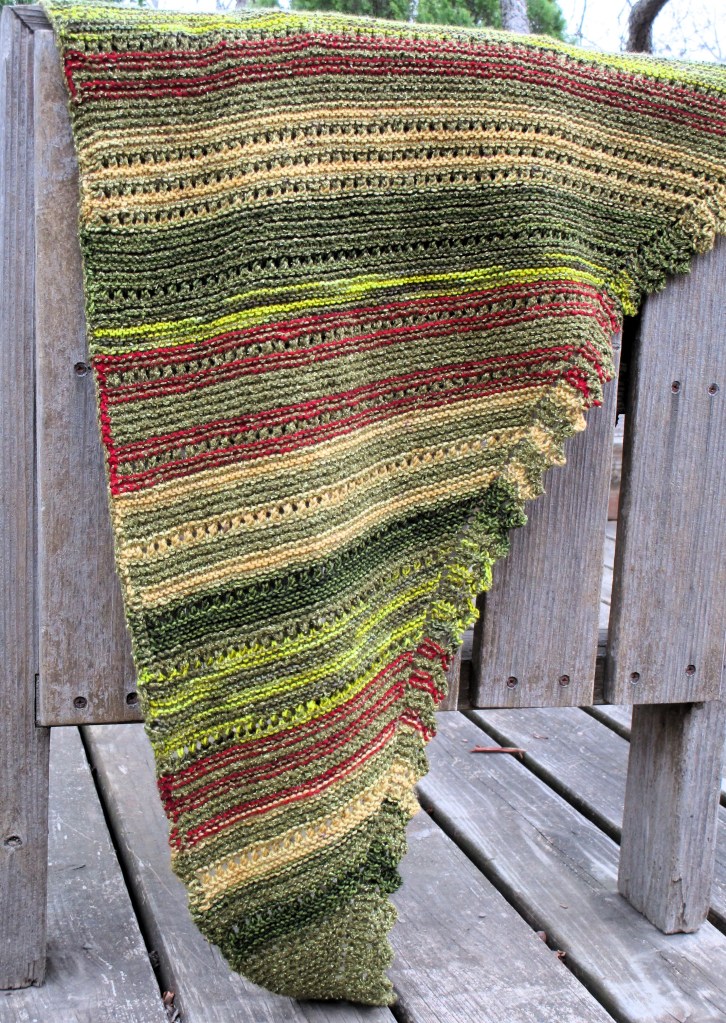
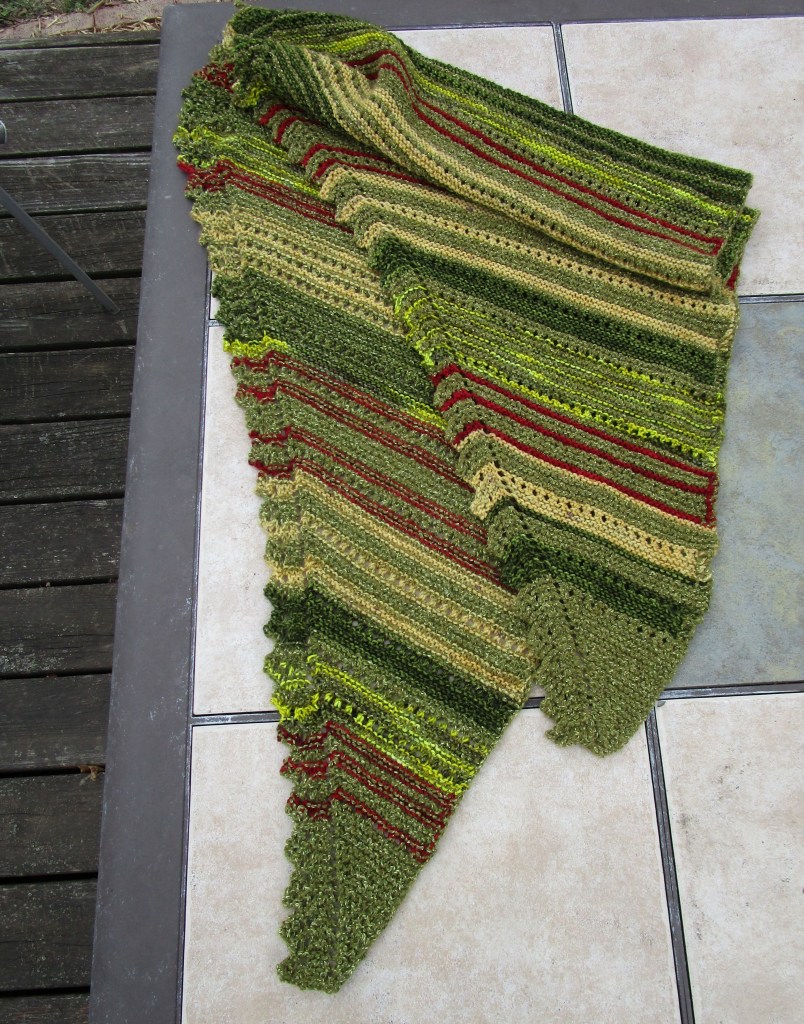
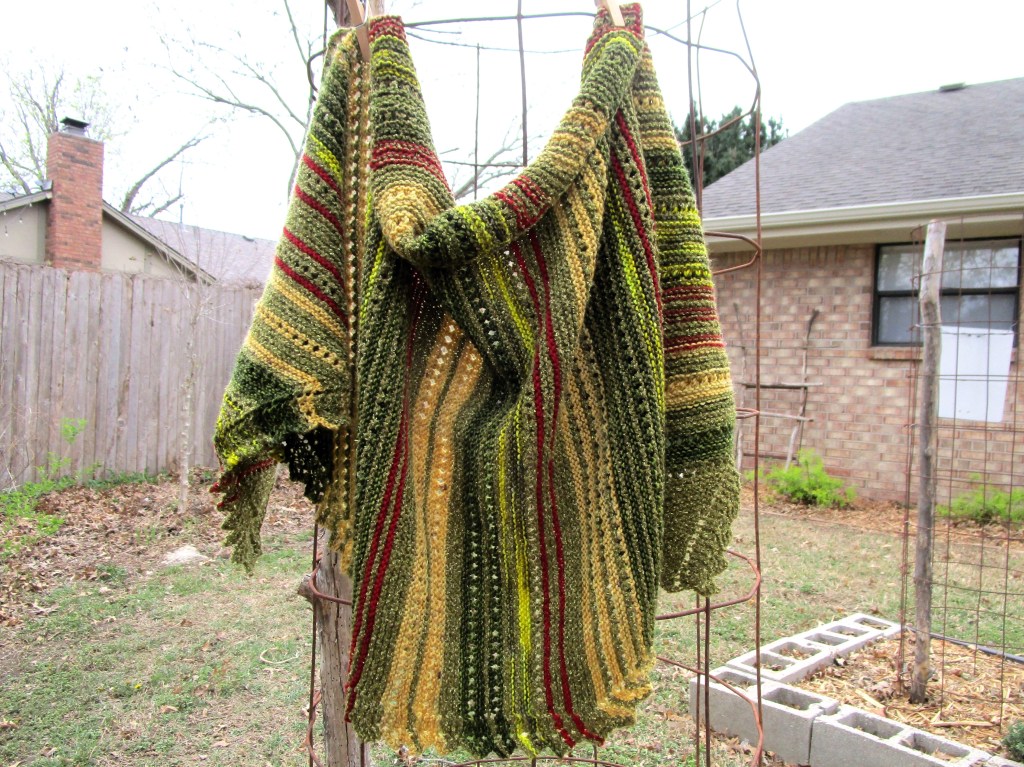
This week I cast off this shawl, the last stashbuster of 2024. This shawl started life as a hurry-up project to accompany me on our trip to the Canadian Rocky Mountain coach tour in July of 2024. I found the easiest pattern I could lay my hands on quickly, gathered up a bunch of fingering weight leftovers and hit the road.
She was cast on in the Calgary hotel lobby.
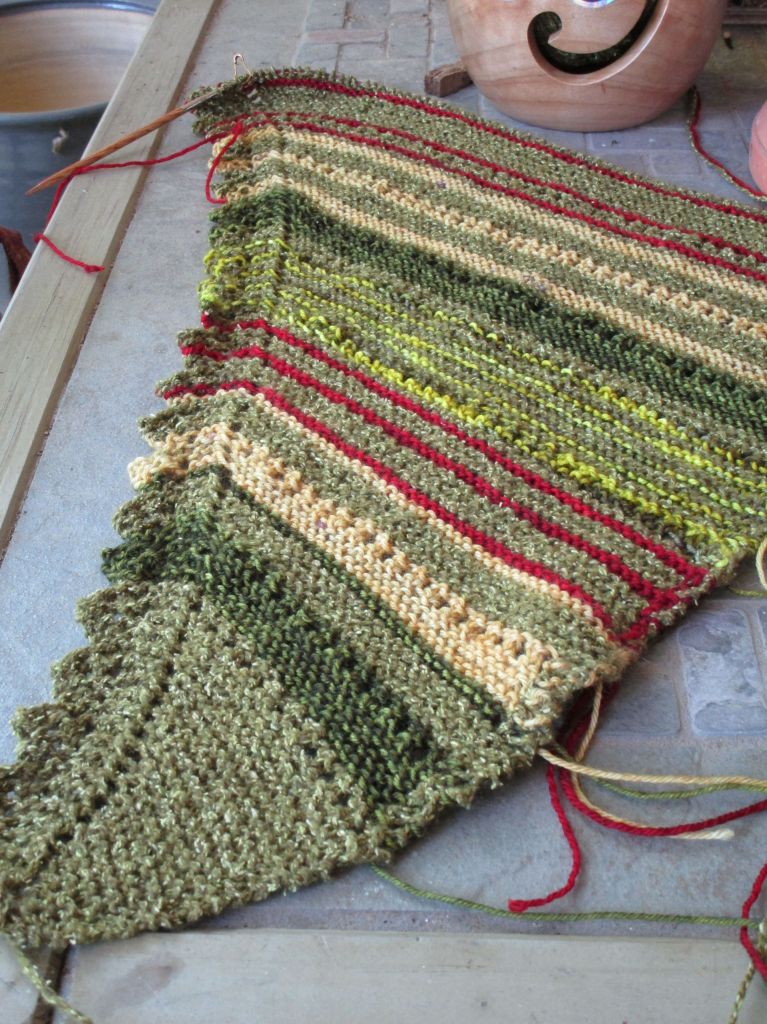
Progress happened throughout the trip. I improvised the color and stitch changes.
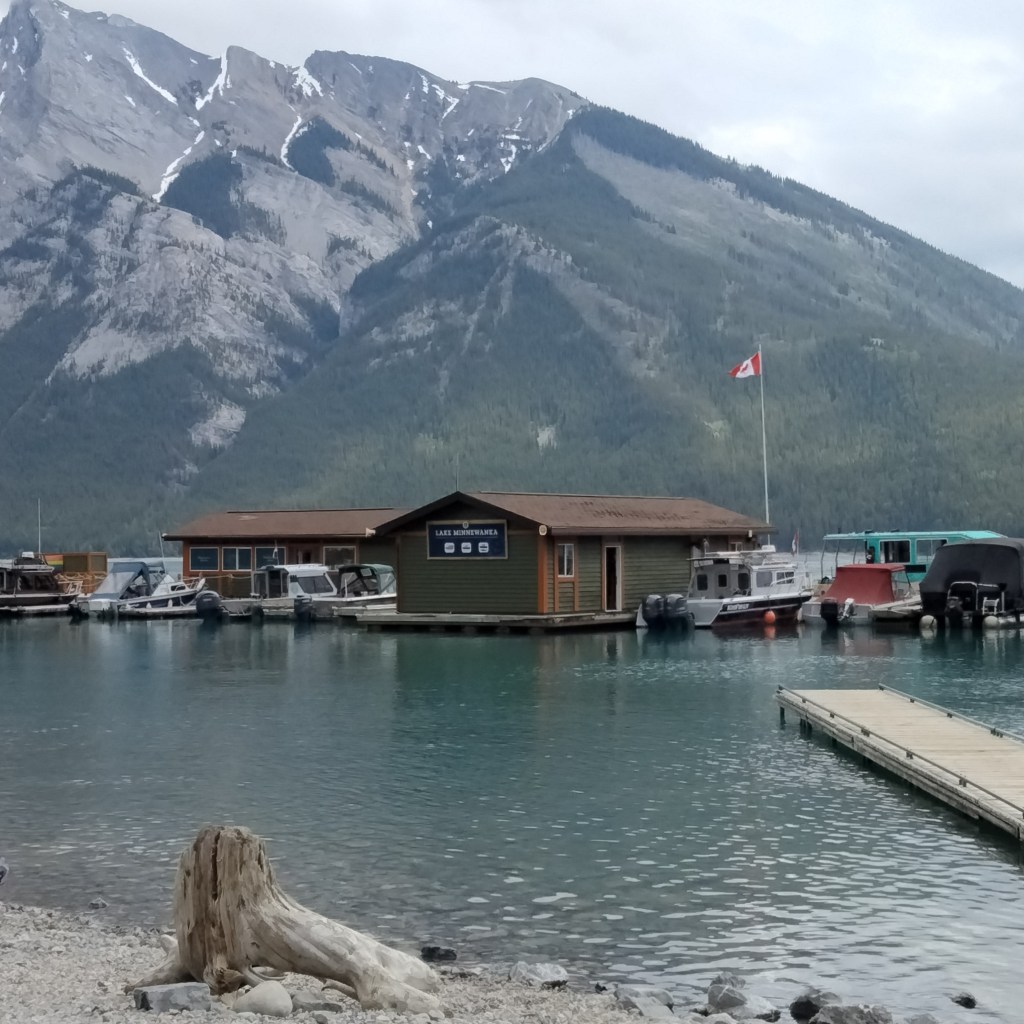
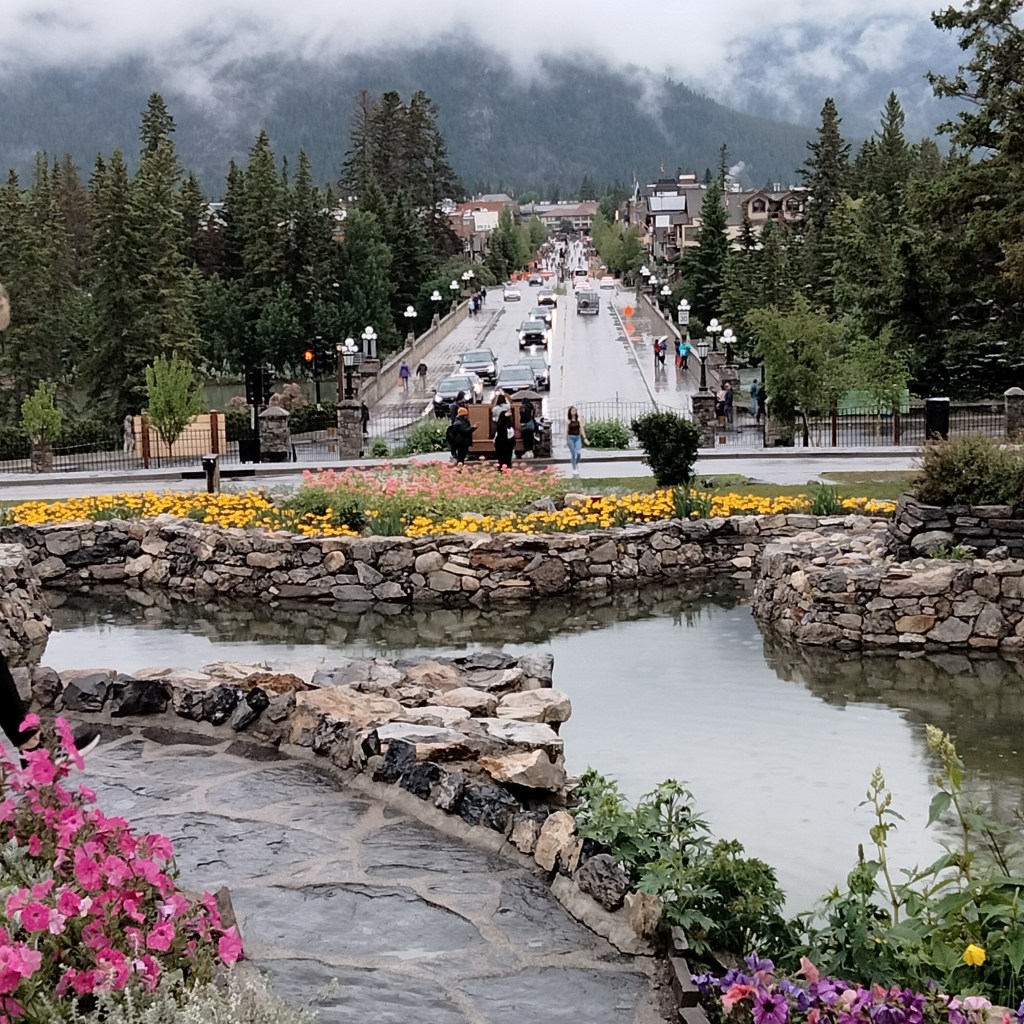
Lake MinnawankaBanffJasper
In late July, the shawl and I were in Northern Wisconsin for a week at the lake.
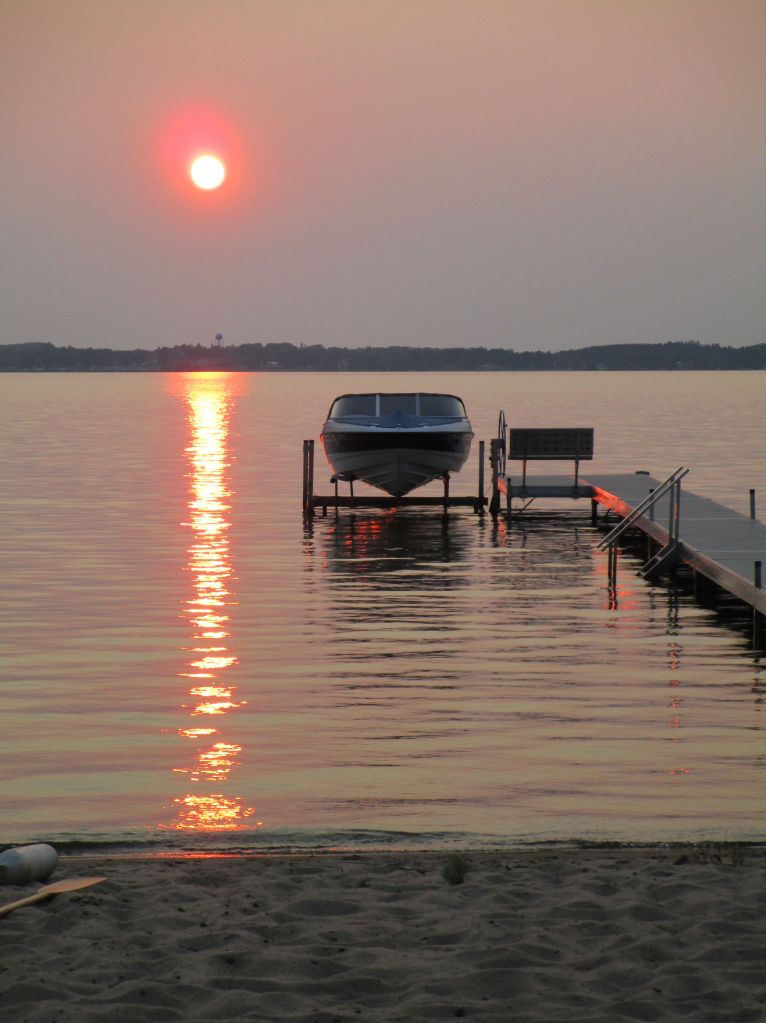
Shell Lake
With the passing of my father in August, we drove to Ohio, the shawl serving as a comforting activity on the long trip to and from.
In December, I sat with my friend who was dying, slowly knitting and listening as she told me what was in her heart.
In January, the shawl came to Iowa, where we signed the papers to purchase our new home. In March we were back in Iowa to visit with family – a joyous occasion.
I haven’t even worn it, but it is embedded with many memories. Memories of all the places where I have knit it, the people who were present and the emotions I felt. Each color change reminds me of the projects that I have made with that specific yarn, and who received the finished project.
This simple little shawl carries a lot of stuff for me. I guess I will keep it.
These past few weeks have been tumbling like dominoes for me. It’s the last day for posting my finished round robin quilt, but it is not finished. Not yet.
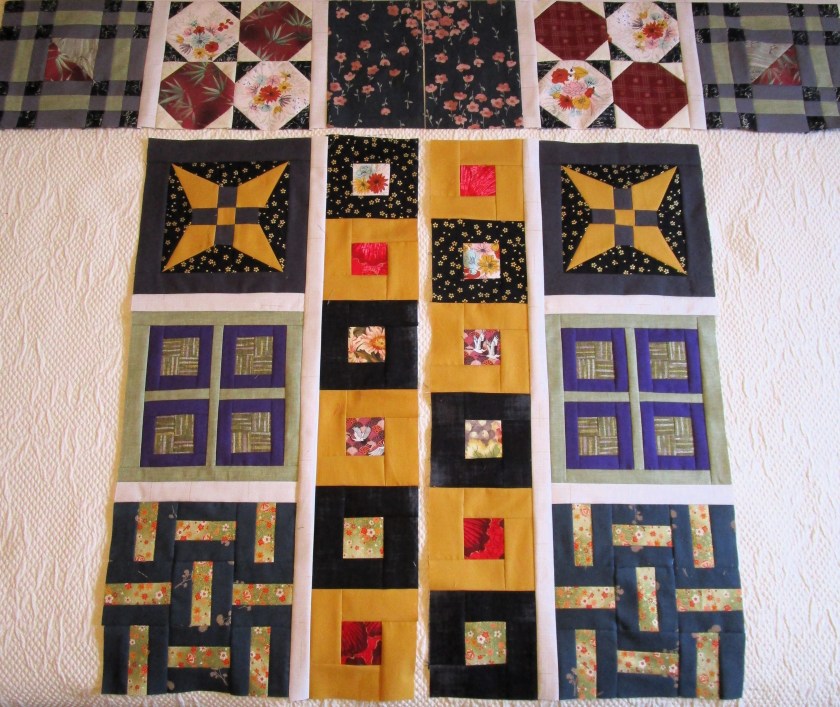
After Round Six, I still needed several more blocks for the front of my kimono/quilt. In the interest of speed and economy, I chose some of the simpler designs in the Japanese quilt block dictionary. Here they are arranged with the two kite blocks.
The quarter-sized blocks frame what will be the front opening.
My next step was to make the quilt sandwich. I chose to use cotton flannel as a thinner option for the bat. Then I started to search for a backing. Nothing I saw looked right for the job.
As I was beginning to pack my studio, in anticipation of moving house, I came across some red fabric – yards and yards of it, which I had purchased to make some drapes and totally forgot about it. It was polyester woven in the style of raw silk. An unusual choice for a quilt backing/kimono lining, but a beautiful match.
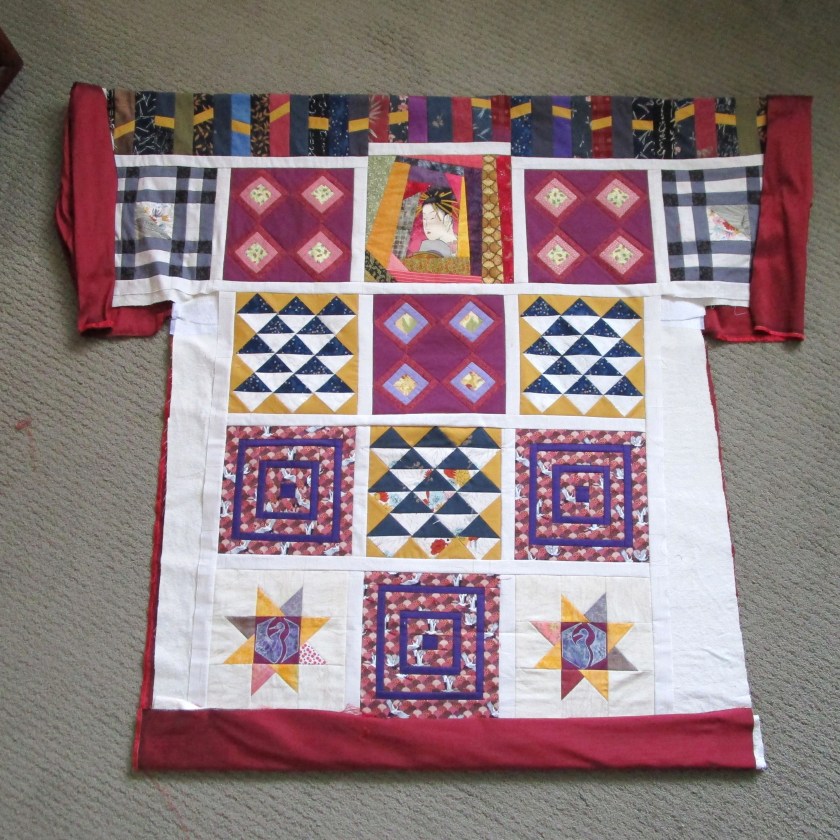
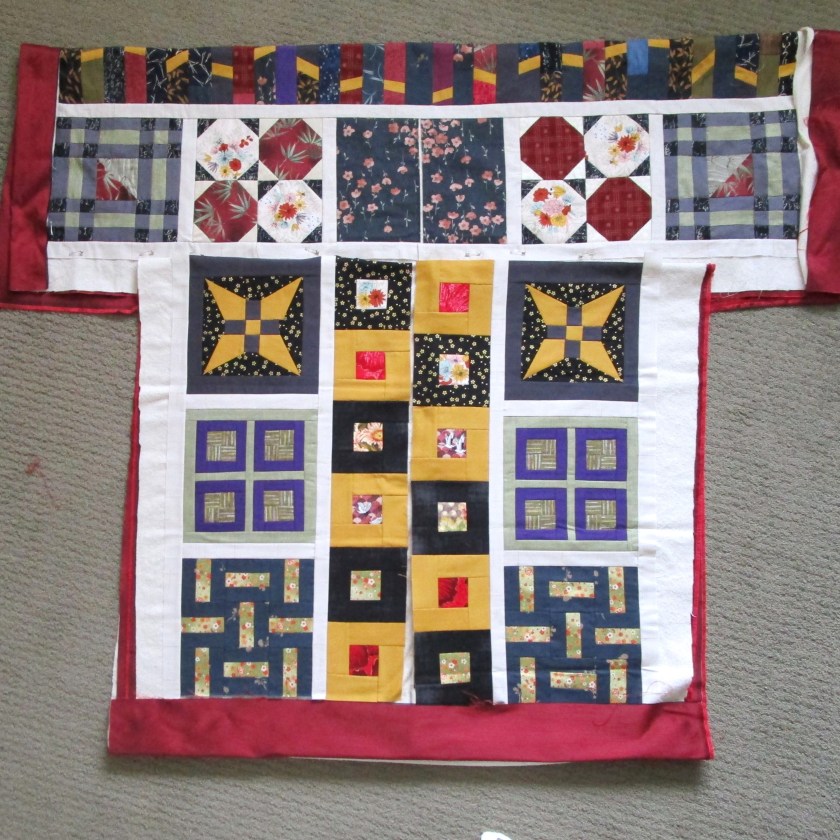
So I got busy cutting, pinning and quilting. By yesterday, I had quilted the shoulder/sleeve section using stitch in the ditch method. My choice allows the block piecing to show to the fullest. At the end of the day, I had sewn the back piece on, but not the front section. I laid it down on the carpet to get photos of front and back.
Quilt back, showing the red lining, which will be turned back to border the sleeves.
Quilt front, laid in position below the shoulder section.
There are some wonderful finished quilts at Quilting Gail’s In Linz party. I will be happy to add my almost-finished one to the parade. To see them all, click.






 Daily Fiber